脑机接口技术

Search documents
全球首个!脑机接口技术获重要突破
Qi Lu Wan Bao· 2025-08-29 04:15
Core Insights - The article highlights a significant breakthrough in clinical brain-machine interface technology, specifically for precise tumor boundary localization during surgery, marking the first global clinical trial of its kind [1][2]. Group 1: Technology Development - The clinical trial was conducted by the Aerospace Information Research Institute and the First Affiliated Hospital of Harbin Medical University, utilizing the NeuroDepth microelectrode developed by the Aerospace Institute [1]. - The technology includes a high-throughput neural signal detection device (AIRCAS-128) that synchronously collects and analyzes vast amounts of neural signals, converting raw signals into precise "lesion navigation" data for real-time tumor boundary assessment [1]. Group 2: Clinical Application - This technology overcomes the limitations of traditional neural electrodes, which could only detect signals from the brain's surface and shallow layers, allowing for detection across all brain regions, including deep brain areas [2]. - It can also simultaneously detect chemical signals such as dopamine and glutamate, providing comprehensive data to differentiate between tumor and normal tissue, which is crucial for accurate surgical planning and execution [2].
【科技日报】临床植入式电极精准定位脑深部肿瘤边界
Ke Ji Ri Bao· 2025-08-29 00:53
Core Insights - The clinical trial conducted by the Aerospace Information Innovation Research Institute and Harbin Medical University is the first in the world to apply brain-machine interface technology for precise boundary localization of deep brain tumors during surgery [1][2] - The trial utilized the NeuroDepth microelectrode and the AIRCAS-128 device, enabling real-time detection and analysis of neural signals, which aids in accurate tumor boundary identification [1][2] Group 1 - The clinical trial represents a significant breakthrough in domestically developed implantable clinical brain-machine interface technology [1] - The NeuroDepth microelectrode can detect signals from various brain regions, including deep brain areas, overcoming the limitations of traditional electrodes [1] - The technology allows for simultaneous detection of chemical signals, providing comprehensive data to differentiate between tumor and normal tissue [1] Group 2 - The trial was conducted on a glioma patient who experienced frequent seizures due to tumor pressure, and it successfully identified tumor boundaries while preserving functional areas [2] - The success of this clinical trial marks a critical step towards the clinical translation and industrialization of brain-machine interface technology [2]
临床植入式电极精准定位脑深部肿瘤边界
Ke Ji Ri Bao· 2025-08-29 00:26
Core Viewpoint - The successful clinical trial of a brain-machine interface for precise tumor boundary localization during surgery marks a significant breakthrough in China's independently developed clinical brain-machine interface technology [1][2]. Group 1: Technology and Innovation - The clinical trial utilized the NeuroDepth microelectrode developed by the Aerospace Information Innovation Research Institute, which allows for real-time detection of tumor boundary signals [1]. - The AIRCAS-128 device enables high-throughput synchronous detection and analysis of massive neural signals, transforming raw signals into precise "lesion navigation" data for real-time surgical guidance [1]. - This technology overcomes the limitations of traditional neural electrodes, which could only detect signals from the brain's surface and shallow layers, allowing for detection across all brain regions, including deep brain areas [1]. Group 2: Clinical Application - The trial was conducted on a glioma patient who experienced frequent seizures due to tumor pressure, successfully identifying tumor boundaries while protecting functional areas [2]. - The integration of imaging data with real-time feedback from NeuroDepth allowed for the complete removal of the tumor while minimizing damage to critical brain functions [2]. Group 3: Industry Implications - The success of this clinical trial is seen as a crucial step towards the clinical transformation and industrialization of brain-machine interface technology [2].
熵基科技(301330) - 301330熵基科技投资者关系管理信息20250828
2025-08-28 12:54
Financial Performance - In the first half of 2025, the company achieved a consolidated revenue of 9,323.56 million yuan, a year-on-year increase of 9.29% [2] - The net profit attributable to shareholders was 9,323.56 million yuan, up 18.56% year-on-year [2] - The net profit excluding non-recurring gains and losses was 8,443.09 million yuan, reflecting a growth of 25.69% [2] - Overseas business revenue reached 7.04 billion yuan, accounting for 75.73% of total revenue, with a growth of 12.58% compared to the same period in 2024 [2] - Domestic business revenue was 2.26 billion yuan, representing 24.27% of total revenue, with a decline of 18.88% year-on-year [2] Business Segments - The Smart Space segment generated approximately 6.86 billion yuan, making up 74.13% of total revenue [3] - The Smart Office segment earned about 1.70 billion yuan, accounting for 18.40% of total revenue, with a year-on-year growth of 30.80% [3] - The Digital Identity Authentication segment reported revenue of approximately 401.63 million yuan, representing 4.34% of total revenue, down 12.50% year-on-year [3] - The Smart Commercial segment generated around 289.41 million yuan, accounting for 3.13% of total revenue, with a growth of 17.10% [3] Cost and Profitability - Total operating expenses (excluding financial costs) for the first half of 2025 were 371 million yuan, a decrease of 0.74% year-on-year [4] - R&D expenses were 104 million yuan, down 1.50%, representing 11.20% of revenue [4] - The overall gross margin for the first half of 2025 was 51.13%, an increase of 1.64% year-on-year [4] - The gross margin for overseas sales was 57.51%, while domestic sales gross margin was 31.21%, down 1.18% year-on-year [4] Future Outlook - The company anticipates a stabilization of domestic business and continued growth in overseas markets [6] - New product launches in the second half of 2025 are expected to drive sales growth in the Smart Space segment [5] - The company is focusing on expanding its presence in key overseas markets, including North America, Europe, and Southeast Asia [7] Investor Engagement - The company addressed investor questions regarding cash flow, overseas business focus, and technological advancements in brain-computer interfaces [6][7][8] - The operating cash flow for the first half of 2025 improved significantly due to adjustments in payment structures [6] - The company is exploring the integration of brain-computer interface technology with robotics for applications in rehabilitation and elderly care [8]

麦澜德: 关于2025年度“提质增效重回报”行动方案的半年度评估报告
Zheng Quan Zhi Xing· 2025-08-26 13:13
南京麦澜德医疗科技股份有限公司 关于 2025 年度"提质增效重回报"行动方案的半年度评估报告 为持续践行"以投资者为本"的上市公司发展理念,推动公司高质量发展和 投资价值提升,维护全体股东利益,基于对公司未来发展前景的信心及公司价值 的认可,南京麦澜德医疗科技股份有限公司(以下简称"公司"或"麦澜德") 于 2025 年 4 月 24 日发布了《关于 2024 年度"提质增效重回报"行动方案评估 报告暨 2025 年度"提质增效重回报"行动方案》。2025 年上半年,公司根据行 动方案内容,积极开展和落实各项工作。现将 2025 年半年度行动方案执行评估 情况报告如下: (一)"主营业务深耕细作,创新驱动发展"方面 报告期内,公司紧紧围绕发展战略和年度目标,稳步推进各项工作。报告期 末,公司资产总额 152,293.47 万元,归属于上市公司股东的净资产 133,578.70 万元。报告期内,公司实现营业收入 24,122.27 万元,同比增长 5.62%;实现归 属于上市公司股东的净利润 6,392.01 万元,同比下降 11.96%;实现归属于上市 公司股东扣除非经常性损益后的净利润 6,072.30 ...

盈康生命:推进“医联体”合作,承接上级医院转诊复杂病例,向下分流康复慢病管理患者
Cai Jing Wang· 2025-08-26 04:34
8月26日,盈康生命发布投资者关系活动记录表,盈康生命表示,2025年上半年公司实现收入 8.43 亿 元,同比增长 2.40%;实现归母净利润 0.62亿元,同比增长12.82%。医疗服务板块来看,公司上半年医 疗服务板块收入6.53 亿元,同比增长 2.28%。报告期内,公司医疗器械实现收入 1.90 亿元,同比增长 2.80%。 未来,公司将积极论证和探索深层次脑机接口技术落地的可行性,从神经康复、疑难脑病诊疗切入,推 进阿尔茨海默病、卒中后遗症、帕金森等神经系统疾病诊疗技术提升。公司旗下医院聚焦差异化业务, 加大创新服务能力:搭建"健康管理中心",通过整合医学方案形成差异化产品和服务体系,提升差异化 服务能力。在链接扩大服务生态方面,盈康生命推进"医联体"合作,承接上级医院转诊的复杂病例,向 下分流康复、慢病管理患者;发展AI 医疗,拓展诊疗服务半径;拓展支付渠道,优化支付结构,推动 商保合作项目,构建"患者-医院-保司"三方共赢生态。 ...

为何截肢后还会幻痛?
Hu Xiu· 2025-08-26 01:40
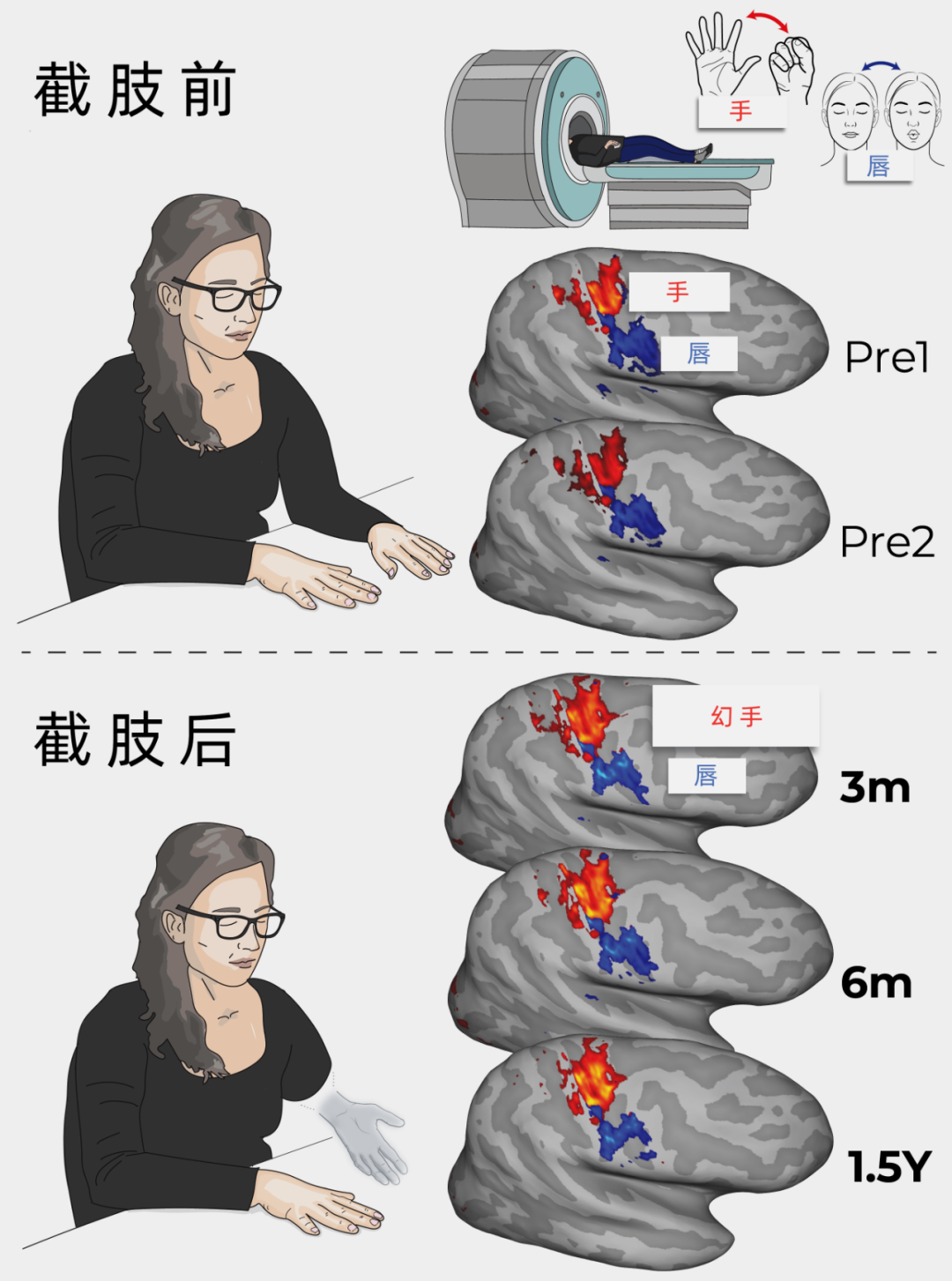
在一项新发表于《自然·神经科学》的研究中,一组研究人员通过对手臂截肢者进行脑成像研究后发现,即使在外科截肢后很久,脑中负责控制失去肢体 的区域仍然存在。 这一成果不仅为幻肢综合征提供了新的认识,并有望为神经假体的发展以及截肢者的"幻痛"治疗提供指导。 因此,关于"截肢是否会引发大规模皮层重组"的争论,一直没有定论。 全新研究设计 在新的研究中,研究人员直接追踪了三名成年参与者在截去手臂之前以及之后长达5年的手部和面部(嘴唇)皮质特征。这是首次在截肢前后同时绘制并 比较脑中的"手部地图"与"面部地图"。 在截肢之前,这三名参与者都能移动他们的所有手指。他们会完成多种动作,例如敲击手指、噘起嘴唇和弯曲脚趾。与此同时,研究人员会利用功能磁共 振成像(fMRI)扫描仪记录参与者的不同脑区的活动。 脑中的"身体地图" 过往的研究表明,在一个名为躯体感觉皮质的脑区中,存在"身体地图",不同区域分别对应不同的身体部位。地图负责处理触觉、温度、疼痛以及身体姿 势等信息。比如,当你用手碰到烫的东西时,某个脑区会被激活;而如果你踢到脚趾,另一个脑区又会被激活。 当身体某个部分被切除时,这张"身体地图"会发生怎样的变化?在过去的五 ...

可孚医疗(301087) - 2025年8月25日投资者关系活动记录表
2025-08-26 01:22
Group 1: Business Performance and Strategy - The company aims to enhance the operational quality of existing stores, with a reported revenue growth of over 20% year-on-year in the first half of 2025 [2] - The company plans to launch new products and strengthen online and offline channel collaboration to expand its hearing business [2] - The overseas business achieved nearly 100 million in revenue, with a year-on-year growth exceeding 200% [4] Group 2: Investments and Acquisitions - The company invested in NeuLink Medical in May 2024 to explore advanced hearing rehabilitation solutions through brain-machine interface technology [3] - In January 2025, the company completed a controlling acquisition of Shanghai Huazhou, enhancing its product line and overseas market channels [4] - The company also acquired a controlling stake in Ximan Na in June 2025, facilitating entry into the Hong Kong market [4] Group 3: Online Sales and Market Trends - The company has developed a comprehensive product matrix covering five major areas, maintaining strong sales performance on mainstream e-commerce platforms [6] - Interest e-commerce platforms have gained popularity, prompting the company to invest in innovative content to enhance brand visibility and product sales [6] Group 4: AI and Technology Development - The company is advancing AI applications across various medical devices, focusing on interconnectivity and data exchange [7] - The upcoming Kefu Health APP will integrate data from multiple devices to provide personalized health management solutions [7] Group 5: Core Product Strategy - The company focuses on core product categories that contribute significantly to revenue and have growth potential, including respiratory machines and hearing aids [8] - Continuous improvement in product quality and market share is a priority, with plans for iterative upgrades and cost reductions [8] Group 6: Respiratory Device Performance - The company's self-developed respiratory machines have received high consumer recognition, with sales rapidly increasing since late June 2025 [9]
晚报 | 8月26日主题前瞻
Xuan Gu Bao· 2025-08-25 14:35
Group 1: Rare Earth - The Ministry of Industry and Information Technology, the National Development and Reform Commission, and the Ministry of Natural Resources released interim measures for total quantity control management of rare earth mining and smelting separation on August 22 [1] - The new management measures indicate a comprehensive upgrade in the regulatory level and scope of rare earth production control, potentially leading to a tightening of supply and an increase in rare earth prices [1][1] - Analysts predict that the domestic rare earth supply will continue to be tight, driving prices upward [1] Group 2: Innovative Pharmaceuticals - China's pharmaceutical industry ranks second globally, with approximately 30% of innovative drugs under research [2] - Since the 14th Five-Year Plan, 387 children's drugs and 147 rare disease drugs have been approved for market, addressing the medication needs of key populations [2] - Analysts believe that the rise of innovative drugs is sustainable, with significant potential for individual products and companies with leading technology platforms [2] Group 3: Photovoltaics - The China Photovoltaic Industry Association issued an initiative to strengthen industry self-discipline and maintain fair competition, urging downstream enterprises to optimize bidding rules [3] - Analysts expect that the photovoltaic industry will see a recovery in long-term profitability as supply-side policies progress and as the industry addresses current challenges [3][3] - The adjustment of polysilicon prices is anticipated to be accepted by the downstream market, leading to a return of component prices to cost levels [3] Group 4: Carbon Emissions - The Central Committee and the State Council released opinions on promoting green and low-carbon transformation and strengthening the national carbon market [4] - By 2027, the national carbon trading market is expected to cover major industrial sectors, with a significant increase in carbon emission quota prices from 46.60 yuan/ton in 2021 to 91.82 yuan/ton in 2024 [4][4] - The total transaction volume of carbon emission quotas reached 1.89 billion tons in 2024, with a total transaction value of 18.114 billion yuan, marking a new annual high [4] Group 5: Storage - Huawei is set to launch a new AI SSD on August 27, aimed at addressing traditional SSD shortcomings in the AI field [5] - The new SSD is expected to enhance data efficiency, which is crucial for enterprise productivity in the era of AI [5] - Analysts highlight the importance of high-performance storage in the training and inference processes of large models, positioning Huawei as a key player in the infrastructure of computing power [5] Group 6: Brain-Computer Interface - A multi-center clinical trial for brain-machine interface technology focusing on precise diagnosis and treatment of hydrocephalus has been initiated by top medical institutions in China [6] - This project marks a significant advancement in brain-machine interface technology, expanding its applications beyond traditional areas [6] - The integration of brain-machine interface technology into medical services has been facilitated by recent policy support from the National Medical Insurance Administration [6] Group 7: Forestry - The People's Bank of China and other regulatory bodies issued a notification to support high-quality development in forestry through financial measures [7] - The forestry sector is evolving beyond traditional timber production to include carbon sink development and ecological tourism [7] - The industry is expected to cover various fields, employing over 100 million people and contributing significantly to the economy [7]
爱朋医疗股价上涨6.55% 成立AI及机器人业务子公司
Sou Hu Cai Jing· 2025-08-25 09:33
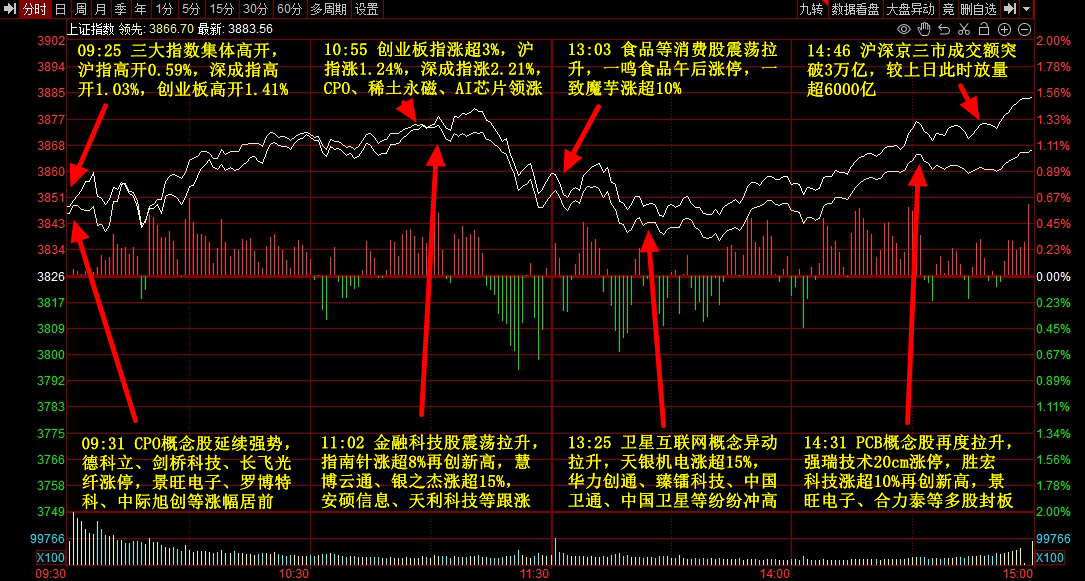
Group 1 - The stock price of Aipeng Medical reached 36.29 yuan as of August 25, 2025, with an increase of 2.23 yuan, representing a rise of 6.55% from the previous trading day [1] - The company opened at 35.00 yuan, with a highest price of 37.50 yuan and a lowest price of 34.40 yuan, achieving a trading volume of 220,500 lots and a total transaction value of 791 million yuan [1] - Aipeng Medical's main business focuses on medical devices, including sectors such as robotics, specialized and innovative technologies, and influenza [1] Group 2 - The company recently established a wholly-owned subsidiary, Aipeng Zhiyuan Brain Science Technology (Shanghai) Co., Ltd., with a registered capital of 10 million yuan, engaging in artificial intelligence application system integration, intelligent unmanned aerial vehicles, and robotics sales [1] - Aipeng Medical has partnered with the Children's Hospital affiliated with Fudan University to establish a "Brain-Computer Interface Technology Behavioral Therapy Joint Laboratory," further expanding the application of brain-computer interface technology in the medical field [1] Group 3 - On August 25, Aipeng Medical saw a net inflow of main funds amounting to 39.64 million yuan, accounting for 1.33% of its circulating market value [1] - Over the past five days, the main funds experienced a net outflow of 19.60 million yuan, representing 0.66% of the circulating market value [1]