合成生物学

Search documents
自然聚焦-机器人学:医疗,武器和机器人
机器人大讲堂· 2025-12-12 06:38
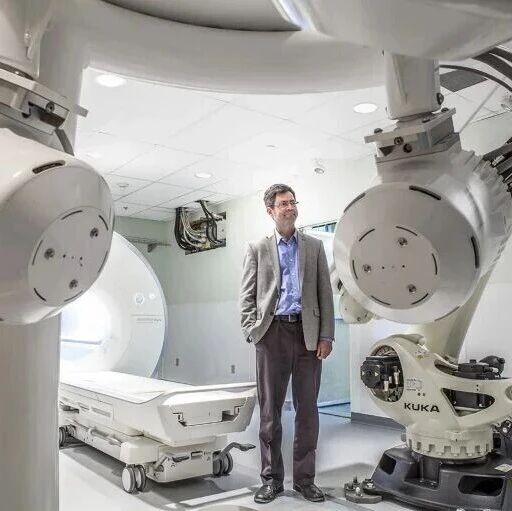
Core Viewpoint - The research on nanorobots for cancer treatment is advancing, with significant improvements in their ability to deliver drugs precisely to targeted areas within the body, potentially revolutionizing cancer diagnosis, monitoring, and treatment methods [2][3]. Group 1: Nanorobots Research - The team led by Sylvain Martel at the Montreal Institute of Technology has spent over a decade developing nanorobots that can be controlled using MRI technology to deliver cancer drugs directly to tumors [2][3]. - Recent experiments showed that by adjusting the position of pigs in MRI machines, the number of nanorobots reaching the liver increased by nearly three times compared to previous tests [2]. - The research indicates that the technology is nearing practical application in humans, which could lead to innovative methods for cancer treatment, including targeted drug delivery and tumor monitoring [3]. Group 2: Publication and Future Directions - The findings are published in a recent issue of Nature Focus, which explores the application of nanorobots in cancer treatment and other advanced robotics topics [4]. - Future editions of Nature Focus will cover rapidly developing topics in various fields, including robotics and AI, indicating a growing interest and investment in these technologies [5].

丸美生物递表港交所 高盛和中信证券为联席保荐人
Zheng Quan Shi Bao Wang· 2025-12-12 00:55
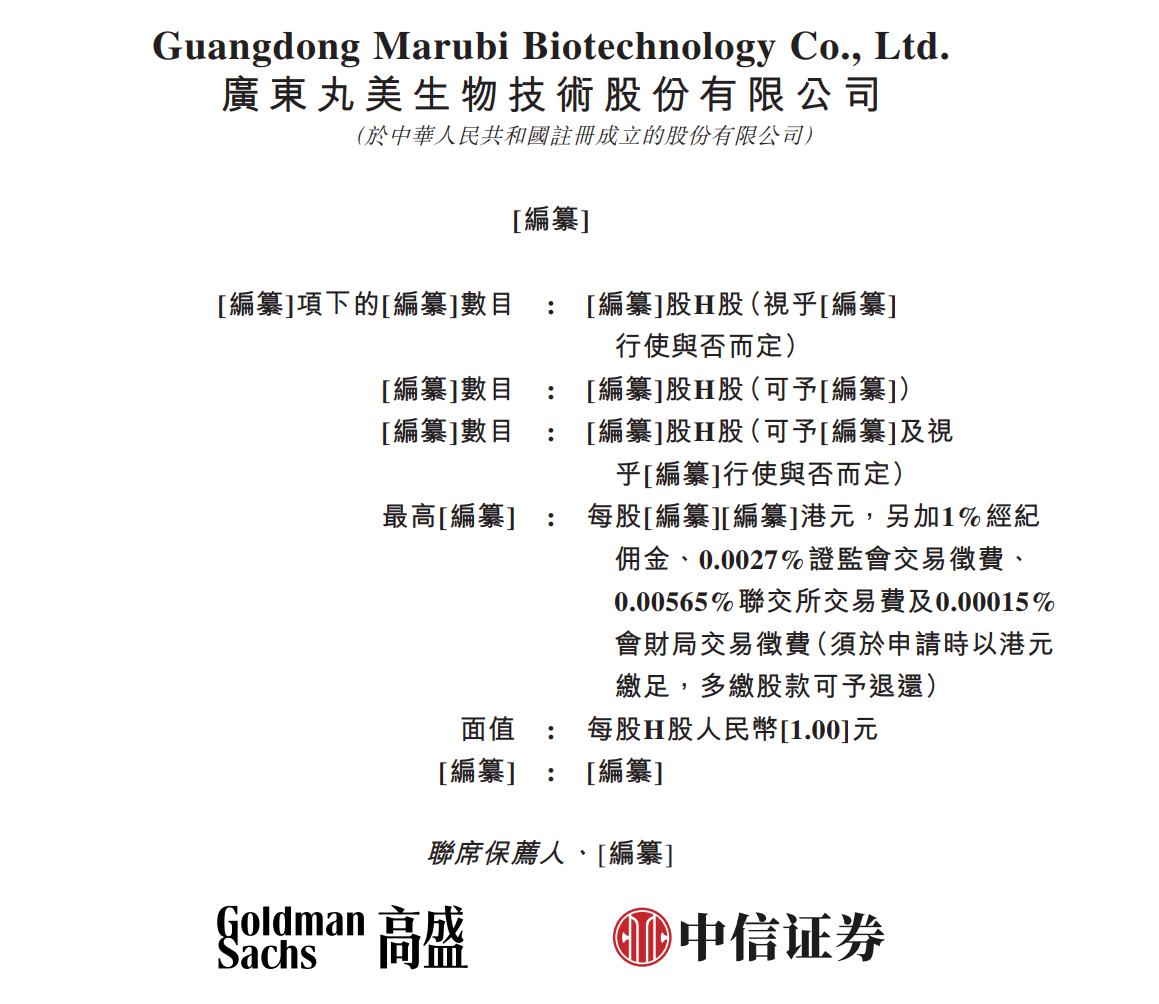
Core Viewpoint - Marubi Biotechnology has submitted a listing application to the Hong Kong Stock Exchange, with Goldman Sachs and CITIC Securities as joint sponsors. The company ranks third in the Chinese market for recombinant collagen skincare products by retail sales in 2024, focusing on anti-aging skincare through synthetic biology technology [1][2]. Group 1: Company Overview - Marubi operates two main brands: Marubi (丸美) and L'HOTEL (恋火). The Marubi brand specializes in eye and facial anti-aging care, holding the top position in retail sales for eye care brands in China from 2021 to 2024. L'HOTEL focuses on base makeup products, ranking third among domestic base makeup brands and fifth overall in China for retail sales in 2024 [2]. - The company has developed over 80 proprietary ingredients, including recombinant double collagen and SPGβ-glucan, with more than 30 products achieving large-scale production. It operates two production bases in Guangzhou, equipped with high-density fermentation and purification processes for recombinant collagen production [2]. Group 2: Industry Position and Innovations - According to a report by Frost & Sullivan, Marubi ranks third in the recombinant collagen skincare segment in China by retail sales for 2024. The company has successfully developed recombinant double collagen, an engineered product that combines type I and type III collagen using translation pause and C-PRO loop technology [1]. - As of September 30, 2025, Marubi is the first and only company in China approved as a national research center for recombinant functional protein technology, having been recognized as a key drafting unit for the industry standard "Recombinant Soluble Collagen" by the Ministry of Industry and Information Technology [1].


新股消息 丸美生物(603983.SH)递表港交所
Jin Rong Jie· 2025-12-12 00:04
Core Viewpoint - Guangdong Marubi Biotechnology Co., Ltd. has submitted an application for listing on the Hong Kong Stock Exchange, with Goldman Sachs and CITIC Securities as joint sponsors, highlighting its position as a leading Chinese beauty company focused on anti-aging solutions [1] Company Overview - Marubi Biotechnology specializes in providing anti-aging skincare solutions and has over 20 years of experience in the industry, driven by synthetic biology technology [1] - The company emphasizes research and development, particularly in core technologies such as recombinant collagen, to innovate skincare products with anti-wrinkle, firming, and repairing effects [1] Market Position - According to a report by Frost & Sullivan, Marubi is the third largest beauty company in China in the segment of recombinant collagen skincare products, based on retail sales projected for 2024 [1]
新股消息 | 丸美生物(603983.SH)递表港交所 为重组胶原蛋白护肤品细分领域的中国第三大美妆企业
智通财经网· 2025-12-11 23:28
Core Viewpoint - Mamei Biotechnology is a leading Chinese beauty company focused on anti-aging solutions, leveraging synthetic biology technology and core innovations in skincare products to drive growth in the industry [4][5]. Company Overview - Mamei Biotechnology has over 20 years of experience in the anti-aging skincare sector, emphasizing research and development, particularly in recombinant collagen technology [4]. - The company has developed recombinant double collagen, a unique engineered protein that combines type I and type III collagen into a single molecule, enhancing its product offerings [4]. - Mamei has been recognized as a key contributor to the industry standard for "recombinant soluble collagen" and is the only company in China approved as a national research center for recombinant functional protein technology [4][5]. Market Position - Mamei has ranked first in the Chinese eye care brand market from 2021 to 2024 based on retail sales, while its brand "Lianhuo" ranks third among domestic foundation brands and fifth overall in the foundation category [5]. - Lianhuo has achieved a compound annual growth rate (CAGR) of 77.5% in retail sales from 2022 to 2024, the highest among the top five foundation brands in China [5]. Product Development - The company has established a comprehensive value chain for core raw materials, developing over 80 proprietary ingredients, with more than 30 achieving large-scale production [7]. - Mamei operates two production bases in Guangzhou, which support high-density fermentation and purification processes for recombinant collagen production [7]. Financial Performance - Mamei's revenue for the fiscal years ending December 31 from 2022 to 2025 is projected to be RMB 1.73 billion, RMB 2.23 billion, RMB 2.97 billion, and RMB 2.45 billion respectively [8]. - The company reported profits of RMB 167.43 million, RMB 277.59 million, RMB 342.36 million, and RMB 246.65 million for the same periods [9]. - Gross profits for the same periods are RMB 1.18 billion, RMB 1.56 billion, RMB 2.18 billion, and RMB 1.83 billion respectively [10]. Industry Overview - The Chinese beauty market is projected to grow from RMB 460.3 billion in 2019 to RMB 566.3 billion by 2024, with a CAGR of 4.2% [10]. - The skincare market is expected to expand from RMB 355.9 billion in 2019 to RMB 451.4 billion by 2024, with a CAGR of 4.9% [13]. - The makeup market is anticipated to grow from RMB 104.5 billion in 2019 to RMB 114.8 billion by 2024, with a CAGR of 1.9% [16].
丸美生物递表港交所
Zhi Tong Cai Jing· 2025-12-11 23:15
Group 1 - The core viewpoint of the article is that Guangdong Marubi Biotechnology Co., Ltd. has submitted an application for listing on the Hong Kong Stock Exchange, with Goldman Sachs and CITIC Securities as joint sponsors [1] - Marubi Biotechnology is a leading Chinese beauty company focused on providing anti-aging solutions, leveraging synthetic biology technology and over 20 years of experience in the anti-aging skincare industry [1] - The company emphasizes research and development, particularly in core technologies such as recombinant collagen, to innovate skincare products with anti-wrinkle, firming, and repairing effects [1] Group 2 - According to a report by Frost & Sullivan, Marubi Biotechnology is the third largest beauty company in China in the recombinant collagen skincare segment, based on retail sales projected for 2024 [1]
新股消息 | 丸美生物(603983.SH)递表港交所
智通财经网· 2025-12-11 23:15
Group 1 - The core viewpoint of the article is that Guangdong Marubi Biotechnology Co., Ltd. has submitted a listing application to the Hong Kong Stock Exchange, with Goldman Sachs and CITIC Securities as joint sponsors [1] - Marubi Biotechnology is a leading Chinese beauty company focused on providing anti-aging solutions, leveraging synthetic biology technology and over 20 years of experience in the anti-aging skincare industry [1] - The company emphasizes research and development, particularly in core technologies such as recombinant collagen, to create skincare products with anti-wrinkle, firming, and repairing effects [1] Group 2 - According to a report by Frost & Sullivan, Marubi is the third largest beauty company in China in the recombinant collagen skincare segment, based on retail sales projected for 2024 [1]
金达威:公司拥有雄厚的研发实力和制造实力
Zheng Quan Ri Bao· 2025-12-11 14:28
Core Viewpoint - The company, Jindawei, emphasizes its strong R&D and manufacturing capabilities, leveraging synthetic biology as a foundational innovation engine to create a comprehensive biological manufacturing platform driven by microbial fermentation and enzyme catalysis, supported by chemical synthesis [2] Group 1: R&D and Manufacturing Strength - The company possesses robust R&D and manufacturing capabilities [2] - It utilizes synthetic biology as a core innovation engine [2] - The company has developed a complete technology chain from molecular design to green manufacturing [2] Group 2: Product Development and Market Potential - The company focuses on innovative health product raw material development [2] - It has strategically positioned itself in product categories with significant market potential, including coenzyme Q10, algal oil omega-3, and biological sweeteners [2]

川宁生物:肌醇作为公司合成生物学重点产品,已进入生产阶段
Mei Ri Jing Ji Xin Wen· 2025-12-11 12:27
Core Viewpoint - The company Chuaning Biological is advancing its production of inositol (Vitamin B8) using synthetic biology technology, which offers cost advantages over traditional extraction methods. The product has received feed additive licenses and is widely used in aquaculture and livestock feed. Group 1: Company Developments - Chuaning Biological has implemented synthetic biology technology for inositol production, showcasing innovations in strain design and fermentation processes [2] - The technology has reached industrial application, although specific cost data is considered a commercial secret [2] - The company is currently in the capacity ramp-up phase at its synthetic biology base, with production capacity and sales forecasts for next year subject to market order conditions [2] Group 2: Product Applications and Market Position - Inositol has been licensed as a feed additive and is extensively applied in aquaculture and livestock feed [2] - The company has not disclosed specific customer information due to commercial confidentiality and compliance with information disclosure regulations [2] - Chuaning Biological is committed to advancing the industrialization of synthetic biology and will provide updates through official disclosure channels [2]
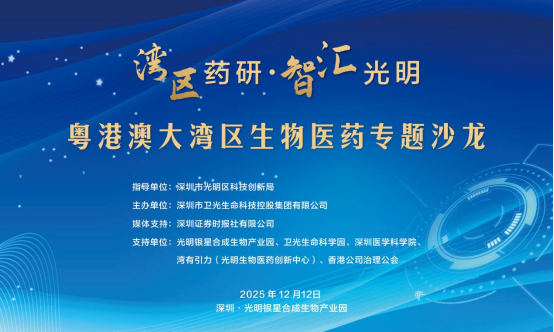
“湾区药研・智汇光明”粤港澳大湾区生物医药专题沙龙即将启幕
Zheng Quan Shi Bao· 2025-12-11 03:14
Core Insights - The global biopharmaceutical industry is undergoing significant transformation, with breakthroughs in innovative drug development, synthetic biology, and gene therapy presenting unprecedented opportunities for human health [1] - Guangming District in Shenzhen is positioned as a key area for building a comprehensive national science center, focusing on innovative drug development and technology transfer, aiming to establish a new highland for the biopharmaceutical industry in the Greater Bay Area [1] Event Overview - The "Bay Area Pharmaceutical Research & Wisdom Gathering" seminar will be held on December 12, 2025, in Guangming, Shenzhen, focusing on innovative drug development, technology transfer pathways, and new opportunities for industry expansion [1] - The seminar will feature industry leaders such as Lizhu Biology and CITIC Construction Investment, providing insights into the transformation paths of innovative drug companies and the value reshaping trends in the industry chain for 2026 [1] Project Roadshow and Investment Opportunities - The seminar will include a project roadshow segment featuring three cutting-edge biopharmaceutical companies: Pamplona Biotech (Shenzhen), Hailike (Beijing), and Shenzhen Ruixing Biotechnology, showcasing their technological breakthroughs and commercial potential in targeted protein degradation and differentiated drug development [2] - A "Capital Face-to-Face" session will facilitate one-on-one discussions between financing companies and investors, with participation from renowned investment institutions such as Sequoia China, Gaotie Capital, and Cornerstone Capital, aimed at providing precise capital support and strategic guidance to biopharmaceutical companies [2] Collaborative Platform - The "Bay Area Pharmaceutical Research & Wisdom Gathering" serves as a high-end collaboration platform linking technology, capital, and industry, inviting experts, business leaders, and investment representatives to foster consensus and resource connections for high-quality development in the biopharmaceutical sector of the Greater Bay Area [2]

“湾区药研 智汇光明”粤港澳大湾区生物医药专题沙龙即将启幕
Zheng Quan Shi Bao Wang· 2025-12-11 03:05
当前,全球生物医药产业正经历深刻变革,创新药研发、合成生物学、基因治疗等前沿技术加速突破, 为人类健康事业带来前所未有的机遇。光明区作为深圳建设综合性国家科学中心的核心承载区,在创新 药研发、科技成果转化等领域具备独特优势,正全力打造大湾区生物医药产业新高地。 为搭建行业交流合作平台,聚焦创新药研发前沿、科技成果转化路径及产业出海新机遇,由深圳市卫光 生命科技控股集团有限公司主办,深圳证券时报社有限公司作为媒体支持单位的"湾区药研 智汇光 明"粤港澳大湾区生物医药行业专题沙龙,将于2025年12月12日在深圳 光明银星合成生物产业园盛大举 行,共探生物医药高质量发展之道。 本次沙龙特别邀请了丽珠生物、中信建投(601066)等行业标杆嘉宾,深度解析创新药企业的蜕变路 径,展望2026年创新药产业链的价值重塑趋势,为参会者带来前沿的行业洞察与战略思考,助力企业明 晰发展方向、把握战略机遇。 为促进技术与资本的高效对接,沙龙特别设置优质项目路演环节。潘普洛纳生物科技(深圳)有限公 司、海徕科(北京)生物技术有限公司、深圳睿陉生物科技有限公司三家前沿生物医药企业,将集中展 示其在靶向蛋白降解、差异化多(双)抗药物开 ...