城乡融合发展

Search documents
坚持开门问策 凝聚智慧力量 科学谋划我市“十五五”经济社会发展
Chang Jiang Ri Bao· 2025-11-28 03:28
Core Viewpoint - The meeting focused on the development of Wuhan's "14th Five-Year Plan," emphasizing the importance of expert contributions to shape a comprehensive development blueprint for the city [1][2]. Group 1: Expert Contributions - Experts provided suggestions on various themes including urban-rural integration, regional coordinated development, and the establishment of a modern industrial system [2]. - The discussions highlighted the need for strategic research on issues such as ecological environment protection and modern governance in mega cities [3]. Group 2: Development Opportunities and Challenges - The "14th Five-Year" period is seen as a critical time for Wuhan to solidify its modernization efforts and address challenges while leveraging significant opportunities [3]. - The city is currently in a favorable development phase characterized by rising status and expanded positioning, although it faces several challenges [3]. Group 3: Role of Experts and Institutions - Wuhan's numerous universities and research institutions are viewed as valuable assets, and there is a call for enhanced mechanisms to involve experts in decision-making processes [3]. - The government is encouraged to leverage the expertise of scholars to contribute to major tasks and policies affecting Wuhan's development [3].
盛阅春主持召开专家座谈会 坚持开门问策 凝聚智慧力量 科学谋划我市“十五五”经济社会发展
Chang Jiang Ri Bao· 2025-11-28 00:41
Core Viewpoint - The meeting focused on gathering expert opinions to develop the "15th Five-Year Plan" for Wuhan, emphasizing the importance of collaboration and strategic planning for the city's future development [1][2][3]. Group 1: Expert Contributions - Experts provided suggestions on various themes including urban-rural integration, regional coordinated development, building a national economic center, modern industrial system construction, enhancing urban functionality, and exploring the contemporary value of Yangtze culture [2]. - The feedback from experts was noted for its relevance to current development trends and local realities, showcasing a high level of theoretical insight and practical applicability [2]. Group 2: Strategic Importance of the "15th Five-Year Plan" - The "15th Five-Year Plan" period is identified as a critical phase for achieving socialist modernization and for Wuhan to establish itself as a modern metropolis [3]. - Wuhan is currently in a prime development phase characterized by rising status, expanded positioning, and overlapping opportunities, although it also faces several challenges [3]. Group 3: Role of Experts and Institutions - The city possesses numerous influential experts and scholars from universities and research institutions, which are considered valuable assets for urban development [3]. - There is a call for local governments to leverage expert knowledge effectively, encouraging their involvement in decision-making processes related to significant urban development tasks and policies [3].
北京农村集体经济账面资产总额达1.1万亿元
Bei Jing Ri Bao Ke Hu Duan· 2025-11-27 13:15
Group 1 - The income gap between urban and rural areas in Beijing continues to narrow, with rural residents' per capita disposable income growing at an annual rate of 7.2% during the 14th Five-Year Plan period [1][2] - The total book assets of rural collective economies in Beijing reached 1.1 trillion yuan, with over one-third of villages achieving profit distribution [1][2] - The agricultural and rural sectors in Beijing have shown a positive trend characterized by "two increases, three advancements, and two stabilizations," with significant improvements in agricultural production capacity and rural income growth [1][2] Group 2 - Basic public services in urban and rural areas are becoming more equitable, with initiatives in education, healthcare, and elderly care leading to better resource allocation [2] - The agricultural sector has seen continuous growth in grain production, projected to reach 576,000 tons in 2024, alongside significant advancements in agricultural technology [2] - Recommendations for enhancing rural economic development include promoting new cooperative models and expanding income channels for farmers through various partnerships and resource utilization [3]
热词看未来|县域经济,怎样走出特色发展路径?
Xin Hua She· 2025-11-27 02:02
Core Viewpoint - The development of county-level economies is crucial for promoting urban-rural integration, regional coordination, and ensuring national food and ecological security, as highlighted in the 15th Five-Year Plan proposal by the Central Committee of the Communist Party of China [2][3]. Group 1: Importance of County-Level Economies - County-level economies account for approximately 90% of China's land area and about half of the national population, serving as a key point for urban-rural integration [3]. - These economies are the "micro-foundation" of China's economy, providing employment and improving living standards for over half of the population, while also playing a significant role in expanding domestic demand and facilitating economic circulation [5]. - County-level economies are essential for nurturing new productive forces and serve as a critical link in urban-rural integration, promoting resource allocation and enhancing public service levels [5]. Group 2: Pathways for Development - The focus should shift from viewing counties as mere extensions of cities to recognizing them as vibrant units capable of creating economic value independently, emphasizing tailored development paths based on local characteristics [7]. - Development strategies should be adaptable and categorized, ensuring the provision of talent, funding, and technology, while fostering unique industrial clusters through extended supply chains and increased value-added services [7].


乘势而上 开启奋进“十五五”的序章——写在省委十二届八次全会召开之际
Si Chuan Ri Bao· 2025-11-27 00:27
Group 1 - The article emphasizes the significant progress made in Sichuan's economic development during the "14th Five-Year Plan" period, highlighting its rise to the fifth largest economy in China with a total economic output surpassing 6 trillion yuan [1][5][8] - Sichuan's strategic industries have shown remarkable growth, with the value added of strategic emerging industries accounting for 30% of the industrial output, and the service sector contributing over 60% to economic growth [8][9] - The province has successfully established several major industrial clusters, including three trillion-yuan-level industries in electronic information, food and textiles, and energy and chemicals [8][9] Group 2 - Sichuan has made significant advancements in infrastructure, including the completion of over 2,000 kilometers of new highways and the opening of high-speed rail lines, enhancing connectivity within the region [19][20] - The province's foreign direct investment (FDI) reached $14.61 billion, marking a 28.1% increase compared to the previous five-year period, maintaining its position as the leader in FDI among central and western regions [22][23] - Sichuan's agricultural output remains robust, with grain production consistently exceeding 70 billion jin, and the province being a leading producer of various agricultural products [9][10] Group 3 - The article outlines the importance of technological innovation in driving Sichuan's industrial transformation, with a focus on developing a modern industrial system supported by high-quality manufacturing [11][12][16] - Sichuan has established a comprehensive innovation ecosystem, with numerous research institutions and universities contributing to technological advancements and the commercialization of research outcomes [12][17] - The province is actively promoting the integration of technology and industry, with initiatives aimed at enhancing digital transformation and smart manufacturing across various sectors [16][17] Group 4 - The article highlights Sichuan's commitment to ecological sustainability, with significant improvements in environmental quality and water management practices [10][28] - Sichuan's strategic location and infrastructure developments are positioned to enhance its role in national and international trade, contributing to the broader economic landscape [18][21] - The province's cultural and tourism sectors are being developed to enhance its attractiveness as a destination, with initiatives aimed at preserving cultural heritage and promoting tourism [29][30]
150万亩永久基本农田落图落地,北京粮食生产连续5年较快增长
Xin Jing Bao· 2025-11-26 11:53
Core Insights - Beijing has implemented the strictest farmland protection system, restoring the cultivated land area to 1.97 million acres and completing the mapping of 1.5 million acres of permanent basic farmland [1][2] - The city has made significant advancements in agricultural technology, achieving a 75% contribution rate from agricultural technology progress and leading the nation in comprehensive technological strength [2][3] - The development of rural industries has been prioritized, with a focus on enhancing the production of local specialties and creating new rural business models [6][4] Group 1: Agricultural Development - The area of high-standard farmland built has reached 840,000 acres, with a focus on modern facility agriculture and the establishment of demonstration zones [2] - The self-sufficiency rates for key agricultural products such as vegetables, eggs, and milk have steadily increased [2] - Beijing has developed a robust seed industry, with 214.4 million preserved germplasm resources, ranking first in the country [3] Group 2: Rural Infrastructure and Services - Over 95% of administrative villages have completed village planning, and rural infrastructure improvements have been largely completed [4] - The city has introduced over 200 new urban entrepreneurial entities to develop rural new business formats, enhancing the local economy [4] - The income of rural residents has consistently grown faster than that of urban residents, with a projected increase of 9,730 yuan per capita by 2024 [7] Group 3: Policy and Governance - Beijing has implemented various policies to support rural collective economic development and improve governance in rural areas [8] - The city has made progress in land reform, with 23,87 plots of land entering the open market for transactions since 2021 [8] - The government aims to continue promoting urban-rural integration and modern agricultural development in the next five years [9]
王廷惠:锚定战略基点全方位扩大内需
Jing Ji Ri Bao· 2025-11-26 00:08
Group 1: Core Insights - The central theme emphasizes the importance of expanding domestic demand as a strategic foundation for economic stability and security, with a focus on enhancing consumption and investment to drive growth [1][3][11] Group 2: Economic Indicators - In 2024, China's total retail sales of consumer goods are projected to reach 48.3 trillion yuan, reflecting a year-on-year growth of 3.5%, while online retail sales continue to lead globally for 12 consecutive years [2] - Fixed asset investment for the year is expected to be 52.1 trillion yuan, with a growth rate of 3.1%, although there has been a decline in investment in the first three quarters of the year [2] Group 3: Challenges to Growth - Insufficient domestic demand, particularly in consumption, is identified as a major constraint on economic growth, with consumption contributing only 44.5% to economic growth in 2024 [2][3] - The investment growth remains weak, with a 0.5% decline in fixed asset investment (excluding rural households) in the first three quarters of the year [2] Group 4: Strategies for Consumption Enhancement - Key strategies to stimulate consumption include enhancing consumer confidence and expectations, focusing on income growth, and improving employment opportunities [4][5] - Reforms in social security systems are crucial to reduce uncertainty and enhance consumer confidence, thereby increasing consumption [6] Group 5: Investment Optimization - The need for effective investment is highlighted, with calls for reforms in market access and investment management to create a conducive environment for investment [9][10] - Emphasis is placed on the importance of aligning investment with consumer demand to ensure that investments are effective and beneficial [12] Group 6: Interconnection of Consumption and Investment - The relationship between consumption and investment is underscored, with a focus on how consumption can drive investment and vice versa, creating a virtuous cycle that expands domestic demand [11][12]
2025秦势高质量发展大会在西安临潼举行
Zhong Guo Fa Zhan Wang· 2025-11-25 03:32
11月22日,由民建陕西省委会指导,民建西安市委员会、民建陕西省委会农业农村委员会、民建西安市 临潼区工委联合主办的2025秦势高质量发展大会在西安市临潼区举行。会议以"城乡融合发展与西安都 市圈建设"为主题,深入贯彻落实习近平总书记关于城乡融合发展的重要论述和中共二十届四中全会精 神,推动陕西城乡区域协调发展。省政协副主席、民建陕西省委会主委李忠民出席会议并作主旨报告。 中共陕西省委统战部常务副部长周玉峰,西安市委统战部常务副部长陈哲出席并致辞,西安市临潼区委 书记黄可出席,西安市临潼区委常委、统战部部长刘新亮致辞。 李忠民在报告中系统阐述了党的十八大以来关于城乡融合发展的重大决策部署,深入解读了党的二十大 和二十届四中全会对完善城乡融合发展体制机制的系统安排,并就破解城乡二元发展路径提出具体建 议。他强调,"十五五"期间,陕西应着力在更高水平上实现城乡要素平等交换、双向流动、互融互补、 共治共享,推动共同繁荣发展。要加快推进西安都市圈和相关城市带建设,共建工业走廊。要强化县城 载体功能,因地制宜推动各类产业园区高质量发展。要更加注重县域首位产业发展,推动农产品深加 工,拓展"一县一业"新赛道。要重视县域职 ...
推进江苏高校县域办学与县域现代化融合共生
Xin Hua Ri Bao· 2025-11-24 21:53
Core Viewpoint - The integration of urban and rural development is essential for China's modernization, with county-level modernization being a key support for this process [1] Group 1: Higher Education's Role - Higher education is crucial for serving national strategies and regional economic development, but its resources are unevenly distributed, primarily concentrated in large cities [1] - The "Education Strong Country Construction Plan Outline (2024-2035)" emphasizes the need to push higher vocational education resources into counties, providing a policy basis for county-level higher education [2] Group 2: County-Level Higher Education as a Pathway - County-level higher education is an innovative model that enhances the service radius of higher education and promotes the balanced allocation of quality educational resources [2] - This model fosters a bidirectional empowerment mechanism between universities and counties, allowing for practical applications of theoretical knowledge and enhancing research and talent cultivation [2] Group 3: Strategic Planning and Regional Coordination - A differentiated policy approach is necessary to address the diverse economic conditions and development stages of counties in Jiangsu, promoting precise connections between universities and counties [3] - Support for strong economic counties includes establishing industry technology research institutes and professional degree training bases focused on advanced manufacturing sectors [3] Group 4: Collaborative Innovation Systems - Establishing a collaborative innovation mechanism that aligns with county development needs is essential to avoid mismatches in higher education [4] - A "four-in-one" connection mechanism is proposed to link universities with local industries and projects, enhancing the relevance of higher education to local economic needs [4] Group 5: Talent Development and Policy Support - Innovative talent cultivation and support mechanisms are needed to address challenges such as population loss and talent shortages in counties [5] - The establishment of modern industry colleges and vocational training bases is encouraged to provide high-quality technical talent tailored to local industries [5] - Government roles and responsibilities should be clearly defined to support the integration of higher education with county development, including the establishment of special funds for this purpose [6]
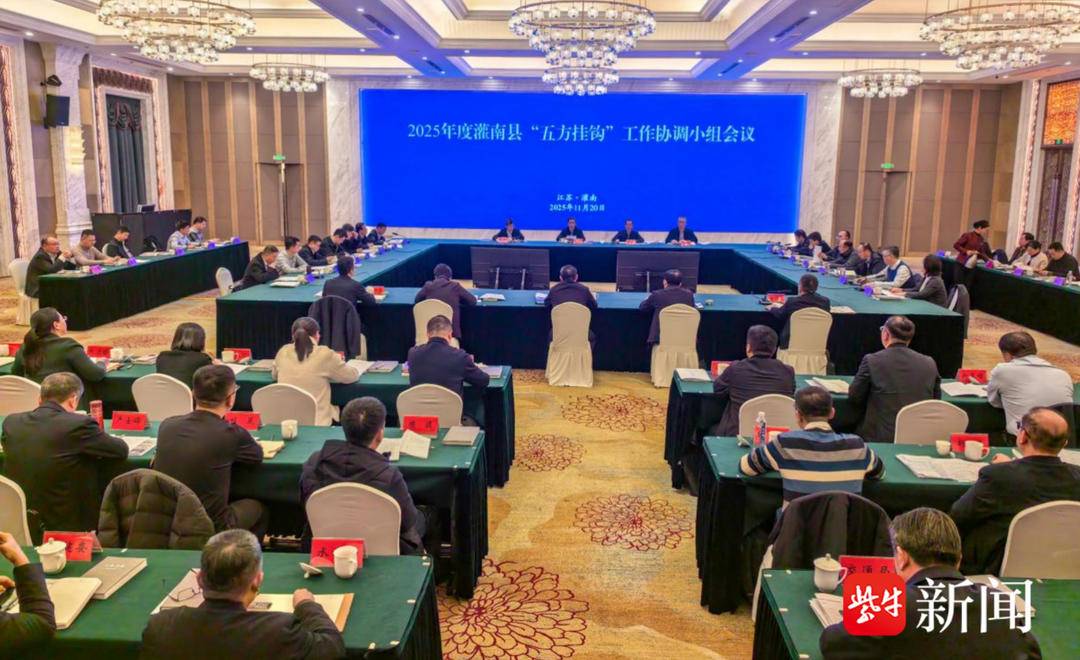
2025年度灌南县“五方挂钩”工作协调小组会议召开
Yang Zi Wan Bao Wang· 2025-11-24 15:44
卢刚在致辞中表示,近年来灌南县全面落实"在推进农业现代化上走在前"的重要任务,衔接推进乡村全面振兴取得积极成效,是"五方挂钩"的直接受益 者。省委驻灌南县乡村振兴工作队坚持与县委、县政府的工作同谋划、同部署、同推动,真正做到了融洽、融入、融合,统筹资金、资源、项目、人才使 用,推进实施重点帮促工作60余项,聚焦产业发展、注重民生改善、加强基层治理,推动灌南乡村振兴迈上新台阶,工作成绩得到基层干部群众的广泛称 赞。 灌南县委主要负责同志介绍了灌南县经济社会发展和乡村振兴情况。省委驻灌南县乡村振兴工作队汇报了帮促工作开展情况。灌南县"五方挂钩"工作协调 小组成员单位围绕下一步重点工作分别作交流发言。 会议期间,与会代表还实地调研新东仓储物流中心、田楼镇乡村振兴产业园、菌菇文化展示中心、马台村等帮促项目。灌南县"五方挂钩"工作协调小组各 成员单位分管负责同志和联络员,省农业农村厅相关处室负责同志,灌南县委、县政府主要负责同志和分管负责同志,灌南县相关镇和机关部门负责同 志,以及省委驻灌南县乡村振兴工作队全体队员,灌南县、镇两级强村公司负责人参加会议。 11月20日,连云港市灌南县"五方挂钩"工作协调小组会议在灌南召 ...