
电力市场化改革

Search documents
浙江电力现货市场转入正式运行,7月份我国天然气进口量同比下降2.1%
Xinda Securities· 2025-08-09 15:39
Investment Rating - The investment rating for the public utility sector is "Positive" [2] Core Insights - The electricity sector is expected to see profit improvement and value reassessment following multiple rounds of supply-demand tensions. The continuous advancement of electricity market reforms is likely to lead to a stable but slight increase in electricity prices. The introduction of a capacity pricing mechanism will clarify the foundational role of coal power [4] - The natural gas sector is anticipated to benefit from the recovery in domestic consumption and the decline in upstream gas prices, with city gas businesses expected to achieve stable margins and high sales growth [4] Summary by Sections Market Performance - As of August 8, the public utility sector rose by 1.6%, underperforming the Shanghai Composite Index. The electricity sector increased by 1.41%, while the gas sector rose by 3.60% [3][10] - Key companies in the electricity sector saw significant stock performance variations, with Shanghai Electric rising by 11.35% and Guodian Power declining by 2.89% [11][13] Electricity Industry Data Tracking - The price of Qinhuangdao port thermal coal (Q5500) increased by 23 CNY/ton week-on-week, reaching 678 CNY/ton as of August 8 [3][19] - Coal inventory at Qinhuangdao port increased by 250,000 tons week-on-week, totaling 5.47 million tons [28] - Daily coal consumption in inland provinces rose by 6.42% week-on-week, reaching 4.09 million tons [28] Natural Gas Industry Data Tracking - As of August 8, the LNG ex-factory price index in Shanghai was 4,220 CNY/ton, down 14.38% year-on-year [52] - The EU's natural gas supply for week 29 of 2025 was 6.08 billion cubic meters, a year-on-year increase of 4.2% [60] - Domestic natural gas consumption in June 2025 was 35.05 billion cubic meters, a year-on-year increase of 1.9% [4] Key Industry News - The State Grid's electricity load reached a historical high of 1.233 billion kilowatts due to extreme weather conditions [4] - In July, China's natural gas imports totaled 10.632 million tons, a year-on-year decrease of 2.1% [4] Investment Recommendations - For the electricity sector, focus on leading coal power companies such as Guodian Power, Huaneng International, and Huadian International, as well as regional leaders in tight supply areas [4] - In the natural gas sector, companies with low-cost long-term gas sources and receiving station assets are recommended, such as Xin'ao Group and Guanghui Energy [4]
专家解读丨全国统一电力市场如何因地制宜?
国家能源局· 2025-08-09 02:30
Core Viewpoint - The "1+6" foundational rule system marks a significant institutional breakthrough in the construction of a unified national electricity market in China, integrating the "dual carbon" goals, the establishment of a unified national market, and the construction of a new power system at the institutional level [3][4][5]. Summary by Sections Milestone Significance - The "1+6" foundational rule system represents a shift from fragmented exploration to standardized design in the national electricity market, establishing a comprehensive framework that includes core institutional frameworks such as market member responsibilities, transaction organization methods, pricing mechanisms, and risk prevention [4][5]. - It successfully connects the "dual carbon" goals, the unified national market, and the new power system, facilitating the participation of renewable energy in market transactions and promoting green and low-carbon energy transitions [5]. - The system establishes robust defenses for information disclosure, credit evaluation, risk warning, and intervention mechanisms, creating a fair and orderly market environment that enhances participant confidence [5]. Institutional Support for Reform - The "1" in the "1+6" system refers to the "Basic Rules for Electricity Market Operation," which outlines the core operational mechanisms of the unified national electricity market [6]. - The "6" includes three basic trading varieties: medium-to-long-term, spot, and ancillary services, which form the backbone of the electricity market trading system [7]. - The system clarifies trading varieties, methods, and pricing mechanisms, ensuring a fair and transparent trading environment [8]. Balancing Uniformity and Local Flexibility - The establishment of a unified national electricity market requires a set of universally applicable institutional frameworks while allowing for local adaptations based on regional resource endowments and electricity demand [9][10]. - Local practices and innovations have been integrated into the top-level design, creating a dynamic feedback loop that enhances both local and national market frameworks [9][10]. - Regions are permitted to make adaptive adjustments to the rule system based on their specific conditions, such as differentiated pricing policies and various trading methods [10][11].


专家解读丨如何护航“1+6”规则落地攻坚?
国家能源局· 2025-08-08 03:49
Core Viewpoint - The establishment of the "1+6" basic rule system marks a new phase in the systematic and standardized advancement of China's electricity market reform, aiming to break regional barriers and optimize resource allocation nationwide [2][3]. Group 1: Key Functions of the "1+6" Rule System - The "1+6" basic rule system serves as a foundational institutional framework for a unified national electricity market, providing a common language and clear operational mechanisms [3]. - It breaks down provincial barriers, transforming the market from a provincial-centric model to a nationally coordinated approach, enhancing overall efficiency [4]. - The system optimizes the participation environment for market members, fostering innovation and vitality by lowering entry barriers and increasing transparency [4]. - It strengthens market regulation to ensure fair competition and orderly market operations, providing a robust framework for market oversight [5]. Group 2: Responsibilities of Guangzhou Electric Power Trading Center - The Guangzhou Electric Power Trading Center plays a crucial role in implementing the "1+6" rule system by actively participating in its formulation and ensuring alignment with national policies [6]. - It promotes the application of the "1+6" rule system within the southern regional electricity market, achieving a unified registration process and seamless integration of trading operations [6][7]. - The center provides guidance to electricity trading institutions across five southern provinces, ensuring collaborative rule development and implementation [7]. Group 3: Optimizing Resource Allocation - The southern regional electricity market is set to launch long-cycle continuous settlement trials by June 28, 2025, fostering a competitive and vibrant market ecosystem [9]. - A cross-grid trading mechanism has been established, breaking the dual-track system and enabling equal competition and resource optimization across the nation [10]. Group 4: Challenges and Solutions - The implementation of the "1+6" rule system faces challenges such as discrepancies with existing provincial rules and the need for continuous adaptation to market changes [11]. - Solutions include maintaining strong leadership, fostering collaboration among provinces, and enhancing risk management frameworks to ensure effective implementation [11].

虚拟电厂"聚沙成塔" 夯实新型电力系统"数字底座"
Zheng Quan Ri Bao· 2025-08-08 00:53
Core Insights - The emergence of virtual power plants represents a multi-trillion yuan market, transforming energy management by integrating distributed resources into a cohesive system [1][2] - Virtual power plants act as intelligent managers of the power system, coordinating various devices to ensure grid stability and economic efficiency during peak demand [2][3] - The Chinese government is actively promoting the development of virtual power plants, aiming for a national regulation capacity of over 20 million kilowatts by 2027 [2][3] Industry Development - Virtual power plants are gaining traction across various regions, with local governments recognizing the urgent need for energy transition and optimization of power systems [3][4] - Major energy companies are integrating distributed energy resources to establish operational platforms for virtual power plants, while technology firms focus on implementing these projects [4][5] - The current landscape shows a collaborative model among generation, operation, and grid sectors, indicating a shift towards a more intelligent and flexible energy system [4][5] Market Dynamics - The transition from subsidy-driven to market-driven models is evident, with virtual power plants increasingly responding to market signals and optimizing resource management [6][7] - Companies like HeKang New Energy and Xiexin Energy are leveraging virtual power plant platforms to enhance their operational efficiency and market participation [6][7] - The Southern Power Grid has reported significant capacity and adjustment capabilities, indicating the growing impact of virtual power plants on the energy market [6][7] Challenges and Solutions - Standardization issues in resource aggregation pose significant challenges for virtual power plants, as diverse devices from different manufacturers create compatibility problems [7][8] - The establishment of a fair and transparent revenue-sharing mechanism is crucial for ensuring all participants benefit from the virtual power plant model [8][9] - Experts suggest utilizing blockchain technology and precise measurement tools to create an intelligent accounting platform that aligns resource contributions with revenue distribution [8][9] Future Outlook - Industry stakeholders express optimism about the future of virtual power plants, anticipating improved solutions to current challenges as the market matures [9]
57亿并购、27亿业绩承诺,火电巨头的新能源估值博弈
2 1 Shi Ji Jing Ji Bao Dao· 2025-08-07 12:01
Core Viewpoint - Inner Mongolia Huadian (600863.SH) is advancing its restructuring efforts through a significant acquisition of renewable energy assets, aiming to optimize its energy structure and enhance its market position in the power sector [2][6]. Company Summary - The company plans to acquire 70% of Zhenglanqi Wind Power and 75.51% of Northern Duolun, with a total transaction value of 57.17 billion yuan [2][3]. - The acquisition will increase the company's renewable energy installed capacity from 14.13% to over 20% [2][7]. - The payment structure includes a cash payment of 25.99 billion yuan for Northern Duolun and the issuance of 8.27 billion shares at 3.46 yuan per share for Zhenglanqi Wind Power [3][4]. - The transaction features a unique risk control mechanism, including a 60-month lock-up period and a performance commitment of 26.83 billion yuan in net profit [2][4]. Financial Impact - The acquisition is expected to structurally impact the company's financial data, with the debt-to-asset ratio projected to rise from 40.88% to 49.09%, an increase of 8.21 percentage points [5]. - The estimated net profit for 2024 is projected to increase by 30.72% to 30.4 billion yuan [5]. Industry Context - The restructuring aligns with the broader trend of market-oriented reforms in the power sector, leveraging technological advantages and enhancing profitability through renewable energy integration [2][7]. - The acquisition is part of a strategic shift for Inner Mongolia Huadian, transitioning from traditional coal power to a more balanced energy portfolio that includes significant renewable assets [6][8]. - The deal is expected to increase industry concentration and promote the integration of traditional and renewable energy sectors, reshaping the market landscape [7][8].

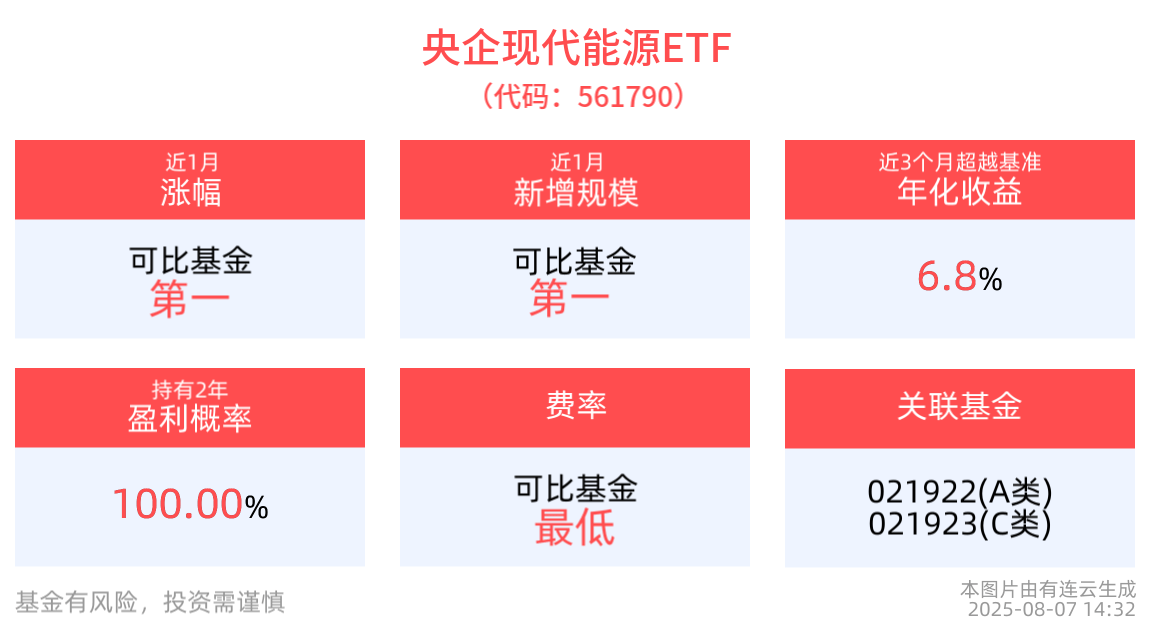
多省落地新能源电价细则,电力市场化改革再深化,央企现代能源ETF(561790)近1月涨幅居可比基金首位
Sou Hu Cai Jing· 2025-08-07 06:52
Core Insights - The Central State-Owned Enterprises Modern Energy ETF (561790) has shown a recent increase of 3.22% over the past month, outperforming two-thirds of comparable funds [2][3] - The ETF's trading volume indicates active market participation, with a turnover rate of 11.7% and a total transaction value of 5.6078 million yuan [2] - The index it tracks, the China New State-Owned Enterprises Modern Energy Index (932037), has a significant concentration in its top ten holdings, which account for 49.26% of the index [4] Market Performance - The ETF has experienced a net asset value increase of 12.03% over the past two years, with a maximum monthly return of 10.03% since its inception [3] - The average monthly return during the rising months is 3.12%, with a historical two-year holding profit probability of 100% [3] - The ETF's maximum drawdown in the last six months was 7.04%, with a recovery time of 71 days, the fastest among comparable funds [4] Regulatory and Policy Developments - Shandong Province has released draft guidelines for new energy pricing mechanisms, while Ningxia has set a stock mechanism price at 0.2595 yuan/kWh, indicating a supportive regulatory environment for the energy sector [3] - The adjustments in coal power pricing in Guangdong aim to enhance the profitability structure of thermal power, benefiting the overall industry [3] Fund Characteristics - The ETF has a management fee of 0.50% and a custody fee of 0.10%, which are among the lowest in its category [4] - The ETF closely tracks the China New State-Owned Enterprises Modern Energy Index, which includes 50 listed companies involved in modern energy sectors [4]
我国电力市场告别“方言”时代
Zhong Guo Dian Li Bao· 2025-08-07 01:13
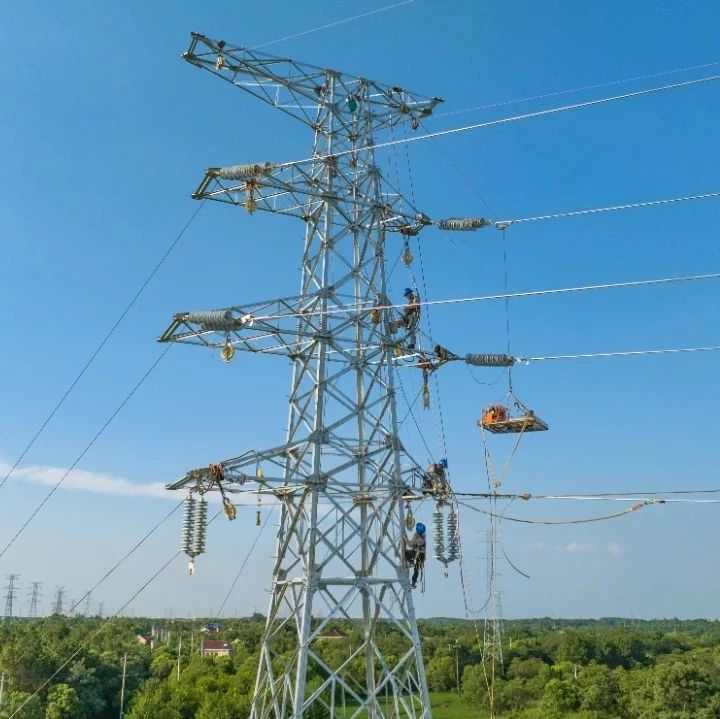
Core Viewpoint - The establishment of a nationwide unified electricity market system in China marks a significant historical leap from fragmented regional markets to a standardized national framework, providing strong institutional support for orderly market operations [1][3][4]. Group 1: Development of the Unified Electricity Market - The "1+6" basic rule system for the national unified electricity market has been preliminarily established, which includes fundamental rules for electricity market operation, long-term trading, spot trading, auxiliary services, information disclosure, registration, and settlement [1][5]. - The construction of the unified electricity market is a key practice of the national strategy to build a unified market system, which is essential for optimizing resource allocation and ensuring energy security [3][4]. - The transition from a fragmented market to a unified system is aimed at breaking down barriers and facilitating efficient electricity flow across regions [4][10]. Group 2: Key Components of the Rule System - The "Electricity Market Operation Basic Rules" serve as the cornerstone of the unified market, defining the basic structure, operational principles, and responsibilities of various market participants [8][9]. - The "Electricity Long-term Trading Basic Rules" provide a primary channel for market participants to lock in electricity and prices, ensuring market stability [8][9]. - The "Electricity Spot Market Basic Rules" optimize real-time supply and demand, generating price signals that reflect market conditions, thus enhancing electricity security and promoting renewable energy consumption [9][10]. Group 3: Market Growth and Performance - In the first half of 2025, the cumulative market trading volume reached 2.95 trillion kilowatt-hours, with cross-regional trading increasing by 18.2% year-on-year, indicating robust market activity [13][14]. - The number of market participants has grown to 816,000 by the end of 2024, with significant participation from various energy sources, including renewable energy and new storage technologies [15]. - Green electricity trading has surged, with a 235.2% year-on-year increase in total trading volume, reflecting the market's role in supporting China's green and low-carbon energy transition [15].
媒体报道丨全国电力市场“一盘棋”靠啥打通?
国家能源局· 2025-08-06 13:26
Core Viewpoint - A significant institutional reform aimed at establishing a "national unified electricity market system" is profoundly reshaping China's electricity industry landscape [2][4]. Summary by Sections National Unified Market Framework - The National Development and Reform Commission and the National Energy Administration have jointly issued the "Basic Rules for Electricity Market Measurement and Settlement," marking a historical transition from regional exploration to a nationally unified operational framework [2]. - The establishment of a "1+6" basic rule system for the electricity market has been completed, providing a strong institutional support for the orderly operation of the national unified electricity market [2][6]. Strategic Importance - The construction of a unified electricity market is a key practice in the broader strategy of building a national unified market, which has been emphasized in recent central government documents [4][5]. - The unified market framework is essential for breaking down barriers, facilitating circulation, and optimizing resource allocation, which are critical for energy security and high-quality development [5]. Historical Context and Development - Since the initiation of the new round of electricity system reform in 2015, the electricity market was fragmented, with varying provincial rules hindering efficient cross-regional transactions [5]. - The establishment of a unified electricity market rule system serves as a "common language" and "fair measure" to eliminate these barriers [5]. Rule System Construction - The "1+6" basic rule system includes the "Basic Rules for Electricity Market Operation," which serves as the foundation for the entire system, ensuring its effective and standardized operation [9]. - Key components of the rule system include long-term trading rules, spot market rules, and auxiliary service market rules, which collectively enhance market vitality and resource allocation [9][10]. Market Performance and Growth - In the first half of 2025, the cumulative market trading volume reached 2.95 trillion kilowatt-hours, a year-on-year increase of 4.8%, with significant growth in cross-regional trading and green electricity transactions [13][14]. - The number of market participants has increased to 816,000 by the end of 2024, reflecting a diverse and expanding market landscape [16]. Future Outlook - The comprehensive implementation of the "1+6" basic rule system is expected to facilitate efficient resource allocation across the national electricity market, supporting the transition to a green and low-carbon energy structure [16].
当躺赢红利消退:工商业储能如何赢战?
行家说储能· 2025-08-01 09:59
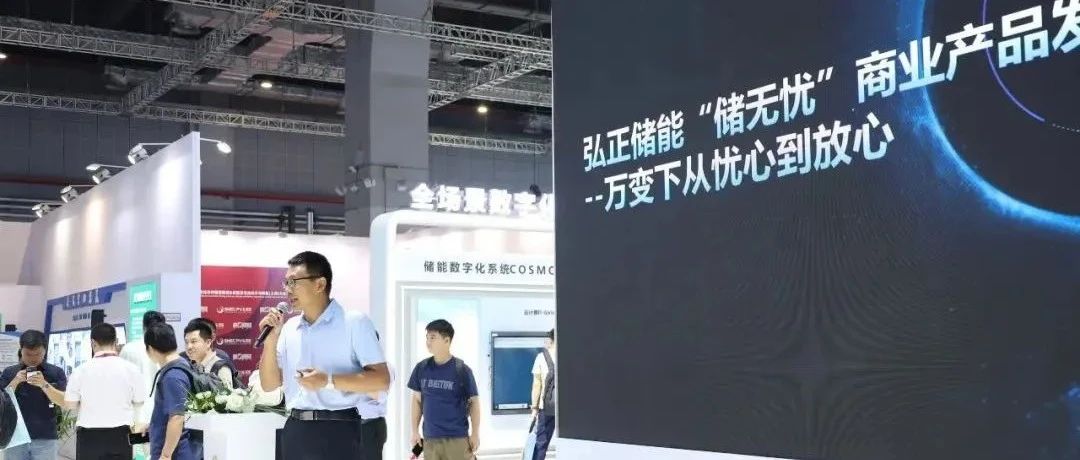
Core Viewpoint - The commercial energy storage industry in China is undergoing a significant transformation by 2025, driven by policy changes and market dynamics, leading to a shift from policy-driven growth to market-oriented value creation [2][4]. Group 1: Industry Transformation - The introduction of documents No. 136 and No. 394 is accelerating the entry of renewable energy into the market and the development of the electricity spot market, respectively [2]. - The traditional commercial energy storage model, which relied on peak-valley arbitrage, faces challenges due to narrowing price differentials and rising operational costs [2][4]. - Companies must innovate in technology, operational efficiency, and ecosystem collaboration to navigate the new competitive landscape [2][4]. Group 2: Revenue Model Evolution - The investment logic in commercial energy storage is shifting from a focus on peak-valley arbitrage to a broader value creation approach, including demand response and ancillary services [4][8]. - The "Shuwuyou" product from Hongzheng Energy offers a digital solution that reconstructs revenue models through cloud-edge collaboration and AI decision-making, optimizing strategies and dynamic energy dispatch [4][6]. Group 3: Operational Efficiency - The operational pressure in the energy storage market is increasing due to a surge in installed capacity, necessitating technological innovation to address maintenance challenges [9][10]. - The "Shuwuyou" system employs AI algorithms for optimal charge-discharge strategies, potentially increasing project revenue by 10% even with reduced price differentials [6][10]. Group 4: Safety Measures - Safety is a critical concern in commercial energy storage, with recent incidents highlighting the limitations of traditional safety measures [13][15]. - Hongzheng Energy's safety system incorporates proactive measures, including a three-tiered prediction and intelligent protection strategy, to enhance safety [15][17]. Group 5: Conclusion and Future Outlook - The "Shuwuyou" initiative aims to redefine industry service paradigms by offering comprehensive services, including smart operation and safety platforms, to ensure predictable revenue, manageable operations, and guaranteed safety [19][21]. - The focus on "certainty" is becoming a core competitive advantage in the commercial energy storage sector, providing stability in a volatile market [18][21].
内蒙华电:上半年实现营业总收入98.27亿元
Zheng Quan Ri Bao Wang· 2025-07-31 13:44
Core Viewpoint - Inner Mongolia Mengdian Huaneng Thermal Power Co., Ltd. reported a total operating revenue of 9.827 billion yuan and a net profit attributable to shareholders of 1.557 billion yuan for the first half of 2025, highlighting its significant role in energy supply in Inner Mongolia and surrounding regions [1] Group 1: Company Performance - The company achieved an operating revenue of 9.827 billion yuan in the first half of 2025 [1] - The net profit attributable to shareholders reached 1.557 billion yuan [1] Group 2: Business Overview - Inner Mongolia Mengdian Huaneng specializes in power generation, heating, and coal production and sales [1] - The company's power generation assets are entirely located in Inner Mongolia, ensuring electricity supply for both the region and areas such as North China and Beijing-Tianjin-Tangshan [1] - The company has a coal production capacity of 15 million tons, leveraging the synergy between coal and electricity [1] Group 3: Future Strategy - The company plans to implement the national energy security strategy and align with the "dual carbon" goals [1] - It aims to accelerate the development of the new energy industry and enhance the collaborative effects of coal and electricity [1] - Continuous improvement in operational management is a key focus for the company moving forward [1]