
经济全球化

Search documents
高端访谈丨APEC秘书处执行主任:中国发挥引领作用
Yang Shi Xin Wen Ke Hu Duan· 2025-10-31 03:58
Core Viewpoint - The upcoming APEC informal leaders' meeting in South Korea highlights China's significant achievements in modernization and its leading role in promoting regional and global prosperity within the APEC framework [1]. Group 1: China's Modernization and Development - The APEC Secretariat Executive Director, Pedroza, has visited China multiple times and noted the rapid development in cities like Beijing and Tianjin, emphasizing improvements in transportation such as high-speed rail [5]. - Pedroza reflects on the ease of travel within China, indicating that even without knowledge of the language, navigating the country has become very accessible [5]. Group 2: China's Role in APEC - Since joining APEC, China has transitioned from focusing on its own reforms to taking a more significant leadership role, aiming to enhance prosperity in the region and globally [7]. - In 2014, during the APEC meeting hosted by China, the country proposed a roadmap for the Asia-Pacific Free Trade Area and released a connectivity blueprint, which are crucial for future regional development [7]. Group 3: Global Economic Perspectives - Pedroza emphasizes the importance of President Xi Jinping's remarks on economic globalization and openness, which are vital for the future of the region and its role in supporting the global economy [9]. - The APEC aims to contribute solutions to the challenges faced by the multilateral trading system, highlighting the diversity of its members, which includes both large and small economies [9].


习近平主席推动构建亚太命运共同体金句
Ren Min Ri Bao· 2025-10-30 22:37
Core Points - The article emphasizes the importance of multilateralism and an open economy in fostering regional economic integration and cooperation within the Asia-Pacific region [3][4][12] - It highlights the need for collaboration to address global challenges such as climate change and economic disparities, advocating for a green and inclusive development model [7][8][12] - The article stresses that economic globalization is irreversible and that countries should avoid protectionism and unilateralism to ensure sustainable growth [5][10] Group 1: Economic Cooperation and Integration - The Asia-Pacific region should actively promote the process of establishing a free trade area, respecting economic laws and leveraging comparative advantages [3][4] - There is a call to dismantle barriers to trade, investment, technology, and services to maintain stable supply chains and promote economic circulation [3][4] - The article asserts that cooperation is essential for development, and non-cooperation poses significant risks [3][4] Group 2: Green and Sustainable Development - The need for a green and low-carbon transformation in development is emphasized, with a focus on achieving harmony between humans and nature [7][8] - The article advocates for collaborative efforts in technology and economic cooperation to facilitate a digital and green transition [8][12] - It highlights the importance of sustainable development that balances economic growth with environmental protection and social equity [9][12] Group 3: Inclusive Development - The article stresses the necessity of inclusive development that benefits all countries and populations, particularly in addressing poverty and inequality [12][14] - It calls for a focus on shared prosperity and ensuring that development outcomes are equitably distributed among different social groups [12][13] - The importance of international cooperation in helping developing countries achieve their development goals is underscored [14]
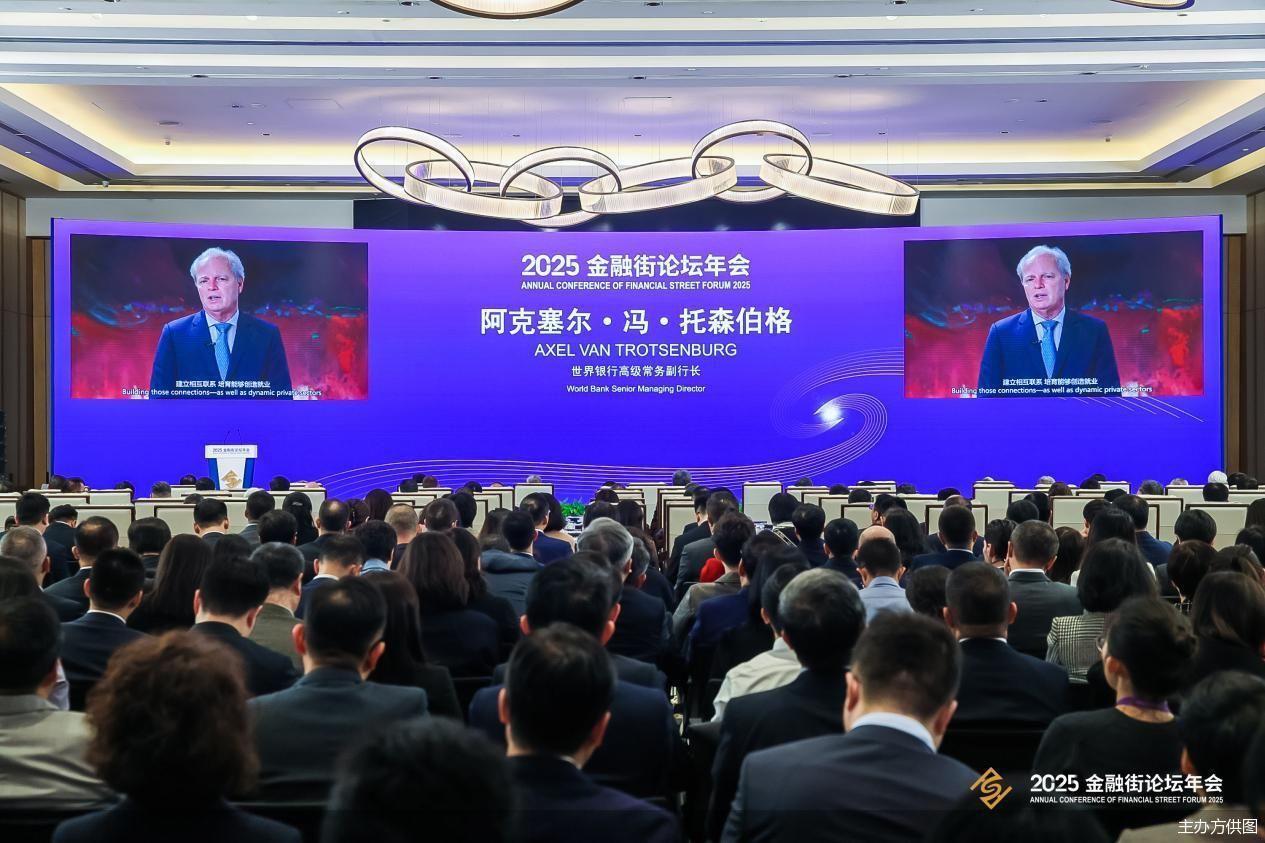
2025金融街论坛|年会闭幕,全球嘉宾共探变局中韧性合作未来
Bei Jing Shang Bao· 2025-10-30 16:27
Group 1 - The World Bank aims to help countries build economies that promote growth and job creation, focusing on infrastructure investment, regulatory reforms, and reducing non-tariff barriers to enhance trade and economic cooperation [1] - The chairman of China Merchants Group emphasizes the need for mutually beneficial cooperation to address challenges in economic globalization, highlighting the importance of resilient logistics networks and innovative financial support for international trade [3] - The chairman of China Ocean Shipping Group points out that the shipping industry is shifting towards building resilient global logistics networks, which requires strong support from the financial sector and collaboration across global supply chains [4] Group 2 - The former governor of the People's Bank of China discusses the need for central banks to balance multiple objectives, including inflation control, financial stability, and economic growth, particularly in developing countries [5] - The Chief Executive of the Hong Kong Special Administrative Region emphasizes the importance of continuous innovation and transformation in finance, aiming to strengthen Hong Kong's position as a global financial center and enhance its role in international trade [5]

壹视界|习主席的“亚太主张”:开放与创新,一个都不能少
Xin Hua She· 2025-10-30 06:34
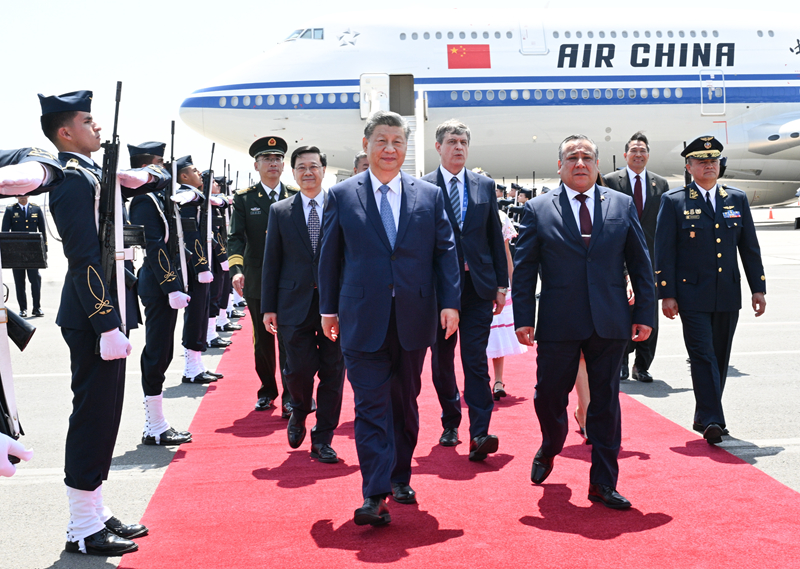
Core Insights - The article highlights the significance of the newly opened QianKai Port in Peru, which symbolizes the vibrant and interconnected economic landscape of the Asia-Pacific region, showcasing the benefits of economic globalization [1][3]. Group 1: Economic Growth and Cooperation - Over the past 30 years, the Asia-Pacific region has seen a fourfold increase in per capita income, with 1 billion people lifted out of poverty, contributing over 60% of global economic output and nearly half of global trade [3]. - The region's economic success is attributed to a commitment to maintaining peace and stability, genuine multilateralism, and adherence to the trends of economic globalization, emphasizing mutual benefit and shared achievements [3][5]. Group 2: Future Development Strategies - President Xi Jinping proposed a "Chinese solution" for future Asia-Pacific development, focusing on innovation, openness, inclusivity, and green development, aiming to create a "golden thirty years" for the region [5][6]. - The signing of the upgraded China-ASEAN Free Trade Area 3.0 agreement marks a significant milestone in Asia-Pacific cooperation and openness [5]. Group 3: Public Sentiment and Innovation - A recent survey indicates that the public in 16 Asia-Pacific countries views the region as a community of shared interests and destinies, with many believing that China's development experience is worth emulating [6]. - The digital economy is identified as a key driver for future growth, with a focus on technological innovation and collaboration among Asia-Pacific nations [6]. Group 4: Environmental Sustainability - The article emphasizes the importance of green development, advocating for a harmonious coexistence between humanity and nature, and highlights China's role as a proactive contributor to global green initiatives [6].
和音:中国—东盟自贸区3.0版为区域开放合作注入更强劲动能
Ren Min Ri Bao· 2025-10-29 06:01
Core Points - The signing of the China-ASEAN Free Trade Area 3.0 upgrade protocol on October 28 in Kuala Lumpur marks a significant milestone in open cooperation between China and ASEAN, injecting strong momentum into the construction of an open world economy [1] - The upgrade is a key outcome of the consensus reached during the 30th anniversary summit of China-ASEAN dialogue relations and aligns with the goals of expanding high-level opening-up as outlined in the 20th National Congress of the Communist Party of China [1] - The China-ASEAN Free Trade Area has evolved since its establishment in 2010, continuously adapting to regional integration and enhancing trade cooperation across various sectors [1] Economic Cooperation - The construction of the China-ASEAN Free Trade Area 3.0 is an effective way to build a super-large market and a community with a shared future, with trade value expected to approach $1 trillion in 2024 and cumulative bilateral investment exceeding $450 billion as of July this year [2] - The upgrade will promote the development of emerging industries such as digital and green sectors, enhance standards and regulatory alignment, and facilitate infrastructure and supply chain connectivity [2] - The agreement reflects a strong commitment to multilateralism and free trade, providing certainty in the face of rising protectionism and geopolitical tensions [2] Future Outlook - By early 2025, China is expected to have signed 23 free trade agreements with 30 countries and regions, expanding its space for mutual benefit and cooperation [3] - The ongoing commitment to open cooperation and mutual benefit positions China as a stabilizing force and a source of momentum in the global economy [3] - The trend of economic globalization is seen as unstoppable, with China aiming to share opportunities and achieve win-win outcomes through inclusive economic globalization [3]
习近平同芬兰总统斯图布互致贺电
Xin Hua She· 2025-10-29 00:54
Core Points - The 75th anniversary of diplomatic relations between China and Finland was celebrated, highlighting the deepening cooperation in political, economic, and cultural fields [1] - Both leaders emphasized the importance of continuing to develop a new type of cooperative partnership and promoting a multipolar world and inclusive economic globalization [1] Group 1 - Xi Jinping noted Finland as one of the first European countries to sign a government trade agreement with China, indicating a long-standing relationship [1] - The bilateral relationship has withstood international changes and has been characterized by stable development and expanding cooperation over the years [1] - The joint work plan for 2025-2029 was mentioned, which aims to further enhance the cooperative partnership between the two nations [1] Group 2 - Stubb expressed confidence in the stability and foundation of Finland-China relations, highlighting the successful state visit to China last year [1] - The international community recognizes China's role as a permanent member of the UN Security Council, which adds to the trust in bilateral relations [1] - Both leaders expressed a desire to maintain dialogue on bilateral and global issues moving forward [1]
日本民众连日抗议日美首脑会谈
第一财经· 2025-10-29 00:35
Core Viewpoint - The article discusses the protests in Japan against U.S. President Trump's visit, highlighting public discontent regarding military expansion and the strengthening of the U.S.-Japan alliance, which is perceived as a threat to regional stability [3][4]. Group 1: Protests and Public Sentiment - Japanese citizens have organized protests against Trump's visit, expressing strong opposition to the U.S.-Japan security alliance and military expansion [3]. - Protesters argue that the U.S. is using tariffs as a weapon, undermining economic globalization for its own benefit, and that Japan should pursue an independent foreign policy [3]. - The protests included slogans against the U.S.-Japan summit and calls for peace, reflecting deep-seated concerns about the implications of military cooperation [3][4]. Group 2: Government Actions and Military Spending - During the summit, both leaders emphasized the need to strengthen their alliance and advance the "Free and Open Indo-Pacific" strategy, with Trump encouraging Japan to increase its defense procurement from the U.S. [4]. - Japan's Prime Minister has accelerated the goal of defense spending to 2% of GDP, originally set for 2027, to be achieved by the current fiscal year [4]. - The revision of Japan's "security three documents" is planned to be completed by the end of 2026, indicating a significant shift in Japan's defense policy [4].

中国—东盟自贸区3.0版为区域开放合作注入更强劲动能(和音)
Ren Min Ri Bao· 2025-10-28 22:56
Core Points - The signing of the China-ASEAN Free Trade Area 3.0 upgrade protocol on October 28 in Kuala Lumpur marks a significant milestone in open cooperation between China and ASEAN, injecting strong momentum into the construction of an open world economy [1] - The upgrade is a key outcome of the consensus reached during the 30th anniversary summit of China-ASEAN dialogue relations and aligns with the goals of expanding high-level opening-up as outlined in the 20th National Congress of the Communist Party of China [1] - The China-ASEAN Free Trade Area has evolved since its establishment in 2010, continuously adapting to regional integration and enhancing trade cooperation across various sectors [1] Economic Cooperation - The construction of the China-ASEAN Free Trade Area 3.0 is an effective way to build a super-large market and a community with a shared future, with trade value expected to approach $1 trillion in 2024 and cumulative bilateral investment exceeding $450 billion as of July this year [2] - The upgrade will promote the development of emerging industries such as digital and green sectors, enhance standards and regulatory alignment, and facilitate infrastructure and supply chain connectivity [2] - The agreement reflects a strong commitment to multilateralism and free trade, providing certainty in the face of rising protectionism and geopolitical tensions [2] Future Outlook - By early 2025, China is expected to have signed 23 free trade agreements with 30 countries and regions, expanding its space for mutual benefit and cooperation [3] - China aims to continue being a "stabilizing anchor" and "driving force" for the world economy through open cooperation and mutual benefit [3] - The ongoing trend of economic globalization is seen as an unstoppable historical tide, with China committed to sharing opportunities and achieving win-win outcomes through inclusive economic globalization [3]
韩正出席第九届未来投资倡议大会并发表演讲
Xin Hua Wang· 2025-10-28 21:13
Core Viewpoint - The speech by Vice Premier Han Zheng at the Future Investment Initiative Conference emphasizes the importance of development and prosperity as a common goal for the international community, particularly for developing countries, and highlights China's commitment to global cooperation and innovation [1][2] Group 1: Innovation and Green Development - The initiative calls for strengthening innovation-driven approaches to promote green development, with China aiming to build a globally competitive open innovation ecosystem and enhance cooperation across traditional and emerging industries [1] - China is committed to facilitating a green and low-carbon transformation of the global economy [1] Group 2: Open Cooperation and Mutual Benefits - The speech reiterates China's stance on open cooperation, positioning the country as a beneficiary and contributor to economic globalization, and aims to enhance the resilience and efficiency of global supply chains [1][2] - China seeks to inject more certainty and positive energy into global economic recovery and development [1] Group 3: People-Centric Development - The focus is on a people-centered development approach, promoting inclusive economic globalization to ensure that different countries and social groups can share in development outcomes [2] - China expresses willingness to collaborate with developing countries to share development opportunities and advance modernization [2] Group 4: Global Governance and Multilateralism - The speech advocates for deepening unity and cooperation among nations to address global challenges, emphasizing the need for mutual respect and common ground in ideologies [2] - China aims to practice true multilateralism and promote a fairer global governance system, contributing to the construction of a community with a shared future for mankind [2] Group 5: Cooperation with Middle Eastern Countries - China expresses a long-standing commitment to friendly cooperation with Middle Eastern countries, particularly Saudi Arabia, focusing on high-quality collaboration in the Belt and Road Initiative and energy cooperation [2] - The Future Investment Initiative Conference is highlighted as the largest investment and innovation forum in the Middle East, featuring over 250 events and participation from leaders and officials from 16 countries [2]
《全球发展报告2025》:携手为全球发展注入稳定性和确定性
Xin Hua She· 2025-10-28 18:07
Core Insights - The report titled "Global Development Report 2025" emphasizes the need for stability and certainty in global development, addressing the rising uncertainties and instabilities in the world [1][2] - It outlines actionable pathways for promoting global stability and sustainable development, focusing on cooperation in key areas [2] Summary by Sections Overview - The report consists of 10 chapters, with 2 chapters summarizing the main instability and uncertainty factors in the world, as well as favorable conditions for development [1] - It proposes overall strategies and specific pathways for promoting global stability and sustainable development [1] Detailed Analysis - The remaining 8 chapters cover various critical areas including: - Global trade - Climate change - Health security - Food security and poverty alleviation - Industrialization in developing countries - Digital technology - Deepening cooperation among Global South countries - Maintaining an international system centered around the United Nations [1] Key Recommendations - The report advocates for: - A multipolar world to improve the international system - Inclusive economic globalization to build an open world economy - Deepening cooperation in key areas to address common challenges - Mutual benefit and win-win strategies to promote development in the Global South [1][2] Context and Participation - The report is a significant knowledge product aimed at implementing global development initiatives, marking the fourth annual release by the organizers [2] - The launch event was attended by over 150 representatives from international organizations, embassies, and Chinese government departments [2]