医疗AI

Search documents
罕见病诊疗指南发布;康华生物停牌|健讯Daily
2 1 Shi Ji Jing Ji Bao Dao· 2025-07-14 03:08
Policy Developments - The National Health Commission has released the "Guidelines for the Diagnosis and Treatment of 86 Rare Diseases (2025 Edition)" to improve the standardization of rare disease treatment [2] Industry Innovations - Guangdong Province has launched an AI-assisted imaging reading system named "Yueyi Zhiying" to enhance diagnostic quality and efficiency in medical imaging, covering seven common examinations [3] Drug and Device Approvals - Merck has submitted a new drug application for its investigational oral combination drug doravirine/islatravir (DOR/ISL) for the treatment of HIV-1, with a PDUFA date set for April 28, 2026 [5] - Lepu Medical's subsidiary has received NMPA registration approval for its injectable sodium hyaluronate solution, aimed at improving skin absorption of nutrients [6] Capital Market Activities - Dajia Weikang plans to acquire 60.85% of Anhui Dajia Weikang's equity, which will make Anhui Dajia Weikang a subsidiary of the company [8] Earnings Announcements - Shuanglu Pharmaceutical expects a net profit of 100 million to 135 million yuan for the first half of 2025, representing a year-on-year increase of 237.95% to 356.24% [10] - Kew Flower Pharmaceutical anticipates a net profit decline of 82.52% to 85.61% for the first half of 2025 due to high raw material costs [12] - Jimin Health forecasts a net loss of 55 million to 46 million yuan for the first half of 2025, significantly down from a profit of 25.45 million yuan in the same period last year [13] Major Industry Events - Kanghua Bio has announced a stock suspension due to the planned change of control by its major shareholder, with the suspension expected to last no more than two trading days [15] Shareholder Actions - A major shareholder of Saike Xide, Zhang Haiying, plans to reduce her stake by up to 1% between August 4 and November 3, 2025, due to personal financial needs [17]
医渡科技20250709
2025-07-11 01:13
Summary of the Conference Call for 易都科技 (Yidu Technology) Company Overview - 易都科技 (Yidu Technology) focuses on AI-driven solutions in the healthcare sector, particularly in medical data management and intelligent diagnosis systems. The company has made significant strides in integrating AI into various medical processes and has established partnerships with numerous healthcare institutions. Key Points Financial Performance - The company reported a net loss reduction of 38.9% year-on-year, with operating expenses (OPEX) decreasing by 23% and accounting for 10 percentage points less of total revenue, indicating improved operational efficiency and profitability potential [2][3][4] - Adjusted EBITDA for the fiscal year 2025 reached 39 million yuan, reflecting a substantial growth of 25.6% year-on-year [3][15] Product Development and AI Integration - 易都科技 has developed a CO pilot product matrix aimed at doctors, leveraging an AI platform that integrates various large models, including Deep Sick, to enhance the entire medical process from pre-diagnosis to post-treatment [2][4] - The company plans to invest between 80 million to 100 million yuan in large model development over the next three years, anticipating a doubling of adjusted EBITDA by fiscal year 2026 [4][13] Applications in Oncology - The company has focused on oncology, establishing over 120 new diagnostic and treatment scenarios in top-tier specialized institutions [6][10] - The "小肝人" (Little Liver) AI diagnostic tool, led by a prominent academician, has been implemented in various hospitals, showcasing its effectiveness in liver cancer treatment [6][10][26] AI Services and Adoption - AI services provided by 易都科技 allow doctors to create customized solutions using a no-code toolchain, with 43% of hospital staff utilizing these AI diagnostic assistants, resulting in 26,000 patient services within two months [7][9] - The company has seen a 15% year-on-year increase in hospital orders, indicating growing acceptance and demand for its AI solutions [7] International Expansion - 易都科技 is involved in the MSC home mobile nursing project in Singapore, which supports remote monitoring of discharged patients through the Doctor Body app [9][27] - The company aims to expand its presence in Southeast Asia and the Middle East, capitalizing on the lower level of AI integration in these regions [27] Challenges and Strategic Focus - The main challenges faced include technical issues related to AI hallucination rates and budget constraints from B-end clients, which require a focused strategy on core customers and projects [17][20] - The company emphasizes the need for specialized medical models to address the complexities of healthcare data, differentiating itself from general AI models [18] Future Outlook - 易都科技 expects to achieve financial sustainability by 2027, with growth driven by its three main business segments [27] - The company is also exploring slow disease management and plans to expand its product offerings based on physician needs and market demands [29] Competitive Landscape - The healthcare AI market is competitive, with major players like Alibaba, JD, and Huawei. 易都科技 differentiates itself through its deep understanding of diseases and high precision in AI applications [24][25] Conclusion - 易都科技 is positioned for growth with its innovative AI solutions in healthcare, strategic investments in product development, and a focus on expanding its market presence both domestically and internationally. The company is addressing challenges head-on while maintaining a clear vision for future profitability and service enhancement.
豆蔻妇科大模型再突破:钉钉行业训练平台+精标数据SFT ,准确率从 77.1%上升至 90.2%
Tai Mei Ti A P P· 2025-07-10 07:49
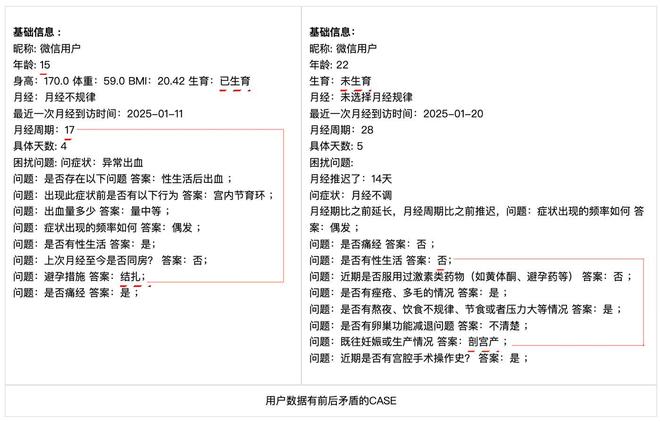
Core Insights - The article discusses the limitations of general large language models in clinical scenarios, particularly in providing accurate medical diagnoses, highlighting the need for specialized training methods like supervised fine-tuning (SFT) [1][2][3] - The performance of the Doukou Gynecology model improved significantly from an initial accuracy of 77.1% to 90.2% through targeted SFT processes [1][3] Data Quality Control - The training dataset underwent a rigorous selection process involving systematic data cleaning, ensuring consistency between reasoning and results, and verifying the logical integrity of the data [2][5] - Low-quality data, such as those with clear medical inconsistencies, were excluded to maintain high standards [2] Model Training Phases - The first phase involved building a foundational SFT model using 1,300 meticulously labeled gynecological consultation data, achieving an initial accuracy of 77.1% [3] - The second phase focused on synthesizing symptom data and refining the model, resulting in a final diagnostic accuracy of 90.2% for six major gynecological symptoms [3][6] Iterative Optimization - Continuous iterative optimization was implemented, where high-quality samples scoring above 8 were added to the training set for further SFT, creating a cycle of training, evaluation, and retraining [10][18] - Key performance indicators were monitored throughout the process to ensure comprehensive model improvement [10] Evaluation System - A dual evaluation system was established, combining automated assessments with manual reviews by medical experts to ensure diagnostic accuracy [11][13] - The automated evaluation system utilized a high-performance language model to objectively score outputs based on a structured framework [11] Challenges and Lessons Learned - Initial reliance on manual labeling slowed data accumulation and increased costs, prompting a shift to a more efficient "machine distillation → expert review → post-training evaluation" system [14][15] - The model's ability to recognize rare diseases was enhanced through balanced sampling strategies [15] Future Directions - The company plans to explore a collaborative training paradigm combining SFT and reinforcement learning (RL) to enhance clinical reasoning capabilities [18]

医药爆拉!百度押注的医疗AI公司冲刺IPO,来自浙江杭州
格隆汇APP· 2025-07-09 10:01
Core Viewpoint - The article discusses the upcoming IPO of a medical AI company backed by Baidu, highlighting the significant interest and potential in the healthcare technology sector, particularly in Hangzhou, Zhejiang [1] Group 1: Company Overview - The medical AI company is based in Hangzhou, Zhejiang, and is preparing for its initial public offering (IPO) [1] - Baidu's investment in the company indicates strong confidence in the growth potential of healthcare AI solutions [1] Group 2: Market Trends - The healthcare technology sector is experiencing rapid growth, driven by advancements in artificial intelligence and increasing demand for innovative medical solutions [1] - The article emphasizes the trend of traditional tech companies, like Baidu, diversifying into healthcare, reflecting a broader industry shift towards integrating technology with medical services [1]

进入创新通道!乳腺超声辅助评估软件
思宇MedTech· 2025-07-07 09:38
Core Viewpoint - The article highlights the advancements in breast ultrasound technology through the introduction of Smart Breast, an AI-assisted feature by Mindray, aimed at improving diagnostic efficiency and accuracy in breast imaging [2][4]. Group 1: Smart Breast Technology - Smart Breast utilizes deep learning algorithms trained on a large dataset of breast ultrasound images to perform automatic lesion detection and segmentation [3]. - The technology shows high sensitivity (92%) and specificity (85%) in detecting breast masses, outperforming traditional manual ultrasound analysis [4]. - Smart Breast is particularly effective in dense breast tissue, increasing the likelihood of detecting small lesions (<1 cm) [4]. Group 2: Clinical Impact - Clinical feedback indicates that Smart Breast can reduce ultrasound examination time by approximately 30%, making it especially useful for radiologists in high-volume breast screening [4]. - The system can intelligently identify suspicious lesions, automatically delineate their boundaries, and measure key parameters, aiding in disease progression monitoring and surgical planning [6]. Group 3: Company Overview - Mindray Medical, founded in 1991 and headquartered in Shenzhen, is a leading global medical device supplier with a diverse product range including patient monitoring, in-vitro diagnostics, and medical imaging systems [5]. - In 2024, Mindray reported an annual revenue of 36.73 billion yuan, a year-on-year increase of 5.1%, with a net profit of 11.67 billion yuan, reflecting a 0.7% growth [5].


最后抢位!第二届全球医疗科技大会招商
思宇MedTech· 2025-07-04 13:34
Core Viewpoint - The second Global Medical Technology Conference will be held on July 17, 2025, in Beijing, focusing on "Cutting-edge Technology: From R&D to Clinical Application" [1][6]. Group 1: Conference Overview - The conference will take place at the Zhongguancun Exhibition Center in Haidian District, Beijing [6]. - The expected attendance is approximately 500 participants, including representatives from government, hospitals, leading enterprises, startups, investment institutions, and research institutes [8]. - The agenda will include discussions on product innovation, technology implementation, and medical-engineering collaboration [6][8]. Group 2: Key Topics of Discussion - The conference will explore challenges in the implementation of medical AI and large models, including multi-modal data integration and embedding into physician workflows [9]. - Topics will also cover advancements in imaging equipment and platform upgrades, high-value consumables, energy systems, and material innovations [10][11][12][13]. - A roundtable discussion will focus on how innovative products can effectively enter clinical settings and be utilized [14]. Group 3: Participation and Opportunities - Companies are encouraged to participate for brand exposure and business collaboration opportunities [1]. - Registration can be completed via a provided link or QR code [15].

平安好医生入选首批"开源大模型+"创新应用典型案例 医疗AI场景化落地
Ge Long Hui· 2025-07-03 07:33
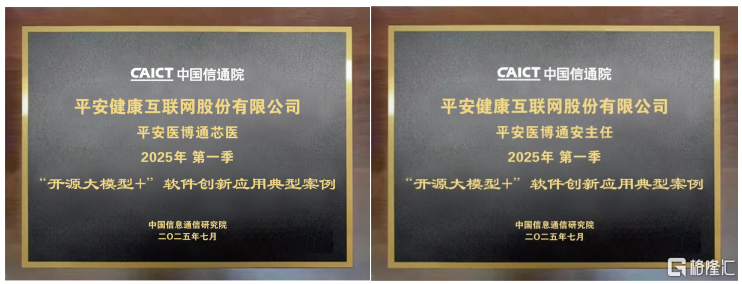
Core Insights - The Global Digital Economy Conference and the SecGo Security Forum highlighted the recognition of Ping An Good Doctor's AI products as exemplary cases in software innovation applications [1][3] Group 1: Company Achievements - Ping An Good Doctor's AI products "Ping An Xin Yi" and "An Zhu Ren" received honors at the conference, showcasing their capabilities in providing closed-loop services through data, models, and scenarios [1][3] - The products focus on core medical service scenarios and leverage a top-tier network of doctors, offering 24/7 online health consultations and support [3][5] - Both products successfully passed the China Academy of Information and Communications Technology's evaluation for integrated application capabilities, receiving professional recognition for their effectiveness and risk management [3] Group 2: Industry Context - The development of medical AI is becoming increasingly important in the context of high-quality healthcare development and the "Healthy China" initiative [5] - As a flagship of Ping An Group's healthcare and elderly care ecosystem, Ping An Good Doctor is enhancing service quality while innovating technology to create a comprehensive medical AI product matrix [5]
瑞金医院与华为开源RuiPath病理模型,为医疗AI发展按下“加速键”
Huan Qiu Wang· 2025-07-03 07:06
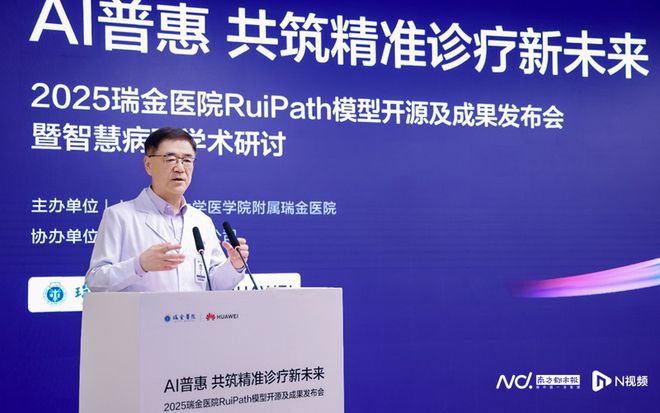
Core Insights - The rapid integration of AI technology into the healthcare sector is transforming traditional medical practices, particularly in areas such as imaging, diagnostics, drug development, and health management [1][12] - The Chinese AI+ healthcare market is projected to grow from 31.5 billion yuan in 2023 to over 80 billion yuan by 2025, with a compound annual growth rate of 58.3% [1] - The global AI healthcare market is expected to exceed $1.5 trillion by 2030, with drug development, imaging diagnostics, and health management accounting for over 60% of this growth [1] AI in Pathology - Pathology diagnosis is considered the "gold standard" for disease diagnosis, especially for cancer, but the traditional process is time-consuming and requires high levels of expertise [2] - There is a significant shortage of pathologists in China, leading to unequal distribution of medical resources and increased patient costs [2] RuiPath Model Development - The RuiPath model, developed by Ruijin Hospital in collaboration with Huawei, is a clinical-grade multi-modal pathology model that covers 90% of cancer cases in China and includes over a hundred auxiliary diagnostic tasks [3] - The open-sourced RuiPath model includes a visual foundation model, a multi-cancer test dataset, and a complete practical guide, significantly lowering the barriers for grassroots hospitals to implement AI-assisted diagnostics [4] Global Collaboration and Standardization - Ruijin Hospital has initiated a global multi-center plan to promote the RuiPath model, focusing on improving diagnostic capabilities in resource-poor areas [5] - The collaboration aims to standardize diagnostic results across different centers and enhance the performance and applicability of the RuiPath model [5] Transition to Smart Pathology - The partnership between Huawei and Ruijin Hospital has evolved through clear phases of digitalization and smart pathology, culminating in the development of a large model capable of precise cancer identification [6] - The introduction of Huawei's ModelEngine AI toolchain has transformed the workflow of pathologists, increasing efficiency and reducing the time required for AI application deployment [7][8] Future Implications - The open-sourcing of the RuiPath model is expected to improve pathology diagnosis in grassroots hospitals, alleviating the imbalance in medical resource distribution [12] - Long-term, this collaboration is anticipated to attract more healthcare institutions and tech companies to participate in the development and application of medical AI, enhancing early diagnosis, personalized treatment, and drug development [12][14]

加速医疗AI普惠落地,瑞金医院联合华为开源病理大模型
Nan Fang Du Shi Bao· 2025-07-02 06:25
Core Insights - The RuiPath pathology model, co-developed by Ruijin Hospital and Huawei, aims to enhance the application of artificial intelligence (AI) in the medical field by providing an open-source core "visual foundation model" [1][2][4] - The model supports clinical applications across 19 common cancer types, covering approximately 90% of annual incidence rates in China, and facilitates hundreds of auxiliary diagnostic tasks [1][2] - The open-source initiative is expected to lower the deployment barriers for pathology AI, allowing grassroots hospitals to access clinical-grade model capabilities without extensive initial investments [2][5] Group 1: Model Development and Capabilities - The RuiPath model incorporates advanced features such as multi-modal pathology modeling, visual feature extraction, and deep sequence modeling, which are essential for comprehensive pathology diagnosis [1][4] - The model has achieved state-of-the-art (SOTA) performance in 7 out of 14 diagnostic tasks tested across 12 mainstream public datasets, demonstrating its clinical validation capabilities [1][5] Group 2: Collaboration and Implementation - The collaboration between Ruijin Hospital and Huawei has been ongoing for three years, focusing on end-to-end processes from data engineering to application engineering [5] - The use of Huawei's ModelEngine platform has streamlined the data annotation process, reducing the AI diagnostic application launch time from 10 days to 2 days [5] Group 3: Future Directions and Goals - The initiative aims to democratize AI capabilities in healthcare, with a focus on sharing high-quality medical resources and accelerating the clinical application of the RuiPath model [4][5] - Huawei plans to enhance the industry adoption of medical AI by standardizing data management, building shared data platforms, and exploring viable business models for AI in healthcare [4][5]
瑞金病理模型全球开源,医疗器械再获政策支持!医疗器械ETF基金(159797)收涨超1%,连续2日净流入!
Xin Lang Cai Jing· 2025-07-01 09:12
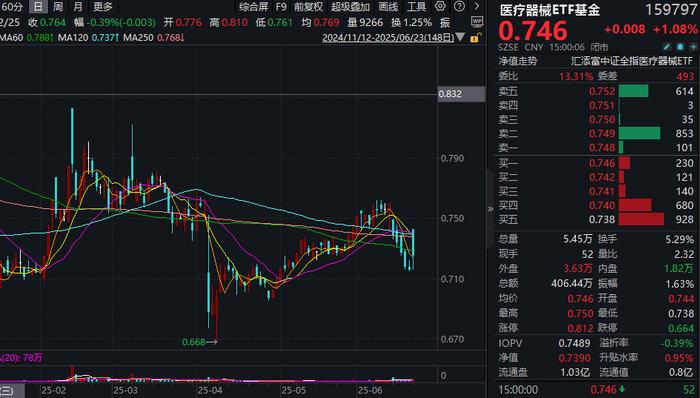
Group 1 - The medical device sector is experiencing strong performance, with the medical device ETF (159797) rising by 1.08% and attracting net inflows for the second consecutive day [1][3] - The majority of the constituent stocks of the medical device ETF saw gains, with notable increases such as Hotgen Biotech rising over 11%, and Xiangyu Medical and Xinmai Medical both increasing over 8% [3] - The National Healthcare Security Administration and the National Health Commission issued measures to support the high-quality development of innovative drugs, which includes enhancing the use of medical insurance data for drug research and improving the dynamic adjustment mechanism for the basic medical insurance drug list [3] Group 2 - The release of the RuiPath pathology model by Ruijin Hospital marks a significant advancement in domestic medical AI, transitioning from technical breakthroughs to ecosystem sharing [4] - The measures approved by the National Medical Products Administration aim to optimize the lifecycle regulation to support the innovation of high-end medical devices, including improving special approval processes and enhancing communication mechanisms [5] - The external skeleton robot industry is viewed positively due to recent technological breakthroughs and product innovations, with applications in both medical and industrial sectors expected to grow rapidly [6][7] Group 3 - The medical device ETF (159797) encompasses a wide range of medical equipment and diagnostics, with the top ten weighted stocks accounting for nearly 47% of the fund [7][8] - The top holdings in the medical device ETF include Mindray Medical (14.65%), United Imaging Healthcare (9.44%), and Aimeike (3.95%) among others [8]