智能体

Search documents
中关村科金发布“322”企业级智能体全栈产品
Xin Lang Cai Jing· 2025-12-09 07:47
Core Insights - The article discusses the launch of a comprehensive enterprise-level intelligent agent roadmap by Zhongguancun Kejin at the EVOLVE 2025 conference, featuring a "3+2+2" product matrix designed to facilitate rapid development and utilization of intelligent agents [2][3] Group 1: Product Offerings - The product matrix includes the Dezhuzhu Model Platform 5.0, Dezhuzhu Intelligent Customer Platform 5.0, Dezhuzhu Intelligent Work Application Platform, Dezhuzhu Financial Intelligent Agent Platform, and Dezhuzhu Industrial Intelligent Agent Platform [2][3] - The Dezhuzhu Model Platform 5.0 integrates over 300 enterprise-level intelligent agents across six major industries, supporting "ready-to-use" functionality and full-chain development and operation capabilities [2][3] Group 2: Market Impact - The intelligent agent deployment success rate is reported to be 95%, with the platform recognized as a major vendor by IDC [2][3] - Zhongguancun Kejin's products have served over 2,000 leading industry clients across more than 180 countries and regions [2][3] - In the financial sector, the platform has helped leading institutions reduce innovation trial and error costs by 60% [2][3] - In the industrial sector, energy consumption in non-ferrous metal smelting has decreased by 8% [2][3] - In automotive marketing, the conversion rate of in-store leads has increased by 55% [2][3] - Customer service efficiency in overseas scenarios has improved by over 50% [2][3]


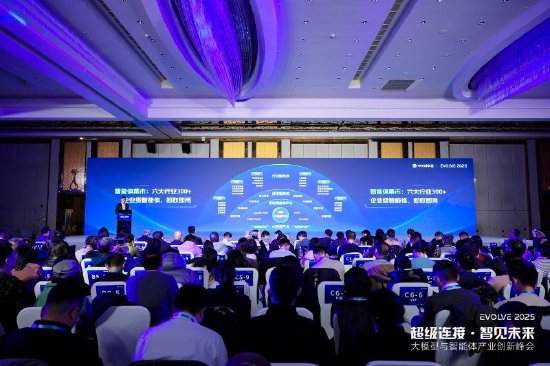
中关村科金总裁喻友平:互联网到人工智能的演进,本质是连接的进化
Xin Lang Cai Jing· 2025-12-09 07:19
Core Insights - The evolution from the internet to artificial intelligence (AI) represents a fundamental shift in connectivity, with AI emerging as a new connector that integrates knowledge, intelligence, people, and data to create new value leaps [1][2] - In the era of large model intelligent agents, these agents will empower enterprises by enhancing internal integration of knowledge, experience, and business processes, while also improving external connections with customers and partners to significantly increase customer value [1][2] Implementation of Intelligent Agents - The implementation of intelligent agents presents unique challenges, as AI serves as the main connector rather than a mere conduit, necessitating high accuracy and adherence to rules, which raises new demands for data governance within enterprises [3] - A roadmap for the successful deployment of intelligent agents has been proposed, highlighting advancements in intelligent marketing, sales, and customer service platforms [3] - The upgraded intelligent customer service platform 5.0, which integrates a wealth of industry assets, is designed to facilitate faster and better AI innovation deployment, serving as a comprehensive foundation for building enterprise-level intelligent agents [2][3] - The intelligent agent marketplace has been enhanced to include over 300 enterprise-level intelligent agents across six major industries: finance, manufacturing, automotive, retail, transportation, and government, strengthening the full lifecycle capabilities of intelligent agent development and operations [2][3] - The platform aims to ensure a success rate of over 95% for enterprise scenario implementations [2][3]
智能体市场全景剖析
2025-12-08 15:36
智能体市场全景剖析 20251208 摘要 近期发布的大模型如 Gemini、Deepseek V3.2 和 Kimi K2 在智能体 能力上各有差异,Gemini 在人机交互方面表现突出,但国产大模型在 前端性能和空间推理上仍有提升空间,执行时间较长,用户成本较高。 豆包手机助手等新产品能够执行复杂指令,但反应速度有待提升。与 2024 年 AutoGLM 相比,智能体技术已应用于更多实际场景,但面临 应用开发商的反制,如阿里系已封杀部分功能。 智能体与操作系统整合拥有最高权限,可执行跨应用操作,但面临应用 开发商的反制。智能体概念兴起于 2024 年,市场初期对其价值存疑, 但随着融资案例出现,其重要性逐渐被认可,同时也需警惕市场上的劣 质产品。 开发完整的智能体产品需依赖强大的软件工程能力,大模型仅提供部分 能力,复杂且稳定的智能体产品无法由单个人完成。声称零部署或一键 上线的智能应用需警惕,实际实现过程复杂。 当前大模型在客服任务中成功率仅约 40%,语义理解和场景上下文表达 仍有不足,常识推理方面人类仍远超 AI。评估智能体验证可靠性时,需 考虑从演示到稳定运行的巨大鸿沟,以及出错后果的可承受性。 ...
中国电信推出星辰智能体服务平台 竞逐AI超级“入口”
Zhong Guo Jing Ying Bao· 2025-12-08 14:51
Core Insights - The year 2025 is anticipated to be the "year of intelligent agents," with a consensus emerging in the industry that large models must be integrated into specific scenarios to solve complex tasks for commercial viability [1] - The release of China Telecom's Starry Intelligent Agent Service Platform 1.0 aims to address current pain points in AI development, particularly the issue of users navigating multiple apps to complete cross-scenario tasks [1][2] Group 1: Platform Features - The Starry Intelligent Agent Service Platform 1.0 is built on a "central control engine and multi-scenario intelligent agent collaborative architecture," focusing on AI restructuring basic services to create a comprehensive intelligent service ecosystem [2] - The "Starry Little Chen" intelligent agent serves as a unified entry point across devices, allowing users to issue complex tasks without switching between multiple apps, emphasizing compatibility, simplicity, and openness [2][3] Group 2: Core Capabilities - The platform's "dialogue-as-a-service" experience is supported by four core capabilities, with the model capability acting as the brain of the intelligent agent, featuring a tree structure for rapid routing and deep understanding of user intent [3] - Memory capability enhances user engagement by creating user profiles through a data feedback loop, allowing the system to recognize user preferences and improve service personalization over time [3] Group 3: Industry Transformation - The launch of the Starry Intelligent Agent Service Platform 1.0 signifies a shift for telecom operators from being mere "connectivity service providers" to "intelligent service enablers," driven by policy incentives, technological advancements, and increasing market demand [4][5] - The integration of intelligent agents is seen as a strategic opportunity for telecom operators to reclaim their position in the value chain, especially as the digital economy evolves and user demands for personalized services grow [5][6] Group 4: Market Opportunities - The unified entry point "Starry Little Chen" aims to connect various scenarios such as communication, home services, payments, and tourism, providing ecosystem partners with access to a vast user base without the need for multiple system integrations [6] - Analysts believe that the "platform + ecosystem" model could significantly enhance value-added services and data operation revenues for telecom operators if successfully implemented [6]

中国联通软件研究院入选“智能体创新推进计划”成员单位
Ke Ji Ri Bao· 2025-12-08 12:29
与此同时,软件研究院还将与各成员单位携手,共同建设开放、协同的智能体产业生态,推动智能技术 与实体经济深度融合,为落实"人工智能+"行动、促进数字经济高质量发展、支撑网络强国建设持续注 入创新动力。 软件研究院此次入选,不仅是行业对其技术能力的认可,也寄托了其在智能体产业发展中发挥引领作用 的期待。未来,软件研究院将依托该计划平台,深度融入智能体产业生态,围绕行业标准共建、核心技 术攻关、创新成果转化等重点方向持续投入。一方面,研究院将紧跟智能体前沿技术,持续优化算法模 型与应用框架,巩固全栈技术优势;另一方面,将面向数智能源、政务服务、智能制造等重点领域,拓 展场景化应用的深度与广度,打造可复制、可推广的行业解决方案。 近日,2025"人工智能+"产业生态大会在北京召开。大会核心论坛——"人工智能与智能体应用论 坛"以"携手共启智能体创新应用新纪元"为主题,汇聚政府、产业、学术、研究及应用各方代表,共同 探讨智能体技术发展路径与产业落地前景。会上,中国联通软件研究院(以下简称"软件研究院")凭借 其在智能体领域的技术积累与行业影响力,成功入选中国互联网协会主导的"智能体创新推进计划"成员 单位,以技术标杆身 ...

刚过完一岁生日的MCP,怎么突然在AI圈过气了
3 6 Ke· 2025-12-08 10:47
Core Insights - The article discusses the rise and fall of the Model Context Protocol (MCP) by Anthropic, which celebrated its first anniversary on November 25, yet has seen a significant decline in interest within the AI community [1][3] - Initially, MCP was hailed as a revolutionary tool for AI integration, but it quickly lost traction due to unrealistic expectations and inherent limitations [3][6] Group 1: MCP Overview - MCP was designed to standardize interfaces for seamless integration between large language models (LLMs) and external data sources and tools, akin to a USB-C interface for AI applications [6][8] - The protocol aimed to address the chaotic landscape of AI products from different vendors, which complicated interactions between AI models and external tools [5][6] Group 2: Initial Hype and Adoption - MCP gained significant attention in early 2023, with claims that it would enable AI to connect everything and serve as a foundational infrastructure for the "Agent era" [3][8] - The protocol was supported by major players in the AI industry, leading to thousands of tools integrating with MCP within just three months [8] Group 3: Challenges and Limitations - Developers soon discovered that MCP lacked context tracking, making it difficult to understand the decision-making process of AI models [10] - The protocol's complexity increased with the need for multi-server architectures to handle high concurrency, raising implementation and maintenance costs [10][12] - MCP's requirement for all tool interactions to pass through the model's context window led to exponential increases in token consumption, diminishing its flexibility and utility [12][14] Group 4: Decline in Interest - As developers encountered various shortcomings, including a rise in "hallucination" rates due to diluted attention from multiple tool calls, interest in MCP waned [14] - The initial perception of MCP as a "universal key" shifted as its limitations became more apparent, leading to a retreat from its adoption [14]

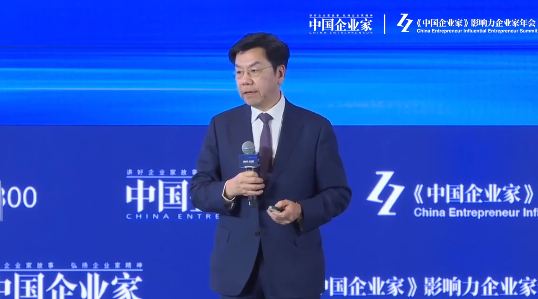
李开复:一个“人类优秀员工”无法被轻易复制,但可以拥有无限多超级agent
Xin Lang Cai Jing· 2025-12-08 03:09
Core Insights - The future may see the emergence of "one-person unicorn companies," where a single CEO manages multiple AI agents, while human employees evolve into "goal architects" who can leverage AI to enhance their capabilities and deliver greater value [1][4]. Group 1: Future of Work - Human employees will not be easily replicable, whereas "super intelligent agents" can be infinitely replicated, enabling rapid global expansion for companies [1][4]. - The core competitive advantage for future enterprises will hinge on three key aspects: early adoption and use of AI agents, selection of the most advanced AI agents, and continuous training of these agents using closed-loop data to enhance their capabilities [1][4]. Group 2: Strategic Recommendations - Companies should prioritize early and swift integration of AI agents into their operations [1][4]. - The importance of utilizing closed-loop data for ongoing training of AI agents is emphasized as a critical factor for success [1][4].
捋一捋豆包手机助手上线一周大事记|南财合规周报(第217期)
2 1 Shi Ji Jing Ji Bao Dao· 2025-12-08 00:29
Core Insights - The launch of Doubao Mobile Assistant has sparked significant discussions and reactions in the tech industry, marking a pivotal moment for AI applications in mobile technology [1][3] Timeline Summary - On December 1, ByteDance released the preview version of Doubao Mobile Assistant in collaboration with ZTE, showcasing its capabilities on the Nubia M153 model [2] - Starting December 2, users reported issues with WeChat and other apps being inaccessible due to the assistant's operations [2] - On December 3, Doubao announced the removal of WeChat operation features in response to user concerns [2] - On December 5, Doubao stated plans to regulate AI operations on mobile devices to address fairness and security issues [2] Technological Impact - Doubao Mobile Assistant demonstrates enhanced control capabilities, supported by system-level integration, which distinguishes it from typical apps [3] - The assistant's ability to interact directly with users may disrupt traditional app engagement and advertising models, as it could potentially replace user interactions with AI-generated actions [3] Ecosystem Disruption - The introduction of mobile AI assistants like Doubao could challenge existing app ecosystems by altering user engagement and data monetization strategies [3][4] - Previous instances of AI assistants facing restrictions from apps like Bilibili and WeChat highlight the ongoing tension between AI capabilities and app permissions [4] Privacy and User Authorization Concerns - The functionality of mobile assistants raises critical questions about data privacy, user consent, and the boundaries of app data access [5] - Key issues include the effectiveness of user authorization, the need for app consent, and the potential for third-party data access [5] Industry Developments - The competition for data access and user engagement is intensifying, with AI glasses also emerging as a new battleground for tech companies [6] - The recent draft regulations from the Cyberspace Administration of China emphasize the need for regular risk assessments for data handling by network data processors [6]
AI演进新阶段:智能体崛起呼唤高质量数据供给
Zhong Guo Xin Wen Wang· 2025-12-07 02:37
Group 1 - The 2025 Digital Intelligence Technology Ecological Conference in Guangzhou focuses on the deep integration of artificial intelligence and digital technology [1] - The National Data Bureau emphasizes the need for open collaboration to build a unified national data element market, fostering a more open industrial ecosystem [1] - Guangdong Province is leading in the market-oriented allocation of data elements, viewing AI and data as core new productive forces driving high-quality economic growth [1] Group 2 - China Telecom introduced the Starry Sky Intelligent Service Platform 1.0, featuring the "Xing Xiaochen" intelligent agent for cross-terminal and cross-scenario intelligent services [2] - The intelligent agent supports users in completing complex tasks through natural language, transforming user interaction [2] - High-quality datasets are identified as the foundation for enhancing AI capabilities, with over 500 PB of high-quality datasets constructed nationwide as of September [2] - The National Data Development Research Institute proposes a new approach to advance high-quality dataset construction, focusing on compliance review, quality assessment, and industry mapping [2]
手机之后,字节AI眼镜或跟上
财联社· 2025-12-05 04:52
Core Viewpoint - The competition in the AI industry is shifting from large model parameters to the hardware applications of AI, with major companies vying for the next generation of hardware entry points, particularly AI glasses and smartphones [5][6]. Group 1: AI Hardware Competition - Major companies like Alibaba, ByteDance, and Baidu are rapidly developing AI glasses to establish a foothold in the AI hardware ecosystem [4][6]. - The AI glasses are seen as the next critical terminal after smartphones, with both startups and major internet companies entering the market [6][7]. - The integration of AI capabilities into smartphones and AI glasses aims to create a closed-loop hardware ecosystem, with ByteDance's ambitions being particularly notable [7][13]. Group 2: User Interaction and Functionality - The "Doubao AI Assistant" on the Nubia M153 smartphone can perform tasks such as gaming and controlling smart devices, showcasing the potential of AI in enhancing user experience [8][11]. - AI assistants from various companies, including Alibaba's Qianwen Assistant, are being integrated into AI glasses to enable voice-controlled operations [12]. - The future of smartphones may involve AI generating interfaces and operations based on user intent, reducing reliance on traditional input methods [13]. Group 3: Regulatory Challenges - The integration of AI assistants with third-party applications like WeChat faces significant regulatory hurdles, leading to the suspension of certain functionalities due to compliance issues [15][17]. - Major apps, particularly WeChat, have strict regulations against automated operations, which complicates the deployment of AI assistants [17][22]. - Previous attempts by other smartphone manufacturers to integrate AI functionalities with WeChat have also been halted, indicating a broader trend of resistance from app developers [18][20]. Group 4: Hardware Development Challenges - Internet companies lacking hardware expertise face significant challenges in developing smart terminals, as evidenced by past struggles of companies like Google and ByteDance in the smartphone market [23][24]. - Despite skepticism about the sustainability of hardware ventures, some experts believe that companies like ByteDance can leverage their existing user base to support hardware initiatives [25]. - Alibaba's strength lies in its stable B2B customer base, while Baidu's advantage is its search capabilities, which can enhance the functionality of AI glasses [25].