
AGI

Search documents
云知声再融资求生:AI烧钱困局与资本耐心赛跑
Xin Lang Cai Jing· 2026-01-20 02:05
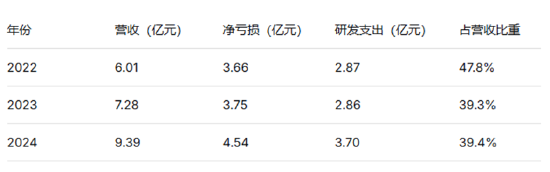
Core Viewpoint - Cloud Wisdom is facing significant financial challenges, necessitating a capital raise shortly after its IPO, with a focus on enhancing R&D and exploring new business opportunities while grappling with increasing losses and cash flow issues [1][2][3]. Fundraising and Financial Situation - The company announced a placement of 780,000 new H-shares at HKD 252 each, a 16% discount from the previous closing price, aiming to raise approximately HKD 192 million [1][2]. - The net proceeds will be allocated as follows: 50% for R&D enhancement, 40% for investing in emerging business opportunities, and 10% for working capital [2][9]. - As of the end of 2024, the company's cash reserves were only HKD 156 million, while it reported a net loss of HKD 454 million for the year, indicating a cash runway of only about four months at the current burn rate [2][3]. Revenue and Loss Trends - From 2022 to 2024, the company's revenue grew from HKD 601 million to HKD 939 million, but net losses increased from HKD 366 million to HKD 454 million, totaling over HKD 1.2 billion in cumulative losses [3][4]. - High R&D expenditures, which accounted for 30%-40% of revenue during this period, have significantly contributed to the losses [4][5]. Customer Growth and Retention Issues - Customer growth has stagnated, with the number of clients in the AI life sector increasing marginally from 373 to 411 and in the medical AI sector from 165 to 166 over three years [4][5]. - The retention rate for medical clients has declined sharply, dropping from 70.4% in 2022 to 53.3% in 2024, indicating a concerning trend in customer loyalty [4][5]. Market Position and Competition - Cloud Wisdom is the fourth largest AI solution provider in China by revenue, holding a mere 0.6% market share, while the top three competitors command significantly larger shares [6][19]. - The company faces intense competition from major players like Baidu and Alibaba in the smart living sector and from iFlytek in the medical AI space [20]. Strategic Adjustments and Future Prospects - The recent fundraising reflects a strategic shift towards balancing R&D with commercial viability, contrasting with previous funding focuses on vertical projects [9][22]. - The company is attempting to establish a foothold in the AI medical sector, having launched a new medical model that has shown promising results in evaluations [11][24]. - Regulatory support for AI in healthcare is increasing, which may provide new opportunities for growth [24]. Market Sentiment and Valuation - The stock price has significantly declined from a peak of HKD 319.80 to HKD 252, with market capitalization dropping from over HKD 600 billion to around HKD 200 billion [25][26]. - Analysts have given a "buy" rating with a target price of HKD 451.33, predicting over 35% revenue growth from 2025 to 2027, but caution that the company must improve its profitability to maintain investor confidence [24][25].

腾讯研究院AI速递 20260120
腾讯研究院· 2026-01-19 16:03
Group 1 - Tesla has announced that the design of its AI5 chip is nearing completion, with the AI6 chip in early stages, aiming to shorten the chip design cycle to 9 months and predicting it will become the highest production AI chip globally [1] - The AI5 chip will utilize Samsung's 2nm and TSMC's 3nm processes, boasting overall performance 50 times that of AI4 and memory capacity 9 times greater, with mass production expected in 2027 [1] - Tesla signed a $16.5 billion agreement with Samsung for the production of the AI6 chip in the U.S., anticipated to launch in 2028 [1] Group 2 - Anthropic has upgraded Claude Cowork with a "permanent memory" feature, allowing the AI to categorize and store information, enhancing user understanding over time [2] - The upgrade includes an MCP connector system to improve automation, voice mode development, and a new UI area for continuous management of results [2] - Continuous learning is viewed as a key breakthrough for AGI, with OpenAI and Google also investing in memory functionalities [2] Group 3 - Kunlun Wanwei has launched Skywork Design Agent, focusing on poster design, social media materials, logo branding, and general creative image generation [3] - The product features a self-developed canvas engine that supports manual editing, AI photo retouching, and layer separation, streamlining the entire process from material import to export [3] - It offers multiple export formats (PNG, JPG, PDF) and includes a unique "add to knowledge base" feature to address material management issues, now fully launched overseas [3] Group 4 - Douzi 2.0 has introduced the Coze Skill feature, allowing users to encapsulate personal methodologies and industry experiences into reusable "skill packages" [4] - A new "long-term plan" feature enables goal-oriented AI collaboration, breaking down vague objectives into clear steps for automatic execution [4] - The launch of a skill marketplace facilitates the exchange of industry skill packages, allowing professionals to monetize their expertise, alongside the beta release of video Agent Skill [4] Group 5 - Giant Network's "Supernatural Action Group" has introduced an "AI large model challenge" mode, integrating large model technology into game combat, marking a significant application in a high DAU game [5] - AI characters are driven by large models in real-time, capable of voice interaction and mimicking human behavior, with over 25 million AI matches recorded in the first week [5] Group 6 - Anker and Feishu have collaborated to create a 10-gram AI recording device, addressing the portability issues of traditional AI recording cards [7] - The device features real-time summarization capabilities, generating structured logical maps during meetings and supporting real-time translation in 24 languages [7] - Recordings are directly streamed to the Feishu knowledge base, integrating with the entire Feishu ecosystem to reduce the burden of knowledge base construction [7] Group 7 - Roboto has open-sourced its bipedal humanoid robot prototype, achieving a running speed of 3 m/s, making it one of the most advanced open-source humanoid robots globally [8] - The open-source content includes hardware schematics, EBOM material lists, supplier information, and control algorithm code, enabling reproducibility and verification [8] - The team, originating from Harbin Institute of Technology, has secured millions in seed funding and aims to reduce the cost of embodied intelligence development by 80% [8] Group 8 - Galaxy General has launched the Galbot S1, a heavy-duty robot capable of carrying loads up to 50 kg, currently operating in key production processes at CATL [9] - It features an industry-first fully autonomous, zero-remote operation "embodied handling model," utilizing pure visual perception without QR code markers [9] - Galaxy General has recently completed a 2.1 billion yuan financing round, with a valuation exceeding 20 billion yuan, and has established partnerships with leading manufacturers [9] Group 9 - OpenAI's product manager reported that since the release of ChatGPT-5, the Codex platform has seen a 20-fold growth, processing trillions of characters weekly [10] - The Sora Android app achieved a rapid development cycle, going from zero to launch in 28 days and topping the App Store, significantly improving team efficiency [10] - The manager noted that human typing speed and multitasking capabilities are often the limiting factors for AGI, rather than the models themselves [10]


State of the AI Industry — the OpenAI Podcast Ep. 12
OpenAI· 2026-01-19 16:00
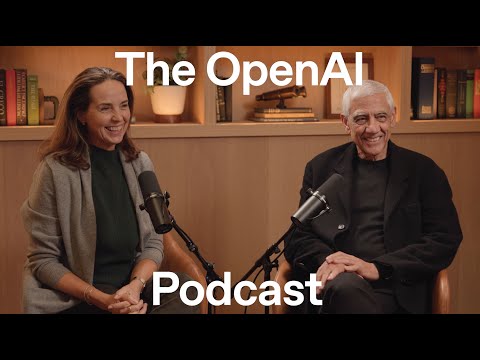
Hello, I'm Andrew Mayne, and this is the OpenAI Podcast. Today, our guests are Sarah Friar, CFO of OpenAI, and legendary investor Vinod Khosla of Khosla Ventures. In this discussion, we're going to talk about the state of the AI ecosystem, whether or not we're in a bubble, and how startups and investors can succeed as AI progresses.Unlike something like Netflix, where they're running so many hours in the day, I think of it much more like infrastructure, like electricity. Demand is limited, not by anything o ...
OpenAI晒出铁证,奥特曼撕烂马斯克:你想让儿子接管AGI?
3 6 Ke· 2026-01-19 11:25
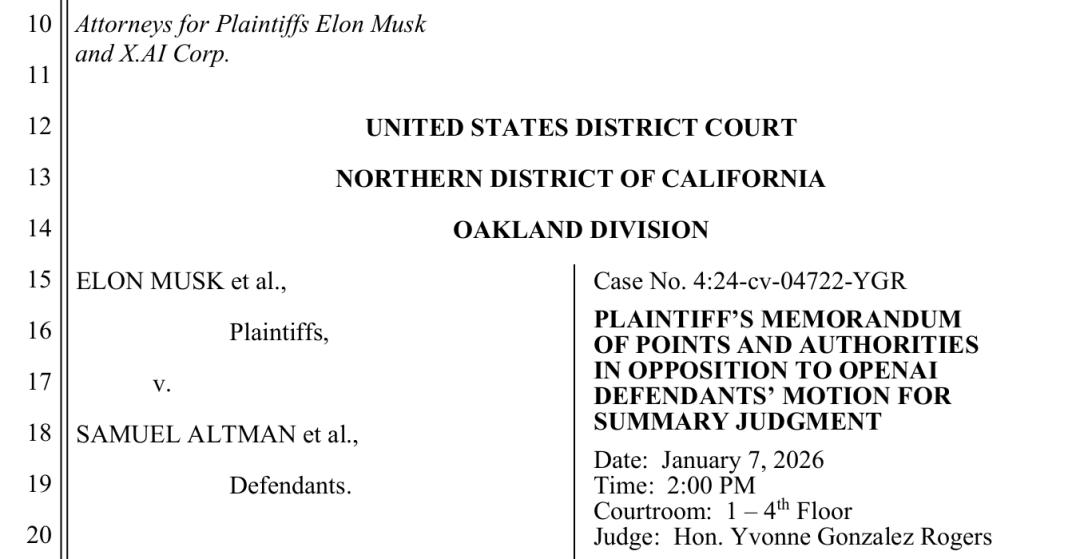
4月27日,马斯克诉OpenAI案即将开庭。OpenAI甩出重磅炸弹:马斯克不仅支持OpenAI转型营利,还索要OpenAI绝对控制权。这场官司表面是非营利 vs营利之争,实则是一场关于谁来掌控AGI的终极博弈。 如果说科技界有什么大戏能让全球吃瓜群众肾上腺素飙升,那绝对是奥特曼与马斯克的世纪大决裂。 刚刚,这场科技圈最吸睛的「豪门恩怨」,迎来了个大升级! OpenAI的观点简单粗暴:马斯克不是什么「被背叛的理想主义者」,他才是最早喊着要把OpenAI变成营利性公司的人! 只不过,当年谈判破裂的原因是——他想要绝对控制权,而我们拒绝了。 先是法院一下子解封100多份诉讼文件,爆出奥特曼竟然间接持有OpenAI的股份,他还同时担任非营利组织的独立董事和CEO! OpenAI总裁Greg Brockman也早就想把马斯克踢出局,组建一家营利性公司。 马斯克称,这些只不过是冰山一角。 另一边,OpenAI再也坐不住了,直接在其官网上甩出了一篇名为《The truth Elon left out》(埃隆遗漏的真相)的檄文。 文章直接甩出了大量2017年前后的内部邮件、短信记录,甚至还有联创Greg Brockman的 ...
没有商业模式--DeepSeek最坚固的“护城河”
华尔街见闻· 2026-01-19 09:46
Core Viewpoint - DeepSeek's unique advantage lies in its lack of a commercial model, allowing it to focus solely on its AGI (Artificial General Intelligence) aspirations without external pressures or funding requirements [3][8][12]. Group 1: Market Expectations and Competition - The market's expectations for DeepSeek's upcoming model are tempered by the saturation of open-source models, making it less likely to shock the world again as it did previously [3][4]. - DeepSeek is no longer the only or the most open player in the market, as other labs have quickly followed suit with their own models [5][8]. Group 2: Funding and Control - DeepSeek's founder, Liang Wenfeng, has maintained a "zero external financing" approach, prioritizing control over financial gain, which is unique among top labs [3][9]. - The success of Liang's quantitative fund, which generated over $700 million in profit with a 53% return rate, allows DeepSeek to fund its operations without external investment [3][11]. Group 3: Advantages of No Commercial Model - The absence of external funding means DeepSeek is not burdened by commercial KPIs, allowing it to focus purely on technological advancements [3][12]. - The lack of external financial pressures fosters a flat organizational structure, reducing internal competition and bureaucracy, which can hinder innovation [14][15]. Group 4: Research and Resource Allocation - DeepSeek's limited resources do not impede its research quality, as good research does not necessarily require excessive computational power [13][14]. - The organization can prioritize innovative ideas without the distractions and conflicts that often accompany larger, well-funded labs [15][18].

直击达沃斯:云计算算力和能源正在成为硬约束
Xin Lang Cai Jing· 2026-01-19 09:35
Core Insights - The 2026 Winter Davos Forum highlights a significant shift in the power structure within the tech industry, particularly regarding AI as it transitions from a cutting-edge technology to a global infrastructure [1][6] Group 1: AI Implementation and Challenges - The primary focus of discussions at Davos is on how to scale AI from pilot projects to full implementation, emphasizing the need for deep integration into business processes and decision-making at the CEO and board level [1][6] - Cloud computing capabilities and energy resources are becoming critical constraints for AI development, with discussions centering on the stability, scalability, and sustainability of cloud infrastructure, as well as the availability and cost of power [1][6] Group 2: Social and Political Dimensions of AI - AI is entering a phase of social and political negotiation, as evidenced by public complaints in the U.S. about rising electricity costs. Microsoft's recent community-focused AI infrastructure initiative aims to create local jobs and retain long-term value within communities, highlighting the importance of social acceptance for AI infrastructure [2][7] Group 3: Corporate Signals and Strategic Moves - Nvidia's recent appointment of its first Chief Marketing Officer (CMO) signifies a strategic shift from merely selling GPUs to positioning itself as a platform and infrastructure provider, necessitating clear communication on how computing power is deployed and utilized [4][10] - Google Cloud's presence at Davos indicates a focus on leveraging large model capabilities to enhance competitive advantages in cloud services, suggesting a complex interplay between cloud computing and large models that influences cost structures and customer loyalty [4][10] - The emergence of Deepseek has drawn global attention to Chinese AI, with its unique position of operating without external financing and commercial pressures, allowing it to focus on advancing AGI ideals [5][10]

微软、英伟达、红杉重金押注!Anthropic估值瞄准3500亿美元
Ge Long Hui A P P· 2026-01-19 07:39
Core Insights - The article discusses the significant financing round for AI startup Anthropic, targeting $25 billion, which could double its valuation to $350 billion from $170 billion in just four months [1] - The financing involves major investors like Sequoia Capital, GIC, and Coatue, with a unique strategy of investing in multiple AI competitors [1][2] - Anthropic's revenue has been growing exponentially, with a projected increase from $100 million in 2023 to $8-10 billion by 2025 [2] Group 1: Financing and Valuation - Anthropic is seeking $25 billion in its latest funding round, which would elevate its valuation to $350 billion if successful [1] - Sequoia Capital, GIC, and Coatue are leading the investment, with Microsoft and Nvidia committing a total of $15 billion [1] - The funding strategy breaks traditional venture capital norms by investing in competing AI firms [1][2] Group 2: Revenue Growth and Market Position - Anthropic has achieved a tenfold revenue growth annually for three consecutive years, with a significant market share in the enterprise sector [2] - The company's core product, Claude, has seen a doubling in total web traffic and a 12% increase in daily active users this year [2] - Anthropic is focusing on the enterprise market, differentiating itself from competitors like Google and OpenAI [8] Group 3: IPO Preparation and Future Outlook - Anthropic is preparing for an IPO, with legal preparations underway, potentially launching in the near future [4] - The company has committed to approximately $100 billion in computing power, emphasizing a different approach compared to competitors [5] - Anthropic's leadership believes in sustainable growth rather than chasing exponential increases, indicating a cautious outlook on the AI market [6][8]
AI手搓的Cowork“李鬼”版跟“李逵”一样能打,还免费?
Tai Mei Ti A P P· 2026-01-19 04:53
Core Insights - Anthropic's Cowork is a desktop AI agent that allows users to automate tasks without programming, but it is expensive, available only to Max users at a minimum of $100 per month [1] - The rapid development of a free open-source version, OpenWork, within 48 hours indicates low technical barriers and clear product logic [1] - The development cycle of Cowork was only 10 days, with most of the code generated by AI, showcasing the potential for AI to create AI [1][9] Product Comparisons - Manus, developed by a company acquired by Meta, is known as the "first general AI agent" and achieved $100 million in annual recurring revenue within 8 months of its launch [3] - Gemini CLI, Google's open-source terminal agent, offers free access to Gemini 2.5 Pro and supports various integrations, but has a higher usage barrier due to its command-line interface [5][6] - ChatGPT Agent, launched in July 2025, operates in a virtual machine environment and has a lower baseline success rate of 12.5% in practical tests, indicating a need for optimization [5][6] Technical Architecture - Manus employs a multi-agent system using a MapReduce architecture, allowing it to handle large-scale tasks efficiently [7] - Cowork operates within a local folder using sandbox mechanisms for security, while Gemini CLI provides direct access to system terminals, offering flexibility but with higher risks [6][8] - The integration of multiple agents and tools represents different balances of security and capability across these products [7] Industry Implications - The emergence of AI building AI signifies a shift in software development timelines, reducing them from months to days [9] - The recursive improvement process within Anthropic has led to a significant increase in coding efficiency, with AI now handling 60% of coding tasks [10] - The transition from traditional software development roles to AI-assisted roles is reshaping the engineering landscape, with engineers focusing more on code review and architecture [12] Future Trends - The trend of AI constructing its successors is irreversible, with predictions indicating that by 2028, 90% of B2B procurement will be handled by AI agents [22] - The potential for AI to transform workflows into AI-first designs is significant, although challenges related to security and reliability remain [22][23] - The shift from passive chatbots to proactive AI agents represents a fundamental change in human-computer collaboration, with profound implications for productivity and task execution [23]



深度|OpenAI产品经理谈Codex爆发式增长背后的AI协作:实现AGI级生产力的真正瓶颈是人类的打字速度!
Z Potentials· 2026-01-19 03:02
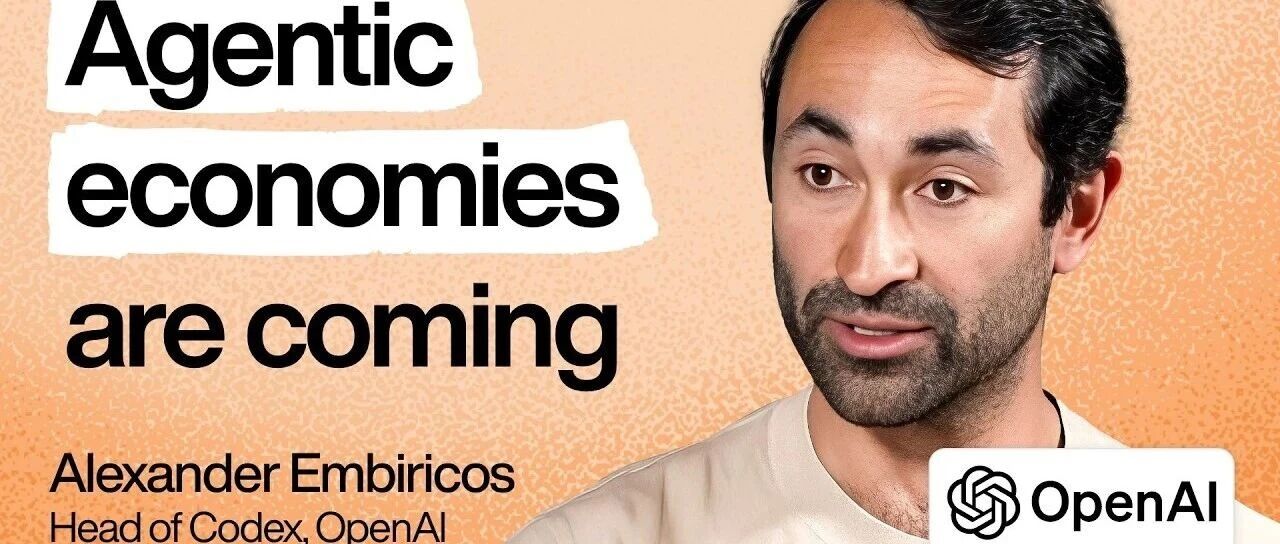
Core Insights - Codex, a powerful coding agent developed by OpenAI, has experienced a 20-fold growth since the release of ChatGPT5 in August 2023, processing trillions of characters weekly [3][19]. - The primary goal of Codex is to enhance human productivity by enabling proactive task completion rather than merely responding to commands [9][17]. - OpenAI's organizational structure emphasizes a bottom-up approach, allowing for flexibility and rapid experimentation, which has been crucial for Codex's development [12][14]. Group 1: Codex's Development and Growth - Codex has become a core tool for software engineering teams, functioning as an initial team member capable of writing, testing, and deploying code [15][16]. - The product has seen explosive growth, with usage increasing over 10 times since August, now reaching 20 times, and it is the most utilized code generation model [19][20]. - The integration of product and research teams has facilitated collaborative iterations, leading to more effective experiments and product enhancements [19][26]. Group 2: Proactive Collaboration and User Interaction - Codex aims to function as a proactive collaborator, akin to a new intern, participating in the entire software development lifecycle [16][17]. - The focus is on creating a seamless integration into developers' workflows, allowing Codex to assist without requiring constant user prompts [18][22]. - The feedback loop established through local interactions enhances user experience and encourages gradual adaptation to AI-assisted development [22][23]. Group 3: Future Vision and Market Position - The vision for Codex extends beyond code writing to include capabilities such as scheduling and task management, positioning it as a comprehensive AI assistant [28][29]. - OpenAI is exploring the potential of a "chatter-driven development" model, where communication and collaboration drive coding processes rather than rigid specifications [38][39]. - The company recognizes the need for Codex to adapt to various user environments and preferences, ensuring it remains a valuable tool for diverse teams [25][33].
对话 Mistral CEO:大模型都差不多了,AI公司靠什么赚钱?
3 6 Ke· 2026-01-19 00:47
Core Insights - The gap between leading AI models is narrowing, with Google Gemini catching up to OpenAI and Claude briefly surpassing GPT-4, indicating a shift in competition from model performance to practical application in business [1][2][4] - The development of AI models is becoming less unique due to the widespread use of similar methods and data across various labs, leading to a decrease in competitive advantage [2][3] Group 1: Model Development and Market Dynamics - The rapid dissemination of technology through open-source initiatives is contributing to the convergence of model performance, making it easier for teams to catch up [3][4] - The focus is shifting from merely having a powerful model to ensuring that businesses can effectively implement and utilize these models in their operations [5][6][7] Group 2: Practical Applications of AI - Mistral AI categorizes enterprise AI applications into two types: efficiency improvements and technological breakthroughs [10][12] - An example of efficiency improvement is seen in CMA CGM, where AI has reduced the workforce needed for complex shipping operations from 20 to 2 by automating communication and coordination tasks [12][13] - Technological breakthroughs are illustrated by Mistral's model aiding ASML in enhancing precision in chip manufacturing, allowing for faster and more accurate defect detection [17][18][20] Group 3: Control and Deployment of AI - Mistral emphasizes the importance of open-source models that allow businesses to customize and deploy AI systems on their own infrastructure, reducing dependency on external vendors [24][26] - The ability to maintain control over AI systems is crucial for businesses, as reliance on closed-source models can lead to vulnerabilities and loss of operational autonomy [26][30] - Mistral's approach not only addresses technical needs but also aligns with local economic interests by fostering local talent and infrastructure [30]