特斯拉AI5芯片

Search documents
晚点独家丨地平线敲定征程 7 目标算力,舱驾一体产品命名 “星空”
晚点LatePost· 2026-03-20 08:16
Core Viewpoint - Horizon Robotics is preparing to launch its next-generation intelligent driving chip series, Journey 7 (J7), with the highest performance version, J7P, expected to significantly surpass NVIDIA's Thor-X in computing power, aiming for mass production in 2027 [4][6]. Group 1: Chip Development and Strategy - The J7 chip's product planning is primarily driven by the algorithm team, marking a shift from the previous J6 series, which was led by the chip team [6][7]. - The J7 will utilize Horizon's fourth-generation BPU architecture, "Riemann," and aims to compete directly with Tesla's AI5 chip [7][8]. - The new chip, "Starry Sky," is designed for integrated cockpit driving and will support localized large model deployment, with plans for release in April this year [4][6]. Group 2: Market Dynamics and Competition - The current generation of high-end driving chips is expected to support model evolution for only 2-3 years, necessitating a consistent upgrade cycle for driving chips [8][9]. - The industry is facing challenges beyond theoretical computing power, such as memory bandwidth and data transfer efficiency, which can limit the deployment of large models [9][10]. - Companies like Xiaopeng and Li Auto are focusing on optimizing the synergy between chips and algorithms to enhance efficiency rather than solely increasing peak computing power [10][11]. Group 3: Future Projections and Requirements - The anticipated computing power for L3 autonomous driving is projected to be between 500-1000 TOPS, while L4 may require up to 2000 TOPS by 2030 [9][10]. - Horizon Robotics is under pressure to maintain production schedules while also investing in next-generation platforms, balancing current product viability with future development needs [11].


独家丨地平线敲定征程 7 目标算力,舱驾一体产品命名 “星空”
晚点Auto· 2026-03-19 08:49
Core Viewpoint - Horizon Robotics is preparing to launch its next-generation intelligent driving chip series, the Journey 7 (J7), with the highest performance version, J7P, expected to significantly surpass NVIDIA's Thor-X in computing power, aiming for mass production in 2027 [3][5]. Group 1: Chip Development and Strategy - The J7 product planning is primarily driven by the algorithm team, marking a shift from being a chip supplier to an integrated solution provider [5]. - The J7 will utilize Horizon's fourth-generation BPU architecture, "Riemann," and aims to compete directly with Tesla's AI5 chip [5]. - The C7H chip, developed in partnership with Volkswagen, will also be based on the Riemann architecture and is designed for the J7, utilizing a 3-4 nm process with an AI computing power of 500-700 TOPS [5]. Group 2: Market Dynamics and Competition - The evolution of vehicle models is accelerating, with parameters expanding from millions to billions, necessitating next-generation high-end driving chips that can adapt to new algorithm models [6]. - Current high-end driving chips are primarily designed for modular algorithms and early-stage end-to-end models, with a typical development cycle of 3-4 years [6]. - The actual bottlenecks in vehicle chips are not just theoretical computing power but also memory bandwidth, data transfer efficiency, and inference accuracy [7]. Group 3: Future Projections and Requirements - The industry anticipates that achieving L3 autonomous driving will require computing power between 500-1000 TOPS by 2025, while L4 may require up to 2000 TOPS by 2030 [7][8]. - Huawei's president of intelligent driving products indicated that transitioning from L2 to L4 may require a 3-5 times increase in investment, with vehicle computing power needing to rise from hundreds to 1500-2000 TOPS [8]. - The focus is shifting towards optimizing the integration of chips, compilers, and models to enhance efficiency rather than solely increasing peak computing power [9]. Group 4: Operational Challenges - Horizon Robotics faces competitive pressure as it attempts to convert more automakers into clients while some of these clients are becoming competitors [9]. - Maintaining production schedules and cash flow is critical for Horizon, especially as it ramps up production of its J6 series while preparing for the next generation [9].

马斯克自称英伟达和黄仁勋“铁粉”:将继续大规模订购英伟达芯片
Sou Hu Cai Jing· 2026-03-19 03:45
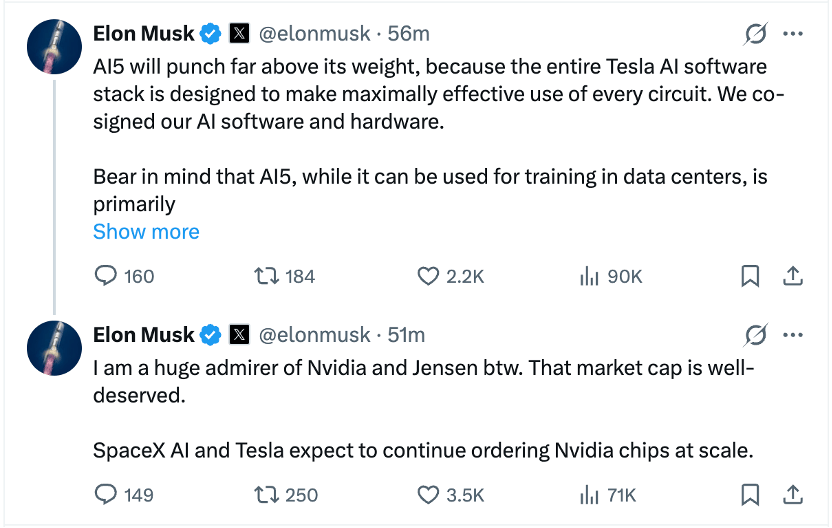
Core Viewpoint - Tesla CEO Elon Musk confirmed that the company will continue to rely heavily on Nvidia's computing chips for the long term, emphasizing the importance of collaboration between AI software and hardware design to maximize circuit efficiency [1] Group 1: Tesla and Nvidia Relationship - Musk stated that both SpaceX and Tesla are expected to continue large-scale orders of Nvidia chips, highlighting a strong partnership between the companies [1] - Musk expressed admiration for Nvidia and its CEO Jensen Huang, affirming the company's market value as "well-deserved" [1] Group 2: AI Industry Context - The GTC conference has evolved into a critical release window for the AI industry, with Nvidia showcasing its latest GPU architecture and solutions, reinforcing its position as an "AI infrastructure platform" [2] - Major tech companies, including Microsoft, Amazon, and Meta, are increasing capital expenditures on AI infrastructure, sustaining high demand for high-performance GPUs [2] Group 3: Tesla's Chip Strategy - Musk reiterated Tesla's strategy of parallel development of in-house and externally sourced chips, aiming for greater control over the entire production process [2] - Tesla's wafer factory, Terafab, is set to start operations within seven days to ensure the production of AI chips [2]


腾讯研究院AI速递 20260209
腾讯研究院· 2026-02-08 16:03
Group 1: Claude Opus 4.6 Release - Anthropic launched Claude Opus 4.6, outperforming GPT-5.2 by approximately 144 Elo in GDPval-AA knowledge work assessment and achieving top scores in Terminal-Bench 2.0, Humanity's Last Exam, and BrowseComp [1] - The Opus model supports a context window of 1 million tokens and an output limit of 128,000 tokens, achieving 76% in long context retrieval tests, which is four times better than Sonnet 4.5 [1] - The product line has been updated with new features, including agent teams in Claude Code, an upgraded Excel, and a research preview for PowerPoint, along with new API functionalities like adaptive thinking and context compaction [1] Group 2: OpenAI GPT-5.3-Codex Release - OpenAI released GPT-5.3-Codex shortly after Claude Opus 4.6, achieving 77.3% in Terminal-Bench 2.0, regaining the highest score and being 25% faster than its predecessor, GPT-5.2-Codex [2] - This model is the first to participate in creating its own model, utilizing early versions for debugging its training process, managing deployment, and analyzing evaluation results [2] - The OSWorld-Verified score improved from 38.2% to 64.7%, nearing the human benchmark of 72%, with a cybersecurity CTF score of 77.6%, marking it as the first high-capability cybersecurity model [2] Group 3: Claude Opus 4.6 Fast Mode - Anthropic introduced a Fast Mode for Claude Opus 4.6, which is 2.5 times faster than the standard version, available to Claude Code and API users, with initial support from platforms like Cursor and GitHub Copilot [3] - Pricing for Fast Mode has significantly increased, with input costs at $30 per million tokens and output costs at $150 per million tokens, while long context pricing has doubled, offering a 50% discount until February 16 [3] - This mode is recommended for rapid code iteration and real-time debugging, with automatic fallback to the standard version after hitting rate limits [3] Group 4: Pony Alpha Model - The OpenRouter platform launched the mysterious anonymous model Pony Alpha, which excels in programming, logical reasoning, and role-playing, available for free [4] - Speculation surrounds the model's identity, with guesses including DeepSeek-V4, GLM new models, Opus 5.3, Codex 4.6, or Grok 4.2, but no consensus has been reached [4] - Pony Alpha supports reasoning with a context of 200,000 tokens, with users successfully creating complete web applications containing 500 lines of code, hinting at a possible Chinese origin due to its name [4] Group 5: ByteDance Seedance 2.0 Launch - ByteDance quietly launched Seedance 2.0, which supports self-storyboarding, synchronized audio-visual generation, multi-shot narratives, and up to 12 multimodal reference files [5] - The usability rate improved from under 20% to over 90%, with actual production costs reduced to near theoretical levels, fundamentally changing the industry's economics [5] Group 6: Tencent WorkBuddy Internal Testing - Tencent opened internal testing for WorkBuddy, a desktop AI agent capable of planning and executing complex multimodal tasks on local computers [7] - Core capabilities include automatic batch file processing, document/spreadsheet/PPT generation, deep data analysis, and industry research, with built-in model switching and high-risk command interception [7] - Since its internal testing began on January 19, it has served over 2,000 Tencent employees, targeting non-technical workplace groups like HR, administration, operations, and sales to lower the AI tool usage barrier [7] Group 7: Waymo and DeepMind Collaboration - Waymo introduced a world model built on DeepMind Genie 3, capable of generating highly realistic and interactive 3D environments, simulating rare driving scenarios like tornadoes and elephants [8] - The model supports three control mechanisms: driving behavior, scene layout, and language, converting ordinary driving record videos into multimodal simulations, showcasing the Waymo Driver's perspective [8] - Waymo Driver has completed nearly 200 million miles of fully autonomous driving, with the world model enabling the system to rehearse billions of miles of complex scenarios in a virtual environment [8] Group 8: Elon Musk's Future Plans - Elon Musk revealed SpaceX plans to launch 20,000 to 30,000 times annually, predicting that within five years, space computing power will exceed the global total [9] - The Tesla AI5 chip is set for mass production in Q2 next year, with the AI6 chip following within a year, and Optimus expected to reach a production capacity of 1 million units in three years and 10 million in four years [9] - Musk described Optimus as a "money-making perpetual motion machine," asserting that without breakthrough innovations, the U.S. will fall behind China in AI, electric vehicles, and humanoid robot manufacturing [9] Group 9: AI Growth Projections - ARK Invest forecasts that global GDP growth will exceed 7% by 2030, driven by the integration of five technologies, with a bullish Bitcoin price target of $1.5 million by 2030 [12] - The differentiated development of AI between China and the U.S. sees China breaking through with an open-source approach, while the U.S. leads in application-level global competitiveness, with proprietary data being a decisive advantage in the AI era [12] - Tesla is positioned to lead the Robotaxis market through vertical integration, with future travel costs potentially dropping to $0.20 per mile, and a market capitalization of a trillion dollars by 2030 is anticipated [12]
三星2470亿芯片投资,面临挑战
半导体行业观察· 2026-02-03 01:35
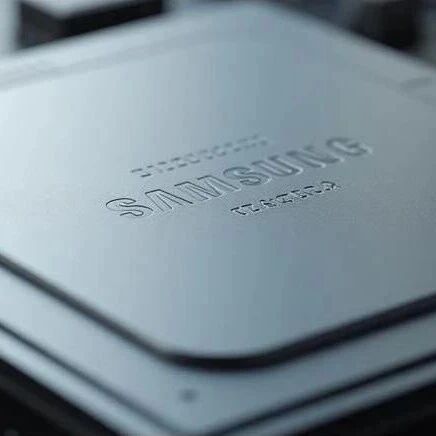
Core Viewpoint - Samsung Electronics' foundry business has been experiencing long-term losses, with an estimated operating loss of approximately 6 trillion KRW (about 4.1 billion USD) last year. However, with the full-scale production of the 2nm process expected this year, the operating loss is projected to decrease to around 3 trillion KRW [2]. Group 1: 2nm Process and Production Plans - Samsung Electronics plans to start mass production of its advanced 2nm foundry process in the second half of this year, with successful development progress reported in yield and performance targets [2]. - The company is conducting performance, power consumption, and area (PPA) evaluations in collaboration with major clients, ensuring that technical validation is proceeding as scheduled before mass production [2]. - The new semiconductor production at the Taylor, Texas facility marks the 30th anniversary of Samsung's semiconductor operations in the U.S., aiming for a significant leap forward [2]. Group 2: Taylor Factory and Market Competition - The Taylor factory, with an investment of 37 billion USD (approximately 247 billion RMB), is preparing to produce advanced processes of 3nm and below to meet the demands of high-performance computing (HPC) and artificial intelligence (AI) [3]. - The factory has received orders, including Tesla's autonomous driving chip "AI6," signaling a recovery for Samsung's foundry business after a challenging period [3]. - Competition in the U.S. foundry market is intensifying, with TSMC announcing its largest investment plan in history, ranging from 52 billion to 56 billion USD [3]. Group 3: Challenges and Strategic Moves - Samsung's 2nm process yield is approximately 50%, which is lower than TSMC's known yield of 70-90%, highlighting a significant technical gap that needs to be addressed [3]. - TSMC holds a dominant market share of 70% in the global foundry market, significantly outpacing Samsung Electronics, which holds only 7% [3]. - The U.S. government's support for Intel, including an investment of about 8.9 billion USD (approximately 12.3 trillion KRW), adds competitive pressure on Samsung's foundry business [4]. Group 4: Future Prospects and Collaborations - Samsung's foundry business must demonstrate its advanced process technology capabilities to regain momentum, with Tesla's order volume expected to serve as a proving ground [4]. - A contract worth 24 trillion KRW for semiconductor supply with Tesla is anticipated to enhance the reliability of Samsung's 2nm technology [4]. - Samsung is reportedly in discussions with companies like Google and AMD for collaboration on AI chip mass production based on the 2nm process [4]. Group 5: Competitive Strategy - Samsung is enhancing its competitiveness through a "turnkey strategy," offering a one-stop solution from semiconductor design to foundry, memory manufacturing, and advanced packaging, which is seen as a unique differentiator compared to TSMC [5]. - The company expects to secure 2nm process orders primarily in high-performance computing and AI applications, with a projected growth of over 130% compared to last year [5]. - The roadmap for the 1.4nm process is in development, with plans to achieve mass production by 2029 and distribute the first version of the process design kit (PDK) to clients by the second half of next year [5].
腾讯研究院AI速递 20260120
腾讯研究院· 2026-01-19 16:03
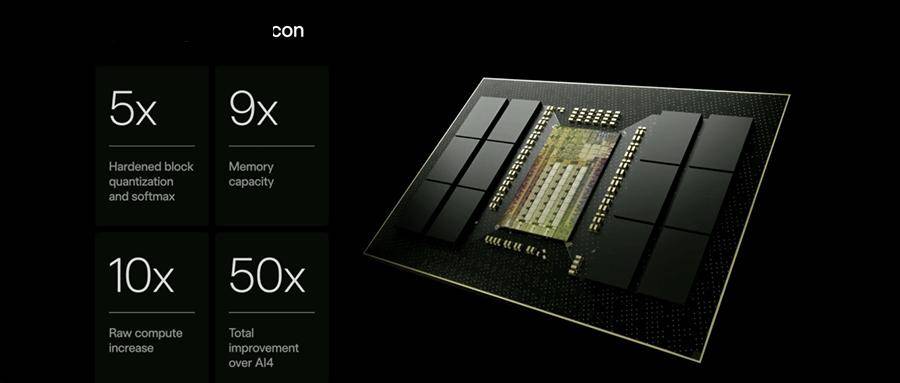
Group 1 - Tesla has announced that the design of its AI5 chip is nearing completion, with the AI6 chip in early stages, aiming to shorten the chip design cycle to 9 months and predicting it will become the highest production AI chip globally [1] - The AI5 chip will utilize Samsung's 2nm and TSMC's 3nm processes, boasting overall performance 50 times that of AI4 and memory capacity 9 times greater, with mass production expected in 2027 [1] - Tesla signed a $16.5 billion agreement with Samsung for the production of the AI6 chip in the U.S., anticipated to launch in 2028 [1] Group 2 - Anthropic has upgraded Claude Cowork with a "permanent memory" feature, allowing the AI to categorize and store information, enhancing user understanding over time [2] - The upgrade includes an MCP connector system to improve automation, voice mode development, and a new UI area for continuous management of results [2] - Continuous learning is viewed as a key breakthrough for AGI, with OpenAI and Google also investing in memory functionalities [2] Group 3 - Kunlun Wanwei has launched Skywork Design Agent, focusing on poster design, social media materials, logo branding, and general creative image generation [3] - The product features a self-developed canvas engine that supports manual editing, AI photo retouching, and layer separation, streamlining the entire process from material import to export [3] - It offers multiple export formats (PNG, JPG, PDF) and includes a unique "add to knowledge base" feature to address material management issues, now fully launched overseas [3] Group 4 - Douzi 2.0 has introduced the Coze Skill feature, allowing users to encapsulate personal methodologies and industry experiences into reusable "skill packages" [4] - A new "long-term plan" feature enables goal-oriented AI collaboration, breaking down vague objectives into clear steps for automatic execution [4] - The launch of a skill marketplace facilitates the exchange of industry skill packages, allowing professionals to monetize their expertise, alongside the beta release of video Agent Skill [4] Group 5 - Giant Network's "Supernatural Action Group" has introduced an "AI large model challenge" mode, integrating large model technology into game combat, marking a significant application in a high DAU game [5] - AI characters are driven by large models in real-time, capable of voice interaction and mimicking human behavior, with over 25 million AI matches recorded in the first week [5] Group 6 - Anker and Feishu have collaborated to create a 10-gram AI recording device, addressing the portability issues of traditional AI recording cards [7] - The device features real-time summarization capabilities, generating structured logical maps during meetings and supporting real-time translation in 24 languages [7] - Recordings are directly streamed to the Feishu knowledge base, integrating with the entire Feishu ecosystem to reduce the burden of knowledge base construction [7] Group 7 - Roboto has open-sourced its bipedal humanoid robot prototype, achieving a running speed of 3 m/s, making it one of the most advanced open-source humanoid robots globally [8] - The open-source content includes hardware schematics, EBOM material lists, supplier information, and control algorithm code, enabling reproducibility and verification [8] - The team, originating from Harbin Institute of Technology, has secured millions in seed funding and aims to reduce the cost of embodied intelligence development by 80% [8] Group 8 - Galaxy General has launched the Galbot S1, a heavy-duty robot capable of carrying loads up to 50 kg, currently operating in key production processes at CATL [9] - It features an industry-first fully autonomous, zero-remote operation "embodied handling model," utilizing pure visual perception without QR code markers [9] - Galaxy General has recently completed a 2.1 billion yuan financing round, with a valuation exceeding 20 billion yuan, and has established partnerships with leading manufacturers [9] Group 9 - OpenAI's product manager reported that since the release of ChatGPT-5, the Codex platform has seen a 20-fold growth, processing trillions of characters weekly [10] - The Sora Android app achieved a rapid development cycle, going from zero to launch in 28 days and topping the App Store, significantly improving team efficiency [10] - The manager noted that human typing speed and multitasking capabilities are often the limiting factors for AGI, rather than the models themselves [10]

马斯克披露五代AI芯片路线图
Sou Hu Cai Jing· 2026-01-19 11:18
Core Viewpoint - Tesla's AI5 chip design is nearing completion, with AI6 in early stages, aiming to shorten design cycles to 9 months and achieve the highest global production of AI chips to date [2] Group 1: AI Chip Development - The AI5 chip will utilize Samsung's 2nm and TSMC's 3nm process technology, supporting Tesla's full self-driving system and AI-driven projects, including the Optimus humanoid robot system [3] - AI5 is expected to have overall performance 50 times greater than AI4 and memory capacity 9 times larger [3] - Production of AI5 is anticipated in 2027, with AI6 expected to launch in 2028 [3] Group 2: Strategic Partnerships - Tesla signed a $16.5 billion agreement with Samsung for the production of AI6 chips in the United States [3]
用ChatGPT要看广告了;萝卜快跑开启阿布扎比运营
2 1 Shi Ji Jing Ji Bao Dao· 2026-01-19 02:28
Group 1: OpenAI and Advertising - OpenAI announced the introduction of advertising in the free version and entry-level subscription tier of ChatGPT, starting with adult users in the U.S. in the coming weeks [2] - The ChatGPT Go subscription service has launched in all regions supporting ChatGPT, offering enhanced features such as using the GPT-5.2 Instant model and increased message and file upload limits [2] - OpenAI emphasizes that advertising will not interfere with the objectivity of responses and aims to diversify revenue streams while enhancing AI accessibility [2] Group 2: Apple Trade-In Program - Apple has updated its trade-in program to include devices from Huawei and Xiaomi, allowing customers to trade in these brands for discounts on new purchases [3] - The maximum trade-in values include up to 5,800 yuan for the iPhone 16 Pro Max and 6,050 yuan for the MacBook Pro [3] - The "Yearly Renewal Plan" allows consumers to upgrade their devices within a specified period at a discount of at least 50% of the original purchase price [3] Group 3: Tesla AI Chip Development - Tesla CEO Elon Musk announced that the design of the AI5 chip is nearing completion, with the AI6 chip in early development stages [4] - Future plans include the development of AI7, AI8, and AI9 chips, with a target design cycle of nine months [4] - Musk highlighted the strength of Tesla's AI team, stating that these chips aim to become the highest-volume AI chips globally [4] Group 4: Meituan's Open Source Model - Meituan's LongCat team released the upgraded open-source model LongCat-Flash-Thinking-2601, achieving state-of-the-art performance in key evaluation benchmarks [5] - The model excels in tool invocation and interaction reasoning, significantly reducing training costs for adapting new tools [5] - It is the first fully open-source model supporting online free experience in the rethinking mode, ensuring comprehensive decision-making in complex tasks [5] Group 5: SpaceX and Falcon 9 Launch - SpaceX successfully launched the Falcon 9 rocket, completing its 600th mission by placing the NROL-105 satellite into orbit [8] Group 6: Commercial Space Ventures in China - Beijing Chuanweizhe's CYZ1 manned spacecraft completed a successful verification test of its landing buffer system, marking a significant milestone in China's commercial space sector [9] - This project is the first full-size test of landing buffer technology for a manned spacecraft in China's commercial space industry [9] Group 7: Investment Activities - Xiangzhong Technology plans to invest 50 million yuan in Zhejiang Hexin Integrated Circuit Co., acquiring a 2.27% stake, focusing on advanced packaging and testing in the integrated circuit sector [10] - Mianbao Optoelectronics is planning to acquire 100% of Xiamen Xizhi Precision Technology and Jiangxi Maida Intelligent Technology, focusing on micro-drilling technology for PCB manufacturing [10] - Yanjing Co. intends to purchase 98.54% of Yongqiang Technology, expanding its business into high-end electronic interconnect materials for integrated circuits [11]





遭到欺诈?马斯克向微软和OpenAI索赔超9000亿元;网友炸锅!员工因拒绝年会表演,被公司开除;机器人将再度登上春晚!网友:绝不是扭秧歌
雷峰网· 2026-01-19 00:25
Key Points - Elon Musk is suing Microsoft and OpenAI for over 900 billion yuan, claiming they gained "unjust enrichment" from his contributions to OpenAI [4][5] - Huawei's Mate 80 has surpassed 1.5 million activations, making it the top-selling domestic flagship model [12][13] - Micron Technology plans to acquire a wafer fab in Taiwan for $1.8 billion to expand its memory chip production capacity [19] - Several smartphone manufacturers, including Xiaomi and OPPO, have lowered their shipment forecasts due to rising supply chain costs [24] - Bosch warns of a profit margin drop below 2% in 2025, citing high restructuring costs and economic pressures [45][46] - OpenAI is introducing ads in its ChatGPT service, creating a three-tier subscription model to address cost pressures [48][49]


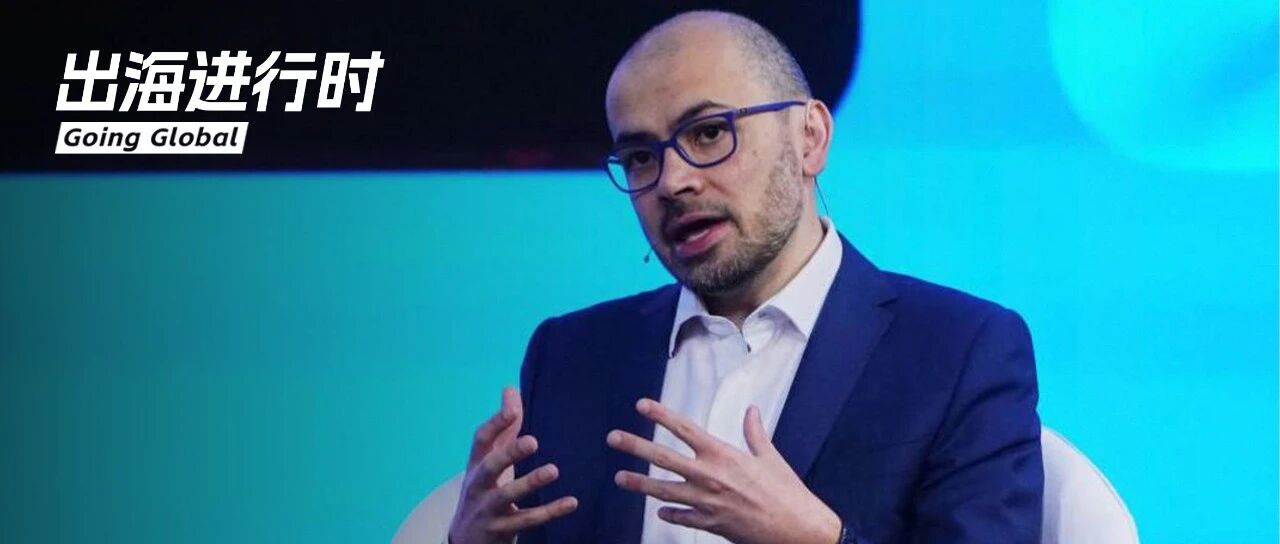
谷歌DeepMind CEO:中国的AI模型仅落后美国几个月;苹果将采用谷歌Gemini大模型作为底层支撑丨Going Global
创业邦· 2026-01-18 10:23
Core Insights - The article highlights significant developments in the global expansion of companies, particularly in the e-commerce and technology sectors, showcasing various strategic initiatives and partnerships aimed at enhancing market presence and operational efficiency [2][3]. Group 1: E-commerce Developments - TikTok Shop launched the "Mei Tong Mo" cross-border plan, allowing direct shipping from U.S. warehouses to consumers in Mexico, set to officially launch in April 2024 [4][5]. - Temu has introduced a local seller program in the UAE, enhancing delivery efficiency and product variety, with coverage extending to over 30 countries [7][9]. - The UAE e-commerce market is projected to reach approximately $12.28 billion by 2025, indicating robust growth potential [10]. Group 2: Major Company Announcements - ZhiMi Technology's CEO Yu Hao aims to create the world's first trillion-dollar company ecosystem, emphasizing long-term growth and innovation [12][13]. - Ford is in discussions with BYD for battery procurement for hybrid vehicles, reflecting a strategic shift towards hybrid models amid declining demand for electric vehicles [18][19][22]. - Micron Technology announced an $1.8 billion acquisition of Powerchip's P5 wafer fab to enhance DRAM production capacity, aiming to meet increasing market demand [26][27]. Group 3: AI and Technology Partnerships - Apple and Google have entered a multi-year AI collaboration, with Apple adopting Google's Gemini model to support its next-generation AI functionalities [30][31]. - Tesla's CEO Elon Musk reported that the AI5 chip design is nearing completion, with plans for rapid development of subsequent AI chips to maintain technological leadership [33][34]. - Google's DeepMind CEO stated that Chinese AI models are only a few months behind their U.S. counterparts, highlighting the competitive landscape in AI development [35][36].