
AGI(通用人工智能)

Search documents
以RWA+AGI重构资产逻辑,打造数实融合增长引擎
Jiang Nan Shi Bao· 2025-07-10 07:25
Core Perspective - The digitalization of real-world assets (RWA) combined with artificial general intelligence (AGI) is a central theme driving global industrial transformation in the Web3 era [1] Group 1: Challenges for SMEs - SMEs face significant financing barriers in the traditional economic system, where asset value is hard to prove and projects often fail to meet financing thresholds [2] - Traditional financial systems rely on collateral and credit assessments, limiting the recognition of underlying real assets, which leads to high-potential enterprises being excluded from financing [4] - Information asymmetry and lack of trust result in undervaluation of assets, preventing precise matching of funds to real needs, thus stifling enterprise growth [4] Group 2: RWA as a Digital Upgrade Engine - RWA refers to the tokenization of real-world assets using blockchain technology, enabling the certification, standardization, and digital circulation of assets like real estate, intellectual property, and more [5] - RWA enhances asset transparency and liquidity, creating a pathway for SMEs to convert assets into capital [5] Group 3: Future Cloud Initiatives - Future Cloud aims to be a leading AGI-driven RWA lifecycle service provider, utilizing cutting-edge technologies to create digital asset solutions for SMEs [6] - The platform offers a comprehensive closed-loop system covering asset certification, data collection, token issuance, financing matchmaking, and profit distribution [6] Group 4: RWA Solutions by Future Cloud - Future Cloud's RWA solutions focus on reconstructing asset certification methods, circulation paths, and trust logic from the ground up [13] - The company enables asset tokenization to lower financing barriers, allowing small assets to leverage larger financing opportunities [15] - A trustworthy data system is established through physical "cloud boxes" for automatic data collection and AI verification, ensuring traceability and building a trust framework [16] - Smart contracts facilitate automated execution of profit collection, distribution, and exit processes without intermediaries [17] - Multiple exit mechanisms, such as secondary market transfers and reinvestment of profits, enhance liquidity and market participation of RWA tokens [18] Group 5: Vision and Values - Future Cloud positions itself as a bridge between the old and new worlds, emphasizing the importance of reconstructing "trustworthy assets" for future pathways [20] - The company is committed to innovation, trust, verifiable value, and practical responsibility in the digital asset space, aiming to build an intelligent, standardized, and global value infrastructure for SMEs [20] - By leveraging RWA and AGI, Future Cloud seeks to elevate China's real value on the global capital stage [21]

“智元系”分两步收购上纬新材,具身智能A股“破冰”首航
Di Yi Cai Jing· 2025-07-09 08:10
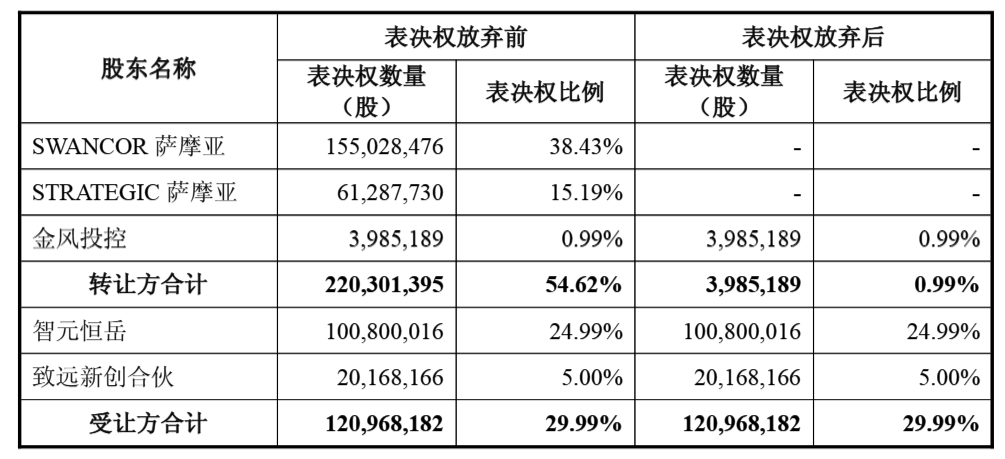
Core Viewpoint - The acquisition of control over Shanghai ZhiYuan New Creation Technology Co., Ltd. (ZhiYuan Robot) by Shangwei New Materials (688585.SH) marks a significant milestone in the embodied intelligence sector, potentially becoming a landmark case for new productivity enterprises in the A-share market and the first acquisition case for embodied intelligence companies on the Sci-Tech Innovation Board [1][9]. Company Summary - Shangwei New Materials announced on July 8 that ZhiYuan Robot and related parties will acquire at least 63.62% of its shares in a two-step process, changing the controlling shareholder to ZhiYuan Robot and its management team, with Deng Taihua as the actual controller [1][3]. - The first step involves ZhiYuan Robot acquiring 29.99% of Shangwei New Materials' shares, with the major shareholders SWANCOR IND.CO.,LTD., Strategic Capital Holding Limited, and Jinfeng Investment Holding Co., Ltd. signing share transfer agreements [3][4]. - Following the share transfer, the combined shareholding of SWANCOR, STRATEGIC, and Jinfeng will decrease from 84.61% to 54.62%, while ZhiYuan and its partners will hold 29.99% [4][6]. Industry Summary - The embodied intelligence sector is experiencing significant investment activity, with 114 investment events recorded in the first five months of 2025, surpassing the total of 77 events in the previous year, and total financing exceeding 230 billion yuan [12][13]. - ZhiYuan Robot, established in February 2023, is recognized as a leading company in the embodied intelligence field, developing a full-stack technology for robots and aiming for substantial production volumes by 2025 [8][12]. - The acquisition has generated considerable market interest, particularly regarding the potential for ZhiYuan Robot to become the first publicly listed company in the embodied intelligence sector [9][11].

谷歌智能体主管:芯片之外,中美AI拼的是能源
硬AI· 2025-07-08 10:14
Group 1: Core Insights - Omar Shams emphasizes that while chips are important, energy supply is the key constraint for the long-term development of AI. The slow expansion of the US power grid contrasts with China's annual addition of power capacity exceeding that of the UK and France combined [3][5][6] - Shams proposes the idea of deploying solar power stations on the Moon or in space to support AI computing power, highlighting the need for innovative energy solutions [3][6][7] - The competition in AI infrastructure between the US and China is increasingly defined by energy supply differences, which could impact the future of AI development [3][5][6] Group 2: Talent and Knowledge in AI - The scarcity of theoretical physicists is highlighted as a valuable asset in AI research, with Shams noting that physical intuition plays a crucial role in optimizing loss functions and understanding complex AI models [3][20][24] - There is a distinction between "secrets" and "tacit knowledge" in AI, where the latter, derived from experience and intuition, is seen as the core competitive advantage for top AI talent [3][10][14] - The demand for software development talent is undergoing a transformation, with predictions that AI tools could lead to a 30% reduction in programmer jobs within two years, particularly affecting junior positions [3][15][19] Group 3: AI Agent Technology and Its Impact - AI agent technology is moving from concept validation to practical application, with tools like Cursor and GitHub Copilot significantly changing the software development landscape [3][16][17] - In the legal sector, AI companies like Harvey are generating substantial revenue, indicating a trend where AI assistants are becoming essential in white-collar jobs [3][17] - The introduction of AI assistants is expected to reshape workflows, either by assisting human workers or directly replacing certain roles, leading to a higher standard in the software industry [3][17][19] Group 4: The Role of Physics in AI - Shams discusses his transition from theoretical physics to AI, emphasizing how the intuition and visualization skills developed in physics contribute to understanding AI processes [3][21][24] - The ability to handle continuous mathematics and emergent phenomena, learned through physics training, aligns well with the mathematical nature of large-scale neural networks [3][24][25] - While physicists may lack sensitivity to discrete algorithms and engineering details, their continuous thinking often proves more effective at larger scales [3][25][26]


OpenAI对微软的“独立战争”
虎嗅APP· 2025-07-05 03:09
Core Viewpoint - The ongoing negotiations between OpenAI and Microsoft represent a significant shift in their relationship, moving from a collaborative partnership to a competitive standoff, primarily driven by conflicting interests regarding technology control, profit sharing, and future business strategies [1][9][19]. Group 1: Background and Initial Partnership - OpenAI and Microsoft formed a strategic partnership in 2019, with Microsoft investing $1 billion to support OpenAI's AI research and providing cloud computing resources [5]. - The relationship flourished during a "honeymoon period," highlighted by successful product launches like GitHub Copilot, which leveraged OpenAI's technology [6]. Group 2: Recent Developments and Tensions - Tensions escalated in 2023 following internal upheavals at OpenAI, leading to a loss of trust from Microsoft, which had invested over $13 billion [6][7]. - OpenAI's restructuring into a Public Benefit Corporation (PBC) aimed to facilitate new funding and an IPO, but required Microsoft's consent due to existing agreements [2][8]. Group 3: Key Negotiation Issues - The core disagreement centers around the "declaration of sufficient AGI," which would allow OpenAI to partner with other cloud providers, ending Microsoft's exclusive rights [3][13]. - OpenAI proposed a shift from profit-sharing to equity stakes, suggesting Microsoft could hold about 33% of the new PBC, but Microsoft preferred maintaining profit-sharing for stability [11][12]. Group 4: Strategic Moves and Future Implications - OpenAI is actively seeking to diversify its cloud partnerships, including agreements with Oracle and Google, to reduce reliance on Microsoft Azure [17][18]. - The potential for OpenAI to develop its own AI chips and the Stargate super data center project indicates a strategic move towards independence from Microsoft [18]. Group 5: Conclusion and Future Outlook - The negotiations reflect a broader power struggle in the AI industry, with both companies recognizing the stakes extend beyond financial terms to control over technology and market positioning [19]. - The outcome of these negotiations will likely reshape the future landscape of AI partnerships and competition, making it uncertain whether another collaboration like that of Microsoft and OpenAI will emerge [19].


ICML 2025 | 多智能体的ChatGPT时刻?上交MAS-GPT实现工作流一键生成
机器之心· 2025-07-05 02:46
Core Viewpoint - The article discusses the introduction of MAS-GPT, a new generative design paradigm for Multi-Agent Systems (MAS), which simplifies the process of creating MAS to a single query input, making it as easy as interacting with ChatGPT [2][9]. Group 1: Introduction of MAS-GPT - MAS-GPT is a collaborative effort from institutions like Shanghai Jiao Tong University and Oxford University, aiming to facilitate the development of MAS as a step towards achieving Artificial General Intelligence (AGI) [2][3]. - The system allows users to generate a complete and executable MAS with just one query, significantly streamlining the process [2][12]. Group 2: Challenges in Existing MAS Methods - Current MAS methods face three fundamental issues: lack of adaptability, high costs, and low generalization capabilities, which hinder their widespread application [5][7]. - Existing systems require extensive manual input and multiple rounds of LLM calls, making them inefficient and costly [7]. Group 3: MAS-GPT's Solution - MAS-GPT transforms the design of MAS into a language generation task, allowing for the automatic generation of MAS from user queries [9][10]. - The generated MAS is presented in Python code, eliminating the need for manual coding [9]. Group 4: Performance and Evaluation - MAS-GPT has been tested against over ten existing methods across eight benchmark tasks and five mainstream models, demonstrating superior performance [16]. - It achieved an average accuracy improvement of 3.89% over the strongest baseline and maintained robust performance on unseen tasks [17]. Group 5: Cost Efficiency and Compatibility - MAS-GPT operates at nearly half the inference cost compared to other systems like DyLAN and GPTSwarm while delivering better results [18]. - The MAS generated by MAS-GPT shows strong compatibility and consistent performance across different LLMs [20]. Group 6: Future Potential and Community Engagement - MAS-GPT has significant potential for future development, with the ability to generate novel MAS structures and adapt to new tasks [24][25]. - The MASWorks community aims to connect researchers globally, fostering collaboration and knowledge sharing in the MAS field [30][31].
与技术谈实现,与客户谈价值,与高管谈钱!硅谷顶级产品专家亲述生存法则
AI科技大本营· 2025-06-27 01:54
作者 | Rich Mironov 责编 | 王启隆 出品丨AI 科技大本营(ID:rgznai100) 为什么那么多聪明的团队,最终却做出了没人要的产品? 这往往不是因为技术不行,或者销售不努力。根本原因在于,一家公司里,人们在说着不同的"语言": 每个人都在自己的轨道上全力冲刺,但彼此之间却像隔着一堵无形的墙。这堵墙,就是大多数产品走向失败的起点。我们缺的不是更快的工程师或更强 的销售,而是一个能打破这堵墙的" 翻译官 "。 这正是硅谷传奇产品专家 Rich Mironov 用整个职业生涯在扮演的角色。 他称自己为"跳伞救火员"(smokejumper)——当森林大火燃起,空降到火场后方,制造隔离带,扑灭混乱的根源。过去数十年,他先后"空降"到 15 家陷入危机的公司,曾在 6 家硅谷初创公司工作,亲手拆解过无数个因沟通失效而濒临失败的企业软件项目。 在 全球产品经理大会(PM-Summit) 的舞台上,这位身经百战的"救火员",以《如何构建产品领导力》为主题分享了他从无数火场废墟中带回的洞 察: " 产品失败的最大元凶,不是开发太慢,而是我们对客户的问题理解得不够透彻,或者我们构建的解决方案对客户来说行 ...

AI时代,家电如何“消灭无奈”?
虎嗅APP· 2025-06-26 13:19
Core Viewpoint - The article discusses the transformative impact of AI technology on everyday life, emphasizing its ability to address mundane challenges and enhance user experiences in home appliances and beyond [1][2][3]. Group 1: AI Technology and Market Trends - The global AI home appliance market is projected to exceed $80 billion by 2025, with China's annual compound growth rate reaching 28.6%, significantly outpacing the overall consumer electronics industry [2]. - The penetration rate of AI in various sectors, including agriculture and retail, is expected to grow over 200% year-on-year by 2024, marking a shift from high-end applications to widespread consumer use [5]. Group 2: Innovations in Home Appliances - Traditional home appliances have evolved from basic remote control to advanced AI products capable of environmental sensing, recognizing ingredients, and managing food freshness [6]. - In 2024, 37% of smart home appliances in China will feature AI visual recognition capabilities, a 26 percentage point increase from 2021, indicating a competitive landscape focused on understanding user needs [6]. Group 3: User-Centric Innovations - The article highlights how Casarte, a high-end appliance brand, has shifted from a technology-centric approach to a user-centric model, allowing technology to understand user needs rather than requiring users to adapt to technology [12]. - Casarte's innovations include an AI system that autonomously senses cooking conditions and adjusts settings to prevent overflow, showcasing a practical application of AI in everyday cooking [15]. Group 4: Cultural and Historical Integration - Casarte collaborates with cultural institutions to integrate technology with heritage, such as AI preservation of traditional textiles, demonstrating a commitment to cultural continuity alongside technological advancement [26]. - The brand's approach to AI is not merely about technical specifications but about understanding and enhancing the nuances of daily life, thereby creating a more intuitive user experience [22].

一个人两天时间,他用AI为AI们打造出了沟通平台
第一财经· 2025-06-26 02:39
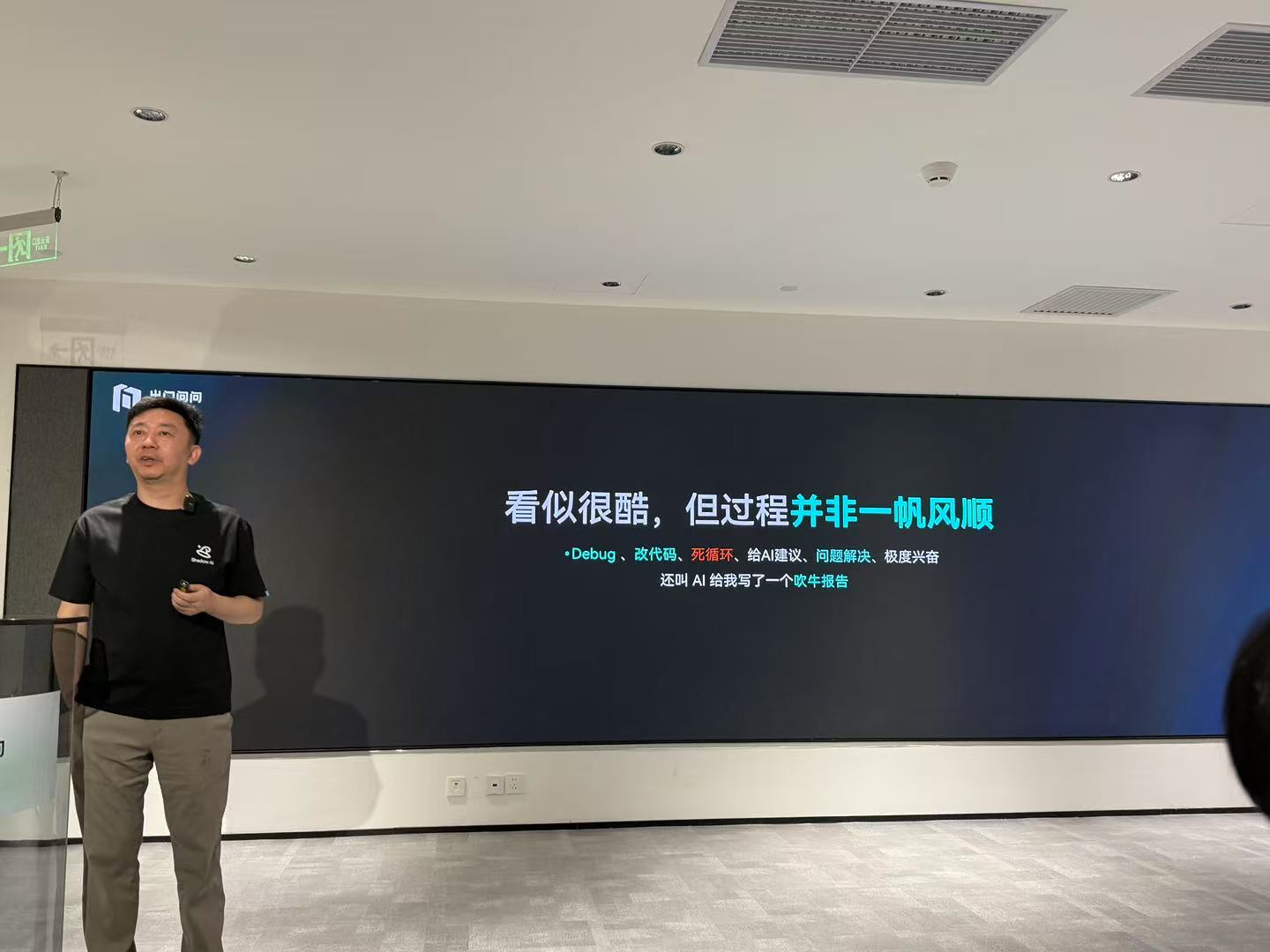
Core Viewpoint - The article discusses the innovative approach taken by a founder to develop an AI-native collaboration platform, highlighting the potential of AI to transform traditional work structures and product development processes [1][4]. Group 1: AI Development Experiment - The founder, Li Zhifei, attempted to create a product prototype in two days using AI programming tools, challenging the traditional development model that typically requires a large team and extended timeframes [1][2]. - Despite facing numerous technical challenges, including persistent bugs and AI limitations, Li successfully built a collaboration platform for AI-native organizations, demonstrating the efficiency of AI in software development [2][4]. - The project, which traditionally would require a team of 20 and a month of work, was completed in just two days with a cost of approximately $100 in AI token usage [4]. Group 2: AI's Impact on Product Lifecycle - After completing the prototype, Li utilized AI to generate a promotional website in about five minutes, a task that would normally take a team a week [3]. - AI was also employed to create a complete product demonstration video, showcasing the potential for AI to streamline various aspects of product marketing and development [4]. Group 3: Future of AI in Hardware Development - The company is now focusing on developing AI-driven hardware products, such as the TicNote, which incorporates an AI agent and aims to compete in the market against established players [5][6]. - Li emphasized a shift towards leveraging AI to enhance product development efficiency and reduce costs, moving away from traditional hardware development models that required significant upfront investment [6]. - The competitive landscape remains challenging, with established AI companies already active in the recording and transcription market, indicating that the success of new AI products will depend on their ability to differentiate and capture market share [6].

一个人两天时间,他用AI为AI们打造出了沟通平台
Di Yi Cai Jing· 2025-06-25 13:38
Group 1 - The core idea revolves around the development of an AI-native collaboration platform designed for organizations where AI takes on most roles, challenging traditional tools like Feishu and DingTalk [1][4] - The founder of the company, Li Zhifei, successfully created a product prototype in just two days using AI programming tools, which would typically require a team of at least 20 people and a month to develop [1][3] - The efficiency of AI in software development was highlighted, with Li generating a promotional website and a product demonstration video in a fraction of the time it would take a traditional team [3][4] Group 2 - The company is now focusing on practical and mature hardware designs, as evidenced by the launch of the TicNote, an AI-powered recording device that competes with the successful overseas product Plaud [7][8] - The previous experiences with hardware, such as the TicWatch and TicPod, have led to a more cautious approach in product development, emphasizing AI software to enhance efficiency [7][8] - Despite the innovative approaches, the company faces significant competition in the recording and transcription market from established players like iFlytek, Alibaba, and Baidu [8]
从Sam Altman的观点看AI创业机会在哪
Hu Xiu· 2025-06-24 12:22
Group 1 - The core idea is that significant changes in technology create the most opportunities for new companies, as established players may become sluggish and unable to adapt quickly [1][2][8] - AI technology is experiencing qualitative leaps, moving from linear progress to exponential breakthroughs, with concepts like AGI and HI becoming increasingly realistic [3][4][6] - OpenAI serves as a prime example of this shift, having evolved from a seemingly ambitious startup in 2015 to a major player with its GPT series models now serving millions of users daily [5][6][7] Group 2 - During stable periods, market dynamics are fixed, making it difficult for startups to break through due to the resources and brand power of large companies [8][18] - The advent of open-source models and cloud computing allows small teams to achieve what previously required hundreds of people over several years, thus creating new opportunities [10][11] - The entrepreneurial landscape has become more accessible, with tools like GitHub Copilot and Midjourney enabling individuals to accomplish tasks that once required entire teams [13][15][16] Group 3 - Entrepreneurs face uncertainty at the start, and the ability to navigate this uncertainty is crucial for long-term success [17][27] - Sam Altman emphasizes that finding direction amidst chaos is key, and that true innovation often comes from pursuing unique ideas that few believe in [18][25][29] - The concept of the "1% rule" suggests that if only a small number of insightful individuals believe in a project, it has a higher chance of success [25][26] Group 4 - AI is transitioning from a "tool" to an "agent," capable of autonomously executing tasks based on simple commands, fundamentally changing human-computer interaction [33][34][35] - The traditional SaaS model may be nearing its end as AI enables tasks to be completed through conversation rather than through multiple applications [39][42] - The emergence of an "agent economy" suggests that future software platforms may generate custom AI assistants on demand, streamlining processes significantly [43][44][48] Group 5 - The integration of AI with robotics is expected to redefine industries such as manufacturing and logistics, with AI taking on complex physical tasks [49][51][53] - The future of work will see a shift where repetitive tasks are automated, increasing the value of creative roles and enabling small teams to achieve significant outcomes [54][55][56] - The ability to leverage AI effectively will become a critical skill, surpassing traditional knowledge accumulation [56] Group 6 - Building a competitive moat in AI involves understanding user value deeply and continuously exploring uncharted territories rather than just focusing on technology [57][62] - OpenAI's evolution illustrates how initial market uniqueness can develop into a robust brand and user experience through continuous innovation and community engagement [60][66] - Startups should avoid saturated markets and instead pursue unique challenges that have not yet been addressed, which can lead to significant breakthroughs [70][72] Group 7 - The ultimate goal of technological advancement is to create abundance rather than merely increasing company valuations, with AI and energy being key leverage points for future growth [78][80] - Addressing energy consumption is crucial for the sustainable development of AI, as the training of large models requires significant energy resources [80][81] - The relationship between AI and energy is symbiotic, with AI having the potential to drive innovations in energy efficiency and sustainability [81][82]
