
资产证券化

Search documents
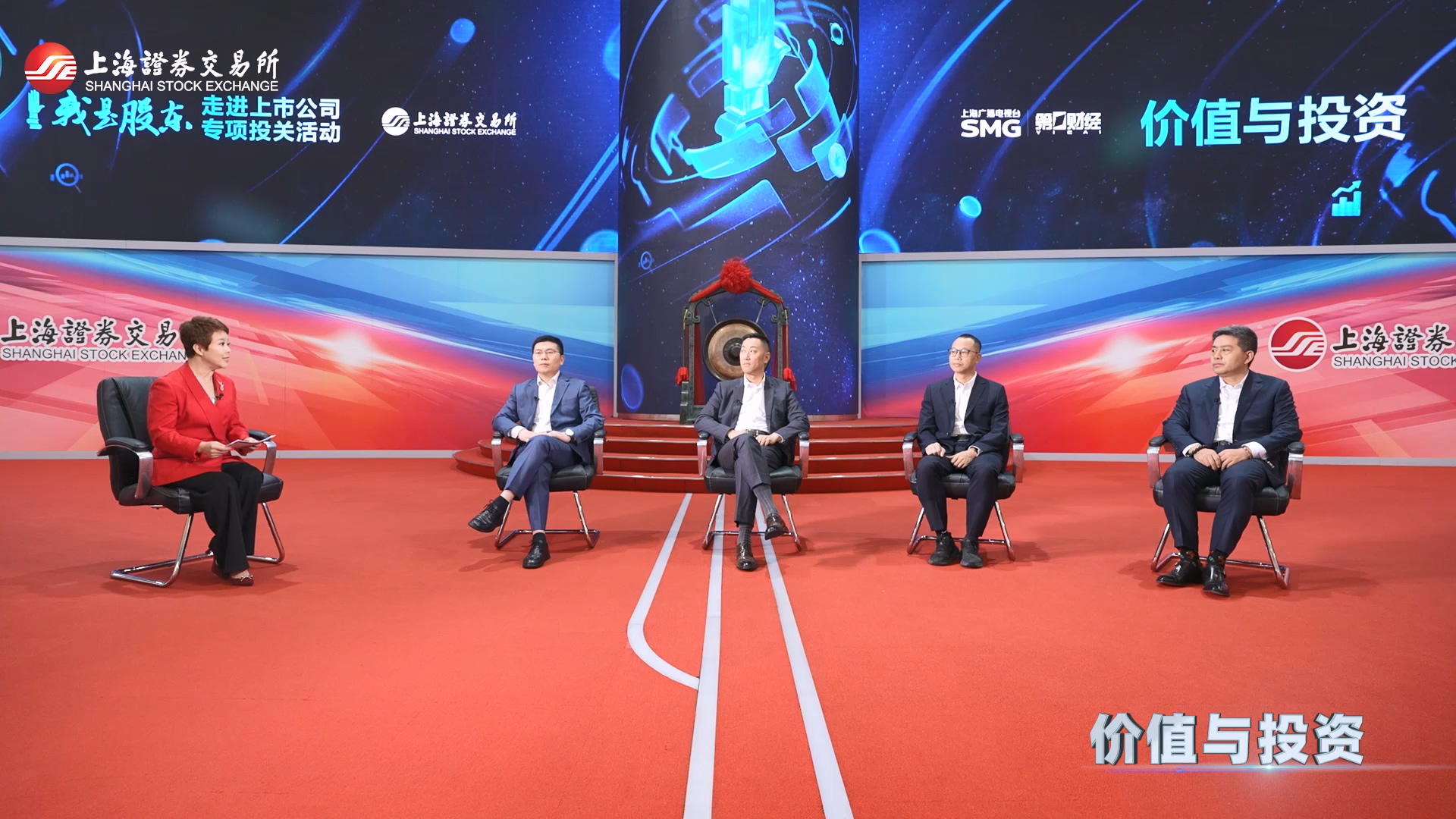
公募REITs市场持续扩容提质,资产稳健运营构筑长期价值
Di Yi Cai Jing· 2025-11-14 08:03
Core Insights - The article discusses the current opportunities for the domestic REITs market in China, emphasizing the importance of enhancing the investment and financing cycle through the expansion and quality improvement of public REITs [1][3]. Group 1: Market Expansion and Policy Support - The number of publicly listed REITs in China has reached 77, with a total market capitalization exceeding 220 billion yuan [3]. - The National Development and Reform Commission (NDRC) has issued a notice to support the normalization of REITs applications in the infrastructure sector, providing new policy guidance and continuous momentum for market expansion [1][3]. - The REITs market in China is still in its early stages compared to mature markets in Europe, the U.S., and Japan, but it has already shown positive impacts on project financing channels and effective investment [3]. Group 2: Importance of Asset Management - High-level asset operation is crucial for the healthy development of REITs, requiring companies to enhance their operational capabilities and risk management [6]. - Companies that can demonstrate stable asset management and resilience to industry cycles are likely to gain higher investor recognition [6]. - The focus on maintaining high occupancy rates and optimizing rental levels is essential for stabilizing the asset base of REITs [6]. Group 3: Perspectives from Industry Leaders - Leaders from various companies, such as Anhui Communications Investment Group and Dongjiu Industrial Real Estate Investment Co., have expressed strong interest in the expansion of REITs, highlighting its role in revitalizing existing assets and funding new projects [4][5]. - The expansion of REITs is seen as a critical mechanism for risk diversification and enhancing asset yield expectations [5]. - The experience from international markets indicates that the scale of REITs expansions often surpasses initial public offerings, suggesting a positive trend for the future of China's REITs market [5][6].

2025年9月图说资产证券化产品:五部门支持商业地产项目REITs发行,ABS产品发行明显升温
Zhong Cheng Xin Guo Ji· 2025-11-13 11:58
Report Industry Investment Rating - No relevant content provided Core Views - The "15th Five-Year Plan" draft proposes to support the development of innovative products such as asset securitization and promote the high - quality development of the real estate industry [2] - The "Action Plan" supports the issuance of REITs for eligible commercial real estate projects, which is conducive to revitalizing the stock assets in the commercial real estate field and promoting the recovery of the real estate industry [3] - In September 2025, the issuance of asset - securitized products in the whole market increased significantly, and the issuance costs of different types of products were differentiated [7] - The issuance scale of products in the inter - bank and exchange markets has increased, with the largest increase in credit ABS [16] - The trading activity of ABS products in the secondary market has generally increased, and products such as class REITs and micro - enterprise loans have relatively active transactions [19] Summary by Directory 1. Overall Market Issuance Situation - In September 2025, a total of 299 issues of asset - securitized products were issued in the whole market, with a total scale of 268.78 billion yuan, a 43% increase from the previous period [7] - The average issuance costs of policy - loan - based and micro - enterprise - loan - based products were relatively high, while those of personal auto - loan products were relatively low [7] - The secondary - stratification ratios of products such as trust - beneficiary rights, shantytown - renovation/affordable - housing, and accounts - receivable did not exceed 10%, while that of non - performing - loan products remained at a high level [7] - The stratification ratios of different products with underlying assets such as micro - enterprise loans and class REITs varied greatly [7] - Exchange - traded ABS: 191 issues were issued, with a total scale of 164.946 billion yuan, a 41% increase from the previous month. The coupon rates of priority products with disclosed credit ratings ranged from 1.65% to 3.95% [13] 2. Issuance Situation in the Inter - bank and Exchange Markets - Inter - bank market ABS: 38 issues of products were issued, with a scale of 36.569 billion yuan, a 72% increase from the previous month. The priority products were all rated AAAsf, and the highest coupon rate was 2.80% [16] - The secondary - stratification ratios of products ranged from 12% to 35%, and nearly 90% of inter - bank ABS products had a secondary - stratification ratio of over 20% [16] - Transaction - Association ABN: 70 issues were issued, with a total scale of 67.363 billion yuan, a 16% increase from the previous month. The coupon rates of priority products with disclosed credit ratings ranged from 1.60% to 3.80% [17] 3. Secondary Market - Inter - bank market ABS: The total trading volume was 20.378 billion yuan, and the trading activity increased significantly. Non - performing - loan products had the largest trading volume [19] - Exchange - traded ABS: The total trading volume was 104.656 billion yuan, and the trading scale increased significantly from the previous month. Class REITs products had the largest trading volume [22] - Transaction - Association ABN: The total trading volume was 54.07 billion yuan, and the trading scale further increased. Micro - enterprise loans and bank/Internet consumer loans had relatively active transactions [25]
西北地区首单国企商业综合体CMBS项目完成发行
Zhong Guo Jin Rong Xin Xi Wang· 2025-11-13 10:41
Core Insights - The issuance of the "Western Securities - Shaanxi Construction Installation Sheng'an Plaza Shopping Center Asset-Backed Special Plan (CMBS)" has been completed, with a scale of 711 million yuan, a term of 18 years, an AAAsf rating, and a coupon rate of 3.6% [1] Group 1: CMBS Issuance Details - The CMBS is backed by Shaanxi Construction Group Co., Ltd., ranked 120th among China's top 500 enterprises, providing external credit enhancement [1] - This CMBS represents the first asset securitization product for a state-owned enterprise's commercial complex in the northwest region of China [1] Group 2: Underlying Asset Characteristics - The underlying asset is the Sheng'an Plaza Shopping Center located in the Beilin District of Xi'an, with a total construction area of 97,900 square meters [1] - The shopping center includes diverse business formats such as a shopping mall, hotel, fashion street, long-term rental apartments, and youth apartments, creating a comprehensive urban consumption circle for surrounding communities, hospitals, and schools [1] Group 3: Industry Implications - The issuance of CMBS products allows for the securitization of future cash flows from underlying assets, enhancing asset allocation efficiency and promoting a shift towards light asset operations for enterprises [1] - The funds raised from the CMBS issuance can be utilized for new construction projects or contributions to industrial funds, thereby amplifying financial leverage, expanding effective investments, and driving high-quality regional economic development [1]


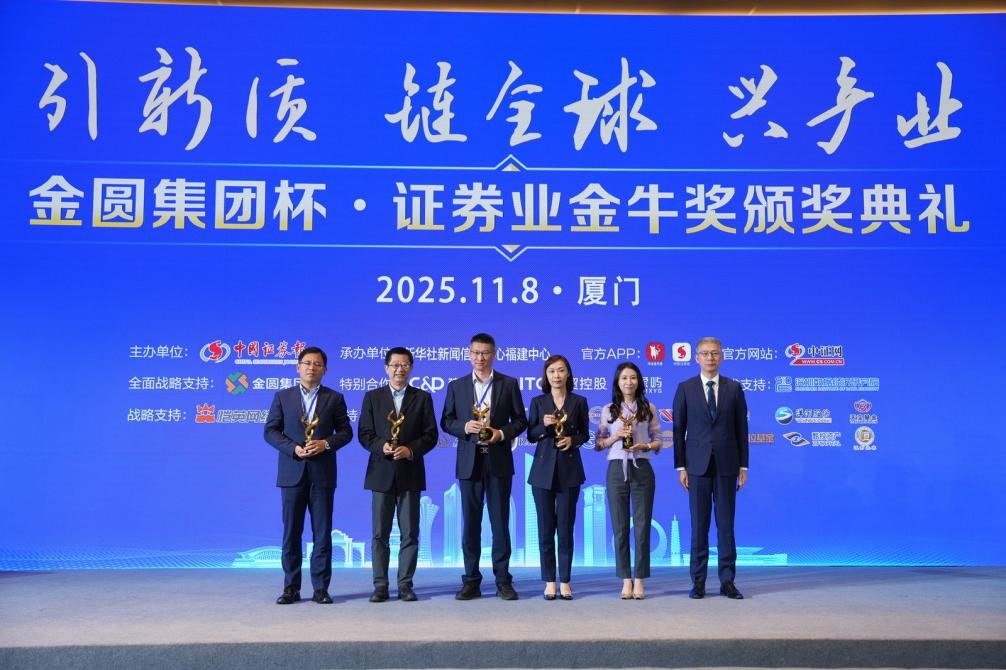
申万宏源资管荣获“五年期金牛券商集合资产管理人”等奖项
Zhong Zheng Wang· 2025-11-11 13:13
Core Viewpoint - The 2025 Securities Industry High-Quality Development Conference and the Golden Bull Award Ceremony highlighted the achievements of Shenwan Hongyuan Securities Asset Management Co., which received multiple awards for its outstanding asset management capabilities and comprehensive strength [1][3]. Group 1: Awards and Recognition - Shenwan Hongyuan Securities Asset Management Co. was awarded the "Five-Year Golden Bull Securities Collective Asset Management Person" and two product awards: "Three-Year Active Mixed Golden Bull Asset Management Plan" and "One-Year Medium to Long-Term Pure Bond Golden Bull Asset Management Plan" [1][3]. - The "Golden Bull Award" is known for its fair and scientific evaluation system, aimed at identifying outstanding securities companies with strong performance and management standards [1]. Group 2: Business Strategy and Development - The company emphasizes a customer-first approach and aims for steady long-term growth, focusing on enhancing active management capabilities and professional reforms [3]. - In response to the low-interest-rate environment, the company is upgrading its fixed-income product line and actively developing "fixed income+" multi-strategy products to meet market demands [3]. - Shenwan Hongyuan is committed to asset allocation business development, customizing strategies for rights-containing products, and exploring the issuance of QDII products in line with international trends [3]. - The company aims to align its business with national strategic directions through asset securitization and is focused on enhancing research capabilities to improve investment efficiency [3].


资产支持票据产品报告(2025年10月):资产支持票据发行节奏有所放缓,个人消费金融和小微贷款类资产保持活跃,汽车融资租赁类资产发行规模显著增长
Zhong Cheng Xin Guo Ji· 2025-11-11 11:11
Report Summary 1. Report Industry Investment Rating No relevant information provided. 2. Core Viewpoint In October 2025, the issuance pace of asset - backed notes slowed down, with personal consumer finance and small - micro loan assets remaining active, and the issuance scale of auto financial leasing assets increasing significantly [4]. 3. Summary by Relevant Catalogs Issuance Situation - **Overall Issuance**: In October 2025, 48 asset - backed note products were issued, with a total issuance scale of 51.436 billion yuan. Compared with the previous month, the number of issuances decreased by 22, and the scale dropped by 23.64%. Compared with the same period last year, the number increased by 2, and the scale grew by 13.50%. Only 5 products were publicly issued, and the rest were privately placed [5][6]. - **Initiating Institutions**: Shenzhen Fudi Financial Leasing Co., Ltd. ranked first with an issuance scale of 6.784 billion yuan (13.19% of the total). The top ten initiating institutions had a combined issuance scale of 36.455 billion yuan, accounting for 70.87% of the total [6]. - **Underlying Asset Categories**: The underlying asset types mainly included personal consumer finance, small - micro loans, auto financial leasing, accounts receivable, and specific non - financial claims. Personal consumer finance products accounted for 28.71% of the scale, small - micro loans 22.16%, and auto financial leasing 20.95% [8]. - **Issuance Scale Distribution**: The highest single - product issuance scale was 6.784 billion yuan, and the lowest was 1.51 billion yuan. The products with a single - issuance scale in the range of (5, 10] billion yuan had the largest number (19) and scale (32.80% of the total) [10]. - **Term Distribution**: The shortest term was 0.27 years, and the longest was 18.05 years. Products with a term in the range of (1, 2] years had the largest number (17) and scale (41.34% of the total) [12]. - **Rating Distribution**: AAAsf - rated notes accounted for 92.53% of the issuance scale [13]. - **Issuance Interest Rate**: For one - year - around AAAsf - rated notes, the lowest issuance interest rate was 1.78%, the highest was 2.65%, and the interest rate center was around 1.80% [15]. - **ABCP Issuance**: In October 2025, 16 ABCP products were issued, with a total scale of 12.41 billion yuan (24.13% of the ABN issuance scale), a year - on - year increase of 7.73%. Personal consumer finance ABCP accounted for 54.54% of the ABCP issuance scale, and accounts receivable ABCP accounted for 20.57% [19]. Secondary Market Transaction Situation - **Overall Transaction**: In October 2025, there were 609 secondary - market transactions of asset - backed notes. The number of transactions decreased by 4.25% month - on - month and 1.77% year - on - year. The transaction amount was 46.139 billion yuan, a month - on - month decrease of 14.67% and a year - on - year decrease of 7.93% [5][20]. - **Underlying Asset Type Distribution**: The more active underlying asset types in the secondary - market transactions were small - micro loans (24.39% of the transaction amount), personal consumer finance (21.79%), accounts receivable (17.44%), class REITs (16.14%), and supply chains (5.98%) [20].
世纪互联(VNET.US)成功发行数据中心行业全国首单绿色持有型不动产ABS
智通财经网· 2025-11-11 10:58
Core Viewpoint - Century Internet (VNET.US) successfully issued the "Taibao Asset-Century Internet Data Center Holding-type Real Estate Green Asset-backed Special Plan," marking a significant breakthrough in green finance and asset securitization for the data center industry, setting a new benchmark for high-quality and sustainable development [1][2] Group 1 - The project is the first successful issuance of a green holding-type real estate ABS in the national data center industry, indicating innovation in green finance [1][2] - The issuance scale of the project is 860 million yuan, with underlying assets transferred to the asset-backed special plan through equity transfer [1] - The underlying assets consist of urban IDC projects held by Century Internet, located in core cities with high demand for data centers, ensuring stable and predictable cash flow [2][3] Group 2 - The project received a G-1 rating from a professional third-party evaluation agency, the highest level in the green asset support securities assessment system [2] - The project integrates national dual carbon strategies through technologies like photovoltaic power generation and AI energy management, establishing a positive correlation between environmental benefits and investment returns [2] - Century Internet aims to revitalize existing IDC assets through innovative financial tools, enhancing operational and capital efficiency while promoting green and intelligent upgrades in data centers [3]

河北省国资委监管企业资产总额达2.3万亿元
Xin Hua Cai Jing· 2025-11-11 07:19
此外,河北省国资委还加速推进资产证券化。截至今年三季度末,河北省国资委监管企业A股上市公司 12家,总市值超1900亿元。"十四五"时期,新增2家新三板挂牌公司,新增2只高速公路类、火电类公募 REITs,省级上市后备企业达到12家。 (文章来源:新华财经) 新华财经石家庄11月11日电(记者刘桃熊)记者从河北省政府新闻办举行的"十四五"高质量发展河北答 卷系列主题发布会河北省国资委专场获悉,"十四五"时期,河北省国资委监管企业资产总额从1.2万亿 元增长到2.3万亿元,利润总额从143亿元增长到211亿元,年均增速分别达到17%和10%。 河北省国资委党委书记、主任张泽峰介绍,"十四五"期间,河北省国资委有序推进29家企业战略性重组 和专业化整合,涉及资产5274亿元。整合重组后的河北港口集团,2024年吞吐量在全国沿海主要港口集 团中位居第3位;完成河北建工集团对省建研院整合,实现设计施工一体化运营;河北建投集团对河北 资产、河北信投、河北国富进行了重组,优化省属投资类企业资本布局;跨部门整合9家省属水利企 业,组建河北水发集团;组建河北数据公司,加速推进全省数据要素市场建设;整合河北物流集团、河 北外贸 ...
润泽科技(300442)三季报点评:大规模数据中心建设如期推进 REIT发行改善资金储备
Xin Lang Cai Jing· 2025-11-11 00:42
Core Viewpoint - The company reported significant growth in Q3 2025, driven primarily by the successful listing of the Southern Runze Technology Data Center REIT, marking a major breakthrough in asset securitization and a new business model for the company [1][2]. Financial Performance - For the first three quarters of 2025, the company achieved revenue of 3.977 billion, a year-on-year increase of 15.05%, and a net profit of 4.704 billion, up 210.73% year-on-year. However, the net profit after deducting non-recurring items was 1.353 billion, down 9.47% year-on-year [1]. - In Q3 2025, the company reported revenue of 1.481 billion, a year-on-year increase of 14.61% and a quarter-on-quarter increase of 14.08%. The net profit reached 3.820 billion, a staggering year-on-year growth of 598.38%, while the net profit after deducting non-recurring items was 475 million, down 12.81% year-on-year but up 5.47% quarter-on-quarter [1]. REIT Listing Impact - The Q3 performance surge was largely attributed to the successful listing of the Southern Runze Technology Data Center REIT on August 8, which included the transfer of assets from the Langfang A-18 Data Center, contributing 3.756 billion in investment income for Q3 [2]. - The asset transfer also resulted in an increase in the company's income tax from 29 million in the same period last year to 399 million [2]. Data Center Construction Plans - The company is on track to complete its large-scale data center construction plan for 2025, with an expected delivery of 440MW of computing power, of which 220MW has already been delivered in the first half of the year [3]. - The Langfang B District data center is in the later stages of construction and is expected to be operational by the end of 2025, providing over 100,000 units of computing power [3]. Margin Analysis - The company's gross margin is in a declining trend, with Q3 2025 gross margin at 45.95%, down 3.14 percentage points from the previous quarter and down 10.85 percentage points year-on-year [3]. - Factors affecting the gross margin include changes in business structure, increased depreciation due to accelerated data center construction, and the impact of the Langfang A-18 Data Center being included in the REIT [4]. Future Outlook - The company is expected to experience high revenue growth due to accelerated computing power construction and is actively seeking quality acquisition targets to strengthen its position in the industry [5]. - EPS forecasts for 2025-2027 are 3.17, 1.85, and 2.63, with corresponding PE ratios of 15.57, 26.64, and 18.81 based on the closing price of 49.38 on November 7 [5].

资产证券化引资本活水服务科技创新 上交所:精准对接和支持中小微企业融资需求
Zhong Guo Zheng Quan Bao· 2025-11-07 00:47
Core Viewpoint - The successful issuance of the "Hua'an-Xingtai Leasing-Data Asset Supporting Intellectual Property ABS" marks a significant milestone in the asset-backed securities (ABS) market, specifically aimed at supporting technology innovation enterprises in industrial parks [1] Group 1: ABS Product Development - Xingtai Holdings has issued a total of 5 ABS products with a cumulative scale of 1.783 billion yuan, targeting various types of enterprises including small and medium-sized enterprises and technology-driven companies [1] - The recent ABS product features a coupon rate of 1.86%, making it the first of its kind in the country to support intellectual property for technology innovation [1] - The ABS "Xingtai Model" has emerged, characterized by a diverse product matrix that effectively revitalizes various asset classes, including financing leasing and commercial factoring [2] Group 2: Data Empowerment and Risk Control - The "Xingtai Model" utilizes data empowerment to create risk profiles for enterprises, enhancing the credibility of investment in ABS products through a risk control model based on the "Research Value Score" [2][3] - This model aims to lower financing costs for enterprises by providing a one-stop ABS financing service that connects asset value with capital market opportunities [2] Group 3: Intellectual Property as Financial Assets - Intellectual property ABS products have transformed "paper patents" into "development funds," enabling companies to leverage high-value patents for financing [4] - Xingtai Leasing has issued approximately 691 million yuan in intellectual property ABS products, facilitating financing for nearly 100 technology companies [4] - The AAA-rated guarantee from Xingtai ensures a stable operation of the ABS products, providing a safety net for investors while supporting low-cost financing for enterprises [4] Group 4: Support for SMEs and Innovation - The Shanghai Stock Exchange (SSE) is actively promoting financial support for small and medium-sized enterprises and technology-driven companies through various initiatives, including the "Five Major Financial Articles" action plan [6][7] - The ongoing development and replication of the ABS "Xingtai Model" are expected to enable more enterprises to utilize asset securitization tools to activate existing assets and attract low-cost capital for economic development [7] - The SSE plans to enhance product case promotion to help SMEs and technology enterprises better understand and utilize asset securitization products to reduce financing costs and broaden funding channels [7]
上交所:精准对接和支持 中小微企业融资需求
Zhong Guo Zheng Quan Bao· 2025-11-06 22:37
Core Insights - The issuance of the "Hua'an-Xingtai Leasing-Data Asset Supporting Intellectual Property ABS" marks the first data asset-backed securities (ABS) product aimed at supporting innovation-driven enterprises in industrial parks, with a coupon rate of 1.86% [1] - The Shanghai Stock Exchange (SSE) has supported Xingtai Holdings in issuing a total of 5 ABS products, amounting to 1.783 billion yuan, targeting various enterprises including small and medium-sized enterprises (SMEs) and technology firms [1][2] - The "Xingtai Model" leverages data empowerment to create risk profiles for enterprises, enhancing the credibility of investments in ABS products [2][3] Group 1: ABS Product Development - The ABS products developed by Xingtai Holdings effectively activate diverse existing assets across financing leasing, commercial factoring, micro-loans, and financing guarantees [2] - The ABS products are designed to provide a comprehensive risk control model for debtors, utilizing a "Research Value Score" to help investors assess repayment capabilities [2][3] - The knowledge property ABS products have facilitated financing for nearly 100 technology firms, converting over 270 high-value patents into financial resources [4] Group 2: Market Impact and Future Prospects - The ABS "Xingtai Model" is seen as a significant tool for cultivating new productive forces in Hefei and serves as an effective channel for capital market support for local development [5] - The SSE's initiatives align with the broader financial strategy to enhance technology finance, green finance, and inclusive finance, contributing to high-quality economic development [6][7] - The ongoing evolution and replication of the ABS "Xingtai Model" are expected to enable more enterprises to utilize asset securitization tools to revitalize existing assets and attract low-cost capital for real economy development [7]