ESG投资

Search documents
绿色化数字化“两化融合”有哪些路径?
Zhong Guo Huan Jing Bao· 2025-07-15 00:18
Core Viewpoint - The acceleration of green low-carbon transformation is essential to address extreme climate risks and achieve sustainable development in the context of increasing global climate change [1] Group 1: Current Challenges - The integration of green low-carbon development and digital governance is insufficient, with a lack of collaborative mechanisms for digital empowerment in green transformation [2] - Urban green infrastructure lacks intelligent management capabilities, limiting its effectiveness in mitigating heat island effects and providing cooling spaces for citizens [2] - Existing green low-carbon policies lack a systematic evaluation mechanism driven by big data and AI, hindering dynamic adjustments and precise policy implementation [3] Group 2: Recommendations for Integration - Promote deep integration of digital technology and green low-carbon transformation by establishing cross-departmental collaboration mechanisms and integrating data resources across various sectors [5] - Upgrade urban green infrastructure and smart buildings to enhance their resilience and livability during extreme heat events, including the implementation of intelligent monitoring and control systems [6][7] - Improve the policy support and incentive systems for smart green low-carbon initiatives by establishing data-driven evaluation mechanisms and enhancing the digitalization of carbon markets [8] Group 3: Talent Development - Strengthen the talent pool for smart green governance by improving educational programs and fostering collaboration between academia and industry to cultivate professionals with both digital and green low-carbon expertise [8]
创业板综编制优化!7家公募火速上报ETF,有存量产品年内涨超10%
Bei Jing Shang Bao· 2025-07-13 12:08
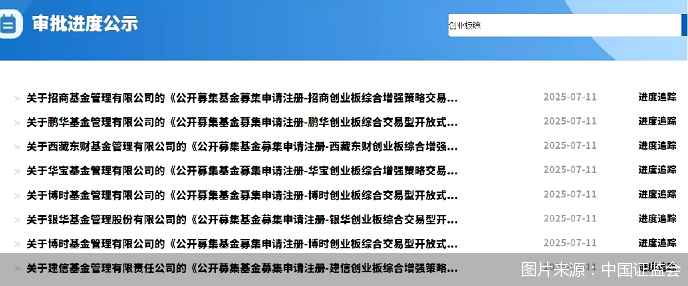
Core Viewpoint - The recent revision of the ChiNext Composite Index by the Shenzhen Stock Exchange aims to enhance index quality and attract more investment into high-quality ChiNext companies through the introduction of new ETFs [1][3][4]. Group 1: Index Revision Details - The revised ChiNext Composite Index will implement a monthly removal mechanism for stocks under risk warning and an ESG negative screening mechanism for stocks rated C or below by the National ESG rating [3][4]. - After the revision, the index will include 1,316 sample stocks, covering 95% of ChiNext listed companies and 98% of total market capitalization [3][4]. - The top three industries represented in the index are Industrial (32%), Information Technology (26%), and Healthcare (12%), with high-tech enterprises accounting for 92% of the index [3][4]. Group 2: ETF Launch and Market Impact - Following the index revision, seven public funds quickly submitted applications for ChiNext Composite ETFs, including major firms like Penghua Fund and Bosera Fund [4][6]. - The introduction of these ETFs is expected to provide investors with more convenient investment tools, potentially increasing liquidity in the ChiNext market and enhancing value discovery [1][4][7]. - The performance of existing related index funds has been strong, with several funds reporting year-to-date gains exceeding 10% [5][6][7]. Group 3: Investment Opportunities - Investment opportunities in the ChiNext Composite ETFs are driven by the high growth potential of ChiNext companies, improved index quality, and relatively low historical valuations [7]. - Investors are encouraged to focus on high-quality companies with core technological advantages and emerging industries aligned with national strategic development [7].


A股绿色周报|11家上市公司暴露环境风险 正邦科技控股公司被罚100万元
Mei Ri Jing Ji Xin Wen· 2025-07-11 14:17
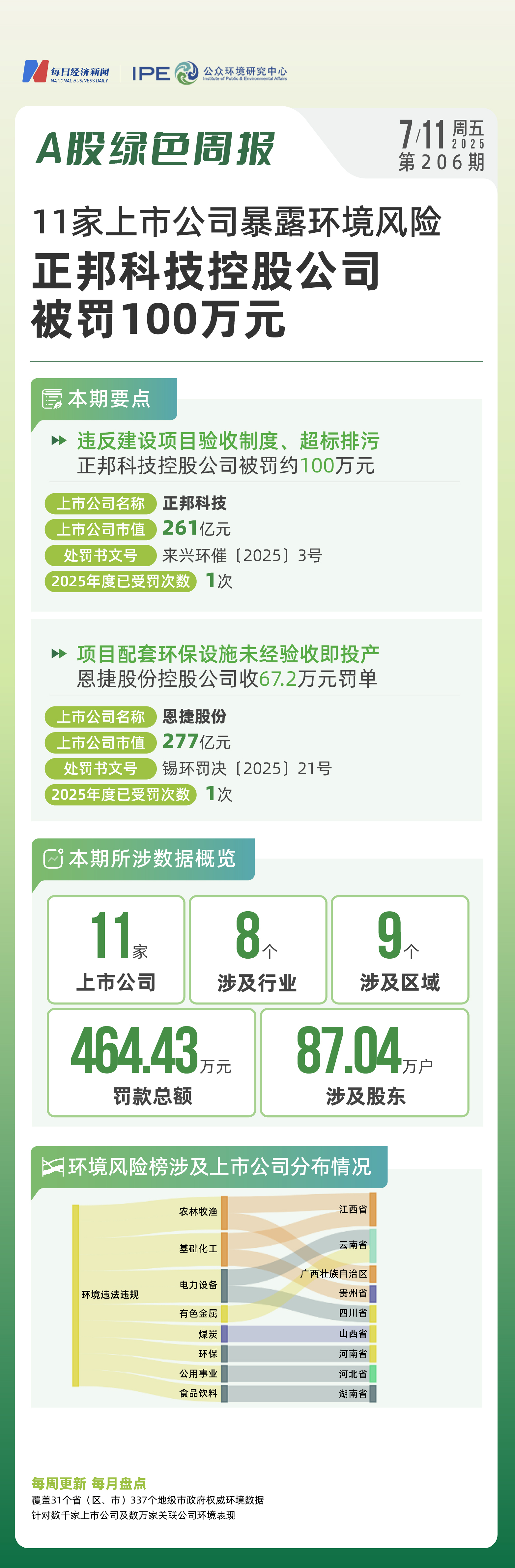
Core Viewpoint - The article discusses the environmental risks faced by listed companies in China, highlighting recent penalties imposed on several firms for violations related to environmental regulations and project approvals [10][11][12]. Group 1: Environmental Violations and Penalties - A total of 11 listed companies were identified as having environmental risks during the first two weeks of July 2025, with 6 of these being state-controlled enterprises [12]. - Zhengbang Technology was fined approximately 1 million yuan for violating project acceptance regulations and exceeding water pollution discharge limits [10][13]. - Enjie Co., Ltd. was penalized 672,000 yuan for exceeding air pollutant discharge limits and for operating without the necessary environmental facility acceptance [16][17]. Group 2: Company Responses and Compliance - Enjie Co., Ltd. reported that it has completed rectifications and achieved compliance with environmental standards after the penalty [16]. - Zhengbang Technology has been involved in legal proceedings regarding its penalties, with a settlement reached to reduce the fine by 30% [13]. - Red Star Development's subsidiary was fined 476,000 yuan for improper monitoring of pollution sources, and the company stated that the environmental impact was minimal [15]. Group 3: Broader Implications for Investors - The environmental risks associated with these companies could potentially affect the investment landscape, as 870,400 shareholders are linked to the firms on the environmental risk list [12][13]. - The increasing focus on ESG (Environmental, Social, and Governance) factors in investment decisions highlights the importance of corporate environmental responsibility [18].




指数重磅调整!刚刚,七家上报新品
Zhong Guo Ji Jin Bao· 2025-07-11 11:22
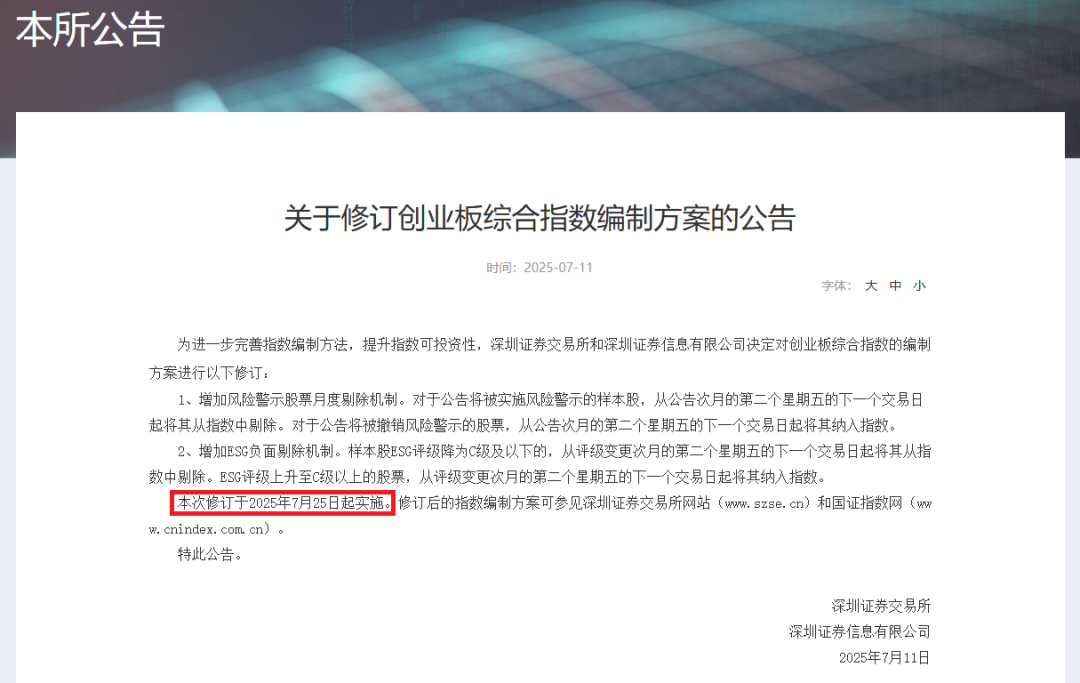
Group 1 - The core viewpoint of the news is the optimization of the ChiNext Composite Index, which introduces two key mechanisms: a monthly elimination rule for risk warning stocks (ST or *ST) and an ESG negative exclusion mechanism [1][4] - Following the announcement of the index optimization plan by the Shenzhen Stock Exchange, seven fund companies quickly submitted applications for ETFs related to the ChiNext Composite Index, indicating an increase in investment interest [2][5] - The revised ChiNext Composite Index will officially implement on July 25, 2025, with a sample stock count of 1,316, covering 95% of ChiNext listed companies and 98% of total market capitalization [3][4] Group 2 - The introduction of the monthly elimination mechanism for risk warning stocks is expected to enhance the index's tail risk management and stability, while the ESG exclusion mechanism promotes responsible investment [4][6] - The performance of the ChiNext Composite Index has shown a cumulative increase of 197% since its inception, with an annualized return of 8%, indicating strong market performance [6][8] - The index's valuation as of July 11, 2025, stands at 63.92 times, which is below the historical median, suggesting potential for future growth [7][8] Group 3 - The long-term allocation value of the ChiNext Composite Index is anticipated to become more prominent, supported by government policies favoring emerging growth enterprises [9] - The index's structure is balanced across industries, with a significant focus on growth attributes, which is expected to attract more market funds [9]
ESG深度报告:中国ESG股票基金的发展历程与绩效表现
Guoxin Securities· 2025-07-11 10:20
Group 1 - The report outlines the steady growth of ESG stock funds in China, with the net value reaching 630.6 billion yuan by the end of 2024, showing significant fluctuations during market upswings [1][11][31] - The number of ESG-themed funds reached 665 by the end of 2024, with a management scale of nearly 833.1 billion yuan, surpassing the proportions seen in mature markets like the US and Japan [11][12] - ESG strategy funds have seen rapid growth, particularly in the fourth quarter of 2024, where the net value surged by 275 billion yuan, increasing its share from 37.5% to 65.4% [2][52] Group 2 - The report indicates that ESG stock funds prefer large-cap and high-growth stocks, achieving considerable positive premiums and excess returns in growth stock investments [2][3] - Active ESG funds and passive ESG funds both favor large-cap and high-growth stocks, with passive funds showing a stronger preference for large-cap stocks [3][6] - The performance of active ESG funds significantly outperforms that of index-based ESG funds, particularly in terms of excess returns and contributions from growth and size factors [3][7] Group 3 - The report highlights the challenges faced by ESG funds in China, including unclear ESG fund rating standards and the need for improved quality in ESG reporting by listed companies [12][13][14] - The lack of a unified ESG evaluation framework and green investment standards has led to ambiguity in fund selection criteria, making it difficult to avoid "greenwashing" practices [12][14] - Despite these challenges, regulatory policies are making progress in promoting ESG investment development, focusing on funding guidance and investor awareness [15]
ESG深度报告:ESG股票基金的发展历程与绩效表现
Guoxin Securities· 2025-07-11 09:41
Core Insights - The report highlights the steady growth of ESG stock funds in China, with the net value reaching 630.6 billion yuan by the end of 2024, indicating a significant increase in market interest and investment in ESG strategies [1][11][31] - ESG strategy funds have seen rapid growth, particularly in the fourth quarter of 2024, where the net value surged by 275 billion yuan, reflecting a shift in investor preference towards more strategic ESG investments [2][52] - The report identifies a preference among ESG stock funds for large-cap and high-growth stocks, which have yielded considerable positive premiums and excess returns [4][66] Development of ESG Stock Funds - The number of ESG public funds in China reached 665 by the end of 2024, with a management scale of nearly 833.1 billion yuan, surpassing the proportions seen in mature markets like the US and Japan [11][12] - The growth rate of ESG funds has accelerated significantly since the introduction of the "dual carbon" goals in September 2020, with an annualized growth rate of 36% and 29% for quantity and net value, respectively, from Q2 2020 to Q4 2024 [11][12] - Environmental protection funds have historically dominated the ESG fund landscape, but ESG strategy funds have recently overtaken them in terms of growth and scale [11][41] Performance Analysis of ESG Stock Funds - ESG stock funds have shown a consistent preference for large-cap and high-growth stocks, which has contributed to their performance advantages [4][66] - The report employs a factor model to analyze the performance of ESG stock funds, indicating that both active and passive ESG funds favor large-cap stocks, with passive funds showing a stronger preference [3][66] - The performance of active ESG funds has outperformed passive funds primarily due to excess returns, while both types exhibit similar preferences for high-growth stocks [3][66] Thematic Development of ESG Funds - The report categorizes ESG funds into various themes, noting that environmental protection and ESG strategy funds have seen the most significant growth, with environmental protection funds leading until recently [2][41] - By the end of 2024, the number of environmental protection funds was 224, while ESG strategy funds reached 195, indicating a shift in focus towards more strategic ESG investments [41][52] - Social responsibility and corporate governance funds have lagged in growth compared to environmental and ESG strategy funds, with their numbers remaining relatively low [42][53]
毅达资本发布第六份ESG报告:在创新星系中锻造韧性增长力
2 1 Shi Ji Jing Ji Bao Dao· 2025-07-11 08:07
Core Insights - The report emphasizes the theme of "Resilience and New Journey," reflecting the company's commitment to ESG principles amid economic uncertainties [1][2] - The report serves as a systematic response to the challenges faced by venture capital institutions, highlighting the importance of building long-term capabilities [1][2] Investment Performance - In 2024, the company invested in 84 innovative startups, with over 96% of investments in key technology sectors, and 5 companies successfully went public [3] - The company has cumulatively invested in over 1,000 enterprises, facilitating 204 companies to enter the capital market [2][3] Fund Management and Regional Development - The company expanded its fund management capabilities, managing mother funds outside Jiangsu Province for the first time, and established funds in Ma'anshan and Chihu District [3][4] - The "Jiang Hai Plan" led to 69 project investments across eight provinces, accounting for over 80% of total investments, with 6 investments in the Sichuan-Chongqing region [3] Organizational Structure and Innovation - The company underwent a structural reorganization to enhance efficiency, establishing six new divisions including AI Research Center and Angel Investment [5][6] - This structure supports a comprehensive investment coverage model, integrating research and investment decision-making across various sectors [6] ESG Integration and Governance - The company has developed a three-tier governance system for ESG, embedding ESG metrics throughout the investment process, resulting in 34 projects being paused due to governance and compliance issues [7] - The report highlights several green investment cases, showcasing the company's commitment to sustainable development and regional collaboration [8] Future Outlook - The company distributed over 4.9 billion yuan to investors in 2024, demonstrating robust returns and confidence in future growth supported by national policies [9]
韧启新程丨毅达资本第六份ESG报告正式发布!
证券时报· 2025-07-11 07:48
Core Viewpoint - The article emphasizes the resilience and adaptability of Yida Capital in the face of significant challenges in the Chinese venture capital industry during 2024, highlighting its strategic adjustments and achievements in investment and organizational structure [2][3]. Group 1: Achievements and Milestones - In 2024, Yida Capital managed to invest in 84 innovative enterprises, with over 96% of investments in the technology sector, achieving 5 IPOs and a record 101 non-listed exits, distributing over 4.9 billion yuan [2][10]. - The company expanded its mother fund management capabilities, successfully managing mother funds outside Jiangsu province and participating in the establishment of strategic emerging industry sub-funds [9]. - In the first half of 2025, Yida Capital restructured its organization, establishing several new departments including an AI research center and an angel investment division [11][12]. Group 2: ESG Practices and Responsibilities - Yida Capital integrates ESG principles into its development strategy, focusing on sustainable investment that aligns with national strategies, promoting green transformation and social benefits [22][51]. - The company has a history of ESG practices dating back to the early 2000s, with significant milestones including the release of its first ESG report in 2020 and the establishment of an ESG review committee in 2023 [25][28]. - Yida Capital has received multiple awards for its ESG investment practices, including the 2024 ESG Investment Practice Award and recognition as one of the top 20 ESG investment institutions in China [39][46]. Group 3: Investment Focus Areas - The company is focusing on hard technology sectors such as semiconductors, aerospace, new materials, and artificial intelligence, aiming to support key technologies that align with national strategic needs [64]. - Yida Capital has established a 2.5 billion yuan green theme fund, targeting investments in clean energy, smart transportation, and digital technologies [54]. - The investment strategy includes a comprehensive approach to AI, covering the entire industry chain from foundational technologies to application scenarios [114][116]. Group 4: Regional Development and Employee Growth - In 2024, Yida Capital's "Jiang Hai Plan" led to investments in eight provinces, totaling 69 projects, with a significant focus on the southwestern region [82]. - The company emphasizes employee development, having onboarded 52 new employees and actively participating in national strategies to alleviate employment challenges for minority groups [85]. - Yida Capital's community engagement includes initiatives for disaster relief and social welfare, demonstrating its commitment to social responsibility [92][96].
华夏基金:公募REITs的ESG实践
Sou Hu Cai Jing· 2025-07-09 06:50
Core Viewpoint - 华夏基金 integrates ESG factors throughout the entire lifecycle of REITs to enhance asset quality and operational efficiency, aiming for long-term stable returns and value creation for investors [2][12]. Group 1: ESG Integration in Investment Process - 华夏基金 has embedded ESG principles into its corporate DNA since becoming the first public institution in China to sign the PRI in 2017 [3]. - The company established an ESG Business Committee in 2020, marking a new phase in ESG governance [3]. - ESG research teams are integrated into investment departments, applying ESG factors across six key investment process stages: strategy formulation, fundamental analysis, portfolio management, risk control, communication with listed companies, and regular tracking [3][4]. Group 2: Post-Investment Management - A dynamic management system is in place for post-investment management, with quarterly monitoring of ESG risk exposure and rating changes [4]. - The company engages with listed companies regarding their ESG risks and opportunities, providing suggestions and tracking performance [4][5]. - The company has initiated a due diligence management exploration since 2018, focusing on companies with low ESG ratings but high sustainable development potential [5]. Group 3: ESG Investment 2.0 Era - The ESG investment 2.0 era emphasizes objective analysis of ESG factors' impact on business operations and financial metrics, adhering to fiduciary responsibilities to clients [7]. - The quality of ESG information disclosure in China is improving, which is expected to enhance the value of ESG data in investment decisions [8]. - The company aims to link ESG analysis with industry allocation and fundamental analysis to improve investment performance [8]. Group 4: Evolution of ESG Products - 华夏基金 began its ESG product design efforts in 2017, launching funds focused on clean energy and energy efficiency [9]. - By the end of Q3 2024, the company managed 15 ESG public funds with a total scale of 23.266 billion yuan, including both active and passive funds [9]. - ESG-themed funds have generally outperformed major broad-based indices in recent years [10]. Group 5: ESG as a Value Attribute in Public REITs - ESG is becoming a crucial value attribute for public REITs as the pilot programs deepen [11][12]. - Infrastructure REITs are closely related to ESG concerns, focusing on long-term value and stakeholder communication [12]. - The company prioritizes ESG factors in asset selection, ensuring projects have strong environmental and social performance [13]. Group 6: Balancing Short-term Returns and Long-term Value - The company employs multi-dimensional strategies to balance short-term returns with long-term value in REITs [14]. - High ESG-rated REITs tend to have better occupancy rates and rental levels due to their focus on sustainability and tenant services [14][15]. - Financial institutions are increasingly favoring high ESG-rated projects, leading to lower financing costs and higher market valuations [15]. Group 7: Challenges in ESG Investment - The ESG investment landscape in China is still in its early stages, facing challenges such as a lack of reliable evaluation systems and standards [16].
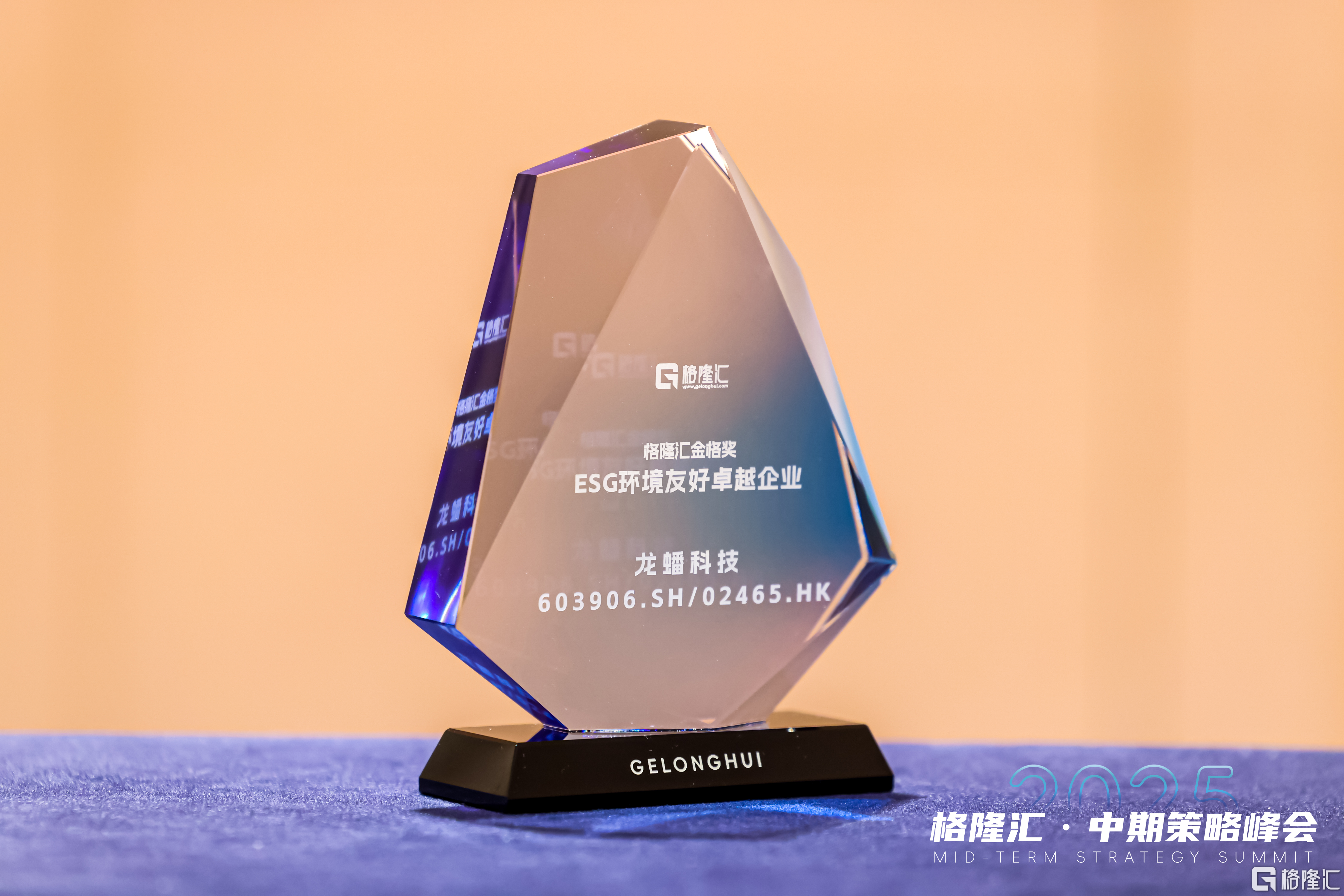
龙蟠科技(603906.SH/02465.HK):荣获ESG环境友好卓越企业,彰显长期价值底色
Ge Long Hui· 2025-07-09 01:48
Core Viewpoint - Longpan Technology has been awarded the "ESG Environmentally Friendly Excellence Enterprise" title, highlighting its commitment to green and sustainable development [1][3][8] Group 1: Environmental Performance - Longpan Technology's recognition is based on its quantifiable environmental benefits, showcasing its professional capabilities in environmental management and technology strength [4] - The company adheres to environmental laws and regulations, actively pursuing innovative environmental measures that exceed legal standards [4] - In 2024, the total wastewater discharge was 403,900 tons, with a 100% compliance rate for wastewater discharge [5] - Longpan Technology has implemented a project to recycle condensate water, expected to save approximately 200,000 tons of water annually [5] - The company has optimized its production processes to reduce hazardous waste, successfully converting desulfurization gypsum into non-hazardous materials, potentially reducing hazardous waste by 6,000 tons annually [5] Group 2: Circular Economy and Cost Savings - Longpan Technology is actively involved in the circular economy, particularly in the recycling and resource utilization of used power batteries from electric vehicles [5] - The acquisition of Shandong Meiduo aims to enhance the recycling of used power batteries, with an expected annual recovery of 25,000 tons, saving approximately 31 million yuan in production costs [5] Group 3: ESG Investment and Market Position - The increasing global emphasis on sustainable development has made ESG investment a significant trend, with investors focusing more on companies' environmental, social, and governance performance [6] - Longpan Technology's ESG excellence is expected to enhance its attractiveness in the capital market, potentially leading to higher valuation premiums [6] - Continuous investment in environmentally friendly practices is anticipated to lower potential environmental risks and compliance costs while improving profitability and operational efficiency [6] Group 4: Social Responsibility - Longpan Technology actively fulfills its social responsibilities through donations and volunteer services, enhancing its corporate image and brand value [7] - The company has partnered with the Jiangsu Provincial Urban Football League, demonstrating its commitment to supporting local sports and contributing to the development of Chinese football [7] Group 5: Conclusion - The award signifies Longpan Technology's significant achievements in sustainable development, laying a solid foundation for long-term stable growth [8] - The company's outstanding ESG performance is expected to attract more investors focused on sustainability, injecting new momentum into its long-term value growth [8]