绿色主题基金

Search documents
证券公司服务绿色金融高质量发展的现状和展望
GUOTAI HAITONG SECURITIES· 2026-02-25 07:55
Core Insights - The report emphasizes the role of securities companies in promoting high-quality development of green finance, highlighting their transition from traditional service providers to key players in building green industry ecosystems and driving innovation [5][20]. - It identifies the challenges faced by securities companies, including imbalanced business layouts, insufficient product innovation, and weak risk management systems, and proposes strategies to enhance their contributions to green finance [12][19]. Group 1: Current Practices in Green Finance by Securities Companies - Securities companies have steadily expanded their green financing business, enhancing their role as intermediaries in financing green enterprises through increased green bond underwriting and equity financing [6][8]. - The green investment business is gaining momentum, with securities companies guiding capital towards green sectors and integrating ESG principles into their investment decision-making processes [8][9]. - Innovations in green financial services are emerging, with securities companies exploring carbon finance, green advisory services, and green derivatives to enhance service offerings [10][11]. Group 2: Challenges in Green Finance Development - There is a notable imbalance in the business layout of securities companies, with resources concentrated in leading firms and coastal regions, leaving smaller firms and inland areas underserved [13][14]. - The capacity for product innovation is lacking, with a predominance of traditional products and insufficient offerings tailored to the diverse needs of green enterprises [15][16]. - The risk management framework for green finance is underdeveloped, with inadequate mechanisms for identifying and managing environmental, credit, and policy risks [17][18]. Group 3: Recommendations and Outlook - Securities companies should strengthen their strategic layouts to promote balanced development in green finance, leveraging their advantages to support smaller firms and enhance service capabilities in underdeveloped regions [21][22]. - There is a need to increase innovation efforts to diversify green financial products and services, focusing on the development of new financing instruments and tailored asset management solutions [23][24]. - Improving the risk management system is crucial, requiring the establishment of comprehensive risk assessment frameworks and enhanced collaboration among financial institutions to share risk data and best practices [25].
迈向“十五五”:以高质量信息披露驱动绿色金融提质增效
Guan Cha Zhe Wang· 2025-12-26 02:49
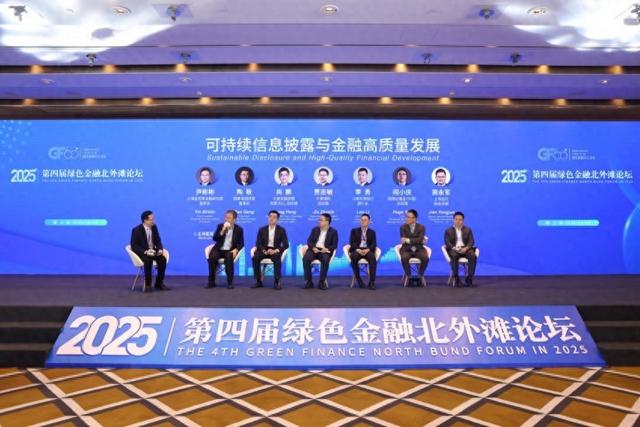
Core Viewpoint - The article emphasizes that green finance has become a core strategy for financial institutions, driven by sustainable information disclosure, which guides funds towards low-carbon sectors and promotes high-quality development in the industry [1]. Group 1: Sustainable Information Disclosure - Sustainable information disclosure is effectively driving financial institutions to integrate green development concepts and implement green innovation practices [1]. - There is a need for a systematic and mandatory information disclosure system to enhance transparency and comparability in ESG disclosures, which are currently mostly voluntary [5]. - The future focus of ESG work should revolve around institutionalizing information disclosure, integrating international standards, and leveraging technology to address data quality issues [5]. Group 2: Green Investment Practices - Companies like Guotai Junan Asset Management have integrated ESG indicators into their investment research systems across various financing businesses, achieving recognition in green financial innovation [5]. - ICBC-AXA Asset Management has seen significant growth in green investment, focusing on sectors like energy storage and renewable energy, while also expanding their green product offerings [7]. - Huaxia Wealth Management has incorporated ESG principles into their product design, ensuring that at least 80% of the underlying assets in green financial products are genuinely green [10]. Group 3: Risk Management and Innovation - Roadmap for risk assessment frameworks is crucial, as identifying and managing risks associated with ESG and climate transition is a key challenge for fund management companies [13]. - Jiangnan Rural Commercial Bank has developed a green finance risk management system to support business expansion and enhance risk control through innovative credit products [16]. - Shanghai Trust emphasizes the flexibility of trust systems in supporting green industries, with a focus on long-term capital and sustainable returns [19]. Group 4: Industry Collaboration and Future Directions - The forum highlighted the need for continuous breakthroughs in information disclosure, standard integration, risk management, and technological empowerment to direct financial resources efficiently towards green low-carbon sectors [21]. - Collaboration with various organizations, including NRDC and WBCSD, indicates a collective effort to advance sustainable finance practices [21].

守护投资者利益 深耕价值创造——深圳积极推动公募基金改革
Zhong Guo Zheng Quan Bao· 2025-11-21 00:13
Core Viewpoint - The public fund industry in China is undergoing a transformation aimed at high-quality development, with Shenzhen leading the charge through comprehensive reforms and initiatives to enhance the industry’s ecosystem and investor protection [1][2]. Group 1: Industry Reform and Development - The key to high-quality development in the public fund industry lies in reshaping the industry ecosystem and establishing a robust investor interest community among investors, fund managers, sales institutions, and evaluation agencies [2]. - Shenzhen has implemented a systematic work plan covering pre-emptive guidance, mechanism construction, and post-evaluation to promote comprehensive reforms in the industry [1][2]. - As of September, Shenzhen public fund companies have issued 14 floating fee rate products with a total scale of 148.72 billion, and the self-purchase of existing funds reached 219.81 billion, reinforcing the investor interest community [2][3]. Group 2: Fee Reduction and Investor Engagement - Since the fee rate reform in July 2023, 31 public fund companies in Shenzhen have significantly reduced management and custody fees, resulting in over 6 billion in benefits to investors [3]. - The industry is enhancing investor satisfaction through improved customer service systems and educational platforms, with 7 pilot fund advisory companies serving approximately 363,700 clients and managing assets of 15.41 billion [3]. Group 3: Long-term Investment and Research Capability - Shenzhen is focusing on enhancing long-term capital inflow and institutional research capabilities to create a new value ecosystem, with a collaborative mechanism established among various regulatory and financial bodies [4][5]. - As of September, the scale of pension products managed by Shenzhen public fund companies exceeded 2 trillion, growing over 10% from the previous year [5]. - The equity fund scale in Shenzhen reached 2.13 trillion, with a year-to-date growth of 23%, while index funds grew by 31% this year, indicating a robust investment environment [5]. Group 4: Product Innovation and Strategic Alignment - Shenzhen public fund companies are actively innovating products to support national strategies, focusing on technology innovation, pension products, and green finance [7][8]. - By the end of September, the number of technology-themed funds reached 495, with a total scale of 506.09 billion, reflecting a 60.94% increase from the previous quarter [7]. - The scale of green-themed funds reached 112.33 billion, with a quarter-on-quarter growth of 22.33%, demonstrating a commitment to sustainable development [8]. Group 5: Future Directions and Regulatory Focus - Moving forward, Shenzhen's regulatory bodies emphasize risk prevention, strong regulation, and promoting high-quality development while enhancing institutional governance and compliance [9][10]. - The industry aims to continue contributing to the construction of a financial powerhouse by focusing on long-term investments and deepening investor protection [10].
守护投资者利益 深耕价值创造
Zhong Guo Zheng Quan Bao· 2025-11-20 20:08
Core Viewpoint - The public fund industry in China is undergoing a critical transformation aimed at enhancing quality and efficiency, with Shenzhen leading the charge through comprehensive reforms and initiatives to support high-quality development [1][2]. Group 1: Industry Reform and Development - Shenzhen's public fund market is characterized by strong vitality and innovation, with a leading number of institutions and management scale in the country [1]. - The China Securities Regulatory Commission (CSRC) has issued a systematic work plan to guide the industry towards high-quality development, focusing on serving the real economy and protecting investor interests [1][2]. - A comprehensive reform covering product, sales, and evaluation aspects is being implemented to align the interests of investors, fund managers, sales institutions, and evaluation agencies [2]. Group 2: Investor Interest and Performance - Industry institutions are incorporating investment performance and investor returns into core assessment indicators, promoting a shift from short-term speculation to long-term value creation [2]. - Nine fund companies in Shenzhen have launched 14 floating fee rate products, amounting to 14.87 billion, to share benefits and risks with investors [2]. - Since the fee reform in July 2023, 31 public fund companies in Shenzhen have significantly reduced management and custody fees, benefiting investors by over 6 billion [2]. Group 3: Long-term Investment and Institutional Capability - The public fund industry is transitioning from a focus on scale to prioritizing investor returns, with efforts to enhance long-term capital market participation [3][4]. - As of September, the scale of pension products managed by Shenzhen public fund companies exceeded 2 trillion, reflecting a growth of over 10% compared to the end of last year [4]. - Institutions are investing in research capabilities and exploring differentiated development paths to improve investor returns [5]. Group 4: Product Innovation and Strategic Focus - Shenzhen's public fund industry is actively directing funds towards key areas such as technology innovation, green finance, and regional collaboration [6][7]. - The number of technology-themed funds in Shenzhen reached 495, with a total scale of 506.09 billion, marking a growth of 60.94% since the second quarter [6]. - The scale of green-themed funds in Shenzhen reached 112.33 billion, with a quarter-on-quarter growth of 22.33% [6]. Group 5: Future Outlook and Strategic Goals - Shenzhen's regulatory body emphasizes risk prevention, strong regulation, and promoting high-quality development as key work priorities [7]. - The industry aims to enhance core research capabilities and better serve national strategies and wealth management needs of residents [7]. - Shenzhen is positioned as a core engine city in the Guangdong-Hong Kong-Macao Greater Bay Area, with a vibrant capital market and deep integration of technology and finance [7].
引金融活水浇灌绿色经济
Jing Ji Ri Bao· 2025-10-30 22:16
Core Viewpoint - The development of green finance in China is progressing well, with significant achievements, particularly highlighted by an average annual growth rate of over 20% in domestic green loans during the "14th Five-Year Plan" period [1] Group 1: Policy and Regulatory Framework - The new version of the "Green Finance Support Project Directory (2025 Edition)" effective from October 1 further solidifies the institutional foundation for green finance development [1] - The central bank has established carbon reduction monetary policy tools and included green credit in the macro-prudential assessment framework to guide financial institutions in supporting green low-carbon projects [1] - Regulatory bodies are enhancing green finance standards and information disclosure requirements, strengthening supervision and evaluation of financial institutions [1] Group 2: Financial Institutions' Role - Policy banks provide stable medium- to long-term funding support for green development in key areas and major projects [1] - Commercial banks are deepening and refining green financial services to ensure efficient and precise financial support for green development [1] - The securities industry is leveraging direct financing functions of the capital market to develop various green-themed funds, guiding more resources towards low-carbon and environmentally friendly sectors [1] Group 3: Product Development and Innovation - There is a need to develop relevant products and services, summarize previous practical experiences, and explore innovative development methods [2] - Financial institutions should simplify approval processes and enhance service efficiency while managing risks to support enterprises in low-carbon technology transformation [2] - Securities institutions are encouraged to actively issue and underwrite green bonds, raising funds specifically for green projects [2] Group 4: Collaborative Efforts and Ecosystem Building - Local governments and departments should implement green low-carbon development strategies, formulate relevant policies, and strengthen horizontal collaboration [3] - Commercial banks should transition from merely providing credit to constructing a comprehensive service function for green ecosystems, enhancing strategic guidance and risk management [3] - The securities industry should play a role in resource integration and value discovery, injecting low-carbon capital into the real economy and guiding social funds towards sustainable development [3]
上海外滩边的盛会!邀请你解锁绿色生活隐藏玩法
新浪财经· 2025-10-15 09:12
Core Viewpoint - The 2025 China Green Sustainable Development Expo showcases the integration of sustainability into daily life, emphasizing that green practices are not just a trend but a reality that influences various sectors [2][12]. Group 1: Energy and Manufacturing - Sheneng Group, established in 1987, presented innovations in green fuels, cables, and finance, highlighting the importance of sustainable energy production [4]. - Lingyi Intelligent Manufacturing showcased AI-driven automation in manufacturing, demonstrating the synergy between energy production and intelligent manufacturing in the green industry chain [4]. - The "Green Financial Support Corridor" featured futures exchanges like the Shanghai Futures Exchange, which supports renewable infrastructure through metal futures, and the Guangzhou Futures Exchange, focusing on new energy materials [5]. Group 2: International Cooperation - The "International Cooperation Zone" highlighted global efforts in sustainability, with the UNHCR promoting green aid initiatives in refugee camps [7]. - The Barbados Embassy emphasized the impact of climate change on small island nations, advocating for global environmental protection [7]. - E Fund displayed its achievements in ESG investment, supporting renewable energy and carbon neutrality initiatives [7]. Group 3: Sustainable Practices in Daily Life - Sony introduced "Synecoculture," an ecological farming method that promotes biodiversity and eliminates the need for chemical fertilizers [10]. - Alibaba reported a reduction of 169,000 tons of packaging materials through sustainable practices in its logistics operations [10]. - Bosideng, a leading down jacket brand, has implemented a comprehensive green strategy and achieved an MSCI ESG rating of "A" [11]. Group 4: Local Initiatives and Innovations - Huangpu District's initiatives focus on sustainable urban development, promoting green buildings and renewable energy public transport [13]. - NIO showcased its electric vehicle network, contributing to China's carbon neutrality goals through battery recycling and smart driving technology [13]. - Huaxi Biological emphasized green manufacturing in its biotechnology processes, aligning health and sustainability [14]. Group 5: Overall Integration of Sustainability - The expo illustrated how various sectors, including energy, finance, manufacturing, and international cooperation, are interconnected in promoting sustainability [14].

ESG系列研究之十四:金融助力绿色转型征程(一):公募基金绿色投资五年演进与展望
CMS· 2025-09-29 08:44
- The report introduces the concept of "green income ratio" as a core metric to quantify the "greenness" of investments, which measures the proportion of a company's total revenue derived from activities recognized as green by policy documents [51] - The green income ratio is calculated by tagging industry revenues of listed companies based on the "Green Low-Carbon Transition Industry Guidance Catalog (2024 Edition)" issued by the National Development and Reform Commission in February 2024 [51] - The weighted average green income ratio is used to evaluate the average green income proportion corresponding to each unit of investment in the fund pool, calculated by multiplying the green income ratio of constituent stocks by the fund's holding weight and summing them up [58][61] - The fund-attributed green income total is derived by attributing a company's green income to the fund pool based on the proportion of the fund's market value holding to the company's total market value [58][61] - The green fund pool's weighted average green income ratio in 2025H1 was 21.22%, slightly lower than 23.47% at the end of 2024, but significantly higher than the ratios of major indices like CSI 300 (10.43%) and CSI 800 (9.73%) [58][61] - The green fund pool's attributed green income total in 2025H1 was approximately 146 billion yuan, with each unit of net value corresponding to 0.06 yuan of green income, showing a slight decline compared to 2024 but still three times higher than in 2020 [58][61]
上海全球资管中心建设|中保投资副总裁陈子昊:私募股权投资在上海国际金融中心建设中的功能发挥
Sou Hu Cai Jing· 2025-07-17 00:44
Group 1 - Private equity investment serves as a crucial bridge connecting the innovation needs of the real economy with the effective supply of social capital, playing an indispensable role in enhancing the global resource allocation capability of Shanghai as an international financial center [2][29] - The recent Central Financial Work Conference emphasized accelerating the construction of a financial powerhouse, focusing on five key areas: technology finance, green finance, inclusive finance, pension finance, and digital finance, which will guide the future development of the financial industry in China [2][8] - Shanghai aims to become a leading global financial center by 2035, characterized by an open modern financial market system and a global RMB asset allocation center, competing with New York and London [2][9] Group 2 - Private equity investment is a vital component of the direct financing system, guiding social capital towards the real economy, particularly innovative enterprises and strategic emerging industries [3][4] - The development level and activity of private equity investment are important indicators of the maturity and competitiveness of an international financial center [3][4] - Private equity investment enhances corporate governance and operational efficiency by actively participating in major decisions of invested companies, promoting the establishment of standardized governance structures [7] Group 3 - The "five key areas" outlined in the recent financial strategy highlight the historical mission of private equity investment to support national strategies, including technological self-reliance, green low-carbon development, and regional coordinated development [8][21] - Private equity investment must return to its core purpose of enhancing the quality and efficiency of financial services to the real economy, avoiding short-term speculation [8][21] - Promoting the healthy development of private equity investment is essential for preventing and mitigating financial risks, which includes improving fundraising, investment, management, and exit mechanisms [8][21] Group 4 - Shanghai's financial market is characterized by a high concentration of financial resources, talent, information, and technology, providing favorable conditions for private equity fund operations [9] - The city has been at the forefront of financial innovation in China, implementing pilot programs for qualified foreign and domestic limited partners, which fosters a conducive policy environment for private equity investment [9] - Strategic emerging industries in Shanghai, such as integrated circuits and biomedicine, offer a rich pool of quality investment targets for private equity [9][13] Group 5 - Private equity investment can significantly contribute to the development of technology finance by providing funding support across the entire chain of technological innovation [10][11] - The focus on "hard technology" projects in key sectors like integrated circuits and artificial intelligence is essential for Shanghai's goal of becoming a global technology innovation center [10][11] - Private equity investment should enhance post-investment support and management for technology enterprises, facilitating their growth and addressing challenges [11] Group 6 - Private equity investment plays a critical role in promoting green finance by directing capital towards environmentally sustainable projects and supporting the transition to a low-carbon economy [12] - Establishing green-themed funds and participating in carbon markets are key strategies for private equity firms to engage in green finance [12] - The transformation of traditional industries towards greener practices can be facilitated through private equity investment, which can help upgrade production methods [12] Group 7 - Private equity investment is essential for inclusive finance, aiming to provide affordable financial services to underserved groups, including small and micro enterprises [14][15] - Collaborating with government-led funds can enhance the reach of private equity investment in the inclusive finance sector [14][15] - Focusing on specific areas of inclusive finance, such as agricultural modernization and community businesses, can further support social equity [14] Group 8 - The development of pension finance is crucial for addressing the aging population in Shanghai, with private equity investment playing a role in creating specialized funds for the elderly care industry [16][17] - Collaborating with insurance capital to invest in the pension sector can leverage resources for better outcomes [16][17] - Exploring asset securitization in the elderly care sector can improve capital efficiency and support the development of sustainable pension services [17] Group 9 - Digital finance is a strategic focus for Shanghai, aiming to enhance the efficiency and inclusivity of financial services through technological innovation [19][20] - Private equity investment can support the digital transformation of traditional financial institutions and invest in foundational technologies for digital finance [19][20] - Engaging in the development of digital financial infrastructure is essential for creating a robust digital finance ecosystem [20]
毅达资本第六份ESG报告正式发布
投中网· 2025-07-14 03:09
ESG Development History - The evolution of ESG practices began in the early 2000s, focusing on investments in renewable energy sectors like solar and wind, gradually expanding to encompass the entire "dual carbon" field [3] - In 2020, the company released its first ESG report titled "Capital for Good, Future to Expect," introducing the industry's first ESG investment evaluation reference index and a negative investment list [4] - The 2021 report, "My Existence is Because of You," elaborated on the company's ESG investment philosophy and practices [8] - The 2022 report, "Good Work, Good Results," shifted focus to the invested enterprises, explaining how ESG investments can achieve "knowledge and action in unity" [5] - In 2023, the report "Harmony and Commonality, Nature is Good" was published, and the ESG Review Committee was officially established [6] - The 2024 report, "The Constant Will Go Far," introduced the "Red and Blue Army Mechanism" into ESG operations [9] ESG Management Structure - The governance structure is driven by top-level design, with the board of directors leading the strategy [10] - An ESG Review Committee oversees the implementation of ESG practices, supported by an ESG execution team that ensures thorough execution [10] ESG Investment Effectiveness - The company has paused 15 projects after comprehensive due diligence on potential target enterprises regarding their business environment and production safety [12] - Eight projects were also paused due to evaluations of policy environments, social opinions, and tax compliance [13] - An additional 11 projects were put on hold after assessing the equity structure, team incentives, and related transactions [13] Green Future - The company recognizes that green development is fundamental to high-quality growth, integrating "carbon peak and carbon neutrality" goals into its core strategy [15] - The mission is to leverage venture capital to promote green transformation, establishing a comprehensive green investment system covering fundraising, investment, management, and exit [15] - The company adheres to the philosophy that "lucid waters and lush mountains are invaluable assets," practicing low-carbon operations and empowering the industry chain to reduce carbon emissions [15] Green Investment Focus - The company has established a green thematic fund with a scale of 2.5 billion, focusing on clean energy, smart transportation, energy conservation, environmental protection, and digitalization [18] - Representative investment cases include companies specializing in perovskite solar cell equipment, waste-to-energy conversion, and lightweight materials for electric vehicles [19][21][23] Social Responsibility - The company emphasizes responsible investment, focusing on hard technology sectors such as semiconductors, aerospace, new materials, new energy, artificial intelligence, and biomedicine [27] - The investment strategy aims to promote key core technologies that are self-controllable and serve national strategic needs [27] Employee Growth - The company promotes a diverse and inclusive environment, establishing a nurturing system for career development [48] - During the reporting period, 52 new employees were hired, with a focus on professional and diverse team structures [48] - The company actively responded to national strategies by hiring 18 new employees from Tibet, including 14 Tibetan graduates, addressing employment challenges for this demographic [48] Community and Public Welfare - The company has made significant investments in community development and public welfare, focusing on innovative entrepreneurship, affordable housing, and medical infrastructure [49] - Following a major earthquake in Tibet, the company organized immediate support efforts, showcasing its commitment to social responsibility [54][59]
韧启新程丨毅达资本第六份ESG报告正式发布!
证券时报· 2025-07-11 07:48
Core Viewpoint - The article emphasizes the resilience and adaptability of Yida Capital in the face of significant challenges in the Chinese venture capital industry during 2024, highlighting its strategic adjustments and achievements in investment and organizational structure [2][3]. Group 1: Achievements and Milestones - In 2024, Yida Capital managed to invest in 84 innovative enterprises, with over 96% of investments in the technology sector, achieving 5 IPOs and a record 101 non-listed exits, distributing over 4.9 billion yuan [2][10]. - The company expanded its mother fund management capabilities, successfully managing mother funds outside Jiangsu province and participating in the establishment of strategic emerging industry sub-funds [9]. - In the first half of 2025, Yida Capital restructured its organization, establishing several new departments including an AI research center and an angel investment division [11][12]. Group 2: ESG Practices and Responsibilities - Yida Capital integrates ESG principles into its development strategy, focusing on sustainable investment that aligns with national strategies, promoting green transformation and social benefits [22][51]. - The company has a history of ESG practices dating back to the early 2000s, with significant milestones including the release of its first ESG report in 2020 and the establishment of an ESG review committee in 2023 [25][28]. - Yida Capital has received multiple awards for its ESG investment practices, including the 2024 ESG Investment Practice Award and recognition as one of the top 20 ESG investment institutions in China [39][46]. Group 3: Investment Focus Areas - The company is focusing on hard technology sectors such as semiconductors, aerospace, new materials, and artificial intelligence, aiming to support key technologies that align with national strategic needs [64]. - Yida Capital has established a 2.5 billion yuan green theme fund, targeting investments in clean energy, smart transportation, and digital technologies [54]. - The investment strategy includes a comprehensive approach to AI, covering the entire industry chain from foundational technologies to application scenarios [114][116]. Group 4: Regional Development and Employee Growth - In 2024, Yida Capital's "Jiang Hai Plan" led to investments in eight provinces, totaling 69 projects, with a significant focus on the southwestern region [82]. - The company emphasizes employee development, having onboarded 52 new employees and actively participating in national strategies to alleviate employment challenges for minority groups [85]. - Yida Capital's community engagement includes initiatives for disaster relief and social welfare, demonstrating its commitment to social responsibility [92][96].