
数据要素

Search documents
科创赋能制造强国建设
Jin Rong Shi Bao· 2025-12-18 01:50
Group 1 - The core viewpoint emphasizes that technological innovation is a fundamental driver for the transformation and upgrading of China's manufacturing industry, connecting various sectors through innovation [1][2] - The "14th Five-Year Plan" suggests maintaining a reasonable proportion of manufacturing and building a modern industrial system centered on advanced manufacturing [2] - Data elements are identified as a new engine reshaping China's manufacturing industry, optimizing production processes and driving the industry towards high-end, intelligent, and green transformation [3][4] Group 2 - The equipment manufacturing industry has shown rapid growth, with a year-on-year increase of 7.7% in added value in November, contributing 59.4% to the growth of industrial added value [3] - The high-tech manufacturing industry has also seen a year-on-year increase of 9.2% in added value over the first 11 months of the year [3] - A case study from Dalian demonstrates how data elements have improved efficiency in shipbuilding, showcasing the integration of data for enhanced production management and green manufacturing [4][5] Group 3 - Financial support is crucial for the transformation and development of manufacturing companies, as seen in the case of Xunxing Zipper, which received tailored financial services to meet its innovation and operational needs [6][7] - Financial institutions play a significant role in providing capital for technological research and development, easing funding constraints for manufacturing enterprises [7][8] - The interaction between finance and market choices can guide resource allocation towards high-tech and high-value-added manufacturing sectors, promoting a high-level cycle of "technology-finance-industry" [8]
奋力擘画新图景 阔步迈向“十五五” ——中共苏州市委十三届十一次全会侧记
Su Zhou Ri Bao· 2025-12-18 00:26
Group 1 - The "14th Five-Year Plan" achievements in Suzhou have been summarized, and the new "15th Five-Year Plan" has been proposed to outline future development strategies [1] - The Suzhou Industrial Park aims to enhance international cooperation and innovation, focusing on high-tech industries and deepening collaboration in biomedicine, green economy, and digital economy [2] - The Gusu District plans to protect and utilize its cultural heritage while promoting urban renewal and enhancing the quality of life [3] Group 2 - The Taicang government emphasizes the importance of integrating with the Yangtze River Delta and enhancing logistics capabilities to support high-quality development [4] - The Wujiang District is focused on high-quality planning and innovation to support the integration of the Yangtze River Delta [4] - The importance of high-quality party leadership in driving development and enhancing the capabilities of the workforce is highlighted [5] Group 3 - The need for strict party governance and supervision to ensure high-quality development is emphasized [6] - The focus on developing new productive forces and promoting the integration of technology and industry is outlined [8] - The importance of artificial intelligence and digital transformation in various sectors is recognized, with plans for significant projects and initiatives [9] Group 4 - The Suzhou Customs aims to enhance trade facilitation and support local enterprises in exploring new markets [10] - The logistics sector is being developed to create a resilient international logistics network, enhancing cross-border trade services [10] - The agricultural sector is set to modernize, focusing on technology and sustainable practices to enhance productivity and quality [15] Group 5 - The cultural and tourism sectors are being developed to enhance Suzhou's cultural identity and promote tourism [16] - The emergency management system is being strengthened to ensure safety and support high-quality development [16] - The expansion of the Suzhou rail transit network aims to improve urban connectivity and service quality [17]
江苏省金融可信数据空间实验室揭牌金融基建再添“硬核支撑”
Xin Hua Ri Bao· 2025-12-17 23:08
金融可信数据空间是全省可信数据空间"123+"项目库的重点项目之一。此次设立实验室,旨在破解 数据孤岛与流通壁垒,助力中小微企业融资,促进数字技术与实体经济深度融合。该实验室将围绕"数 据资源交互融合、流通过程可信可控、场景应用价值共创"的目标,打造可信、安全、合规的金融数据 共享基础设施。具体来说,实验室利用隐私计算、区块链、数据沙箱等前沿技术打通数据流通堵点,构 建"多级共治、权责清晰、安全可控"的跨机构协作网络,发挥数据要素价值。在此基础上,通过强化数 据要素赋能、创新数字金融产品、打造开放协同平台,全面提升金融服务实体经济质效。 12月16日,江苏省金融可信数据空间实验室在南京正式揭牌。该实验室由江苏省数据集团有限公 司、江苏省联合征信有限公司、江苏省金科数字与科技金融研究院和苏州企业征信服务有限公司共同发 起设立,标志着江苏在数字金融领域迈出关键一步,为金融强省建设提供"硬核支撑"。 ...
江苏省金融可信数据空间实验室揭牌
Xin Hua Ri Bao· 2025-12-17 22:03
金融可信数据空间是全省可信数据空间"123+"项目库的重点项目之一。此次设立实验室,旨在破解数据 孤岛与流通壁垒,助力中小微企业融资,促进数字技术与实体经济深度融合。该实验室将围绕"数据资 源交互融合、流通过程可信可控、场景应用价值共创"的目标,打造可信、安全、合规的金融数据共享 基础设施。具体来说,实验室利用隐私计算、区块链、数据沙箱等前沿技术打通数据流通堵点,构 建"多级共治、权责清晰、安全可控"的跨机构协作网络,发挥数据要素价值。在此基础上,通过强化数 据要素赋能、创新数字金融产品、打造开放协同平台,全面提升金融服务实体经济质效。 本报讯(记者何钰)12月16日,江苏省金融可信数据空间实验室在南京正式揭牌。该实验室由江苏省数据 集团有限公司、江苏省联合征信有限公司、江苏省金科数字与科技金融研究院和苏州企业征信服务有限 公司共同发起设立,标志着江苏在数字金融领域迈出关键一步,为金融强省建设提供"硬核支撑"。 ...
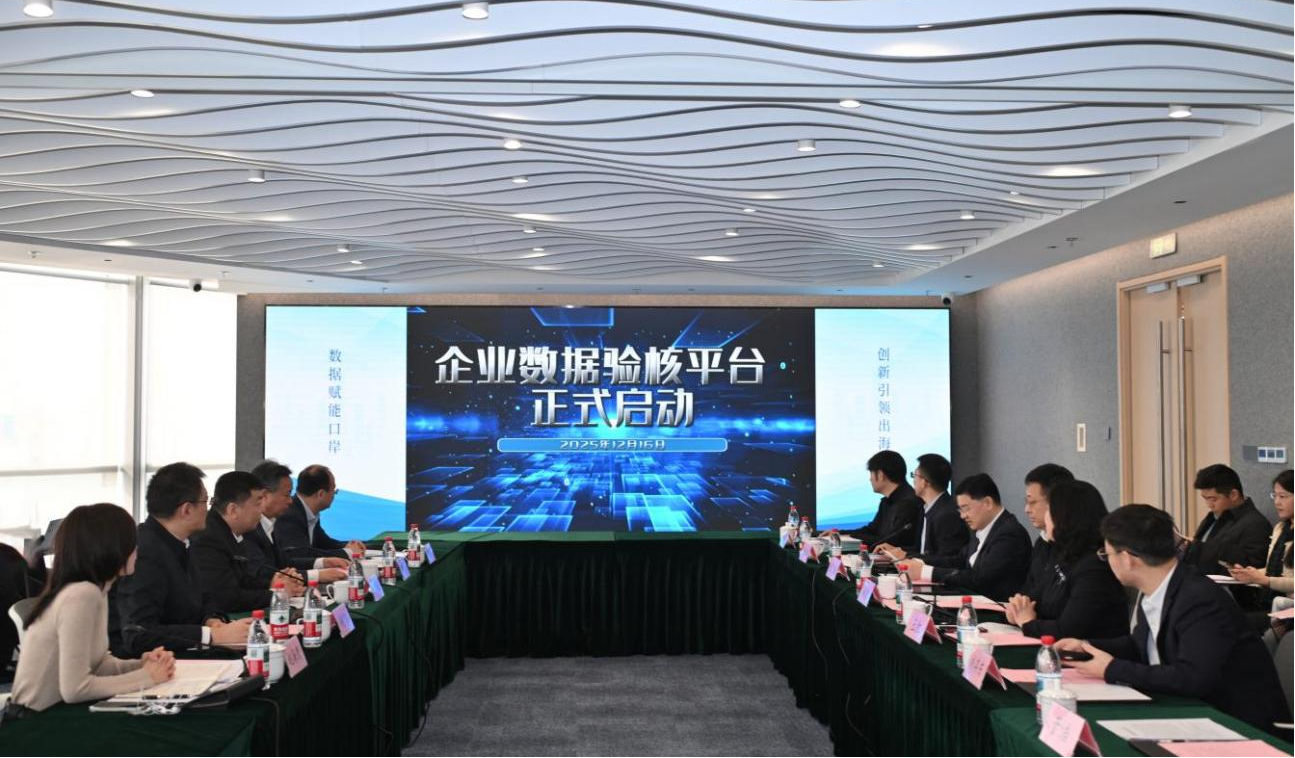
数据要素优化口岸营商环境研讨会暨企业数据验核平台启动会在青岛召开
Zhong Guo Jin Rong Xin Xi Wang· 2025-12-17 08:05
转自:新华财经 近日,数据要素优化口岸营商环境研讨会暨企业数据验核平台启动会在青岛举行。会议以"数据赋能口岸,创新引领出海"为主题,深入研讨数据要素在优化 口岸营商环境、稳定外贸企业预期、促进航运贸易金融融合发展方面的路径与措施,为提升贸易便利化水平、促进航运贸易金融发展提供了新的支撑。 青岛市人民政府副市长高健表示,企业数据验核服务平台的成功上线,不仅提升了贸易数字化水平,也为优化口岸营商环境、促进贸易便利化提供了有力支 撑。青岛将以此为契机,持续深化数字要素与航运物流业融合发展,打造更加智能、安全、高效的数字贸易新生态。 企业数据验核服务平台是在山东省商务厅、青岛市商务局的发起和支持下,由中国电子口岸数据中心、青岛海关数据分中心提供技术支持,青岛外贸赋能中 心负责主体建设,通过权威、便捷、可信的数据验核机制,平台可在 5 秒内完成单笔业务真实性验证,并支持多任务并行处理,有效破解了传统模式下业务 真实性验证难、单据核对周期长、数据来源分散等问题,为企业融资、结算、认证等环节提供了高效支撑。目前,平台已率先试用于外贸赋能中心的物流结 算账期服务,显著提升了交易安全性和结算效率。 下一步,各方将以本次合作为基 ...

构建AI时代金融新生态
Jin Rong Shi Bao· 2025-12-17 02:12
Group 1 - The core viewpoint is that artificial intelligence, quantum computing, and data elements are driving a transformation in financial services, shifting from efficiency enhancement to ecological reconstruction, with digital finance becoming a key engine for high-quality economic development [1] - A new financial ecosystem centered on intelligence, compliance, and symbiosis is rapidly forming, injecting strong momentum into economic transformation and upgrading [1] Group 2 - National policies are crucial for the deepening application of AI in finance, with a comprehensive policy framework being established to guide technological innovation and set boundaries [2] - The 2023 Central Financial Work Conference emphasized five key areas: technology finance, green finance, inclusive finance, pension finance, and digital finance, with AI highlighted as a key breakthrough direction [2] Group 3 - The evolution of large models is shifting financial services from passive responses to proactive predictions, enabling institutions to process complex unstructured data effectively [3] - The enhanced reasoning capabilities of large models provide significant technical support for the refinement of financial services [3] Group 4 - Safety and compliance are fundamental to the implementation of AI in finance, with a focus on establishing a robust safety and compliance framework [4] - Current challenges in AI application include issues like the "hallucination" problem of large models, data leakage risks, and potential biases in algorithm design [4] Group 5 - A layered risk governance mechanism is essential for addressing challenges, with higher standards for high-risk scenarios and more flexible requirements for lower-risk situations [5] - Collaboration between regulatory bodies and financial institutions is necessary to explore "regulatory sandbox" mechanisms for innovation while maintaining compliance [5] Group 6 - The integration of technologies is key to overcoming complex financial challenges, with AI and quantum computing expected to create synergistic effects [6] - The "4S framework" proposed for compliance in loan collection demonstrates the potential of combining large models with quantum computing to address industry pain points [6] Group 7 - The future competition in finance will focus on data quality, particularly public data, and enhancing data governance capabilities will be critical for financial institutions [7] - There is a need to break existing institutional constraints to promote public data openness and accelerate the establishment of a specialized data market in finance [7]
用数据要素激活生态价值(人民时评)
Ren Min Ri Bao· 2025-12-16 22:31
Core Viewpoint - The article emphasizes the importance of transforming data infrastructure into a driving force for high-quality development, facilitating the conversion of "green mountains and clear waters" into "golden mountains and silver waters" through effective data utilization [1][3]. Group 1: Policy and Implementation - The National Data Bureau has issued a plan to enhance the role of scenario applications in the construction of national data infrastructure, aiming to convert the potential of data infrastructure into actual effectiveness [1]. - The policy aims to empower related industries through public data, fostering the release of value from data elements by cultivating and opening up scenarios [1]. Group 2: Data Integration and Asset Valuation - The integration of data across various sectors, such as natural resources and agriculture, is crucial for overcoming challenges like resource fragmentation and unclear property rights, as demonstrated by the "Ecological Resource Cloud Brain" in Zhejiang [2]. - A standardized value assessment system for forestry resources in Fujian has been established, allowing for precise rights confirmation and dynamic quantification of ecological assets, thus enhancing their market value [2]. Group 3: Financial Innovation and Data Utilization - The transformation of static asset data into dynamic, verifiable "data credit" allows ecological assets to be used as collateral and credit certificates, facilitating financial support for green industries [3]. - Continuous focus on ecological protection, industrial upgrading, and financial innovation is essential for deepening data integration and application, ensuring that data infrastructure serves as a true engine for high-quality development [3].
数字科技产业观察 | 双周要闻(2025.12.02—12.16)
Mei Ri Jing Ji Xin Wen· 2025-12-16 10:45
Government Initiatives - The Ministry of Industry and Information Technology (MIIT) has revised the "Management Measures for Public Service Platforms for Industrial Technology," effective from December 5, 2025, focusing on key industries such as equipment, petrochemicals, steel, and artificial intelligence [1][1] - The National Development and Reform Commission, along with other ministries, has issued opinions to strengthen the construction of data element disciplines and digital talent teams, aiming to support the development of a digital economy and society [1][1] - The Ministry of Ecology and Environment has released guidelines for the construction of a product carbon footprint factor database to support the establishment of a carbon footprint management system [1][1] - MIIT is seeking public opinions on the "Comprehensive Standardization System Construction Guide for the Metaverse Industry (2026 Edition)," aiming to establish over 50 national and industry standards by 2030 [1][1] Local Actions - Shandong Province is promoting the metaverse as a new economic growth point, supporting cities like Jinan and Qingdao in building future industry pilot zones [1][1] - Jiangsu Province has established a Metaverse Standardization Technical Committee in Nanjing to fill the gap in the standardization system within the province [1][1] Industry Developments - The GPU leader, Moore Threads, has officially listed on the STAR Market, becoming the first domestic GPU stock, with a market capitalization of 305.5 billion yuan and an opening surge of 468.78% [3][3] - Google has integrated AI simultaneous translation into all its headphones and launched an experimental browser named "Disco," aiming to redefine web browsing experiences [3][3] Academic Insights - Academician Zhang Yaqin predicts that the future of large models will not exceed ten, emphasizing the integration of information, physical, and biological intelligence [4][4] - Academician Tan Jianrong stresses the importance of small models as the foundation for large models, advocating for a shift towards precision small models and industry-specific intelligent agents [4][4] Technology and Applications - The Ministry of Industry and Information Technology has granted approval for China's first batch of L3-level conditional autonomous driving vehicles, marking a significant step towards commercialization [6][6] - Mathematician Terence Tao and his team have solved the 50-year-old Erdős 1026 problem in just 48 hours using AI tools, showcasing the potential of AI in solving complex mathematical challenges [6][6]

达华智能(002512.SZ):公司未开展数据要素相关业务
Ge Long Hui· 2025-12-15 13:08
格隆汇12月15日丨达华智能(002512.SZ)在互动平台表示,公司未开展数据要素相关业务。 ...

一批新规明年1月将落地,这些和A股有关
Xuan Gu Bao· 2025-12-15 09:07
Group 1 - The "Fujian Province Promotion of Cross-Strait Standard Commonality Regulations" is the first local regulation in mainland China aimed at promoting standard commonality across the Taiwan Strait, effective from January 1, 2026. It establishes mechanisms for adopting advanced standards from Taiwan in Fujian and vice versa, and encourages collaboration between Xiamen and Kinmen, Fuzhou and Matsu [1] - The "Fujian Province Private Economy Promotion Regulations" will also take effect on January 1, 2026, encouraging cooperation between private economic organizations in Fujian and Taiwan to promote economic integration [1] - CICC believes that the concept of cross-strait integration is based on solid policy foundations and industrial logic, suggesting a strategic layout along the path of "infrastructure first - industry follows - financial empowerment - consumption upgrade" [1] Group 2 - The revised "Cybersecurity Law" will be implemented on January 1, 2026, marking the first major adjustment since its enactment in 2017. It focuses on strengthening legal responsibilities, addressing AI governance needs, and enhancing protection for critical information infrastructure [2] - The revised law supports research in AI foundational theories and key technologies, promotes infrastructure for training data resources and computing power, and aims to enhance ethical standards and risk monitoring in AI applications [2] Group 3 - The mandatory national standard "Technical Requirements and Testing Methods for Passenger Car Brake Systems" (GB 21670-2025) will be implemented on January 1, 2026. It introduces new requirements for electric transmission brake systems and emergency brake signals, among other modifications [2] - The introduction of EMB (Electric Brake by Wire) technology is expected to significantly enhance active safety capabilities and align with the trends in intelligent driving, with production breakthroughs anticipated by 2025 and a market size projected to reach 11.98 billion by 2030 [3] Group 4 - The "Guizhou Province Big Data Development and Application Promotion Regulations" will take effect on January 1, 2026, aimed at deepening big data applications and promoting the development of the digital economy [4] - The domestic data factor market is expected to grow at a compound annual growth rate of approximately 20.26%, surpassing 300 billion by 2028, driven by regional policies that enhance the flow and value extraction of data resources [4] Group 5 - The revised "Implementation Measures for the Sale of Civil Explosives" will be effective from January 1, 2026, focusing on improving the regulatory framework, licensing procedures, and supervision mechanisms [5] - The civil explosives industry is experiencing significant supply-side optimization and increased concentration, with steady demand from mining and infrastructure sectors, particularly in resource-rich regions like Xinjiang and Tibet [5] Group 6 - The "Regulations on the Inspection and Export Certification Management of Pharmaceutical Production Enterprises" will be implemented on January 1, 2026, providing various conveniences for drug exports [6] - The innovative drug sector and related industries are currently experiencing high levels of market performance, supported by frequent overseas BD transactions and a recovery in global biopharmaceutical financing [6]