
数据基础设施

Search documents
这种半导体原料,告急
半导体行业观察· 2026-03-28 01:12
Core Viewpoint - The ongoing conflict in the Middle East has led to a tightening supply of helium, a critical but often overlooked component in the artificial intelligence and data infrastructure industry, particularly in semiconductor manufacturing and cooling systems [1][2]. Group 1: Importance of Helium - Helium plays a crucial role in semiconductor manufacturing by providing a stable gas environment that ensures precision in production processes, preventing chemical reactions that could lead to defects [1][2]. - In cooling systems, helium efficiently dissipates heat from servers and core components, making it essential for high-density operations in AI data centers [1]. - Helium is necessary for various processes in wafer manufacturing, including plasma etching and chemical vapor deposition, ensuring uniform temperature control during high-precision procedures [1]. Group 2: Supply Chain Risks - The helium supply chain is under significant threat due to the ongoing Middle East conflict, with Qatar, which produces about one-third of the world's helium, facing production disruptions [2][3]. - Damage to Qatar's energy infrastructure, particularly the Ras Laffan industrial city, has resulted in a projected 14% reduction in annual helium exports, with recovery expected to take several years [3]. - The U.S. is the largest helium producer, but domestic consumption limits its ability to quickly address global supply shortages [2][3]. Group 3: Market Impact - The price of helium has doubled since the onset of the conflict, with further increases anticipated as supply chain disruptions continue [4]. - The semiconductor industry may face production slowdowns or halts if helium shortages persist, as companies rely heavily on this gas for manufacturing processes [3][4]. - Finding alternative solutions is challenging due to long-term contracts in helium trade and strict purity requirements for semiconductor manufacturing [4].


中信证券:首次覆盖迅策(03317)给予“增持”评级 目标价160港元
智通财经网· 2026-03-12 11:01
Company Overview - XunCe Technology (03317) is a leading real-time data infrastructure provider in China, focusing on real-time data infrastructure and analysis solutions, with a market share of 3.4% in the overall market and 11.6% in the asset management sector, ranking fourth and first respectively [2] - The company was established in April 2016 and is set to be listed on the Hong Kong Stock Exchange on December 30, 2025 [2] Industry Analysis - The real-time data infrastructure and analysis market in China is experiencing rapid penetration, benefiting from data factor policy dividends and the urgent need for digital transformation in downstream industries, with a projected double-digit growth over the next five years [2] - The market size is expected to grow from RMB 187 billion in 2024, with a compound annual growth rate (CAGR) of 46.1% from 2020 to 2024, and is projected to reach RMB 505 billion by 2029, driven by policy support and the demand for digital transformation across industries [2] Growth Potential - The company is expected to achieve profitability by 2026, supported by solid fundamentals and diversified revenue streams [4] - Revenue from the asset management sector is projected to decrease from 74.4% in 2022 to 38.7% by 2024, while contributions from non-asset management sectors are expected to rise to 61.3% by 2024, indicating successful diversification [4] Financial Projections and Valuation - Revenue forecasts for the company from 2025 to 2027 are estimated at RMB 1.28 billion, RMB 2.33 billion, and RMB 3.45 billion, with growth rates of 103%, 82%, and 48% respectively [5] - The company is expected to maintain high gross margins of 71.6%, 73.5%, and 75% from 2025 to 2027, with projected net profits of RMB -1.30 billion, RMB 2.72 billion, and RMB 8.41 billion [5] - A target market capitalization of HKD 51.7 billion is set for 2026, corresponding to a target price of HKD 160, representing a 13% upside from the current price, with an initial "Buy" rating [5]

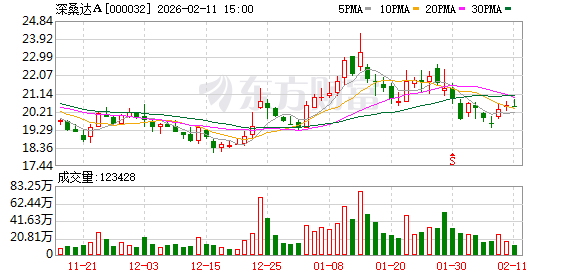
深桑达A:中国电子云可信数据空间以国家数据基础设施标准为指引 构建覆盖多方主体的数据基础设施体系
Zheng Quan Ri Bao· 2026-02-11 13:09
Core Viewpoint - Deep Sanda A is developing a data infrastructure system guided by national data infrastructure standards, transitioning data resources from "self-sufficiency" to "circulation empowerment" [2] Group 1 - The company is responding to investor inquiries regarding its initiatives in the data space [2] - The focus is on creating a multi-party data infrastructure system [2] - The aim is to enhance the flow and utilization of data resources [2]

AI智能体可能压垮企业基础设施,蟑螂实验室CEO警告
Sou Hu Cai Jing· 2026-02-09 15:13
Core Insights - The article highlights the growing concerns among technology leaders regarding the scalability of current infrastructure to meet the demands of AI workloads, which are expected to increase significantly in the near future [2][3]. Group 1: AI Workload Growth - A survey conducted by Cockroach Labs revealed that all respondents expect AI workloads to grow in the next year, with over 60% predicting an increase of 20% or more [2]. - Spencer Kimball, CEO of Cockroach Labs, predicts a tenfold increase in AI workloads within three years and a potential hundredfold increase within five years, significantly compressing the historical growth timeline of enterprise databases [4][10]. Group 2: Infrastructure Challenges - 83% of surveyed professionals believe their data infrastructure will fail without major upgrades within the next 24 months, with 34% anticipating this critical point within 11 months [3]. - The report indicates that 36% of respondents see cloud infrastructure or service providers as the first potential failure point, while 30% identify the database layer as the second [6]. Group 3: Financial Implications of Downtime - The financial consequences of downtime are severe, with 98% of respondents stating that an hour of downtime results in at least $10,000 in losses, and nearly two-thirds reporting costs exceeding $100,000 per hour [4]. Group 4: Underestimation of AI Demand - 63% of respondents believe that executives underestimate the speed at which AI demand will exceed existing infrastructure capabilities [8]. - The disconnect between leadership awareness and the rapid changes in usage patterns could leave organizations unprepared for the surge in AI-driven workloads [8]. Group 5: Scaling Strategies - Companies are adopting various scaling strategies, with about half using hybrid or dynamic scaling methods, 26% focusing on horizontal scaling, and 22% on vertical scaling [8][11]. - Kimball advocates for a pragmatic hybrid approach to scaling, emphasizing the risks of transitioning to fully distributed infrastructure all at once [8][11].

深度|MongoDB CEO:平台化才是企业软件唯一的护城河,单点工具必将被AI颠覆
Z Potentials· 2026-02-05 03:34
Core Insights - The article discusses the transformation of software value in the AI era, emphasizing the importance of platforms over single-point products, and the need for companies to adapt quickly to technological changes to maintain their competitive edge [5][6][7][8]. Group 1: Software Value and Competitive Edge - The core question raised is about the value of software in an era where software can be generated rapidly, prompting a reevaluation of what constitutes a competitive advantage or "moat" [5][7]. - Platforms are sticky and provide a significant decision-making process for customers, while single-point products are easily replaceable [6][10]. - Companies must continuously engage with customers to understand their needs and remain relevant in a fast-evolving market [6][8]. Group 2: Transitioning to Platforms - The discussion highlights that successful companies must transition from single products to platforms, which requires a deep integration of multiple products that work together [10][12]. - The example of MongoDB illustrates how a platform can create significant customer stickiness by integrating deeply into clients' existing systems [13][19]. - The challenge lies in moving from initial disruptive use cases to building a comprehensive platform that meets enterprise-level requirements [11][15]. Group 3: Market Dynamics and AI Integration - The article notes that the total addressable market (TAM) for platforms remains large, and companies must leverage AI to enhance their existing moats [16][21]. - The ongoing transition to AI is seen as a critical opportunity for companies to innovate and accelerate growth [16][24]. - Companies must demonstrate how AI can lead to faster innovation and increased sales to satisfy investor concerns [16][26]. Group 4: Customer Engagement and Feedback - Continuous communication with customers is essential for understanding their pain points and ensuring that products meet their needs [33][34]. - The importance of real-world feedback from clients is emphasized, as it helps shape product development and market strategies [33][34]. - Companies must be willing to adapt their offerings based on customer insights to remain competitive in the evolving landscape [30][34]. Group 5: Leadership and Change Management - Effective leadership is crucial for navigating technological transitions, with a focus on proactive engagement and understanding market dynamics [36][37]. - The article suggests that companies must embrace change management to successfully transition through various technological phases, including cloud and AI transformations [36][37]. - Leaders should prioritize innovation and maintain a clear vision of their competitive advantages to guide their organizations through change [36][37].


数据基础设施企业云器科技完成B轮融资
Bei Jing Shang Bao· 2026-02-04 13:01
Core Insights - Yunqi Technology has completed a Series B financing round led by ALC Capital, indicating strong investor interest in the company [1] - The company focuses on providing self-developed AI and data infrastructure for the Chinese market and overseas enterprises, highlighting its innovative approach in the tech sector [1] Company Overview - Yunqi Technology specializes in AI and data solutions, positioning itself as a key player in the next-generation data infrastructure market [1] - The company has established partnerships with notable firms such as Ant Group, Xiaohongshu, Kuaishou Technology, and Ninja Van, showcasing its broad industry connections [1] Market Reach - Yunqi Technology's services extend across multiple countries and regions in Asia, indicating a significant geographical footprint and potential for growth in international markets [1]
L4数据闭环 | 模型 × 数据:面向物理 AI 时代的数据基础设施
自动驾驶之心· 2026-01-19 09:04
Core Viewpoint - The article emphasizes that in the pursuit of general physical intelligence, the model serves as the ceiling while the data infrastructure acts as the floor, highlighting the importance of both elements working in tandem as a competitive barrier [1]. Group 1: Shift in Talent Demand - There has been a noticeable shift in the automatic driving and AI sectors, with a growing emphasis on recruiting talent for "data infrastructure" [2]. - Leading companies like Tesla and Wayve are now focusing on extracting data from large-scale fleets rather than relying solely on manually written rules [3]. - The consensus is that while model algorithms are becoming rapidly replaceable, the foundational infrastructure for data extraction and defining quality remains a significant competitive advantage [5]. Group 2: Evolution of Physical AI - The article outlines three evolutionary stages of "Physical AI" using references from popular anime, illustrating the progression from early simulation to advanced world models [7]. - The first stage involves basic simulation and remote teaching, while the second stage incorporates augmented reality with real-world data [10][11]. - The third stage envisions a world model that allows for accelerated training in a virtual environment, significantly enhancing AI learning capabilities [13]. Group 3: Data Infrastructure Layers - The article describes a multi-layered approach to building a robust data infrastructure for autonomous driving, which includes metrics for physical world perception, data classification, and automated evaluation systems [16][20][22]. - The first layer focuses on creating a metric system to gauge physical world interactions, while the second layer emphasizes transforming raw data into structured, high-value information [18][20]. - The third layer involves tagging data for specific scenarios, enabling the creation of a comprehensive "question bank" for training AI models [21]. Group 4: Future of Physical AI - The article posits that as the industry moves towards end-to-end solutions and physical AI, the foundational infrastructure becomes increasingly valuable [27]. - Unlike text-based models, physical AI requires real-world data to avoid catastrophic errors, necessitating a closed-loop system for calibration [28]. - The future development model is expected to rely on a world model as a generator and the data infrastructure as a discriminator, ensuring that AI systems are guided by real-world parameters [29][36].

单志广:以数据要素可信流通 推动数字经济高质量发展
Ren Min Wang· 2026-01-12 02:35
Core Viewpoint - The construction of data infrastructure is essential for the efficient circulation, in-depth mining, and value release of data, serving as a core support for industrial digitalization and the cultivation of new productive forces [1] Group 1: Data Infrastructure Development - During the "14th Five-Year Plan" period, data infrastructure construction should focus on "overall coordination, scenario-driven, and inclusive adaptation" to enhance support capabilities for specific scenarios [2] - The transition from "building" to "utilizing" data infrastructure is a critical phase, emphasizing the establishment of a "unified foundation" and avoiding redundant construction and "data silos" [2][3] - A "graded and classified" construction mechanism is necessary to prioritize functions and technical paths for different fields such as government, industry, and people's livelihood [2] Group 2: Local Adaptation and Pilot Demonstration - The key to guiding local industries is "classified guidance + pilot demonstration," promoting mature national-level solutions for common scenarios while encouraging customized adaptations for unique local contexts [3] - Infrastructure construction should focus on practical applications rather than just technology, ensuring that data infrastructure effectively supports scenario implementation [3] Group 3: Technical Optimization and Data Security - Achieving a balance between data security and circulation efficiency requires "standardization of technology + modular architecture" to address interoperability issues across different technical routes [3][4] - Establishing unified technical standards and cross-platform interfaces can facilitate seamless data flow without the need for repeated modifications [3] Group 4: Trust Alliance and Data Flow - A national-level platform should be established to create a cross-regional and cross-industry "trust alliance," reducing redundant verifications and breaking down "trust barriers" [4] - The "National Data Bureau's Action Plan for Trusted Data Space Development (2024-2028)" marks a shift from conceptual validation to practical implementation, with privacy protection computing and blockchain technologies being key to solving the "data usable but invisible" issue [4] Group 5: National Digital Credential Service Platform - The "National Digital Credential Public Service Platform," launched on December 19, 2025, aims to address the bottleneck of "trusted data circulation" in the digital economy [5] - The platform focuses on creating a "digital trust foundation" by ensuring the credibility of digital credentials and providing convenient services across various sectors [5] - Future expansion of the platform will target three main directions: empowering the entire digital economy chain, supporting modern governance, and enhancing public welfare services [5]
华为袁远:中国是数据大国,但数据语料建设仍面临关键挑战
Guan Cha Zhe Wang· 2025-12-18 13:34
Core Insights - The 2025 Global Data Technology Conference (GDTC) was held in Beijing, focusing on building advanced data infrastructure to unlock data value in the AI era [1][3] - Huawei's Vice President and President of the Data Storage Product Line, Yuan Yuan, highlighted the challenges in China's data corpus construction, including a low data retention rate of only 2.8% and a data sharing rate of less than 25% [1][4] Group 1: Data Challenges - China is a global data powerhouse, yet it faces significant challenges in data corpus construction, such as a data retention rate of only 2.8% [4] - The scarcity of high-quality data is evident, with China's model training data volume being only about 10% of that of leading Western countries [4] - Data sharing remains insufficient, with many urban and enterprise data still stored in "silos," leading to a data sharing rate of less than 25% [4] - The global annual data breach count has reached an alarming 47.16 billion records, posing significant risks across industries [4] Group 2: Recommendations for Data Infrastructure - At the city level, it is recommended to leverage urban hub roles to create advanced storage centers that promote the aggregation, governance, and trusted circulation of public and industry data [4][5] - At the industry level, building data sharing collaboration platforms is essential to transition from fragmented data use to intelligent integration, enhancing high-quality industry knowledge bases [5] - At the enterprise level, companies should focus on building AI data lakes to strengthen data sharing, management, and agile usage, exemplified by the integration of diverse data types for autonomous driving [5] Group 3: Future Directions - Continuous technological innovation is crucial for advanced data infrastructure development, with plans to enhance AI data lake capabilities and address data collection, storage, governance, and utilization issues [6] - The company aims to improve and open-source end-to-end AI toolsets to enrich the AI tool ecosystem in China, emphasizing the importance of practical tools for sustainable intelligent capabilities [6] - Research will focus on compliance governance, secure data flow, and cross-border auditing in the context of trusted data cross-border flow [6]

用数据要素激活生态价值(人民时评)
Ren Min Ri Bao· 2025-12-16 22:31
Core Viewpoint - The article emphasizes the importance of transforming data infrastructure into a driving force for high-quality development, facilitating the conversion of "green mountains and clear waters" into "golden mountains and silver waters" through effective data utilization [1][3]. Group 1: Policy and Implementation - The National Data Bureau has issued a plan to enhance the role of scenario applications in the construction of national data infrastructure, aiming to convert the potential of data infrastructure into actual effectiveness [1]. - The policy aims to empower related industries through public data, fostering the release of value from data elements by cultivating and opening up scenarios [1]. Group 2: Data Integration and Asset Valuation - The integration of data across various sectors, such as natural resources and agriculture, is crucial for overcoming challenges like resource fragmentation and unclear property rights, as demonstrated by the "Ecological Resource Cloud Brain" in Zhejiang [2]. - A standardized value assessment system for forestry resources in Fujian has been established, allowing for precise rights confirmation and dynamic quantification of ecological assets, thus enhancing their market value [2]. Group 3: Financial Innovation and Data Utilization - The transformation of static asset data into dynamic, verifiable "data credit" allows ecological assets to be used as collateral and credit certificates, facilitating financial support for green industries [3]. - Continuous focus on ecological protection, industrial upgrading, and financial innovation is essential for deepening data integration and application, ensuring that data infrastructure serves as a true engine for high-quality development [3].