
物联网

Search documents
背靠海尔走向市场 卡奥斯的独立考验
BambooWorks· 2026-02-03 10:35
Core Viewpoint - Kaos IoT has submitted its application for listing in Hong Kong, emphasizing accelerating revenue growth and the expectation of achieving profitability for the first time in 2024, although profit margins remain low [1][2]. Group 1: Company Background and Market Position - Kaos IoT, established in 2017 and formerly known as Haier Industrial Holdings, is attempting to operate independently from its parent company, Haier Group, which contributed 58% of its revenue last year [2][5]. - The company positions itself as a supplier of industrial digitalization products and solutions, integrating AI, big data, and IoT technologies to serve manufacturing clients across various sectors [5]. - The company has a significant customer base, with over 9,500 paying enterprise clients, although it remains heavily reliant on Haier for revenue [5][6]. Group 2: Financial Performance - Revenue growth is accelerating, with a 22% year-on-year increase in the first nine months of the previous year, rising from 3.63 billion to 4.42 billion [8]. - Despite the revenue growth, the company faces challenges with low profit margins, with a gross margin hovering around 18% over the past three years, significantly lower than competitors like Tuya Smart, which has a gross margin of 48% [7][8]. - The company has shown improvement in profitability, with net income from continuing operations increasing from 53 million to 129 million year-on-year in the first nine months [9]. Group 3: Strategic Developments - The company sold its mold manufacturing business to focus on its core industrial digitalization operations and acquired Shanghai Carbon Source Group to enter the green manufacturing solutions market [5][8]. - The reliance on Haier is decreasing, with the revenue contribution from its largest customer dropping from 72% to 58%, indicating a positive trend towards diversification [6][9]. - Investors will closely monitor the company's progress in establishing its independence from Haier and improving its profit margins to demonstrate its capabilities as a high-tech company [9].


浙江桐乡,如何“无中生有”?
3 6 Ke· 2026-02-03 07:54
Core Insights - The article highlights the remarkable economic transformation of Tongxiang City, emphasizing its ability to create industries and opportunities from scratch, referred to as "creating something from nothing" [1][3][9]. Group 1: Economic Development - Tongxiang's GDP reached 134.71 billion, showcasing its economic strength comparable to a prefecture-level city despite its small size [9][11]. - The city has a significant entrepreneurial spirit, with approximately 20% of its population engaged in business, leading to a prosperous local economy [13][24]. - In 2024, the industrial output value of Tongxiang exceeded 225.86 billion, marking its evolution from "China's woolen sweater town" to "the capital of woolen sweaters in the world" [7][9]. Group 2: Industrial Growth - Tongxiang has developed a robust new materials industry cluster, with major companies like Jushi, New Fengming, and Tongkun leading the way [15][17]. - The city produces one-third of the country's wind turbine blades, demonstrating its significant role in the new materials sector [15][19]. - The local textile industry, particularly in Puyuan, supports the new materials sector by providing high-quality raw materials, with 31% of high-end functional fabrics used in new materials [15][17]. Group 3: Digital Transformation - The establishment of the "Wuzhen Light" supercomputing center has positioned Tongxiang as a leader in digital innovation, facilitating the digital transformation of traditional industries [20][23]. - The city has implemented a "supercomputing + intelligent computing" system to enhance production efficiency, achieving over a 40% increase in productivity for new materials companies [23][24]. - By 2023, 76% of enterprises in Tongxiang had undergone intelligent transformation, reflecting the city's commitment to integrating technology into its industrial framework [23][24]. Group 4: Government Support and Strategic Planning - The local government has committed significant resources to support the new materials industry, including a 500 million annual fund for three years [24][28]. - Tongxiang's "135N industrial cluster" strategy aims to cultivate a comprehensive new materials industry chain, indicating a structured approach to economic development [25][28]. - Various incentive programs, such as the "Eagle Plan" and "Chick Plan," provide financial support to both large and small enterprises, fostering a conducive environment for business growth [28][29]. Group 5: Future Prospects - The new materials market is projected to grow at a compound annual growth rate of 13.3% from 2020 to 2025, with Tongxiang positioned to be a key player in this expansion [32][33]. - The city's efforts in developing a high-quality new materials industry have resulted in a production capacity that could significantly contribute to China's overall new materials output [32][33].
上海福羿新能源科技有限公司成立,注册资本1000万人民币
Sou Hu Cai Jing· 2026-02-03 06:55
Core Viewpoint - Shanghai Fuyi New Energy Technology Co., Ltd. has been established with a registered capital of 10 million RMB, focusing on various technology services and renewable energy solutions [1] Company Overview - Company Name: Shanghai Fuyi New Energy Technology Co., Ltd. [1] - Legal Representative: Chen Jian [1] - Registered Capital: 10 million RMB [1] - Company Type: Other limited liability company [1] - Business Duration: Until February 2, 2026, with no fixed term thereafter [1] - Registration Authority: Qingpu District Market Supervision Administration [1] Shareholding Structure - Shareholder 1: Shanghai Huizhu Industrial Co., Ltd. - 50% [1] - Shareholder 2: Shanghai Houyi New Energy Technology Co., Ltd. - 50% [1] Business Scope - The company engages in a wide range of activities including: - Technical services, development, consulting, and transfer [1] - Sales of photovoltaic equipment and components [1] - Research and development in resource recycling technology [1] - Engineering and technical research and experimental development [1] - Sales of energy storage technology and battery components [1] - Software development and artificial intelligence application software [1] - Online energy monitoring technology research [1] - Solar power generation technology services [1] - The company is also involved in construction engineering and intelligent system design, subject to approval [1]
江苏优废科技有限公司成立,注册资本1000万人民币
Sou Hu Cai Jing· 2026-02-03 04:09
天眼查显示,近日,江苏优废科技有限公司成立,法定代表人为叶勘,注册资本1000万人民币,由广东 优废环保科技有限公司全资持股。 经营范围含技术服务、技术开发、技术咨询、技术交流、技术转让、技术推广;环境保护专用设备制 造;环境保护专用设备销售;机械电气设备制造;机械电气设备销售;计算机软硬件及外围设备制造; 环保咨询服务;资源再生利用技术研发;资源循环利用服务技术咨询;物联网技术研发;物联网应用服 务;人工智能行业应用系统集成服务;机械设备研发;软件开发;软件销售;信息系统集成服务;碳减 排、碳转化、碳捕捉、碳封存技术研发;数据处理和存储支持服务;固体废物治理;电池销售;普通机 械设备安装服务;机械设备租赁;工程管理服务;工程技术服务(规划管理、勘察、设计、监理除 外);信息系统运行维护服务;电子、机械设备维护(不含特种设备)(除依法须经批准的项目外,凭 营业执照依法自主开展经营活动) 企业名称江苏优废科技有限公司法定代表人叶勘注册资本1000万人民币国标行业科学研究和技术服务业 >科技推广和应用服务业>技术推广服务地址江苏省苏州市吴中区淞葭路699号卓凡科技产业园1幢311室 企业类型有限责任公司(自然人投 ...
绥芬河卡泰驰汽车销售服务有限公司成立,注册资本200万人民币
Sou Hu Cai Jing· 2026-02-03 01:20
Group 1 - The company "Suifenhe Kataychi Automobile Sales Service Co., Ltd." has been established with a registered capital of 2 million RMB, fully owned by "Qingdao Kataychi International Trade Development Co., Ltd." [1] - The business scope includes sales of automotive decorative products, new energy vehicle battery swapping facilities, electric vehicle accessories, battery sales, charging pile sales, and various automotive services [1][2] - The company is classified under the rental and business services industry, specifically in the mechanical equipment leasing sector [2] Group 2 - The legal representative of the company is not specified in the provided information [1] - The company is located in Suifenhe City, Mudanjiang, Heilongjiang Province, with a business duration until February 2, 2026, and no fixed term thereafter [2] - The company is registered with the Suifenhe Market Supervision Administration [2]
趋势研判!2026年中国光通信测试仪器市场政策、产业链全景、发展现状及未来发展趋势分析:发展动能持续强劲,2029年规模将突破65.9亿元[图]
Chan Ye Xin Xi Wang· 2026-02-03 01:15
Core Insights - The optical communication testing instruments are essential tools for ensuring the efficient operation of fiber optic communication systems, supported by national policies as a strategic emerging industry [1][5] - The global electronic measurement instrument market is projected to grow from $10.08 billion in 2020 to $12.93 billion by 2024, with China's market expected to increase from ¥23.85 billion to ¥35.38 billion during the same period [8] - The optical communication testing instruments market is driven by the growth in data traffic and demand for optical modules, with the global market expected to rise from $0.95 billion in 2024 to $2.02 billion by 2029, and China's market projected to grow from ¥3.30 billion to ¥6.59 billion [10][11] Industry Overview - Optical communication testing instruments are specialized electronic devices used to measure, analyze, and verify the performance of fiber optic communication systems, ensuring transmission quality and reliability throughout the product lifecycle [1][4] - These instruments can be categorized by core functions, testing objects, form factors, and technical principles, catering to various testing needs in the optical communication sector [1][3] Development Background - The optical communication testing instruments have been included in national strategic emerging industries and key core technology initiatives, supported by a comprehensive policy framework aimed at fostering technological innovation and market application [5][6] Market Trends - The optical module market, which is crucial for optical communication systems, is expected to see significant growth, with data centers becoming the primary application scenario, leading to accelerated iterations of optical modules [13] - The industry is anticipated to evolve towards high-end technology, domestic independence, and diversified application scenarios, with a focus on upgrading testing capabilities and breaking reliance on imports [14][15][16] Industry Chain - The optical communication testing instruments industry chain consists of upstream core components, midstream testing instrument manufacturing, and downstream applications, with domestic companies making strides in increasing their market share [11][12] Future Outlook - The industry is expected to focus on high-speed and intelligent technology iterations, with an emphasis on automation and precise diagnostics, while also pushing for domestic innovation in core components [14][15] - The expansion of application scenarios and the transformation of business models towards integrated solutions will open new growth opportunities for the industry [16]

越南数字经济推动增长模式创新
Shang Wu Bu Wang Zhan· 2026-02-02 16:01
Group 1 - The core viewpoint is that Vietnam's digital economy is rapidly developing and becoming a crucial pillar for economic growth and the cultivation of new productive forces, particularly in the service and emerging industries [1][2] - By 2025, the value added by Vietnam's digital economy is expected to account for 14% of GDP, approximately $72.1 billion, which is 1.6 times the value in 2020 ($43.8 billion) [1] - The number of digital technology enterprises in Vietnam has significantly increased to about 80,000, up from 58,000 in 2020, indicating a broad expansion of the digital economy [1] Group 2 - The digital economy plays a key role in shaping modern productivity and is essential for Vietnam to prevent developmental lag and achieve leapfrog growth in the digital age [2] - Despite the rapid increase in the digital economy's share of GDP, the domestic value added remains low, with a significant reliance on foreign enterprises and cross-border platforms [2] - To meet the targets set by the Central Political Bureau's Resolution No. 57, which aims for the digital economy to account for at least 30% of GDP by 2030 and 50% by 2045, future development must focus on practical and in-depth approaches, leveraging breakthrough innovations for higher added value [2] Group 3 - The Minister of Science and Technology emphasized the need for the government to build a comprehensive national digital economy framework and promote digital technology enterprises as strategic production forces [3] - The government should guide the development of the digital market through regulations, standards, and procurement mechanisms to create demand for domestic enterprises, helping them grow and compete globally [3] - The focus should be on mastering core technologies, including telecommunications infrastructure, data centers, cloud computing platforms, and cybersecurity solutions, to provide solutions for the domestic market and create globally competitive products [3]
爱施德:公司子公司优友互联已完成符合国际标准的eSIM平台建设
Zheng Quan Ri Bao· 2026-02-02 13:41
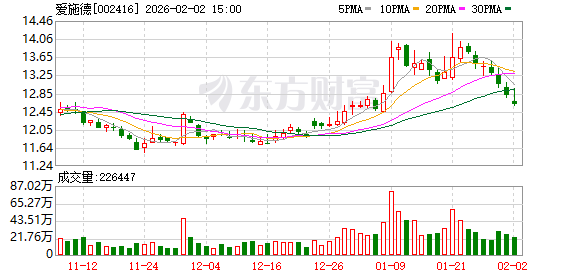
Group 1 - The company Aishide's subsidiary Youyou Internet has completed the construction of an eSIM platform that meets international standards [2] - The company is currently focusing on IoT communication solutions, with the eSIM services primarily applied in vertical industries within the IoT sector [2]

估值超164亿,海尔旗下公司赴港IPO
Sou Hu Cai Jing· 2026-02-02 13:34
Core Insights - Kaos IoT Technology Co., Ltd. (Kaos) is set to become the 9th listed company under Haier Group, having submitted its IPO application to the Hong Kong Stock Exchange on January 30, 2024, after previously pursuing an A-share listing [2][3] - The company, established in 2017 and incubated by Haier, aims to expand Haier's capital landscape, which already includes eight listed companies [2][3] - Kaos is recognized as the leading provider in China's industrial data intelligence solutions market, with over half of its revenue currently derived from Haier Group [3][10] Company Overview - Kaos was founded in April 2017 in Qingdao, initially named Haier Industrial Holdings Co., Ltd., focusing on digital transformation services for industries through advanced technologies like AI and IoT [4] - The company is led by Chen Lucheng, a long-time Haier employee with extensive experience in various senior positions within the group [4] - Kaos has developed the COSMOPlat industrial internet platform, integrating industrial software, operating systems, and IoT solutions [4] Financial Performance - Kaos has completed five rounds of financing from 2020 to 2022, raising a total of 2.555 billion yuan, with approximately 81% of the funds utilized for capital expenditures, R&D, and business expansion [5][14] - As of 2022, the post-investment valuation of Kaos reached 16.405 billion yuan [6] - The company reported revenues of 4.994 billion yuan in 2023, with projections of 5.070 billion yuan in 2024 and 4.420 billion yuan in the first three quarters of 2025 [10][11] Revenue Composition - The revenue from data intelligence solutions is expected to grow from 9.13 billion yuan in 2023 to 12.80 billion yuan in 2025, while IoT solutions are projected to decline from 40.80 billion yuan to 31.40 billion yuan during the same period [12] - A significant portion of Kaos's revenue is derived from related party transactions, with over 80% of sales attributed to its top five customers, primarily Haier Group [13] Strategic Focus - The IPO proceeds will be used to enhance core platform capabilities, market expansion, and potential acquisitions, as well as to supplement operational funds [14] - Kaos is also exploring opportunities in overseas markets, with revenue from non-mainland China customers accounting for approximately 12.5% to 14% of total revenue in recent years [13]


快递竞争逻辑,已变!京东物流、圆通、中通、菜鸟、韵达、顺丰、中国邮政、极兔、申通、德邦……
Xin Lang Cai Jing· 2026-02-02 10:49
Core Insights - The article highlights the rapid growth and development of China's postal and express delivery industry, which has become the largest and most utilized network globally, with express delivery volume reaching 198.95 billion pieces, a year-on-year increase of 13.6%, and total revenue of 1.5 trillion yuan, up 6.5% year-on-year [1][13] Group 1: High-Quality Development - The 2026 National Postal Work Conference emphasizes "two promotions and three enhancements" as the core strategy for industry development, with a primary focus on promoting high-quality development [1][13] - High-quality development is seen as a necessary transition from scale expansion to value creation, as the industry adapts to new market conditions and consumer demands [1][14] - The domestic e-commerce market is shifting from "incremental expansion" to "deep cultivation of existing markets," necessitating a focus on quality improvement rather than just quantity growth [2][14] Group 2: New Growth Opportunities - Companies are encouraged to explore new value growth avenues by extending their services along the supply chain, moving beyond basic delivery services to areas like cold chain logistics and supply chain management [3][15] - The industry must shift from a competitive mindset of "dividing the pie" to "improving the pie together," focusing on quality, innovation, and customer experience [3][16] - Emphasis is placed on fostering new productive forces through technological innovation, integrating AI, big data, and IoT into business operations to enhance efficiency and service quality [4][16] Group 3: Efficient Governance - The article discusses the need for a governance upgrade from mere management to a multi-faceted approach involving government regulation, corporate self-discipline, and social collaboration [5][17] - Key strategies for effective governance include optimizing the business environment, innovating regulatory models, and enhancing corporate compliance [6][18] - Collaboration across the entire supply chain is essential, with a focus on shared interests and responsibilities among delivery companies, end-point networks, and franchisees [6][18] Group 4: Enhancing Rural Delivery Services - The National Postal Work Conference outlines three major tasks, including enhancing rural delivery service capabilities, which is crucial for improving network efficiency and supporting rural revitalization [20][21] - The rural delivery network consists of both public postal services and private delivery companies, emphasizing the need for a balanced approach to service provision [20][21] - New metrics for rural delivery services focus on accessibility, stability, and quality, ensuring that services effectively support agricultural and industrial product distribution [9][21] Group 5: International Delivery Service Capabilities - Improving international delivery service capabilities is critical for expanding market reach and enhancing resilience, aligning with China's status as a major global economy [10][22] - The article notes that two Chinese companies have entered the Fortune Global 500, and seven are in the China 500, indicating growing international competitiveness [10][22] - Strategies for enhancing international logistics include strengthening capabilities across the delivery process and optimizing organizational models for cross-border e-commerce [11][23] Group 6: Service Industry Capability Enhancement - Enhancing service capabilities is identified as a core driver for the transformation and value enhancement of the postal and express delivery industry [24] - The industry is urged to integrate logistics services with modern industrial systems, becoming an integral part of the supply chain rather than merely fulfilling logistics demands [24][25] - The focus on developing supply chain logistics and transitioning to comprehensive logistics providers is expected to create high-value service opportunities and support national modernization efforts [24][25]