
车路云一体化

Search documents
会赛“双引擎”发力,北京亦庄新能源产业焕新城市活力
Huan Qiu Wang· 2025-10-05 03:17
Core Insights - The dual events, the 2025 World Intelligent Connected Vehicle Conference and the GT New Energy Carnival, are set to enhance the industrial landscape of Beijing Yizhuang, promoting economic growth and urban branding [1][2][3] Group 1: Event Overview - The 2025 World Intelligent Connected Vehicle Conference will take place from October 16-18, featuring a theme of "Gathering Wisdom and Energy, Unlimited Connectivity" and an upgraded framework of "3+3+6+N" [1] - The GT New Energy Carnival will follow from October 17-19, showcasing extreme performance of new energy vehicles through professional racing and public exhibitions [2] Group 2: Economic Impact - The events are expected to create a positive cycle of "event attraction - consumption growth - industrial revenue increase," enhancing economic vitality in Beijing Yizhuang [2] - The World Intelligent Connected Vehicle Conference is anticipated to attract upstream and downstream enterprises, facilitating multiple industry cooperation agreements [2] Group 3: Urban Development and Branding - The conference contributes to the development of smart city infrastructure, expanding coverage to 600 square kilometers and establishing a leading "vehicle-road-cloud integration" environment [3] - The public engagement aspect of the GT New Energy Carnival aims to popularize smart mobility concepts and attract young talent, enhancing the global recognition of Beijing Yizhuang [3] Group 4: Future Prospects - The ongoing development of the "Beijing Yizhuang Automotive Intelligent Manufacturing Innovation City" is expected to continue releasing the agglomeration effect of the new energy intelligent connected vehicle industry, contributing to high-quality development [3]
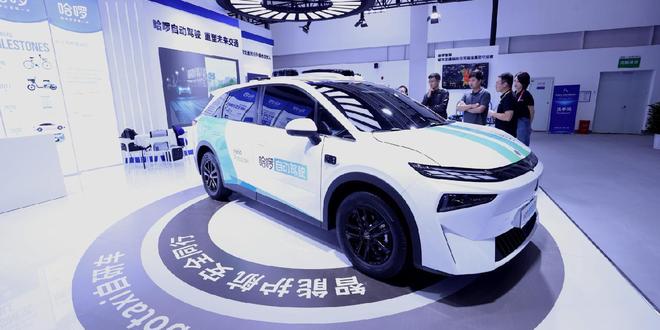
出行进化论:从哈啰两轮到无人驾驶的战略跃迁
Jing Ji Guan Cha Bao· 2025-10-03 07:03
Core Insights - The article highlights the strategic transition of the company from a ride-sharing platform to a leader in intelligent driving technology, exemplified by the launch of the "HR1" Robotaxi and the "Hello" cruise ship project [2][6][15] Group 1: Product Launch and Innovation - The "Hello" cruise ship, which features interactive elements and showcases local messages, symbolizes the company's commitment to integrating technology with user experience [2][6] - The "HR1" Robotaxi, equipped with advanced sensors and computing power, marks a significant step towards the commercialization of autonomous driving technology [2][6][10] - The Robotaxi employs an end-to-end L4 technology system that enhances response speed and decision-making consistency, utilizing a multi-sensor input approach [6][7] Group 2: Strategic Partnerships and Collaborations - The company has formed strategic partnerships with key industry players, including Aliyun and Didi, to enhance the development and deployment of Robotaxi technology [10][11] - A collaboration with Qwen team from Aliyun has led to the development of a large-scale model that supports the autonomous driving system [7][10] Group 3: Market Position and Future Plans - The company aims to achieve mass production of its Robotaxi models by 2026, targeting over 10 cities and a fleet of 10,000 vehicles [10][11] - The company has initiated commercial pilot operations in Zhuzhou and Liyang, marking its first steps towards large-scale deployment [11][14] - The Chinese autonomous driving market is projected to reach 118.5 billion yuan in 2023, with significant growth expected by 2025, providing a favorable environment for the company's expansion [14][15] Group 4: Regulatory Environment and Industry Trends - Recent government policies are creating a conducive environment for the development of intelligent connected vehicles, facilitating the company's rapid advancements in the Robotaxi sector [5][14] - The autonomous driving industry in China is expected to see a market size of $183 billion by the late 2030s, indicating a substantial growth opportunity for the company [15]

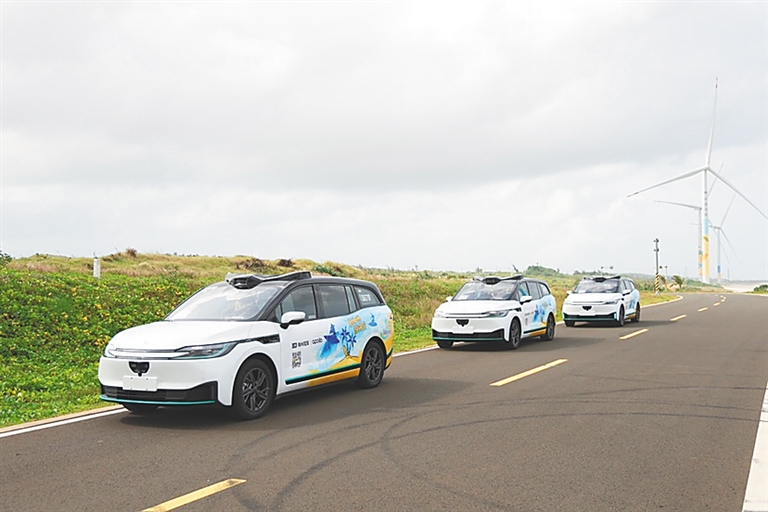
海南环岛旅游公路首次开通“无人驾驶”旅游专线
Hai Nan Ri Bao· 2025-10-03 01:41
Core Insights - The launch of the "driverless" tourism route on Hainan's circular tourism highway marks a significant innovation in travel, allowing tourists to experience self-driving cars without a human driver [3][4][5] Group 1: Technology and Innovation - The "driverless" tourism route utilizes L4 level autonomous driving systems, capable of navigating the complex environments of Hainan's tourism highway [5] - The vehicles are equipped with features such as KTV, a refrigerator, and smart voice interaction, transforming the car into a "mobile leisure cabin" [4][5] - The integration of autonomous driving technology into the entire tourism service process aims to provide a new travel experience rather than just renting a vehicle [6] Group 2: User Experience - Tourists can enjoy a seamless travel experience with features like route recommendations, historical background information, and practical travel tips provided within the vehicle [5] - The service covers popular routes from Haikou to Wenchang and Sanya to Lingshui, connecting various tourist attractions [5] - The first three days of the National Day holiday saw all autonomous vehicles fully booked, indicating strong demand for this service [5] Group 3: Business Collaboration - The initiative is a collaboration between Hainan's transportation investment company and Shenzhou Car Rental, focusing on the integration of technology and tourism [4][6] - The project aims to build an ecosystem that includes technology partners, manufacturers, financial institutions, and various sectors such as energy and tourism [6]
【新能源周报】新能源汽车行业信息周报(2025年9月22日-9月28日)
乘联分会· 2025-09-30 09:36
Industry Information - In Guangdong, the production of new energy vehicles increased by 21.9% from January to August 2025, with the manufacturing sector growing by 2.6% overall [9] - Chongqing is accelerating the high-quality development of the automotive industry, achieving a 7.6% increase in total vehicle production and over 31% in new energy vehicle production from January to August 2025 [9] - CATL signed a strategic cooperation agreement with the People's Government of Milin City, focusing on clean energy projects and zero-carbon infrastructure [9][10] - The penetration rate of combined driving assistance systems in new passenger cars in China exceeded 60%, with sales reaching 7.76 million units from January to July 2025 [11][12] - China is making significant strides in the global new energy vehicle market, contributing 63% of global sales in Q2 2025 [15] Policy Information - The Ministry of Industry and Information Technology (MIIT) is optimizing tax incentives for new energy vehicles, including vehicle purchase tax and vessel tax [22] - Beijing is promoting the "vehicle-road-cloud integration" infrastructure to support advanced autonomous driving and enhance the automotive industry's development [13] - Local governments, such as Lanzhou and Zhengzhou, are offering substantial subsidies for new energy vehicle purchases to stimulate market demand [28][29] Company Information - Great Wall Motors officially named its first pure electric SUV "Ora 5," featuring a 150kW motor and a battery from Honeycomb Energy [35] - Li Auto restructured its autonomous driving department, expanding from three to eleven sub-departments to enhance technology development and product delivery [36] - Xiaomi's investment fund has acquired a stake in Qichip Microelectronics, a developer of automotive controller chips [11] - NIO's cumulative vehicle deliveries have surpassed 800,000 units, indicating strong market performance [38] - Xpeng Motors has launched its first batch of charging stations in Singapore, Malaysia, and Thailand, expanding its international presence [37]
万集科技拟参股设立合资公司,发力车路云一体化业务
Ju Chao Zi Xun· 2025-09-30 03:33
Core Viewpoint - The establishment of a joint venture company, Shanghai YunYue WuJie Technology Co., Ltd., aims to enhance market development and project undertaking capabilities in the integrated vehicle-road-cloud business, leveraging the strengths of all parties involved [1][2]. Group 1: Joint Venture Details - The joint venture will be established with a registered capital of RMB 10 million, with contributions from four parties: Shenzhen Deepin Investment Holding Group Co., Ltd. (RMB 4 million, 40%), Wanji Technology (RMB 3 million, 30%), Shanghai Huiyun Huirong Enterprise Management Partnership (RMB 2 million, 20%), and Shanghai Hongqiao Ruizhi Investment Management Co., Ltd. (RMB 1 million, 10%) [1]. - The joint venture will focus on digital security, including areas such as alternative solutions for information technology, network security, data security, and cryptographic security [1]. Group 2: Strategic Goals - Wanji Technology aims to become a global leader in intelligent transportation ecosystem services, providing comprehensive solutions that encompass products, systems, and platforms [1]. - Deepin Investment, a wholly-owned subsidiary of Deepin Technology Co., Ltd., will focus on network security, cloud computing, and IT infrastructure [1].
与会嘉宾为海南发展新能源汽车产业建言献策
Hai Nan Ri Bao· 2025-09-30 01:41
Core Viewpoint - The forum highlighted the potential of Hainan as a leading region for the development of the new energy vehicle (NEV) industry, emphasizing its unique advantages and the importance of policy support and infrastructure development for promoting smart and green transportation solutions [4][6]. Group 1: New Energy Vehicle Promotion - The implementation of NEV promotion policies in Hainan is expected to significantly reduce PM2.5 concentrations to below 10 micrograms per cubic meter by 2035, contributing to world-leading air quality [3]. - Hainan's NEV promotion is seen as a key measure for coordinated pollution reduction and carbon emission cuts, with recommendations for a comprehensive policy framework and advanced technology integration [3][4]. Group 2: Infrastructure Development - A comprehensive battery swap network is being developed in Hainan, with plans to establish 28 battery swap stations by 2026, covering major routes and ensuring convenient access for users [5]. - The development of charging and battery swap infrastructure is crucial for supporting the growth of the NEV market in Hainan [3][5]. Group 3: Policy and Innovation - Hainan is positioned as a unique experimental zone for policy innovation, with discussions on leveraging its free trade port status to enhance the automotive industry and attract global cooperation [6][7]. - The forum emphasized the need for a robust standard system and regulatory framework to facilitate the development of smart NEVs and cross-border data sharing [7]. Group 4: Automotive Customization and Export - Hainan aims to become a global center for automotive customization and a hub for exporting modified vehicles, utilizing its tariff-free policies to reduce costs for importers [6]. - The potential for automotive modification to create new growth points in the industry was highlighted, with a focus on high-end and personalized vehicles [6].


智能汽车未来或可“上天下水”?多专家建言全球智慧交通发展
Xin Lang Ke Ji· 2025-09-29 08:25
Group 1 - The core viewpoint of the articles emphasizes China's leadership in the global automotive industry, particularly in electric vehicles and smart transportation systems, highlighting its position as the largest producer, consumer, and exporter of new energy vehicles [1][2][3] - The "2025 Car Road Cloud 50 Annual Forum" in Chongqing discussed the rapid innovation in China's automotive industry, with a focus on the development of intelligent connected vehicles and the establishment of a trillion-level industry cluster for smart connected new energy vehicles [1][3] - Experts at the forum noted the importance of integrating vehicle and road cloud technologies to enhance safety, reliability, and efficiency, particularly for high-level autonomous driving [3][4] Group 2 - The forum highlighted the need for a unified approach to transportation development that balances safety and growth, advocating for a collaborative ecosystem involving all stakeholders [2][3] - Predictions for the future of intelligent transportation systems (ITS) suggest a significant reduction in traffic accidents by over 70%, an increase in road capacity by 3 to 5 times, and a decrease in energy consumption by 15-20% [4] - The transition from single vehicle intelligence to a collaborative vehicle-road cloud ecosystem is seen as a critical path for the advancement of smart connected vehicles, requiring systemic innovation and supportive policies [3][4]
海南加快打造全球新能源汽车制造和贸易重要枢纽
Hai Nan Ri Bao· 2025-09-29 01:47
Core Viewpoint - Hainan is accelerating its development as a global hub for the manufacturing and trade of new energy vehicles, focusing on smart transportation and intelligent connected vehicles as key areas for innovation and growth [1][2]. Group 1: Smart Transportation Development - The "Hainan Smart Transportation Innovation Development Forum" held on September 28 discussed the rapid transformation of transportation through smart technologies, emphasizing the importance of digitalization in the electric vehicle sector [1]. - Experts highlighted the role of big data in enhancing safety management, health assessment, and energy-saving applications for new energy vehicles, particularly in risk management for transportation across the Qiongzhou Strait [1]. - The need for a comprehensive traffic safety management system was emphasized, integrating human-vehicle coordination and advanced driving technologies to improve risk response capabilities [1]. Group 2: Policy and Industry Opportunities - The deputy director of the China (Hainan) Reform and Development Research Institute discussed leveraging Hainan's free trade port policies and regional advantages from RCEP and ASEAN markets to reshape the global new energy vehicle supply chain [2]. - Industry representatives from various sectors shared insights on smart transportation ecosystem construction and digital transformation, providing case studies and practical pathways for Hainan's intelligent transportation industry [2]. - A roundtable discussion addressed challenges in departmental collaboration, technical standards, and business models related to the integration of vehicle, road, and cloud technologies, contributing to the development of a unique smart transportation system in Hainan [2].
四维图新:公司已中标了北京、深圳、无锡等多地的车路云项目
Mei Ri Jing Ji Xin Wen· 2025-09-29 01:01
Core Viewpoint - The Ministry of Industry and Information Technology announced the acceleration of the construction of 20 "vehicle-road-cloud integration" pilot cities, with 17 national-level testing demonstration zones already established, which presents positive implications for companies involved in this sector [1] Company Summary - Four-dimensional Tushin (002405.SZ) is one of the earliest companies to enter the vehicle-road-cloud industry in China, possessing rich technical reserves and relevant experience [1] - The company has won bids for vehicle-road-cloud projects in multiple cities, including Beijing, Shenzhen, and Wuxi [1] - In addition to the 20 pilot cities, several other cities are in the preliminary planning stages for vehicle-road-cloud projects, indicating ongoing opportunities for the company [1] - The company plans to further strengthen its efforts in the construction of vehicle-road-cloud systems in Beijing, capitalizing on the increased project investments in the city this year [1]

中国科协主席万钢:L3、L4级别自动驾驶的实现,必须依托智慧道路和云计算平台
Mei Ri Jing Ji Xin Wen· 2025-09-28 03:56
Group 1 - The development of new energy vehicles (NEVs) is a systematic project that requires breakthroughs in core technologies such as batteries, chips, and software, as well as advancements in green intelligent processes and recycling systems [1] - Infrastructure needs to be accelerated, including distributed renewable energy generation and hydrogen refueling along highways to support commercial vehicle development [1] - The future will see vehicle-to-grid (V2G) interactions to promote green electricity consumption and efficient utilization, alongside exploring community smart charging and large-scale applications [1] Group 2 - The development of autonomous driving is highlighted, with NEVs serving as a carrier for energy revolution and a frontier for digital transformation [1] - Pilot projects for integrated vehicle-road-cloud systems have been launched in 20 cities, enhancing capabilities for autonomous driving through smart intersections, smart lamp posts, and digital maps [1] - Achieving L3 and L4 level autonomous driving requires a closed-loop system from vehicle to cloud, relying on smart roads and cloud computing platforms to improve decision-making and emergency response capabilities [1] Group 3 - Hainan Province has the highest penetration rate of NEVs in China, with a total of 483,700 NEVs as of the end of August, accounting for 21.86% of the total vehicle ownership, which is nearly 11 percentage points higher than the national average [2] - The new energy penetration rate in Hainan Province stands at 66.5% [2]