AI编程

Search documents
三名华裔天才创业,21个月估值720亿
投中网· 2025-08-12 07:03
Core Viewpoint - Cognition AI, co-founded by three talented Chinese entrepreneurs, is on track to become a $10 billion AI unicorn, showcasing rapid growth and significant investment interest in the AI coding sector [5][6][17]. Group 1: Company Overview - Cognition AI was founded in late 2023 by Scott Wu, Walden Yan, and Steven Hao, all of whom are recognized for their exceptional mathematical and programming skills [8][9]. - The company developed "Devin," the world's first AI software engineer, which operates on a subscription model priced at $500 per month per user [12][18]. - Cognition has completed three funding rounds, with the latest round rumored to be in progress, consistently achieving valuation milestones with each round [15][17]. Group 2: Funding and Valuation - Cognition's valuation skyrocketed from $3.5 billion in March 2024 to $20 billion in April 2024, marking a rapid increase in investor confidence [16][17]. - The company has attracted investments from notable firms such as Founders Fund and Khosla Ventures, with the latest funding round reportedly raising over $300 million [5][6][17]. - The strategic release of product milestones has been a key factor in driving valuation increases, with each funding round coinciding with significant product developments [15][16]. Group 3: Product Development and Market Position - Devin AI has received mixed reviews, with some praising its capabilities while others criticize its tendency to produce bugs, reflecting the challenges of AI in software engineering [12][13]. - Cognition's recent acquisition of Windsurf for $220 million has significantly enhanced its market position, adding over 300 paying customers and $80 million in annual recurring revenue (ARR) [20][21]. - The AI coding sector is experiencing intense competition, with major players like GitHub Copilot and Cursor dominating the market, capturing over 80% of the cash flow [26]. Group 4: Industry Trends - The global AI programming sector has seen nearly 20 billion RMB in funding in 2024, with 80% of this capital going to seven leading companies [26]. - The market is expected to evolve into an oligopoly, with a few dominant players controlling the majority of market share, as indicated by the rapid growth and investment in top firms [26]. - Domestic AI coding initiatives are beginning to emerge, with new products like Vinsoo aiming to fill gaps in the market and increase competition [28].


“利润率要么是0,要么为负”!最火的AI应用竟只是“为大模型打工”?
Hua Er Jie Jian Wen· 2025-08-12 03:31
Core Insights - The AI programming assistant market appears prosperous, but many unicorn companies are facing significant losses due to high costs associated with large language model usage [1][5] - Despite soaring revenues, AI programming companies are experiencing negative profit margins, raising concerns about the sustainability of their business models [2][4] Financial Performance - Anysphere's parent company, Cursor, reached $500 million in annual recurring revenue (ARR) in June, marking the fastest achievement of $100 million ARR in SaaS history [2] - Replit's annual revenue surged from $2 million in August last year to $144 million recently, while Lovable grew from $1 million to $100 million in annual revenue within eight months [2] Profitability Challenges - AI programming companies like Windsurf are struggling with operational costs that exceed their revenue, leading to significantly negative gross margins [4][5] - The gross margins for AI programming companies generally range from 20% to 40%, not accounting for costs incurred from serving free users [4] Cost Structure - The high costs of large language model calls are the primary burden on profits, with these expenses increasing as user numbers grow, contrary to traditional software models [5][6] - The variable costs for startups in this sector are estimated to be between 10% and 15%, making it a high-cost business if not involved in model development [5] Strategic Options - AI programming companies are faced with difficult choices, including developing their own models, being acquired, or passing costs onto users [7][8] - Anysphere announced plans for self-developed models, but progress has been slow, and some companies, like Windsurf, have abandoned this route due to high costs [8] Industry Outlook - The profitability crisis in the AI programming sector raises questions about the sustainability of the entire industry [9] - Direct competition from model providers like OpenAI and Anthropic poses additional challenges, as they are both suppliers and competitors [9] - Investor concerns are growing regarding user loyalty, as users may quickly switch to superior tools developed by competitors [9]
久其软件:不涉及AI编程项目
Zheng Quan Ri Bao Wang· 2025-08-11 11:12
证券日报网讯久其软件(002279)8月11日在互动平台回答投资者提问时表示,公司不涉及AI编程项 目。 ...

久其软件(002279.SZ):不涉及AI编程项目
Ge Long Hui· 2025-08-11 07:15
格隆汇8月11日丨久其软件(002279.SZ)在投资者互动平台表示,公司不涉及AI编程项目。 ...
实测腾讯CodeBuddyIDE:我用嘴做出了一个能上线的电商网站。。
猿大侠· 2025-08-10 04:11
Core Viewpoint - CodeBuddy IDE, developed by Tencent, is capable of building a complete e-commerce website from scratch using AI, significantly reducing the technical barriers between product design and development [6][37]. Group 1: Project Initialization - The user initiated a project by requesting the construction of a complete e-commerce website, which includes various essential pages and a backend management system [6][8]. - CodeBuddy IDE analyzed the project requirements and generated a comprehensive system architecture diagram, detailing the responsibilities of both frontend and backend [8][11]. Group 2: Development Process - The IDE automatically initialized the development environment and created the project directory structure, including folders for static resources, API routes, and reusable components [9][11]. - Throughout the development, the IDE prompted the user for confirmations at key steps, allowing for a hands-off approach while maintaining control over critical decisions [13][14]. Group 3: Functionality and Features - Within approximately ten minutes, the frontend pages were set up, featuring a product display area, search bar, and shopping cart, all functioning interactively [14][19]. - The backend management system included modules for product management and order management, allowing real-time updates and efficient data synchronization [22][23]. Group 4: UI Enhancement - The default UI design was basic, prompting the user to utilize an integrated Figma tool within the IDE to enhance the visual quality of the website [24][25]. - The AI facilitated the extraction and application of design elements from Figma templates, significantly improving the website's aesthetics in a short time [27][30]. Group 5: Deployment - The IDE guided the user through the deployment process, including setting up a Supabase backend and generating a complete deployment document [32][33]. - The entire process from project conception to a fully operational e-commerce website took about half an hour, with no coding required from the user [34][37].


全球工业机器人市场遇冷,中国逆势增长成最大亮点
第一财经· 2025-08-10 01:23
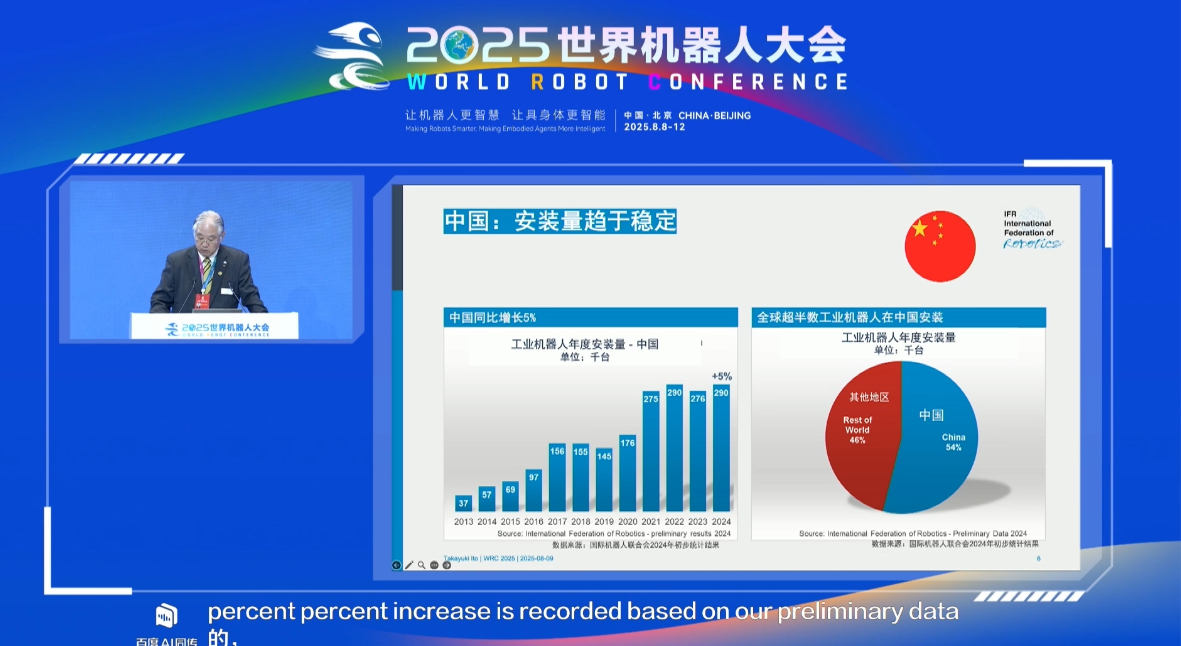
Core Viewpoint - The industrial robot market is facing challenges in 2024, with a global decline in new installations and significant regional disparities, particularly highlighting China's growth amidst a global downturn [3][4]. Group 1: Global Market Trends - In 2023, global industrial robot installations decreased by 3% to approximately 523,000 units, with Asia down 2%, Europe down 6%, and the Americas down 9% [3]. - The automotive industry has seen a significant decline, while the electronics sector experienced slight growth. Other industries such as metals, machinery, plastics, chemicals, and food are in a growth phase [3]. Group 2: China's Market Performance - China is projected to install around 290,000 industrial robots in 2024, marking a 5% increase and raising its global market share from 51% in 2023 to 54% [3]. - The structure of installations has shifted, with general industrial applications rising from 38% five years ago to 53%, while the electronics sector's share dropped from 45% to 28% [3][4]. - China remains the largest industrial robot market globally for 12 consecutive years, with sales expected to reach 302,000 units in 2024 [4]. Group 3: Regional Comparisons - Japan's industrial robot installations fell by 7% to 43,000 units, with only the automotive sector showing an 11% increase [6]. - The U.S. market shrank by 9%, with the automotive sector contributing nearly 40% of installations [6]. - Europe experienced a 6% decline but still achieved a historical second-highest installation level at 86,000 units, with plastics, chemicals, and food industries emerging as new growth areas [6]. Group 4: Industry Innovations and Future Trends - The integration of artificial intelligence and advancements in digital twin technology are expected to enhance human-robot interaction and reshape production processes [6]. - The logistics and material handling sectors are anticipated to be early adopters of humanoid robots, with construction, laboratory automation, and warehousing also accelerating robot penetration [6].

全球工业机器人市场遇冷 中国逆势增长成最大亮点
Di Yi Cai Jing· 2025-08-09 07:17
Core Insights - 2024 is expected to be a challenging year for the industrial robotics sector, with a global decline in new installations by 3% to approximately 523,000 units in 2023 [1] - Major markets in Asia, Europe, and the Americas all experienced downturns, with Asia down 2%, Europe down 6%, and the Americas down 9% [1] - China stands out as the only bright spot, with an expected growth of 5% in new installations, reaching around 290,000 units in 2024, increasing its global market share from 51% in 2023 to 54% [1][2] Market Performance - The electronics and automotive sectors have been the leading industries for industrial robots since 2020, with the electronics sector showing slight growth while the automotive sector faced significant declines [1] - In China, the industrial robot market is projected to reach 302,000 units in 2024, maintaining its position as the largest industrial robot market globally for 12 consecutive years [2] - Japan's industrial robot installations fell by 7% to 43,000 units, while the U.S. market shrank by 9%, with the automotive sector contributing nearly 40% of installations [4] Regional Analysis - China is the world's largest producer of industrial robots, with production increasing from 33,000 units in 2015 to 556,000 units in 2024, and service robots reaching 10.5 million units, a 34.3% year-on-year growth [2] - The robot density in China is 470 units per 10,000 workers, surpassing Japan and Germany, with South Korea and Singapore leading at 1,012 and 770 units respectively [4] - Despite geopolitical tensions, Asia is still viewed positively, with a forecast of single-digit growth in industry orders in Q1 2025 and a mild recovery in the electronics sector [4] Industry Trends - The robotics industry is increasingly focusing on the integration of artificial intelligence, with advancements in digital twin technology and enhanced human-machine interaction capabilities [4] - Key areas for early adoption of robotics include logistics and material handling, with construction, laboratory automation, and warehousing also seeing accelerated penetration [4]

全球工业机器人市场遇冷,中国逆势增长成最大亮点
Di Yi Cai Jing· 2025-08-09 07:13
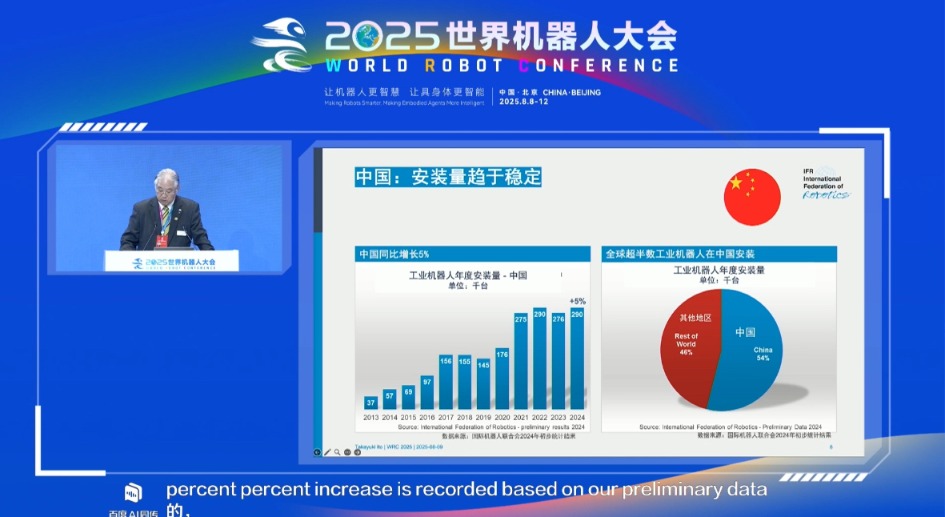
Core Insights - The global industrial robot market faced a decline in new installations in 2023, with a 3% drop to approximately 523,000 units, affecting major markets in Asia, Europe, and the Americas [1][4] - China remains the only bright spot in the market, with an expected 5% growth in new installations for 2024, reaching around 290,000 units, increasing its global market share from 51% in 2023 to 54% [1][2] - The structure of the market is changing, with general industrial applications increasing their share from 38% five years ago to 53%, while the electronics sector's share has decreased from 45% to 28% [1] Regional Performance - Japan's industrial robot installations fell by 7% to 43,000 units, with only the automotive sector showing an 11% growth [4] - The U.S. market shrank by 9%, with the automotive industry contributing nearly 40% of installations [4] - Europe experienced a 6% decline but still achieved a historical second-highest installation level at 86,000 units, with the plastics, chemicals, and food sectors emerging as new growth areas [4] Industry Trends - The density of industrial robots per 10,000 workers indicates varying levels of automation, with South Korea (1,012 units), Singapore (770 units), and China (470 units) leading the way, surpassing Japan and Germany [4] - Despite geopolitical tensions and tariff disputes, the Asian market is expected to see growth, with a mild recovery in the electronics sector anticipated in early 2025 [4] - Future trends in the robotics industry include a focus on AI integration, advancements in digital twin technology, and improvements in human-robot interaction through visual language models [4]
半年研发、1周上线,1秒200行代码爆发?美团研发负责人:靠小团队奇袭,模型和工程能力突破是核心
AI前线· 2025-08-09 05:32
Core Viewpoint - AI programming tools are reshaping software development with a focus on "development democratization," evolving from simple code completion assistants to collaborative partners capable of understanding natural language requirements and generating runnable code frameworks [2] Group 1: Product Development and Features - Meituan launched its first AI Coding Agent product, NoCode, on June 10, 2023, aiming to establish its core competitiveness in the AI programming market [2] - The NoCode project started in October 2024 and was released in May 2023, with a focus on internal support and rapid product prototype delivery [3] - The AI Coding efficiency is complex to measure, with current observations focusing on AI-generated code's incremental proportion and adoption rate [2][3] Group 2: Model Optimization and Performance - The team optimized smaller models to balance performance and output quality, as larger models tend to have lower throughput speeds [4] - The self-generated code by NoCode indicates a low investment in development, with a small team achieving significant results [3][4] Group 3: User Experience and Target Audience - NoCode targets non-technical users, aiming to help them create functional products without extensive programming knowledge, while also being usable by technical users [6][7] - The product's design considers the needs of both novice users and experienced developers, focusing on creativity and continuous learning [7] Group 4: Future Directions and Challenges - The future of AI programming tools may shift from traditional IDE extensions to more autonomous agents capable of handling complex tasks [11] - The integration of various technologies and backend capabilities is essential for addressing complex product development challenges [10][12]
GPT-5发布,普通人必看的8件事
Hu Xiu· 2025-08-08 14:06
Core Insights - The release of GPT-5 marks a significant advancement in AI capabilities, particularly in programming and reducing hallucination rates, while also addressing user experience through model unification [4][31][38]. Group 1: Model Improvements - GPT-5 introduces several groundbreaking enhancements over its predecessor, GPT-3.5, including multi-modal recognition, an increase in context processing length from approximately 4,000 tokens to 120,000 tokens, and more human-like text generation [4]. - The programming capabilities of GPT-5 have seen substantial improvements, with increased accuracy, speed, and stability in handling complex tasks compared to previous versions [22][30]. - The hallucination rate has been significantly reduced, with a 45% decrease in factual errors during web searches and an 80% reduction in reasoning errors compared to GPT-3 [33]. Group 2: User Experience Enhancements - GPT-5 has unified the naming convention for its models, simplifying the user experience by eliminating confusion over which model to use for specific tasks [6][12]. - The API usage costs for GPT-5 have been significantly lowered, with input costs at $1.25 for 1 million tokens and output costs at $10, making it more competitive compared to other models [38]. - The model's design aims to reduce user decision-making complexity, allowing users to focus on task completion rather than model selection [18]. Group 3: Market Positioning and Future Outlook - OpenAI aims to capture market share by offering GPT-5 at a lower cost compared to competitors, positioning it as a cost-effective solution for enterprises [38]. - The long-term value of GPT-5 should not be underestimated, as the incremental improvements in AI capabilities may lead to significant advancements in various applications over time [45][55]. - The ongoing evolution of AI tools suggests that features introduced in GPT-5 will soon become standard across the industry, prompting other companies to enhance their offerings [56].