市盈率

Search documents
发电业务估值超过了英伟达和GE Vernova!大摩:卡特彼勒被严重高估
Hua Er Jie Jian Wen· 2025-10-31 06:42
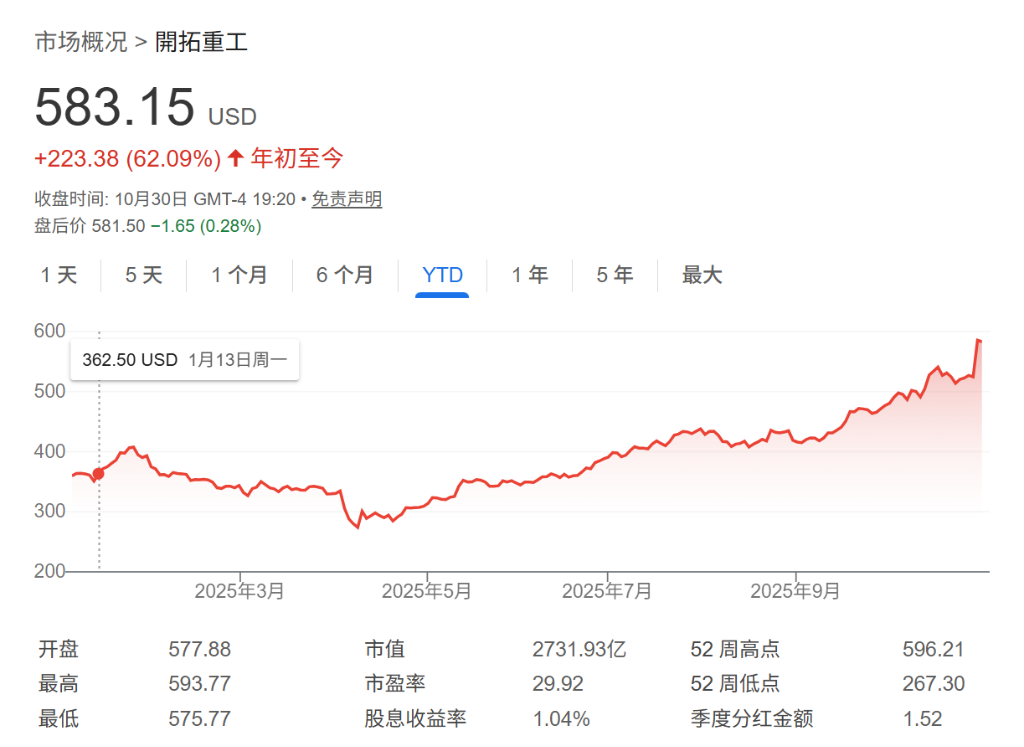
Core Viewpoint - Morgan Stanley warns that the market valuation multiples for Caterpillar's power generation business have significantly exceeded those of industry leaders like Nvidia and GE Vernova, indicating a potential overvaluation that could lead to a sharp correction if market conditions change [1][4]. Valuation Comparison - Caterpillar's power generation business is currently valued at an EV/EBITDA multiple between 58x and 103x, while GE Vernova and Nvidia are valued at approximately 28x and 25x, respectively [1][4]. - This suggests that the market perceives Caterpillar's power generation business as more valuable than the related businesses of top technology and energy companies [4]. Business Segment Analysis - The projected EBITDA for Caterpillar's segments in 2026 is as follows: - Construction Industries: $3,664 million at a 13.0x multiple, resulting in an EV of $47,628 million - Resource Industries: $2,118 million at a 13.0x multiple, resulting in an EV of $27,538 million - Power Generation: $1,508 million at a 103.0x multiple, resulting in an EV of $155,369 million - Other Energy & Transportation: $7,132 million at a 13.0x multiple, resulting in an EV of $92,713 million [5]. Market Expectations - To justify Caterpillar's current stock price of $585, the market must accept one of two extreme scenarios: 1. The valuation of Caterpillar's traditional cyclical businesses (like construction and resource extraction) is pushed to "absurd levels" far beyond historical norms. 2. Even with optimistic assumptions for the power generation business, the implied valuation for cyclical businesses remains high at 28x, despite declining operating margins [6][7]. - Morgan Stanley estimates that even with aggressive growth projections for the power generation business, it is unlikely to meet bullish expectations of $20 billion in sales by 2027 [7]. Price Target and EPS Forecast - Morgan Stanley maintains a 2026 EPS forecast for Caterpillar at $19.24, with a target price of $380 based on a 20x P/E ratio, indicating a potential downside of 35% from the current stock price [7].


Arthur J. Gallagher & Co. (NYSE: AJG) Earnings Report Analysis
Financial Modeling Prep· 2025-10-31 04:06
Core Insights - Arthur J. Gallagher & Co. (AJG) reported mixed results in its third quarter earnings for 2025, with earnings per share (EPS) below expectations but showing a year-over-year increase [2][3] Financial Performance - AJG's EPS for the quarter was $2.32, missing the Zacks Consensus Estimate of $2.51, resulting in a negative surprise of 7.57%. This EPS reflects a slight increase from $2.26 in the same quarter last year [2][6] - The company's revenue for the quarter was $3.33 billion, slightly below the anticipated $3.34 billion, but significantly up from $2.74 billion reported in the same period last year, indicating a 20% increase in total revenue for its brokerage and risk management segments [3][6] Market Position and Valuation - AJG maintains a price-to-earnings (P/E) ratio of 40.92 and a price-to-sales ratio of 5.39, suggesting a high valuation relative to its sales, reflecting strong market position and growth prospects [4][6] - The company's enterprise value to sales ratio is 5.31, further indicating investor confidence in its future earnings potential [4] Financial Health - AJG has a debt-to-equity ratio of 0.58, indicating a moderate level of debt, and a current ratio of 1.36, suggesting sufficient liquidity to cover short-term liabilities [5][6] - Despite the recent earnings miss, AJG's consistent revenue growth and solid financial metrics highlight its resilience in the competitive insurance brokerage industry [5]


Stellantis N.V. (NYSE:STLA) Earnings Report and Financial Analysis
Financial Modeling Prep· 2025-10-30 08:05
Core Insights - Stellantis N.V. is a significant entity in the global automotive sector, formed from the merger of Fiat Chrysler Automobiles and PSA Group, with a diverse brand portfolio including Peugeot, Citroën, and DS Automobiles [1] Financial Performance - On October 30, 2025, Stellantis reported an earnings per share (EPS) of -$0.91, missing the estimated EPS of $0.41, with a revenue of approximately $87.44 billion, slightly below the estimated $87.94 billion [2] - The company's price-to-sales ratio of 0.19 indicates a low market valuation of Stellantis' sales relative to its stock price, supported by an enterprise value to sales ratio of 0.26 [3] - Stellantis has an enterprise value to operating cash flow ratio of -12, indicating difficulties in generating positive cash flow from operations [3] - The earnings yield stands at -8.63%, reflecting the negative earnings situation, while the debt-to-equity ratio of 0.56 suggests a moderate level of debt relative to equity [4] - The current ratio of 1.06 indicates slightly more current assets than current liabilities, suggesting short-term financial stability [4] Supplier Relations - Stellantis recently held its fifth annual Supplier of the Year Ceremony in Paris, recognizing 54 global suppliers for their exceptional performance, attended by the Stellantis Leadership Team and over 200 global sourcing partners [5] - The event included presentations on Stellantis' future product strategies, highlighting the company's commitment to supplier relationships and future planning [5]

JBG SMITH Properties (NYSE:JBGS) Earnings Overview
Financial Modeling Prep· 2025-10-29 07:06
Core Insights - JBGS reported an earnings per share (EPS) of -$0.48, slightly better than the estimated EPS of -$0.49, while revenue reached approximately $123.87 million, exceeding the estimated $120.57 million [2][6] Financial Performance - The company has a price-to-earnings (P/E) ratio of approximately -9.60, reflecting negative earnings over the past year [3] - The price-to-sales ratio is about 2.56, indicating that investors are willing to pay $2.56 for every dollar of sales, suggesting confidence in revenue potential [3] - JBGS's enterprise value to sales ratio is approximately 7.38, and the enterprise value to operating cash flow ratio is around 37.81, highlighting its valuation relative to sales and cash flow [4] Financial Health - The debt-to-equity ratio stands at approximately 1.92, indicating a higher reliance on debt financing [5][6] - The current ratio is about 0.77, suggesting potential liquidity challenges in covering short-term liabilities with current assets [5][6] - The negative earnings yield of -10.41% is consistent with the negative P/E ratio, indicating challenges in profitability [4]


跟踪ETF规模超1.2万亿,如何玩转沪深300指数
Sou Hu Cai Jing· 2025-10-29 07:06
Core Insights - The article discusses the growing popularity of the CSI 300 Index as a tool for investors to capture market opportunities, with the total scale of ETFs tracking this index reaching 1.25 trillion yuan as of October 24, 2025 [2]. Group 1: Investment Strategies - The CSI 300 Index, comprising high-quality blue-chip stocks, is suitable for low-positioning strategies based on valuation indicators such as price-to-earnings (PE) and dividend yield [3]. - A phased investment approach is recommended, where investors can gradually buy into index products when the CSI 300 Index is at historically low valuation levels, thus mitigating timing risks [6]. - The article highlights the size and style rotation strategy, indicating that large-cap and small-cap stocks in the A-share market exhibit significant performance divergence influenced by economic cycles [7][10]. Group 2: Portfolio Strategies - The "Dumbbell Strategy" is introduced, which focuses on allocating assets with low correlation to balance risk and return, emphasizing a concentrated investment in both ends of the risk-return spectrum [15]. - For conservative investors, the CSI 300 Index can serve as an offensive asset, while for aggressive investors, it can be paired with high-growth sectors to create a more offensive portfolio [19]. - The "Core-Satellite Strategy" is discussed, where the core portion of the portfolio is invested in the CSI 300 Index for stable returns, while the satellite portion is allocated to other assets for tactical gains [20][23].

Billionaires Are Piling Into This Nasdaq Stock Down 72% and Yielding a Healthy 5% Dividend
The Motley Fool· 2025-10-28 08:29
Core Viewpoint - SiriusXM has seen significant investment from billionaires like Warren Buffett, but the company faces substantial challenges, including a 72% decline in stock price since mid-2023 and increasing competition from modern music streaming services [1][4]. Financial Performance - SiriusXM's current stock price is $21.63, with a market cap of $7 billion and a P/E ratio of just 3, indicating it may appear undervalued [2][9]. - The company reported a revenue decline from $9 billion in 2023 to $8.565 billion over the last 12 months, alongside a decrease in self-pay subscribers by 68,000 last quarter [4][7]. - Operating margin has decreased from 30% in 2018 to 22% over the last 12 months, reflecting ongoing financial struggles [4]. Subscriber Trends - SiriusXM has experienced a decline in subscribers every year since the end of 2022, attributed to the rise of music streaming services like Spotify and YouTube Music [4][10]. - The company claims a low churn rate of 1.5%, but the overall subscriber base is under pressure from modern alternatives [4]. Debt Situation - SiriusXM has over $10 billion in long-term debt and less than $100 million in cash, leading to concerns about its financial stability [6][7]. - The company generates around $1 billion in free cash flow but pays over $100 million in quarterly interest payments, raising questions about its ability to sustain dividends and manage debt [7][9]. Competitive Landscape - The competitive environment has intensified with the emergence of platforms like Spotify and Apple Music, which offer extensive music libraries and are integrated into modern vehicles, reducing the necessity for SiriusXM subscriptions [4][10]. - Despite the high dividend yield of 5%, the company's declining subscriber base and revenue, coupled with significant debt, suggest that investing in SiriusXM may not be prudent at this time [2][10].


Galp Energia's Q3 2025 Earnings Overview
Financial Modeling Prep· 2025-10-27 22:00
Core Insights - Galp Energia reported mixed results in its Q3 2025 earnings, with an EPS of $0.48, slightly below analyst estimates of $0.49, while revenue exceeded expectations at approximately $5.84 billion compared to the forecasted $5.05 billion [2][5] Financial Performance - The company's P/E ratio is approximately 12.64, indicating market valuation of earnings [4] - The price-to-sales ratio stands at about 0.60, and the enterprise value to sales ratio is roughly 0.74, reflecting the company's valuation in relation to its sales [4] - An enterprise value to operating cash flow ratio of about 8.64 shows valuation based on operating cash flow [4] - The earnings yield is approximately 7.91%, and the debt-to-equity ratio is 1.14, providing insights into financial health and operational efficiency [4] - A current ratio of approximately 1.64 indicates a solid liquidity position to meet short-term obligations [4] Strategic Insights - Executives discussed financial outcomes, strategic initiatives, and future prospects during the earnings call, with details available in the full transcript on Seeking Alpha [3]
The Cheesecake Factory Incorporated (NASDAQ:CAKE) Earnings Preview
Financial Modeling Prep· 2025-10-27 12:00
Core Insights - The Cheesecake Factory is set to report its third-quarter fiscal 2025 earnings on October 28, with projected EPS of $0.60 and revenue of approximately $913 million [1][2] Financial Performance - Analysts forecast a 3.5% increase in EPS from $0.58 reported in the same quarter last year, driven by strong demand, menu innovations, and efficient cost management [2] - The company has consistently outperformed earnings expectations, with an average surprise of 15.2% over the last four quarters [2][6] - In the most recent quarter, CAKE reported earnings of $1.16 per share, exceeding the Zacks Consensus Estimate of $1.06 per share, resulting in a 9.43% surprise [3] Market Valuation - CAKE's price-to-earnings (P/E) ratio is approximately 16.39, and the price-to-sales ratio is about 0.76, indicating a valuation of $0.76 for every dollar of sales [4] - The enterprise value to sales ratio stands at around 1.29, reflecting the company's total valuation in relation to its sales [4] Financial Health - The current ratio is approximately 0.20, indicating potential liquidity challenges for the company [5][6] - The debt-to-equity ratio is notably high at 5.24, suggesting a significant reliance on debt financing over equity [5][6]


新里程:2025年前三季度实现营业总收入22.56亿元
Zhong Guo Zheng Quan Bao· 2025-10-26 15:08
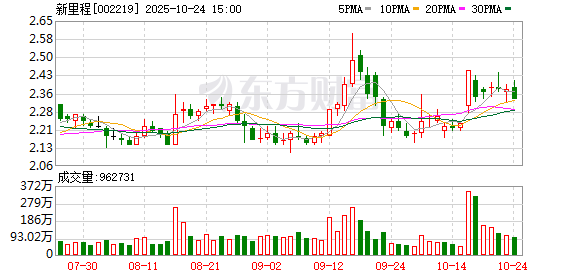
Core Viewpoint - The company reported a significant decline in revenue and net profit for the third quarter of 2025, indicating financial challenges and a need for strategic adjustments [2][21]. Financial Performance - Total revenue for the first three quarters of 2025 was 2.256 billion yuan, a decrease of 23.40% year-on-year [2]. - The net profit attributable to shareholders was a loss of 38.468 million yuan, compared to a profit of 56.716 million yuan in the same period last year [2]. - The net profit after deducting non-recurring items was a loss of 33.421 million yuan, down from a profit of 47.780 million yuan year-on-year [2]. - Basic earnings per share were -0.0114 yuan, with a weighted average return on net assets of -1.95% [2][21]. Cash Flow and Capital Structure - The net cash flow from operating activities was 1.509 billion yuan, a decline of 31.88% compared to the previous year [24]. - The company experienced a significant decrease in cash and cash equivalents, down 34.72% from the end of the previous year [26]. - The current ratio was 0.56, and the quick ratio was 0.5, indicating potential liquidity issues [32]. Asset and Liability Changes - As of the end of the third quarter of 2025, the company's total assets were approximately 6.553 billion yuan, with a notable increase in construction in progress by 11.54% [26]. - Other receivables increased by 60.45%, while fixed assets decreased by 3.37% [26]. - Short-term borrowings increased by 23.29%, while long-term borrowings decreased by 15.67% [29]. Valuation Metrics - As of October 24, the company's price-to-earnings (P/E) ratio was approximately 403.08, and the price-to-book (P/B) ratio was about 4.01 [1].

A Look Into O'Reilly Automotive Inc's Price Over Earnings - O'Reilly Automotive (NASDAQ:ORLY)
Benzinga· 2025-10-24 20:01
Core Viewpoint - O'Reilly Automotive Inc. has shown a mixed performance with a short-term decline of 8.01% over the past month, while experiencing a long-term increase of 22.29% over the past year, prompting long-term shareholders to consider the company's price-to-earnings (P/E) ratio [1]. Group 1: Company Performance - O'Reilly Automotive's current share price is $97.60, reflecting a decrease of 0.68% [1]. - The company has a P/E ratio of 34.07, which is higher than the Specialty Retail industry's aggregate P/E ratio of 21.86 [6]. Group 2: P/E Ratio Analysis - A lower P/E ratio may indicate that shareholders do not expect better future performance or that the company is undervalued [5]. - The higher P/E ratio of O'Reilly Automotive suggests that it may perform better than its industry group, but it also raises concerns about potential overvaluation [6]. Group 3: Investment Considerations - The P/E ratio is a useful tool for evaluating market performance but should be used cautiously, as it can indicate both undervaluation and weak growth prospects [10]. - Investors should consider the P/E ratio alongside other financial metrics, industry trends, and qualitative factors for a comprehensive analysis [10].