
绿色贸易

Search documents
盘前必读丨党的二十届四中全会今日召开;寒武纪前三季度营收同比增逾23倍
Di Yi Cai Jing· 2025-10-19 23:29
Economic Data and Policy Updates - The National Bureau of Statistics released data on the national economy for the first three quarters, indicating ongoing economic trends [1] - The State Council emphasized the importance of developing green trade to optimize trade and achieve carbon neutrality goals [3] - The Ministry of Finance announced a VAT policy adjustment for offshore wind power products, effective from November 1, 2025, to December 31, 2027, allowing a 50% VAT refund [4] Stock Market Performance - Major U.S. stock indices rebounded, with the Dow Jones up 0.52%, Nasdaq up 0.52%, and S&P 500 up 0.53% [2] - Notable tech stocks showed mixed results, with Tesla rising 2.5% and Amazon falling 0.7% [2] - The Nasdaq Golden Dragon China Index decreased by 0.14%, with New Oriental up 2.3% and Alibaba up 1.2% [2] Corporate Earnings and Developments - Cambrian reported a revenue of 4.607 billion yuan for the first three quarters of 2025, a year-on-year increase of 2386.38% [9] - Zijin Mining's net profit for the third quarter was 14.572 billion yuan, up 57.14% year-on-year [9] - China Life expects a net profit increase of approximately 50% to 70% year-on-year for the first three quarters [10] Regulatory Changes - The China Securities Regulatory Commission revised the Corporate Governance Standards for listed companies, effective January 1, 2026, focusing on management and accountability [5] - The National Internet Information Office and the State Administration for Market Regulation announced a personal information export certification method, effective January 1, 2026, to enhance data protection [6] Industry Insights - The Ministry of Commerce and nine other departments issued guidelines to promote high-quality development in the accommodation industry, focusing on brand building and green development [7] - Nvidia's CEO stated that the company's market share in China has dropped from 95% to 0% due to U.S. policies, highlighting the impact of geopolitical factors on market dynamics [7]



“样品都售空了”!广交会第一期线下展闭幕
Zhong Guo Zheng Quan Bao· 2025-10-19 14:41
Core Insights - The 138th Canton Fair's first phase concluded with nearly 400 foreign buyers and an intention to sign orders worth $1.92 million, exceeding expectations [1] - The fair focused on "advanced manufacturing," covering an exhibition area of 520,000 square meters with over 25,000 booths and approximately 12,000 participating companies [1] Group 1: New Products and Technologies - The fair showcased over 5,500 high-quality export enterprises, including national high-tech companies and "little giant" firms, accounting for about half of the exhibitors [2] - Major global brands like Haier, Midea, and Gree presented innovative products, while AI unicorns displayed cutting-edge technology [2] - Midea's new air conditioning products utilize AI and eco-friendly refrigerants, achieving up to 50% energy savings [2] - Gree's GMV9 multi-split air conditioning unit features an AI energy-saving control strategy, achieving an average energy savings rate of 25% [3] Group 2: Trade Confidence and Future Outlook - The fair is seen as a barometer for China's foreign trade, with expectations for continued growth in exports based on order intentions observed [4][5] - The Ministry of Commerce highlighted the fair's role in supporting high-quality foreign trade development and fostering new trade dynamics [5] - Experts suggest that China's foreign trade will maintain resilience in the fourth quarter, with recommendations for policy support and the development of new trade models [6]
国务院总理李强主持召开国务院常务会议:推动人工智能等与物流深度融合
Mei Ri Jing Ji Xin Wen· 2025-10-19 13:53
Core Insights - The State Council meeting emphasized the importance of logistics in supporting domestic circulation and modern industrial systems, aiming to reduce logistics costs and improve efficiency [1] Logistics Cost Reduction - The "Action Plan for Effectively Reducing Social Logistics Costs" outlines 20 key tasks across five areas, with logistics costs as a percentage of GDP decreasing from 18% in 2012 to 14.4% in 2023, indicating significant potential for further reductions [2] - Investment in logistics infrastructure, including warehousing and digital facilities, is prioritized to enhance logistics efficiency and support small and micro enterprises [2] Green Trade Development - The meeting highlighted the need to develop a green trade system to optimize trade, achieve carbon neutrality goals, and enhance international cooperation on green standards [4] - Significant growth in exports of green products was noted, including a 71.9% increase in wind turbine exports and electric vehicle exports surpassing 2 million units for the first time [4] Agricultural Production Support - The meeting addressed the importance of coordinated efforts in grain production, with expectations for a good harvest and sufficient supply of agricultural products [5] - Emphasis was placed on ensuring the stability of agricultural inputs and supporting market participants to enhance farmers' income [5] Environmental Monitoring System - The establishment of a modern ecological environment monitoring system was discussed, focusing on improving monitoring standards and data quality to support ecological civilization initiatives [5]
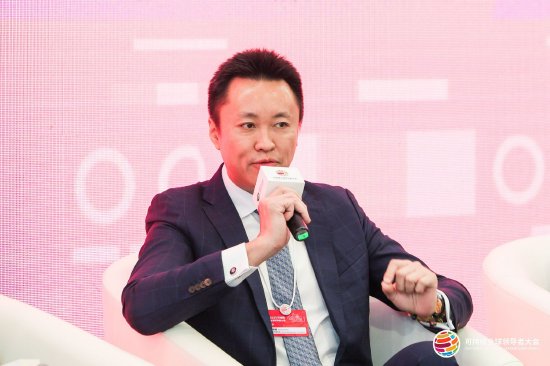
全文|德勤钟晓扬:以绿色供应链与长期主义推动ESG从主流走向落地
Xin Lang Zheng Quan· 2025-10-18 03:41
Core Insights - The 2025 Sustainable Global Leaders Conference will be held from October 16-18 in Shanghai, focusing on global action, innovation, and sustainable growth [1] - The conference aims to explore new paths for sustainable development and inject "Chinese momentum" into global governance [1] - Approximately 500 prominent guests, including 100 international attendees, will participate, covering nearly 50 topics related to sustainability [1] Group 1: Conference Overview - The conference is co-hosted by the World Green Design Organization (WGDO) and Sina Group, with support from the Shanghai Huangpu District Government [1] - It builds on the previous four "ESG Global Leaders Conferences" and features a strong lineup of speakers, including Nobel laureates and leaders from Fortune 500 companies [1] Group 2: Key Themes and Discussions - Discussions will cover various topics, including energy and "dual carbon" strategies, green finance, sustainable consumption, and technology for public good [1] - The emphasis is on the relationship between business operations and the symbiosis with people, nature, and land, highlighting the importance of understanding these connections [4][6] Group 3: Insights from Industry Leaders - The importance of integrating ESG (Environmental, Social, Governance) into long-term business strategies is emphasized, with a focus on building sustainable business models [5][12] - The need for a stable governance mechanism to ensure the continuity of ESG strategies through leadership transitions is highlighted [4][13] Group 4: Challenges and Opportunities - Companies are increasingly recognizing the importance of ESG in their growth and transformation plans, with a significant focus on achieving carbon peak by 2030 and carbon neutrality by 2060 [7][10] - The role of green supply chains is identified as crucial for contributing to the global economy, with a call for deeper collaboration between Chinese and European companies in green trade [8][9] Group 5: Future Directions - The necessity for companies to adopt a circular economy mindset is stressed, which can lead to cost reductions of around 20% and significant carbon emissions reductions [10] - The upcoming COP30 in Brazil will provide a platform for discussing ESG needs and solutions among major Chinese companies [11]
国常会:推动人工智能与物流深度融合 部署拓展绿色贸易
2 1 Shi Ji Jing Ji Bao Dao· 2025-10-18 00:37
Group 1 - The State Council meeting emphasized the importance of logistics in facilitating domestic circulation and developing a modern industrial system, aiming to reduce logistics costs and improve efficiency [1] - The meeting called for the construction of a modern logistics system that is safe, efficient, and integrates digital infrastructure, with a focus on investment in logistics facilities and enhancing multi-modal transport management [1] - The integration of artificial intelligence with logistics was highlighted as a key area for development, with a goal to enhance operational efficiency and re-engineer logistics processes [2] Group 2 - The development of green trade is seen as a crucial measure for optimizing trade, achieving carbon neutrality goals, and building a strong trade nation, with an emphasis on creating a supportive policy environment [2] - Green trade encompasses both the greening of trade products and processes, aiming for minimal environmental impact throughout the supply chain [3] - The significance of green trade lies in its potential to help achieve carbon neutrality, promote domestic industrial upgrades, and enhance China's position in the global green industry chain [3]
国常会:推动人工智能与物流深度融合,部署拓展绿色贸易
2 1 Shi Ji Jing Ji Bao Dao· 2025-10-18 00:36
Core Insights - The State Council meeting emphasized the importance of logistics in facilitating domestic circulation and developing a modern industrial system, aiming to reduce logistics costs and improve efficiency [3][4] - The integration of artificial intelligence (AI) with logistics was highlighted as a key focus, with plans to promote data sharing and support for small and micro logistics enterprises [3][4] - The development of green trade was identified as a crucial measure for optimizing trade, achieving carbon neutrality goals, and enhancing the country's position in global trade [4][5] Logistics Sector - The meeting called for continuous efforts to lower logistics costs and enhance quality and efficiency, with a focus on building a modern logistics system that is safe, efficient, and environmentally friendly [3] - Investment in logistics infrastructure and digital upgrades is prioritized to improve the logistics framework [3] - The integration of AI in logistics is expected to lead to significant changes in operational processes and service delivery, with a push for logistics companies to adopt AI as a central system [4] Green Trade - Green trade is defined as incorporating environmental and social costs into trade activities, focusing on sustainable development [5] - The significance of green trade includes supporting carbon neutrality goals, promoting domestic industrial upgrades, and enhancing the export of green products and services [5] - The dual approach of green product exports and the implementation of green standards is expected to drive trade optimization and elevate the quality of trade [5]
国常会:持续推动物流降本提质增效
Jing Ji Guan Cha Wang· 2025-10-17 23:42
Core Viewpoint - The State Council of China is focusing on reducing logistics costs across the society, enhancing green trade, and improving agricultural production, as discussed in a recent meeting chaired by Premier Li Qiang [1] Group 1: Logistics Cost Reduction - The meeting emphasized the critical role of logistics in facilitating domestic circulation and developing a modern industrial system [1] - Continuous efforts will be made to reduce logistics costs while improving quality and efficiency [1] - Investment in logistics warehousing facilities will be increased [1] - There will be a push for open and interconnected logistics data [1] - Support for logistics companies, especially small and micro enterprises, will be enhanced through short-term financing [1] Group 2: Green Trade and Agricultural Production - Measures to expand green trade were discussed, although specific details were not provided in the summary [1] - Further efforts to ensure effective grain and agricultural production were also part of the meeting agenda [1] Group 3: Regulatory Developments - The meeting reviewed and approved the draft of the Ecological Environment Monitoring Regulations [1] - The revised draft of the Measures for the Use of the National Emblem was also discussed [1]
三部门调整海南离岛旅客免税购物政策;特朗普与泽连斯基再度会面|南财早新闻
2 1 Shi Ji Jing Ji Bao Dao· 2025-10-17 23:19
Group 1 - The Hainan duty-free shopping policy has been adjusted, increasing the number of duty-free product categories from 45 to 47, allowing domestic products like clothing and ceramics to be sold duty-free starting November 1 [1] - The State Council has emphasized the need to enhance green trade and improve logistics efficiency, with a focus on reducing costs and increasing investment in logistics infrastructure [1] - China's fiscal revenue has shown a gradual recovery, with a total public budget revenue of 16.39 trillion yuan in the first three quarters, reflecting a year-on-year growth of 0.5% [1] Group 2 - The 138th Canton Fair is currently ongoing, attracting over 32,000 exhibitors, with a record number of high-quality enterprises participating [2] - A new tax policy will be implemented from November 1, 2025, providing a 50% VAT refund for electricity products generated from offshore wind power [2] - The China Express Development Index increased by 3.9% year-on-year in September, with an expected 12% growth in express delivery volume [2] Group 3 - The China Securities Regulatory Commission has released new corporate governance guidelines, which will take effect on January 1, 2026, focusing on limiting significant adverse impacts from competition among listed companies [3] - In September, the number of new margin trading accounts reached 205,400, marking a 12.24% month-on-month increase and a 288% year-on-year increase [3] - The company Cambrian Technology reported a 1332.52% year-on-year increase in revenue for Q3, reaching 1.727 billion yuan [4] Group 4 - Zijin Mining reported Q3 revenue of 86.489 billion yuan, a year-on-year increase of 8.14%, with a net profit of 17.056 billion yuan, up 52.25% [4] - Alibaba and Ant Group announced a joint investment of $925 million to acquire a commercial office building in Hong Kong [5] - The U.S. stock market saw all three major indices rise, with the Dow Jones increasing by 0.52% [5]
国务院常务会议提出 持续推动物流降本提质增效
Zhong Guo Zheng Quan Bao· 2025-10-17 23:12
Group 1: Logistics and Supply Chain - The meeting emphasized the importance of logistics in facilitating domestic circulation and developing a modern industrial system, calling for continuous efforts to reduce costs and improve efficiency in logistics [1] - There is a push to accelerate the construction of a modern logistics system that is safe, efficient, and integrates digital infrastructure, with a focus on enhancing multi-modal transport management [1] - Investment in logistics facilities and support for small and micro logistics enterprises will be increased to strengthen the logistics sector [1] Group 2: Green Trade Development - The development of green trade is identified as a key measure to optimize trade, achieve carbon neutrality goals, and build a strong trade nation [2] - The meeting called for the establishment of a comprehensive policy framework for green trade, enhancing collaboration with various sectors such as industry, technology, and finance [2] - Efforts will be made to improve the green and low-carbon development capabilities of foreign trade enterprises and to establish standards for green products and technologies in line with international practices [2] Group 3: Agricultural Production - The meeting noted that grain production is expected to be abundant this year, with sufficient supply of essential agricultural products [2] - There is a focus on ensuring the supply and price stability of agricultural inputs like seeds and fertilizers, as well as supporting market entities in increasing procurement [2] - Agricultural disaster relief funds will be utilized to mitigate losses for farmers due to disasters [2] Group 4: Environmental Monitoring - The establishment of a modern ecological environment monitoring system is a priority, with an integrated monitoring network being developed to support ecological civilization efforts [2] Group 5: National Symbol Regulations - The meeting highlighted the importance of the national emblem as a symbol of the state, emphasizing the need for strict adherence to regulations regarding its use in international exchanges [2]
持续推动物流降本提质增效
Zhong Guo Zheng Quan Bao· 2025-10-17 20:19
Group 1: Logistics and Supply Chain - The meeting emphasized the importance of logistics in facilitating domestic circulation and developing a modern industrial system, calling for continuous efforts to reduce costs and improve efficiency in logistics [1] - There is a push to accelerate the construction of a modern logistics system that is safe, efficient, and integrates digital infrastructure, with a focus on enhancing multi-modal transport management [1] - Investment in logistics facilities and the optimization of their layout and functionality are prioritized, alongside the promotion of data openness and the integration of artificial intelligence in logistics [1] Group 2: Green Trade Development - The development of green trade is identified as a key measure to optimize trade, achieve carbon neutrality goals, and build a strong trading nation [2] - The meeting called for the establishment of a comprehensive policy framework for green trade, enhancing collaboration with various sectors such as industry, technology, and finance [2] - There is an emphasis on improving the green and low-carbon development capabilities of foreign trade enterprises and establishing a public service platform for green trade [2] Group 3: Agricultural Production - The meeting noted that grain production is expected to be abundant this year, with sufficient supply of essential agricultural products [2] - It highlighted the need for coordinated efforts in autumn harvest and planting, ensuring the supply and price stability of agricultural inputs like seeds and fertilizers [2] - Support for market-oriented entities to increase purchasing efforts and the effective use of agricultural disaster relief funds were also discussed [2] Group 4: Environmental Monitoring - The establishment of a modern ecological environment monitoring system is to be accelerated, with a focus on integrating monitoring networks across various domains [2] - The meeting stressed the importance of improving monitoring standards and data quality management to support ecological civilization and the construction of a beautiful China [2] Group 5: National Emblem Usage - The meeting underscored the significance of the national emblem as a symbol of the state, advocating for strict adherence to regulations regarding its use in international exchanges [3] - There is a call to strengthen national awareness among citizens and organizations to maintain constitutional authority and national image [3]