
贸易顺差

Search documents
中国经济内外部挑战的基本逻辑和前景展望
2025-07-16 06:13
Summary of Conference Call Industry or Company Involved - The discussion primarily revolves around the impact of the U.S. tariff policy, specifically the "reciprocal tariffs" introduced by the Trump administration, and its implications for the U.S. economy and global trade dynamics. Core Points and Arguments 1. **Introduction of Reciprocal Tariffs**: The reciprocal tariffs were implemented on April 2, 2024, and have been evolving since then, with ongoing discussions about potential negotiations between the U.S. and China [1][2][3]. 2. **Tariff Calculation Methodology**: The tariffs are calculated based on the trade deficit the U.S. has with other countries, with a specific formula provided by the U.S. Trade Representative's office. For instance, the trade deficit with China was $295.4 billion against imports of $438.9 billion, resulting in a tariff rate of approximately 67% [2][3]. 3. **Tariff Rates on Other Countries**: Besides China, the U.S. has imposed tariffs on other countries, such as 40% on Vietnam and around 50% on Lesotho, indicating a broad application of these tariffs [3]. 4. **Underlying Economic Logic**: The rationale behind these tariffs is argued to be flawed, as the U.S. trade deficit is more a reflection of domestic demand exceeding supply rather than unfair trade practices by other countries [4][5][6]. 5. **Historical Context of the Dollar**: The discussion highlights the historical evolution of the international monetary system, particularly the transition from the Bretton Woods system to the current fiat currency system, which has allowed the U.S. to maintain a trade deficit by printing dollars without physical backing [8][9][10]. 6. **Consequences of Trade Deficits**: The U.S. has benefited from its trade deficits by acquiring goods and services globally at a low cost, but this has led to domestic issues such as deindustrialization and widening income inequality [11][12][16][17]. 7. **Potential Solutions for the U.S.**: Suggestions include abandoning dollar hegemony and establishing a supranational currency to address income inequality and the negative impacts of globalization [18][19][20]. 8. **Impact on U.S. Economy**: The implementation of reciprocal tariffs has led to a significant decline in investment confidence in the U.S., as evidenced by the Syntex investment confidence index [25]. The tariffs have also created uncertainty in the global economic outlook, affecting investment willingness [25][27]. 9. **Financial Market Reactions**: The financial markets have reacted negatively to the tariffs, with a notable decline in the U.S. dollar's strength and rising bond yields, indicating a loss of confidence in the U.S. as a safe haven [26][27][32]. 10. **Future Globalization Trends**: The current global trade dynamics are shifting, with the potential for a new form of globalization that may depend heavily on China's economic choices and domestic policies [23][24]. Other Important but Possibly Overlooked Content 1. **Domestic Economic Pressures**: The U.S. faces significant internal pressures, including rising inflation and a potential debt crisis as the trade deficit is compressed [37][38]. 2. **China's Economic Strategy**: China is encouraged to enhance domestic consumption and investment to mitigate the impacts of U.S. tariffs and maintain economic stability [23][24][50]. 3. **Long-term Economic Outlook**: The long-term sustainability of the U.S. economic model, heavily reliant on trade deficits and dollar dominance, is questioned, with implications for future economic policies [32][57]. This summary encapsulates the key points discussed in the conference call, providing insights into the implications of U.S. tariff policies and the broader economic context.
冯德莱恩:产能过剩必须从源头解决,不能简单转移到全球市场
Sou Hu Cai Jing· 2025-07-15 10:12
Core Viewpoint - The EU is seeking to rebalance its economic relationship with China, focusing on market access for European companies and easing export controls on rare earths, amidst ongoing trade tensions and challenges in the EU-China relationship [1][3]. Economic Relations - The EU's trade surplus with China reached $357 billion in 2024, attributed to fair market competition and the growth of China's manufacturing sector, rather than unfair practices [5][14]. - The EU is concerned about China's manufacturing subsidies leading to overcapacity, which it views as a threat to trade balance [6][10]. Trade Disputes - Recent trade disputes include China's restrictions on EU medical device imports and anti-dumping duties on EU brandy, indicating ongoing tensions ahead of the upcoming EU-China summit [8][13]. - The upcoming summit, intended to celebrate the 50th anniversary of diplomatic relations, is overshadowed by these trade disagreements, potentially leading to a shortened meeting [8][13]. Rare Earths and Resource Supply - The EU is pushing for China to relax its export controls on rare earth materials, which are critical for various industries, while also seeking to develop alternative supply sources [10][11]. - China currently dominates the global rare earth market, accounting for two-thirds of mining and 92% of refining, giving it significant leverage in negotiations [10][11]. Strategic Choices - The EU faces a strategic decision in its relationship with China, balancing pressures from the US and the need for stable partnerships with major economies [15][16]. - A potential collaboration between the EU and China could mitigate the impact of US tariffs, highlighting the importance of cooperation over conflict [15].

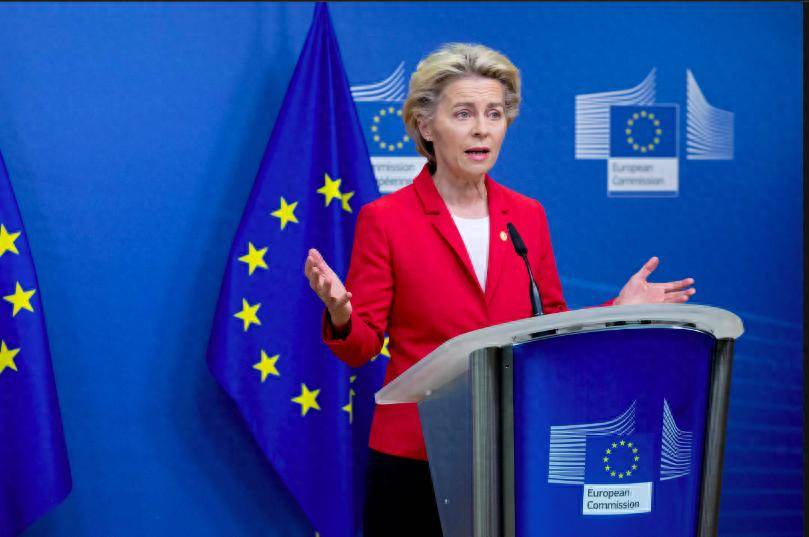
2025年6月外贸数据点评:进出口增速同步回升
Ping An Securities· 2025-07-15 02:51
Group 1: Trade Performance - In June 2025, China's exports increased by 5.8% year-on-year, up from 4.8% in the previous month[2] - Imports grew by 1.1% year-on-year, a significant recovery from a decline of 3.4% in the previous month[2] - The trade surplus reached $114.77 billion, compared to $103.22 billion in the previous month[2] Group 2: Export Dynamics - The improvement in export growth was supported by better performance in exports to the US, which reduced its drag on overall export growth by 2.4 percentage points, a decrease of 2.7 percentage points from the previous month[3] - ASEAN and Hong Kong contributed positively, adding 2.7 and 1.3 percentage points to export growth, respectively[3] - Key product categories such as machinery, high-tech, and labor-intensive goods showed increased contributions to export growth, with machinery contributing 4.8 percentage points and high-tech products 1.5 percentage points[3] Group 3: Import Dynamics - Agricultural products, raw materials, and machinery imports saw improved growth rates, with agricultural products' drag on import growth reduced to 0.9 percentage points, down from 1.1 percentage points in the previous five months[3] - Raw materials contributed a drag of 3.7 percentage points, which is a slight improvement from the previous period[3] - High-tech products contributed 2.7 percentage points to import growth, with integrated circuits showing a notable recovery[3]
国债期货:资金面收敛 期债整体回落
Jin Tou Wang· 2025-07-15 02:14
Market Performance - Government bond futures closed lower across the board, with the 30-year main contract down 0.18%, the 10-year main contract down 0.08%, the 5-year main contract down 0.05%, and the 2-year main contract down 0.03% [1] - Major interbank bond yields rose, with the 30-year government bond yield increasing by 0.6 basis points to 1.8820%, the 10-year policy bank bond yield rising by 0.7 basis points to 1.7500%, the 10-year government bond yield up by 0.5 basis points to 1.6710%, and the 2-year government bond yield increasing by 1.5 basis points to 1.4075% [1] Funding Conditions - The central bank announced a 7-day reverse repurchase operation of 226.2 billion yuan at a fixed rate of 1.40%, with a net injection of 119.7 billion yuan after accounting for maturing reverse repos [2] - Overnight pledged repo rates rose over 8 basis points to 1.42%, while 7-day pledged repo rates increased over 6 basis points to 1.53% [2] - The central bank plans to conduct a 14 billion yuan reverse repurchase operation on July 15, 2025, indicating a proactive approach to maintain liquidity in the banking system [2] Fundamental Data - In the first half of the year, RMB loans increased by 12.92 trillion yuan, with household loans rising by 1.17 trillion yuan and corporate loans increasing by 11.57 trillion yuan [3] - RMB deposits increased by 17.94 trillion yuan, with household deposits up by 10.77 trillion yuan [3] - The social financing scale increased by 22.83 trillion yuan, 4.74 trillion yuan more than the same period last year, indicating improvements in government bond financing and corporate short-term loans [3] - June exports (in USD) grew by 5.8% year-on-year, while imports increased by 1.1%, resulting in a trade surplus of 114.77 billion USD [3] Operational Recommendations - Current fundamental data indicates resilient export growth and positive social financing signals, although uncertainties in foreign trade and weak domestic demand remain concerns [4] - The central bank's increased reverse repurchase operations may improve market sentiment towards the bond market [4] - A short-term observation strategy is recommended for government bonds, with potential adjustments to increase holdings after stabilization [4]
瑞达期货股指期货全景日报-20250714
Rui Da Qi Huo· 2025-07-14 11:36
Report Summary 1. Report Industry Investment Rating - Not provided in the given content 2. Core Viewpoints - Although the US has restarted the tariff war, the market has become somewhat insensitive after previous fluctuations in the trade situation. With the release of semi - annual performance forecasts of listed companies, the market is optimistic about their first - half profits. The effects of loose monetary policies are evident, and the improvement in external demand has led to positive GDP expectations. The market anticipates positive second - quarter economic data, and the fundamental recovery supports the stock market. As the Politburo meeting at the end of July approaches, market bulls may pre - arrange, driving the stock market up. It is recommended to buy on dips with a light position [2] 3. Summary by Relevant Content a. Futures Contract Data - IF主力合约(2509)最新价3985.8,环比下降13.0;IF次主力合约(2507)最新价4009.0,环比下降11.6;IH主力合约(2509)最新价2747.4,环比下降12.8;IH次主力合约(2507)最新价2751.8,环比下降23.2;IC主力合约(2509)最新价5897.6,环比下降18.0;IC次主力合约(2507)最新价6008.4,环比下降19.0;IM主力合约(2509)最新价6302.2,环比下降13.0;IM次主力合约(2507)最新价6442.2,环比下降13.0 [2] - IC - IF当月合约价差1257.2,环比下降9.0;IF - IH当月合约价差1999.4,环比下降2.8;IC - IH当月合约价差3256.6,环比下降11.8;IM - IC当月合约价差433.8,环比下降5.0;IM - IH当月合约价差3690.4,环比下降7.8;IM - IF当月合约价差2433.2,环比下降2.0 [2] - IF下季 - 当月为 - 23.2,环比下降4.8;IF当季 - 当月为 - 53.8,环比下降1.4;IH下季 - 当月为 - 4.4,环比下降8.2;IH当季 - 当月为 - 1.8,环比上升0.2;IC下季 - 当月为 - 110.8,环比下降4.8;IC当季 - 当月为 - 233.8,环比下降7.0;IM下季 - 当月为 - 140.0,环比下降4.6;IM当季 - 当月为 - 321.4,环比下降4.6 [2] - IF前20名净持仓为 - 29,007.00,环比下降735.0;IH前20名净持仓环比上升2211.0;IC前20名净持仓为 - 11,851.00,环比上升885.0;IM前20名净持仓环比上升1903.0 [2] - IF主力合约基差环比上升2.9;IH主力合约基差环比上升1.0;IC主力合约基差环比下降6.2;IM主力合约基差环比上升1.2 [2] b. Market Sentiment Data - A股成交额(日)为14,809.22亿元,环比上升20.81;两融余额(前一交易日)为18,757.94亿元,环比下降2556.88;逆回购(到期量,操作量)为2455.04亿元,环比上升432.40;北向成交合计(前一交易日)为 - 1065.0亿元,环比上升2262.0;MLF(续作量,净投放)为 - 405.03亿元;主力资金(昨日,今日)为 - 119.66亿元 [2] - Shibor(日)为1.415%,环比上升0.082;上涨股票比例(日)为58.69%,环比上升4.03;IO平值看涨期权隐含波动率环比下降8.00;IO平值看涨期权收盘价(2507)为28.80,环比下降0.59;IO平值看跌期权隐含波动率环比下降1.20;IO平值看跌期权收盘价(2507)为18.40,环比下降0.59;成交量PCR环比上升0.01;沪深300指数20日波动率为8.69%,环比上升13.64;持仓量PCR为74.76%,环比下降0.36 [2] - 技术面:Wind市场强弱分析中,全部A股为5.90,环比上升0.50;资金面为6.00,环比下降0.60 [2] c. Industry News - On July 14, the General Administration of Customs released data showing that in June, China's exports (in RMB) increased by 7.2% year - on - year (previous value: 6.3%), imports increased by 2.3% (previous value: - 2.1%), and the trade surplus was 8259.7 billion yuan (previous value: 7435.6 billion yuan). In the first half of the year, exports increased by 7.2% year - on - year, imports decreased by 2.7%, and the trade surplus was 42125.1 billion yuan. In June, exports (in US dollars) increased by 5.8% year - on - year (previous value: 4.8%), imports increased by 1.1% (previous value: - 3.4%), and the trade surplus was 1147.7 billion US dollars (previous value: 1032.2 billion US dollars). In the first half of the year, exports increased by 5.9% year - on - year, imports decreased by 3.9%, and the trade surplus was 5859.6 billion US dollars [2] - On July 14, the central bank announced that in the first half of 2025, the cumulative increase in social financing scale was 22.83 trillion yuan, 4.74 trillion yuan more than the same period last year. At the end of June 2025, the stock of social financing scale was 430.22 trillion yuan, a year - on - year increase of 8.9%. At the end of June, the balance of broad - money (M2) was 330.29 trillion yuan, a year - on - year increase of 8.3%. The balance of narrow - money (M1) was 113.95 trillion yuan, a year - on - year increase of 4.6%. The balance of currency in circulation (M0) was 13.18 trillion yuan, a year - on - year increase of 12%. In the first half of the year, 363.3 billion yuan of cash was net - injected [2] - As of 21:00 on July 13, 510 A - share listed companies had released their semi - annual performance forecasts for 2025, of which 301 were positive, with a positive forecast ratio of about 59.02% [2] - According to data from the Shanghai and Shenzhen Stock Exchanges, foreign capital has increased its holdings of A - shares for two consecutive quarters. As of the end of the second quarter of this year, north - bound funds held 2907 stocks, with a total market value of about 2.29 trillion yuan. Compared with the end of 2024, the market value of north - bound funds' holdings increased by 87.1 billion yuan; compared with the first quarter of 2025, it increased by more than 50 billion yuan [2] d. Market Performance - A - share major indexes showed mixed trends. The Shanghai Composite Index was slightly stronger in a volatile manner, while the Shenzhen Component Index and the ChiNext Index were slightly weaker. At the close, the Shanghai Composite Index rose 0.27%, the Shenzhen Component Index fell 0.11%, and the ChiNext Index fell 0.45%. The trading volume of the Shanghai and Shenzhen stock markets decreased significantly. Most industry sectors rose, with the machinery and equipment sector leading the gains and the real estate sector leading the losses [2] e. Upcoming Key Data - July 15, 10:00: China's June fixed - asset investment, industrial added value of large - scale industries, total retail sales of consumer goods, and unemployment rate; second - quarter GDP - July 15, 20:30: US June CPI and core CPI - July 16, 20:30: US June PPI and core PPI - July 17, 20:30: US June import price index, retail sales, and core retail sales [3]
特朗普30%关税威胁下欧盟为何暂缓反制?专家:一场“心知肚明”的较量|特朗普关税风云第二季
Di Yi Cai Jing· 2025-07-14 10:48
Core Points - The European Union (EU) has extended the suspension period for countermeasures against U.S. tariffs until early August in response to President Trump's threat of a 30% tariff on EU imports starting August 1 [1][4] - EU Commission President Ursula von der Leyen emphasized the importance of negotiations, stating that if no agreement is reached, the EU will prepare countermeasures [3][5] - French President Emmanuel Macron expressed strong opposition to the U.S. tariffs and called for the EU to demonstrate its commitment to defending its interests [4][5] Trade Relations - The total trade in goods and services between the EU and the U.S. is projected to reach €1.7 trillion in 2024, averaging €46 billion daily [7] - In 2024, the EU is expected to export €531.6 billion worth of goods to the U.S. while importing €333.4 billion, resulting in a trade surplus of €198.2 billion [7] - The EU's exports to the U.S. have increased by 5.5% compared to 2023, while imports have decreased by 4.0% [7] Negotiation Dynamics - Trump's administration is focused on reducing the trade surplus the EU has with the U.S., which is seen as a key objective behind the tariff threats [7][10] - The EU is exploring various trade relationships and is seeking to diversify its trade partnerships beyond the U.S. [10] - Macron's statements reflect the voice of EU member states, emphasizing the need for a united front against U.S. trade policies [6][5]
特朗普严惩欧盟!美国征收30%关税!欧美关系破裂?中国获利?
Sou Hu Cai Jing· 2025-07-14 09:16
所有人都没有预料到,欧盟这个在国际贸易中常常"骑墙"的角色,竟然成为特朗普这次贸易战的最大输家,甚至最终遭到了"制裁"。根据昨晚的最新消息, 美国总统特朗普宣布,自8月1日起对欧盟和墨西哥征收高达30%的关税。这一消息一经传出,立刻引发了全球范围内的强烈反响。 在几天前,欧盟与美国的谈判进展已有所披露,当时欧盟在谈判中做出了相当大的让步,最终美国承诺对欧盟仅征收10%的对等关税,部分领域如汽车、药 品和航空航天等则加征25%的关税。然而,令所有人大跌眼镜的是,特朗普这次直接将税率从原本的10%提升至30%,这一变动远远超出了所有人的预期。 稍微算一算,欧盟征收的30%关税,与美国对中国征收的34%关税几乎持平。对此,欧盟感到震惊,甚至难以分辨自己到底是美国的盟友,还是中国才是。 那么,欧盟的27个成员国面对这一局面,是选择屈服妥协,还是像中国一样与美国展开激烈的对抗?这是否意味着新一轮的欧美贸易战即将爆发?接下来, 我们将探讨这个问题。写这篇文章并不容易,欢迎大家点赞、转发和收藏。 那么,特朗普为何对欧盟下如此狠手呢?从特朗普的角度来看,欧盟并非是美国的"商业盟友",而恰恰是美国经济的一大威胁。虽然美国市场一 ...
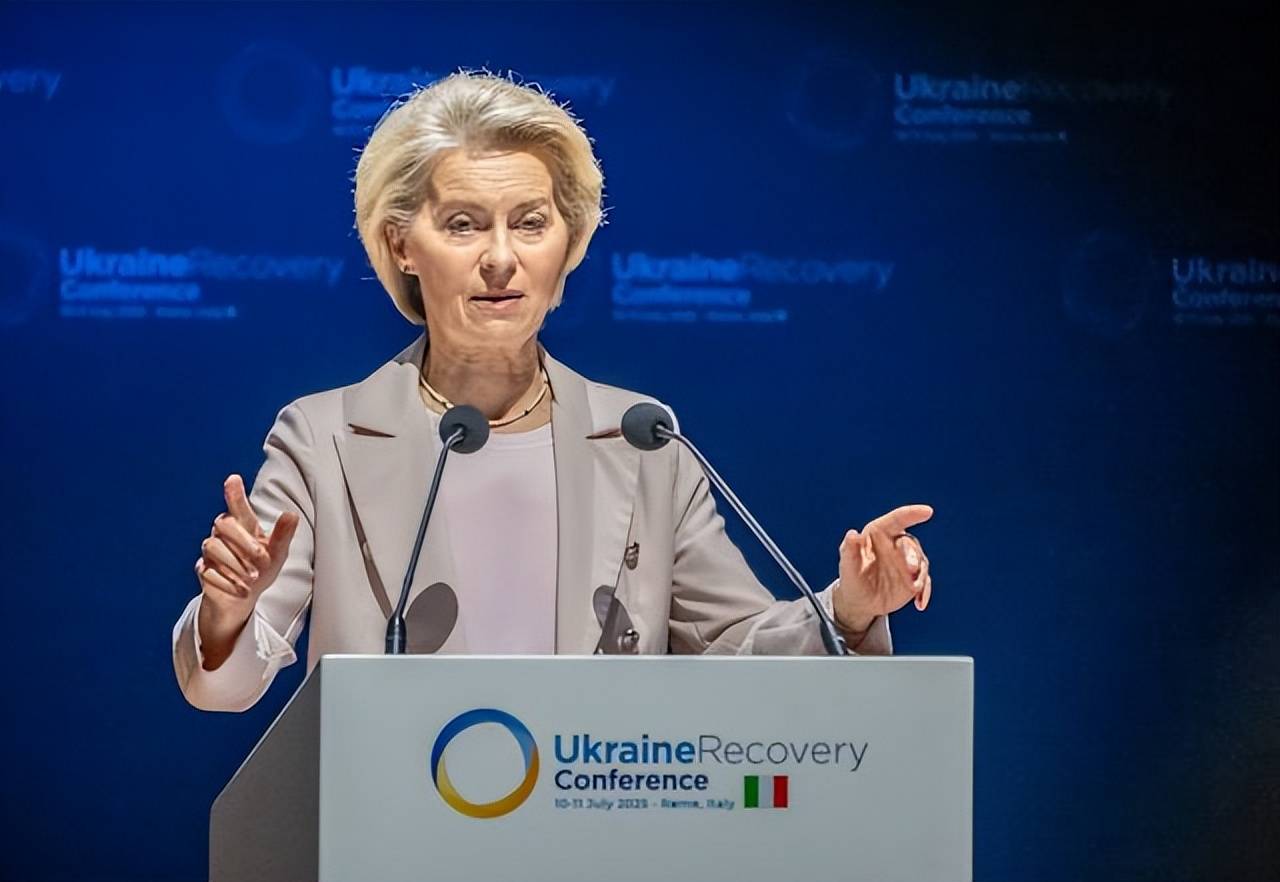
7月14日电,中国6月贸易顺差8259.7亿元人民币。中国6月份以人民币计价进口同比增长2.3%;6月份以人民币计价出口同比增长7.2%。
news flash· 2025-07-14 03:13
Group 1 - China's trade surplus in June reached 825.97 billion RMB [1] - In June, imports measured in RMB increased by 2.3% year-on-year [1] - In June, exports measured in RMB increased by 7.2% year-on-year [1]