信用修复

Search documents
个人征信修复新政将落地,符合条件的逾期记录不予展示
Di Yi Cai Jing· 2025-10-30 12:42
Core Viewpoint - The People's Bank of China is set to implement a one-time personal credit relief policy in early 2026, aimed at addressing the credit repair needs of individuals affected by the pandemic, specifically those who have fully repaid loans but have negative credit records due to defaults during the pandemic [1][2]. Group 1: Policy Details - The new policy will not display default information in the credit system for individuals who meet specific criteria, including having default amounts below a certain threshold and having fully repaid their debts [1][2]. - The policy is designed to provide a "reset" opportunity for individuals with "non-malicious" defaults, allowing them to regain eligibility for housing loans, auto loans, and business loans, which is expected to positively impact domestic demand and employment stability [1][2][3]. Group 2: Implementation and Impact - The credit relief policy will be implemented through a technical process where qualifying default information will not be deleted but will be marked as "not displayed" in the credit system [4]. - This initiative is anticipated to improve the financing environment for individuals, encouraging them to clear outstanding debts and thus stimulating economic activity by restoring consumer credit [3][5]. - Financial institutions are expected to benefit from this policy as it may help recover overdue loans and improve asset quality by re-engaging previously defaulting clients [6]. Group 3: Regulatory Context - The credit relief policy reflects a shift towards a more humane financial system, balancing the rigid constraints of the credit system with the financial difficulties faced by individuals in the post-pandemic era [3][6]. - It is emphasized that this policy is not a "credit wash" but a structured and conditional relief mechanism, distinguishing it from misleading practices in the market that claim to offer credit repair services [6].
2024年 全国法院新纳入失信被执行人名单245.7万人次 同比下降23.4%—— 失信名单人数何以首次下降?(法治头条)
Ren Min Ri Bao· 2025-10-29 22:18
Core Viewpoint - The article discusses the implementation of a more targeted and precise credit punishment system to address the issue of "execution difficulties" in China's judicial system, emphasizing the need to differentiate between "dishonesty" and "inability" in debt repayment [1][2][11]. Group 1: Credit Punishment System - The Supreme People's Court has initiated a classification management system for "dishonesty" and "inability," aiming to enhance the precision of credit punishment and assist honest but unfortunate debtors in returning to the market [2][11]. - In 2024, the number of new entries into the dishonesty list decreased by 23.4% year-on-year, while the number of individuals returning to the market through credit repair increased by 35.4% [2][8]. Group 2: Case Studies and Practical Applications - A case involving a technology company in Jiangxi illustrates the court's approach to balancing the interests of creditors and debtors, allowing a grace period for repayment while ensuring the creditor's rights are protected [3][5]. - Another case highlights how a plastic technology company was able to secure funding for production expansion after the court issued a credit repair certificate, demonstrating the effectiveness of the credit repair mechanism [6][7]. Group 3: Judicial Environment and Market Impact - The article emphasizes the importance of a fair judicial environment in optimizing the business landscape, with courts actively working to facilitate the recovery of companies facing temporary financial difficulties [4][6]. - The establishment of a judicial credit data-sharing mechanism in Shanghai aims to encourage compliance and support businesses in overcoming financial challenges while maintaining accountability [7][8]. Group 4: Enforcement and Accountability - The article outlines the ongoing issues of evasion and resistance to execution, with the Supreme Court collaborating with various departments to enhance the supervision and punishment of dishonest behavior [11]. - Since the implementation of the dishonesty list system in 2013, approximately 17.95 million instances of individuals voluntarily fulfilling their legal obligations have been recorded due to credit punishment pressure [11].
征信修复释放政策善意
Xin Hua Ri Bao· 2025-10-28 23:22
Core Viewpoint - The People's Bank of China plans to implement policies to support personal credit repair, responding to social needs during the pandemic and reflecting a transformation in credit management philosophy [1][2]. Group 1: Policy Implementation - The central bank will not display certain default information in the credit system for specific amounts that have been settled since the pandemic, allowing for a window of credit repair for affected individuals [1]. - This approach aims to balance the need for credit repair with the necessity of maintaining some accountability for defaults, showcasing a nuanced financial policy response to societal challenges [1]. Group 2: Credit Repair Framework - The new policy aligns with the State Council's earlier plan to improve the credit repair system, establishing a three-tier management system: minor defaults exemption, general default repair, and severe default punishment [1]. - The regulations allow for more refined credit repair processes, such as debt freezing and credit repair applications for special circumstances like severe medical conditions, highlighting a more humane approach to credit management [1]. Group 3: Long-term Implications - The policy aims to foster a societal consensus that "credit is wealth," encouraging individuals to rebuild credit through responsible behavior, which in turn may drive financial institutions to innovate products [2]. - The ultimate goal of credit relief is to ensure that well-intentioned defaulters are not hindered by past mistakes, potentially leading to a more inclusive and resilient credit environment in China [2].
央行正研究实施一次性的个人信用救济政策 业内:将减少因信用记录“误伤”带来的信贷扭曲
Mei Ri Jing Ji Xin Wen· 2025-10-28 17:36
Core Viewpoint - The People's Bank of China (PBOC) is researching the implementation of a one-time personal credit relief policy to assist individuals in repairing their credit records affected by the COVID-19 pandemic and other uncontrollable factors [1][2]. Group 1: Policy Details - The proposed credit relief policy aims to help individuals who have defaulted on loans below a certain amount since the pandemic, provided they have fully repaid their debts [1]. - The policy will not display default information in the credit system for eligible individuals, and it is expected to be implemented in early next year after necessary preparations [1]. - The policy is designed to balance the constraints of the credit system with social fairness, targeting non-malicious defaulters who have experienced temporary financial difficulties [2]. Group 2: Mechanism and Conditions - The credit repair mechanism is not a simple deletion of bad records; it requires borrowers to have settled all debts and maintained a good credit record for a period [3]. - The focus of the credit repair mechanism is on education and relief for non-malicious defaulters, rather than protecting habitual defaulters [3]. - The design and execution of the policy must be precise to prevent misuse, ensuring that the conditions and review processes are strict [3]. Group 3: Economic Implications - The policy is expected to reduce credit distortions caused by long-term negative credit records, which can hinder individuals' access to loans and suppress consumption and investment [4]. - By allowing individuals with previously bad credit records to re-enter the credit system, the policy aims to enhance the vitality of the credit consumption market and improve the overall credit ecosystem [4]. - The restoration of credit will enable more residents to regain loan eligibility, thereby stimulating consumption and financing for small businesses [6]. Group 4: Societal Impact - The credit repair mechanism is seen as a way to break the cycle of lifelong restrictions due to a single credit mistake, encouraging individuals to actively rectify their credit issues [5]. - A healthy credit system should incorporate both punitive measures for defaults and incentives for those who correct their mistakes, enhancing public trust in the credit system [5]. - The policy is anticipated to improve market confidence and release consumer potential, contributing to a more inclusive financial environment [6].
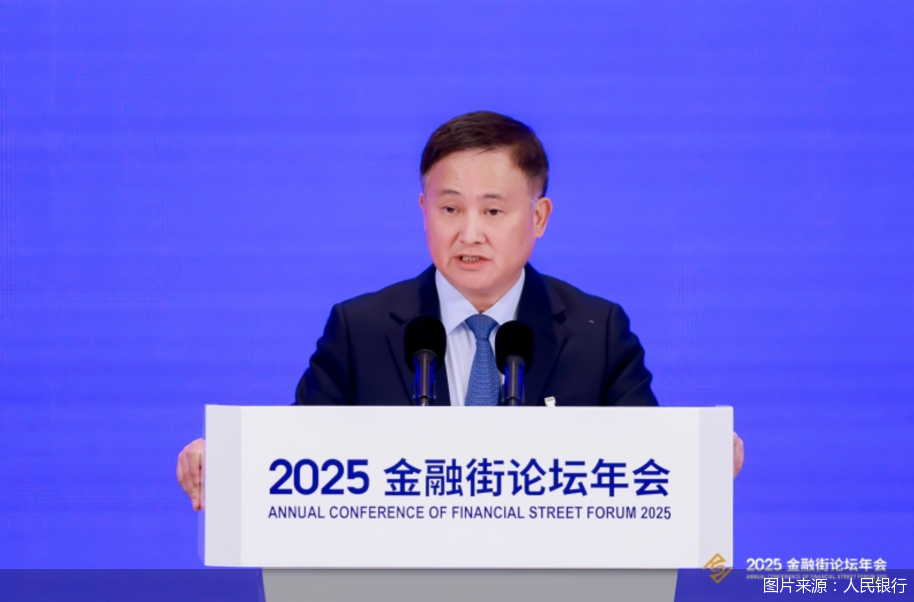
2025金融街论坛|重启国债买卖、打击虚拟货币炒作,潘功胜最新发声信息量巨大
Bei Jing Shang Bao· 2025-10-27 14:44
Core Viewpoint - The People's Bank of China (PBOC) is set to resume open market operations for government bonds, which is seen as a significant step to enhance monetary policy tools and stabilize the bond market, while also addressing various recent market concerns [1][5][6]. Monetary Policy and Financial Stability - The PBOC has maintained a supportive monetary policy stance, with key macro-financial indicators reflecting a moderately loose monetary environment, including an 8.7% year-on-year increase in social financing scale and an 8.4% increase in M2 as of September [3][4]. - The resumption of government bond trading is expected to alleviate supply-demand imbalances in the bond market and lower financing costs for the real economy [4][6]. Credit Repair Policies - The PBOC is researching policies to support personal credit repair, particularly for individuals who have defaulted due to the pandemic but have since repaid their debts [7][8]. - This initiative aims to improve the credit ecosystem, reduce friction costs between consumers and financial institutions, and promote economic recovery by restoring credit eligibility for affected individuals [9]. Virtual Currency Regulation - The PBOC reiterated its commitment to combat the operation and speculation of virtual currencies, emphasizing the need for strict regulation to maintain financial order and mitigate risks associated with stablecoins and other digital currencies [10][11]. - The central bank's stance reflects a long-standing high-pressure regulatory environment against virtual currencies, aiming to prevent potential financial risks and maintain monetary sovereignty [12]. Macro-Prudential Management Framework - The PBOC outlined its focus on building a comprehensive macro-prudential management system, which includes monitoring systemic financial risks and enhancing the regulatory framework for key financial institutions [13][14]. - Future efforts will involve improving the assessment of macro-prudential policies and ensuring better coordination between monetary policy and fiscal measures to strengthen financial stability [15][16].


今年全省法院修复信用已超过7万件
Liao Ning Ri Bao· 2025-10-20 01:06
Core Points - The article discusses the implementation of a credit repair mechanism by the Wafangdian People's Court, which aims to help private enterprises recover from credit issues and re-enter the market [1] - The provincial political and legal committee has initiated ten key tasks to optimize the legal business environment, focusing on credit repair for eligible enterprises and entrepreneurs [1][2] Group 1 - The Wafangdian People's Court issued a "Credit Repair Certificate" to a private enterprise that voluntarily repaid its debts, marking a significant step in promoting a civilized execution concept [1] - As of now, the provincial courts have repaired credit for 70,197 cases, representing a year-on-year increase of 144.51%, contributing to a trustworthy business environment [1] - The provincial court's execution department emphasizes the use of a grace period for punishing dishonest behavior while focusing on the enforcement against those evading or resisting execution [1] Group 2 - The provincial political and legal committee aims to establish a long-term mechanism of "repair + supervision + service" to enhance the coverage of credit repair [2] - The initiative is designed to encourage businesses to maintain trustworthiness and integrity, positioning credit repair as a new starting point for honesty [2]
9月金融数据点评:信用修复取决于盈利与财政合力
LIANCHU SECURITIES· 2025-10-17 08:34
Group 1: Financial Data Overview - The growth rate of social financing (社融) decreased to 8.7% in September, with new social financing of 3.53 trillion yuan, a year-on-year decrease of 233.9 billion yuan[3] - The decline in social financing was primarily due to a slowdown in government bond supply and weaker RMB loans, while corporate bonds and off-balance-sheet note financing provided some support[3] - New RMB loans amounted to 1.61 trillion yuan, a year-on-year decrease of 366.1 billion yuan, indicating slow recovery in demand[12] Group 2: Corporate and Household Lending - New short-term loans for enterprises increased by 710 billion yuan, a year-on-year increase of 250 billion yuan, driven by a shift from bill financing[4] - New medium- and long-term loans for enterprises were 910 billion yuan, a year-on-year decrease of 50 billion yuan, constrained by insufficient corporate profitability and investment confidence[4] - Household short-term loans were 142.1 billion yuan, a year-on-year decrease of 127.9 billion yuan, reflecting weak consumer confidence and income expectations[5] Group 3: Monetary Supply and Economic Outlook - M1 growth rate rose to 7.2%, while M2 growth rate decreased to 8.4%, indicating a mixed monetary environment[36] - The recovery in M1 was supported by fiscal measures and a shift of funds from fixed deposits to demand deposits[36] - Future credit recovery depends on the restoration of corporate profitability and investment confidence, alongside coordinated fiscal spending and policy tools[7]
天津优化信用修复工作制度 行政处罚决定书、信用修复告知书同步送企业
Ren Min Ri Bao· 2025-10-15 22:09
Core Viewpoint - The implementation of the "Two Notices Delivered Together" system in Tianjin aims to enhance the business environment by providing timely information on credit restoration rights and processes to enterprises facing administrative penalties [1] Group 1: Policy Implementation - Starting from December 1, Tianjin will fully implement the "Two Notices Delivered Together" system, which involves delivering both the administrative penalty decision and the credit restoration notice simultaneously to enterprises [1] - This initiative is designed to inform enterprises about their rights and the specific pathways for credit restoration immediately upon receiving an administrative penalty [1] Group 2: Impact on Enterprises - The new policy addresses the challenges faced by many enterprises, particularly small and medium-sized private enterprises, who often lack awareness of policies or processes, leading to missed opportunities for credit restoration [1] - By ensuring that enterprises understand their legal rights and the steps for credit restoration at the time of penalty notification, the policy aims to facilitate quicker recovery from credit issues, thereby supporting the high-quality development of the private economy [1]
今年以来北京8万余户次经营主体实现信用“无感修复”
Zhong Guo Xin Wen Wang· 2025-10-15 08:57
优化流程减材料提效率。在申请环节,除提交申请书、承诺书外,不再要求提供其他申请材料。审批环 节对补报年报、变更经营场所、缴纳罚款等履行义务情况,能够通过市场监管领域系统平台查询或部门 函询确认的,不再需要当事人提供相关证明材料,也不再将整改报告书、修复培训记录等作为必须提供 的材料。信用修复时限整体压缩40%,大幅降低制度性交易成本。 今年以来北京8万余户次经营主体实现信用"无感修复" 中新网北京10月15日电 (记者 吕少威)记者今天从北京市市场监管局了解到,该局聚焦企业信用修复"多 头跑、材料繁、耗时长"等痛点,通过数智赋能构建"一网通办、多场景覆盖、政企协同、区域联动"服 务体系,推动信用修复进入"云服务"时代。今年以来,北京已有8万余户次经营主体通过"免申即享"等 机制实现信用"无感修复",材料齐全的轻微失信修复最快当日办结,企业满意度显著提升。 指尖办:信用修复驶入"云服务"快车道 作为北京市"高效办成一件事"场景建设的重要组成部分,多部门协同推进信用修复"一件事"。北京市市 场监管局将行政处罚公示信息、经营异常名录、严重违法失信名单三类高频修复事项整合为"一张表 单、一个入口"。通过打通部门数据壁 ...
【涨知识】非正常户对纳税缴费信用的影响知多少
蓝色柳林财税室· 2025-10-14 14:17
Core Viewpoint - The article discusses the implications of being classified as a "non-normal taxpayer" and the process for credit repair, emphasizing that such entities are automatically rated as D-level and cannot be upgraded to A-level even after rectification [1][4]. Non-Normal Taxpayer Classification - Entities recognized as non-normal taxpayers are directly assigned a D-level credit rating [1]. - If individuals responsible for the non-normal status register a new entity afterward, that new entity is also rated as D-level [1]. Credit Repair Process - Taxpayers with recorded credit violations can apply for credit repair by submitting a "Tax Payment Credit Repair Application Form" to the tax authority before the annual evaluation [1][4]. - The tax authority will reassess the credit rating within 15 working days of receiving the application, but the highest rating achievable post-repair is still D-level [1][4]. Consequences of Non-Normal Status - Taxpayers who fail to submit tax declarations for three consecutive months are automatically classified as non-normal, leading to the suspension of their invoice usage [2]. - Non-normal taxpayers face penalties and must pay fines for overdue declarations, but their non-normal status can be lifted automatically upon compliance [3]. Distinction Between Credit Repair and Re-evaluation - Credit repair requires that the taxpayer has no objections to the annual evaluation results and must submit the repair application with a commitment [4]. - If there are disputes regarding the credit evaluation, a re-evaluation must be conducted before applying for credit repair [4]. Measures Taken by Tax Authorities - Tax authorities will implement various measures against entities rated as D-level due to non-normal status, including restrictions on invoice usage and limitations on tax benefits [4].