
电动化转型

Search documents
全球最封闭的汽车市场,被撕开了一道裂缝
Di Yi Cai Jing· 2025-11-01 03:10
Core Insights - Japan's electric vehicle (EV) market is characterized by a low penetration rate, with only 2.8% for new energy vehicles and 1.7% for pure electric models as of September 2025, significantly lower than China's approximately 50% [1][4] - The Japanese automotive market is considered one of the most closed globally, with domestic brands holding over 90% market share, making it challenging for foreign manufacturers to penetrate [3][5] - Despite government incentives for EV adoption, factors such as insufficient charging infrastructure and consumer safety concerns have hindered the growth of electric vehicles in Japan [4][5] Industry Dynamics - The market share of fuel vehicles in Japan increased from 42.3% to 44.7% year-on-year, while hybrid vehicles slightly decreased from 35.6% to 33.8% [4] - International EV manufacturers, particularly from China and the U.S., are beginning to make inroads into the Japanese market, with companies like BYD and Tesla reporting significant sales growth [5][6] - BYD's strategy includes launching models specifically designed for the Japanese market, such as the K-EV BYD RACCO and the Sea Lion 06DM-i, while also expanding its sales network [8][9] Competitive Landscape - Tesla remains a significant competitor for Chinese EV manufacturers in Japan, with plans to increase its store count and charging network [9][10] - The K-Car segment, which accounts for 36.8% of new car sales in Japan, presents an opportunity for both domestic and foreign manufacturers due to its cost-effectiveness and favorable tax policies [10] - The growing acceptance of EVs in Japan is being driven by the efforts of international companies to educate the market and provide tailored products [6][8]


电动车销量大涨,净利润却同比下降!大众汽车集团遭遇近五年来首次季度亏损,仍坚定推进电动化转型:明年将在中国市场推20余款新能源车
Mei Ri Jing Ji Xin Wen· 2025-10-31 12:07
Core Insights - Volkswagen Group is facing challenges in its transition to electrification, as evidenced by its Q3 2025 financial results showing a significant decline in profitability [1][3] - The company reported a net loss of €1.072 billion in Q3, marking its first quarterly loss in five years, despite a slight increase in vehicle deliveries and revenue [1][3] - The decline in profitability is attributed to factors such as U.S. import tariffs, restructuring of the Porsche product line, and the costs associated with the electrification transition [1][3] Financial Performance - In Q3 2025, Volkswagen delivered 2.199 million vehicles, a 1.0% year-on-year increase, with revenues reaching €80.305 billion, up 2.3% [1] - The net profit for the first nine months of 2025 decreased by 61.5% to €3.4 billion compared to the same period last year [3] - The operating profit margin for the first nine months was 2.3%, which would be 5.4% if excluding special factors like restructuring and tariffs [3] Electric Vehicle Strategy - Volkswagen's electric vehicle sales reached 717,000 units in the first nine months of 2025, a 40% increase year-on-year, but this growth did not translate into improved overall financial performance [3] - The company plans to launch over 20 new electric vehicle models in China next year to enhance its market share in the growing electric vehicle segment [4] - Currently, 95% of Volkswagen's sales in China are from internal combustion engine vehicles, with a market share of 22% in that segment [4] Cost Management and Future Outlook - Volkswagen aims to achieve a net cash flow close to zero or break-even for the year, with an investment rate projected between 12% and 13% [4] - The company is focused on cost optimization, having reduced costs by 40% compared to previous global platforms, with an additional 10% cost reduction target [5] - Volkswagen Group (China) anticipates that by 2027, its operating profit in the Chinese market will reach €2 billion, increasing to €3 billion by 2030 [6]

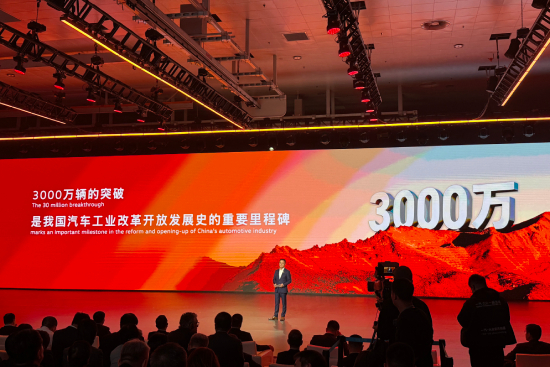
中国首个3000万辆级车企诞生 一汽-大众:每年投百亿研发,稳年销200万辆规模
Zhong Guo Jing Ji Wang· 2025-10-31 11:19
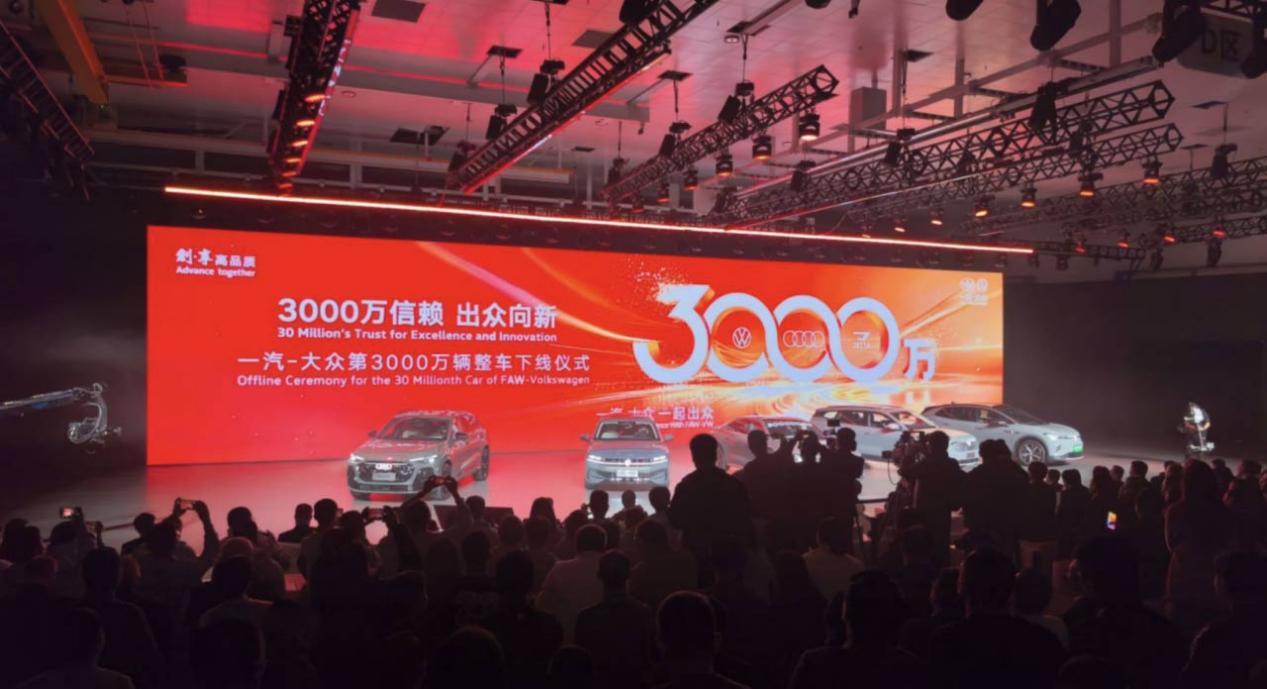
Core Insights - FAW-Volkswagen has officially reached a historic milestone of producing its 30 millionth vehicle, becoming the first passenger car manufacturer in China to surpass this production and sales figure [1][3][4] - This achievement reflects not only the scale of success but also significant contributions to social and economic benefits, including the creation of over 500,000 jobs and a cumulative tax contribution of 730 billion yuan [3][6] Company Development - FAW-Volkswagen has evolved from a single brand with one model in 1991 to a comprehensive matrix of three brands (Volkswagen, Audi, and Jetta) covering mainstream, luxury, and economy markets, with a total of 33 models [3][6] - The company has maintained its position as the top seller of fuel vehicles in China for six consecutive years and leads in sales efficiency among joint ventures [6] Future Strategy - The company has announced a new five-year plan aiming for "two highs and one new," targeting an annual sales volume of 2 million vehicles [3][8] - FAW-Volkswagen plans to invest approximately 10 billion yuan annually in research and development, focusing on smart driving and software innovations [10] - The future product lineup will include nearly 30 new models, with over 20 being electric vehicles, and aims to introduce 11 new models tailored for the Chinese market by 2026 [10] Technological Advancements - The company is transitioning from being a beneficiary of imported technology to becoming a promoter of its own innovations, marking a significant shift in the Chinese automotive industry [7] - FAW-Volkswagen aims to achieve L3 and above autonomous driving capabilities by 2027-2030, significantly reducing project development cycles by over 50% [10]
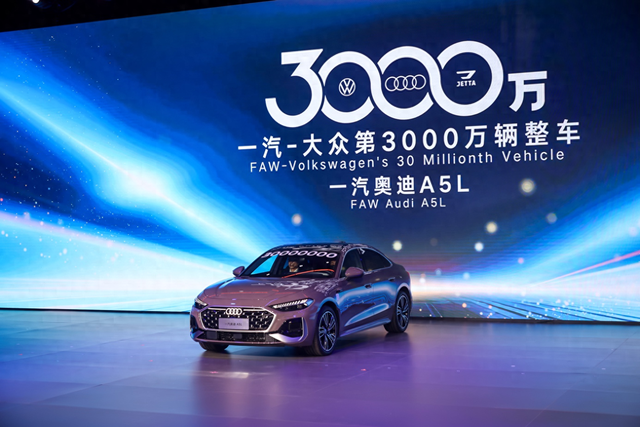
站在3000万辆起点,看中欧合作新时代
Guan Cha Zhe Wang· 2025-10-31 09:28
Core Insights - FAW-Volkswagen has achieved a significant milestone by producing its 30 millionth vehicle, the Audi A5L Pilot Edition, becoming the first passenger car manufacturer in China to surpass this production figure [1][3] - The achievement highlights China's robust market potential and the deep cooperation between Chinese and German automotive industries, reflecting a favorable business environment in China [3][5] Company Milestones - FAW-Volkswagen was established in 1991 as a joint venture between China FAW Group and Volkswagen AG, with the first vehicle, the Jetta A2, rolling off the production line in December of the same year [5] - The company reached the 1 million vehicle production mark in 2004, achieving this milestone in just 13 years [5] - By 2014, FAW-Volkswagen's production and sales exceeded 10 million units, marking a rapid growth from 1 million to 10 million in under a decade [5] Future Strategy - FAW-Volkswagen plans to accelerate its transformation in response to the electric and intelligent vehicle trends, facing increased competition in the automotive market [7] - A strategic cooperation agreement was signed in March 2023, focusing on new vehicle planning and accelerating the transition to electric and intelligent vehicles [7] - The company aims to introduce 11 new models tailored for the Chinese market by 2026, including 6 pure electric vehicles, 2 plug-in hybrids, 2 range-extended models, and 1 fuel vehicle [7][9] Product and Innovation Focus - FAW-Volkswagen will implement a "hybrid and electric co-prosperity" strategy, launching nearly 30 new products in the next five years, with over 20 being new energy vehicles [9] - The company will maintain an annual R&D investment of nearly 10 billion, focusing on intelligent driving and software innovations [9] Operational and Cultural Development - FAW-Volkswagen is exploring new localized operational models for the Jetta brand, leveraging local resources to enhance brand and product offerings [9] - The company has introduced a new corporate culture, emphasizing high-quality development and a commitment to customer-centric long-termism [10][12]
未来五年推30款新车型 陈彬:一汽-大众要保证200万辆年产销规模
Mei Ri Jing Ji Xin Wen· 2025-10-31 08:41
Core Insights - FAW-Volkswagen has set a new strategic goal for 2030 after achieving its target of 30 million units in production and sales, focusing on a dual-fuel strategy with nearly 30 new products, including over 20 electric vehicles in the next five years [1][5] Group 1: Product Development - FAW-Volkswagen plans to launch 11 new models under a strategic cooperation agreement with Volkswagen Group, including 10 models from the Volkswagen brand starting in 2026, with 9 being electric vehicles [1][2] - The new electric models will cover entry-level to mid-range markets, with 6 pure electric models, 2 plug-in hybrids, 2 range-extended models, and 1 fuel model [1] - The CMP and CSP platforms will be used for the new electric products, enhancing development speed by over 30% [2] Group 2: Performance and Technology - The new hybrid models will feature a pure electric range exceeding 300 km and a fuel consumption of less than 4L/100km, while pure electric models will have a range exceeding 800 km [4] - FAW-Volkswagen aims to enhance the intelligence of fuel vehicles, with a roadmap for advanced driving features that will cover 90% of urban scenarios and 95% of highway scenarios by 2026 [4][5] - The CEA electronic architecture will improve product integration by 30%, reduce costs by 40%, and shorten development cycles by 30%, supporting L3 conditional autonomous driving [5] Group 3: Market Expansion and Sales Goals - FAW-Volkswagen plans to invest 10 billion yuan annually in R&D to accelerate its electrification transformation and shorten project cycles by over 50% [5] - The Jetta brand is a key part of the strategy, targeting annual sales of 400,000 to 500,000 units in the next five years [5] - The company aims for a production and sales target of 2 million units annually, with a focus on maintaining profitability and technological leadership in the joint venture sector [6]
大众第3000万辆整车下线
Zhong Guo Zhi Liang Xin Wen Wang· 2025-10-31 06:51
Core Points - FAW-Volkswagen has achieved a historic milestone by producing its 30 millionth vehicle, an Audi A5L, marking a significant achievement in the Chinese automotive industry over 34 years [1][2][4] - The growth from a single model, the Jetta, to over 30 models across mainstream, luxury, and economy segments reflects the rapid development of China's automotive sector [1][2] Group 1 - The milestone of 30 million vehicles symbolizes not only the company's growth but also the deepening cooperation between the automotive industries of China and Germany [2][4] - Key figures from the automotive industry and government attended the ceremony, highlighting the importance of this achievement [2] - The chairman of FAW emphasized that this accomplishment showcases China's vibrant openness and the unique advantages of its large market [4][5] Group 2 - The company plans to lead high-quality development with a new development philosophy and aims to become a benchmark for high-level openness [6][8] - FAW-Volkswagen has set ambitious goals for its future, including a focus on electric vehicle transformation with nearly 30 new products planned over the next five years, including over 20 new energy vehicles [10][12] - The company will maintain significant R&D investment, focusing on intelligent driving and software innovation [10] Group 3 - A new corporate culture initiative, "Creation and Sharing Path 3.0," has been launched, emphasizing high-quality development and customer-centric values [12] - To celebrate the milestone, the company has initiated a "30 Million Customer Appreciation Season," providing free vehicle usage rights and gifts to loyal customers [14]
大众汽车遭遇五年来首次季度亏损
Di Yi Cai Jing· 2025-10-30 22:21
Core Insights - Volkswagen Group reported a revenue of €80.305 billion in Q3, a year-on-year increase of 2.3%, but faced a net loss of €1.072 billion, marking its first quarterly loss in five years [2] - The operating loss for the quarter was €1.299 billion, compared to an operating profit of €2.833 billion in the same period last year, indicating a significant decline [2] - The total vehicle deliveries for Q3 reached 2.199 million units, a 1% increase year-on-year, while total sales for the first three quarters amounted to 6.518 million units, up 1.8% [2] Financial Performance - The net profit for Volkswagen Group in the first three quarters dropped by 61.5% to €3.4 billion compared to the same period last year [3] - The decline in profitability is attributed to increased production of low-margin electric vehicles and an additional burden of €7.5 billion, including U.S. import tariffs and strategic adjustments at Porsche [3] - Excluding these additional costs, the profit margin for the first three quarters was 5.4%, while including the costs resulted in a negative profit margin of 1.6% [3] Challenges and Strategic Adjustments - Volkswagen is facing challenges in its electric vehicle transition, having set a cost-cutting plan to save €10 billion by 2026 and aiming for an operating profit margin of 6.5% [4] - The company anticipates an operating profit margin between 2% and 3% for the year, with revenue expected to remain flat compared to last year [5] - Porsche, once a significant profit contributor, reported its first quarterly loss since going public, with additional expenses from strategic restructuring amounting to €2.7 billion in the first three quarters of 2025 [3]
全球第二盈利车企 遭遇五年来首次季度亏损
Di Yi Cai Jing· 2025-10-30 17:19
Core Insights - Volkswagen Group reported a revenue of €80.305 billion in Q3, a year-on-year increase of 2.3%, but faced a net loss of €1.072 billion, marking a decline of approximately 168.8% compared to a net profit of €1.558 billion in the same period last year [1] - The operating loss for the quarter was €1.299 billion, a significant drop from an operating profit of €2.833 billion in the previous year [1] - The total vehicle deliveries for Q3 reached 2.199 million units, reflecting a 1% year-on-year growth, while cumulative sales for the first three quarters amounted to 6.518 million units, up 1.8% year-on-year [1] Financial Performance - Volkswagen's net profit for the first three quarters of the year decreased by 61.5% to €3.4 billion compared to the same period last year [1] - The profit margin for the first three quarters, excluding related costs, was 5.4%, while including costs, the profit margin was negative at -1.6% [2] - The company anticipates an operating profit margin between 2% and 3% for the current year, with revenue expected to remain flat compared to last year [3] Challenges and Strategic Adjustments - The decline in profitability is attributed to factors such as U.S. auto tariffs, the strategic restructuring of Porsche, and the transition to electric vehicles [1] - Porsche, once a significant profit contributor, reported its first quarterly loss since its IPO, with additional expenses from strategic restructuring amounting to €2.7 billion for the first three quarters of 2025 [2] - Volkswagen has set a cost-cutting plan to save €10 billion by 2026 and aims for an operating profit margin of 6.5% [2]
全球第二盈利车企,遭遇五年来首次季度亏损
Di Yi Cai Jing Zi Xun· 2025-10-30 16:52
Core Insights - Volkswagen Group reported a Q3 revenue of €80.305 billion, a year-on-year increase of 2.3%, but faced a net loss of €1.072 billion, marking a 168.8% decline compared to a net profit of €1.558 billion in the same period last year, representing the first quarterly loss in five years [1] - The operating loss for Q3 was €1.299 billion, a significant drop from an operating profit of €2.833 billion in the previous year [1] - The total vehicle deliveries in Q3 reached 2.199 million units, a 1% increase year-on-year, while total sales for the first three quarters amounted to 6.518 million units, up 1.8% [1] - Volkswagen's net profit for the first three quarters fell sharply by 61.5% to €3.4 billion compared to the same period last year [1] Financial Performance - The profit margin for the first three quarters, excluding related costs, was 5.4%, while including costs, the profit margin was negative at -1.6% [2] - The company anticipates an annual pressure of up to €5 billion due to increased U.S. tariffs and the resulting decline in sales [2] - Volkswagen expects an operating profit margin between 2% and 3% for the current year, with revenue projected to remain flat compared to last year [3] Challenges and Strategic Adjustments - The decline in profitability is attributed to factors such as U.S. auto tariffs, the strategic restructuring of Porsche, and the transition to electric vehicles [1][2] - Porsche, once a significant profit contributor, reported its first quarterly loss since its IPO, with additional expenses from strategic restructuring amounting to €2.7 billion for the first three quarters of 2025 [2] - Volkswagen has set a cost-cutting plan to save €10 billion by 2026 and aims for an operating profit margin of 6.5% [2]
保时捷电动战略"翻车"+关税冲击,大众汽车Q3意外亏损13亿欧元 | 财报见闻
Hua Er Jie Jian Wen· 2025-10-30 09:21
Core Insights - Volkswagen Group reported a net loss of €1.3 billion in Q3, highlighting challenges in its electric transition, weak market demand, and tariffs [1][2][3] - The company had to recognize €5.1 billion in impairment and write-downs, primarily due to Porsche's overly optimistic electric vehicle strategy [1][2] - Volkswagen's operating profit margin was 5.4% excluding these costs, but fell to -1.6% when including them, indicating structural challenges [1] Financial Performance - The significant write-downs were largely attributed to Porsche's misjudgment of luxury electric vehicle demand, which also affected Audi's performance [2] - Despite the losses, Volkswagen's net cash flow from automotive operations exceeded expectations, attributed to better working capital management and reduced inventory [3] Market Dynamics - The slow transition of European consumers to electric vehicles has led to excess capacity issues for Volkswagen, compounded by declining sales in China and the U.S. [3] - However, Volkswagen saw a 17% increase in new orders in Western Europe, with over 20% coming from electric vehicles, indicating some positive momentum [3] Strategic Adjustments - Volkswagen is implementing cost-saving measures and has formed partnerships with XPeng Motors and Rivian to enhance its market position in China and the U.S. [3] - The company is also reducing its electric vehicle battery production plans and internal software development to alleviate financial pressures [3] Supply Chain Concerns - Volkswagen warned of the need for sufficient semiconductor supply to meet its financial targets, indicating potential future production disruptions [4][5]