
粮食安全

Search documents
粮食安全看山东”之淄博:康浪河面业助力打造“鲁中粮仓
Zhong Guo Fa Zhan Wang· 2025-12-22 06:55
Core Viewpoint - Shandong Kanglanghe Noodle Industry Co., Ltd. has evolved from a local grain processing factory into an industry benchmark, integrating grain acquisition, processing, deep processing of noodle products, and sales, supported by a strong raw material base from its location in Zibo, Shandong [1] Group 1: Company Overview - Established in 1992, the company occupies an area of 26,000 square meters, employs over 120 staff, and has fixed assets of 57 million yuan [1] - The company has registered three trademarks: "Kanglanghe," "Qiwangfu," and "Jixia Home," focusing on the "Kanglanghe" brand, which includes various products such as flour, noodles, and steamed buns, with an annual processing capacity of 200,000 tons [2] Group 2: Compliance and Social Responsibility - The company combines compliant operations with industry feedback to ensure efficient and fair grain circulation, adhering to national policies and regulations to protect farmers' rights [3] - It promotes "order agriculture" by signing long-term contracts with farmers, stabilizing their income and contributing to rural revitalization [3] Group 3: Technological and Cultural Integration - The company emphasizes technological support for industrial upgrades, investing in advanced milling equipment and achieving full-process intelligent monitoring, maintaining a 100% quality inspection pass rate [4] - It integrates traditional culture into product development, enhancing brand identity and market competitiveness through local culinary heritage [4] Group 4: Product Development and Capacity Optimization - The company focuses on refined processing to meet health-conscious consumer demands, expanding its product line with health-oriented noodle products rich in dietary fiber and vitamins [5][6] - It implements measures to reduce grain loss and optimize production efficiency, including improved storage conditions and innovative processing techniques, achieving a processing capacity of 200,000 tons more efficiently [6] Group 5: Education and Sustainable Development - The company engages in national grain security education through school partnerships, fostering awareness of food safety and sustainability among future consumers [7] - Its development model balances national strategy and market success, serving as a reference for the industry while maintaining a strong corporate culture [7]
传达学习习近平总书记重要指示精神部署未成年人思想道德建设和“三农”等工作
Xi An Ri Bao· 2025-12-22 02:52
Group 1 - The meeting emphasized the importance of moral education for minors as a strategic and foundational task, advocating for the implementation of quality improvement in basic education and a collaborative education mechanism involving schools, families, and society [2] - The meeting highlighted the need to strengthen farmland protection and management, focusing on reducing farmland occupation by revitalizing existing land and enhancing the regulatory capacity for food security [2] - The meeting called for the continuous consolidation and expansion of poverty alleviation achievements, implementing a comprehensive rural revitalization strategy, and accelerating agricultural modernization [2] Group 2 - The meeting stressed the need to address historical issues with determination and systematic thinking, focusing on resolving long-standing petition cases and improving governance capabilities [2] - The meeting aimed to systematically resolve the difficulties in real estate registration, promoting reforms such as "multi-measure integration" and "separation of certificates and payments" [2] - The meeting encouraged the promotion of labor model and craftsman spirit, leveraging the exemplary role of labor models and advanced collectives to foster a strong atmosphere for high-quality development in Xi'an [3]
颗粒归仓 筑牢饭碗里的安全感
Zhong Guo Jing Ji Wang· 2025-12-22 02:01
Core Insights - The national grain production is projected to reach 14,297.5 billion jin in 2025, an increase of 167.5 billion jin or 1.2% from the previous year, marking a new high [1] - The abundance of grain serves as a "ballast" for economic and social development, emphasizing the importance of cherishing every grain and saving food [1] - The phrase "颗粒归仓" reflects the need to reduce losses and improve efficiency throughout the agricultural production chain, highlighting the importance of modern agricultural technology and logistics [2] Group 1 - The grain production achievement is a result of hard work and dedication from researchers and farmers, and it is crucial to respect labor by valuing food [1] - Current challenges in grain production include climate change and extreme weather events, which create uncertainties for future yields [1] - The concept of "颗粒归仓" should be integrated into daily life as a collective responsibility, emphasizing that individual efforts can lead to significant savings on a national scale [2] Group 2 - The promotion of agricultural modernization and scientific storage techniques is essential for minimizing losses during harvesting, transportation, storage, and processing [2] - The cultural value of frugality is a traditional virtue in Chinese society and is seen as a modern civic responsibility, reinforcing the idea that saving food contributes to national food security [2][3] - The celebration of grain harvests should not lead to wastefulness; instead, it should inspire a renewed commitment to frugality and awareness of potential future challenges [3]
守护一方地 端稳一碗饭
Xin Lang Cai Jing· 2025-12-21 22:46
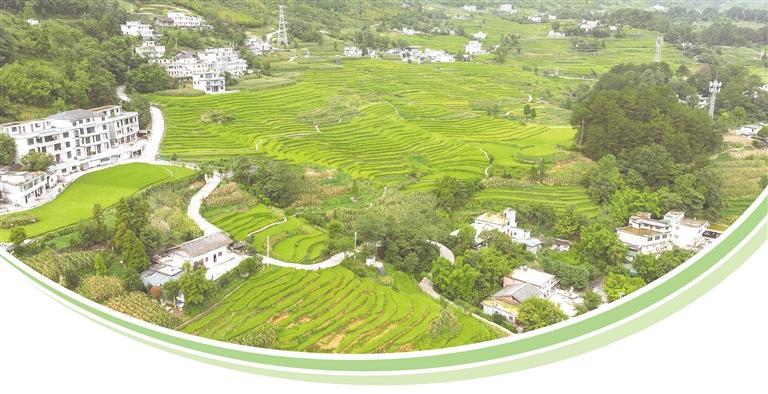
Core Viewpoint - Guizhou province is implementing a comprehensive strategy to protect arable land and ensure food security, focusing on innovative practices and strict enforcement of regulations to combat the challenges posed by its mountainous terrain [5][9][19]. Group 1: Responsibility and Governance - Guizhou has established a multi-tiered responsibility system for arable land protection, involving provincial, municipal, and local levels to ensure accountability [6][7]. - The province has adopted a collaborative governance model, transitioning from isolated efforts to coordinated actions among various stakeholders [6][7]. - Specific measures include regular inspections by designated personnel and the establishment of clear responsibilities at different administrative levels [6][7]. Group 2: Quality and Quantity of Arable Land - The province emphasizes both the quantity and quality of arable land, aiming to expand high-quality farmland while improving the existing land's productivity [9][10]. - Recent initiatives have led to the recovery and addition of over 5,000 acres of arable land through land rehabilitation projects [10]. - High-standard farmland construction has been a key focus, with 146,000 acres developed since 2020, significantly enhancing agricultural capacity [9][10]. Group 3: Spatial Optimization - Guizhou is actively optimizing the spatial distribution of arable land to enhance efficiency and reduce ecological risks associated with fragmented farming [11][12]. - The province's 2025 plan includes transitioning unstable farmland to more suitable areas, thereby improving agricultural conditions [11][12]. - Pilot projects in various counties have successfully increased arable land by converting unsuitable land types, such as steep slopes, into productive farmland [11][12]. Group 4: Technological Empowerment - The province is leveraging technology to enhance monitoring and enforcement of arable land protection, moving from traditional methods to a more integrated approach using drones and satellite imagery [13][14]. - Innovative monitoring systems have improved the efficiency of inspections and the accuracy of data regarding land use [14][15]. - The integration of technology into land management practices is expected to significantly reduce illegal land use and improve compliance with regulations [14][15]. Group 5: Incentives and Community Engagement - Guizhou is exploring various incentive models to align arable land protection with farmers' economic benefits, ensuring that land conservation efforts also contribute to local income [16][17]. - Successful case studies demonstrate how community involvement in land improvement projects has led to increased financial returns for farmers [16][17]. - The province is fostering a culture of shared responsibility among farmers, encouraging them to actively participate in land protection initiatives [17][18].

“钱等粮”助力粮归仓
Xin Lang Cai Jing· 2025-12-21 22:46
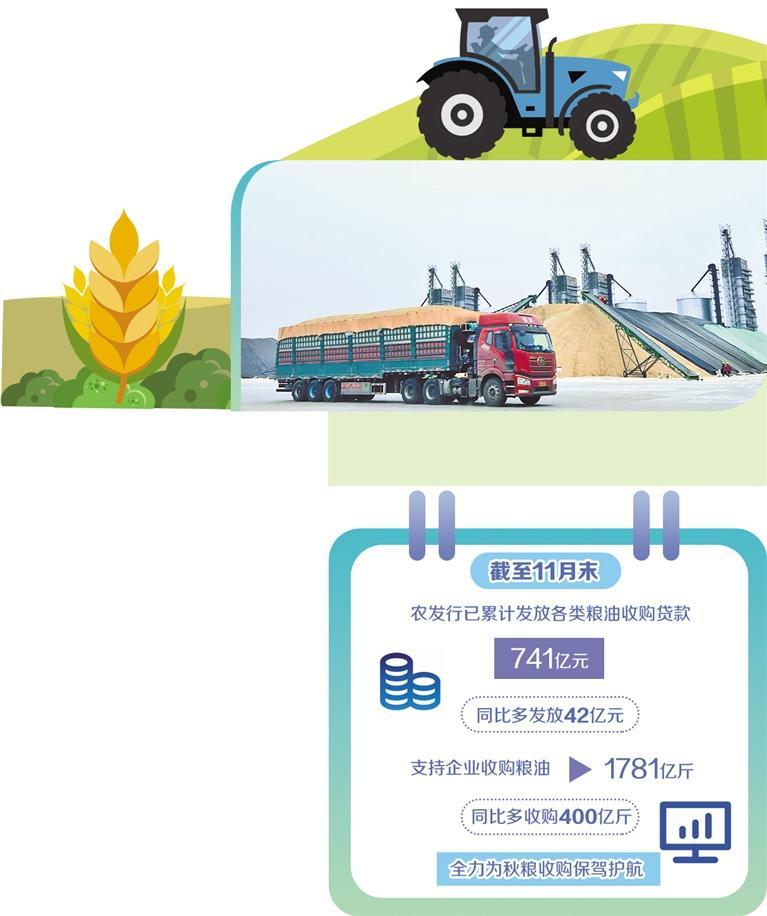
Core Viewpoint - The central economic work conference emphasizes the importance of ensuring grain production and highlights the role of financial institutions in supporting grain procurement to safeguard national food security [3]. Group 1: Financial Support for Grain Procurement - Policy-based financial institutions, such as the Agricultural Development Bank, are actively providing credit support for grain procurement, with a total of 741 billion yuan in grain and oil purchase loans issued, an increase of 4.2 billion yuan year-on-year, supporting the purchase of 1,781 billion jin of grain, which is 400 billion jin more than the previous year [4]. - As of the end of November, the Agricultural Development Bank's Heilongjiang branch has issued 172.8 billion yuan in grain procurement loans for the 2025 grain year, an increase of 13.8 billion yuan year-on-year, supporting the purchase of 110 billion jin of grain [5]. - The introduction of the "Zhongchu e-loan" product aims to provide liquidity for borrowers qualified for grain bidding, allowing for rapid loan approval and disbursement, with over 30 million yuan already issued [5][6]. Group 2: Personalized Financial Services - Financial institutions have initiated emergency service mechanisms to support grain procurement amid adverse weather conditions, ensuring smooth operations during the autumn harvest [7]. - Zhejiang Rural Commercial Bank has launched specialized financial products such as "Harvest Loan" and "Agricultural Input Loan" to alleviate funding difficulties for farmers, with 110.97 million yuan in loans issued to 140 farmers [7]. - The Industrial and Commercial Bank of China in Huzhou has efficiently disbursed 10 million yuan in loans to a modern agricultural enterprise to support its grain procurement efforts [8]. Group 3: Insurance Support for Farmers - Insurance companies have played a crucial role in providing rapid response mechanisms for farmers affected by adverse weather, with claims processed quickly to alleviate financial pressure [10]. - The Ping An Insurance Company in Shandong has implemented a comprehensive service strategy to ensure timely claims and support for farmers, with 406 claims adjusters and 76 drones deployed for efficient damage assessment [11]. - Jiangsu's financial regulatory bureau has urged insurance companies to enhance their emergency response mechanisms, ensuring rapid claims processing and utilizing technology for accurate damage assessment, with 5.55 billion yuan in claims paid to farmers by the end of October [12].
粮食高位增产增添发展底气
Xin Lang Cai Jing· 2025-12-21 22:46
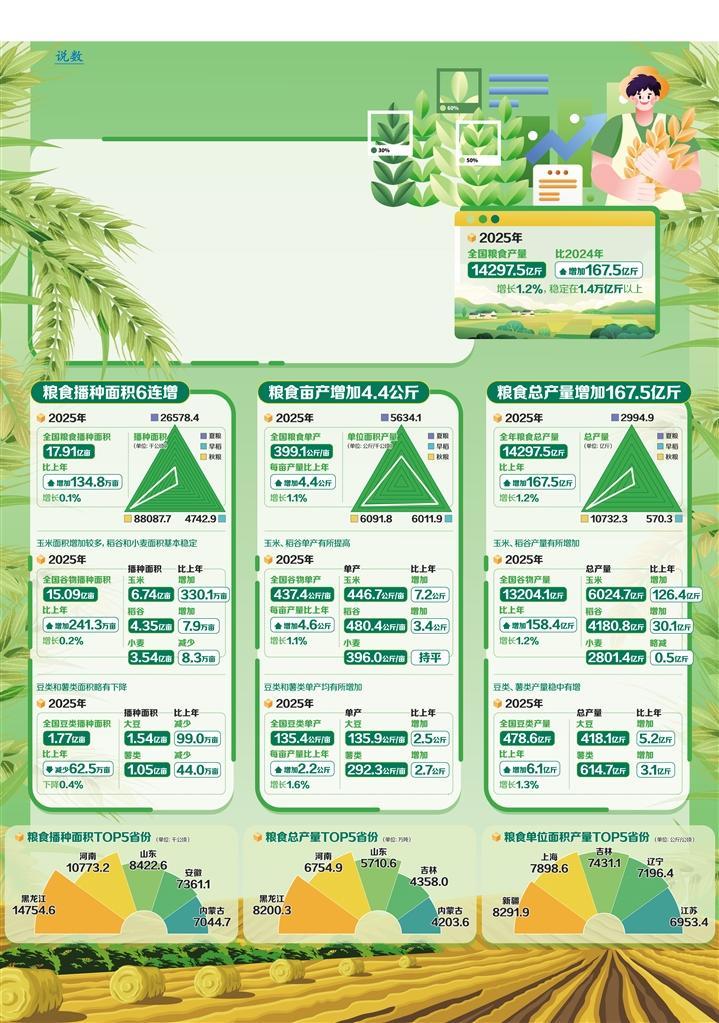
Core Viewpoint - The national grain production in 2025 is projected to reach 14,298 billion jin, marking a 1.2% increase from the previous year, indicating a stable and robust agricultural foundation for China's food security [2][3]. Group 1: Grain Production Overview - The total grain production for 2025 is expected to increase by 167.5 billion jin, maintaining a level above 14 trillion jin [1][2]. - The grain planting area has seen a continuous increase for six consecutive years, with a notable rise in corn acreage while rice and wheat areas remain stable [3][4]. - The average yield per mu (亩) has increased by 4.4 kg compared to the previous year, reflecting improvements in agricultural practices and technology [3][4]. Group 2: Contributing Factors to Grain Production - Government policies have been favorable, including increased minimum purchase prices for wheat and early indica rice, as well as expanded insurance coverage for major grain crops [3][4]. - Local efforts have focused on protecting arable land, optimizing planting structures, and enhancing land quality, which have contributed to improved yields [3][4]. - Favorable weather conditions in major production areas have significantly boosted grain output, with regions like Inner Mongolia, Liaoning, Jilin, and Heilongjiang contributing to nearly 70% of the national increase [3][4]. Group 3: Future Outlook and Challenges - The new benchmark of 14 trillion jin in grain production presents challenges for future stability and growth, necessitating a comprehensive approach to strengthen food security [4]. - Recommendations include increasing investment in agricultural infrastructure, enhancing disaster prevention capabilities, and promoting agricultural technology innovations [4].
种苹果有了“新”保险带来的启示(财经观)
Ren Min Ri Bao· 2025-12-21 22:41
Core Viewpoint - The article emphasizes the importance of innovative agricultural insurance tailored to local needs, particularly focusing on the introduction of new insurance products like the apple flowering period meteorological index insurance in Shaanxi province, which enhances risk management for farmers [1][2]. Group 1: Agricultural Insurance Innovations - The introduction of the apple flowering period meteorological index insurance in Wuqi and Luochuan counties provides risk coverage for over 20,000 acres of orchards, allowing farmers to receive timely compensation based on minimum temperature during the flowering period [1]. - The agricultural insurance policies, including comprehensive cost insurance and planting income insurance, are being implemented to expand coverage and improve quality, addressing farmers' needs and pain points [2]. - The "insurance + futures" model is being utilized to ensure more predictable income for farmers, enhancing their motivation to engage in agricultural production [2]. Group 2: Enhancing Service Efficiency - The importance of precise claims processing and timely compensation is highlighted as a key measure of agricultural insurance service quality, with a focus on the need for technological advancements and data sharing to improve underwriting and claims efficiency [3]. - The article notes that innovative insurance products, such as the apple flowering period meteorological index insurance, are well-received by farmers as they cater to local agricultural characteristics and production needs [3]. - The insurance industry is encouraged to develop customized property and liability insurance products to better support agricultural production and risk management [3]. Group 3: Addressing Extreme Weather Risks - The article points out that agriculture is significantly affected by extreme weather and disasters, placing a heavy burden on the insurance industry for claims [4]. - There is a call for improved fiscal support mechanisms for agricultural insurance to enhance disaster risk management and the industry's capacity to respond to major risks [4].
优化晒场管理畅通销售渠道
Xin Lang Cai Jing· 2025-12-21 21:43
(姜欣) 连日来,为进一步提高各管理区晒场粮食安全生产意识、抓好余粮销售,北大荒集团青龙山农场多点发 力打好售粮"组合拳",守护粮食安全、促进粮食销售,为种植户粮食变现保驾护航。 农场高度重视粮食安全保管工作,进一步强化粮食保管举措,组织开展晒场安全隐患排查,确保粮食在 恶劣天气条件下安然无恙。各管理区线上、线下多方联系粮食收购企业,帮助种植户切实做好余粮销售 工作。晒场上,各管理区党员干部对储存的粮食进行通风测水,确保粮食存储处于适宜条件,用实际行 动帮助各管理区种植户守护粮食安全。 下一步,青龙山农场将密切关注天气走势和粮食市场行情,引导种植户加快余粮销售变现速度,为明年 生产奠定基础。 (来源:黑龙江日报) 转自:黑龙江日报 ...
省委落实中央巡视反馈意见整改工作动员部署会召开 刘宁出席并讲话 王凯主持 孔昌生出席
He Nan Ri Bao· 2025-12-21 10:23
Core Viewpoint - The meeting emphasized the importance of implementing the feedback from the central inspection, aiming to ensure effective governance and high-quality development in Henan province, aligning with the strategic directives from the central government [2][3]. Group 1: Implementation of Inspection Feedback - The provincial leadership is committed to addressing the central inspection feedback thoroughly, ensuring that all issues are resolved and actions are taken promptly [3][4]. - There is a focus on enhancing political awareness and responsibility in executing the central government's strategic plans, particularly in ecological protection and rural revitalization [3][4]. Group 2: Governance and Reform - The meeting highlighted the need for strict governance and the continuation of anti-corruption efforts, emphasizing the importance of a disciplined approach to party management and talent selection [3][4]. - A systematic approach to governance is encouraged, including legal and comprehensive measures to improve social security and community governance [3][4]. Group 3: Risk Management and Economic Development - The leadership aims to address financial risks associated with local government debts and enhance the safety of production processes [3][4]. - There is a push for deeper reforms and opening up to create a more favorable business environment and promote the development of industrial parks [3][4].
辉煌“十四五” 壮美新答卷 | 饭碗端得更稳!广西粮食生产六连增
Guang Xi Ri Bao· 2025-12-20 02:31
时下,晚稻收割接近尾声,但平南县南部区域性水稻产业中心技术人员何佩霞的快乐仍在继续:租 种500亩尝试密植,湿谷亩产量提升200-250公斤,为当地水稻密植成功打样。 近年来,广西以粮油大面积单产提升为核心,大力开展水稻增密增穗、绿色高产高效、水稻玉米高 产攻关三大行动,推广集中育秧、机插机抛、增密增穗、水肥调控、绿色防控和一喷多促等关键技术措 施,为粮食大面积均衡增产提供了关键支撑。 国家统计局日前发布数据,今年广西粮食播种面积4270.35万亩,预计总产1404.4万吨,单产328.88 公斤/亩。 广西"八山一水一分田",人均耕地面积低于全国平均水平,耕地质量不高,提升粮食产量并非易 事。 作为农业"芯片",种子是保障粮食产量的关键因素。回顾"十四五"时期,广西种业交出硬核成绩 单:2025年新审定水稻优质稻占比86.9%、优质稻推广播种面积占比约88%,比"十三五"末分别提高了 23个百分点、35个百分点;广西"野香优莉丝""昌两优8号"水稻品种列入农业农村部主导品种;15个 (次)优质稻品种在国家评比中获金奖,位居全国前列。这些突破性成果为粮食大面积单产提升提供了 种源支撑。 至此,广西粮食播种面积 ...