
5G通信

Search documents
2025年中国电连接器行业市场政策、产业链图谱、市场规模、竞争格局及发展趋势研判:国产化替代进程加速[图]
Chan Ye Xin Xi Wang· 2025-07-07 01:38
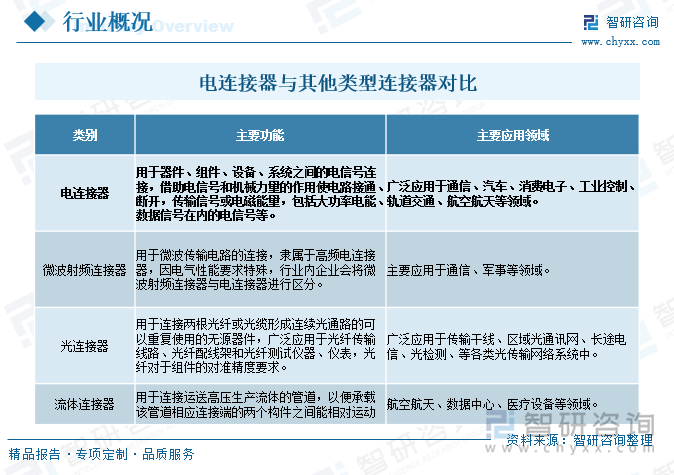
Core Viewpoint - The demand for electrical connectors in China is significantly increasing due to the rapid development of 5G and 6G networks, the growth of the electric vehicle industry, and the evolution of consumer electronics, leading to a projected market size of 174.9 billion yuan in 2024, representing a year-on-year growth of 6.27% [1][14]. Market Overview - Electrical connectors are essential components for transmitting electrical signals between devices, systems, and components, widely used in telecommunications, automotive, consumer electronics, industrial control, and aerospace [2][4]. - The electrical connector market is supported by various government policies aimed at promoting the development of the electronic components industry, creating a favorable environment for growth [5][7]. Industry Chain - The upstream of the electrical connector industry includes suppliers of raw materials such as metals, plastics, and plating materials, while the downstream encompasses application markets in telecommunications, automotive, consumer electronics, and industrial control [8][10]. Market Demand - The telecommunications and automotive sectors are the primary demand markets for electrical connectors in China, accounting for over 40% of the market share in 2024. The automotive industry is experiencing significant growth, with production and sales increasing by 14.5% and 11.2% year-on-year, respectively [12][14]. Competitive Landscape - The electrical connector market is dominated by established international brands like Tyco and Amphenol, which have advantages in funding, technology, and global sales networks. However, domestic companies such as Luxshare Precision and AVIC Optoelectronics are gaining ground through competitive pricing and improved technology [16][18]. Key Companies - AVIC Optoelectronics specializes in high-end interconnection solutions and is projected to achieve a revenue of 20.69 billion yuan in 2024, with 78.3% of its revenue coming from electrical connectors [18]. - Luxshare Precision focuses on providing integrated manufacturing solutions for consumer electronics and automotive products, with an expected revenue of 268.8 billion yuan in 2024, where consumer electronics account for 83.37% of its revenue [20]. Development Trends - Future trends in the electrical connector market include the need for higher transmission speeds, lower signal delays, and better electromagnetic compatibility, driven by advancements in 5G, big data, and cloud computing technologies. There is also a push towards miniaturization and high-density designs to meet the demands of modern consumer electronics [22].



【IPO一线】好达电子再启IPO征程 更换辅导机构冲刺资本市场
Ju Chao Zi Xun· 2025-07-04 01:17
Core Viewpoint - Wuxi Haoda Electronics Co., Ltd. has submitted a listing guidance report to the China Securities Regulatory Commission, indicating a renewed attempt to go public after a previous failed IPO [1][2] Company Overview - Founded in 1999, Haoda Electronics is one of the early players in the surface acoustic wave (SAW) filter market in China [2] - The company successfully developed SAW filters and resonators for walkie-talkies and remote controls in 2001, establishing a technological foundation in the RF front-end chip sector [2] - Over 20 years, Haoda Electronics has become a leading domestic producer of SAW filters, with product performance nearing international standards [2] Market Position and Clientele - Major clients include well-known companies such as Xiaomi, ZTE, Samsung, Lenovo, and Foxconn [2] - The demand for domestic RF chip replacements is strong due to the rapid development of 5G communications and the Internet of Things [2] IPO Attempts and Regulatory Environment - This is not the first attempt by Haoda Electronics to go public; the company previously submitted an application to the Shanghai Stock Exchange and received an acceptance notice in June 2021 [1] - The IPO application was approved in November 2021 but was later withdrawn in December 2022, with the CSRC terminating the registration process in February 2023 [1][2] - The reasons for the withdrawal remain unclear, but industry speculation suggests factors such as market environment changes, valuation adjustments, or regulatory inquiries [2] Future Outlook - With the trend of domestic semiconductor self-sufficiency, the RF front-end chip market presents significant opportunities [2] - The change of guidance institutions and the renewed effort to enter the capital market warrant ongoing attention regarding the company's listing progress and valuation performance [2]
电网迎峰度夏工程全部竣工
Hang Zhou Ri Bao· 2025-07-02 02:52
Group 1 - The completion of the 110 kV Shuangwei substation project in Xiaoshan marks the successful implementation of all key projects for the Hangzhou power grid during the summer peak, with a total investment of 1.535 billion yuan [3] - The 220 kV Yanzhou-Longyin transmission project, which took 800 days to complete, significantly enhances the power supply capacity in western Hangzhou by 2 million kW, providing a solid energy guarantee for the region's development over the next decade [3] - The newly established "cross-shaped" multi-loop power grid in western Hangzhou allows for bidirectional power flow, increasing the regional power supply reliability to over 99.999% [3] Group 2 - In Chun'an, the integration of 5G communication and quantum encryption technology into distribution network equipment has improved the reliability of electricity supply in mountainous areas to 99.9995%, the highest in Zhejiang's mountainous island counties [3] - A 26-kilometer external communication line in Tonglu's He Village has increased the village's power supply capacity to 6,000 kW, exceeding the summer peak load by over 20%, providing a "double insurance" for rural electricity [4] - During the summer peak, the company will leverage the advantages of large power grid resource allocation and utilize new load management methods like virtual power plants to support the electricity demand in Hangzhou [4]

研判2025!中国电子连接器行业产业链、市场规模及发展趋势分析:技术加速向高频高速智能化演进,助力产业升级[图]
Chan Ye Xin Xi Wang· 2025-06-29 01:25
Industry Overview - China has become the largest production base and consumer market for electronic connectors globally, with a market size projected to reach approximately 212.37 billion yuan in 2024, representing a year-on-year growth of 11.67% [1][12] - The electronic connector industry in China is rapidly evolving towards high-frequency, low-loss, and high-reliability products, driven by advancements in technologies such as 5G, IoT, and AI [1][12] Industry Development History - The development of China's electronic connector industry can be divided into four stages: the embryonic period (1940-1949), the initiation period (1950-1970), the rapid development period (1980-2000), and the maturity period (2000-present) [4][5] Industry Supply Chain - The upstream of the electronic connector industry includes raw materials such as copper, alloy materials, and various plastics, while the midstream involves the manufacturing of electronic connectors, and the downstream applications span across automotive, communication, consumer electronics, and industrial control sectors [7] Market Demand and Trends - The demand for electronic connectors is continuously growing, primarily driven by the rapid development of the new energy vehicle market and consumer electronics, with significant increases in the demand for high-density and high-voltage connectors [21] - The trend towards smart and high-frequency connectors is becoming a core focus, with innovations in materials and manufacturing processes enhancing performance and driving the industry towards high-end and intelligent solutions [20] Competitive Landscape - The competition in the electronic connector industry is intensifying, with domestic companies like Luxshare Precision and AVIC Optoelectronics gaining market share through technological innovation and customized services, while international brands maintain dominance in the high-end market [22][14]
全球低介电电子布市场前5强生产商排名及市场占有率
QYResearch· 2025-06-25 07:51
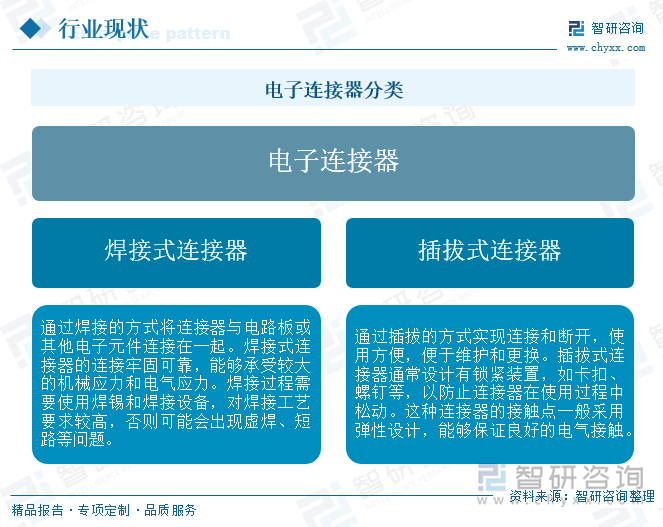
Core Viewpoint - The low dielectric electronic fabric market is driven by the explosive growth of high-frequency and high-speed electronic products, particularly in 5G telecommunications, advanced computing, automotive electronics, and aerospace systems. The demand for materials that maintain signal integrity and reduce electromagnetic interference (EMI) is surging, with the global market expected to reach $530 million by 2031, growing at a CAGR of 18.7% from 2025 to 2031 [2]. Market Overview - Low dielectric electronic fabric is designed with low dielectric constant (Dk) and low loss factor (Df), making it essential for high-performance printed circuit boards (PCBs) used in high-frequency, high-speed, or RF/microwave electronic applications [1][2]. - The market is primarily dominated by the Asia-Pacific region, especially China, Japan, and South Korea, with significant contributions from companies like Taiwan Glass, Nittobo, and Taishan Fiberglass [1]. Market Size and Growth - According to QYResearch, the global low dielectric electronic fabric market is projected to reach $530 million by 2031, with a compound annual growth rate (CAGR) of 18.7% [2]. - The thin fabric segment currently holds the largest market share, accounting for approximately 50.8% of the total market [10]. Key Applications - The communication sector is the largest downstream market for low dielectric electronic fabric, representing about 43.6% of the demand [11]. Major Players - The leading manufacturers in the global low dielectric electronic fabric market include Nittobo, Taiwan Glass, Taishan Fiberglass, Fulltech, and AGY, with the top five companies holding around 97.0% of the market share as of 2024 [8].
机构:北美AI硬件供应链板块回调后仍可参与,5G通信ETF(515050)近2周规模增长6354.75万元
Mei Ri Jing Ji Xin Wen· 2025-06-24 02:27
Group 1 - A-shares main indices surged in early trading on June 24, with active performance in sectors such as air transportation, intelligent driving, and IDC computing power leasing [1] - The 5G Communication ETF (515050) rose by 1.19%, with leading stocks including Dalian Technology, Guanghetong, and Zhaoyi Innovation [1] - Over the past two weeks, the 5G Communication ETF (515050) saw an increase in scale by 63.55 million yuan, driven by the active AI computing power chain [1] Group 2 - Securities institutions recommend focusing on the North American AI hardware supply chain, indicating that despite recent corrections, participation is still advisable [1] - The demand for ASIC chips is expected to grow due to AI inference clusters, with upward revisions in the demand growth for optical modules and PCBs [1] - The underlying driver for the sector remains the rapid growth in North American inference computing demand, particularly as tech giants shift from a model arms race to user acquisition [1] Group 3 - The 5G Communication ETF (515050) tracks the CSI 5G Communication Theme Index, focusing on the supply chains of Nvidia, Apple, and Huawei [1] - The ETF covers leading stocks across various sub-industries, including AI computing, 6G, consumer electronics, semiconductors, PCBs, communication equipment, servers, optical modules, and the Internet of Things [1] - The full name of the related ETF is Huaxia CSI 5G Communication Theme ETF (515050), with off-market connections available [1]
无线通信模块排名全球第四,美格智能正式递表港交所
Ju Chao Zi Xun· 2025-06-20 03:15
Core Viewpoint - Meige Intelligent Technology Co., Ltd. has officially submitted its application for an IPO on the Hong Kong Stock Exchange, positioning itself as a leading provider of wireless communication modules and solutions, particularly in high-performance intelligent modules [2] Group 1: Market Position and Product Innovation - Meige Intelligent ranks fourth globally in the wireless communication module industry by revenue, holding a market share of 6.4% as of 2024 [2] - The company is recognized as the first globally to launch intelligent module products and to achieve large-scale deployment of 5G intelligent modules in new energy vehicles [2] - In the high-performance intelligent module segment, Meige Intelligent is the first to develop a 48TOPS high-performance intelligent module and has become a designated supplier for leading automotive manufacturers [3] Group 2: Revenue and Customer Segmentation - Revenue from direct sales customers for Meige Intelligent was approximately RMB 2,055.6 million, RMB 1,957.3 million, and RMB 2,785.1 million for the years 2022, 2023, and 2024, respectively, accounting for 89.1%, 91.1%, and 94.7% of total revenue during those periods [4] - Revenue from distribution sales was RMB 250.4 million, RMB 190.1 million, and RMB 156.3 million for the same years, representing 10.9%, 8.9%, and 5.3% of total revenue [4] Group 3: Research and Development Investment - Meige Intelligent's R&D expenses were RMB 185.9 million, RMB 213.9 million, and RMB 208.1 million for the years 2022, 2023, and 2024, constituting 8.1%, 10.0%, and 7.1% of total revenue, respectively [4] - The company's total R&D expenses as a percentage of total revenue are higher than the average level in the global wireless communication module industry as of December 31, 2024 [4]
研判2025!中国柔性显示行业产业链、相关政策及市场现状分析:受益于产能扩张、成本下降,柔性显示发展迅速[图]
Chan Ye Xin Xi Wang· 2025-06-20 01:16
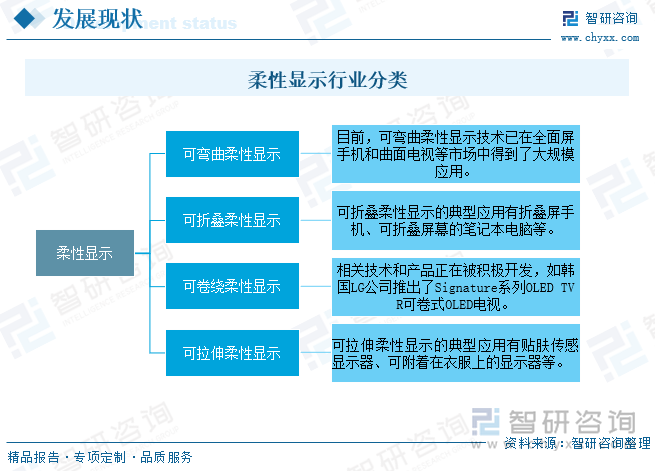
Core Insights - Flexible display technology is revolutionizing the display industry by enabling devices to be curved, folded, and rolled, breaking the traditional rigid display limitations [1][17] - The global flexible display market is projected to grow from $23.2 billion in 2024 to over $173 billion by 2031, driven by advancements in 5G, AI, and VR technologies [1][17] - The flexible OLED segment is expected to see significant growth, with global shipments estimated at approximately 617 million units in 2024, reflecting a year-on-year increase of 21.5% [21] Industry Overview - Flexible displays are made from soft materials and are characterized by low energy consumption, lightweight, durability, and shape variability [2][7] - The main types of flexible displays include bendable, foldable, rollable, and stretchable displays, with bendable and foldable displays already seeing large-scale applications in consumer electronics [2][4] Technology Landscape - The leading technology for flexible displays is flexible OLED, known for its high contrast, wide viewing angles, and rapid response times [4][6] - Other technologies include flexible LCD, electronic paper, quantum dot LEDs, and Micro-LEDs, with flexible OLED being the most widely adopted [4][6] Market Dynamics - The Asia-Pacific region dominates the flexible display market, accounting for over 65% of the global market share, with China, South Korea, and Japan as key contributors [17] - The flexible AMOLED market share in smartphones is expected to rise from 28% in 2022 to 40% in 2024, driven by the demand for high-end smartphone models [19][21] Competitive Landscape - Samsung is the leading global supplier of flexible OLED displays, while BOE Technology Group is the largest producer in China, having broken the international monopoly in 2017 [23] - Chinese companies like BOE, Visionox, Tianma, and TCL Huaxing have made significant technological advancements, enhancing their competitiveness and gradually reducing Samsung's market dominance [23]



研判2025!中国半导体塑封机行业产业链、进出口及重点企业分析:技术升级加速自主化进程,高端设备进口依赖与出口承压凸显产业链短板[图]
Chan Ye Xin Xi Wang· 2025-06-18 01:21
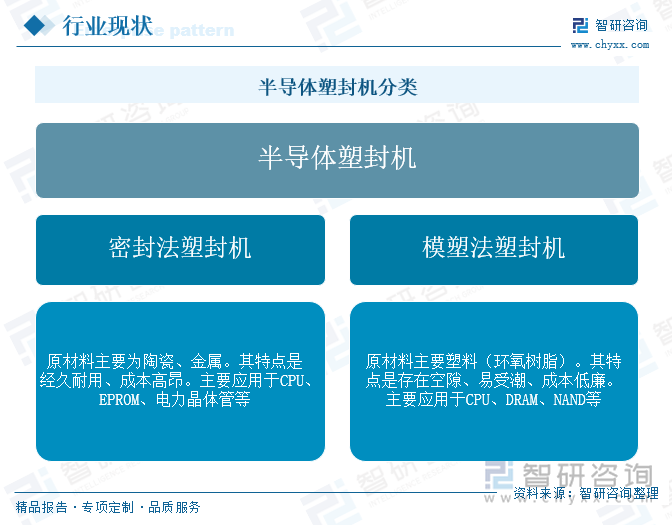
内容概况:作为半导体封装环节的核心设备,塑封机的技术升级与产业布局深刻影响着中国半导体产业 链的自主化进程。2025年1-4月,中国半导体塑封机进口金额为3144.82万美元,同比增长29.46%;出口 金额为1605.21万美元,同比下降28.05%。进口增长方面,一是国内先进封装产能扩张,尤其是第三代 半导体(SiC、GaN)封装线建设,对日本东和半导体、荷兰ASMPT等企业的超高压塑封机需求激增。 二是高端设备国产替代率不足,500MPa级超高压成型机、激光辅助成型设备等仍依赖进口,单台设备 价格超50万美元,推高进口总额。出口下降则反映全球市场压力。一方面,东南亚、印度等新兴市场本 土封装厂崛起,以价格优势挤压中国设备出口;另一方面,美国《芯片与科学法案》限制中国设备进入 高端市场,叠加欧盟碳关税(CBAM)政策,导致出口成本上升。此外,国产设备在稳定性、精度 (±1μm以下)等指标上仍落后于国际巨头,难以满足台积电、三星等大客户要求。 相关上市企业:耐科装备(688419)、三佳科技(600520)、长电科技(600584) 相关企业:衡所华威电子有限公司、北京科化新材料科技有限公司、宁波博威合金材 ...


2025年法国科技创新展中国馆在巴黎亮相
Zhong Guo Xin Wen Wang· 2025-06-16 08:23
Core Insights - The 2025 France Technology Innovation Exhibition was successfully held in Paris from June 11 to 14, showcasing the China Pavilion organized by the China Council for the Promotion of International Trade in France [1][2] - The China Pavilion featured multiple Chinese enterprises from technology, communication, manufacturing, and cultural sectors, highlighting advancements in artificial intelligence, robotics, digital solutions, 5G communication, and additive manufacturing [1][2] Group 1 - The China Pavilion included notable companies such as Huawei, China Mobile, China Unicom, Dahua Technology, and Moutai Group, representing a blend of technological innovation and cultural confidence [1][2] - The exhibition attracted professional audiences, media, and industry personnel from various countries, facilitating interaction and discussions on cooperation [1][2] Group 2 - Chinese Ambassador to France, Deng Li, emphasized the Chinese government's commitment to placing technological innovation at the core of national development, increasing research investment, and reforming the technology system [2] - The pavilion focused on themes of "openness, cooperation, and sharing," providing a platform for French and European startups to showcase their innovations [2] - During the exhibition, six thematic forums were organized, addressing topics such as China-EU technological innovation, supply chain cooperation, and the internationalization of small and medium-sized enterprises [2]