财富管理

Search documents
跨境理财通深化发展:券商的角色、挑战与突破
Zheng Quan Shi Bao Wang· 2025-12-05 10:25
Core Insights - The cross-border wealth management scheme, known as the Cross-Border Wealth Management Connect, has evolved to version 2.0, allowing brokerages to transition from traditional product channels to cross-border wealth management platforms, although challenges remain in market awareness and regulatory compliance [1][2]. Group 1: Institutional Evolution - The launch of the Cross-Border Wealth Management Connect marks a significant step in financial market connectivity within the Guangdong-Hong Kong-Macao Greater Bay Area, creating a funding loop through the banking system for residents to invest in each other's markets under compliance [2]. - Initially, the program was bank-led, focusing on low to medium-risk products, but the upgrade to version 2.0 has included qualified brokerages, creating a dual-channel system that expands product offerings to include medium to high-risk public funds [2]. Group 2: Brokerages' Role - Currently, only 14 brokerages are participating in the pilot, and their business volume is significantly lower than that of banks, but this presents an opportunity for brokerages to transform into central platforms for cross-border asset allocation and global capital markets [4]. - Brokerages are well-positioned to act as buy-side advisors for cross-border asset allocation, especially as the variety of investable products increases, catering to high-net-worth clients focused on long-term asset growth [4][5]. Group 3: Current Challenges - Despite rapid growth in participation, overall market awareness and engagement remain low, with significant disparities in fund usage between southbound and northbound channels, indicating a lack of understanding and accessibility [6][7]. - Strict compliance regulations hinder proactive outreach and investor education, limiting the ability of institutions to effectively communicate and engage with potential clients [7]. Group 4: Optimizations in 2.0 Pro Version - The Hong Kong Securities and Futures Commission's recent measures in the 2.0 Pro version allow for improved communication between institutions and clients, enabling brokerages to explain product details more effectively under a compliant framework [8][9]. Group 5: Future Recommendations for 3.0 Version - For the future 3.0 version, it is recommended to enhance suitability and information disclosure, allowing for a more comprehensive explanation of products based on asset allocation and risk budgeting [10]. - Exploring mutual recognition of advisory licenses between mainland and Hong Kong professionals could facilitate a shift from product sales to professional consulting services [10]. - Introducing a dynamic quota management mechanism could attract more high-net-worth clients by allowing for tiered limits based on financial capacity and risk tolerance [12].
兴业银行召开2026年财富管理大会 共绘财富管理高质量发展新蓝图
Zhong Jin Zai Xian· 2025-12-05 09:16
Core Viewpoint - The 2026 Industrial Bank Wealth Management Conference highlighted the bank's commitment to enhancing its wealth management services in alignment with national strategies for common prosperity, aiming to significantly grow its assets under management (AUM) and support residents in wealth preservation and appreciation [1][2]. Group 1: Conference Highlights - The conference featured key speeches from prominent figures, including the chairman of Industrial Bank, emphasizing the importance of wealth management in the context of national economic strategies [1][2]. - A total of 42 representatives from various financial sectors, including funds, securities, and insurance, gathered to discuss new trends in wealth management, bank-insurance cooperation, and digital innovation [1]. Group 2: Business Strategy - Industrial Bank aims to strengthen its wealth management business as part of its "Wealth Bank" initiative, which is one of its three key focuses, to support the common prosperity agenda [1][2]. - Since the start of the 14th Five-Year Plan, the bank's wealth AUM has increased from 2.52 trillion yuan to 3.95 trillion yuan, with over 210 billion yuan in asset appreciation for clients in the past three years [1]. Group 3: Future Directions - The bank plans to enhance its service to the real economy by facilitating the conversion of funds into investments, particularly in technology and industry, to achieve wealth appreciation for residents [2]. - There is a commitment to shift from merely selling products to helping clients allocate assets, improving professional capabilities in selecting strategies and products across domestic and international markets [2]. - The bank will continue to strengthen partnerships in wealth management, aiming for a more comprehensive and deeper collaboration to foster a healthier and more inclusive wealth management ecosystem [3].

深圳金融,大消息
Zhong Guo Ji Jin Bao· 2025-12-05 09:01
Group 1 - Shenzhen has launched 7 bank-affiliated AIC funds in 2025, with a total scale of 24 billion yuan, ranking first in the country [2] - The city has also added 156 new VC/PE funds this year, leading the nation in quantity [2] - The financial industry in Shenzhen has shown significant growth, with an average annual increase of 6.9% during the 14th Five-Year Plan period, contributing approximately 14% to the GDP [2] Group 2 - The financial sector in Futian District accounts for 49% of the city's financial value added, with a growth rate of 21.4%, maintaining the top position in both total volume and growth rate [4] - Futian District hosts 60% of Shenzhen's licensed financial institutions and 62% of its wealth management scale [4] - The district is developing the Xiangmi Lake New Financial Center, aiming to match global financial hubs like London and Manhattan [4] Group 3 - Qianhai has become a national pilot zone for financial industry openness and cross-border RMB business innovation, with actual foreign investment accounting for half of Shenzhen's total [6] - The region has seen an average GDP growth of over 10% during the 14th Five-Year Plan, with financial value added maintaining double-digit growth [6] - Qianhai has attracted 518 financial institutions, with 30% being Hong Kong and foreign capital [6]
深圳金融,大消息
中国基金报· 2025-12-05 08:57
Core Viewpoint - Shenzhen has established itself as a leading financial hub in China, with significant growth in various financial sectors, including the launch of multiple AIC funds and a high number of VC/PE funds, indicating a robust financial ecosystem [5][6]. Group 1: Financial Growth and Achievements - In 2025, Shenzhen launched 7 bank-affiliated AIC funds with a total scale of 240 billion yuan, ranking first in the country [6]. - The city added 156 new private equity and venture capital funds in 2025, also the highest in the nation [6]. - Over the past five years, Shenzhen's financial industry has shown impressive growth, with an average annual increase of 6.9% during the 14th Five-Year Plan period, contributing approximately 14% to the city's GDP [6]. Group 2: Strategic Goals and Future Plans - Shenzhen aims to become a globally influential industrial financial center by 2030, focusing on integrated innovation in technology, industry, and finance [7]. - The city plans to enhance its financial ecosystem by optimizing the business environment and attracting global financial talents and enterprises [11]. Group 3: Regional Financial Strength - Futian District is recognized as one of the top three financial districts in the country, accounting for 49% of the city's financial value added and achieving a growth rate of 21.4% [9]. - Qianhai serves as a national pilot for financial openness and innovation, with actual foreign investment accounting for half of Shenzhen's total [11].

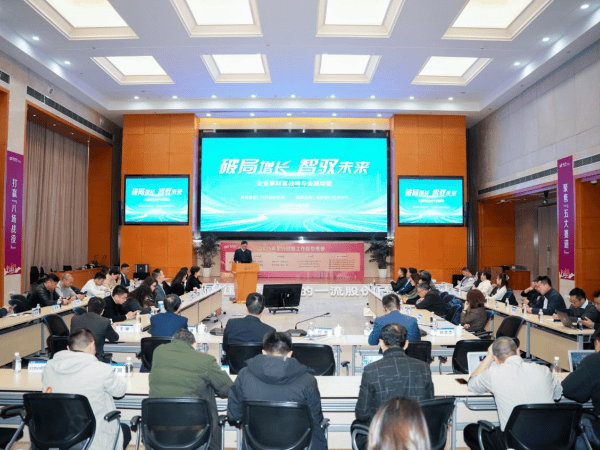
“企业家财富战略与金融动能”企业家论坛在苏州举办
Sou Hu Cai Jing· 2025-12-05 08:25
论坛现场(浦发银行苏州分行供图) 在苏州区域实践中,浦发银行苏州分行始终与区域经济发展同频共振。今年8月,分行与苏州市政府签 署战略合作协议,未来五年将为苏州高质量发展提供总额度约3000亿元的融资支持,重点打造具有苏州 特色的科技金融与财富管理服务模式。 在科技金融领域,截至2025年9月末,苏州分行科技贷款余额达459亿元,稳居苏州股份制同业第一;累 计服务科技金融客户近9900户,科创板上市公司覆盖率95%、专精特新"小巨人"客群覆盖率61%,成为 科创企业创新旅程的"合伙人"。在财富管理领域,通过"企明星服务平台"与"浦和人生账户""浦发寰球 平台",为企业家提供"家业、家财、家族"综合解决方案,助力实现企业成长、财富保全与代际传承的 多重目标。 12月2日,由21世纪经济报道长三角工作室与浦发银行苏州分行联合主办的"破局增长,智驭未来——企 业家财富战略与金融动能"企业家论坛在浦发银行苏州分行二楼会议厅举行。 浦发银行苏州分行党委副书记、副行长何荣表示,2025年作为浦发银行"数智化战略提升年",银行以科 技金融、供应链金融、普惠金融、跨境金融、财资金融"五大赛道"为核心抓手,聚焦"超级平台、超级 ...

大摩:对中国平安看法更正面具显著增长潜力 上调目标价至89港元
Xin Lang Cai Jing· 2025-12-05 04:19
Core Viewpoint - Morgan Stanley has upgraded its outlook on Ping An Insurance, believing the group can capitalize on key opportunities in wealth management, healthcare, and eldercare services, while investor concerns are dissipating, paving the way for a revaluation [1] Group 1 - The firm reiterated its "Overweight" rating for both H-shares and A-shares of Ping An Insurance [1] - The target price for H-shares has been raised by 27% to HKD 89 [1] - The target price for A-shares has been increased by 21% to RMB 85 [1]

大摩:对中国平安(02318)看法更正面具显著增长潜力 上调目标价至89港元
智通财经网· 2025-12-05 03:56
Core Viewpoint - Morgan Stanley has upgraded its outlook on China Ping An (02318, 601318.SH), believing the group can seize key opportunities in wealth management, healthcare, and elder services, while investor concerns are dissipating, paving the way for a revaluation [1] Group 1: Ratings and Price Targets - Morgan Stanley reiterated its "Overweight" rating for both H-shares and A-shares of China Ping An, raising the target price for H-shares by 27% to HKD 89 and for A-shares by 21% to RMB 85 [1] Group 2: Financial Projections - The group’s return on equity (ROE) is expected to reach 14% to 15% by 2028 [1] - The compound annual growth rate (CAGR) of core new business value (VNB) is projected to rebound to 21% over the next two years [1] - The balance of the contract service margin (CSM) for life insurance is anticipated to recover to a growth rate of 1.9% by 2026 [1] - The group's operating profit is expected to improve with a CAGR of 11% over the next two years, indicating a transformation within the group [1] Group 3: Market Positioning - Morgan Stanley considers China Ping An's H-shares as a top pick and has added the company to its focus list for China/Hong Kong [1] - The firm believes that with a projected ROE of 14% to 15% and a cost of capital below 10%, the company's price-to-earnings (P/E) ratio can rebound from approximately 7 times to a double-digit figure [1] - The group aims to expand its market through enhanced integrated financial services and value-added services [1]
“小东财”,获增资
Zheng Quan Shi Bao· 2025-12-05 02:46
公告表示,本次增资是为了更好地满足麦高证券业务发展的资金需要,有助于麦高证券业务的稳定推 进,符合公司长远规划和核心利益,为公司未来发展打下坚实基础。增资完成后,公司将继续保持对麦 高证券的全资控股,不会因此导致公司财务合并报表范围发生变化。本次增资的资金来源为公司自有资 金,不会对公司当前财务状况和经营成果产生重大影响,不存在损害公司和全体股东利益的情形。 12月4日晚间,指南针发布公告称,根据麦高证券经营发展需要,公司拟对麦高证券以自有资金增资1亿 元。 据悉,麦高证券为指南针的全资子公司,在业界有"小东财"之称。此前,指南针拟定增募资30亿元,将 全部用于增资麦高证券,但今年10月底这笔定增终止了。 指南针向麦高证券增资1亿元 指南针于2025年12月4日召开第十四届董事会第十二次会议,审议通过了《关于向全资子公司麦高证券 有限责任公司增资的议案》,董事会同意公司向全资子公司麦高证券增资,并同意授权公司经营管理层 具体决定和办理上述增资相关事项。 根据麦高证券经营发展需要,公司拟对麦高证券以自有资金增资1亿元。本次增资完成后,麦高证券的 注册资本将由14 亿元变更为15亿元,麦高证券仍为公司全资子公司。 ...

中诚信国际金融机构评级副总监杨傲镝:投资收益增长成拉动银行非息收入增长重要引擎
Guo Ji Jin Rong Bao· 2025-12-04 15:14
Core Viewpoint - The banking industry is facing challenges due to narrowing net interest margins, with the net interest margin recorded at 1.43%, 1.42%, and 1.42% for the first three quarters of the year, indicating a need for transformation towards diversified revenue sources and value-driven strategies [1][2] Group 1: Net Interest Margin and Revenue Structure - The net interest margin is at historical lows, prompting banks to adjust their asset-liability management and revenue structures to overcome profitability challenges [1] - Non-interest income has been gradually increasing, particularly through investment income, which has become a key driver for banks in a declining interest rate environment [1] - The proportion of loans in total assets has risen from 45% at the end of 2016 to 58% by the end of 2024, reflecting effective asset structure adjustments [1] Group 2: Credit Allocation and Loan Growth - Recent policies have directed bank credit towards technology, green, and inclusive finance sectors, which are expected to yield stable returns, optimizing the loan allocation structure [1] - Loans for inclusive small and micro enterprises, green projects, and technology-oriented SMEs have been growing faster than total loan growth, with technology loans leading since 2025 [1] Group 3: Liability Structure and Deposit Management - Deposits remain a cornerstone for banks, with their proportion in total liabilities stabilizing around 81% by the end of 2024, aided by ongoing financial deleveraging [2] - Banks are adjusting deposit term structures to manage liability costs, including controlling long-term deposit interest rates and implementing quota restrictions [2] Group 4: Business Strategies for Revenue Enhancement - Banks are focusing on wealth management by creating a "product supermarket" to diversify offerings and enhance customer loyalty, thereby increasing revenue contributions [3] - Customized payment and settlement services are being developed to serve clients' supply chain needs, facilitating bulk customer acquisition [3] - In the capital market, banks are adjusting trading strategies and may invest in overseas high-yield bonds to address asset shortages [3] - Investment banking services are being sought in both domestic and international markets, particularly in sectors benefiting from policy support, such as technology [3]
156亿美元神秘消失,爱马仕老板再也买不起爱马仕
Sou Hu Cai Jing· 2025-12-03 12:57
Group 1 - The article discusses the mysterious disappearance of $15.6 billion belonging to Nicolas Pierre, the fifth heir of Hermès, who owns 5.7% of the company [2][4] - Nicolas's wealth, amounting to approximately $15.6 billion (around 110 billion RMB), was managed by his friend, Fréremond, who ultimately mismanaged the funds [4][19] - After 25 years of trusting Fréremond, Nicolas discovered that he had unknowingly signed a power of attorney, allowing Fréremond to handle his assets, which led to the complete loss of his wealth [12][14] Group 2 - The article presents five possible scenarios for the disappearance of Nicolas's wealth, including fraud by Fréremond's team or poor investment decisions in speculative markets [19][20][21][22][23] - It emphasizes the importance of social interaction and transactions in maintaining wealth, highlighting that Nicolas's social anxiety prevented him from engaging in necessary financial activities [25][27][28] - The narrative contrasts Nicolas's passive approach to wealth management with Fréremond's aggressive, yet ultimately reckless, investment strategies, leading to both their downfalls [30][32][34]