
创新药研发

Search documents
众生药业:控股子公司签署RAY1225注射液项目许可协议
Ge Long Hui· 2026-01-16 08:36
格隆汇1月16日丨众生药业(002317.SZ)公布,控股子公司广东众生睿创生物科技有限公司(简称"众生 睿创")与齐鲁制药有限公司(简称"齐鲁制药")于2026年1月16日签署《许可协议》,众生睿创授权齐 鲁制药在中国地区(包括中国大陆、香港、澳门、台湾,统称"许可地区")内对RAY1225注射液(简 称"许可产品")进行生产与商业化销售,众生睿创保留许可知识产权的全部权利、权属和权益,在许可 产品获得药品监管部门上市注册批准后,众生睿创为药品上市许可持有人(MAH)。同时,众生睿创 仍然拥有RAY1225注射液国外的全部权利、权属和权益,包括但不限于临床开发、生产及新药注册、 销售和市场推广。 在满足许可协议约定的条款下,众生睿创将获得首付款及里程碑付款总金额为人民币100,000万元,包 括首付款人民币20,000万元、开发和销售里程碑付款最高合计人民币80,000万元,后续产品上市后有权 获得许可产品净销售额双位数的销售提成。 许可产品RAY1225注射液是众生睿创研发的、具有全球自主知识产权的创新结构多肽药物,具有GLP-1 受体和GIP受体双重激动活性,得益于优异的药代动力学特性,具备每两周注射一 ...

长春高新:金赛药业携7条管线亮相JPM大会,BD加速有望打造新增长极
Zheng Quan Shi Bao Wang· 2026-01-16 06:21
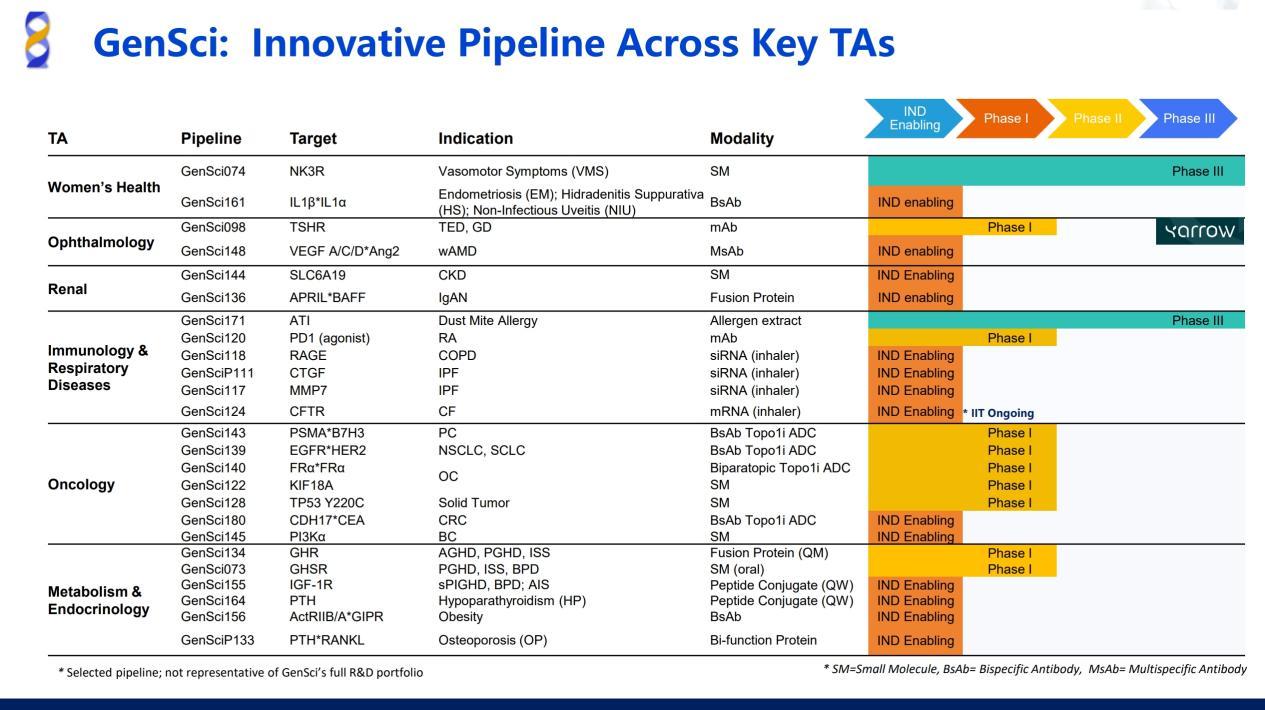
Core Insights - The article highlights the participation of Gensci Pharmaceutical at the 44th JPMorgan Healthcare Conference, showcasing its innovative drug development and research capabilities, which attracted significant investor interest [1][2]. Group 1: Innovative Drug Pipeline - Gensci Pharmaceutical presented seven innovative drug pipelines targeting major disease areas such as oncology, respiratory, immunology, endocrinology, and women's health, with potential First-in-Class (FIC) or Best-in-Class (BIC) profiles [2][3]. - The company emphasized its advanced technology platforms, including long-acting release, conjugation technology, targeted delivery, and AI-assisted drug design, which are crucial for developing competitive drug candidates [2][3]. Group 2: Clinical Development Highlights - Gensci's GenSci134, a long-acting growth hormone analog, is in Phase I clinical trials, aimed at improving patient compliance in growth hormone deficiency [3]. - The NK3R antagonist GenSci074 for menopausal vasomotor symptoms has met all primary endpoints in Phase II trials, showing significant improvement over placebo, with plans for a global Phase III trial in Q2 2026 [3]. - The PD-1 agonist GenSci120 has received clinical approval in China and the U.S., demonstrating potential for chronic immune inflammatory diseases [4]. Group 3: Oncology Advancements - Gensci's GenSci128, targeting TP53 Y220C mutations, has entered clinical trials, addressing a significant unmet need in solid tumors [5]. - The new PI3Kα inhibitor GenSci145, recently accepted for IND, shows selective inhibition of PIK3CA mutations and potential for treating advanced solid tumors with brain metastases [5]. Group 4: Strategic Development and Global Expansion - Gensci is advancing over 40 clinical research projects and has achieved a milestone with the overseas licensing of GenSci098, totaling $1.365 billion, marking international recognition of its innovation [9]. - The company aims to develop a robust pipeline through a strategy that combines growth hormone, innovative drugs, and overseas business development, positioning itself for high-quality growth [9]. - The JPM conference serves as a platform for Gensci to showcase its innovations and foster global partnerships, reflecting a shift in the industry towards quality and global outreach [9].


浙江尖峰集团股份有限公司关于子公司撤回药品注册临床试验申请的公告
Zhong Guo Zheng Quan Bao - Zhong Zheng Wang· 2026-01-15 23:44
Core Viewpoint - Zhejiang Jianfeng Group Co., Ltd. announced that its subsidiary, Jianfeng Pharmaceutical, has voluntarily withdrawn the clinical trial application for the drug "C2235 and C2235 tablets" to the National Medical Products Administration, pending further research and will resubmit the application at a later date [2][3]. Group 1: Drug Registration and Withdrawal - Jianfeng Pharmaceutical received a termination notice for the drug registration application for "C2235 and C2235 tablets" from the National Medical Products Administration, indicating that the withdrawal was a proactive decision by the company [2]. - The withdrawal was due to the need for further improvement of the application materials during the registration process [2]. Group 2: Impact on Company Performance - The withdrawal of the clinical trial application for "C2235 and C2235 tablets" is not expected to have a significant impact on the company's current performance [3]. - The company acknowledges that the research and development of innovative drugs involve high technology and risks, with long and complex cycles from development to production, which are susceptible to unpredictable factors [3].

石药集团(01093):石药创新预计2025年度归母净亏损1.7亿元–2.55亿元
智通财经网· 2026-01-15 11:49
Group 1 - The core viewpoint of the article indicates that Shiyao Group's subsidiary, Shiyao Innovation, is expected to report a net loss attributable to shareholders of 170 million to 255 million yuan for the fiscal year 2025, compared to a profit of 53.7263 million yuan in the previous year [1] - The expected net loss after deducting non-recurring gains and losses is projected to be between 210 million and 315 million yuan, with the previous year's profit being 42.3419 million yuan [1] - The increase in research and development (R&D) expenses to approximately 1 billion yuan, a significant year-on-year increase, is a major factor affecting the current period's profit [1] Group 2 - In early November 2025, Shiyao Innovation completed the acquisition of an additional 29% minority stake in its subsidiary, Jushi Biotech, raising its ownership to 80% [2] - Due to significant investments in the research pipeline, Jushi Biotech is currently not profitable, and the increased ownership will amplify its impact on the consolidated financial statements of the company [2] - The company is actively consolidating its advantage in the functional raw materials business, particularly in caffeine products, although the gross margin and profitability of these products have slightly declined compared to the same period last year due to market factors [2]
石药集团:石药创新预计2025年度归母净亏损1.7亿元–2.55亿元
Zhi Tong Cai Jing· 2026-01-15 11:47
Core Viewpoint - The company, Shiyao Group, is expected to report a significant net loss for its subsidiary, Shiyao Innovation, in 2025, contrasting with a profit in the previous year, primarily due to increased R&D investments and operational challenges [1][2]. Group 1: Financial Performance - Shiyao Innovation anticipates a net loss attributable to shareholders of 170 million to 255 million yuan for 2025, compared to a profit of 53.7263 million yuan in the previous year [1]. - The expected net loss, excluding non-recurring items, is projected to be between 210 million and 315 million yuan, down from a profit of 42.3419 million yuan in the prior year [1]. Group 2: R&D Investments - The company is significantly increasing its R&D expenditures, with total R&D costs expected to rise to approximately 1 billion yuan, marking a substantial year-on-year increase [1]. - Several products in the pipeline have made important progress, including four antibody drugs, six ADC products, and one mRNA vaccine receiving clinical trial approvals for the first time in 2025 [1]. Group 3: Subsidiary Developments - In early November 2025, Shiyao Innovation completed the acquisition of an additional 29% minority stake in its subsidiary, Jushi Biotech, raising its ownership to 80% [2]. - The increased stake in Jushi Biotech, which is currently not profitable due to high R&D investments, will have a more pronounced impact on the consolidated financial statements of Shiyao Innovation [2]. Group 4: Functional Raw Materials Business - Shiyao Innovation is working to strengthen its position in the functional raw materials sector, particularly in caffeine products, although the gross margin and profitability of these products have slightly declined compared to the previous year due to market factors [2].
最高447%!这些药企净利润翻倍,药明康德、康辰药业…
Xin Lang Cai Jing· 2026-01-14 11:44
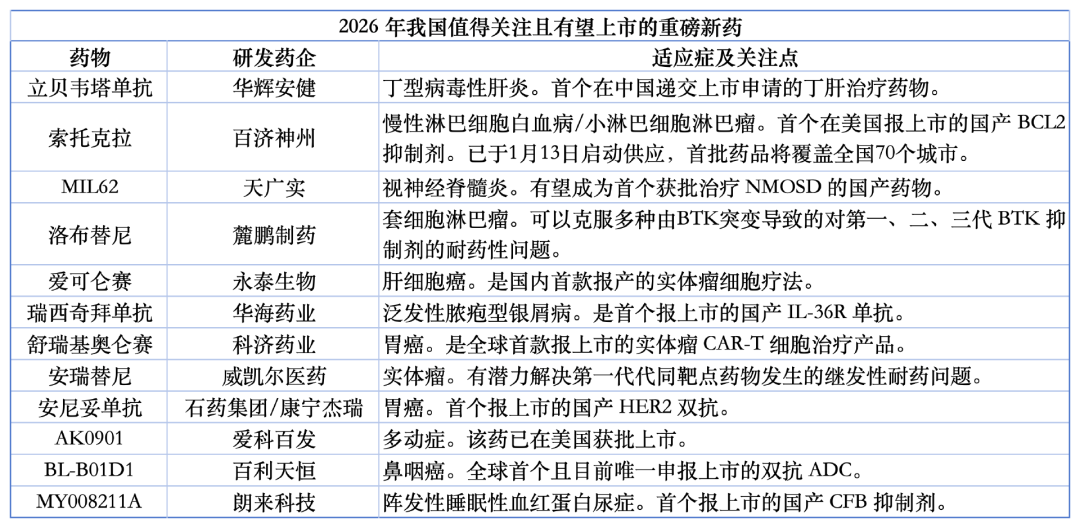
Group 1 - The pharmaceutical industry in A-shares is showing a recovery trend, with some companies exceeding performance expectations for 2025 [1][14] - WuXi AppTec expects revenue of approximately 45.456 billion yuan for 2025, a year-on-year increase of about 15.84%, and a net profit of approximately 19.151 billion yuan, a year-on-year increase of about 102.65% [1][15] - WuXi AppTec's performance is driven by stable growth in its main business and the sale of equity in three companies, generating nearly 5.6 billion yuan in revenue [1][15] Group 2 - WoHua Pharmaceutical anticipates a net profit between 80 million and 115 million yuan for 2025, representing a year-on-year increase of 119.76% to 215.90% [2][16] - The growth in WoHua's performance is attributed to the price-volume trade-off trend after the entry of its product into centralized procurement and the extension to outpatient markets [3][17] Group 3 - Kangchen Pharmaceutical expects a net profit between 14.5 million and 17.5 million yuan for 2025, a year-on-year increase of 243% to 315% [4][19] - The company attributes its performance to the absence of goodwill impairment provisions for 2025, following a decline in revenue from a previously acquired business [5][19] Group 4 - Baiaosaitu is projected to achieve a net profit growth of 249.5% in 2025, with expected revenue of 1.31 billion yuan, a year-on-year increase of 37.75% [6][20] - The company began to achieve commercial profitability in 2024, successfully turning around its financial performance [6][20] Group 5 - The Chinese pharmaceutical market is expected to see significant developments in 2026, with a focus on innovative drug research and business development (BD) [7][21] - China has become the second-largest market for innovative drug launches globally, with leading pharmaceutical companies showing R&D intensities close to global averages [7][21] Group 6 - The total value of innovative drug licensing transactions from China is expected to exceed 130 billion USD in 2025, indicating strong recognition of Chinese pipelines by overseas buyers [9][23] - The CXO service industry is recovering, with predictions that the market size will approach 100 billion USD in 2026, driven by increased demand from innovative drug development [9][23] Group 7 - The AI pharmaceutical sector is becoming increasingly active, with significant transactions and the listing of AI companies on stock exchanges [11][25] - The global market for AI solutions in healthcare is projected to grow from 13.7 billion USD in 2022 to 155.3 billion USD by 2030, highlighting the potential for companies in this space [13][27]

花旗发布研报称,对泰格医药(03347.HK)开启90日上行催化剂观察,现予目标价73港元及“买入”评级
Sou Hu Cai Jing· 2026-01-14 10:01
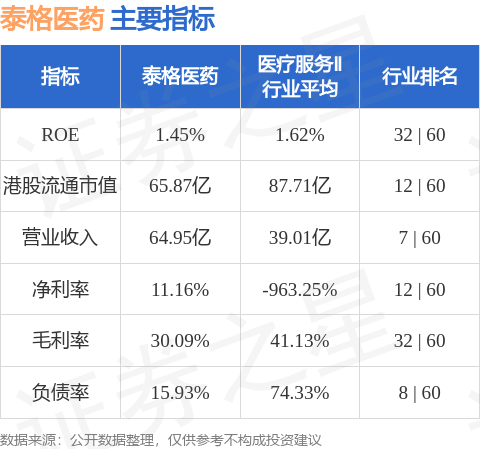
Group 1 - Citi has initiated a 90-day upward catalyst observation for Tigermed (03347.HK) with a target price of HKD 73 and a "Buy" rating [1] - Tigermed will participate in a healthcare conference in the U.S. and is expected to share optimistic industry trends and 2026 outlook due to strong performance in China's innovative drug research and a recovering funding environment [1] - The company is set to release its 2025 performance in March and provide guidance for 2026, with an anticipated 44% growth in operating profit by 2026 [1] Group 2 - As of January 14, 2026, Tigermed's stock closed at HKD 53.0, down 0.93%, with a trading volume of 3.6978 million shares and a turnover of HKD 199 million [1] - Tigermed's market capitalization is HKD 6.587 billion, ranking 12th in the healthcare services sector [1] - Key performance indicators for Tigermed compared to industry averages are as follows: ROE at 1.45% (industry average 1.62%), market capitalization at HKD 6.587 billion (industry average HKD 8.771 billion), revenue at HKD 6.495 billion (industry average HKD 3.901 billion), net profit margin at 11.16% (industry average -963.25%), gross margin at 30.09% (industry average 41.13%), and debt ratio at 15.93% (industry average 74.33%) [1]

花旗:对泰格医药开启上行催化剂观察 目标价73港元
Zhi Tong Cai Jing· 2026-01-14 09:47
Group 1 - The core viewpoint of the report is that Citigroup has initiated a 90-day upward catalyst observation for Tigermed (300347)(03347), setting a target price of HKD 73 and a "Buy" rating [1] - Tigermed is set to participate in a healthcare conference in the United States where it will deliver a presentation, which is expected to highlight optimistic industry trends and prospects up to 2026 due to strong performance in China's innovative drug research and a recovering funding environment [1] - The company is scheduled to release its 2025 performance results in March and provide guidance for 2026, with expectations of a cautious tone from management, but potential for upward revisions in the 2026 guidance, projecting a 44% increase in operating profit for that year [1]
花旗:对泰格医药(03347)开启上行催化剂观察 目标价73港元
智通财经网· 2026-01-14 09:41
Group 1 - Citi has initiated a 90-day upward catalyst observation for Tiger Medical (03347) with a target price of HKD 73 and a "Buy" rating [1] - Tiger Medical will participate in a healthcare conference in the US and deliver a presentation [1] - Due to the strong performance of China's innovative drug research and a recovering funding environment, it is expected that management will share optimistic industry trends and outlook for 2026 [1] Group 2 - The company is set to release its 2025 performance results in March and provide guidance for 2026 [1] - Management's tone is perceived as cautious, but there is potential for upward guidance for 2026, with an expected operating profit growth of 44% [1]
大行评级|花旗:对泰格医药开启90日上行催化剂观察 目标价73港元
Ge Long Hui· 2026-01-14 08:00
Group 1 - Citi has initiated a 90-day upward catalyst observation for Tiger Medical, noting the company's participation in a healthcare conference in the U.S. where it will deliver a speech [1] - Due to the strong performance of China's innovative drug research and a recovering funding environment, Citi expects management to share optimistic industry trends and outlooks for 2026 [1] - The company is set to release its 2025 earnings in March and provide guidance for 2026, with management's tone leaning towards caution, but with potential upside in the 2026 guidance, anticipating a 44% growth in operating profit [1] - Citi has set a target price of HKD 73 and a "Buy" rating for the company [1]