
城乡融合发展

Search documents
奋勇争先,决战决胜“十四五”|开创城乡融合发展新局面
Ren Min Ri Bao· 2025-10-13 01:26
Core Viewpoint - The transformation of Taoyuan Village reflects the profound changes in urban-rural relations in China, showcasing the successful implementation of rural revitalization strategies and urban-rural integration [2][3] Group 1: Urban-Rural Integration - Urban-rural integration is a necessary requirement for Chinese modernization, addressing the imbalance in development and promoting high-quality economic and social growth [3] - The strategy emphasizes the importance of planning and resource allocation that considers both urban and rural areas as a cohesive unit [3] - The development of new urbanization centered around county towns is crucial for achieving comprehensive rural revitalization and improving the quality of life for residents [3] Group 2: Economic Opportunities in Counties - Counties with a GDP exceeding 100 billion yuan are emerging as significant economic hubs, showcasing diverse local economies and opportunities for growth [4] - The integration of industries such as new energy vehicles and biomedicine in counties is contributing to substantial economic output, with the new energy vehicle sector alone generating over 200 billion yuan [4] Group 3: Improvement of Living Standards - Policies aimed at improving the living conditions of migrant workers in cities are being implemented, including reforms in the household registration system and enhanced access to public services [5] - The urbanization rate is projected to reach 67% by the end of 2024, with a high percentage of migrant workers' children able to access public education [5] - Infrastructure improvements in rural areas are evident, with significant increases in access to clean water and sanitation facilities, enhancing the quality of life for rural residents [6]
开创城乡融合发展新局面(奋勇争先,决战决胜“十四五”)
Ren Min Ri Bao· 2025-10-12 22:10
城乡融合发展是中国式现代化的必然要求。推进城乡融合发展,不仅是解决城乡发展不平衡、农村发展 不充分问题的关键举措,更是推动经济社会高质量发展、实现全体人民共同富裕的必然选择。 "城里有的,我们基本都有;有些城里没有的,我们也有。"浙江省海宁市盐官镇桃园村里,说到现在的 新生活,村民们赞不绝口。 从泥路坑洼、河道淤塞到道路整洁、风景宜人,运动有专业场地,还建起了民宿、书店、露营基地…… 生活在桃园村,却能享受到和城里差不多的便利生活。如今的桃园村,吸引了一拨拨游客,也吸引了不 少外出打拼的年轻人回乡创业。 桃园村的变迁折射出我国城乡关系的深刻变化。 习近平总书记强调:"要把乡村振兴战略这篇大文章做好,必须走城乡融合发展之路。" 从农村来到城市务工,郝霞凭着对手工编织的热爱,成立工作室,带动上百名妇女实现就业增收。但在 城里工作,孩子入学、家人就医等问题一度让她困扰。 随着当地有序推进农业转移人口市民化,郝霞一家在城里买了房。"孩子考上了大学,医疗保险、养老 保险全都有,心里踏实多了。"她说。 当前,我国正进一步深化户籍制度改革,实施新一轮农业转移人口市民化行动。2024年末,我国常住人 口城镇化率达67%,义务 ...
中经评论:科技为笔,绘就“三农”新图景
Zhong Guo Jing Ji Wang· 2025-10-05 05:20
Group 1 - The core viewpoint emphasizes the importance of agricultural modernization and rural development as foundational elements for national security and economic growth [1][2][3] - Technological advancements in agriculture are highlighted, with a projected agricultural technology progress contribution rate of 63.2% by 2024 and grain production expected to exceed 1.4 trillion jin [1] - Rural infrastructure improvements are noted, including over 464,000 kilometers of rural roads and a 90% 5G coverage rate in administrative villages, enhancing public service levels [1] Group 2 - The increase in farmers' income is identified as a key focus, with the urban-rural income ratio decreasing from 2.56:1 in 2020 to 2.34:1 in 2024 [2] - The growth of a diverse talent pool in rural areas is emphasized, with over 9 million high-quality farmers trained [2] - The need for balanced urban-rural development and addressing challenges such as insufficient integration of technology and industry is discussed [2][3] Group 3 - The strategy for agricultural and rural modernization is outlined, focusing on building an agricultural powerhouse and enhancing public services in education, healthcare, and elderly care [3] - The commitment to promoting agricultural efficiency, rural vitality, and increasing farmers' income is reiterated as essential for revitalizing rural areas [3]
我省102个镇入选2025年度全国综合实力千强镇榜单
Da Zhong Ri Bao· 2025-10-05 00:45
Core Insights - The recent release of the "2025 National Comprehensive Strength Top 1,000 Towns" list indicates that the province has 102 towns selected, an increase of 15 from 2024, marking the highest growth rate in the country [1] Group 1: Development of Small Towns - Small towns serve as a crucial link between urban and rural areas, playing a significant role in promoting urban-rural integration and establishing new urban-rural relationships [1] - The province has historically prioritized the construction and development of small towns, viewing them as essential for regional coordinated development and modernization [1] Group 2: Policy Initiatives - During the "12th Five-Year Plan" period, the province was the first in the country to initiate demonstration town construction and implement the "Hundred Towns Construction Demonstration Action," providing support through land and funding to promote industrial development [1] - The "13th Five-Year Plan" saw further deepening of the "1310 Demonstration Project," systematically cultivating 10 new small cities with county-level sub-center functions, creating 30 key demonstration towns with strong regional influence, and establishing 100 distinctive small towns with competitive advantages [1] - Since the "14th Five-Year Plan," the province has adhered to a tailored approach, addressing different regions, functional positions, and development stages [1]
“双节”献礼!杭州新登共和花园公寓安置区项目冲刺主体结构全面封顶
Jiang Nan Shi Bao· 2025-09-30 06:57
Core Insights - The project undertaken by China State Construction Engineering Corporation (CSCEC) is making significant progress with the completion of the main structure of the Hangzhou Xindeng Gonghe Garden residential area, marking a transition to the secondary structure construction phase [1] - The project, located in Fuyang District, Hangzhou, covers a total construction area of 70,000 square meters and includes six high-rise residential buildings and two ancillary buildings, providing over 400 low-cost housing units [1] - As a key livelihood project in Fuyang District, it aims to meet the housing needs of thousands of local families and enhance their sense of gain in urban development [1] Project Development - The project team is focused on ensuring quality, safety, and production efficiency, conducting emergency rescue drills and implementing meticulous management to achieve "zero accidents" during construction [2] - The team has optimized processes and resource allocation to ensure timely completion of project milestones, with a commitment to maintaining quality and progress in subsequent indoor decoration and facility construction [2] - The project is expected to facilitate the integration of quality public services such as education and healthcare into the new community, supporting the equalization of basic public services and aligning with the strategic direction of the Yangtze River Delta regional coordinated development [1]
一条具有区域特色的城乡融合发展新路
Xin Hua Ri Bao· 2025-09-30 06:53
Core Viewpoint - The article emphasizes the importance of building beautiful and livable rural areas as a key strategy for implementing rural revitalization, guided by the principles of the "Ten Million Project" and focusing on integrated reforms to enhance rural living conditions and economic development [2][3]. Group 1: Importance of Building Beautiful Villages - Building beautiful and livable rural areas is a significant strategic measure proposed by the 20th National Congress of the Communist Party of China, aimed at fulfilling the aspirations of farmers for a better life [2]. - The GDP of the region is projected to reach 61.83 billion yuan in 2024, with per capita disposable income of 38,200 yuan, indicating a gradual reduction in the income gap between urban and rural residents [2]. Group 2: Five Priorities and Three Transformations - The focus is on achieving the overall goal of "urban-rural integration, all-around beauty, rural common prosperity, and citizen happiness" through three key transformations in production, life, and ecology [3]. - The region has been recognized as a top performer in rural revitalization assessments, indicating successful implementation of these strategies [3]. Group 3: Industrial Revitalization - The article highlights the importance of industrial revitalization as the foundation for developing beautiful villages, with a focus on integrating agriculture with culture and tourism [5]. - In 2024, the budget for agriculture, forestry, and water resources is set at 374.83 million yuan, accounting for 7.24% of the general public budget [5]. Group 4: Enhancing Public Services and Infrastructure - The region aims to improve public services and infrastructure, ensuring a comfortable living environment for residents by implementing the "Five Connections and Ten Guarantees" standard [8]. - Initiatives include enhancing public service facilities and encouraging self-built housing projects to improve living conditions [8]. Group 5: Strengthening Rural Governance - The governance system combines self-governance, rule of law, and moral governance, with a focus on community engagement and cultural preservation [10]. - The article emphasizes the importance of retaining local cultural elements while modernizing rural infrastructure [10]. Group 6: Ecological Development - The region promotes ecological development by enhancing the beauty of villages, rivers, roads, and gardens, aiming for a harmonious relationship between economic growth and ecological preservation [11]. - Specific actions include comprehensive environmental clean-up campaigns and the establishment of a social service system for rural infrastructure maintenance [12]. Group 7: Innovative Approaches for Future Development - The article suggests that future efforts should focus on innovative thinking and integrating modern technology into rural development, such as digital transformation and smart agriculture [18]. - Emphasis is placed on respecting local conditions and gradually advancing construction projects to ensure quality and sustainability [19]. Group 8: Economic Empowerment of Farmers - The ultimate goal of building beautiful villages is to enhance the economic well-being of farmers, with initiatives aimed at diversifying income sources and promoting local specialties [21]. - Strategies include developing new economic models like leisure agriculture and e-commerce to create job opportunities and increase farmers' income [21].
“阅读新时代”理论热点面对面 阅读分享活动走进中国移动
Huan Qiu Wang· 2025-09-30 01:28
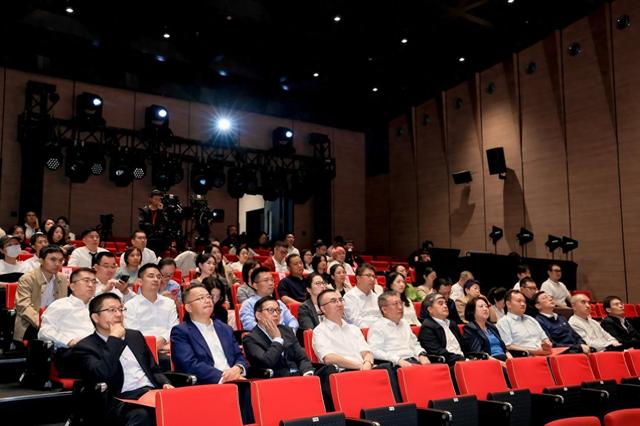
Core Points - The "Reading New Era" event was co-hosted by China News Publishing Media Group, Learning Publishing House, and China Mobile, focusing on theoretical discussions and practical applications in reading and education [1][5] - The event featured the "New Power" presentation team from China Mobile, showcasing their responses to contemporary societal questions and their innovative practices in various fields [3][5] - A donation ceremony for the book "Innovation and Practical Development" was held, with participation from major state-owned enterprises, emphasizing the importance of promoting reading and theoretical exchange [5][8] Group 1 - The "Theoretical Hotspot Face-to-Face" series aims to make abstract theories accessible through practical examples, enhancing political education and theoretical learning [3] - The event included discussions on cultural innovation, urban-rural integration, grassroots governance, and the role of artificial intelligence in development [3][5] - The "Reading New Era" essay competition was launched to encourage theoretical exchange and promote understanding of China's development path [5] Group 2 - The event was broadcasted through various video platforms, expanding its reach and engagement with a wider audience [7] - Attendees visited the new content production exhibition hall of China Mobile's Migu Company, highlighting advancements in cultural and technological integration [8]


全国“一盘棋”凝聚发展合力
Jing Ji Ri Bao· 2025-09-29 22:16
Core Viewpoint - The article emphasizes the importance of high-quality development in China, addressing issues of imbalance and insufficiency in development, and outlines the strategic direction set by the government for the "14th Five-Year Plan" [1] Group 1: Regional Development - Significant progress has been made in regional coordination, with major cities like Shanghai, Hefei, Hangzhou, and Suzhou enhancing cross-regional collaboration in technology and industry [4] - The Beijing-Tianjin-Hebei, Yangtze River Delta, and Guangdong-Hong Kong-Macau Greater Bay Area are becoming key drivers of high-quality national development, projected to account for over 40% of the national economy by 2024 [5] - The integration of industries and resources across regions is increasing, with 40% of energy in eastern regions sourced from western areas through major energy transmission projects [6] Group 2: Infrastructure and Public Services - The construction of strategic transportation networks is accelerating, connecting over 80% of county-level administrative regions and serving approximately 90% of the national economy and population [7] - By the end of 2024, rural road mileage is expected to reach 4.64 million kilometers, achieving nearly universal access to paved roads in villages [11] Group 3: Urban-Rural Integration - The integration of urban and rural areas is progressing, with a focus on breaking down the dual structure and facilitating smoother flow of resources and people [10] - The income gap between urban and rural residents is narrowing, with the income ratio decreasing from 2.56:1 in 2020 to 2.34:1 by 2024 [12] Group 4: Cultural Development - The demand for cultural and spiritual enrichment is rising alongside material wealth, with a record 304 million visitors to museums this year [14] - China's economic strength has significantly increased, with GDP projected to reach around 140 trillion yuan this year, maintaining its status as a global leader in various sectors [15]
盛秋平副部长出席“交流互促 携手扩消”县域商业创新发展交流活动
Shang Wu Bu Wang Zhan· 2025-09-28 06:47
Core Viewpoint - The event aims to promote the development of county-level commercial systems and enhance the integration of digital technology with the county economy, supporting urban-rural integration and rural revitalization [1] Group 1: Event Overview - The county commercial innovation development exchange event was held in Hangzhou, Zhejiang on September 24, attended by officials including the Deputy Minister of Commerce and the Vice Governor of Zhejiang [1] - This event is the first activity of the Fourth Global Digital Trade Expo, themed "Exchange and Mutual Promotion, Hand in Hand to Expand Consumption" [1] Group 2: Government Initiatives - The Ministry of Commerce has been implementing the decisions of the Central Committee and the State Council to deepen the construction of county commercial systems [1] - Efforts include upgrading circulation facilities, optimizing the supply of goods and services, and improving logistics distribution systems to facilitate urban-rural circulation [1] Group 3: Achievements and Future Plans - As of now, county commercial outlets have achieved full coverage in areas with suitable conditions [1] - The event released the "County Commercial Development Report in the Digital Economy Era (2025)" and announced typical cases of "Leading Counties" in county commerce for 2025 [1] - Participation included representatives from local commerce departments, experts, and professional institutions [1]
事关千万县中学子:县域居民注意了,你家孩子上高中迎来新机会
Jing Ji Guan Cha Wang· 2025-09-26 05:06
Core Viewpoint - The "County High School Revitalization Action Plan" aims to enhance the quality and accessibility of high school education in rural areas, addressing the educational disparities between urban and rural regions [1][2][7]. Summary by Sections Overall Requirements - By 2030, the plan seeks to improve the supply mechanism of high school education resources to accommodate the growing school-age population, ensuring sufficient enrollment opportunities for junior high school graduates [2][5]. - The initiative emphasizes the need for better teacher qualifications and a shift away from exam-oriented education towards a more holistic evaluation system [2][6]. Educational Resource Expansion - Establish a predictive mechanism for school-age population and enrollment needs, utilizing data from various departments to accurately assess and plan educational infrastructure [3]. - Optimize existing high school capacities by adjusting class sizes and improving facilities to meet the needs of the changing student population [3][4]. - New high schools will be constructed in areas with high population influx and weak educational foundations, with a focus on safety and resource efficiency [4]. Reform of Educational Management - The plan encourages a reform in the management system, promoting collaboration between city and county levels to enhance resource allocation and educational equity [5]. - Pilot programs for comprehensive high schools will be initiated, focusing on diverse educational pathways that include vocational training [5][6]. - A multi-faceted admission reform will be implemented to ensure fair access to education, moving away from a purely score-based system [5][6]. Significance of the Reform - The reform is seen as a critical step towards achieving educational equity and high-quality development, addressing issues such as resource scarcity and the outflow of quality students from rural areas [7]. - By improving county high school education, the plan aims to foster local talent and stimulate economic development in rural regions, aligning with broader national modernization goals [7].