
稳定币

Search documents
粤开市场日报-20251216
Yuekai Securities· 2025-12-16 07:44
Market Overview - The A-share market experienced a general decline today, with the Shanghai Composite Index falling by 1.11% to close at 3824.81 points, the Shenzhen Component Index down by 1.51% at 12914.67 points, and the ChiNext Index decreasing by 2.10% to 3071.76 points [1] - The total trading volume in the Shanghai and Shenzhen markets was 172.42 billion yuan, a decrease of 49.3 billion yuan compared to the previous trading day [1] Industry Performance - Among the Shenwan first-level industries, only the retail, beauty care, and social services sectors saw gains, with increases of 1.32%, 0.66%, and 0.13% respectively [1] - The telecommunications, non-ferrous metals, comprehensive, power equipment, media, and machinery equipment sectors experienced significant declines, with losses of 2.95%, 2.81%, 2.81%, 2.66%, 2.41%, and 2.24% respectively [1] Concept Sector Performance - The leading concept sectors in terms of gains today included stablecoins, cryptocurrencies, duty-free shops, vehicle-road cloud, intelligent driving, intelligent transportation, cross-border payments, selected food processing, vehicle networking, selected air transport, selected animal health, initial economy, financial technology, tax digitalization, and outbound tax refunds [2] - Conversely, sectors such as cross-strait integration, cultivated diamonds, photovoltaic glass, photolithography factories, solar thermal power, and Moore threads experienced pullbacks [2]
豪掷11亿欧元抄底尤文图斯,币圈大佬的体育图谋
Sou Hu Cai Jing· 2025-12-15 11:19
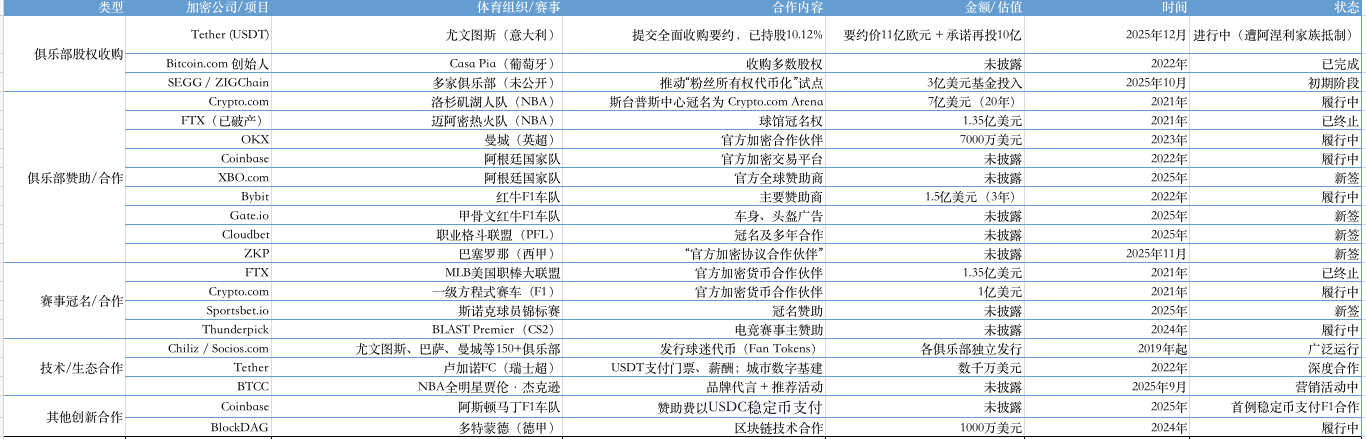
近日,一则"稳定币巨头 Tether,向意大利证券交易所递交了一份收购要约,准备收购意大利著名足球俱乐部尤文图斯"的消息刷爆币圈与体育圈,一个是稳 定币巨头,一个是老牌足球俱乐部,这二者的结合属实让看官们摸不着头脑,这两个八竿子打不着的行业怎么会擦出火花?这纯粹出于老板的喜好,还是 Thther有什么战略布局呢? 大手笔收购仅为老板情怀? Tether对尤文图斯的兴趣要更早一些,据报道,其在2025年2月就已经悄悄在二级市场建仓,目前持有该俱乐部11.5%的股份,此次,Tether公司提出,愿以 每股2.66欧元的价格,全现金收购Exor持有的尤文图斯65.4%的股份。该报价对这家意大利俱乐部的总估值达到11亿欧元。 Tether的公告还强调,如果交易顺利完成,收购方将承诺再向俱乐部投入10亿欧元,"用于加强一线队实力,并支持俱乐部的发展与成长"。同时也明确指 出,该要约"如果Exor未能在2025年12月22日18点之前提交书面接受函,将自动失效"。 不过很快,Exor 董事会一致拒绝了 Tether 提出的现金收购要约,明确表示"无意向任何第三方出售尤文图斯股份",包括 Tether。 尤文图斯足球俱乐部 ...

监管严打炒币后,一资金盘爆雷
第一财经· 2025-12-15 10:50
Core Viewpoint - The article discusses the recent collapse of a cryptocurrency trading platform named "Yuzhi Financial," highlighting the risks associated with virtual currency investments and the illegal activities that have emerged in this sector [3][19]. Group 1: Company Overview - Yuzhi Financial was established on September 3, 2024, claiming to operate in Hong Kong and was listed on the Hong Kong Equity Trading Display Center with stock code HK31919 [4]. - The platform falsely claimed to have developed a 6G Hongmeng system in collaboration with Huawei, asserting a 99.99% reliability in its trading signals [4]. - Yuzhi Financial utilized the HSEX app for trading, charging a 10% withdrawal fee, which was increased to 30% just before the platform's collapse [4][6]. Group 2: Regulatory Actions and Warnings - The HSEX exchange issued a notice regarding Yuzhi Financial's suspicious activities, including potential wash trading and market manipulation, leading to regulatory measures requiring a 20% deposit of total assets as a "self-certification margin" [5][6]. - The Hong Kong Stock Exchange had previously flagged Yuzhi Financial as a suspicious website and clarified that it had no affiliation with HSEX [10]. - Local authorities in various regions, including Guangdong, issued warnings about Yuzhi Financial's illegal financial activities, emphasizing that it lacked the necessary regulatory licenses [19][22]. Group 3: Investment Scheme and Risks - Yuzhi Financial employed a multi-level marketing strategy, offering incentives for users to recruit new investors, which is characteristic of Ponzi schemes [13][16]. - The platform advertised unrealistic returns, with claims of a 370.6% monthly growth rate for dynamic investments, which raised red flags about its legitimacy [12][16]. - Users reported that initial small investments yielded quick returns, which encouraged them to invest larger amounts, ultimately leading to significant losses when the platform collapsed [13][18]. Group 4: Industry Context - The article places Yuzhi Financial's collapse within the broader context of increasing illegal activities related to virtual currencies, including fraud and money laundering, particularly following the rise of stablecoins [21][23]. - Regulatory bodies, including the People's Bank of China, have intensified efforts to combat illegal cryptocurrency trading and related financial crimes, marking a significant shift in the regulatory landscape [20][23].

协鑫能科:公司目前未开展稳定币相关业务
Ge Long Hui· 2025-12-15 07:53
Group 1 - The company, GCL-Poly Energy Holdings Limited (协鑫能科), has stated that it is currently not engaged in any stablecoin-related business [1]

——2025年贵金属市场回顾与2026年展望:贵金属:金银岂是池中物一遇风云便化龙
Fang Zheng Zhong Qi Qi Huo· 2025-12-15 05:18
1. Report Industry Investment Rating The report does not mention the industry investment rating. 2. Core Viewpoints of the Report - In 2025, the precious metals market shone brightly. Gold and silver were the best - performing assets among global major asset classes, with silver doubling in value and gold rising over 60%, the best annual performance since 1979. The underlying logic driving this bull market was the global shake of faith in the US dollar system, the decline of the real interest rate's explanatory power for precious metal prices, and the weakening independence of the Federal Reserve. Precious metals were re - defined from traditional safe - haven assets to inflation - resistant and risk assets [2][167]. - In 2026, the bull market in the precious metals market is expected to continue. The factors driving the 2025 rise may be strengthened. The Fed chair change, potential interest rate cuts, and increased US debt issuance may further undermine the US dollar's credit. Global central banks are likely to maintain strong gold - buying intentions, and investment demand for precious metals is expected to be further released. Silver may have a larger price increase than gold, and the gold - silver ratio may further decline [3][4][168]. 3. Summary by Relevant Sections I. Review of Long - term and 2025 Trends of Precious Metals - **Long - term historical trends**: Since the Bretton Woods system in 1944, the gold price has experienced multiple bull - bear cycles. After the system collapsed in the 1970s, the gold price became market - oriented. From 1972 - 2023, it can be divided into five stages: the 1973 - 1980 bull market, the 1980 - 2000 bear market, the 2000 - 2011 bull market, the 2011 - 2018 bear market, and the 2019 - present bull market [12][13][14]. - **2025 trends**: Gold had two main upward waves in 2025, reaching a high of nearly $4400 per ounce. Silver's performance was even more remarkable, with a cumulative increase of over 80%. The gold - silver ratio declined from a high level [19][20][21]. II. Decline of the Explanatory Power of US Treasury Real Interest Rates for Precious Metal Prices Since 2023, US Treasury real interest rates have shown a positive correlation with gold prices. In 2025, their explanatory power for gold prices further weakened. The US debt, deficit, and damaged US dollar credit are becoming the new pricing anchors for gold, and the pricing logic has shifted from the financial to the monetary attribute [27][28]. III. The Underlying Logic of the Current Precious Metals Bull Market is Global De - dollarization - **The US dollar returning to its intrinsic value**: In 2025, the US dollar index declined by over 10%. The "Sea Lake Manor Agreement" aims to address the US trade deficit and manufacturing hollowing - out, which may lead to a long - term decline in the US dollar index [32][33]. - **Shaken faith in the US dollar**: In 2025, the US dollar and US Treasuries lost their safe - haven properties and began to show risk - asset characteristics. Gold and silver's safe - haven properties were highlighted [38][39]. - **Loosening of global capital's focus on US dollar assets**: In 2025, global capital reduced its allocation of US dollar assets and increased non - US assets. Precious metals benefited from this capital flow. In 2026, the attractiveness of US dollar assets may increase, but precious metals still have investment value [42][43][46]. - **Inability of stablecoins and the "Pennsylvania Plan" to fundamentally strengthen US dollar and US Treasury credit**: Stablecoins can temporarily increase US Treasury demand, but in the long run, they may accelerate the collapse of the US dollar credit system. The "Pennsylvania Plan" has not achieved the expected results in stabilizing the long - term US Treasury demand [49][53][57]. - **The US dollar index entering a new medium - to - long - term downward channel**: Historically, the US dollar index has a cycle of about 17 years, with 6 - 7 years of rising and 10 years of falling. Currently, it is at the beginning of a new downward cycle, which is favorable for the rise of precious metal prices [60][61][62]. IV. The Monetary Attributes of Precious Metals Shine Global high debt and shaken faith in the US dollar have made gold and silver the ultimate choice to hedge against the risk of the credit - currency system. In 2025, global major economies' long - term bond yields rose, and the US and French sovereign ratings were downgraded. The US Treasury debt scale expanded rapidly, and global central banks increased their gold holdings. The Fed's independence was severely challenged, which was conducive to the rise of precious metal prices [70][71][75]. V. Redefinition of Precious Metals - **Transition from safe - haven to inflation - resistant and risk assets**: Gold and silver are being re - defined from traditional safe - haven assets to inflation - resistant and risk assets. In 2026, with the Fed's potential interest rate cuts and balance - sheet expansion, global inflation may rise again, increasing the attractiveness of precious metals [90][91]. - **Highlighted value as a major asset allocation**: Gold and silver have both risk - asset attributes. Their volatility is similar to that of the S&P 500, and their positive correlation with the US stock market is increasing. They are becoming an important part of global major asset allocation [94]. VI. Changes in the Supply - Demand Structure of Precious Metals - **Global central banks' gold - buying**: In 2025, the global central banks' gold - buying pace slowed down in the first half of the year but accelerated in the third quarter. It is expected that in 2026, central banks' gold - buying intentions will remain strong due to the potential weakening of the US dollar credit [96][99][101]. - **Global physical gold supply and demand**: In 2025, gold investment demand soared, compensating for the decline in central banks' gold - buying. Although the supply was slightly in surplus in the first three quarters, the supply - demand pattern tightened compared to 2024. In 2026, the physical gold market may face a supply shortage [106][110][111]. - **Global physical silver supply and demand**: In recent years, silver supply has been constrained. In 2025, supply is expected to increase by about 2%. In 2026, the supply growth rate may be about 1.5%. Demand in 2025 is expected to decline by 1%, but in 2026, it may increase by 2%. The silver market has had a supply shortage for five consecutive years, and the shortage may widen in 2026 [112][121][127]. VII. Technical and Seasonal Analysis - **Technical analysis**: Gold's upward space has been fully opened. Based on historical bull - market performance, it still has room for growth. Silver usually lags behind gold in entering the bull market but has a larger cumulative increase. Technically, it supports a significant increase in silver prices [144][146]. - **Seasonal analysis**: For gold, December has the highest winning rate, and November - January is the strong - season period. For silver, January and June have a higher probability of decline, while March and October have a higher probability of increase [149]. VIII. Position Changes In 2025, the inventories of COMEX gold and silver increased. The non - commercial net long positions in the futures market decreased, but the spot - market sentiment was stronger, as shown by the increase in ETF holdings [157]. IX. Arbitrage Strategy The gold - silver ratio reflects the premium of gold over silver in terms of safe - haven demand. In 2025, the gold - silver ratio declined. In 2026, with the rise of inflation expectations and copper prices, the gold - silver ratio is expected to further decline to around 60 [162][163]. X. Full - text Summary and Operational Suggestions The bull market in the precious metals market in 2026 is expected to continue. The upper pressure range for London gold is $5000 - $5200 per ounce, and the lower support range is $4100 - $4300 per ounce. For Shanghai gold futures, the pressure range is 1200 - 1250 yuan per gram, and the support range is 920 - 940 yuan per gram. The upper pressure range for London silver is $90 - $95 per ounce, and the lower support range is $55 - $60 per ounce. For Shanghai silver futures, the pressure range is 19000 - 20000 yuan per kilogram, and the support range is 13000 - 13500 yuan per kilogram [168]. XI. Related Stocks The report lists the cumulative price increases of some precious - metal - related stocks in 2025, such as Shandong Gold (600547.SH) with a 59.05% increase and Western Gold (601069.SH) with a 129.82% increase [170].
YouTube开放稳定币收款,加密货币支付正在全球普及?
Sou Hu Cai Jing· 2025-12-14 17:42
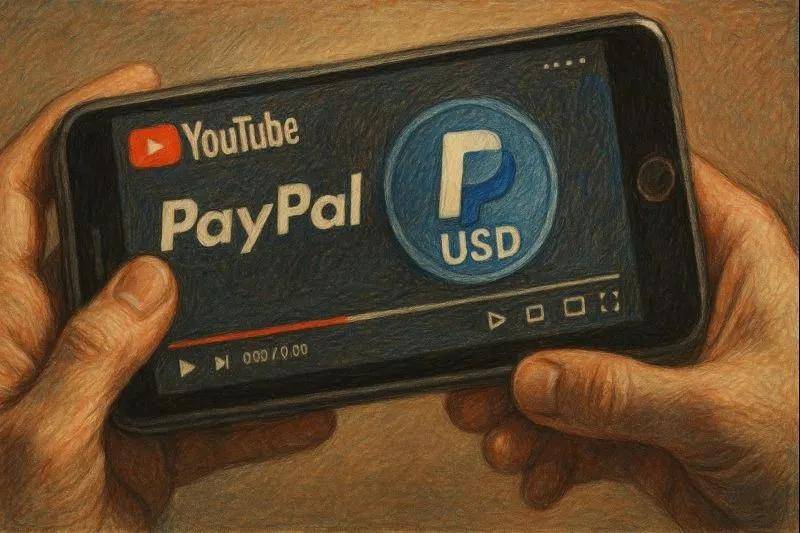
Core Viewpoint - YouTube's decision to allow content creators in the U.S. to receive payments in PayPal's stablecoin PYUSD marks a significant shift in the tech industry's approach to cryptocurrency payments, suggesting the potential onset of a mainstream adoption era for cryptocurrency payments [1][11]. Group 1: YouTube and PayPal Collaboration - YouTube's integration of PYUSD is characterized by a "clean layered" or "hands-off" model, where YouTube issues traditional dollar payment instructions to PayPal, which then converts these to PYUSD and distributes them to creators' digital wallets [3]. - This structure allows YouTube to avoid direct exposure to cryptocurrency assets, outsourcing the complexities and risks associated with cryptocurrency to PayPal, thus providing a low-risk entry point for large corporations [3]. Group 2: Regulatory Environment - The launch of this payment option coincides with the U.S. regulatory landscape becoming clearer, particularly following the signing of the GENIUS Act, which provides a federal regulatory framework for stablecoins, legitimizing them as payment tools [4]. - The clarity in regulation has accelerated the adoption of stablecoins among tech giants, reflecting a shift in corporate attitudes towards stablecoins as a viable payment option [4]. Group 3: Global Financial Landscape - The collaboration between YouTube and PayPal represents a microcosm of the broader competition for the next generation of global payment infrastructure, with stablecoins being positioned as a new financial foundation [7]. - PayPal has been proactive in this space, launching its own stablecoin PYUSD and integrating it into its ecosystem, while competitors like Stripe and Cash App are also making significant moves to establish their own blockchain-based payment networks [7]. Group 4: Implications for the Industry - The increasing adoption of stablecoins across various sectors indicates a shift in payment dynamics, with the creator economy emerging as a key battleground for tech giants [8]. - The International Monetary Fund (IMF) acknowledges the potential of stablecoins to enhance cross-border payments and promote financial inclusion, while also warning of associated risks such as de-pegging and regulatory fragmentation [8][9]. Group 5: Future Outlook - YouTube's introduction of PYUSD payments is seen as a cautious yet significant step towards embracing new technology while mitigating direct risks, potentially leading to a ripple effect in the industry [11]. - The path to global adoption of cryptocurrency payments is fraught with challenges, particularly due to varying regulatory frameworks across countries, which could lead to new financial barriers if not addressed [11].

定调啦!如何一口气真正搞懂稳定币?
Sou Hu Cai Jing· 2025-12-13 17:14
Group 1 - The central bank has classified stablecoins as virtual currencies and emphasized that activities related to virtual currencies are illegal financial activities [1][98] - Stablecoins are designed to maintain price stability and are a type of cryptocurrency that utilizes blockchain technology [10][14] - The issuance of stablecoins typically involves backing them with fiat currency, such as the US dollar, to maintain a 1:1 exchange relationship [71][75] Group 2 - Stablecoins can enhance transaction efficiency by enabling peer-to-peer transactions without the need for banks or third-party platforms, but this efficiency comes at the cost of overall financial system security [62][64] - The reliance on stablecoins can create systemic risks, particularly if the issuing institutions do not maintain sufficient reserves to meet redemption demands, leading to liquidity issues [89][91] - The International Bank for Settlements has warned that stablecoins may not be a reliable form of currency without proper regulation, posing risks to financial stability and monetary sovereignty [95]
OSL集团发布美元稳定币USDGO,强化全球合规支付网络
Zhi Tong Cai Jing· 2025-12-13 12:00
Core Viewpoint - USDGO is a new USD-pegged stablecoin aimed at enhancing cross-border payments and settlements for e-commerce, gaming, and trade sectors, while also serving as a reliable medium for investors to manage digital assets through OSL's global trading and payment platform [1][2] Group 1: Product Overview - USDGO is set to launch in Q1 2026 and will be fully regulated, backed 1:1 by USD, and subject to rigorous third-party audits [1][3] - The stablecoin will adhere to the highest standards of anti-money laundering (AML) and know your customer (KYC) requirements [1] - Anchorage Digital Bank will issue USDGO, bringing U.S. banking-level regulatory oversight to a global stablecoin [2] Group 2: Strategic Importance - USDGO represents OSL Group's commitment to upgrading its payment segment and establishing a secure operational environment [1] - The stablecoin aims to lower transaction costs, improve capital management, and optimize liquidity, acting as a bridge between fiat and digital worlds [1] - OSL Group is enhancing its global compliance payment network with the introduction of USDGO, which is a cornerstone of its global payment infrastructure [4] Group 3: Technical Aspects - USDGO will adopt a multi-chain strategy to maximize accessibility and interoperability across major blockchain ecosystems [2] - Solana will be the first public blockchain to deploy USDGO, with plans to expand to additional chains in the future [2]
支付宝向外生长
Hua Er Jie Jian Wen· 2025-12-12 10:04
Core Insights - Ant Group's international business, particularly Alipay+, is rapidly expanding its global footprint, facilitating cross-border payments and enhancing the ease of doing business for users and merchants worldwide [2][10] - The upcoming peak travel season, driven by favorable policies for Chinese tourists, is expected to boost cross-border travel and payment activities significantly [3][4] Group 1: Alipay+ Expansion - Alipay+ has integrated with 40 e-wallets across 11 countries in the Asia-Pacific region, establishing a strong presence in over 100 global markets [13] - In South Korea, Alipay+ has connected with 21 e-wallets and bank apps, covering nearly 90% of popular tourist locations, enhancing the payment experience for Chinese tourists [3][4] - The platform has seen a 15% year-on-year increase in transaction volume from Chinese users in South Korea [4] Group 2: Market Performance - The number of transactions made by Chinese tourists in South Korea has increased by over 30% year-on-year, driven by the convenience of Alipay+ [5] - In the Myeongdong Night Market, transactions through Alipay+ surged by nearly 626% year-on-year, indicating a strong demand for mobile payments among overseas tourists [6] - Alipay+ aims for a 20% growth in payment volume in South Korea next year, capitalizing on the popularity of K-pop and K-beauty trends [7] Group 3: Strategic Developments - Ant Group's restructuring into four independent business units has positioned Ant International as a key player in the cross-border payment market, with a processing volume exceeding $1 trillion last year [10] - The company generated nearly $3 billion in revenue last year, achieving adjusted profitability for two consecutive years [10] - Ant International is leveraging AI and blockchain technologies to enhance its payment solutions, aiming to reduce cross-border transaction costs by 12.5% by 2030 [13][14]

TerraUSD史诗级骗局 创办人权渡衡被判刑15年
Ge Long Hui· 2025-12-12 06:58
Group 1 - Terraform Labs and its co-founder Do Kwon were sentenced to 15 years in prison for fraud related to the collapse of TerraUSD and Luna, which resulted in a loss of $40 billion [1] - The judge described the case as "epic, generational fraud," noting that few cases in federal prosecution history have caused such severe financial damage [1] - Kwon admitted to conspiracy to commit fraud and wire fraud in court [1] Group 2 - The prosecution highlighted that Kwon exaggerated the automatic recovery capabilities of UST and falsely claimed integration with the Korean payment platform Chai, which was not the case [2] - The Anchor Protocol, which promised returns as high as 20%, was deemed to rely on subsidies and was classified by the court as a Ponzi scheme [2] - Kwon had previously fled to Singapore and was arrested in Montenegro while using a fake passport, later being extradited to the United States [2]