中国特色现代企业制度

Search documents
中央经济工作会议最新部署,明确未来五年国企改革方向
Hua Xia Shi Bao· 2025-12-13 09:18
Core Viewpoint - The concentration of state-owned capital in industries crucial to national security and the economy is becoming a key direction for the new round of state-owned enterprise (SOE) reform in China, as highlighted in the Central Economic Work Conference held on December 10-11, which emphasizes the need for further reform plans [1][2]. Group 1: State-Owned Enterprises and Economic Impact - The total assets of state-owned enterprises (excluding financial enterprises) in China have increased from 89.5 trillion yuan in 2012 to 401.7 trillion yuan by the end of 2024, indicating a significant growth trajectory [1]. - In 2024, the operating revenue of state-owned enterprises (excluding financial enterprises) is projected to reach 84.7 trillion yuan, with total profits of 4.35 trillion yuan and tax contributions of 5.88 trillion yuan, all of which have doubled since 2012 [1]. Group 2: Functional Reform and Strategic Focus - The focus of the new round of SOE reform will be on functional reform, aiming to enhance core functions and competitiveness while optimizing the layout and structure of state-owned capital [2][4]. - The reform will involve improving the evaluation system for state-owned enterprises, promoting them as sources of original technology, and enhancing their support roles in critical areas such as national defense, energy resources, and food supply [4]. Group 3: Integration and Optimization - Professional integration has become a key approach for optimizing the layout of state-owned enterprises, with over a thousand projects initiated this year to promote resource concentration towards leading enterprises through asset restructuring and cooperation [4]. - The establishment of the China Salt Lake Industry Group aims to integrate domestic and international potassium and lithium resources, creating a significant player in the salt lake industry [4]. Group 4: Modern Enterprise System - The improvement of the modern enterprise system with Chinese characteristics is a crucial part of the socialist system, with recent policies emphasizing the need for better governance and management efficiency in state-owned enterprises [6][7]. - The government is encouraged to enhance the service system while enterprises focus on internal improvements to adapt to market competition and transformation [6]. Group 5: Governance and Leadership - The principle of maintaining the Party's comprehensive leadership over state-owned enterprises is emphasized, with calls for improved governance structures and management innovation to support high-quality development [7]. - Local governments, such as Shanxi Province, are implementing measures to enhance the governance of state-owned enterprises, including personalized assessments based on industry characteristics [7].


以文兴业,激活企业高质量发展新动能
Xin Hua Ri Bao· 2025-12-10 21:48
□ 孙丽娟王国莲 中华优秀传统文化作为中华民族的文化根脉,为企业高质量发展筑牢思想基础、注入精神动力。企业应 从制度建设、文化建设、人才建设三个维度入手,积极主动探索中华优秀传统文化赋能路径,在以文化 人、以文育人中实现高质量发展。 人才建设:中华优秀传统文化与职业素养的结合 制度建设:中华优秀传统文化与企业治理的融合 中华优秀传统文化蕴含独特育人价值,强调克己复礼的道德自律、知行合一的实践准则,与现代企业对 人才德才兼备、素养全面的需求高度一致。企业人才建设与传统文化的结合,既能筑牢人才道德根基, 又能提升人才专业能力与创新思维。在领导力培养方面,融入"修身齐家治国平天下"的价值导向,培养 中高层管理者道德情操和责任担当,以规章制度"硬监督"和荣誉表彰"软激励",引导其以身作则,发挥 模范带头作用。在青年员工培养上,开展红色基因、清廉风尚、工匠精神等主题培训讲座,帮助其树立 正确价值观和职业观。同时,在企业内部建立师徒传承制度,增设道德考核维度,将徒弟道德评议与岗 位晋升挂钩,确保技能、匠心接续传承。 2024年9月,中共中央办公厅、国务院办公厅《关于完善中国特色现代企业制度的意见》提出,要"鼓励 企业将诚 ...
沧州大化股份有限公司第九届董事会第十二次会议决议公告
Shang Hai Zheng Quan Bao· 2025-12-10 18:29
Meeting Overview - The 12th meeting of the 9th Board of Directors of Cangzhou Dahua Co., Ltd. was held on December 9, 2025, with all 6 directors present, including participation via communication methods [2][3] Resolutions Passed - The meeting approved the adjustment of the Nomination Committee members with 6 votes in favor, 0 against, and 0 abstentions, electing Mr. Ban Hongsheng as the employee representative director and adjusting him to the Nomination Committee [4] - The meeting approved the revision of the "Cangzhou Dahua Co., Ltd. Salary Management Measures" with 6 votes in favor, aimed at establishing a normal salary growth mechanism linked to labor productivity [4] - The meeting approved the revision of the "Cangzhou Dahua Management Team Member Selection Management Measures" with 6 votes in favor, focusing on enhancing the quality and capability of the management team [5] - The meeting approved the revision of the "Cangzhou Dahua Management Team Member Performance Evaluation Management Measures" with 6 votes in favor, to ensure a scientific and orderly evaluation process [5] - The meeting approved the revision of the "Cangzhou Dahua Management Team Salary Management Measures" with 6 votes in favor, aimed at creating a differentiated salary system linked to operational performance [7]

省工商联赴宁德开展工商联执委企业建立完善中国特色现代企业制度调研
Xin Lang Cai Jing· 2025-12-08 12:28
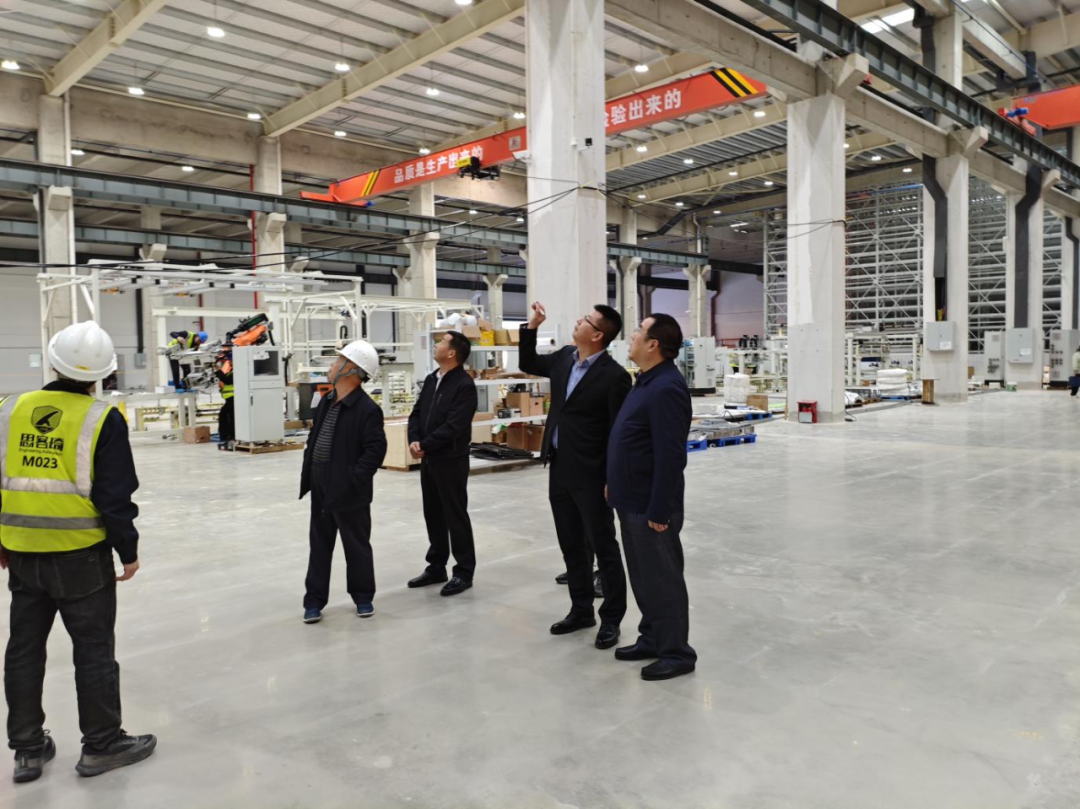
(来源:福建省工商联) 调研组充分肯定宁德市工商联在推动民营企业现代化治理,加强法治民企建设所做的工作,并强调,民营企业建立完善中国特色现代企业制度是大势所 趋,工商联执委企业要先行先试,在坚持党建引领、完善治理结构、加强合规建设、做好企业代际传承以及履行社会责任等方面当先锋做表率,努力形成 可复制、可推广的"福建样板",引领带动更多福建民营企业走上高质量发展轨道。 为深入学习贯彻党的二十届四中全会精神和习近平总书记在民营企业座谈会上的重要讲话精神,进一步推动工商联执委企业建立完善中国特色现代企业制 度试点工作,12月4日至5日,省工商联党组成员、副主席陈飚带队赴宁德市开展相关调研。 调研期间,宁德市委统战部副部长、市工商联党组书记钟灵灵,市工商联党组成员、副主席陈忠及相关同志参加座谈会。 (来源:福建省工商联) 调研组先到省工商联执委企业宁德思客琦智能装备有限公司开展实地调研,与企业负责人和党务、法务、财务负责人员进行深入交流。之后,围绕《工商 联执委企业建立完善中国特色现代企业制度指引(试行)》召开座谈会,福建宏旺实业、禾来科技、三都澳食品、闽威实业、德京集团等5家纳入首批试 点企业的负责人,结合企业治理 ...
学习贯彻党的二十届四中全会精神·五年路上你我他——四中全会精神大家谈丨一单“帮送”跑出经济加速度
He Nan Ri Bao· 2025-12-03 23:47
Core Insights - The article emphasizes the importance of invigorating various business entities as a key indicator of high-quality economic development, aligning with national and provincial policies aimed at enhancing the vitality of the private economy [2][5]. Group 1: Business Environment and Policy - Over the past five years, there has been a continuous improvement in the policy framework supporting the development of the private economy, with the "14th Five-Year Plan" highlighting legal protections for private enterprises [5]. - The financing environment remains a challenge for companies like UU Run, which faces regional disparities compared to first-tier cities, necessitating a focus on refined and specialized development paths [5]. - The government has implemented a series of policies and measures to promote high-quality development in the private sector, encapsulated in a framework referred to as "four beams and eight pillars" [9]. Group 2: Corporate Governance and Management - Establishing a modern enterprise system is crucial for private companies to effectively respond to challenges and seize opportunities, with five key areas identified for improvement: organizational structure, cost management, talent mechanisms, technology decision-making, and social responsibility [6][7]. - UU Run has adopted an innovative mechanism encouraging employee participation in idea generation and project development, which has led to the creation of new operational systems and integration of AI into daily tasks [7]. Group 3: Employee Development and Experience - The introduction of the "Universal Helper" service by UU Run has diversified career development paths for employees, enhancing their income sources and work experiences [8]. - Employees report feeling secure and valued due to the company's support systems, including insurance and transparent income reporting, which fosters a sense of trust and commitment to the platform [8]. Group 4: Digital Economy and Innovation - The digital economy is recognized as a critical force in restructuring resource allocation and economic frameworks, with local companies like UU Run playing a significant role in connecting users and laborers [10]. - The integration of technology and industry innovation is essential for driving economic growth, with a focus on creating an open and collaborative ecosystem to align technological advancements with market needs [10].

充分激发各类经营主体活力
Ren Min Ri Bao· 2025-12-01 02:28
Group 1: Core Views - The core viewpoint emphasizes the importance of invigorating various business entities to enhance high-quality economic development in China, as outlined in the 20th Central Committee's Fourth Plenary Session [1] Group 2: State-Owned Enterprises (SOEs) - The state-owned enterprises (SOEs) are deemed essential for the material and political foundation of socialism with Chinese characteristics, necessitating their strengthening and optimization to enhance competitiveness and innovation [2] - Reforming state-owned assets and enterprises is crucial to eliminate barriers to high-quality development, improve internal management, and enhance market-oriented operations [3] Group 3: Optimization and Structural Adjustment of State-Owned Economy - The focus is on optimizing the layout and structure of state-owned capital, directing investments towards strategic sectors and public services, and promoting the development of the real economy [4] - Emphasis on strategic and professional restructuring to enhance efficiency and avoid redundant construction and disorderly competition [4] Group 4: Enhancing Core Competencies of SOEs - SOEs are encouraged to leverage market forces to fulfill national strategic missions, with a focus on enhancing core functions and competitiveness [5] - Establishing a comprehensive evaluation system for SOEs to align their development with national strategic goals [5] Group 5: Support for Non-Public Economy - The non-public economy, particularly private enterprises, plays a significant role in China's economic development, contributing over 90% of enterprises and 80% of urban employment [6][7] - Continuous optimization of the business environment for private enterprises is essential, including legal protections and fair competition [8] Group 6: Support for SMEs and Individual Businesses - Small and medium-sized enterprises (SMEs) and individual businesses are vital for innovation and employment, necessitating enhanced support and services [9] - Encouragement for collaboration between large enterprises and SMEs to strengthen supply chains and promote innovation [9] Group 7: Protection of Property Rights - The protection of property rights for both public and non-public economies is emphasized, with a focus on establishing a robust legal framework to support the development of the private sector [10] Group 8: Building World-Class Enterprises - The development of world-class enterprises is crucial for national economic strength and global competitiveness, requiring a focus on innovation and governance [11] - Enhancing the modern enterprise system and promoting the entrepreneurial spirit are key to achieving this goal [12][13] Group 9: Accelerating the Creation of World-Class Enterprises - Support for leading enterprises to deepen reforms and enhance innovation is essential for gaining international competitive advantages [14]
汇垠德擎基金许长忠:破解民企传承困局需要模式创新
Zhong Guo Zheng Quan Bao· 2025-12-01 00:39
Core Insights - Private enterprises have become a significant force driving high-quality economic development in China, yet many are facing a critical "inheritance test" due to succession challenges [1] - Over 80% of private enterprises in China are family-run, but only 30% successfully pass to the second generation, and the rate drops to 13% for the third generation [1] - More than 50% of private entrepreneurs are aged between 50-60, with over 300 chairpersons of listed companies over 65 years old, leading to a "no successor" dilemma and governance risks [1] Group 1: Current Challenges in Succession - A survey indicates that over 80% of second-generation heirs lack interest in taking over family businesses, and even those willing often face the dilemma of having titles without real power [5] - The current family business succession is hindered by three main issues: lack of willingness, insufficient capability, and systemic exclusion [5] - Cultural conflicts and cognitive gaps between the founding generation and the second generation exacerbate the difficulties in family succession [5][6] Group 2: Governance System Shortcomings - The reliance on professional managers in some enterprises has led to risks of "insider control," resulting in governance chaos [6] - Historical inertia from the grassroots entrepreneurial model has led to family governance becoming mainstream, with control rights and family assets highly intertwined [6] - Many entrepreneurs lack systematic succession planning due to traditional beliefs about discussing posthumous matters [6] Group 3: Recommendations for Improvement - The "14th Five-Year Plan" suggests improving the modern enterprise system with Chinese characteristics and promoting entrepreneurial spirit, which provides a dual solution for succession issues [7] - Modern enterprise systems can break family control through diversified equity structures, professionalized boards, and market-oriented professional managers [7] - The long-term impact of modernizing governance structures can enhance the resilience of private enterprises and avoid strategic interruptions during succession [7] Group 4: International Governance Models - Successful governance models from international companies like Danaher and Thermo Fisher demonstrate the effectiveness of governance structure innovation in breaking away from hereditary succession [9][10] - Danaher’s transition to a global leader in life sciences was facilitated by a governance structure of "holding company + professional management," allowing for stable ownership while enabling operational autonomy [9] - Thermo Fisher's board composition, with a majority of independent directors, helps mitigate "insider control" risks and aligns managerial incentives with long-term performance [10] Group 5: "Foundation + Professional Management" Model - The "foundation + professional management" model establishes a dual governance structure that separates control from management, providing strategic guidance and capital support without interfering in daily operations [11][12] - This model addresses trust issues, professional capability mismatches, and long-term orientation challenges in traditional family business succession [12] - To promote this model, it is essential to cultivate foundations and develop a professional manager market, along with improving institutional guarantees [12][13] Group 6: Broader Economic Implications - The modernization of governance structures in private enterprises is a micro-foundation for China's transition from high-speed growth to high-quality development [14] - Establishing replicable and inheritable institutional systems will enhance the resilience and stability of the Chinese economy, moving from "entrepreneurial-driven" to "system-driven" enterprises [15]

充分激发各类经营主体活力(学习贯彻党的二十届四中全会精神)
Ren Min Ri Bao· 2025-11-30 22:20
Core Points - The article emphasizes the importance of invigorating various business entities to enhance high-quality economic development in China, as outlined in the 20th Central Committee's Fourth Plenary Session [1] Group 1: State-Owned Enterprises (SOEs) - The article stresses the need to consolidate and develop the public ownership economy, focusing on strengthening state-owned enterprises and capital to enhance their competitiveness and innovation capabilities [2] - It highlights the importance of deepening reforms in state-owned enterprises to eliminate barriers to high-quality development and to better stimulate internal motivation and innovation [3] - The article calls for optimizing the layout and structure of state-owned capital, directing investments towards strategic and essential industries, and promoting the development of the real economy [4] Group 2: Enhancing Core Competitiveness - The article discusses the necessity for state-owned enterprises to better utilize market forces to fulfill national strategic missions, emphasizing the need for a robust evaluation system for their performance [5] - It advocates for the establishment of a modern enterprise system with improved governance structures to enhance operational efficiency and responsiveness to market changes [12] Group 3: Private Sector Development - The article underscores the critical role of the private economy in China's economic growth, noting that private enterprises account for over 90% of total enterprises and contribute significantly to employment and tax revenue [6][7] - It emphasizes the need to create a favorable environment for private enterprises, ensuring equal access to resources and fair competition [8] - The article also highlights the importance of supporting small and medium-sized enterprises (SMEs) and individual businesses, which are vital for innovation and employment [9] Group 4: Legal and Regulatory Framework - The article calls for strengthening legal protections for private property rights, ensuring that both public and private economic rights are inviolable [10] - It advocates for the establishment of a legal framework to support the development of the private economy, enhancing the predictability and stability of regulatory policies [10] Group 5: World-Class Enterprises - The article emphasizes the goal of building world-class enterprises that reflect national economic strength and competitiveness, advocating for a collaborative development of various ownership economies [11] - It discusses the need for fostering an entrepreneurial spirit and creating a supportive environment for entrepreneurs to thrive [13] - The article calls for increased investment in research and development to cultivate world-class innovation capabilities and enhance global market integration [14]
汇垠德擎基金许长忠: 破解民企传承困局需要模式创新
Zhong Guo Zheng Quan Bao· 2025-11-30 20:29
Core Insights - The core issue facing private enterprises in China is the challenge of succession, particularly the transition from family-based management to institutional governance, which is crucial for sustainable development [1][3][10] Group 1: Current Challenges in Succession - Over 80% of second-generation leaders in private enterprises lack interest in succession, with many feeling powerless despite holding executive titles [2][3] - The difficulties in succession stem from three main issues: lack of willingness, insufficient capability, and systemic exclusion [2] - Cultural conflicts and cognitive gaps between first-generation founders and second-generation leaders exacerbate the challenges of family business succession [2][3] Group 2: Governance Shortcomings - The reliance on family governance has led to governance weaknesses, including risks associated with "insider control" due to over-dependence on professional managers [3][7] - Historical practices, such as the close binding of family control and business assets, have hindered the establishment of modern governance tools like equity trusts and professional management systems [3][4] Group 3: Institutional Recommendations - The "14th Five-Year Plan" emphasizes the need to improve the modern enterprise system and promote entrepreneurial spirit, which can provide a dual solution to the succession dilemma [4][10] - Modern governance structures should include diversified equity, professional boards, and market-oriented professional managers to break the inertia of family control [4][8] Group 4: International Best Practices - Successful international models, such as Danaher and Thermo Fisher, demonstrate the effectiveness of governance structures that separate control from management, allowing for professional management to thrive [5][6][7] - The "holding company + professional manager" model can address key issues in traditional family business succession, including trust, professional capability, and long-term orientation [8][9] Group 5: Future Implications - The modernization of governance structures in private enterprises is essential for China's economic transition from high-speed growth to high-quality development [10] - Establishing replicable and transferable institutional frameworks will enhance the resilience and stability of the Chinese economy [10]
民企“二代接班”难题待解,“长期资本+专业管理”是金钥匙吗?
Zhong Guo Zheng Quan Bao· 2025-11-28 16:20
Core Viewpoint - Private enterprises have become a crucial force in driving high-quality economic development in China, yet many are facing a significant challenge regarding succession, with only 30% successfully passing to the second generation and a mere 13% to the third generation [1][6]. Group 1: Current Challenges in Succession - Over 50% of private entrepreneurs are aged between 50 and 60, with more than 300 listed company chairpersons over 65 years old, leading to a "no successor" dilemma and governance risks [1][6]. - Research indicates that over 80% of second-generation entrepreneurs lack interest in succession, and even those willing to take over often face the dilemma of having titles without real power [6][7]. - The current family business succession is hindered by three main issues: lack of willingness, insufficient capability, and systemic exclusion [6][7]. Group 2: Governance Shortcomings - The reliance on family governance has led to a lack of modern governance tools, such as equity trusts and professional management systems, which are essential for sustainable development [7][8]. - Historical inertia from the grassroots entrepreneurial model has resulted in a strong binding of family control and assets, complicating succession planning [7][8]. Group 3: Recommendations for Improvement - The "14th Five-Year Plan" suggests improving the modern enterprise system with a focus on enhancing entrepreneurial spirit, which is seen as a dual solution for the succession dilemma [8][17]. - Modern enterprise systems can break the inertia of family control through diversified equity structures and professionalized boards, while the core of entrepreneurial spirit emphasizes innovation and long-term vision [8][17]. Group 4: International Governance Models - Successful international governance models, such as those from Danaher and Thermo Fisher, demonstrate the effectiveness of separating control and management through professional management teams and independent boards [10][11]. - The "financial group + professional manager" model is highlighted as a viable path for Chinese private enterprises to address succession challenges by providing strategic direction and operational autonomy [13][14]. Group 5: Long-term Implications - The modernization of governance structures in private enterprises is essential for transitioning China's economy from high-speed growth to high-quality development, enhancing resilience and stability [17][18].