主动权益投资

Search documents
紫金黄金国际火爆,汇添富与富国赚翻
Jin Tou Wang· 2025-10-13 02:35
Group 1 - The core viewpoint of the news is the successful IPO of Zijin Gold International, which raised nearly HKD 25 billion, making it the second-largest IPO in Hong Kong this year, following CATL [1] - Zijin Gold International's stock price has increased by 82% since its listing, closing at HKD 130.40 last Friday [1] - The IPO attracted significant institutional interest, with 29 institutions participating in cornerstone subscriptions, including GIC, BlackRock, and Schroders [1] Group 2 - Huatai Fund and Fortune Fund, both of which emphasize active equity investment, secured cornerstone subscriptions for Zijin Gold International, reflecting their strong investment culture [2] - The historical performance of Huatai Fund and Fortune Fund includes a notable 41 consecutive quarters of heavy investment in Kweichow Moutai, showcasing their long-term investment strategies [2] - Fortune Fund, one of the "old ten" fund companies, has a balanced ownership structure that supports effective corporate governance and long-term interests of shareholders [2] Group 3 - Fortune Fund has maintained a reputation for compliance and brand integrity since its inception, largely due to the leadership of its first general manager, Li Jianguo [3] - The company has been a pioneer in market-oriented reforms and has consistently ranked at the top of the fund industry in Shanghai [3] - Since 2008, Fortune Fund has implemented a global market-oriented selection process for its management team, enhancing its operational effectiveness [3] Group 4 - Over the past decade, Fortune Fund has strengthened its research and investment team, attracting top talent and respected fund managers [4] - Notable fund managers at Fortune Fund include Zhang Feng, who has achieved an annualized return of 12.64% over 13 years, and Ning Jun, with an annualized return of 14.33% since 2018 [5] - The recruitment of high-caliber fund managers like Fan Yan demonstrates Fortune Fund's ability to attract top talent in the industry [5]

汇添富基金总经理张晖:厚植“选股专家”投研底蕴,书写高质量发展新篇章
Zhong Guo Zheng Quan Bao· 2025-09-25 09:03
Core Viewpoint - The China Securities Regulatory Commission (CSRC) has released an action plan to promote the high-quality development of public funds, emphasizing investor-centric development and enhancing core research capabilities, which aligns with the strategic direction of Huitianfu Fund [1][2] Group 1: Investment Philosophy and Strategy - Huitianfu Fund has consistently focused on active equity investment, achieving significant performance with five funds doubling their returns and 20 funds increasing by over 70% in the past year [1][12] - The company emphasizes a long-term investment philosophy based on in-depth fundamental analysis, aiming for sustainable and stable growth in returns [4][6] Group 2: Research and Development - The action plan calls for strengthening core research capabilities and establishing evaluation metrics for fund companies, which Huitianfu has already implemented through a unique integrated research system [3][4] - Huitianfu has developed a vertical integrated research system that includes industry teams and regular overseas research, enhancing its competitive edge in active equity investment [3][4] Group 3: Team and Culture - The company has focused on team building by nurturing talent and attracting experienced investment managers, fostering a culture of collaboration and knowledge sharing [4][5] - Huitianfu aims to create a diverse investment team while maintaining a stable and effective research environment [4][5] Group 4: Performance and Fee Structure - Huitianfu has responded to the action plan by lowering management and custody fees for active equity funds, aligning its fee structure with performance to enhance investor benefits [7][8] - The company has established a performance evaluation system based on clear product positioning and benchmarks, emphasizing long-term assessments of fund managers [7][8] Group 5: Client-Centric Approach - Huitianfu prioritizes client needs by developing a multi-strategy product system and providing tailored investment solutions, enhancing the overall client experience [9][10] - The company has established specialized service teams for different client segments, ensuring a high level of service and responsiveness to market changes [10][11] Group 6: Future Outlook - With the implementation of the action plan, the public fund industry is expected to play a more significant role in wealth management and economic development, with Huitianfu positioned to contribute to this growth [10][11] - The company aims to uphold its mission of delivering long-term stable returns to investors while adapting to evolving market conditions [11]
汇添富基金总经理张晖:厚植“选股专家”投研底蕴 书写高质量发展新篇章
Zhong Guo Ji Jin Bao· 2025-09-24 23:59
Core Viewpoint - The China Securities Regulatory Commission (CSRC) has released an action plan to promote the high-quality development of public funds, emphasizing investor-centric development and enhancing core research capabilities, which aligns with the strategic direction of Huitianfu Fund [1][2] Group 1: Company Strategy and Development - Huitianfu Fund has a strong reputation for active stock selection and has implemented various reforms that align with the CSRC's action plan, reinforcing the company's strategic determination and confidence in development [1][2] - The company is celebrating its 20th anniversary, and the action plan provides clear guidance for optimizing reform measures and enhancing research and service levels, marking a new chapter in high-quality development [1][2] - In the past year, Huitianfu has seen significant performance in active equity funds, with five funds doubling their performance, the highest increase exceeding 200%, and 20 funds achieving over 70% growth [1][12] Group 2: Research and Investment System - The action plan calls for strengthening core research capabilities and establishing evaluation metrics for fund companies, encouraging continuous investment in human and system resources [3] - Huitianfu has developed a unique vertical integrated research system, conducting in-depth research and forward-looking layouts through regular overseas industry inspections [3][4] - The company emphasizes a collaborative research model that fosters sharing and efficient cooperation among research teams, creating competitive barriers in long-term growth industries [3][4] Group 3: Team Building and Management - Huitianfu has consistently focused on team building, nurturing talent while also attracting stable and high-performing investment managers to create a diversified investment team [4][5] - The company promotes a culture of simplicity, focus, and collaboration, enhancing team stability and research efficiency [4][5] - A data science team has been established to support the investment management process, ensuring comprehensive performance attribution, risk analysis, and investment decision oversight [4][7] Group 4: Client-Centric Approach - Huitianfu emphasizes the alignment of client needs with product positioning and investment strategies, ensuring that investment managers' strengths match client demands [5][6] - The company is committed to a multi-strategy investment system centered around its core fund managers, allowing for precise matching of product configurations to investment capabilities [5][6] - Huitianfu aims to enhance investor satisfaction and experience by providing tailored solutions based on thorough analysis of market conditions and client needs [9][10] Group 5: Fee Structure and Performance Evaluation - The action plan highlights the need for optimizing fund operation models and establishing performance-linked fee structures to better align with investor interests [7] - Huitianfu has proactively reduced management and custody fees for active equity funds and launched investor-benefit funds, focusing on enhancing investor returns [7][8] - A comprehensive evaluation system based on product positioning and performance benchmarks has been established to assess fund managers' abilities to generate excess returns [7][8]
二季度百亿级主动权益基金经理增至84位 新晋选手展现多元投资风格
Huan Qiu Wang· 2025-09-18 03:21
Core Insights - As of the end of Q2 2025, the number of active equity fund managers with assets under management exceeding 10 billion yuan reached 84, an increase of 15 from the end of 2024 [1][3] - This new group of fund managers includes both seasoned professionals with extensive research backgrounds and emerging talents who have rapidly grown during recent strong thematic market trends [3][4] Group Characteristics - Notable companies with multiple fund managers on the list include Huatai-PineBridge, China Universal, and Yongying, indicating strong performance in the industry [3] - Common investment targets among these fund managers include stocks like CATL, Shenghong Technology, and Tencent Holdings, reflecting a focus on high-potential sectors [3] Performance Metrics - The structural rally in the A-share market this year has provided significant performance opportunities for active equity investments [3] - The threshold for the top ten performing fund managers who achieved over 10 billion yuan in assets this year was a return of 35.05%, with Zhang Wei from Huatai-PineBridge leading at 75.67% [3][4] Growth in Assets - The top ten new billion-yuan fund managers saw a net growth in assets of at least 3.102 billion yuan, with Zhang Lu and Gao Nan from Yongying leading with increases of 13.388 billion yuan and 10.779 billion yuan, respectively [4] - Zhang Lu's assets grew from 2.025 billion yuan at the beginning of the year to 15.413 billion yuan by the end of Q2, marking a more than sevenfold increase [4] Investment Strategies - Gao Nan's management strategy focuses on a diversified approach, emphasizing growth and consumption sectors, with significant investments in companies benefiting from consumer recovery and AI trends [4] - The emergence of new billion-yuan fund managers reflects a shift towards diverse strategies, where short-term performance can attract large-scale investments, provided there is a clear investment framework [4] Experience and Background - All new billion-yuan fund managers possess at least four years of investment experience, with four having over ten years in the industry, indicating a trend towards experienced professionals in this segment [4]


权益市场持续回暖,鹏华旗下主动权益基金提供多元投资解决方案
Sou Hu Wang· 2025-09-10 11:09
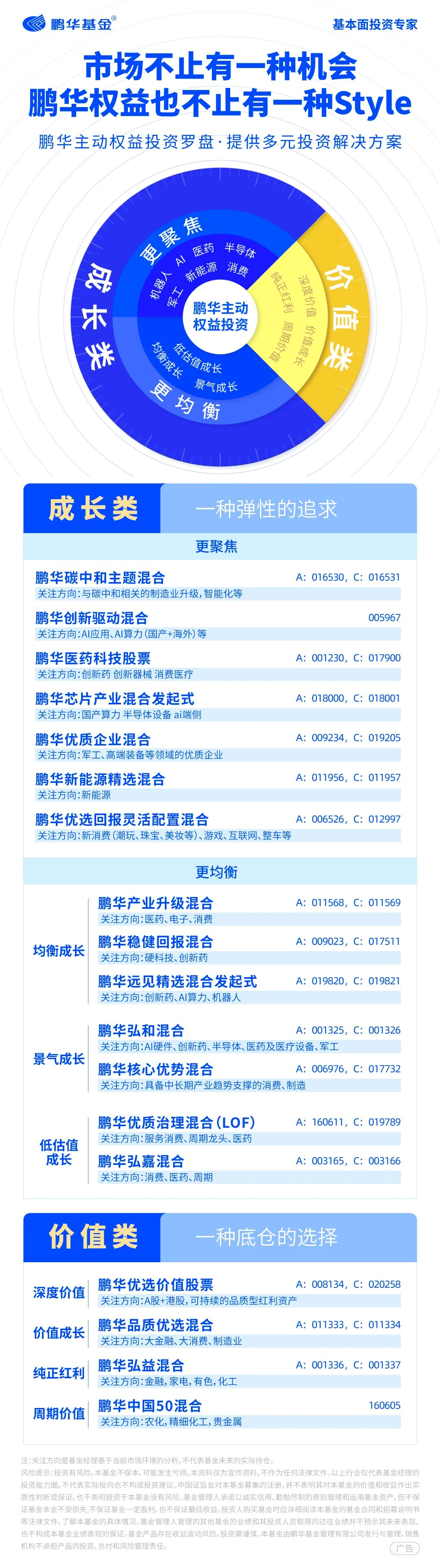
Core Viewpoint - The A-share market is steadily rising, with the Shanghai Composite Index surpassing the 3,800-point mark, driven by policy benefits, increased capital inflow, and accelerated industrial upgrades, highlighting the growing value of equity assets [1] Group 1: Fund Performance - Penghua Fund has reported impressive results, with five actively managed equity funds doubling their performance over the past year, and 11 funds showing net value growth exceeding 90% [1] - Among the 37 funds with over 50% net value growth in the past year, technology and innovative pharmaceutical theme funds have been particularly prominent, contributing significantly to performance [1] - The top-performing funds include Penghua Carbon Neutral Theme A (164.80%), Penghua Stable Return A (109.21%), Penghua Pharmaceutical Technology A (106.17%), and Penghua New Energy Vehicle A (105.59%) [1] Group 2: Long-term Performance and Ratings - In the long-term perspective, several funds have demonstrated strong endurance, with Penghua Stable Return A, Penghua Hongjia A, and Penghua Preferred Value A receiving five-star ratings for both three-year and five-year periods [2] - Penghua Pharmaceutical Technology A and Penghua Hongyi A have achieved five-star ratings across three, five, and ten-year periods, showcasing their sustained research and investment capabilities [2] Group 3: Investment Strategy - In response to market uncertainties, Penghua Fund emphasizes the need for diverse investment strategies, creating an "Active Equity Investment Compass" to provide solutions suitable for different market environments [2] - The company recognizes the importance of balancing risk and return by utilizing value-oriented products during market volatility and high-growth funds when opportunities arise [5] - Penghua Fund is committed to building a diversified and multi-dimensional investment strategy system, focusing on growth, value, balance, and thematic investments [5]
20年投资老将即将离职!
证券时报· 2025-09-04 00:11
Core Viewpoint - Xu Zhimin, the Chief Investment Officer of Zhongtai Asset Management, announced his departure after over 10 years, expressing gratitude for the trust and support received during his tenure [1][3]. Group 1: Performance and Achievements - Xu Zhimin's managed products have consistently outperformed the CSI 300 index, achieving an annualized return exceeding 15% over the past decade [3]. - All products managed by Xu have been profitable, with a direct correlation between the duration of investment and profitability, ensuring that clients who remained invested saw returns [3]. Group 2: Transition and Succession - Starting from September 4, 2023, all products managed by Xu will be taken over by Zhang Hengjia, who has been involved in the investment decision-making process since 2019 [2][7][8]. - Zhang Hengjia holds a master's degree in finance from Johns Hopkins University and has 10 years of experience in the securities industry [8]. Group 3: Investment Philosophy - Xu emphasized the importance of diligent selection of fund managers, urging investors to treat their investments with the same seriousness as significant life decisions [5]. - He highlighted the distinction between correct decision-making and favorable outcomes, advocating for a focus on sound investment decisions rather than immediate results [5]. - Xu advised investors to pay attention to managers who may go against prevailing market sentiments, suggesting that such managers can provide valuable insights during adverse market conditions [5].


业绩大爆发!信达澳亚近一年6只“翻倍基”领跑,41只涨超30%
中国基金报· 2025-08-22 07:25
Core Viewpoint - The A-share market has shown strong performance, with major indices experiencing significant increases, which has positively impacted fund performance. As of August 20, 2025, multiple products under Xinda Australia Fund have reported outstanding returns, with 41 products achieving over 30% returns in the past year, showcasing the company's robust investment capabilities [1][4]. Group 1: Fund Performance - As of August 20, 2025, 41 products from Xinda Australia Fund have achieved returns exceeding 30% in the past year, with 34 products rising over 50% and 25 products increasing over 70%. Notably, 6 products have doubled in value [1]. - The top-performing funds include Xinda Performance Driven A with a return of 149.64%, Xinda Star Yi A at 118.55%, and Xinda Bojian Growth One-Year Open A at 117.29% [2][4]. Group 2: Investment Strategy - The strong performance of Xinda Australia Fund's products is primarily driven by actively managed equity funds, which have become the core engine of performance growth, demonstrating the company's investment strength in active equity [4]. - The company employs a diversified research matrix covering key sectors such as manufacturing, technology, consumption, and new energy, optimizing its investment research team to enhance its investment capabilities [5]. Group 3: Quantitative and Pension Strategies - Xinda Australia Fund's active equity is considered the "alpha engine," with quantitative investments capturing market beta effectively. The company utilizes a "HI+AI" dual-engine approach to develop a range of quantitative products [7]. - In the pension finance sector, the company focuses on "target date strategies" to assist investors in achieving comprehensive retirement planning, with a notable return of 31.04% for the Xinda Yiyuan Pension Target 2055 Five-Year Holding A product [7]. Group 4: Future Outlook - Looking ahead, Xinda Australia Fund aims to continue prioritizing the interests of its investors, deepening its commitment to long-term value investment, optimizing its research system, and expanding its product line to create sustainable returns for investors [8].

A股不断破局 信达澳亚主动权益类基金现实力
Cai Fu Zai Xian· 2025-08-20 02:11
Core Insights - The A-share market is experiencing a rebound, with the Shanghai Composite Index reaching historical highs, boosting investor confidence and leading to a resurgence in public funds [1] - Active equity funds, particularly those managed by Xinda Australia Fund, have shown remarkable performance, creating sustained value growth for investors [1][2] Fund Performance - Xinda Australia Fund's products, including Xinda Craftsmanship Return Mixed A, Xinda Preferred Life Mixed A, Xinda Medical Health Mixed A, and Xinda Performance Driven Mixed A, have achieved net value growth rates of 70.82%, 57.40%, 57.46%, and 51.72% respectively in 2025 [1] - According to Haitong Securities, these funds ranked in the top 10% of their category as of June 30, 2025, with respective rankings of 138/3751, 214/3751, 338/3751, and 162/3751 [1] - Over the past five years, Xinda Australia's equity products have yielded a return of 17.86%, ranking 47 out of 137 in the market, while the seven-year return reached 149.24%, placing second out of 115 [2] Investment Strategy - Xinda Australia Fund emphasizes a dual-driven approach of "talent + technology," utilizing intelligent analysis tools and multi-factor quantitative models to enhance decision-making efficiency [2] - The firm has actively responded to industry fee reforms, prioritizing investor benefits and reinforcing market trust [2] - The fund's investment strategy focuses on long-term value creation aligned with national industrial upgrading directions, aiming to provide sustainable returns for investors [2] Fund Manager Profiles - Xinda Craftsmanship Return Mixed Fund is managed by Zhang Mingye, who has a background in industry analysis and has been with Xinda Australia since 2020 [3] - Xinda Preferred Life Mixed Fund is managed by Yang Ke, who has experience in consumer industry research and has been with Xinda Australia since 2015 [4] - Xinda Medical Health Mixed Fund is currently managed by Li Diandian, who has a background in biochemistry and has been with Xinda Australia since 2020 [6] - Xinda Performance Driven Mixed Fund is managed by Liu Xiaoming, who has extensive experience in equity investment and joined Xinda Australia in 2021 [6]
产品换手率高企,东方基金两位基石“老将”业绩折戟引关注
Hua Xia Shi Bao· 2025-08-16 13:16
Core Viewpoint - The performance of key fund managers at Dongfang Fund, particularly Wang Ran and Li Rui, has raised concerns in the market due to their poor investment returns, leading to a potential trust crisis for the company [2][3]. Group 1: Fund Performance - Dongfang Fund currently manages a total of 123.4 billion yuan across 123 funds, but the active equity investment capabilities are under scrutiny due to negative returns [3]. - Wang Ran's three managed funds have all reported negative returns, with the best performance being -8.94% over her tenure [3]. - The Dongfang Quality Consumption One-Year Holding A/C classes have seen returns of -57.93% and -58.31%, with net values dropping to 0.424 yuan and 0.417 yuan respectively [3]. - The Dongfang Urban Consumption Theme Mixed Fund has also underperformed, with returns of 16.53%, -15.83%, and -28.70% over the past one, two, and three years, respectively [4]. Group 2: High Turnover Rates - Wang Ran's Dongfang Emerging Growth Fund has a turnover rate exceeding 600%, reaching 750% in Q2 2024, but this high turnover has not translated into improved returns, with a three-year loss of 38.71% [4][5]. - High turnover rates are indicative of unstable investment strategies, which contradict the advocated principles of value and long-term investing [5]. - Frequent trading increases transaction costs, which can further erode fund performance and negatively impact investor experience [5][7]. Group 3: Li Rui's Fund Performance - Li Rui's flagship fund, the Dongfang New Energy Vehicle Theme Mixed Fund, has seen a drastic decline in performance since 2022, with returns of -31.69%, -32.02%, and -2.11% in the following years, ranking at the bottom among peers [6]. - The fund's management scale has decreased significantly from 224.41 billion yuan at the end of 2021 to 78.58 billion yuan by mid-2024 [6]. - Another fund managed by Li Rui, the Dongfang Automotive Industry Trend Mixed A, has also seen its scale shrink from 1.4 billion yuan to 0.52 billion yuan over three years [6].

聊聊下周的五件大事
表舅是养基大户· 2025-08-10 13:34
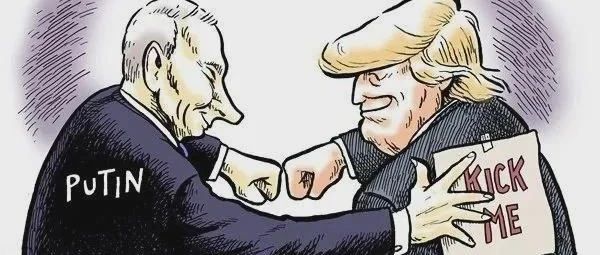
Group 1: Overseas Events - The upcoming meeting between Trump and Putin is a key event to watch, with potential implications for global risk appetite depending on the outcomes of their discussions on the Russia-Ukraine conflict [8][10][11] - The U.S. stock market reached a historical high last week, with the Nasdaq 100 setting a new record, indicating strong market performance despite previous concerns about economic data [11] Group 2: Real Estate Policy - Beijing's recent decision to lift purchase restrictions on properties outside the Fifth Ring Road marks a significant policy shift, the first substantial easing since 2010, which is expected to increase housing demand [12][13] - In Guangzhou, a real estate company has introduced a price protection initiative, allowing buyers to receive compensation if the price of their purchased property drops [12] Group 3: Industry Insights - The banking sector is experiencing pressure as many small banks significantly reduce fund distribution fees, highlighting the competitive landscape influenced by larger banks and e-commerce platforms [20][22] - In the insurance industry, the market share of leading companies is increasing, with top insurers reporting a 48.9% growth in sales through bank channels, significantly outpacing the industry average growth of 4.8% [22][23] Group 4: Equity Market Developments - Several companies are making significant investments in the stock market, with Liou Holdings announcing a 3 billion yuan investment, indicating a trend of companies reallocating capital towards equity investments [24][25] - The departure of prominent fund managers from public funds to private equity firms raises concerns about the sustainability of active equity management in the long term [26] Group 5: Economic Indicators - The Consumer Price Index (CPI) showed no growth year-on-year, while the Producer Price Index (PPI) declined by 3.6% year-on-year, reflecting ongoing economic weakness [28][29] - Upcoming social financing data is anticipated to be weak, which may impact short-term loan demand and overall market sentiment [29]