
倚美谋独

Search documents
民进党“大罢免”完败有其必然
Ren Min Ri Bao· 2025-08-27 22:38
Core Viewpoint - The recent failures of the Democratic Progressive Party (DPP) in the recall votes reflect widespread public dissatisfaction with its governance, particularly under Lai Ching-te's leadership, and highlight a disconnect between the party's actions and the electorate's interests [1][2][3]. Group 1: Political Dynamics - The DPP's attempts to utilize the recall system for political gain, rather than addressing actual incompetence among officials, have undermined the legitimacy of the process [2]. - The DPP's actions have transformed the recall mechanism into a tool for party conflict, rather than its intended purpose of addressing individual misconduct [2]. - The DPP's focus on political maneuvering during a time of economic hardship has exposed its prioritization of party interests over public welfare [2]. Group 2: Public Sentiment - Public dissatisfaction with Lai Ching-te's administration is evident, with a TVBS poll indicating only 28% satisfaction and 55% dissatisfaction among the populace [3]. - The DPP's political actions, including perceived "political persecution," have led to a climate of fear and discontent among the Taiwanese public [3]. Group 3: Cross-Strait Relations - Lai Ching-te's administration has intensified cross-strait tensions through policies that restrict exchanges and promote a confrontational stance towards mainland China [4][5]. - The DPP's economic policies, particularly those aimed at "decoupling" from China, have adversely affected Taiwan's economy, especially in sectors like tourism and agriculture [5]. Group 4: Economic Implications - The DPP's restrictions on cross-strait exchanges have led to significant economic repercussions, including a decline in tourism and disruptions in trade with mainland China [5]. - The push for increased investment in the U.S. at the expense of local industry, particularly in the semiconductor sector, raises concerns about Taiwan's economic independence and resilience [7][8].
国台办:统一大势不可阻挡 “倚美谋独”注定失败
Yang Shi Xin Wen Ke Hu Duan· 2025-08-27 05:38
Group 1 - The Taiwan administration has approved a defense budget of 949.5 billion New Taiwan Dollars for the fiscal year 2026, which accounts for 3.32% of the projected GDP, marking a record high [1][3] - The spokesperson criticized the Taiwan administration for its "pro-independence" stance, claiming it prioritizes party interests over public opinion and is escalating tensions in the Taiwan Strait [3] - The spokesperson accused the Taiwan administration of wasting public funds on military purchases to appease external forces, which could have been used for improving livelihoods and economic development [3] Group 2 - The spokesperson emphasized that the reliance on the U.S. for military support is a misguided strategy that will ultimately lead to failure and disaster for Taiwan [3]

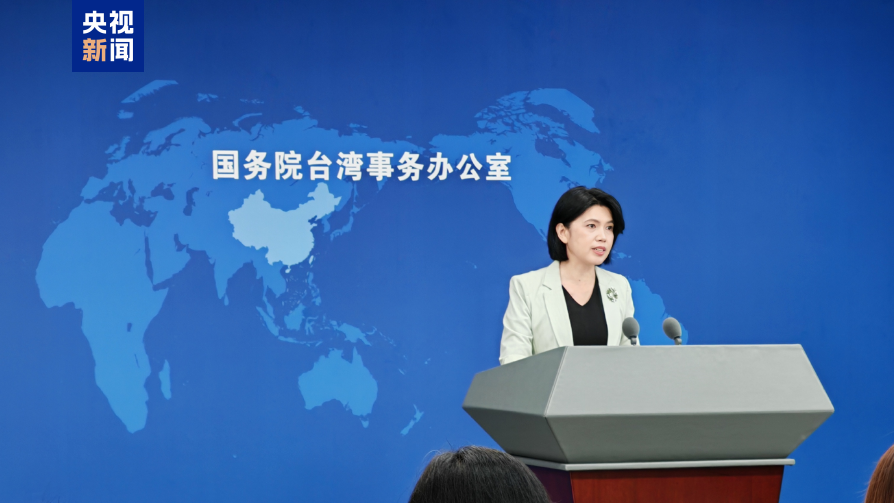
“倚美谋独”再遭一记响亮耳光
Huan Qiu Shi Bao· 2025-08-22 12:42
Core Viewpoint - The article discusses the contrasting views on renewable energy policies between Taiwan's DPP government, led by Lai Ching-te, and former U.S. President Donald Trump, highlighting the implications for Taiwan's energy strategy and political landscape [2][5]. Group 1: Renewable Energy Policies - Lai Ching-te's administration has been criticized for pushing renewable energy initiatives like wind and solar power, despite Taiwan's energy challenges and public dissent [3][4]. - The DPP's "green energy" policies have been labeled as corrupt, with allegations of benefiting party insiders through contracts and inflated electricity prices [3][4]. - Trump's recent comments labeling renewable energy policies as a "century scam" have intensified scrutiny on the DPP's energy strategy, contrasting sharply with Lai's pro-renewable stance [2][5]. Group 2: Political Implications - The DPP's reliance on U.S. support for its independence agenda is questioned, especially in light of Trump's criticism, which undermines Lai's narrative of external manipulation [4][5]. - Public sentiment in Taiwan reflects frustration with the DPP's approach, as citizens perceive a disconnect between the government's policies and their economic realities [3][4]. - The article suggests that the DPP's strategy of aligning with U.S. interests may ultimately backfire, as it fails to address local concerns and could lead to political backlash [5].

“台独”是绝路,“跪美”无出路(日月谈)
Ren Min Ri Bao Hai Wai Ban· 2025-08-21 00:50
Group 1 - The Taiwanese government faces a significant increase in tariffs, with a new 20% tariff on top of existing rates, leading to a potentially disastrous "20%+N" tax burden on local industries [1][2] - Key sectors such as textiles, petrochemicals, steel, and machine tools are expected to be severely impacted, with the machine tool industry facing a combined tax rate of 24.7%, exacerbating competitive disadvantages against South Korean and Japanese products [2][3] - The Taiwanese government's response includes a commitment to increase investment in the U.S. by $400 billion, which is equivalent to half of Taiwan's annual GDP, indicating a willingness to spend taxpayer money to appease U.S. demands [2][3] Group 2 - The Taiwanese administration's approach of yielding to U.S. demands has not resulted in favorable outcomes, instead leading to increased pressure and unfavorable treatment compared to other trade partners [1][3] - The lack of transparency in negotiations, with claims of confidentiality, raises concerns about the effectiveness of the talks and the potential negative implications for Taiwan's economy [2] - The ongoing reliance on U.S. support while neglecting to strengthen cross-strait relations may lead to further economic challenges for Taiwan, as the government continues to pursue a confrontational stance against mainland China [3]
赖清德突遭晴天霹雳!特朗普下“死命令”,美国对台态度有变?我国防部发出统一最强音
Sou Hu Cai Jing· 2025-08-12 04:55
Group 1 - The imposition of a 20% special tariff on Taiwan by the Trump administration signifies a shift in U.S. policy towards Taiwan, revealing the underlying economic pressures rather than a supportive alliance [1][3] - The tariff on Taiwan's key industry, machine tools, has surged from 4.7% to 24.7%, while a proposed 100% tariff on semiconductors threatens to choke Taiwan's economy, as semiconductors account for 40% of its total output [3][4] - The response from Taiwan's government, emphasizing continued communication with the U.S., contrasts sharply with the harsh economic realities faced by Taiwanese manufacturers, who are now experiencing layoffs and exploring costs for relocating production to the U.S. [6][8] Group 2 - The Trump administration's trade policies reflect a broader "America First" strategy, where Taiwan is treated as a bargaining chip, similar to previous negotiations with Japan and South Korea [4] - The recent tariffs have exposed the fragility of Taiwan's reliance on U.S. support, as the notion of a "special relationship" is undermined by economic coercion [6][8] - The military rhetoric from China's defense ministry indicates a readiness for unification, suggesting that Taiwan's strategic position is increasingly precarious amid shifting U.S. policies [6][8]
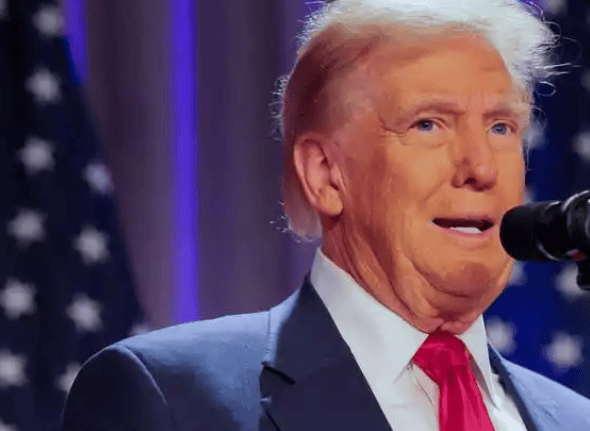
国务院台办:正告赖清德当局 “倚美谋独”枉费心机 注定失败
news flash· 2025-07-16 02:53
Core Viewpoint - The Chinese government firmly opposes any form of official exchanges between the United States and Taiwan, particularly condemning Lai Ching-te's planned transit through the U.S. [1] Group 1 - The spokesperson Chen Binhua emphasized the need for the U.S. to adhere to the One China principle and the three joint communiqués between China and the U.S. [1] - The Chinese government warns Lai Ching-te's administration that relying on the U.S. to pursue independence is futile and destined to fail [1] - The One China principle is described as a widely accepted international consensus and a fundamental norm in international relations, supported by the vast majority of countries [1] Group 2 - The Chinese government urges Latin American and Caribbean countries to recognize the prevailing trends and handle Taiwan-related issues cautiously [1] - There is a call for these countries to join the broader framework of China-Latin America friendly cooperation [1]
“台独十讲”半途叫停,以武拒统声势唬人
经济观察报· 2025-07-09 11:37
Group 1 - The Taiwanese military exercises are designed to entertain the public rather than focus on tactical analysis, with this year's highlight being a live demonstration of the M1A2T main battle tank [1][10][9] - The M1A2T tank, purchased from the U.S., is considered expensive and unsuitable for Taiwan's terrain, with a total cost of approximately $1.87 billion for 108 units, each priced at $17 million [11][13][14] - The Taiwanese military's annual "Han Guang" exercise, this year numbered 41, will take place over 10 days, featuring continuous live drills that may disrupt civilian life [7][8] Group 2 - The cancellation of a speech by Taiwan's leader Lai Ching-te, initially planned as part of a series promoting national unity, has sparked speculation about external influences, particularly from the U.S. [2][4][5] - Lai's previous speeches have faced criticism for their content, leading to suggestions from within his party to pause further presentations to avoid further embarrassment [5][6]
台海观澜| “台独十讲”半途叫停,以武拒统声势唬人
Jing Ji Guan Cha Bao· 2025-07-09 03:40
Group 1 - Taiwan's leader Lai Ching-te's "Ten Talks on Independence" was abruptly halted, originally scheduled for July 5, due to a claimed response to a typhoon [1][2] - Speculation arose regarding the cancellation, with some suggesting it was influenced by the American Institute in Taiwan (AIT) after reviewing Lai's speech, fearing it could disrupt US-China negotiations [3] - Internal party advice also played a role, as previous speeches had been criticized and could negatively impact upcoming elections, with polls indicating only 3 to 4 out of 24 targeted opposition members might be removed [3][4] Group 2 - Following the speech cancellation, Taiwan's military began its annual "Han Kuang" exercise, which is set to last for 10 days, involving extensive real-time drills [5] - The military's exercises are designed to engage public interest, with this year's highlight being a live demonstration of the M1A2T main battle tank, purchased from the US [8][7] - The M1A2T tanks, costing approximately $1.7 million each, total around $1.87 billion for 108 units, have been criticized for being unsuitable for Taiwan's terrain and infrastructure [10]
民进党当局长期与CIA等合作
news flash· 2025-06-05 00:46
Group 1 - The Taiwanese Democratic Progressive Party (DPP) has been collaborating with U.S. intelligence agencies such as the NSA and CIA to align with the U.S. "Asia-Pacific strategy" in an attempt to seek independence through reliance on the U.S. [1] - U.S. intelligence agencies have been providing personnel training and technical equipment support to Taiwan's "cyber military," indicating a long-term partnership [1] - There have been multiple instances of U.S. "forward hunting" teams being dispatched to Taiwan to conduct cyber attacks against China [1]
台积电“在美巨亏在大陆盈利”,国台办回应
财联社· 2025-04-30 07:45
国台办举行例行新闻发布会。记者:据报道,2024年台积电美国亚利桑那厂持续亏损,而在大陆的厂大幅盈利。在此情况下,台积电还宣布要扩大 投资美国一千亿美元。岛内舆论指出,应该认清哪些市场更值得加码投资。对此有何评论? 国台办发言人朱凤莲:民进党当局为谋取私利,对外部势力予取予求,把台湾的半导体产业和台积电作为"倚美谋独"的投名状,当成"伴手礼"拱手奉 送,一再出卖台湾民众和企业的利益福祉。这种不以"卖台"为耻、反以"媚美"为荣的行径,遭到越来越多台湾民众和企业的反对。 Cl S 为速度和交易而生 机构和私募都在使用 下载财联社APP获取更多资讯 准确 快速 权威 专业 7x24h电报 头条新闻 VIP资讯 实时盯盘 当成"伴手礼"拱手奉送,一再出卖台湾民众和企 业的利益福祉。这种不以"卖台"为耻、反以"媚 美"为荣的行径,遭到越来越多台湾民众和企业的 反对。 期货市场情报 | 半导体芯片 | 台积电 长按右侧二维码阅读原文 准确 快速 权威 专业 ...
