
光伏行业供需失衡

Search documents
欧晶科技:2025年前三季度营收降56.36%,业绩仍亏损
Xin Lang Cai Jing· 2025-11-14 11:53
Core Viewpoint - The company reported a significant decline in revenue and a net loss for the first three quarters of 2025, primarily due to supply-demand imbalance and intensified competition in the photovoltaic industry [1] Financial Performance - Revenue for the first three quarters of 2025 reached 353 million yuan, representing a year-on-year decrease of 56.36% [1] - The net profit was -87.18 million yuan, an improvement compared to -223.47 million yuan in the same period last year [1] Industry Impact - The company's performance was adversely affected by low capacity utilization and low product prices within the photovoltaic sector [1] Balance Sheet - As of the end of September, the company's total equity was 975 million yuan, with a debt-to-asset ratio of 53.05% [1] - Cash and cash equivalents amounted to 688 million yuan, while total debt stood at 798 million yuan [1] Credit Rating - Zhongjin Pengyuan maintained the company's and "Oujing Convertible Bond" credit rating at AA- and continues to list it on the observation list [1]

半年盘点| 五家光伏企业半年亏超150个“小目标”,还都警示了这些风险
Di Yi Cai Jing Zi Xun· 2025-08-25 09:16
Core Viewpoint - The photovoltaic industry is facing significant challenges, with major companies reporting substantial losses in the first half of 2025 despite a positive stock market performance on the same day the financial reports were released [1][2]. Financial Performance - The total market capitalization of five major photovoltaic companies (LONGi Green Energy, Tongwei Co., JA Solar, Trina Solar, and TCL Zhonghuan) is approximately 335.9 billion yuan, with individual market caps of 126.4 billion, 97 billion, 41.5 billion, 36.6 billion, and 34.4 billion yuan respectively [2]. - Collectively, these companies reported a net loss of 17.264 billion yuan in the first half of 2025, with Tongwei and TCL Zhonghuan accounting for nearly 10 billion yuan of this loss [2]. - LONGi Green Energy reported a net loss of 2.569 billion yuan, a significant reduction from 5.231 billion yuan in the same period last year, primarily due to improved operational efficiency and reduced expenses [2][3]. - Tongwei Co. experienced a loss of 4.955 billion yuan, up from 3.129 billion yuan year-on-year, while Trina Solar reported a loss of 2.918 billion yuan, marking its first half-year loss since its listing in 2020 [3]. Industry Challenges - The industry is grappling with severe supply-demand imbalances, leading to significant price declines across various segments of the photovoltaic supply chain, which has eroded profit margins [3][4]. - From January to June 2025, the production growth rates for battery cells and modules fell below 15%, with polysilicon and wafer production experiencing negative growth [3]. - Average prices for mainstream products have dropped significantly, with reductions of 88.3%, 89.6%, 80.8%, and 66.4% compared to peak prices in 2020 [3]. Market Dynamics - Over 40 companies have announced delistings, bankruptcies, or mergers since 2024, with the first quarter of 2025 seeing 31 A-share listed photovoltaic companies collectively losing 12.58 billion yuan, a year-on-year increase of 274.3% in losses [4]. - The industry consensus indicates that the rapid expansion of production capacity has led to a systemic imbalance, pushing prices below the cost line and resulting in widespread losses [3]. Policy and Regulatory Environment - The domestic market is experiencing significant policy changes that impact industry dynamics, demand, and overall market structure [6][7]. - Companies have expressed concerns about the uncertainties arising from policy changes, particularly regarding land use for photovoltaic projects and market pricing mechanisms [7]. - The industry is currently in a deep adjustment phase, with some companies beginning to exit the market due to outdated production capacities and competitive disadvantages [8]. Future Outlook - There is a growing consensus within the industry for a "de-involution" approach, aimed at achieving high-quality development and maintaining fair competition [8][9]. - Recent trends indicate a potential recovery in prices for crystalline silicon, wafers, and modules, with expectations that prices may return above the industry cost level [9].





通威股份上半年“失血”超49亿元 能否借政策东风穿越“最冷周期”?
Zhong Guo Jin Rong Xin Xi Wang· 2025-07-14 14:37
Core Viewpoint - Tongwei Co., Ltd. is facing significant losses in the first half of 2025, with expected net losses ranging from 49 billion to 52 billion yuan, highlighting the severe supply-demand imbalance in the photovoltaic industry [1][5]. Financial Performance - The company reported a loss of 25.93 billion yuan in Q1 2025, with Q2 losses estimated between 23.46 billion and 26.07 billion yuan, indicating no signs of narrowing losses [1]. - The projected net profits for 2025-2027 are -31.18 billion yuan, 28.79 billion yuan, and 57.88 billion yuan, reflecting year-on-year growth rates of 55.7%, 192.3%, and 101.0% respectively [5]. Industry Context - Despite the losses, the photovoltaic industry is experiencing growth in new installations, but the supply-demand imbalance remains unresolved, leading to continued low prices across the industry [1][2]. - Recent policy measures, including production cuts and addressing low-price dumping, have raised market expectations for industry recovery, although analysts remain cautious about the timing of a turnaround [2]. Strategic Adjustments - Tongwei has successfully completed a strategic capital increase of 49.16 billion yuan, attracting 11 investment institutions, including several with state-owned backgrounds, which is expected to provide sufficient cash flow to navigate current industry challenges [3]. - The company is also increasing its investment in technology, showcasing advancements in TOPCon technology with solar modules achieving a bifacial rate of 94.3% and a power output of 722W [4]. Future Outlook - The company expresses confidence in the long-term growth potential of the photovoltaic industry, emphasizing the importance of addressing current supply-demand issues for sustainable development [5]. - The company plans to maintain its technological leadership while exploring new technologies to enhance product competitiveness and meet diverse market demands [4].
通威股份:预计上半年净亏损49亿元-52亿元
news flash· 2025-07-14 08:39
Group 1 - The company expects a net loss of approximately 49 billion to 52 billion yuan for the first half of 2025, compared to a net profit of 31.29 billion yuan in the same period last year [1] - Despite the growth in photovoltaic installation capacity, the industry is facing an imbalance between supply and demand, leading to depressed product prices and operational losses for the company [1]
供需失衡加剧,光伏玻璃价格跌去70%,本月行业欲减产三成
2 1 Shi Ji Jing Ji Bao Dao· 2025-07-01 15:08
Core Viewpoint - The photovoltaic glass industry is undergoing a significant reduction in production, with major companies planning to cut output by approximately 30% to address supply-demand imbalances and improve market conditions [2][6]. Industry Overview - The photovoltaic glass industry is facing challenges, with a total reduction of 31,091 tons per day since July, achieving a reduction rate of about 26%, nearing the target of 30% [3]. - As of June, domestic supply of photovoltaic glass was approximately 54GW, with demand around 49-50GW, resulting in a monthly surplus of about 8-9GW, equating to a glass surplus of 350,000-400,000 tons [3]. - Current inventory levels are high, with stock estimated at 31-32 days, indicating a significant oversupply in the market [3]. Price Dynamics - The price of photovoltaic glass has dropped over 70% from its peak of 40 yuan per square meter in 2020, leading to financial strain on many companies [4]. - The market has seen continuous price declines since June, with some prices falling below 11 yuan per square meter, causing many companies to struggle to cover costs [3][4]. Company Responses - Major companies are adapting to the market conditions by either reducing production or focusing on long-term customer relationships rather than engaging in price wars [4][7]. - Companies like 福莱特 and 信义光能 hold over 50% of the market share, with 福莱特 reporting a revenue of 18.683 billion yuan in 2024, down 13.2% year-on-year, and a net profit decline of 63.52% [4]. - 亚玛顿 is planning to invest in a new production line in the UAE to leverage local resources and enhance its competitive edge in the photovoltaic glass sector [6][7]. Future Outlook - The anticipated production cuts are expected to stabilize prices and improve the supply-demand balance in the photovoltaic glass market [7]. - The industry is projected to gradually move towards a healthier and more sustainable development trajectory as supply conditions improve and relevant policies are implemented [7].


多家光伏大客户业绩大跌,冲上市的江松科技高增长能否持续?
Nan Fang Du Shi Bao· 2025-06-22 05:16
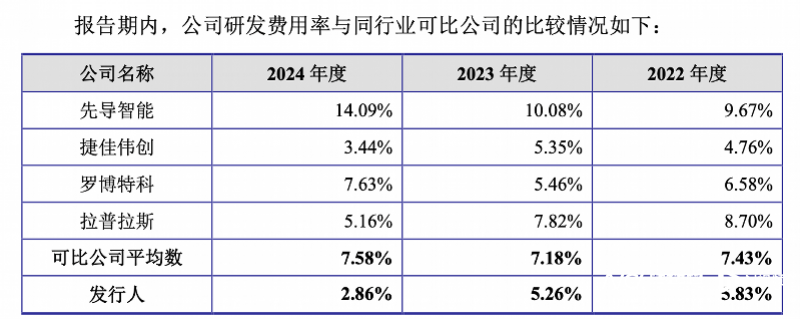
Core Viewpoint - Jiangsong Technology has officially applied for listing on the ChiNext board, aiming to raise approximately 1.053 billion yuan for various projects including the construction of a photovoltaic intelligent equipment production base and a research and development center [1] Group 1: Company Overview - Jiangsong Technology, established in 2007, specializes in the research, production, and sales of high-efficiency photovoltaic cell automation equipment, providing integrated solutions for major clients in the photovoltaic industry [2] - The company has reported significant revenue growth, with projected revenues of 807 million yuan, 1.237 billion yuan, and 2.018 billion yuan for 2022, 2023, and 2024 respectively, alongside net profits of 85 million yuan, 128 million yuan, and 186 million yuan [2] Group 2: Industry Challenges - Despite Jiangsong Technology's strong performance, the overall photovoltaic industry is experiencing a downturn, with major clients reporting substantial revenue declines and losses in 2024 [3][4] - The financial struggles of key clients such as JinkoSolar and Longi Green Energy indicate potential pressure on Jiangsong Technology's future performance [5] Group 3: Financial Health - As of the end of 2024, Jiangsong Technology's contract liabilities decreased by 23.26% to 1.626 billion yuan, and cash reserves fell by 45.9%, indicating reduced demand and new orders [7] - The company reported a negative cash flow of -117 million yuan due to a decline in new orders, which may lead to a lag in revenue recognition [7] Group 4: Asset Risks - Jiangsong Technology has increased its provision for bad debts to 136 million yuan, a rise of 189.36%, reflecting concerns over customer contract cancellations and potential asset impairment [8] - New clients, such as Xinhao New Energy, have also shown signs of financial distress, leading to significant provisions for bad debts [9] Group 5: R&D and Profitability - Jiangsong Technology's R&D expenses have been relatively low compared to peers, with rates of 5.83%, 5.26%, and 2.86% from 2022 to 2024, while competitors maintain higher R&D investment levels [11][12] - Despite having superior technical specifications, Jiangsong Technology's gross margins are lower than the industry average, with rates of 26.11%, 24.08%, and 25.11% during the same period [13]

晶盛机电去年Q4首现季度亏损,巨额减值侵蚀利润,半导体业务难填业绩缺口
Zheng Quan Zhi Xing· 2025-05-14 02:34
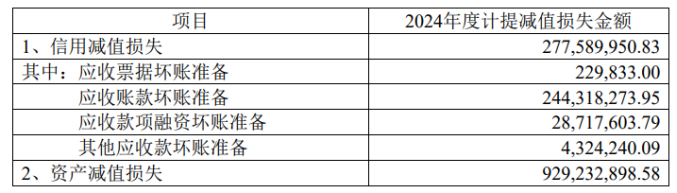
Core Viewpoint - The company, Jing Sheng Mechanical & Electrical (300316.SZ), experienced a significant decline in both revenue and net profit in 2024, marking the first occurrence of such a downturn since its listing in 2012, primarily due to supply-demand imbalances in the photovoltaic industry and substantial impairment losses [1][2][4]. Financial Performance - In 2024, Jing Sheng reported revenue of 17.577 billion yuan, a year-on-year decrease of 2.26%, and a net profit attributable to shareholders of 2.51 billion yuan, down 44.93% year-on-year [2][5]. - The company plans to recognize total impairment losses of 1.207 billion yuan in 2024, with credit impairment losses of 277.59 million yuan (up 348.22% year-on-year) and asset impairment losses of 929.23 million yuan (up 222.19% year-on-year) [2][3]. Business Segments - The main business segments include equipment and services, which generated revenue of 13.363 billion yuan in 2024, a growth of 4.3%, but with a gross margin decline of 2.46 percentage points to 36.36% [6][8]. - The materials segment, which includes silicon carbide substrates and quartz crucibles, saw a revenue decline of 19.62% to 3.346 billion yuan, with a gross margin drop of 27.44 percentage points to 28.71% [7][8]. Customer Dependency - The revenue from the largest customer, TCL Zhonghuan, significantly decreased from 9.035 billion yuan in 2023 (50.24% of total revenue) to 5.217 billion yuan in 2024 (29.68% of total revenue) [4][5]. - The company faces risks related to order fulfillment due to the cyclical nature of the photovoltaic industry, which may lead to adjustments in expansion projects by downstream customers [4]. Inventory and Receivables - As of the first quarter of 2025, the company reported 3.236 billion yuan in accounts receivable and 9.545 billion yuan in inventory, indicating ongoing risks related to price declines and potential losses [5][6]. - The company recognized inventory impairment provisions of 962 million yuan in 2024, with specific provisions for certain customers and raw materials [4][8]. Market Outlook - The photovoltaic industry is entering a supply-side adjustment period, with a slowdown in new capacity demand, which is expected to impact the company's processing equipment business significantly [7]. - Despite the challenges in the photovoltaic sector, the semiconductor equipment business is seeing an increase in order volume, although this has not yet translated into significant revenue [10].

硅料资产布局再收缩 弘元绿能拟转让内蒙古鑫元股权
Zheng Quan Ri Bao· 2025-05-08 16:10
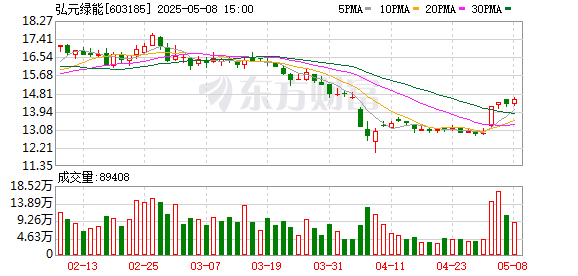
Core Viewpoint - The photovoltaic industry is undergoing price adjustments, prompting companies like Hongyuan Green Energy to optimize their business layouts by divesting from non-core assets [2][4]. Company Summary - Hongyuan Green Energy announced the sale of its 27.0737% stake in Inner Mongolia Xinyuan Silicon Material Technology Co., Ltd. for 1.245 billion yuan, which corresponds to an investment of 1.02 billion yuan [2]. - The company aims to focus on its core business and reduce investment risks, as it has established its own silicon material production capacity and the market supply is sufficient [2][4]. - This is the second time in 2023 that Hongyuan Green Energy has divested from silicon material assets, having previously sold a stake in Jiaxing Zhongping Guoyu Investment Partnership [3]. Financial Performance - Inner Mongolia Xinyuan is projected to generate 4.792 billion yuan in revenue for 2024, but it is also expected to incur a net loss of 477 million yuan [3]. - Hongyuan Green Energy's revenue for 2024 is expected to be 7.302 billion yuan, a year-on-year decrease of 38.42%, with a net loss of 2.697 billion yuan [6]. - In the first quarter of 2025, the company reported revenue of 1.657 billion yuan, down 24.37% year-on-year, and a net loss of approximately 61.88 million yuan [6]. Industry Context - The silicon material prices are currently at a low point, with N-type dense material priced around 38,000 yuan per ton, leading to significant pressure on profitability for many companies in the sector [3][4]. - The photovoltaic industry is facing supply-demand imbalances, with some inefficient capacities needing to be eliminated [6]. - Analysts predict that the prices across the photovoltaic industry chain may see a rebound in 2026 as supply-demand dynamics improve [6].

年报盘点|四大光伏组件厂业绩集体下滑,股价最高跌去三成
Di Yi Cai Jing· 2025-05-07 12:00
Core Insights - In 2024, major photovoltaic companies experienced significant losses, with Longi Green Energy reporting a net loss of 8.62 billion yuan, JA Solar a loss of 4.656 billion yuan, and Trina Solar a loss of 3.443 billion yuan, while JinkoSolar was the only company to achieve profitability [1][2] Revenue Performance - JinkoSolar achieved revenue of 92.471 billion yuan, a year-on-year decrease of 22.08% - Longi Green Energy reported revenue of 82.58 billion yuan, down 36.23% year-on-year - Trina Solar's revenue was 80.282 billion yuan, reflecting a 29.21% decline year-on-year - JA Solar's revenue stood at 70.121 billion yuan, a decrease of 14.02% year-on-year [1][2] Shipment Volumes - In 2024, Trina Solar shipped over 70 GW of photovoltaic modules - JinkoSolar's shipments reached 92.87 GW - Longi Green Energy shipped 82.32 GW of battery modules - JA Solar's battery module shipments totaled 79.447 GW, including 1.544 GW for self-use [1] Profitability Challenges - Only JinkoSolar reported a profit in 2024, with a net profit of 99 million yuan, down 98.67% year-on-year - Longi Green Energy's net loss was 8.62 billion yuan, compared to a net profit of 10.75 billion yuan in the previous year - JA Solar's net loss was 4.656 billion yuan, down from a net profit of 7.039 billion yuan the previous year - Trina Solar reported a net loss of 3.443 billion yuan, compared to a net profit of 5.531 billion yuan in the prior year [2] Factors Contributing to Losses - Longi Green Energy cited a 61% drop in silicon wafer prices and a 39% decline in module prices as key factors for its losses, along with asset impairment losses of 8.7 billion yuan and investment losses of 486 million yuan [2] - JA Solar attributed its losses to intensified market competition, significant price declines, and a challenging international trade environment, leading to substantial asset impairment provisions [2] - Trina Solar indicated that the continuous decline in photovoltaic module prices adversely affected its profitability [2] Asset Impairment - Trina Solar reported a total of 3.106 billion yuan in various credit and asset impairment provisions, including 508 million yuan in credit impairment losses and 2.598 billion yuan in asset impairment losses [3] Market Performance - The stock prices of these four companies fell significantly in 2024, with JA Solar experiencing the largest decline at 31.25% - Longi Green Energy and Trina Solar saw their stock prices drop by 30.56% and 30.09%, respectively - JinkoSolar, the only profitable company, had a relatively smaller decline of 17.63% [4]
