公募基金改革

Search documents
布局未来 年末基金经理更替“忙”
Shang Hai Zheng Quan Bao· 2025-12-03 18:46
Core Insights - The public fund industry is experiencing a peak in fund manager turnover as 2025 approaches, with over 130 changes since November, significantly higher than the same period last year [1][2] - The increase in turnover is attributed to year-end performance evaluations and strategic adjustments by fund companies to seize market opportunities and align with public fund reforms [1][2] Group 1: Fund Manager Changes - A total of 134 fund manager changes were recorded from November to December 3, surpassing last year's 92 changes, with a notable increase in departures, up over 110% year-on-year [2] - The performance evaluation at year-end poses replacement risks for underperforming fund managers, prompting some companies to proactively replace them in hopes of improving rankings [2] - The disparity in fund performance has widened, with equity funds showing a 226 percentage point difference between the best and worst performers over the past year [2] Group 2: New Appointments and Strategies - Despite the turnover, 73 new fund managers were hired since November, exceeding last year's 64, indicating a flow of "fresh blood" into the industry [3] - Some companies are adopting an "old brings new" approach, pairing new managers with experienced ones to ensure continuity in investment strategies [3] - Fund companies are optimistic about the upcoming market, with December seen as a key period for positioning ahead of a potential spring rally [3] Group 3: Regulatory and Structural Changes - The changes in fund management are part of a broader strategy to optimize talent and adapt to industry shifts, enhancing the investor experience [4] - The China Securities Regulatory Commission has outlined a plan to improve the quality of public funds, emphasizing performance-based assessments for fund managers, with at least 80% of evaluation metrics focused on investment returns [5] - Future assessments will prioritize long-term performance, with a significant weight on returns over three years or more, reflecting the industry's human resource-intensive nature [5]
以“获得感”为坐标 公募基金加快系统性变革
Zhong Guo Zheng Quan Bao· 2025-11-11 22:11
Core Viewpoint - The public fund industry is positioned to play a significant role in wealth management and economic development during the "15th Five-Year Plan" period, focusing on enhancing investor experience and adapting to new wealth management demands [1][4][6]. Group 1: Industry Development and Trends - The public fund industry has undergone significant reforms aimed at prioritizing investor interests, including fee reductions and enhanced performance benchmarks [2][3]. - There is a notable shift in wealth management needs, with residents moving from real estate investments to diversified financial assets, indicating a new phase in wealth management during the "15th Five-Year Plan" [4][5]. - The industry anticipates a transformation in wealth management trends, emphasizing long-term, diversified, and experience-focused investment strategies [5][6]. Group 2: Investment Research and Product Innovation - Investment research capability is deemed essential for asset management, with firms like China Europe Fund implementing a "professional, industrialized, and intelligent" research strategy to enhance product quality [3][7]. - Companies are focusing on product innovation and aligning offerings with investor needs, aiming to provide stable long-term returns and improve investor experiences [7][8]. - The emphasis on performance benchmarks is expected to guide investment strategies and enhance accountability within the industry [3][8]. Group 3: Enhancing Investor Experience - The industry aims to improve investor satisfaction by prioritizing long-term sustainable returns and adjusting performance evaluation metrics to focus on long-term outcomes [8]. - Companies are adopting service principles that emphasize regular communication and innovation to enhance investor engagement and experience [7][8]. - The public fund sector is transitioning from a scale-driven approach to one that prioritizes investor interests, aiming for a symbiotic relationship between value creation and investor satisfaction [8].
非银金融行业点评报告:业绩比较基准指引征求意见,进一步落实公募基金改革
Soochow Securities· 2025-11-01 15:09
Investment Rating - The industry investment rating is maintained at "Add" [1][7] Core Viewpoints - The report discusses the release of the "Guidelines for Performance Comparison Benchmarks of Publicly Raised Securities Investment Funds" by the CSRC, which aims to guide industry institutions in establishing a more stable investment style and providing long-term stable returns for investors, thus further implementing public fund reforms [4] - The guidelines emphasize the importance of performance comparison benchmarks, which should reflect the core elements and investment style agreed upon in the fund contract and should not be changed arbitrarily once selected [4] - The report highlights the establishment of a performance comparison benchmark element library, which will encourage and guide industry institutions to standardize the selection of benchmarks representing equity assets [4] Summary by Sections - **Event Overview**: The CSRC has published guidelines and operational details for performance comparison benchmarks, which will help in the high-quality development of public funds [4] - **Key Guidelines**: The guidelines include the necessity for benchmarks to reflect product positioning and investment style, the establishment of internal control mechanisms by fund managers, and the need for performance compensation to be linked to whether the fund outperforms its benchmark [4] - **Implementation Timeline**: A one-year transition period is set for fund managers to adjust existing products' benchmarks to better align with fund contracts and actual styles without impacting market stability [4]
财经深一度|公募基金改革再“落子”,业绩“参照系”全面升级
Xin Hua Wang· 2025-11-01 02:21
Core Viewpoint - The China Securities Regulatory Commission (CSRC) has released a draft for public consultation regarding performance benchmarks for public funds, indicating a shift towards a clearer and more stable reference system for evaluating fund performance [1][2]. Group 1: Performance Benchmark Reform - The new guidelines aim to upgrade the performance benchmarks for public funds, marking a significant step into the "stock reform" phase of public fund reform [1]. - The performance benchmark serves as a "yardstick" for public funds, helping investors understand the fund's investment focus and risk-return characteristics [2]. - The reform addresses issues of "style drift" and "misalignment" in fund performance, ensuring that fund managers adhere to their stated investment strategies [2]. Group 2: Selection and Management of Benchmarks - Fund managers are required to select benchmarks from an established library of benchmark elements, ensuring that the benchmarks accurately reflect the fund's investment direction and strategy [3][4]. - Once set, benchmarks cannot be easily changed due to manager turnover or market trends, ensuring that funds remain true to their stated objectives [5]. - The calculation methods and data sources for benchmarks must be transparent, with funds required to disclose the basis for benchmark selection in contracts and reports [6]. Group 3: Accountability and Oversight - The new regulations mandate that fund companies establish systems for the selection, disclosure, monitoring, evaluation, and accountability of performance benchmarks [7]. - The decision-making process for benchmark selection will be elevated to the management level, ensuring accountability [7]. - Independent departments within fund companies will monitor deviations from investment styles, with a compliance management system in place [7]. Group 4: Impact on Fund Management and Sales - The new rules require that performance benchmarks be reasonably integrated into fund manager compensation, sales practices, and fund evaluations to mitigate aggressive investment behaviors [8]. - Fund managers whose long-term performance significantly lags behind benchmarks will see a notable decrease in performance-related compensation [8]. Group 5: Transition for Existing Products - The transition to new benchmarks for existing products will be gradual, with a one-year period for adjustments to avoid market disruption [9]. - Fund managers are encouraged to align benchmarks with the actual investment styles of their products, preventing drastic portfolio adjustments that could affect market stability [9]. - The CSRC's previous initiatives have already begun to shift the focus of fund companies from scale to returns, with new floating fee models being introduced [9]. Group 6: Future Directions - Future reforms will continue to deepen, with upcoming revisions to fund manager compensation rules that will incorporate performance comparisons against benchmarks [10]. - The goal is to further align the interests of fund companies with those of investors, ensuring that poor performance leads to reduced compensation for fund managers [10].
公募基金改革再“落子”,业绩“参照系”全面升级
Xin Hua She· 2025-11-01 00:57
Core Viewpoint - The China Securities Regulatory Commission (CSRC) has released a draft for public consultation regarding the performance comparison benchmarks for public funds, marking a significant step in the reform of the public fund industry towards a more objective and stable evaluation system [1][2]. Group 1: Performance Benchmarking - The new performance comparison benchmarks will provide a clearer and more stable reference for evaluating public fund performance, transitioning from "incremental reform" to "stock reform" [2]. - The benchmarks will serve as a "ruler" to measure fund performance, ensuring that fund managers adhere to their investment strategies and improve the stability of excess returns [3][4]. - The reform aims to address issues of "style drift" and misalignment between fund performance and investment strategy, which have led to investor dissatisfaction [3][4]. Group 2: Selection and Management of Benchmarks - Fund managers will select benchmarks from an established library of benchmark elements, ensuring that the chosen benchmarks accurately reflect the fund's investment direction and strategy [4][5]. - Once set, benchmarks cannot be easily changed due to manager turnover or market trends, ensuring consistency and reliability [6]. - The new regulations require public fund companies to establish a comprehensive management system for the selection, disclosure, monitoring, evaluation, and accountability of performance benchmarks [8][9]. Group 3: Accountability and Transparency - The decision-making process for benchmark selection will be elevated to the management level of fund companies, ensuring accountability [8]. - Fund companies must monitor style deviations and have independent departments responsible for analyzing and addressing these deviations [9]. - The new rules will also require that fund performance evaluations and sales practices transparently incorporate benchmark comparisons to prevent misleading marketing [10]. Group 4: Transition for Existing Products - The transition for existing products to new benchmarks will be gradual, with a one-year period for adjustments to avoid market disruption [11]. - Fund managers are encouraged to align benchmarks with the actual investment styles of their products without imposing strict quantitative limits on deviations [11]. - The ongoing reforms aim to shift the focus of fund companies from merely achieving scale to delivering returns that align with investor interests [11][12].
规模重业绩更重体验 公募规模突破36万亿元
Shang Hai Zheng Quan Bao· 2025-10-29 00:14
Core Insights - The public fund scale has surpassed 36 trillion yuan, reaching a historical high, with equity funds being the main driver of this growth [1][2] - Fund companies are increasingly focusing on investor experience alongside performance, aiming to enhance investor satisfaction and trust [4] Fund Scale and Performance - As of the end of Q3, over 13,000 funds collectively reached a scale of 36.45 trillion yuan, an increase of 2.4 trillion yuan from the end of Q2 [2] - Equity products, particularly pure stock index funds, saw significant growth, with their scale exceeding 5 trillion yuan, a 26.29% increase [2] - The performance of equity funds has been strong, with both mixed equity funds and stock funds showing approximately 40% growth over the past year [2] Growth of Specific Fund Types - QDII funds also experienced rapid growth, reaching 904.52 billion yuan by the end of Q3, marking a 33% increase [2] - Bond funds were the only category to see a decline in scale, dropping over 140 billion yuan to 10.62 trillion yuan [2] Popularity of High-Performance Products - Several high-performing active equity funds have rapidly increased in scale, with some achieving over 800% growth [3] - Passive products, particularly large ETFs, attracted significant inflows, with notable increases in their scales [3] Focus on Investor Experience - Fund companies are changing their assessment mechanisms to improve investor experience, incorporating metrics that directly affect investor satisfaction [4] - Companies aim to build a comprehensive investment advisory service system to better align professional capabilities with investor needs [4]
华源证券刘晓宁:明确市场改革路径 夯实稳健上行基础
Zhong Zheng Wang· 2025-10-28 06:11
Core Viewpoint - The 2025 Financial Street Forum emphasizes the theme of "Innovation, Transformation, and Reshaping Global Financial Development," highlighting the importance of reforms in the Chinese financial market to enhance investor confidence and support long-term growth [1]. Group 1: Market Reforms - Deepening the reform of the ChiNext board is expected to expand the capacity and scale of related ETFs, increasing the weight of the technology sector in A-shares and supporting a long-term trend dominated by technology [1]. - Enhancing the early risk management capabilities and preventing significant market fluctuations, along with strict enforcement against financial fraud, can create a low-volatility market environment, boosting investor confidence and providing foundational support for a stable upward trend in the stock market [1]. Group 2: Long-term Investment Strategies - Promoting reforms in public funds and implementing long-term assessments for corporate pensions and insurance funds can introduce sustained incremental capital focused on long-term value investment, supporting a healthy and stable upward trajectory in the stock market [1]. - Advancing the high-quality development of the Beijing Stock Exchange will further broaden financing channels for innovative small and medium-sized enterprises, increase their trading activity and market share, and attract more funds and qualified investors, fostering a positive investment ecosystem and market style for innovative small-cap companies [1].
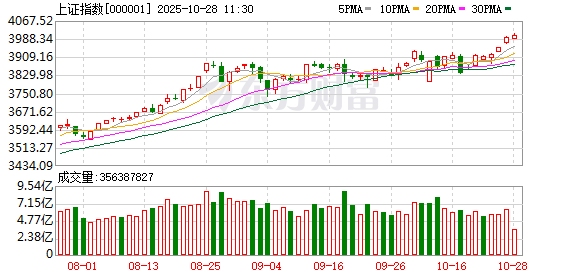
上证指数时隔十年再上4000点 成交额仍待放量
Di Yi Cai Jing· 2025-10-28 04:52
Core Viewpoint - The A-share market has shown resilience, with the Shanghai Composite Index breaking the 4000-point mark, reflecting improved market sentiment and investor confidence, driven by progress in US-China trade negotiations and supportive regulatory policies [2][4]. Market Performance - As of the morning close, the Shanghai Composite Index rose by 0.21%, closing at 4005 points, with a total trading volume of 1.36 trillion yuan, a decrease of 216.5 billion yuan compared to the previous day [2]. - The index's ability to maintain above 4000 points is seen as a psychological barrier that could attract more capital inflow and support future market trends [4]. Regulatory Environment - The China Securities Regulatory Commission (CSRC) has introduced measures to optimize the Qualified Foreign Institutional Investor (QFII) system, enhancing access and operational efficiency for foreign investors [2]. - Future plans include the introduction of a refinancing framework to broaden support for mergers and acquisitions, alongside encouraging listed companies to improve governance and increase shareholder returns through dividends and buybacks [3]. Investment Sentiment - Analysts suggest that the market is currently experiencing a "slow bull" trend, with expectations of continued upward movement in the index, albeit with increased volatility [5]. - There is a cautionary note regarding high valuations in certain sectors, particularly technology and semiconductors, which may lead to profit-taking behavior among investors [3][4]. Economic Context - The market's recent performance is influenced by global economic conditions, including expectations of a potential interest rate cut by the Federal Reserve and the possibility of a meeting between US and Chinese leaders at the APEC summit, which could ease geopolitical tensions [5]. - The overall market sentiment is supported by a marginally easing domestic policy environment, which is expected to bolster risk appetite among investors [3].

证监会剧透四大关键政策动向
Shang Hai Zheng Quan Bao· 2025-10-27 20:32
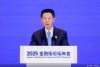
Core Viewpoint - The speech by the Chairman of the China Securities Regulatory Commission (CSRC), Wu Qing, at the 2025 Financial Street Forum outlines a comprehensive plan for the high-quality development of the capital market during the "14th Five-Year Plan" and sets forth four key reform tasks to better serve economic and social development as well as the construction of a financial powerhouse [1] Group 1: Multi-layered Market System Reform - Wu Qing emphasized the need to deepen the reform of market segments to enhance the inclusiveness and coverage of the multi-layered market system, responding to market expectations for institutional inclusiveness and financing efficiency [2] - The construction of a multi-layered capital market system, including the main board, Sci-Tech Innovation Board, Growth Enterprise Market, Beijing Stock Exchange, and the National Equities Exchange and Quotations, has accelerated during the "14th Five-Year Plan" period, forming a mature system [2] - The CSRC announced the "1+6" policy measures for the Sci-Tech Innovation Board in June, with plans to deepen reforms in the Growth Enterprise Market and improve the differentiated listing, information disclosure, and trading systems of the New Third Board [2] Group 2: Financial Support for Innovation - The continuous improvement of the multi-layered capital market will promote high-quality development and better serve the real economy, providing a complete financial support chain for enterprises at different stages and in various industries [3] - The CSRC plans to introduce a refinancing framework to broaden support channels for mergers and acquisitions and encourage listed companies to enhance governance and increase dividends and buybacks [3] Group 3: Public Fund and Long-term Investment Reform - Wu Qing proposed solid progress in public fund reforms, promoting long-term investment products and risk management tools to create a "long money, long investment" market ecosystem [3][4] - Institutional investors should prioritize investor interests, optimize assessment mechanisms, and enhance professional management capabilities to build a healthy and orderly market ecosystem [4] Group 4: Opening Up Capital Markets - Wu Qing stated the intention to steadily expand high-level institutional opening-up, integrating capital and systems on a larger and deeper scale [5] - The introduction of the "Qualified Foreign Institutional Investor" (QFI) system optimization plan aims to provide a more transparent and efficient environment for foreign investors, enhancing the internationalization and marketization of China's financial market [6] Group 5: Investor Protection and Market Integrity - The CSRC aims to enhance the quality and effectiveness of investor rights protection and establish a long-term market stabilization mechanism while cracking down on various illegal activities such as financial fraud and insider trading [7] - The CSRC released opinions on strengthening the protection of small and medium investors, focusing on enhancing fairness in trading environments and promoting rational investment [7]
吴清:扎实推进公募基金改革
Bei Jing Shang Bao· 2025-10-27 12:29
Core Viewpoint - The Chairman of the China Securities Regulatory Commission, Wu Qing, emphasized the importance of long-term funds as a stabilizing force in the financial market, advocating for reforms in public funds and the implementation of long-term assessments for corporate pensions and insurance funds [1] Group 1 - The focus is on enhancing the role of medium to long-term funds as a "ballast" and "stabilizer" in the financial market [1] - There is a commitment to advancing public fund reforms to better support long-term investments [1] - The initiative includes enriching products and risk management tools that are suitable for long-term investments [1]