创新联合体

Search documents
推出六大方面20项措施,山东加快推进智能建造发展
Qi Lu Wan Bao· 2025-08-28 02:53
Core Viewpoint - The Shandong Provincial Department of Housing and Urban-Rural Development, along with 14 other departments, has issued opinions to accelerate the development of intelligent construction, outlining 20 specific measures across six key areas to foster new productive forces in the construction industry [1] Group 1: Industry Development and Support Measures - The opinions integrate intelligent construction into regional industrial development plans, prioritizing "Qilu Construction" brand recognition for qualifying chain enterprises [3] - The establishment of specialized clusters for digital design, intelligent construction equipment, and smart production is emphasized, supported by market-oriented funding from the provincial new and old kinetic energy conversion fund [3] Group 2: Innovation and Application Promotion - The initiative encourages the formation of innovation consortia among construction enterprises, universities, and research institutions to enhance collaboration and support for key laboratories and technology centers [4] - New real estate projects with a total building area exceeding 50,000 square meters are required to apply intelligent construction technologies, promoting the adoption of suitable technologies in project evaluations and awards [4] Group 3: Talent Development and Policy Support - To address the talent gap in intelligent construction, a tiered support approach is introduced, including the establishment of expert and skill master workstations with financial incentives [5] - A new model combining "intelligent equipment and skilled workers" is proposed to reduce accident insurance rates, enhancing the training of new technology workers in high-risk construction scenarios [6] Group 4: Comprehensive Policy Integration - A multi-dimensional policy framework is established to ensure funding for technological advancements and tax incentives for investments in energy-saving and safety equipment [7] - The promotion of intelligent construction technologies and their benefits in quality enhancement, safety assurance, cost reduction, and environmental sustainability is prioritized to increase their influence in the industry [7]

科技新观察|从长三角到长江经济带——超级“创共体”来了
Ke Ji Ri Bao· 2025-08-25 09:22
Group 1: Regional Collaboration and Innovation - The Yangtze River Economic Belt is enhancing collaborative innovation through the signing of the "Yangtze River Economic Belt Collaborative Innovation Framework Agreement" by 11 provinces and cities, focusing on cross-regional technological and industrial innovation [1][2] - The establishment of the "Long Triangle Technology Innovation Collaborative Development Decision" marks a new phase of legal governance for technological innovation collaboration in the Yangtze River Delta [1][9] - The Long Triangle region aims to strengthen the integration of technological and industrial innovation, fostering new industries and business models while expanding development space [1][10] Group 2: Technological Advancements and Achievements - The introduction of a new high-performance ultrafast laser from Anhui Huachuang Hongdu Optoelectronics Technology Co., Ltd. is set to change the domestic femtosecond laser market, with key components now being produced domestically [4][5] - The Long Triangle National Technology Innovation Center has attracted over 18,000 R&D personnel and incubated more than 1,700 enterprises, significantly contributing to technological advancements [6][10] - The successful development of the world's longest single-core underwater optical cable by Jiangsu Hengtong Optic-Electric Co., Ltd. demonstrates the region's capability to compete with international giants through collaborative innovation [8][10] Group 3: Ecosystem and Infrastructure Development - The Long Triangle region is focusing on creating a favorable business environment and optimizing the innovation ecosystem to support enterprise development and talent attraction [10][11] - The establishment of 24 Long Triangle Innovation Alliances aims to enhance cross-regional collaborative innovation, fostering a robust innovation atmosphere [8][10] - The integration of technological resources and the establishment of key laboratories across the Yangtze River Economic Belt are expected to drive significant advancements in technology and innovation [7][10]
立法协同,推动科创协同(坚持和完善人民代表大会制度)
Ren Min Ri Bao· 2025-08-13 21:50
Core Points - The article discusses the collaborative legislative decision made by Shanghai, Jiangsu, Zhejiang, and Anhui to promote technological innovation in the Yangtze River Delta region, marking a new phase of legal governance in this area [3][4] - The decision aims to transform effective practices into institutional arrangements to address bottlenecks in technological innovation and enhance the region's role as a strategic pillar in national technology development [3][4] Group 1: Legislative Framework - The decision consists of 19 articles focusing on implementing national strategies, fostering original innovation capabilities, and developing new growth drivers [3] - It emphasizes the importance of the Yangtze River Delta in the construction of a strong technological nation and aims to establish it as a key hub in the global innovation network [3] Group 2: Infrastructure and Resource Sharing - The region is home to significant scientific infrastructure, including national science centers and major research facilities, which are crucial for technological innovation [4] - A shared service platform for technological resources has been established, with over 610 billion yuan worth of scientific instruments available for public use [4][5] Group 3: Innovation Mechanisms - The article highlights the introduction of a "pay after use" mechanism for technology transfer, allowing companies to trial technologies before committing to purchase [6][7] - Various collaborative innovation mechanisms have been incorporated into the decision, including optimizing task organization and encouraging cross-regional technology incubators [8] Group 4: Industry Collaboration - The article mentions successful collaborations among universities and enterprises in the region, leading to rapid product development and commercialization [10][11] - The decision supports the establishment of innovation clusters and encourages the integration of innovation resources across the Yangtze River Delta [10][12]
政策举措密集落地 多维度赋能新质生产力发展
Shang Hai Zheng Quan Bao· 2025-08-13 17:48
Group 1 - The establishment of innovation consortia in Jiangsu Province aims to enhance targeted resource flow by integrating leading enterprises, unicorns, and research institutions to address technological challenges in the innovation and industrial chains [1] - Financial support is being optimized through policies that encourage banks to provide long-term financing for key manufacturing sectors such as integrated circuits and industrial mother machines, facilitating breakthroughs in core technologies [1] - The increasing global competition in technology necessitates that China's manufacturing sector overcomes core technology bottlenecks, with financial backing being crucial for research and industrialization of these technologies [1] Group 2 - A series of institutional innovations, including intellectual property protection and technology evaluation reforms, are being implemented to clear obstacles and solidify the foundation for cultivating new productive forces [2] - The new intellectual property protection regulations in cities like Shijiazhuang and Fujian are tailored to support industries such as biomedicine and artificial intelligence, establishing a comprehensive protection network [2] - The Long Triangle region's initiative encourages universities and research institutions to reform the management of technological achievements, promoting their commercialization through various mechanisms [2] Group 3 - The goal of deep integration is to cultivate emerging pillar industries with global influence, aiming to create benchmarks for new productive forces in China [3]
从长三角到长江经济带——超级“创共体”来了
Ke Ji Ri Bao· 2025-08-13 02:50
Group 1: Regional Collaboration and Innovation - The Yangtze River Delta (YRD) has initiated the "Decision on Promoting Collaborative Development of Technological Innovation," marking a new phase of legal governance in regional innovation [1] - The YRD and the Yangtze River Economic Belt (YREB) are accelerating their collaborative efforts, with 11 provinces and cities signing a cooperation framework to promote cross-regional technological innovation [1][2] - The YREB's population and economic scale represent a significant portion of the national economy, with ongoing efforts to optimize regional coordination and development [3] Group 2: Technological Advancements and Achievements - The introduction of a new high-performance femtosecond laser by Anhui Huachuang Hongdu Optoelectronics Technology Co., Ltd. is set to change the domestic femtosecond laser market landscape [4][5] - The Long Triangle National Technology Innovation Center has attracted substantial innovation resources, resulting in over 1,700 incubated enterprises and more than 20,000 serviced companies [6] - The establishment of the "Long Triangle Marine Information Transmission Technology Innovation Alliance" led by Hengtong Optoelectronics highlights the collaborative innovation efforts in the region [8] Group 3: Future Directions and Strategic Goals - The YREB aims to build a collaborative innovation mechanism focusing on cultivating new growth drivers and enhancing regional innovation capabilities [6][9] - The Long Triangle Technology Innovation Community Office has implemented 43 projects since 2022, with a total financial input of 1.8 billion yuan from local governments and 1.15 billion yuan from social investments [10] - The region is expected to focus on key breakthroughs and the establishment of innovation joint bodies to tackle critical technologies [7][10]
浦口经开区新增一家创新联合体
Xin Hua Ri Bao· 2025-08-10 19:35
Group 1 - Nanjing's Science and Technology Bureau announced the 2025 list of registered innovation consortia, with the project led by Xinde Semiconductor from Pukou Economic Development Zone successfully passing the municipal evaluation [1] - The "Nanjing Integrated Circuit 2.5D Advanced Packaging and Testing Key Technology R&D and Application Innovation Consortium" aims to accelerate the industrialization of 2.5D technology and fill the local high-end packaging and testing gap, supporting Nanjing's transformation from a "packaging and testing city" to a "strong packaging and testing city" [1] - The consortium is composed of Jiangsu Xinde Semiconductor Technology Co., Ltd. and Xina Technology (Nanjing) Co., Ltd., focusing on shared R&D platforms, joint process verification, and industry chain collaboration [1] Group 2 - Pukou Economic Development Zone is promoting a comprehensive "research-production integration" strategy, linking laboratories with production lines and scientists with entrepreneurs through innovation consortia [1] - Industry leaders like Xinde, Huaten, and Jiuwu are leading innovation consortia to tackle technical challenges and build a collaborative innovation ecosystem across various industry chains [1] - The consortia aim to break through "bottleneck" technologies in the industry chain and create replicable practical experiences for the transformation of innovative results [1]
杭州成全国学子暑期实践“青春磁场”
Hang Zhou Ri Bao· 2025-08-07 03:26
Group 1 - The core theme of the news is the vibrant engagement of youth in social practice activities across various regions, particularly in Hangzhou, showcasing their contributions to societal development and innovation [3][4][5][6]. - The "Youth Power" initiative in Hangzhou has expanded significantly, attracting participation from students across 16 provinces, indicating a nationwide interest in social practice [3][6]. - Various university teams are focusing on different themes, such as digital reform in governance, healthcare innovation, and community service, reflecting a diverse approach to social issues [4][5][6]. Group 2 - The collaboration among universities, such as the formation of the Fujian Province practice demonstration team, highlights the importance of interdisciplinary approaches in addressing urban challenges [4]. - The activities include hands-on experiences with advanced technologies, such as AI and robotics, which enhance students' understanding of their academic subjects and their practical applications [4]. - The popularity of the "Youth Love Hangzhou" initiative is evidenced by over 500 university teams submitting practice reports, with significant engagement on social media platforms [6][7].
“深度绑定”共攀科技创新高峰
Xin Hua Ri Bao· 2025-07-30 21:12
Group 1 - The core viewpoint of the article emphasizes the establishment and operationalization of the Yangtze River Delta Innovation Alliance, which aims to enhance regional collaboration in technology innovation and address key industry challenges [1][5][10] - The first batch of innovation alliances focuses on seven strategic technology fields, including artificial intelligence, integrated circuits, biomedicine, aerospace manufacturing, intelligent equipment, new energy vehicles, and quantum communication [2][5] - The second batch of alliances expands into ten fields, including new generation information technology and intelligent robotics, indicating a broader focus on emerging industries [5][10] Group 2 - The Yangtze River Delta Language Computing Innovation Alliance, led by Sibeichi Technology Co., Ltd., aims to address the challenges of general artificial intelligence (AGI) in various application scenarios, enhancing reliability and commercial value [3][8] - The Traditional Chinese Medicine Green Intelligent Manufacturing Technology Innovation Alliance, led by Jiangsu Kangyuan Pharmaceutical Co., Ltd., focuses on developing intelligent manufacturing technologies for modern Chinese medicine extraction [4][8] - The collaborative model of the innovation alliances promotes resource sharing among members, enhancing research efficiency and fostering innovation through a structured management system [6][7] Group 3 - The alliances are designed to eliminate the gap between technological innovation and industrial application, establishing clear operational rules and roles among participating entities [6][10] - The resource-sharing mechanism within the alliances allows for the integration of algorithms, research data, and industrial scenarios from different regions, enhancing collaborative innovation [7][10] - The article highlights the importance of government support in facilitating major technological breakthroughs and the establishment of significant innovation platforms within the Yangtze River Delta [10]


第七届中关村•智聚创新创业大赛落幕
Bei Jing Ri Bao Ke Hu Duan· 2025-07-25 13:46
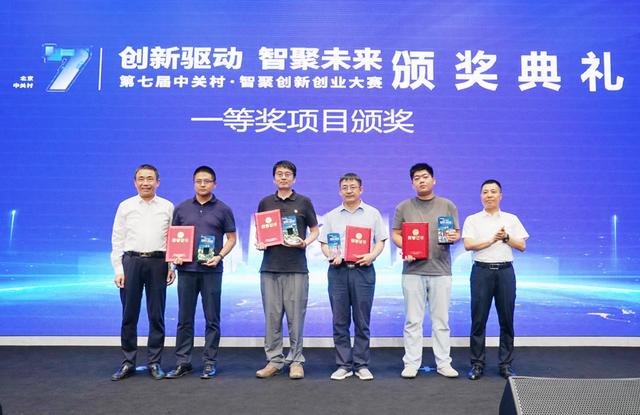
Core Insights - The seventh "Zhongguancun Smart Gathering" Innovation and Entrepreneurship Competition concluded on July 25, showcasing 321 projects over 360 days, with 48 awards distributed and intended financing exceeding 30 million yuan, highlighting the emergence of hard-tech stars [1] Group 1: Award-Winning Projects - The first prize in the frontier technology category was awarded to a "High-Level Explosion-Proof Industrial Robot," which achieved a 90% localization rate of core components and broke foreign monopolies, enhancing safety in high-risk scenarios [3] - In the life sciences category, the "High-Performance Multimodal Mental Illness Diagnosis Model" can complete psychological screening in just three minutes, with a clinical compliance rate of 85%, making "mind-reading" a practical reality [3] - The "Chip Application Verification Testing Equipment" in the new manufacturing category provides a standardized, universal, automated, and information-based platform, establishing a quality fortress for domestic chips [3] Group 2: Post-Competition Initiatives - The award ceremony served as a platform for immediate implementation, with Zhongguancun Street signing landing agreements with 11 winning companies, providing incubation space, industrial resources, and cash prizes [5] - A new "Enterprise Introduction Service Policy Package" was launched, including special support funds, talent green channels, and technology transformation support, covering the entire lifecycle of enterprises from startup to listing [5] - Zhongguancun Street introduced a dual-track display model combining offline exhibitions and online cloud exhibition halls, showcasing 24 award-winning projects and facilitating discussions with investment institutions and potential partners [5] Group 3: Future Plans - Zhongguancun Street plans to open application scenarios for smart governance and urban renewal within the year, providing a broad platform for new technologies [7] - The "Enterprise Growth Accompaniment Plan" will package policies, space, and financial services to contribute to the construction of Beijing's International Science and Technology Innovation Center [7] - The competition adopted a "quarterly competition" mechanism for the first time, maintaining innovation service cohesion and building an innovation consortium with street-level support and leading enterprises [7]

解码东莞经济半年报:向“新”力驱动增长韧性
2 1 Shi Ji Jing Ji Bao Dao· 2025-07-24 11:09
Economic Performance - Dongguan's GDP grew by 4.8% year-on-year in the first half of the year, with industrial added value increasing by 5.1% and foreign trade growth reaching 16.5%, marking a historical high for the same period [1][3] - The city's economic performance is significant on a national scale, showcasing resilience and vitality despite global economic challenges [1][2] Foreign Trade Resilience - Dongguan's foreign trade achieved a record high of 749.28 billion yuan in import and export value, with a year-on-year growth of 16.5%, leading the major foreign trade cities in Guangdong province [3][6] - The city's foreign trade dependency ratio has decreased to 113% in 2024, down from over 400% in previous years, yet it remains one of the highest among major cities in China [2][3] Market Diversification - Dongguan has successfully diversified its trade markets, with ASEAN becoming the largest trading partner, while the U.S. market share decreased from 14% to 12% [6][8] - The city has seen significant growth in exports to emerging markets, with increases of 43.5% to ASEAN, 21.5% to India, and 63.6% to Central Asia [6][8] Manufacturing Sector Growth - The industrial added value for Dongguan's manufacturing sector increased by 5.1%, with notable growth in electronic information manufacturing (9.2%), electrical machinery (8.8%), and chemical manufacturing (12.4%) [10][11] - Advanced and high-tech manufacturing sectors reported growth rates of 7.5% and 9.1%, respectively, indicating a shift towards higher value-added production [10][11] Innovation and New Industries - Strategic emerging industries and future industries are becoming key pillars of Dongguan's economy, with investments in advanced and high-tech manufacturing rising by 30.6% and 31.8% respectively [13][14] - The establishment of innovation consortia in various sectors is enhancing collaboration between enterprises and research institutions, driving technological advancements [14][15] Export Product Trends - Dongguan is the largest toy export base in China, with toy exports reaching 9.97 billion yuan in the first half of the year, reflecting a growth of 6.3% [9] - The city's export structure is evolving, with a focus on high-tech products and self-owned brands, leading to increased competitiveness in the global market [8][9]