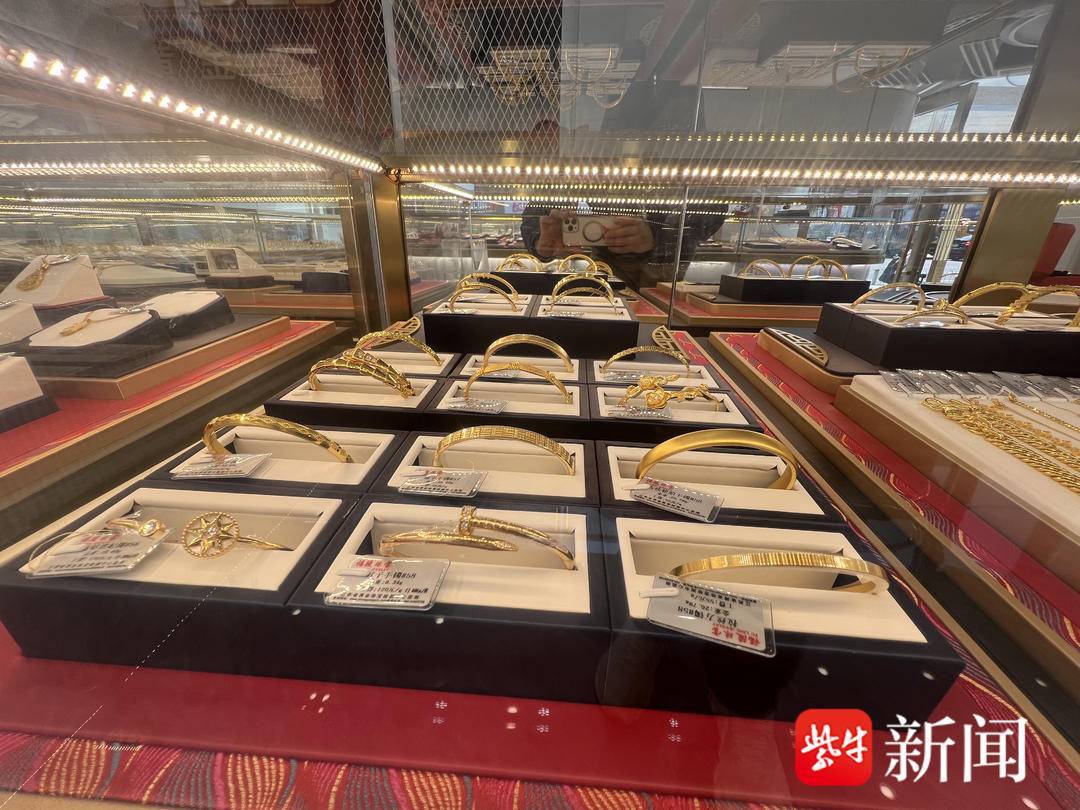
反洗钱监管

Search documents
反洗钱监管升级 金融机构客户尽职调查新规将至
Bei Jing Shang Bao· 2025-08-04 15:50
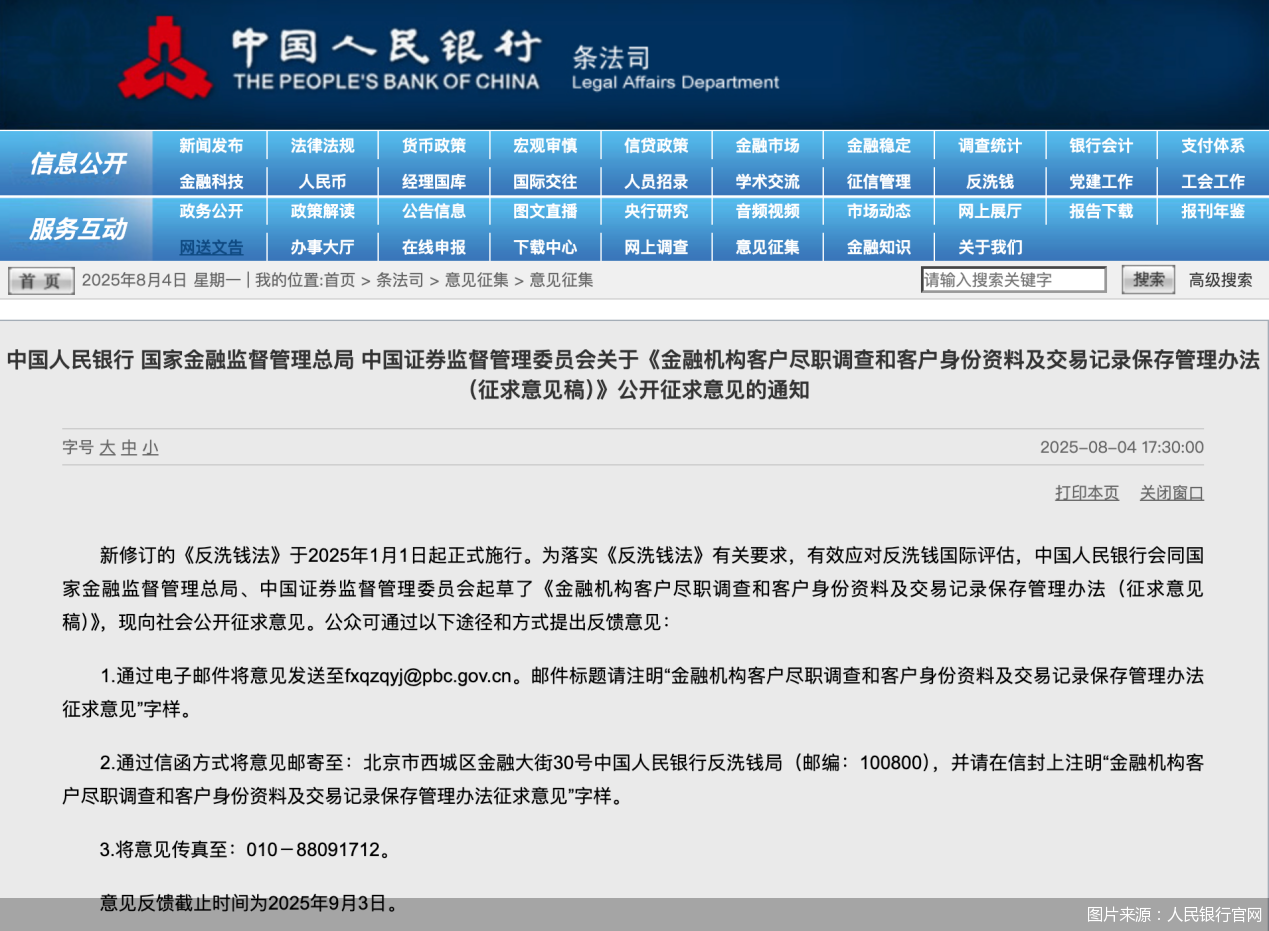
金融领域的反洗钱监管持续升级中。8月4日,中国人民银行、国家金融监督管理总局、中国证券监督管 理委员会关于《金融机构客户尽职调查和客户身份资料及交易记录保存管理办法(征求意见稿)》(以 下简称《办法》),现向社会公开征求意见,意见反馈截止时间为2025年9月3日。 结合内容来看,《办法》围绕对金融领域客户尽职调查流程、客户身份资料及交易记录保存等以及受益 所有人识别等提出多项细化要求,为金融机构提供了操作指南。而在《办法》之前,金融监管部门也曾 出台多个细分领域的反洗钱要求。分析人士指出,有效的反洗钱措施能够帮助金融机构识别并防范潜在 的金融犯罪风险,为客户提供更安全的服务环境。 六大类金融机构适用 根据《办法》,需要履行反洗钱义务的金融机构类型包括六大类,分别是:政策性银行、商业银行、农 村合作银行、农村信用合作社、村镇银行;证券公司、期货公司、证券投资基金管理公司;保险公司、 保险资产管理公司;信托公司、金融资产管理公司、企业集团财务公司、金融租赁公司、汽车金融公 司、消费金融公司、货币经纪公司、理财公司;非银行支付机构;中国人民银行确定并公布的从事金融 业务的其他机构。 以银行为例,《办法》要求,银行类 ...
强化反洗钱监管!客户尽职调查和资料保存新规将至,涉多类金融机构
Bei Jing Shang Bao· 2025-08-04 14:30
Core Viewpoint - The People's Bank of China and other regulatory bodies have released a draft regulation aimed at enhancing anti-money laundering (AML) measures across various financial institutions, with a feedback deadline set for September 3, 2025 [1][6]. Group 1: Regulatory Framework - The draft regulation outlines detailed requirements for customer due diligence, customer identity documentation, and transaction record retention, providing operational guidelines for financial institutions [1][6]. - Six categories of financial institutions are required to comply with the AML obligations, including policy banks, commercial banks, rural cooperative banks, securities firms, insurance companies, and non-bank payment institutions [4][5]. - The regulation mandates that banks conduct customer due diligence for transactions exceeding RMB 50,000 or USD 10,000, and non-bank payment institutions must do the same for transactions above RMB 10,000 [4][5]. Group 2: Implementation and Impact - The regulation aims to enhance the effectiveness of customer due diligence and align with international AML standards, thereby improving risk management and compliance within the financial sector [6][8]. - Analysts suggest that while compliance costs may increase in the short term, the long-term benefits include enhanced stability and confidence in China's financial markets, facilitating cross-border capital flows and international cooperation [9]. - The regulation is seen as a critical upgrade to the AML regulatory framework, filling gaps in oversight and contributing to a safer and more transparent financial system [9].

今起现金买黄金超10万元需上报!记者实探
证券时报· 2025-08-01 14:08
Core Viewpoint - The article discusses the recent regulatory changes in China's precious metals and jewelry industry, specifically the implementation of anti-money laundering measures, and the current state of the gold market amid fluctuating prices and declining consumer demand [1][4][6]. Regulatory Changes - The People's Bank of China has issued new regulations requiring institutions to report cash transactions exceeding 100,000 RMB or equivalent foreign currency within five working days, effective from August 1, 2025 [1]. - Merchants in the Shenzhen Shui Bei gold and jewelry district have not yet received specific notifications regarding the implementation of these regulations, but they anticipate that enforcement will occur soon [1]. Market Conditions - International gold prices have been fluctuating around historical highs, with a notable decline of over 10% from peak levels in late July [4]. - Demand for gold jewelry has decreased in recent months, with one merchant reporting a 15% drop in transaction volume from June to July [4]. - The price of gold jewelry is currently stable between 770 and 790 RMB per gram, but consumer interest has waned, with fewer purchases compared to previous periods [4]. Consumer Behavior - A price threshold of 800 RMB per gram is seen as a critical point that could reignite consumer interest in gold purchases [5]. - The World Gold Council reported a 3% year-on-year increase in global gold demand in Q2 2025, but a significant decline of 14% in gold jewelry consumption, with China and India experiencing drops of 20% and 17%, respectively [5][6]. Future Outlook - The Chinese gold jewelry market may continue to face challenges due to low consumer confidence and high gold prices, although seasonal improvements and potential policy support could provide some relief [6]. - Analysts note that gold prices have risen by 26% in the first half of the year, outperforming many asset classes, suggesting that prices may stabilize within a narrow range in the latter half of the year [6].

现金购金迎新规:8月1日起,单笔超10万元交易需上报
Huan Qiu Wang· 2025-07-31 06:50
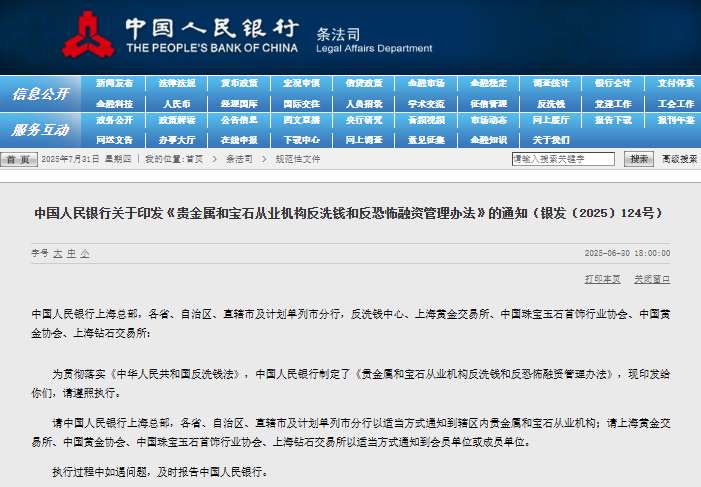
【环球网财经综合报道】为强化贵金属领域的反洗钱与反恐怖融资监管,一项影响个人与机构购金行为 的新规将落地。中国人民银行近日发布《贵金属和宝石从业机构反洗钱和反恐怖融资管理办法》(银发 〔2025〕124号),明确要求自2025年8月1日起,个人使用现金购买贵金属的单笔或日累计交易金额达 到人民币10万元(含)以上的,相关机构必须履行客户尽职调查,并向中国反洗钱监测分析中心提交大 额交易报告。 根据《办法》规定,此次监管聚焦于贵金属和宝石行业的现金交易。具体来看,当客户在从业机构(如 金店、银行等)进行交易时,若使用人民币现金或等值外币进行支付,且单笔或当日累计金额超过10万 元门槛,则该机构必须启动严格的反洗钱程序。这意味着,当有大额现金购金行为发生时,商家或银行 等机构有责任核实客户身份、了解资金来源和交易目的,并评估其潜在的洗钱风险。 | | | | 中国人民纪行 THE PEOPLE'S BANK OF CHINA | | 条法司 Legal Affairs Department | | | | | | | --- | --- | --- | --- | --- | --- | --- | --- | ...
香港稳定币牌照有望2026年初首发
3 6 Ke· 2025-07-30 11:50
香港金融管理局敦促稳定币潜在发行机构尽快申请牌照。"稳定币发牌将是一个持续进行的过程,如个 别机构认为已准备充分并希望尽早获得牌照,应于9月30日或之前向香港金管局提交申请。"该机构表 示。 香港金管局要求,稳定币发行人要拥有实在的应用场景、切实可行的具体商业方案和落实计 划,以及周全而稳妥的业务模式及运作安排 7月29日,香港金融管理局(下称"香港金管局")表示,预计首批香港稳定币发行人牌照将于2026年年 初发放。 这一计划慢于市场预期。此前,市场预计香港稳定币首批发行人牌照可能在2025年年内发放,上述立场 表明了香港金管局的谨慎立场。 香港金管局副总裁陈维民表示,目前没有明确的牌照最终落地时间表,顺利的话,首批牌照有可能在 2026年初发出。 与此同时,陈维民亦表示,初期阶段香港金管局只会发出几个牌照。即使取得牌照,公司短期盈利仍存 在不确定性,建议投资者在消化市场"利好"消息时应保持冷静和独立思考。 目前,已有不少企业试验稳定币的落地情况。此前,在建立稳定币发牌制度同时,香港金管局已从40多 份申请中核准了三组潜在发行人设立了测试沙盒。这些潜在发行人分别来自金融和科技行业,具有较大 的清算业务规模或 ...
支付宝、财付通!大消息!
券商中国· 2025-07-23 08:36
Core Viewpoint - The People's Bank of China (PBOC) has expanded direct anti-money laundering (AML) supervision to include major third-party payment institutions like Alipay and WeChat Pay, reflecting the growing importance of these entities in the financial ecosystem [3][5][8]. Group 1: Regulatory Changes - The PBOC has revised the notification regarding the implementation of the AML supervision management measures, which now includes a broader list of financial institutions under direct supervision [2][12]. - The updated list of institutions under PBOC's direct AML supervision now includes three additional entities: Alipay, WeChat Pay, and the Network Union Clearing Co., Ltd [5][6]. - The regulatory framework is evolving to address new challenges in the AML sector, necessitating a more robust supervisory approach to enhance financial risk management [4][15]. Group 2: Market Position of Third-Party Payment Institutions - Alipay and WeChat Pay hold significant market shares in China's third-party internet payment market, with 20.70% and 18.31% respectively, while UnionPay leads with 26.63% [6]. - The combined market share of Alipay and WeChat Pay indicates a "duopoly" in the non-bank payment sector, highlighting their systemic importance [6][7]. Group 3: AML Compliance and Challenges - The third-party payment sector has faced scrutiny, with the PBOC issuing 55 payment fines totaling approximately 174 million yuan in 2024, indicating a focus on AML compliance and customer identity verification [10]. - The revised notification emphasizes the need for financial institutions to report significant AML-related incidents and submit annual AML work reports to enhance compliance [16][17].
【西街观察】莫让稳定币成为洗钱工具
Bei Jing Shang Bao· 2025-07-09 15:04
Core Viewpoint - The rise of stablecoins presents significant money laundering risks that require urgent attention and regulatory measures [1][2]. Group 1: Risks Associated with Stablecoins - Some merchants in Yiwu have started accepting stablecoins, raising concerns about potential money laundering activities, despite the absence of the rumored $1 billion monthly transaction volume [1]. - Stablecoins, unlike volatile cryptocurrencies like Bitcoin, have mechanisms to maintain value stability, making them attractive as transaction tools [1]. - The anonymity and decentralization of stablecoin transactions complicate the tracking of fund flows, providing a cover for money laundering activities [2]. Group 2: Regulatory Challenges - The use of stablecoins allows users to bypass traditional banking processes, posing challenges to regulatory frameworks and impacting cross-border financial operations [2]. - The increasing share of stablecoins in illegal transactions has surpassed that of Bitcoin, indicating a shift in criminal preferences [3]. - The need for a robust monitoring system across various dimensions, including transaction processes and exchange channels, is critical to mitigate money laundering risks [4]. Group 3: Solutions and Recommendations - Strengthening regulations around the "in and out" processes of stablecoins is essential to prevent illegal fund laundering [4]. - Merchants should be vigilant in verifying transaction counterparties and reporting large transactions to avoid becoming conduits for money laundering [4]. - Developing specialized monitoring tools that leverage blockchain technology can help trace transactions and identify illicit activities [4]. - International collaboration is necessary to establish cross-border anti-money laundering information-sharing mechanisms to combat the use of stablecoins in global money laundering [4]. Group 4: Future Considerations - The exploration of compliant pathways for cross-border payments, such as the pilot programs in Hong Kong with digital RMB, could provide innovative solutions while ensuring financial security [4]. - Balancing market innovation with financial safety is a critical challenge that must be addressed in the evolving landscape of cross-border payments [4].
8月1日起现金买黄金钻石超10万元需上报:新规出台意味着什么?
Sou Hu Cai Jing· 2025-07-07 22:18
Group 1 - The new regulation requires financial institutions to identify customers and record the source and purpose of cash transactions exceeding 100,000 yuan (or equivalent foreign currency) [2] - The regulation targets key monitoring areas including gold jewelry stores, real estate sales, and car dealerships, reflecting a shift in consumer behavior regarding high-value purchases [2][4] - The implementation of the new rules has led to a significant decrease in cash transactions, with a reported 40% drop in large cash transactions in the first week of August, while electronic payments rose to 75% [6] Group 2 - The regulation also strengthens oversight of the gold recycling process, requiring identification and proof of source for gold sales exceeding 100,000 yuan, which complicates the liquidation of unverified "heirloom gold" [8] - The policy aims to promote a transformation in national wealth management practices, aligning with global trends towards financial transparency [8] - The regulation is part of a broader policy framework that includes measures related to real estate and digital currency, enhancing the financial security landscape and ensuring compliance as a key attribute for wealth protection [9]

贵金属和宝石从业机构反洗钱新规下月施行 银行强化风险防控
Zheng Quan Ri Bao· 2025-07-03 16:18
Core Viewpoint - The People's Bank of China has issued the "Anti-Money Laundering and Counter-Terrorism Financing Management Measures for Precious Metals and Gemstone Practitioners," which will take effect on August 1, 2025, aiming to enhance regulatory oversight in the precious metals and gemstones sector [1][2]. Group 1: Regulatory Framework - The new measures include a requirement for practitioners to report cash transactions of 100,000 RMB or more, or equivalent foreign currency, and non-cash transactions under specific circumstances [1]. - The threshold for large transaction reporting has been raised from 50,000 RMB to 100,000 RMB, expanding the regulatory scope to include a larger number of precious metals and gemstone retail outlets [1][2]. Group 2: Industry Response - Several banks have issued warnings regarding the risks of money laundering and terrorist financing in the precious metals trading sector, highlighting the high transaction amounts and cash transaction ratios [3]. - Financial institutions, including Shanghai Bank and Huizhou Rural Commercial Bank, have emphasized the need for practitioners to understand and manage the risks associated with precious metals trading [3]. Group 3: Expert Opinions - Industry experts suggest that the new measures are a necessary response to the evolving risks of money laundering and terrorist financing, aligning with international standards and domestic legal requirements [2]. - Analysts note that the trend of money laundering techniques is becoming more specialized and concealed, necessitating ongoing regulatory updates and collaboration among banks and authorities [3].




反洗钱监管再升级!8月1日起现金买黄金、钻石超10万元需上报
Sou Hu Cai Jing· 2025-07-02 13:40
Core Viewpoint - The People's Bank of China has issued the "Management Measures for Anti-Money Laundering and Anti-Terrorist Financing for Precious Metals and Gemstone Practitioners," which will take effect on August 1, 2025, expanding the scope of anti-money laundering regulations to cover the entire industry chain of precious metals and gemstones [1][3]. Group 1: Regulatory Changes - The new regulations clarify the applicable entities, starting amount for reporting large transactions, and specific circumstances for customer due diligence, bringing all precious metals and gemstones businesses under anti-money laundering supervision [3][5]. - The threshold for submitting large transaction reports has been raised from 50,000 RMB to 100,000 RMB, requiring numerous precious metals and gemstone retail outlets to comply [3][6]. Group 2: Compliance Requirements - Practitioners must adhere to the "Know Your Customer" principle, conducting due diligence based on customer characteristics and transaction nature, particularly for cash transactions of 100,000 RMB or more [3][5]. - Institutions are required to verify customer identities using reliable identification documents and maintain records of essential customer information [3][5]. Group 3: Industry Context - The precious metals sector is considered a high-risk area for money laundering and terrorist financing due to the large transaction amounts and high liquidity associated with these assets [5]. - Criminal activities often involve purchasing large quantities of gold for quick cash conversion, which complicates the tracking of illicit funds, especially when cash payments are used [5][6].