大数据技术

Search documents
认清网购骗局“新马甲”
Jing Ji Ri Bao· 2025-11-17 22:24
Group 1 - The article highlights the rise of online shopping scams, particularly around major shopping events like "Double 11," where fraudsters exploit increased consumer activity to launch various scams [1] - New types of online shopping fraud are emerging, leveraging big data technology to obtain consumer records, shopping preferences, payment capabilities, and psychological traits, which are then used to tailor scams [1] - Examples of scams include impersonating e-commerce customer service to induce consumers to click on fake links and providing personal banking information, as well as fake merchant customer service claiming to offer commission for helping with order placements [1] Group 2 - E-commerce platforms are urged to take proactive measures to enhance platform security and data management, preventing consumer information leaks [2] - The use of technology to identify and intercept suspicious links, along with strengthening merchant qualification reviews and establishing rapid response fraud prevention mechanisms, is emphasized [2] - Logistics companies are advised to improve consumer information protection mechanisms to prevent data leaks during the logistics process, while regulatory bodies should intensify efforts to combat fraud [2]
销量证明:衡量企业综合实力的关键指标!-权威机构中金企信
Sou Hu Cai Jing· 2025-11-17 12:10
Core Insights - The article discusses the increasing importance of market position certification for companies, highlighting its role in enhancing brand value, market trust, and attracting investment [2][3]. Group 1: Market Position Certification - Market position certification is crucial for reflecting a company's comprehensive strength and product market position, which in turn boosts product competitiveness and brand image [2]. - The demand for market position certification is expected to rise due to intensifying market competition [2]. Group 2: Future Trends in Certification - A diversified certification system will emerge, focusing on specialized standards tailored to different industries [3]. - The certification process will become more intelligent through the integration of AI and big data, improving efficiency and accuracy [3]. - International collaboration in certification will strengthen, allowing companies to better meet global market demands [3]. Group 3: Brand Value and Market Share - Certification results can enhance brand credibility and attract consumers [5][6]. - Market position certification is linked to consumer trust in brands, which is essential for expanding market share [7][8]. - Establishing comprehensive brand competitiveness can lead to greater market space and support high-quality development for companies [14]. Group 4: Industry Insights - The jump rope industry has evolved into a comprehensive sector encompassing product development, sales, and promotion, with active participants exceeding 250 million in China as of 2024 [11]. - The adult market's growth reflects a shift in health awareness, with younger consumers prioritizing health management over mere weight loss [11]. - Diverse consumer needs are emerging, with professional athletes focusing on product performance and ordinary users valuing smart features [11].

商家“巨型吊牌防退货”成潮流,为啥会出现这种情况?
3 6 Ke· 2025-11-17 04:15
Group 1 - The phenomenon of "giant tags to prevent returns" has become a trend among merchants during this year's Double Eleven shopping festival, as they face high return rates, particularly in women's clothing, which exceeds 80% [3][4] - Merchants have started using oversized tags, comparable to A4 paper, to deter consumers from returning items after wearing them, as these tags increase discomfort and visibility [3][6] - The high return rates in the e-commerce sector, particularly for women's clothing, are driven by consumers exploiting the "seven-day no-reason return" policy, leading to significant economic losses for merchants [4][9] Group 2 - The rise of giant tags is a response to the growing issue of malicious returns, where consumers use the return policy to take advantage of free clothing [6][7] - The use of giant tags reflects a breakdown of trust in the e-commerce market, as merchants assume all consumers may be potential returners, which can alienate honest customers [9][10] - The introduction of giant tags has created a dilemma for merchants, balancing the need to reduce returns while maintaining customer flow, as the negative shopping experience may lead to a decrease in conversion rates [10][12] Group 3 - To address the challenges posed by high return rates, the e-commerce market should consider implementing effective mechanisms and technologies, such as AI and big data, to improve return verification processes [12] - The integration of VR and AR technologies could enhance the online shopping experience, helping consumers better understand products before purchase, thereby reducing returns [12] - Exploring fairer return policies, such as tiered return shipping fees and encouraging consumer feedback, could foster better interactions between merchants and consumers [12]

共推大宗商品数字化转型,上海国际棉花交易中心与上海财大计算机与人工智能学院签约
Sou Hu Cai Jing· 2025-10-28 23:57
Core Insights - The Shanghai International Cotton Trading Center (SICC) has signed a cooperation agreement with the School of Computer Science and Artificial Intelligence at Shanghai University of Finance and Economics to integrate artificial intelligence and big data technology into the commodity supply chain [1][3] - The collaboration aims to foster innovation in industry-academia-research cooperation and cultivate composite talents that meet industry needs, supporting the digital transformation of the real economy [1][3] Group 1 - The signing ceremony was hosted by the financial director of SICC, with key representatives from both organizations in attendance [3] - SICC, as the only spot trading platform for cotton, textile raw materials, and textiles in the Shanghai Free Trade Zone, is committed to a development strategy centered on trading services and supported by big data information [3] - SICC has been advancing digital transformation projects like the "Shangmian Data Chain" but faces challenges in AI model training and talent reserves, seeking deep cooperation with the university in four areas: talent co-training, joint research, resource sharing, and spiritual integration [3] Group 2 - The School of Computer Science and Artificial Intelligence at Shanghai University of Finance and Economics is a significant initiative aligned with the national strategy for technological advancement and has a strong research foundation in computer science and artificial intelligence [3] - The collaboration is expected to leverage research and talent advantages to jointly tackle areas such as big data analysis, large model application development, and intelligent risk control, aiding the digital upgrade of the real economy [3]

数智科技为金融高质量发展注入新动能
Jin Rong Shi Bao· 2025-10-13 02:07
Core Insights - The article emphasizes the necessity for China's financial system to transition from a scale-oriented model to one focused on efficiency, driven by the need for high-quality economic development [4][5][6]. Group 1: Evolution of Production Factors - The shift from traditional production factors (land, labor, capital) to the recognition of data as a fifth production factor highlights the changing landscape of economic growth in the digital age [2][3]. - Data is now seen as a core element driving productivity leaps, surpassing traditional information [2]. Group 2: Role of AI and Digital Technology - The rapid advancement of AI, particularly large model technologies, is transforming financial services by enhancing decision-making and operational efficiency [3][9]. - AI systems are replacing or augmenting human capabilities in information processing and predictive analysis, acting as a new engine for productivity transformation [3][9]. Group 3: Financial Development Goals - The financial sector must prioritize efficiency over mere scale to avoid systemic risks and improve resource allocation, especially for small and innovative enterprises [4][5]. - Enhancing capital allocation efficiency is crucial for the financial system to effectively support entities with high innovation potential and market prospects [5][6]. Group 4: Implementation of Smart Technology - Utilizing big data technology can significantly reduce information asymmetry and enhance transparency within the financial system [7][8]. - AI applications are driving financial services towards greater automation and personalization, improving service quality and efficiency [8][9]. Group 5: Strategic Recommendations for Financial Innovation - China should adopt a top-level design approach to integrate smart finance into national financial development strategies, focusing on long-term planning and cross-departmental coordination [10][11]. - Strengthening digital infrastructure and core technology research is essential for overcoming key technological challenges and fostering innovation [11][12]. - Establishing a regulatory framework that balances innovation and risk management is vital for the sustainable development of smart finance [12].
算法备案风险防控:内容标识与用户权益保护
Sou Hu Cai Jing· 2025-10-03 21:44
Core Viewpoint - The article emphasizes the growing importance of algorithm registration risk and user rights protection in the context of rapid information development, highlighting the need for effective content identification and management systems to safeguard user interests [1][2]. Content Identification - Content identification is crucial as algorithm-generated content often lacks traceability regarding its source and authenticity. A scientific and reasonable content identification system is necessary, including information on content origin, algorithm characteristics, publication time, and review mechanisms to help users assess information reliability [1][2]. User Rights Protection - User rights protection is a multifaceted concern in algorithm application. Users often worry about privacy and data security when using algorithm-generated content. Strict data protection policies should be established to prevent information leakage, and users should have greater control over their personal information, enhancing trust and improving platform image [1][2]. Technological Solutions - The application of technological solutions is vital in addressing these issues. Advances in artificial intelligence and big data technologies enable more mature applications of algorithms in content generation and management. For instance, natural language processing can automate content review to identify potential misinformation, while blockchain technology offers solutions for content traceability and identification [2][5]. Industry Standards - The establishment of industry standards is an important step in risk prevention. Currently, there is a lack of unified standards and norms in the industry, leading to significant discrepancies in content identification and user rights protection across platforms. Enhanced communication and collaboration within the industry are necessary to develop a set of standards applicable to various platforms, improving overall industry standards and user experience [2][7]. Future Directions - Future developments in algorithm registration risk prevention and user rights protection will likely focus on several key areas: - Increased intelligence in content identification and risk prevention through real-time monitoring and algorithm analysis [5]. - Enhanced user participation in content management, allowing users to provide feedback and become active participants in information management [7]. - Cross-platform collaboration to create a more comprehensive content ecosystem, improving overall risk prevention capabilities through information sharing and resource integration [7]. Conclusion - The article concludes that while challenges exist in algorithm registration risk prevention and user rights protection, there are also significant opportunities. By establishing effective content identification mechanisms, strengthening user rights protection, leveraging advanced technologies, and promoting industry standards, a safer and more trustworthy digital environment can be created [7].

深挖涉海大数据
Zhong Guo Zi Ran Zi Yuan Bao· 2025-09-29 01:47
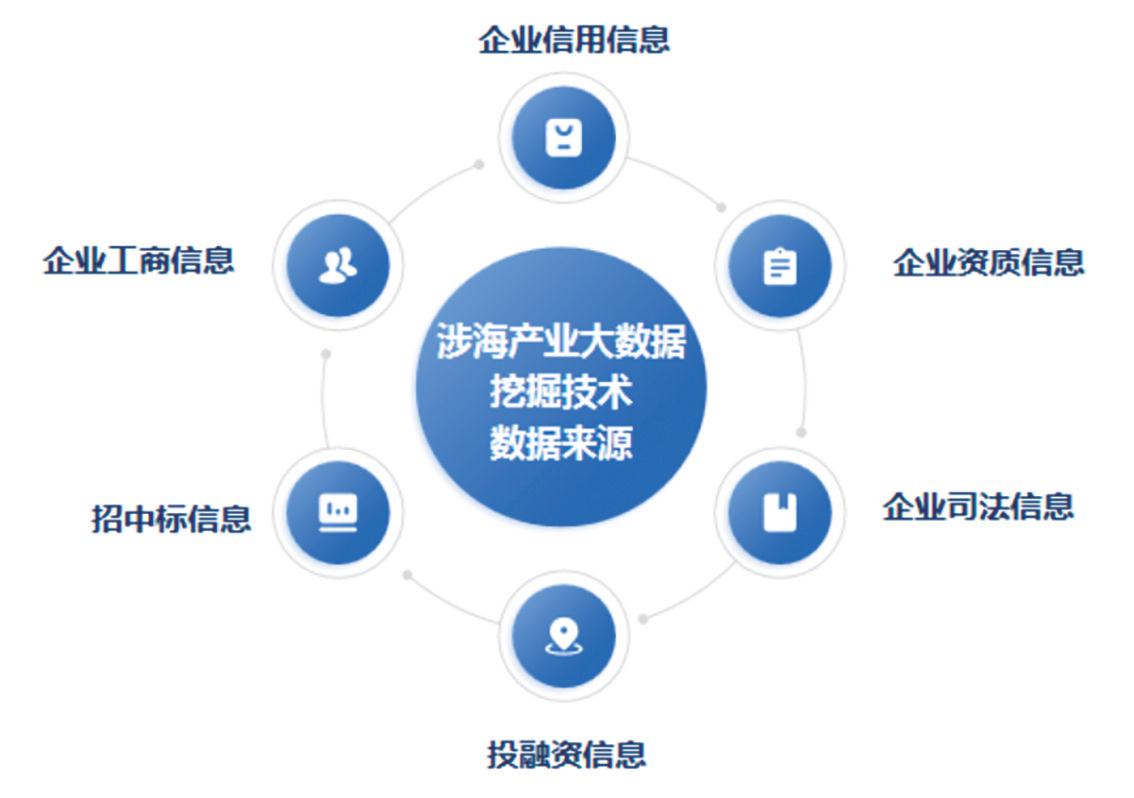
Core Viewpoint - The article emphasizes the importance of technological innovation in driving high-quality development of the marine economy, highlighting the implementation of a three-year action plan by the Beihai Bureau to enhance marine industry data mining capabilities and improve economic monitoring and evaluation [3][4]. Group 1: Technological Innovation and Data Integration - The Beihai Bureau has initiated a three-year action plan focused on technological innovation to support high-quality development in marine industries, resulting in significant achievements in integrating technology, industry, and business innovation [3]. - The project aims to overcome challenges in identifying and classifying marine economic activities by utilizing multi-source heterogeneous data and intelligent algorithms, transitioning from manual assessment to intelligent recognition [4][6]. - A dual-driven model of "external collection + internal governance" has been established to address data fragmentation, enhancing data coverage and real-time capabilities for effective marine economic monitoring [6][10]. Group 2: Data Mining and Quality Control - The marine industry data mining technology has developed a dual-track recognition mechanism with a "marine attribute feature word library" and a "marine national economic industry code library," facilitating efficient identification of marine economic activity units [8][9]. - A total of 1,440 feature words have been extracted to create the marine attribute feature word library, which aids in classifying marine-related industries and improving monitoring efficiency [9]. - Quality control measures have been implemented to ensure data accuracy, maintaining a model error rate below 1%, resulting in a comprehensive directory of over 3 million marine-related units across the country [10]. Group 3: Future Applications and Development - The article outlines plans to leverage digital technology for enhanced marine governance, aiming to improve decision-making capabilities and expand the application of marine economic big data for precise governance [13]. - A "1+4+N" visualization platform is being developed to support various service scenarios, enhancing the ability of marine enterprises to innovate and grow [12]. - Continuous updates to the marine attribute feature word library and the establishment of industry standards for data mining are planned to further improve data quality and usability [12].
上海钢联:将继续加大在人工智能和大数据技术领域的研发投入
Quan Jing Wang· 2025-09-24 05:54
Core Insights - The company is focused on promoting the digital transformation of the bulk commodity industry through data services and steel trading services, driven by data elements and digital technology [1] - The management expresses confidence in the company's future development, aiming to enhance high-value services through AI and the Steel Union EBC product by 2025 [1] - The company plans to expand its international presence and influence through overseas subsidiaries [1] Industry and Company Overview - Shanghai Steel Union is a leading global provider of bulk commodity and related industry data services, with a domestic trillion-level B2B steel trading smart service e-commerce platform [1] - The main business segments include industrial data services and steel trading services [1] Future Strategies - The company aims to increase revenue by expanding consignment business transaction scale and extending the steel-silver ecosystem services, including supply chain innovation products, warehousing logistics upgrades, and SaaS subscription services [1] - There will be a continued increase in R&D investment in artificial intelligence and big data technology to enhance data processing and analysis capabilities [1] - The goal is to provide more accurate market forecasts, trend analysis, and intelligent decision support to enhance market recognition of the company's value and drive business growth [1]

[路演]上海钢联:将继续加大在人工智能和大数据技术领域的研发投入
Quan Jing Wang· 2025-09-19 08:28
Core Viewpoint - The company is focused on promoting the digital transformation of the bulk commodity industry through data services and steel trading services, expressing confidence in its future development [1] Group 1: Company Strategy - The company plans to enhance its industrial data service business by deepening services and integrating multidimensional data to provide high-value services, leveraging AI and its EBC products to expand applications in intelligent forecasting and business decision-making [1] - The company aims to accelerate its international layout and enhance its global influence through overseas subsidiaries [1] - The steel trading service will increase revenue by expanding consignment business transactions and extending the steel ecosystem services, including supply chain innovation products, warehousing logistics upgrades, and SaaS subscription services [1] Group 2: Technology and R&D - The company will continue to increase its investment in artificial intelligence and big data technology research and development to improve data processing and analysis capabilities [1] - The goal is to provide users with more accurate market forecasts, trend analysis, and intelligent decision support, thereby enhancing market recognition of the company's value and driving business growth [1] Group 3: Market Position - The company is recognized as a global leader in bulk commodity and related industry data services and operates a domestic trillion-level B2B steel trading smart service e-commerce platform [1]
各地探索“多路径”破解农户贷款抵押难题 “信用+”让金融服务乡村振兴更精准
Yang Shi Wang· 2025-09-15 02:53
Core Insights - The article discusses the challenges faced by farmers in obtaining loans due to a lack of effective collateral and highlights various innovative solutions being implemented across different regions in China to address these financing difficulties [1][10][23]. Group 1: Innovations in Rural Financing - In Zhejiang, the application of big data technology has enabled the establishment of financial profiles for farmers, creating a loan whitelist that alleviates the financing difficulties caused by insufficient collateral [1][5][9]. - By the end of July, Zhejiang Rural Commercial Bank had achieved full coverage of eligible farmers for credit, benefiting 9.568 million households with a total credit amount of 1.44 trillion yuan, with credit loans accounting for 68% of the total [9][30]. - In Hunan, financial institutions have adopted a "whole village credit" model, which has supported 377 villages and 6,317 farmers with a total credit amount of 1.61 billion yuan [16][18]. Group 2: Credit Assessment and Loan Products - In Hubei, a pilot program has been initiated to evaluate the credit value of farmers and rural assets, allowing individual farmers to receive credit limits of up to 1 million yuan based on their credit ratings [18][20]. - The introduction of specialized credit loan products such as "pig loans," "aquaculture loans," and "pepper loans" has been developed to meet the needs of agricultural producers [14][20]. - The national agricultural credit guarantee alliance has been established to help farmers and agricultural cooperatives overcome financing challenges, with over 4.8 million farmers receiving guarantees and financing exceeding 1.76 trillion yuan [29][30]. Group 3: Shift Towards Credit-Based Financing - The Financial Regulatory Administration reported that as of July, credit loans accounted for over 50% of the total balance of operating loans for farmers, indicating a significant shift from reliance on collateral to credit value [30][34]. - The number of new agricultural entities receiving loans has increased by 10.18% since the beginning of the year, with regions like Fujian and Shanxi showing loan approval rates exceeding 70% [32][34]. - The recent implementation of the "Implementation Plan for High-Quality Development of Inclusive Finance in the Banking and Insurance Industries" emphasizes increasing credit loan issuance to farmers and new agricultural entities [36].