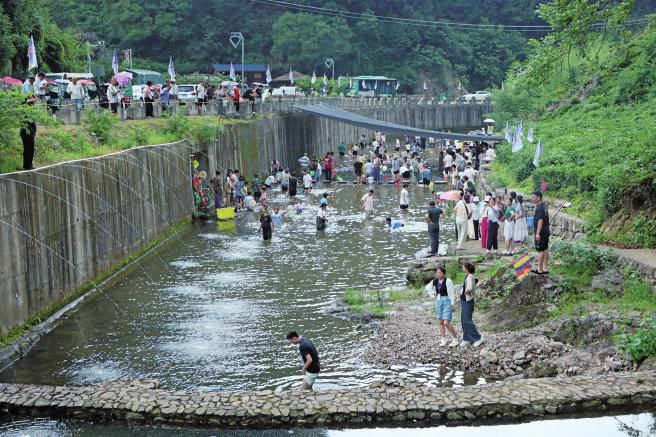
宜居宜业和美乡村建设

Search documents
传达学习习近平总书记重要指示精神 研究“十五五”规划《纲要草案》编制等工作
Zheng Zhou Ri Bao· 2026-01-09 00:50
Group 1 - The meeting emphasized the importance of modernizing agriculture and rural areas, aiming for comprehensive rural revitalization and urban-rural integration [1] - It highlighted the need to ensure food security, maintain arable land boundaries, and enhance agricultural production capacity and quality [1] - The meeting discussed the importance of consolidating poverty alleviation achievements and implementing policies to increase farmers' income while preventing large-scale poverty [1] Group 2 - The meeting addressed the preparation of the city's "14th Five-Year" planning outline, stressing the incorporation of national and local strategic intentions [2] - It called for setting indicators, arranging policies, and planning projects to achieve qualitative and reasonable quantitative economic growth [2] - The meeting focused on addressing wage arrears, emphasizing a people-centered development approach and the need for coordinated actions to resolve wage disputes [2]
学习手记丨“三农”工作务求因地制宜
Xin Hua She· 2026-01-08 00:16
Core Viewpoint - The central theme of the article emphasizes the importance of the "localized approach" in rural development, as highlighted by President Xi Jinping during the recent Central Rural Work Conference, aiming to enhance rural governance and improve living conditions for farmers [5][6]. Group 1: Principles of Rural Development - The principle of "localized approach" is repeatedly stressed as a methodology for rural work, which should be tailored to local conditions and needs [5][6]. - The "Ten Thousand Projects" initiated in 2003 serves as a successful model for rural environment improvement, demonstrating the effectiveness of localized strategies [5][6]. - The article underscores the necessity of avoiding "performance projects" and "image projects" that do not align with the actual needs of farmers, ensuring that initiatives are practical and beneficial [5][6][8]. Group 2: Specific Examples and Applications - The article cites the example of rural toilet renovations, where President Xi has consistently advocated for a localized approach, recognizing the diverse conditions across different regions [6][7]. - It highlights the need for scientific assessment in determining which villages to preserve, renovate, or consolidate, emphasizing the importance of respecting farmers' opinions and local characteristics [7][9]. - The article notes that rural development should not mimic urban planning but should focus on improving living conditions while preserving the unique cultural and environmental aspects of rural areas [7][9]. Group 3: Future Directions - The "14th Five-Year Plan" suggests further advancing the construction of livable and workable beautiful villages, emphasizing the need for localized strategies that align with farmers' demands [9]. - Continuous exploration of new paths and methods is encouraged to create a modernized vision of rural development across the country [9].

乡村风貌有了“美学指南”
Xin Lang Cai Jing· 2026-01-07 17:12
Core Viewpoint - The newly released "Guidelines for the Protection and Enhancement of Rural Appearance in Anhui Province" aims to provide clear guidance for improving the aesthetic and functional quality of rural areas, promoting livable and workable beautiful villages [1] Group 1: Guidelines Overview - The guidelines serve as a "design manual" and "aesthetic handbook" for rural construction in Anhui Province [1] - They categorize the province into five distinct aesthetic zones: southern Anhui, western Anhui, along the river, Jianghuai, and northern Anhui, providing tailored design guidance for each region [1] - The guidelines propose differentiated aesthetic control directives for five types of villages: aggregation enhancement, characteristic protection, urban-rural integration, relocation and consolidation, and others, enhancing specificity and operability [1] Group 2: Management System - An innovative four-level aesthetic control system is established, encompassing provincial, municipal, county (district), and township (street) levels [1] - The guidelines integrate aesthetic directives into land use planning at all levels, forming a closed-loop management system of "planning-licensing-implementation-supervision" [1] Group 3: Special Chapter for Huangshan Region - A dedicated chapter for the Huangshan region outlines specific requirements for spatial protection patterns, control of Huizhou architecture, and revitalization of historical environmental elements [1] - The guidelines aim to support the development of Huangshan as a world-class leisure and wellness tourism destination [1]
以“千万工程”经验推动乡村美丽蝶变
Di Yi Cai Jing· 2026-01-06 12:00
Core Viewpoint - The "Ten Thousand Projects" initiative is essential for advancing rural development in China, promoting the construction of livable and workable beautiful villages, and addressing rural governance and cultural development challenges [1] Group 1: Significance of the Initiative - It solidifies the foundation of Chinese-style modernization, addressing the most challenging tasks in rural areas through the transformation from "dirty, chaotic, and poor" to "beautiful, rich, and healthy" in Zhejiang [2] - It embodies a people-centered development philosophy, focusing on improving the livelihoods of farmers by addressing their most pressing concerns, such as housing, healthcare, education, and employment [2] - It explores a path for ecological and developmental synergy, demonstrating that environmental protection can coexist with economic development, as seen in the transformation of Yucun from "selling stones" to "selling scenery" [3] Group 2: Internal Principles - The essence of the "Ten Thousand Projects" lies in its tailored, location-specific planning, avoiding a one-size-fits-all approach and emphasizing customized development paths based on local resources and cultural heritage [4] - It involves precise identification and scientific classification of villages, assessing their ecological, industrial, and cultural characteristics to create targeted development strategies [4] - The planning process is a consensus-building exercise, ensuring that community voices are heard and reflected in development plans to avoid disconnect between officials and residents [4] Group 3: Policy Recommendations - Enhance planning mechanisms and top-level design by creating a national overall plan for beautiful village construction, setting clear goals and region-specific development paths to prevent blind construction and repeated investments [6] - Establish a stable financial support mechanism for rural development, focusing on improving living environments, infrastructure, and industrial growth, while encouraging social capital participation [6] - Innovate resource support mechanisms by reforming land use policies and facilitating the flow of labor, land, and capital between urban and rural areas to support rural industry and infrastructure [7] - Create collaborative mechanisms that clarify responsibilities among government departments and encourage community participation in rural development projects [7] - Develop long-term management systems for rural environments and infrastructure to ensure sustainable development and effective project outcomes [8]
“十五五”开局之年,中央定调“三农”工作
Xin Lang Cai Jing· 2026-01-02 22:39
Core Insights - The central theme of the news is the emphasis on the importance of agricultural modernization and food security in China's 14th Five-Year Plan, with specific goals set for 2026 and beyond [1][2]. Group 1: Agricultural Modernization - The 2026 focus on "anchoring agricultural modernization" reflects a strategic commitment from the government to enhance agricultural strength as part of China's overall modernization [1]. - Key tasks for 2026 include improving the policy support system, enhancing food supply diversity, and promoting rural living environment improvements [1]. Group 2: Food Security - The central government has reiterated the importance of food security, with measures such as maintaining arable land limits and enhancing grain production [2]. - The shift in focus from merely ensuring food availability to improving food quality and diversity indicates a strategic evolution in food security policy [2]. Group 3: Agricultural Resilience - Recent severe water and drought disasters have posed significant challenges to food production, prompting a call for enhanced water infrastructure and disaster resilience in agriculture [3]. - The government aims to ensure stable food supply by promoting farmer income stability and enhancing the agricultural production system's resilience [3]. Group 4: Farmer Income Growth - The increase in rural residents' disposable income, reaching 23,119 yuan in 2024, highlights the government's commitment to improving farmers' livelihoods [4]. - Specific measures to boost farmer income include supporting migrant workers and developing county-level industries to expand farmers' participation in economic activities [4]. Group 5: Rural Development - The emphasis on creating quality living spaces in rural areas reflects a shift towards valuing rural life and enhancing the quality of life for residents [5]. - The approach aims to integrate rural revitalization with modern economic development, fostering a system that supports both agricultural productivity and rural living standards [5].
从中央农村工作会议看2026年“三农”工作战略部署
Xin Hua She· 2025-12-31 04:10
Core Viewpoint - The Central Rural Work Conference emphasized the importance of agricultural and rural modernization as a key component of China's overall modernization strategy, with a focus on ensuring food security and promoting rural revitalization [2][3][5]. Group 1: Agricultural and Rural Modernization - The conference highlighted the need to anchor agricultural and rural modernization as a priority for the comprehensive construction of a socialist modern country, reflecting the Party's deep understanding of the current agricultural development situation [2][4]. - A series of strategic deployments were discussed to accelerate agricultural modernization, including the development of new agricultural productivity, improvement of rural living environments, and deepening rural reforms [3][4]. Group 2: Food Security - The conference underscored the necessity of solidifying food security, with measures such as stabilizing grain and oil production and implementing a new round of grain production capacity enhancement actions [5][6]. - Protecting arable land was identified as crucial for food security, with commitments to maintain stable planting areas and optimize crop structures [6][7]. Group 3: Poverty Alleviation and Rural Revitalization - The transition to a normalized support phase for poverty alleviation was emphasized, with a focus on integrating this into the rural revitalization strategy to prevent a return to poverty [8][10]. - The conference proposed various measures to support underdeveloped areas, ensuring long-term assistance and monitoring mechanisms to sustain poverty alleviation achievements [8][10][11]. Group 4: Rural Infrastructure and Living Conditions - The need to improve rural living conditions and infrastructure was highlighted, with a focus on creating quality living spaces in rural areas and enhancing the overall rural environment [12][13]. - The conference called for a balanced approach to rural development, emphasizing the importance of both hard infrastructure and soft environmental factors, including cultural and social aspects [12][13]. Group 5: Rural Reform and Investment - Further deepening rural reforms was identified as essential for energizing rural development, particularly in managing land relations as the second round of land contracts approaches expiration [14][16]. - The conference proposed innovative financing mechanisms for rural revitalization to attract financial and social capital, aiming to enhance investment in rural areas [16].
产能提升 常态帮扶 空间提质 专家解读2026年“三农”工作三大亮点
Shang Hai Zheng Quan Bao· 2025-12-30 19:26
Core Insights - The central theme of the article revolves around the key highlights of the 2026 "Three Rural Issues" work, emphasizing the modernization of agriculture and rural areas as a crucial aspect of China's overall modernization strategy [1] Group 1: Agricultural Production Capacity and Quality - Enhancing agricultural comprehensive production capacity and quality is identified as the main focus for accelerating agricultural modernization, with an emphasis on stabilizing grain and oil production [2] - The meeting introduced a new initiative to implement a new round of actions aimed at increasing grain production capacity by 1 billion jin, focusing on major crops like rice, wheat, corn, and soybeans [2] - The shift from "stabilizing grain production" to "stabilizing grain and oil production" reflects the current reality of China's agricultural supply, addressing the high dependency on imports for oilseed crops [2] Group 2: Technological Advancements - The meeting highlighted the need to strengthen core agricultural technologies and efficiently convert scientific achievements into practical applications, which is essential for addressing traditional agricultural inefficiencies [3] - Developing new agricultural productivity is seen as a key pathway to enhance efficiency and reduce resource waste, thereby ensuring food security [3] Group 3: Poverty Alleviation Mechanisms - Establishing a regular mechanism to prevent poverty is deemed a critical measure for advancing agricultural modernization, with a focus on continuous support for underdeveloped regions [4] - The transition to a normalized assistance phase post-2025 will maintain the intensity of poverty alleviation policies and measures [4] Group 4: County-Level Economic Development - The meeting emphasized the importance of cultivating and expanding county-level industries to enhance farmers' participation in economic development, which is vital for preventing large-scale poverty [5][6] - Developing industries with comparative advantages at the county level can create local employment opportunities and support returning migrant workers, contributing to farmers' sustained income growth [6] Group 5: Rural Infrastructure and Living Conditions - Promoting the construction of livable and workable rural areas is essential for agricultural modernization, with a focus on improving rural infrastructure and living conditions [7] - The concept of creating quality living spaces in rural areas aims to integrate urban and rural development while preserving rural characteristics [7] Group 6: Financial Mechanisms for Rural Development - The meeting called for innovative financing mechanisms to invigorate rural development, including the promotion of collateral financing for agricultural facilities and livestock [8] - Ongoing efforts to explore various financing solutions aim to alleviate funding challenges for agricultural production and rural construction, thereby supporting the steady advancement of agricultural modernization [8]
奋发有为扎实推进乡村全面振兴——习近平总书记重要指示激励广大干部群众为做好“三农”工作贡献更大力量
Xin Hua She· 2025-12-30 15:53
Core Insights - The central theme of the news is the emphasis on advancing rural revitalization and ensuring food security as articulated by General Secretary Xi Jinping during the Central Rural Work Conference [1][2]. Group 1: Agricultural Production - The importance of maintaining stable grain production is highlighted, with China's grain output remaining above 1.4 trillion jin this year despite adverse weather conditions [1]. - Farmers are encouraged to adopt advanced agricultural technologies and practices, such as the use of drones and integrated water and fertilizer systems, to enhance crop yields [2]. Group 2: Rural Revitalization Strategies - The need for integrated development of agriculture and rural areas is stressed, with a focus on modernizing agriculture and promoting urban-rural integration [1]. - The strategy includes extending industrial chains and increasing the added value of agricultural products, which is seen as a pathway to enhance farmers' income [3]. Group 3: Poverty Alleviation and Employment - Consolidating and expanding the achievements of poverty alleviation is identified as a critical task during the rural revitalization process, with a focus on implementing regular and precise assistance measures [3][4]. - The use of big data platforms to match assistance measures with local needs is emphasized to prevent the risk of returning to poverty [3]. Group 4: Community Development - The construction of livable and workable rural areas is essential, with initiatives aimed at improving the quality of rural life and integrating modern amenities with traditional rural aesthetics [4]. - The leadership of the Party is deemed crucial for the success of rural revitalization efforts, with a call for grassroots responsibility and action [4].
年终话“三农”丨宜居又宜业 乡村绘新卷——2025年美丽乡村建设一线观察
Xin Lang Cai Jing· 2025-12-26 16:59
Core Viewpoint - The article emphasizes the importance of building livable and workable beautiful rural areas, reflecting the aspirations of millions of farmers for a better life and environment [1] Group 1: Agricultural Development - The central government has prioritized the improvement of rural living environments and ecological governance in agriculture, leading to significant enhancements in rural ecological conditions and the promotion of beautiful countryside construction [1] - The implementation of smart farming technologies, such as soil sensors and AI monitoring systems, has increased land utilization rates from below 90% to 95% and reduced water and fertilizer usage by 15% to 25% [1] - The current fertilizer utilization rate stands at 42.6%, while the comprehensive utilization rate of livestock and poultry manure has reached 80.1% [1] Group 2: Environmental Improvement - The national rural sewage treatment rate has exceeded 51%, doubling since the end of the 13th Five-Year Plan, with over 98% of major rural black and odorous water bodies being treated [1] - The implementation of the "toilet revolution" has significantly improved sanitation and living conditions in rural areas, enhancing the overall quality of life for residents [1] Group 3: Economic Development - The article highlights the emergence of rural tourism and the development of cultural homestays as a means to boost local economies, with some villages seeing tourism revenue account for over 60% of per capita income [1] - The integration of agriculture with culture, tourism, and other industries is being actively promoted to create new economic opportunities in rural areas [1]
宜居宜业和美乡村建设成效显著“十四五”交出亮眼答卷
Xin Lang Cai Jing· 2025-12-25 16:21
Core Viewpoint - The article highlights the successful implementation of the "Beautiful Countryside" initiative in Jin'an District, which has led to significant improvements in rural living conditions, economic development, and community engagement through various projects and activities [7][14]. Group 1: Rural Development Initiatives - Jin'an District has adopted the "Ten Million Project" experience to promote the construction of beautiful and livable villages, resulting in a clean and vibrant rural environment [7][14]. - Dongshisun Village in Maotanchang Town has been recognized as a model for beautiful countryside due to its ecological restoration, cultural tourism integration, and industrial upgrades [7][8]. - The district has invested 560 million yuan in rural development, establishing 187 provincial-level central villages and applying for the creation of 10 model villages [14]. Group 2: Economic Growth and Employment - The integration of leisure tourism, boutique homestays, and wild tea planting in Dongshisun Village has significantly enhanced the local economy and improved residents' quality of life [8][9]. - The oil tea industry in Huangdun Village has seen a harvest of 160 million pounds this year, generating approximately 54,000 yuan for the village collective and providing jobs for around 30 local residents [9][11]. - The white goose breeding industry in Youfang Village is expanding, with plans to develop e-commerce to promote local products, benefiting the community economically [10][11]. Group 3: Community Engagement and Governance - Villagers in various communities are actively participating in governance through regular meetings to discuss environmental improvements and development plans [12][13]. - The establishment of a "red and black list" system encourages community involvement in maintaining a clean environment and recognizes outstanding villagers [13]. - The district emphasizes a combination of self-governance, legal governance, and moral governance to enhance community participation and satisfaction [13][14].