智慧口岸

Search documents
以智提效激发口岸潜能
Jing Ji Ri Bao· 2025-11-15 22:08
Core Insights - The article highlights the advancements in smart port models in China, particularly since the 14th Five-Year Plan, emphasizing the significant improvements in customs supervision efficiency and service levels [1] Group 1: Smart Port Developments - The construction of smart customs has accelerated, leading to a new form of customs supervision characterized by network interconnectivity, digital perception, intelligent analysis, and automated operations [1] - The Guangxi Youyi Pass has established the country's first fully digital intelligent customs clearance model, reducing average waiting time per transaction by 3.5 hours [1] - Heilongjiang Suifenhe Customs has introduced "AR+AI" inspection technology, enhancing the efficiency of raw material customs clearance [1] Group 2: Challenges in Port Development - Some ports still face challenges in improving smart service levels, with issues such as coordination difficulties, cumbersome procedures, and slow approvals affecting cross-border business [1] - Intense homogenization competition among ports and weak collaborative capabilities hinder the potential to drive surrounding industries [1] - Insufficient supporting productive service industries in some port areas leads to high logistics costs and weak warehousing capacity [1] Group 3: Future Directions - Future efforts should focus on key areas such as the intelligence of port facilities, digital management of operations, precise collaborative supervision, ubiquitous comprehensive services, and mechanized regional cooperation [1] - The goal is to establish a modern international first-class port, optimize multimodal transport, enhance smart supervision, and increase policy support in finance and land use [1] - The aim is to create replicable and promotable models for smart port construction [1] Group 4: Logistics and Trade Innovations - Accelerating the construction of smart logistics hubs at ports by promoting automation, IoT upgrades, and non-invasive technologies for seamless customs clearance [2] - Implementing blockchain smart contracts to ensure traceability throughout the transaction process, while developing unique blueprints for each port based on resource endowments [2] - Strengthening institutional innovation and collaborative smart supervision to boost border trade and enhance the economic development of border regions [2] Group 5: Service Industry Enhancements - Improving the multi-modal transport system and establishing cross-border cargo and capacity information platforms to enhance cargo matching efficiency and reduce transportation costs [3] - Innovating cross-border e-commerce settlement models and integrating production and value-added services of imported goods into the local economy [3] - Promoting new services like Beidou positioning and electronic fencing to compress transit times and improve cross-border trade efficiency [3]
新疆霍尔果斯“云港·霍数通”发布会暨智慧口岸合作交流会成功举办
Xin Hua Ri Bao· 2025-11-12 22:27
Core Insights - The "YunGang.HuoShuTong" platform marks a significant advancement in the construction of the Horgos smart port, facilitating the digital transformation of ports and regional collaborative development [1][2]. Group 1: Platform Development - The "YunGang.HuoShuTong" platform focuses on public services for smart ports, integrating core functions such as customs clearance, logistics, trade, and finance into a unified service portal [2]. - The platform has served over 730 enterprises, achieving a coverage rate of 90% in the port trade information service sector [2]. - The implementation of the platform has led to a 60% reduction in the outbound cargo operation process at road ports, an 80% increase in efficiency, and a 50% decrease in costs [2]. Group 2: Regional Collaboration - Agreements were signed between Horgos and cities including Lianyungang, Xi'an, Lanzhou, Xining, and Urumqi to establish a land-sea intermodal data corridor [3]. - The collaboration aims to leverage each party's strengths to explore new models and pathways for logistics data sharing, enhancing technical innovation and application [3]. - The series of agreements signifies substantial progress in regional collaborative development for Horgos's smart port construction, laying a solid foundation for future cross-regional port cooperation [3]. Group 3: Strategic Goals - The launch of the "YunGang.HuoShuTong" platform and the series of cooperation agreements are practical measures to implement the concepts of "smart customs, intelligent borders, and shared connectivity" [3]. - Horgos aims to continuously deepen strategic cooperation with partners, enhancing the functionality of the smart port system to create an efficient, convenient, and intelligent international logistics channel [3].
辽港股份:创新延展主业增值服务能力,培育港口新兴产业发展
Zheng Quan Shi Bao Wang· 2025-11-10 10:19
Core Insights - Liao Port Co., Ltd. reported a revenue of 8.426 billion yuan for Q3 2025, marking a year-on-year increase of 5.99%, and a net profit attributable to shareholders of 1.3 billion yuan, up 37.51% year-on-year, indicating steady growth in operational performance [1][2] Revenue Growth - The company's revenue growth is attributed to a combination of "increasing income" and "cost-saving efficiency," with strategies focusing on stabilizing core business, competing for market share, and seeking innovative opportunities [2] - The container business saw a steady increase in throughput due to enhanced market development, while the grain business benefited from the "North Grain South Transport" initiative and a recovery in the breeding industry, leading to simultaneous growth in volume and added value [2][3] - The oil and chemical products segment expanded revenue through trade oil storage and crude oil transshipment, contributing to the overall revenue increase [2] Profitability Improvement - Profitability was bolstered by optimizing revenue structure, with growth in container and grain businesses compensating for underperformance in other cargo types [2] - Cost control measures, including lean operations and a focus on comprehensive benchmarking, led to a decrease in operating costs despite revenue growth, resulting in a 7.6 percentage point increase in gross margin year-on-year [2] Operational Metrics - Container throughput reached 8.323 million TEUs, a year-on-year increase of 4.7%, driven by stable operations and market development [3] - Oil and chemical throughput totaled 47.048 million tons, up 8.6%, primarily due to increased crude oil procurement by coastal refineries [4] - Grain throughput increased by 18.2% to 12.93 million tons, supported by national controls on foreign grain imports and rising demand from southern feed enterprises [4] Strategic Goals - The company aims to become a leading port enterprise in Northeast Asia, focusing on enhancing core port operations and innovating development strategies [5] - Plans include strengthening market expansion, optimizing operational efficiency, and developing a variety of logistics service systems to enhance core competitiveness [5] - The company is committed to innovation through green, digital, and high-end development, fostering new industries and building a sustainable port-city integration ecosystem [5]
“智”汇边关 广西凭祥加速“链”接东盟
Zhong Guo Xin Wen Wang· 2025-11-03 12:07
Core Viewpoint - The Guangxi Pingxiang city is accelerating the construction of smart ports to enhance trade connections with ASEAN countries, leveraging advanced technologies for automation and efficiency in customs clearance processes [1][2]. Group 1: Smart Port Development - The "Puzhai-New Qing" smart port project utilizes technologies such as 5G communication and Beidou navigation to achieve 24/7 automated customs clearance through systems like unmanned vehicle dispatch and intelligent inspection platforms [1]. - The daily customs clearance capacity of the Puzhai-New Qing freight dedicated channel is expected to increase to 2,000 vehicles after the project becomes operational, significantly improving efficiency [2]. Group 2: Infrastructure and Automation - At the Friendship Pass port, the number of vehicle lanes has increased from 6 to 12, with a daily traffic volume exceeding 1,500 vehicles. The smart port features remote-controlled lifting equipment and autonomous vehicles for efficient cargo transfer [4]. - The Friendship Pass smart port project aims to simplify customs processes by reducing required documentation and minimizing manual operations, thereby lowering costs and enhancing efficiency [4]. Group 3: Cross-Border E-commerce and Logistics - Pingxiang is innovating in cross-border e-commerce, collaborating with domestic and international e-commerce and manufacturing sectors to leverage its logistics advantages for rapid delivery to ASEAN markets [5]. - Future plans include improving multi-modal transport networks and developing cross-border logistics hubs, as well as exploring cross-border data flow cooperation to establish a smart port system between China and Vietnam [5].

浦寨—新清通道智慧口岸 打造智慧化智能化边境口岸通关示范
Jing Ji Ri Bao· 2025-10-29 22:04
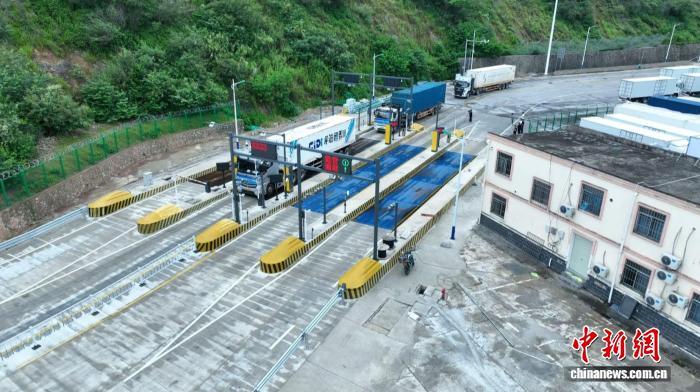
Core Viewpoint - The project in Pingxiang City aims to enhance the efficiency and automation of cross-border trade between China and Vietnam through the development of a smart port and autonomous driving systems, significantly improving customs clearance capabilities and reducing transportation costs [1][2][4]. Group 1: Project Overview - The smart port project covers an area of approximately 176.48 acres with an investment of about 760 million yuan, focusing on the construction of dedicated autonomous driving lanes and a smart port command and dispatch system [1]. - The dedicated lane for the Chinese section is approximately 2395 meters long, consisting of roads, bridges, and tunnels, facilitating a seamless cross-border transport experience [1]. Group 2: Technological Integration - The project utilizes advanced technologies such as 5G communication, Beidou navigation, and cloud integration to enable 24/7 automated customs clearance, significantly enhancing clearance capacity and efficiency [2]. - The autonomous vehicles are equipped with intelligent driving systems to navigate complex scenarios, ensuring safety during operations [2]. Group 3: Operational Efficiency - During the trial phase, the project has streamlined the business processes for freight forwarding companies, allowing all operations to be conducted online, thus saving time and resources [3]. - Once fully operational, the channel's daily clearance capacity is expected to reach 2000 vehicles, improving the smart and convenient level of border ports between China and Vietnam [3]. Group 4: Future Goals - The project aims to achieve the "two 24-hour" goals, enabling 24-hour automated customs clearance and ensuring that goods from industrial parks around Hanoi can be delivered within 24 hours [4]. - The initiative is set to create an efficient and convenient cross-border logistics system, establishing a model for smart and automated customs clearance at border ports [4].
国庆、中秋期间,瑞丽边检站出入境客流量达12.23万人次
Xin Jing Bao· 2025-10-10 08:47
Core Insights - The article highlights the significant increase in cross-border traffic at the Ruili border inspection station during the National Day and Mid-Autumn Festival period, with a total of 122,300 people and 11,900 vehicles processed, marking a 15% increase in daily cross-border traffic compared to non-holiday periods [1][2] Group 1: Traffic and Operations - The Ruili border inspection station processed 117,500 cross-border travelers, indicating a strong demand driven by events such as the China-Myanmar Friendship Carnival and the Dehong Border Commodity Trade Fair [1] - The average inspection time for travelers was reduced to under 30 seconds through the use of facial recognition technology, significantly decreasing wait times [1] - A "fast inspection channel" was established for business travelers and exhibitors, ensuring efficient customs clearance for goods and participants in the two major events [1] Group 2: Service Enhancements - The implementation of a "two-priority" mechanism allowed for a dedicated passage for the Myanmar delegation, reducing their customs clearance time to under 2 minutes [2] - The customs process for goods was expedited by over 60%, facilitating smooth passage for 15 groups of over 260 participants from cultural exchange delegations and business attendees [2] - The Ruili border inspection station aims to enhance its "smart port" initiatives and optimize customs processes further, positioning itself as a key channel for economic and cultural exchanges between China and Myanmar [2]
北疆党旗红|内蒙古甘其毛都口岸用“钢铁和代码”打造智慧口岸样板,绘跨境物流新图景
Xin Lang Cai Jing· 2025-09-19 02:19
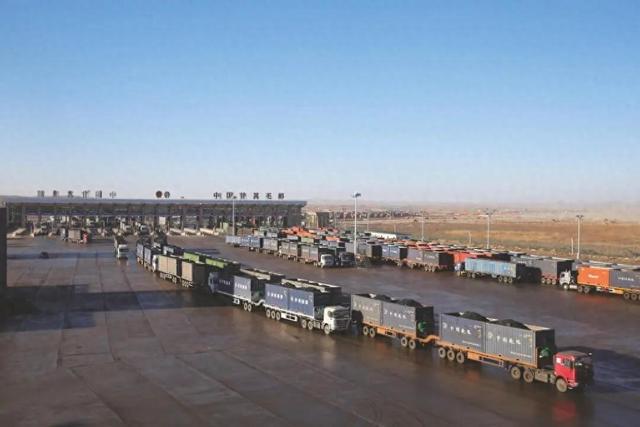
Core Viewpoint - The AGV (Automated Guided Vehicle) project at the Ganqimaodu port represents a significant advancement in cross-border logistics, showcasing a successful model for smart port transformation in China, with a daily transport capacity of 13,000 tons of coal [1][4][9]. Group 1: AGV Project Overview - The AGV system operates between the Gashun Suhaitu port in Mongolia and the Ganqimaodu port in China, focusing on the transportation of bulk commodities like coal and copper concentrate [3][4]. - The project has achieved over 400 trips per day, with each vehicle transporting an average of 65 tons of coal, resulting in a total daily freight volume exceeding 13,000 tons [5][9]. Group 2: Technological Innovations - The AGV vehicles utilize an advanced magnetic navigation system that allows them to operate autonomously in harsh weather conditions, including extreme cold and sandstorms [4][5]. - The project includes a smart system that integrates vehicle control with customs and management systems, enabling real-time data exchange and operational efficiency [5][8]. Group 3: Institutional Innovations - The project has implemented a streamlined customs process through a single intelligent checkpoint, enhancing collaboration among customs and border inspection units [8]. - A new customs clearance model has been adopted, which involves "one-time collection, one-time declaration, and one-time release" to facilitate the operation of unmanned vehicles [8]. Group 4: Strategic Importance - The AGV project is a key component of the "Belt and Road" initiative, aimed at enhancing the economic corridor between China, Mongolia, and Russia [9]. - Investments of 1.45 billion yuan for dedicated passageways and 1.2 billion yuan for customs supervision facilities have been made to support the AGV operations, with an expected annual clearance capacity of 10 million tons [9].
出口创新高 码头焕新“绿”——探访“长江外贸第一大港”太仓港
Xin Hua She· 2025-09-18 13:53
Core Insights - The article highlights the significant growth and transformation of Taicang Port, emphasizing its role as a key hub for automobile and new energy exports, with a historical high in automobile exports recorded in 2023 [1][2]. Group 1: Trade and Export Growth - In the first eight months of 2023, Taicang Port exported 513,000 vehicles, marking a year-on-year increase of 64.3%, surpassing the total export volume of the previous year [1]. - The port has established itself as a major export base for new energy products, with over 500,000 standard containers of new energy vehicles, lithium batteries, and photovoltaic products exported, reflecting a 45% year-on-year growth [1][3]. Group 2: Infrastructure and Automation - Taicang Port has 18 various types of terminals and 99 berths, with a cargo throughput of nearly 300 million tons and container throughput exceeding 8 million TEUs last year [1]. - The port's fourth-phase container terminal features 28 automated cranes that operate autonomously, reducing the need for human labor by approximately 70% and increasing operational efficiency by 20% [2]. Group 3: Environmental Initiatives - The port has transitioned from heavy oil to electric power for its operations, with 131 shore power facilities installed, achieving 100% berth coverage, and reducing carbon dioxide emissions by over 4,000 tons in 2024 [2]. - Taicang Port has also constructed over 100 electric vehicle charging stations and a solar power station covering more than 100,000 square meters, contributing to effective pollution control and ecological improvement [3]. Group 4: Future Development Plans - By 2027, Taicang Port aims to achieve an annual container throughput of over 10 million TEUs and a cargo throughput exceeding 300 million tons, enhancing its status as a major maritime hub [3]. - The port is positioned to leverage its strategic location at the intersection of the "Belt and Road" initiative and the "Yangtze River Economic Belt" to become the largest automobile and parts export base along the Yangtze River and the leading port for new energy exports [3].
《横琴方案》印发四周年,横琴口岸晒出成绩单
Nan Fang Du Shi Bao· 2025-09-05 12:01
Core Viewpoint - The establishment of the Hengqin Guangdong-Macao Deep Cooperation Zone is progressing with significant improvements in cross-border management and convenience for Macao residents, driven by innovative policies and technological advancements [1][4]. Group 1: Cross-Border Management Improvements - Since the implementation of the cooperation zone plan, the Hengqin border inspection station has processed 69.85 million inbound and outbound passengers and 8.12 million vehicles, with Macao residents accounting for 16.75 million passengers and 5.38 million vehicles, representing 24% and 66% of the total respectively [1]. - The average crossing time for travelers has been reduced to 20 seconds due to the new "cooperative inspection, one-time release" model, and the average vehicle crossing time has been shortened to 100 seconds with the introduction of a joint inspection system [3]. - The border inspection station has achieved over 100,000 daily passenger crossings on 13 occasions this year and has set new records for vehicle crossings [3]. Group 2: Policy Innovations - The cooperation zone plan emphasizes innovative policies to facilitate the flow of elements and enhance the integration of Macao and Hengqin, including measures like "one signature, multiple entries" and dedicated inspection areas for Macao residents [4]. - Over 7,300 Macao-funded enterprises have settled in Hengqin, and more than 23,000 Macao residents have established their homes there, indicating a growing integration of Macao into the cooperation zone [4]. Group 3: Future Developments - The Hengqin border inspection station plans to continue enhancing the "smart port" initiative, focusing on upgrading inspection channels to allow for "no document presentation" and improving the overall cross-border experience [5].
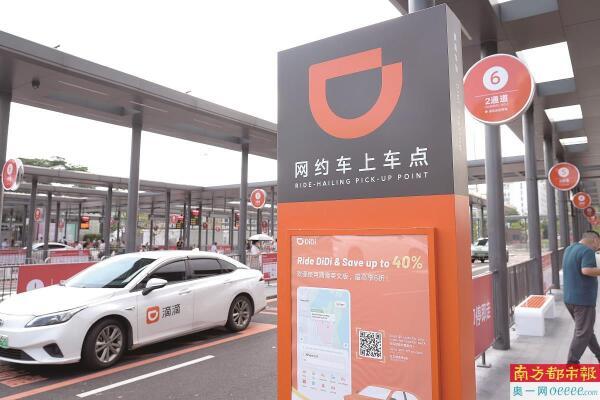
智能识别车辆接单 司乘碰面“车到即走”
Nan Fang Du Shi Bao· 2025-08-27 23:09
Core Viewpoint - The establishment of the Shenzhen Bay Smart Port aims to enhance the travel experience for cross-border travelers between Shenzhen and Hong Kong, addressing the growing demand for cross-border travel and improving efficiency in transportation services [2][3]. Group 1: Infrastructure and Services - Didi Chuxing has collaborated with relevant Shenzhen authorities to build a dedicated pick-up point, waiting area, and an intelligent license plate recognition system at Shenzhen Bay Port, providing a more convenient and comfortable travel experience for passengers [2][3]. - The waiting area includes resting seats and designated pick-up spots for ride-hailing services, allowing users to relax while waiting for their rides, thus improving overall travel efficiency [3][4]. - The implementation of a "person-finding-car" model at the port allows for precise vehicle positioning and quick matching with passengers, effectively solving the traditional "finding a car" problem [2][3]. Group 2: User Experience Enhancements - Passengers can use the same Didi app for cross-border travel, which automatically converts currency for payments, and they can receive exclusive discounts for rides at Shenzhen Bay Port [2][5]. - A dual-language guide for using Didi services is available in the waiting area to assist foreign tourists, catering to the increasing demand for cross-border travel [5]. - Didi is offering promotional activities, such as a discount of 100 HKD for first-time users in Hong Kong and various fare reduction coupons for users in Shenzhen, to encourage usage and enhance the travel experience [5]. Group 3: Operational Improvements - The upgrade includes a refined entry recognition system that identifies whether vehicles have accepted rides, helping to reduce congestion and improve the efficiency of passenger pick-up [3][5]. - Didi has implemented a system that allows passengers to view real-time parking information for their rides, facilitating quicker and more efficient pick-ups [3][5]. - The company has rolled out experience optimization measures in 255 airports and train stations across 137 cities in China, enhancing both passenger and driver experiences [5].