模仿学习

Search documents
当前的自动驾驶VLA,还有很多模块需要优化...
自动驾驶之心· 2025-09-18 11:00
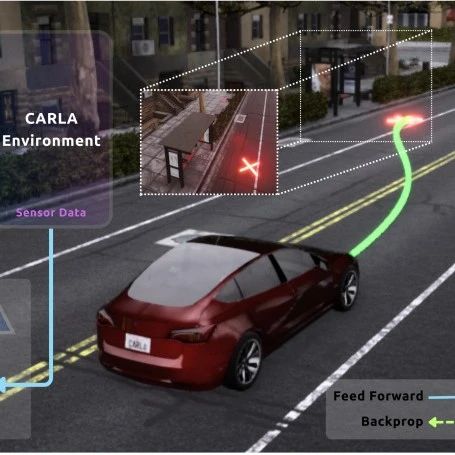
Core Viewpoint - VLA (Vision-Language-Action) is emerging as a mainstream keyword in autonomous driving, with rapid advancements in both academia and industry, aiming to overcome the limitations of traditional modular architectures and enhance the capabilities of autonomous systems [1][5]. Summary by Sections VLA Research and Development - The transition from traditional modular architectures to end-to-end models is marked by the introduction of VLA, which aims to unify sensor inputs directly into driving commands, addressing previous bottlenecks in the development of autonomous driving systems [2][5]. - The VLA model leverages large language models (LLMs) to enhance reasoning, explanation, and interaction capabilities, making it a significant advancement in the field [5]. Traditional Modular Architecture - Early autonomous driving systems (L2-L4) utilized a modular design, where each module (e.g., object detection, trajectory prediction) was developed independently, leading to issues such as error accumulation and information loss [3]. - The limitations of traditional architectures include reliance on manually designed rules, making it difficult to handle complex traffic scenarios [3][4]. Emergence of Pure Vision End-to-End Models - The rise of pure vision end-to-end models, exemplified by NVIDIA's DAVE-2 and Wayve, aimed to simplify system architecture through imitation learning, but faced challenges related to transparency and generalization in unseen scenarios [4][5]. VLA Paradigm - The VLA paradigm introduces a new approach where language serves as a bridge between perception and action, enhancing the model's interpretability and trustworthiness [5]. - VLA models can utilize pre-trained knowledge from LLMs to better understand complex traffic situations and make logical decisions, improving generalization to novel scenarios [5]. Course Objectives and Structure - The course aims to provide a systematic understanding of VLA, addressing gaps in knowledge and practical skills, and includes a comprehensive curriculum covering various aspects of VLA research [6][12]. - The program consists of 12 weeks of online group research, followed by 2 weeks of paper guidance, and an additional 10 weeks for paper maintenance, focusing on both theoretical and practical applications [7][30]. Enrollment and Requirements - The course is designed for individuals with a background in deep learning and basic knowledge of autonomous driving algorithms, requiring familiarity with Python and PyTorch [16][19]. - The class size is limited to 6-8 participants to ensure personalized attention and effective learning [11]. Course Highlights - Participants will gain insights into classic and cutting-edge papers, coding skills, and methodologies for writing and submitting research papers, enhancing their academic and professional profiles [12][15][30].


西湖大学最新!ARFM:结合VLA模仿学习与强化学习的优势
具身智能之心· 2025-09-11 02:07
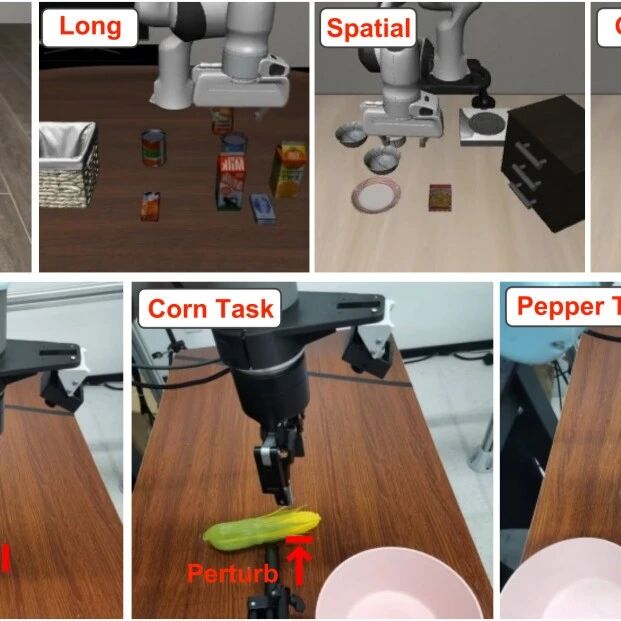
Core Viewpoint - The article discusses the limitations of current visual-language-action (VLA) models in complex tasks and introduces the Adaptive Reinforcement Flow Matching (ARFM) method to enhance their performance by integrating reinforcement learning (RL) capabilities with flow matching advantages [1][2][4]. Summary by Sections Current Status of VLA Models - VLA models based on flow matching have shown excellent performance in general robotic manipulation tasks, validated by large-scale pre-trained systems like RT-1 and PaLM-E, but they struggle with action precision in complex downstream tasks due to reliance on imitation learning [4][5]. Existing Solutions and Limitations - Previous attempts to fine-tune VLA models using offline RL methods, such as ReinboT, have been limited in effectiveness due to the indirect guidance of action prediction, highlighting the need for more effective offline RL fine-tuning methods [4][5]. Main Contributions - The ARFM method is introduced as a novel offline RL post-training approach specifically designed for VLA flow models, addressing the challenges of data quality extraction and improving the efficiency of offline RL fine-tuning [6][7]. Methodological Innovation - ARFM incorporates an adaptive scaling factor in the loss function to balance the advantages of RL while controlling gradient variance, leading to improved generalization, robustness against disturbances, and few-shot learning capabilities [6][8]. Experimental Validation - Extensive experiments on the LIBERO simulation benchmark and the UR5 robotic arm platform demonstrate that ARFM outperforms existing methods in various aspects, including generalization ability, robustness to dynamic disturbances, and efficiency in few-shot learning [6][8][29]. Core Algorithm Design - The ARFM framework is built around energy-weighted loss to integrate RL signals and an adaptive mechanism to ensure training stability, effectively overcoming the limitations of traditional imitation learning and existing offline RL fine-tuning methods [8][11]. Experimental Setup - The experiments utilized the LIBERO benchmark platform, which includes four core task suites, and real-world scenarios with the UR5 robotic arm, focusing on various manipulation tasks under different conditions [29][30]. Key Experimental Results - ARFM demonstrated superior performance in multi-task learning, action perturbation robustness, few-shot learning efficiency, and continual learning capabilities compared to baseline models, confirming its practical value in real-world robotic applications [32][35][38]. Conclusion - The ARFM method effectively balances the retention of RL advantage signals and the control of flow loss gradient variance, leading to enhanced performance in VLA flow models across various tasks and conditions, showcasing its applicability in real-world scenarios [49][47].
从近1000篇工作中,看具身智能的技术发展路线!
自动驾驶之心· 2025-09-07 23:34
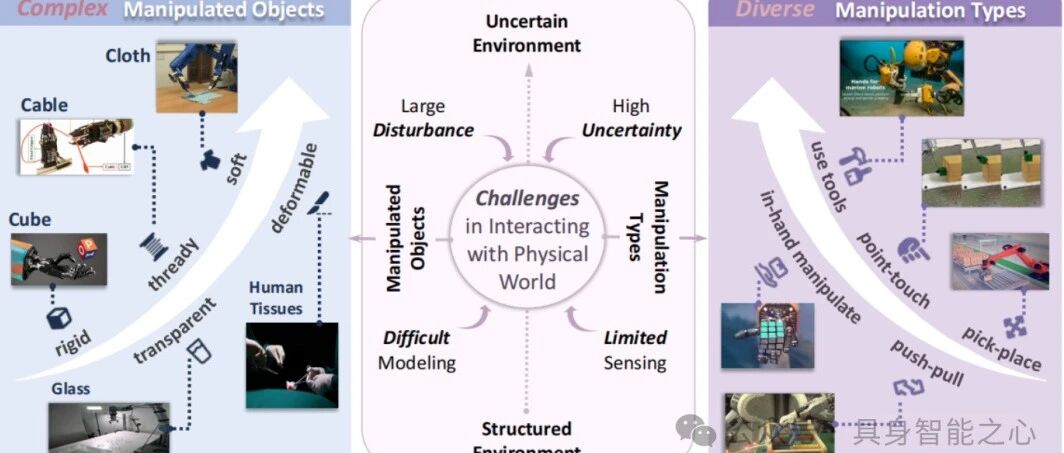
Core Insights - The article discusses the evolution and challenges of embodied intelligence, emphasizing the need for a comprehensive understanding of its development, issues faced, and future directions [4][5]. Group 1: Robotic Manipulation - The survey on robotic manipulation highlights the transition from mechanical programming to embodied intelligence, focusing on the evolution from simple grippers to dexterous multi-fingered hands [6][7]. - Key challenges in dexterous manipulation include data collection methods such as simulation, human demonstration, and teleoperation, as well as skill learning frameworks like imitation learning and reinforcement learning [6][7]. Group 2: Navigation and Manipulation - The discussion on robotic navigation emphasizes the high costs and data difficulties associated with real-world training, proposing Sim-to-Real transfer as a critical solution [8][13]. - The evolution of navigation techniques is outlined, transitioning from explicit memory to implicit memory, while manipulation methods have expanded from reinforcement learning to imitation learning and diffusion strategies [13][14]. Group 3: Multimodal Large Models - The exploration of embodied multimodal large models (EMLMs) indicates their potential to bridge the gap between perception, cognition, and action, driven by advancements in large model technologies [15][17]. - Challenges identified include cross-modal alignment difficulties, high computational resource demands, and weak domain generalization [17]. Group 4: Embodied AI Simulators - The analysis of embodied AI simulators reveals their role in enhancing the realism and interactivity of training environments, with a focus on 3D simulators and their applications in visual exploration and navigation [18][22]. - Key challenges for simulators include achieving high fidelity, scalability, and effective interaction capabilities [22]. Group 5: Reinforcement Learning - The survey on reinforcement learning in vision outlines its application in multimodal large language models and the challenges posed by high-dimensional visual inputs and complex reward designs [24][27]. - Core research directions include optimizing visual generation and enhancing cross-modal consistency through reinforcement learning [27]. Group 6: Teleoperation and Data Collection - The discussion on teleoperation of humanoid robots highlights the integration of human cognition with robotic capabilities, particularly in hazardous environments [28][30]. - Key components of teleoperation systems include human state measurement, motion retargeting, and multimodal feedback mechanisms [30]. Group 7: Vision-Language-Action Models - The comprehensive review of vision-language-action (VLA) models outlines their evolution and applications across various fields, including humanoid robotics and autonomous driving [31][34]. - Challenges in VLA models include real-time control, multimodal action representation, and system scalability [34].
端到端自动驾驶的万字总结:拆解三大技术路线(UniAD/GenAD/Hydra MDP)
自动驾驶之心· 2025-09-01 23:32
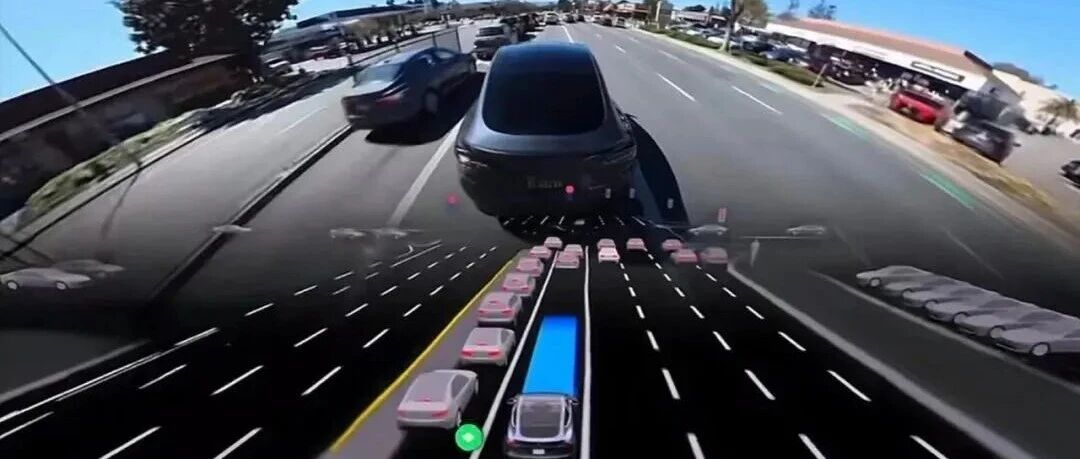
Core Viewpoint - The article discusses the current development status of end-to-end autonomous driving algorithms, comparing them with traditional algorithms and highlighting their advantages and limitations [3][5][6]. Group 1: Traditional vs. End-to-End Algorithms - Traditional autonomous driving algorithms follow a pipeline of perception, prediction, and planning, where each module has distinct inputs and outputs [5][6]. - The perception module takes sensor data as input and outputs bounding boxes for the prediction module, which then outputs trajectories for the planning module [6]. - End-to-end algorithms, in contrast, take raw sensor data as input and directly output path points, simplifying the process and reducing error accumulation [6][10]. Group 2: Limitations of End-to-End Algorithms - End-to-end algorithms face challenges such as lack of interpretability, safety guarantees, and issues related to causal confusion [12][57]. - The reliance on imitation learning in end-to-end algorithms limits their ability to handle corner cases effectively, as they may misinterpret rare scenarios as noise [11][57]. - The inherent noise in ground truth data can lead to suboptimal learning outcomes, as human driving data may not represent the best possible actions [11][57]. Group 3: Current End-to-End Algorithm Implementations - The ST-P3 algorithm is highlighted as an early example of end-to-end autonomous driving, focusing on spatiotemporal learning with three core modules: perception, prediction, and planning [14][15]. - Innovations in ST-P3 include a perception module that uses a self-centered cumulative alignment technique, a dual-path prediction mechanism, and a planning module that incorporates prior information for trajectory optimization [15][19][20]. Group 4: Advanced Techniques in End-to-End Algorithms - The UniAD framework introduces a multi-task approach by incorporating five auxiliary tasks to enhance performance, addressing the limitations of traditional modular stacking methods [24][25]. - The system employs a full Transformer architecture for planning, integrating various interaction modules to improve trajectory prediction and planning accuracy [26][29]. - The VAD (Vectorized Autonomous Driving) method utilizes vectorized representations to better express structural information of map elements, enhancing computational speed and efficiency [32][33]. Group 5: Future Directions and Challenges - The article emphasizes the need for further research to overcome the limitations of current end-to-end algorithms, particularly in optimizing learning processes and handling exceptional cases [57]. - The introduction of multi-modal planning and multi-model learning approaches aims to improve trajectory prediction stability and performance [56][57].
基于深度强化学习的轨迹规划
自动驾驶之心· 2025-08-28 23:32
Core Viewpoint - The article discusses the advancements and potential of reinforcement learning (RL) in the field of autonomous driving, highlighting its evolution and comparison with other learning paradigms such as supervised learning and imitation learning [4][7][8]. Summary by Sections Background - The article notes the recent industry focus on new technological paradigms like VLA and reinforcement learning, emphasizing the growing interest in RL following significant milestones in AI, such as AlphaZero and ChatGPT [4]. Supervised Learning - In autonomous driving, perception tasks like object detection are framed as supervised learning tasks, where a model is trained to map inputs to outputs using labeled data [5]. Imitation Learning - Imitation learning involves training models to replicate actions based on observed behaviors, akin to how a child learns from adults. This is a primary learning objective in end-to-end autonomous driving [6]. Reinforcement Learning - Reinforcement learning differs from imitation learning by focusing on learning through interaction with the environment, using feedback from task outcomes to optimize the model. It is particularly relevant for sequential decision-making tasks in autonomous driving [7]. Inverse Reinforcement Learning - Inverse reinforcement learning addresses the challenge of defining reward functions in complex tasks by learning from user feedback to create a reward model, which can then guide the main model's training [8]. Basic Concepts of Reinforcement Learning - Key concepts include policies, rewards, and value functions, which are essential for understanding how RL operates in autonomous driving contexts [14][15][16]. Markov Decision Process - The article explains the Markov decision process as a framework for modeling sequential tasks, which is applicable to various autonomous driving scenarios [10]. Common Algorithms - Various algorithms are discussed, including dynamic programming, Monte Carlo methods, and temporal difference learning, which are foundational to reinforcement learning [26][30]. Policy Optimization - The article differentiates between on-policy and off-policy algorithms, highlighting their respective advantages and challenges in training stability and data utilization [27][28]. Advanced Reinforcement Learning Techniques - Techniques such as DQN, TRPO, and PPO are introduced, showcasing their roles in enhancing training stability and efficiency in reinforcement learning applications [41][55]. Application in Autonomous Driving - The article emphasizes the importance of reward design and closed-loop training in autonomous driving, where the vehicle's actions influence the environment, necessitating sophisticated modeling techniques [60][61]. Conclusion - The rapid development of reinforcement learning algorithms and their application in autonomous driving is underscored, encouraging practical engagement with the technology [62].
港大&清华最新!仅通过少量演示,实现动态物体操作的强泛化能力!
具身智能之心· 2025-08-21 00:03
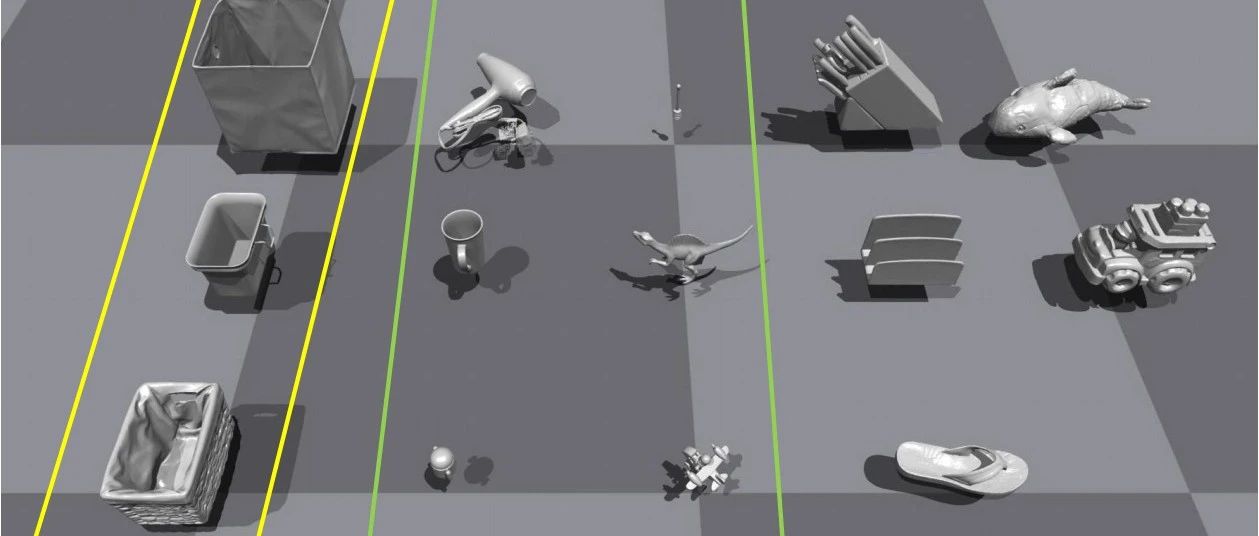
Group 1 - The article discusses the challenges of dynamic object manipulation in industrial manufacturing and proposes a solution through a new system called GEM (Generalizable Entropy-based Manipulation) that achieves high generalization with minimal demonstration data [3][6]. - GEM combines target-centered geometric perception and mixed action control to effectively reduce data requirements while maintaining high success rates in dynamic environments [6][15]. - The system has been validated in real-world scenarios, achieving a success rate of over 97% in over 10,000 operations without the need for on-site demonstrations [6][44]. Group 2 - Dynamic object manipulation requires higher precision and real-time responsiveness compared to static object manipulation, making it a complex task [8]. - Existing methods face limitations such as the need for extensive demonstration data and poor scalability due to high costs associated with data collection in dynamic environments [11][13]. - The proposed entropy-based framework quantifies the optimization process in imitation learning, aiming to minimize the data needed for effective generalization [13][15]. Group 3 - The GEM system is designed to lower observation entropy and action conditional entropy, which are critical for reducing data requirements [15][16]. - The system utilizes a hardware platform with adjustable-speed conveyor belts and RGB-D cameras to track and manipulate objects effectively [20][21]. - Key components of GEM include a memory encoder that enhances performance by integrating historical data and a mixed action control mechanism that simplifies dynamic challenges [29][39]. Group 4 - Experimental results show that GEM outperforms seven mainstream methods in both simulated and real-world scenarios, with an average success rate of 85% [30][31]. - The system demonstrates robust performance across various moving speeds and object geometries, maintaining high success rates even with unseen objects [38][39]. - In practical applications, GEM has been successfully deployed in a cafeteria setting, handling challenges such as food residue and fast-moving items with a success rate of 97.2% [42][44].
跟随音乐舞动节拍!这款机器人集体舞蹈引关注
Xin Lang Ke Ji· 2025-08-15 03:26
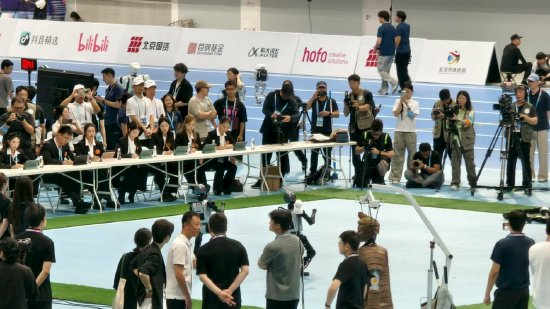
Core Insights - The 2025 World Humanoid Robot Games, the first comprehensive competition featuring humanoid robots, officially commenced on August 15 in Beijing, attracting 280 teams and over 500 robots from 16 countries [1] Group 1: Event Overview - The event includes 26 categories and 487 matches, showcasing a wide range of robotic capabilities [1] - A notable performance involved the "Bridge Interface" humanoid robot, which executed synchronized dance movements in response to music, captivating the audience [1] Group 2: Technology and Innovation - The "Bridge Interface" humanoid robot utilizes the Deepmimic algorithm for its full-body imitation motion control solution, enabling high-precision transfer of complex human actions [1] - The technology employs a dual-stage approach of "imitation learning + reinforcement learning," allowing the robot to perform intricate actions such as dance and martial arts, as well as custom movements [1] - The core logic of the technology involves capturing human motion segments through motion capture devices, followed by imitation learning to replicate basic action frameworks, and reinforcement learning to optimize physical feasibility for stability and fluidity in robotic movements [1]

25年8月8日理想VLA体验分享(包含体验过特斯拉北美FSD的群友)
理想TOP2· 2025-08-12 13:50
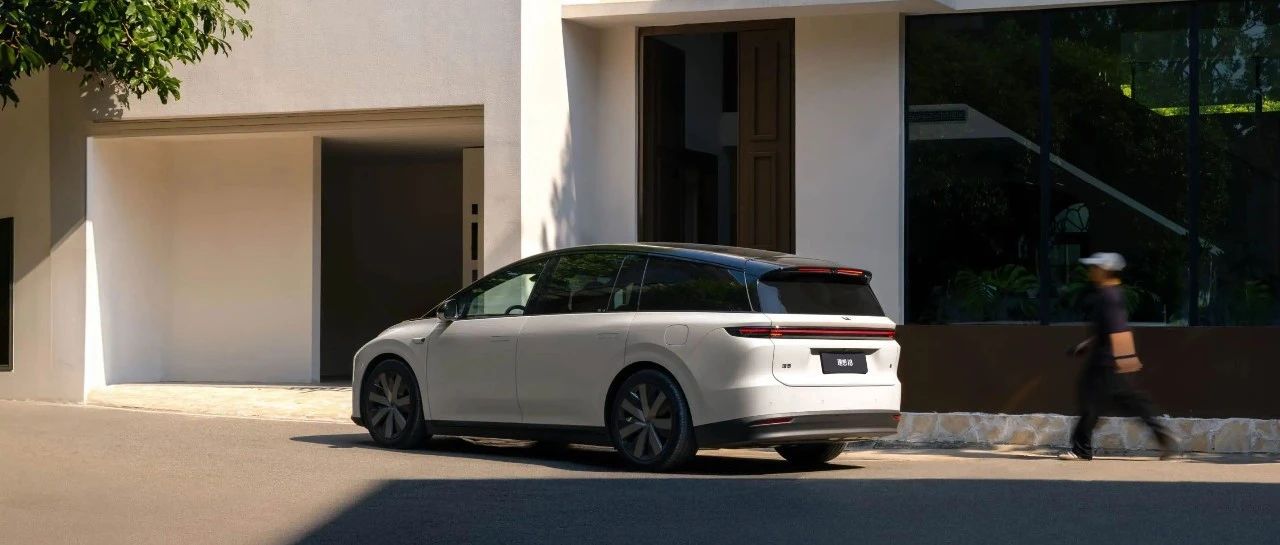
Core Insights - The article discusses the performance and user experience of the Li Auto's VLA (Vehicle Lane Assist) system compared to Tesla's FSD (Full Self-Driving) system, highlighting that while VLA shows promise, it still falls short of the seamless experience provided by FSD in certain scenarios [1][2][3]. Experience Evaluation - The experience is divided into three parts: driving in a controlled environment with no driver present, a one-hour public road test, and a two-hour self-selected route test [1]. - Feedback from users indicates that the VLA system provides a comfortable and efficient experience, particularly in controlled environments, but its performance in more complex road scenarios remains to be fully evaluated [2][3]. User Feedback - Users noted a significant difference in the braking experience of VLA, describing it as smooth and seamless compared to traditional driving, which enhances the perception of safety and comfort [3][4]. - The article emphasizes that the initial goal for autonomous driving systems should be to outperform 80% of average drivers before aiming for higher benchmarks [4][5]. Iteration Potential - The VLA system is believed to have substantial room for improvement compared to its predecessor, VLM, with potential advancements in four key areas: simulation data efficiency, maximizing existing hardware capabilities, enhancing model performance through reinforcement learning, and improving user voice control experiences [6][7]. - The article suggests that the shift to reinforcement learning for VLA allows for targeted optimizations in response to specific driving challenges, which was a limitation in previous models [8][9]. User Experience and Product Development - The importance of user experience is highlighted, with the assertion that in the AI era, product experience can be as crucial as technical capabilities [10]. - The voice control feature of VLA is seen as a significant enhancement, allowing for personalized driving experiences based on user preferences, which could improve overall satisfaction [10].

质疑VLA模型、AI完全不够用?有从业者隔空回应宇树王兴兴
第一财经· 2025-08-11 14:51
Core Viewpoint - The article discusses the skepticism of Wang Xingxing, CEO of Yushu, regarding the VLA (Vision-Language-Action) model, suggesting that the robotics industry is overly focused on data while lacking sufficient embodied intelligence in AI [3][4]. Group 1: Challenges in Robotics - The traditional robotics industry faces three core challenges: perception limitations, decision-making gaps, and generalization bottlenecks [6][7]. - Current robots often rely on preset rules for task execution, making it difficult to understand complex and dynamic environments [6]. - In multi-task switching, traditional robots frequently require human intervention for reprogramming or strategy adjustments [6]. - Robots need extensive retraining and debugging when confronted with new tasks or scenarios [6]. Group 2: Need for Model Reconstruction - There is a call within the industry to reconstruct the VLA model and seek new paradigms for embodied intelligence [5][7]. - Jiang Lei emphasizes the need for a complete system that integrates both hardware and software, rather than merely relying on large language models [6]. - The current research landscape is fragmented, with large language model researchers focusing solely on language, while edge intelligence concentrates on smaller models [6]. Group 3: Future Directions - Jiang Lei proposes exploring cloud and edge computing collaboration to create a comprehensive deployment architecture for humanoid robots [6]. - The ideal "brain" model for humanoid robots should possess full parameter capabilities, while the "small brain" model deployed on the robot must achieve breakthroughs in size and real-time performance [6]. - The industry is optimistic about humanoid robots becoming a significant sector, with this year being referred to as the year of mass production for humanoid robots [7].

干货 | 基于深度强化学习的轨迹规划(附代码解读)
自动驾驶之心· 2025-07-29 23:32
Core Viewpoint - The article discusses the advancements and applications of reinforcement learning (RL) in the field of autonomous driving, highlighting its potential to enhance decision-making processes in dynamic environments. Group 1: Background and Concepts - The concept of VLA (Variational Learning Algorithm) and its relation to embodied intelligence is introduced, emphasizing its similarity to end-to-end autonomous driving [3] - Reinforcement learning has gained traction in various industries following significant milestones like AlphaZero in 2018 and ChatGPT in 2023, showcasing its broader applicability [3] - The article aims to explain reinforcement learning from a computer vision perspective, drawing parallels with established concepts in the field [3] Group 2: Learning Methods - Supervised learning in autonomous driving involves tasks like object detection, where a model is trained to map inputs to outputs using labeled data [5] - Imitation learning is described as a method where models learn actions by mimicking human behavior, akin to how children learn from adults [6] - Reinforcement learning differs from imitation learning by focusing on optimizing actions based on feedback from interactions with the environment, making it suitable for sequential decision-making tasks [7] Group 3: Advanced Learning Techniques - Inverse reinforcement learning is introduced as a method to derive reward functions from expert data, particularly useful when defining rewards is challenging [8] - The Markov Decision Process (MDP) is explained as a framework for modeling decision-making tasks, where states, actions, and rewards are interrelated [9] - Dynamic programming and Monte Carlo methods are discussed as techniques for solving reinforcement learning problems, emphasizing their role in optimizing decision-making processes [11][12] Group 4: Reinforcement Learning Algorithms - Various reinforcement learning algorithms are categorized, including on-policy and off-policy methods, highlighting their differences in training stability and data utilization [25][26] - The article outlines key algorithms such as Q-learning, SARSA, and policy gradient methods, explaining their mechanisms and applications in reinforcement learning [27][29] - Advanced algorithms like TRPO and PPO are presented, focusing on their strategies for ensuring stable training and optimizing policy updates [57][58] Group 5: Applications in Autonomous Driving - The importance of reward design in autonomous driving is emphasized, with safety, comfort, and efficiency being key factors [62] - The article discusses the need for closed-loop training systems in autonomous driving, where vehicle actions influence the environment, necessitating dynamic modeling of other vehicles [62] - The integration of end-to-end learning with reinforcement learning is highlighted as a method to adapt to changing environments in real-time [63]