污染防治

Search documents
奋进的河南 决胜“十四五”·生态焕绿记丨让美好生态成为幸福常态
He Nan Ri Bao· 2025-11-22 23:21
Core Insights - The article highlights the innovative measures taken by Henan province to combat air pollution and improve environmental quality through technology and policy initiatives [1][2][3][4]. Group 1: Air Quality Improvement - New technology, such as remote sensing monitoring devices for vehicle emissions, has been implemented in Xinxiang City to enhance pollution control [1]. - In Hebi City, the introduction of electric heavy-duty trucks has led to a staggering 305-fold increase in their transportation volume, while nitrogen oxide emissions have decreased by 14.8% [2]. - Compared to 2017, PM2.5 concentrations in Henan are projected to decrease by 25.1% by 2024, with an increase of 27 days of good air quality [2]. Group 2: Environmental Policies and Initiatives - Henan has taken significant steps to eliminate over 120,000 "scattered and polluting" enterprises and has led the nation in ultra-low emissions upgrades in the thermal power sector [3]. - The province has established comprehensive action plans for air quality improvement and blue sky protection, reinforcing its commitment to environmental sustainability [3][4]. - The successful implementation of wastewater treatment facilities in 1,788 townships has contributed to the continuous improvement of rural environments [4]. Group 3: Water Quality and Biodiversity - The water quality in Henan has shown significant improvement, with 86.1% of national control sections meeting Class I-III standards, and no sections classified as poor [3]. - The return of migratory swans to the Yellow River wetlands indicates a positive trend in water quality, with over 15,000 swans recorded last year [3]. - The province's efforts in water management have led to stable water quality in key areas, supporting ecological health [3].
坚决打好污染防治攻坚战 | 梧州动真碰硬关停“散乱污”
Guang Xi Ri Bao· 2025-10-27 01:13
Core Viewpoint - The article highlights the efforts of Wuzhou City in Guangxi to address environmental safety hazards related to heavy metals in the jewelry manufacturing industry, particularly through the establishment of a modern jewelry manufacturing industrial park that consolidates operations and improves waste management practices [1][2][3] Group 1: Industry Overview - Wuzhou City is a major processing area for copper jewelry, with over 300 copper jewelry enterprises previously operating in a fragmented and unregulated manner, leading to significant environmental pollution risks [1] - The shift of jewelry enterprises from residential areas to the industrial park is part of a broader initiative to mitigate environmental hazards and upgrade the industry [1] Group 2: Environmental Management - The Dragon District completed a comprehensive inspection of over 300 jewelry enterprises within 30 days, implementing a governance plan that combines immediate risk control with long-term development strategies [2] - A total of 188 heavy metal-related enterprises have been integrated into the industrial park, with over 20 million yuan allocated for the construction of dedicated environmental protection facilities [2] Group 3: Regulatory Actions - Wuzhou City has adopted a rigorous approach to identify and rectify environmental safety hazards, utilizing drones and mobile mapping technology for effective monitoring [3] - The city has successfully addressed issues from 100 "scattered and polluting" enterprises, achieving a goal of complete remediation, and has shut down 75 such enterprises to facilitate industry upgrades and improve public welfare [3]
二十届四中全会闭幕后 多部重要法律草案将提请审议
2 1 Shi Ji Jing Ji Bao Dao· 2025-10-23 08:52
Group 1: Legislative Developments - The 18th meeting of the 14th National People's Congress Standing Committee will review multiple legal drafts from October 24 to 28, including amendments to maritime law, village committee organization law, urban residents' committee organization law, cybersecurity law, environmental protection tax law, and more [1] - The maritime law amendment aims to enhance maritime ecological environment protection and promote high-quality development in shipping and trade, incorporating international conventions and addressing domestic practices [2][3] Group 2: Maritime Law Amendments - The maritime law revision introduces a chapter on ship oil pollution damage liability, detailing compensation scope, liability assumptions, and insurance systems, aligning with international obligations [3] - Key modifications in the maritime law draft include provisions for ship ownership registration inquiries, improvements in ship mortgage priority rules, and requirements for timely notification to shippers when cargo is not picked up [2][3] Group 3: Cybersecurity Law Amendments - The cybersecurity law revision will focus on enhancing guidelines for cybersecurity work, promoting the safe development of artificial intelligence, and improving personal information protection in alignment with existing laws [4] - The draft emphasizes the need for a framework to support AI research, infrastructure, ethical standards, and safety risk monitoring [4] Group 4: Environmental Protection Law Amendments - The environmental protection law draft aims to strengthen pollution prevention measures, including increased funding for agricultural pollution control and enhanced standards for volatile organic compounds [5][6] - The draft is structured into nine sections addressing various pollution types, aiming to create a comprehensive system for tackling traditional and emerging environmental issues [7] Group 5: Administrative Penalties in Environmental Law - The environmental law draft seeks to ensure that administrative penalties are proportionate to the severity of violations, introducing guidelines for heavier or lighter penalties based on specific circumstances [7][8] - Adjustments to penalty amounts for radioactive pollution are proposed, referencing existing regulations for hazardous waste violations [8]


生态环境法典污染防治编草案将二审 拟增加保障公众健康内容
Zhong Guo Xin Wen Wang· 2025-10-23 06:29
Core Points - The second draft of the Ecological Environment Code's pollution prevention section is set for review by the 18th meeting of the 14th National People's Congress Standing Committee, with proposed additions to improve ecological environment quality and public health protection [1] Summary by Sections Pollution Prevention - The second draft aims to enhance overall pollution prevention requirements by including content focused on improving ecological environment quality and safeguarding public health [1] - Increased financial support for pollution prevention in agriculture and rural areas, with a focus on addressing agricultural non-point source pollution [1] - Strengthening measures for heavy metal pollution prevention [1] - Improving standards for volatile organic compounds (VOCs) pollution prevention, enhancing regulation of emissions from heavy-duty trucks, and addressing fraudulent emissions testing for vehicles and ships [1] - Adding requirements for monitoring and evaluating groundwater conditions [1][2] - Further strengthening water pollution prevention for vessels entering inland rivers [2] - Improving solid waste pollution prevention planning and standards for industrial solid waste, with a focus on construction waste [2] - Clarifying the conditions for obtaining qualifications for radioactive pollution monitoring institutions [2] - Enhancing the system for chemical substance pollution prevention [2]
条款最多,生态环境法典污染防治编提请全国人大常委会二审
Xin Jing Bao· 2025-10-23 05:49
Core Points - The National People's Congress (NPC) Standing Committee is reviewing the second draft of the Ecological Environment Code, focusing on pollution prevention and legal responsibilities [1][2][3] Group 1: Pollution Prevention Measures - The second draft of the pollution prevention section aims to enhance overall requirements for pollution control, improve ecological environment quality, and safeguard public health [2] - Increased funding for agricultural and rural pollution prevention is emphasized, along with stronger measures against heavy metal pollution and volatile organic compounds [2] - The draft includes provisions for monitoring underground water conditions and regulating emissions from ships and heavy-duty vehicles [2] Group 2: Legal Responsibilities - The second draft proposes significant modifications to the legal responsibilities section, ensuring a balance in penalties for similar violations and enhancing accountability for ecological protection and low-carbon development [3][5] - Specific legal responsibilities are being refined for issues like groundwater protection and oil smoke pollution, with a new structure for the legal responsibilities chapter [3] - The draft aims to prevent disproportionate penalties in the pollution prevention sector, ensuring that fines are commensurate with the severity of violations [5][6] Group 3: Systematic Framework - The pollution prevention section is structured into nine subdivisions, addressing traditional pollution types and emerging environmental issues [4] - It integrates existing laws related to air, water, soil, solid waste, noise, radioactive pollution, chemical substances, and electromagnetic radiation, creating a comprehensive regulatory framework [4] - The goal is to provide systematic support for ongoing pollution prevention efforts, emphasizing scientific and precise pollution control [4]
新华社权威速览·非凡“十四五”丨污染防治几场保卫战 环保部门这样打!
Xin Hua She· 2025-09-19 13:48
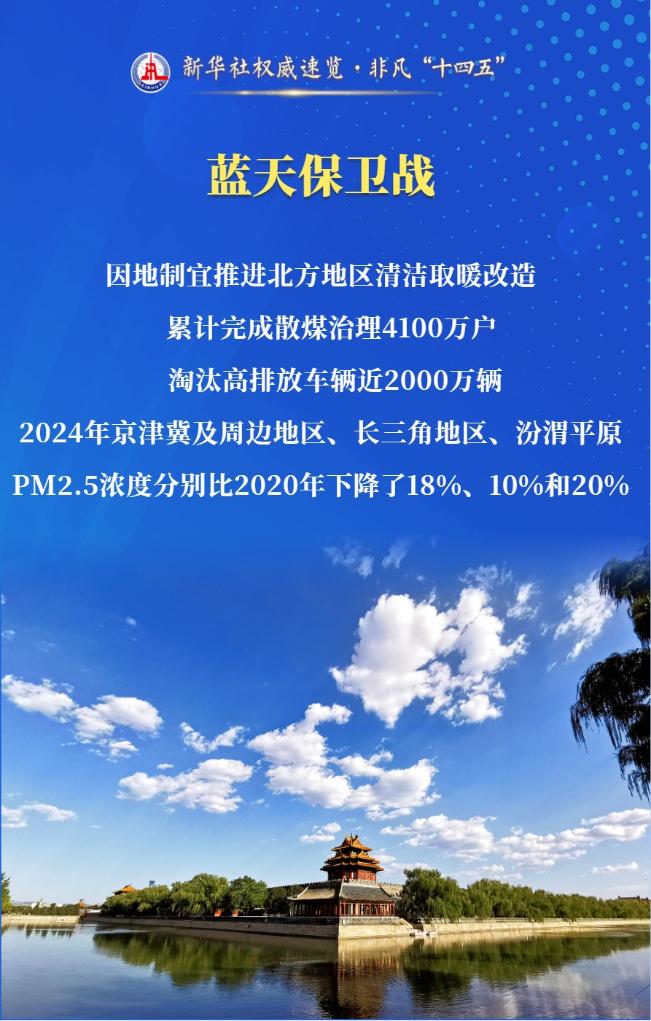
Core Points - The "14th Five-Year Plan" period is significant for ecological civilization construction and environmental protection in China, with the ecological environment department setting higher standards for key battles such as blue sky, clear water, and clean land [1] Group 1: Blue Sky Protection Campaign - The northern region has implemented clean heating transformations, completing coal-to-gas conversions for 41 million households [3] - Nearly 20 million high-emission vehicles have been eliminated [3] - PM2.5 concentrations in the Beijing-Tianjin-Hebei region, Yangtze River Delta, and Fenwei Plain are projected to decrease by 18%, 10%, and 20% respectively compared to 2020 levels by 2024 [3] Group 2: Clear Water Protection Campaign - A comprehensive investigation of pollution outlets has been conducted, identifying over 360,000 river pollution outlets and more than 63,000 sea pollution outlets [5] - The remediation completion rates for seven major river basins and key bays have reached 90% and 93.3% respectively [5] Group 3: Clean Land Protection Campaign - Actions for soil pollution source prevention and control have been implemented, with the tracing of heavy metal pollution in agricultural land completed in 132 key counties [8] - Environmental remediation has been completed in over 100,000 administrative villages, with rural sewage treatment rates exceeding 45% [8]
“科技+生态环境”创造更多可能
Zhong Guo Huan Jing Bao· 2025-09-17 00:26
Group 1 - The core viewpoint emphasizes the need for accelerated technological innovation in ecological and environmental protection to effectively combat pollution and enhance ecological restoration efforts [1][2] - The integration of modern technologies such as 5G, big data, cloud computing, artificial intelligence, and robotics is crucial for transforming ecological protection efforts [1] - Traditional methods are becoming less effective in addressing complex environmental issues, necessitating a reliance on advanced technologies for pollution prevention and control [1] Group 2 - Current ecological and environmental technology development must align closely with the practical needs of environmental protection, particularly in addressing pollution challenges [2] - There is a call to attract more research resources into the ecological environment sector and to expand the market for environmental technology applications [2] - Continuous innovation and the introduction of new technologies, products, and methods are essential for supporting ecological protection efforts [2] Group 3 - The establishment of platforms for efficient exchange and transaction of advanced technological products is necessary to enhance resource allocation in ecological research [3] - Existing platforms should be improved or integrated to better serve the needs of ecological research, ensuring effective connections between demand and supply [3] - The goal is to facilitate the flow of advanced research outcomes into practical applications, maximizing economic, social, and ecological benefits [3]
提高认识统一思想强化责任 坚决打好污染防治攻坚战主动仗
Zheng Zhou Ri Bao· 2025-09-08 00:41
Core Points - The meeting emphasized the importance of ecological civilization construction as a major political issue related to the party's mission and a significant social issue affecting people's livelihoods, business environment, and urban image [2] - The city aims to enhance pollution prevention efforts and achieve ecological environment goals set for the 14th Five-Year Plan, laying a solid foundation for a green, low-carbon, and circular economic development system for the 15th Five-Year Plan [1][2] Group 1 - The meeting highlighted the need for clear objectives and focused efforts on environmental quality improvement, emphasizing structural adjustments and the upgrade of industrial structures [3] - It called for targeted governance by concentrating on key pollution sources, periods, and areas, implementing precise measures to achieve a balance between ecological protection and socio-economic development [3] - The meeting stressed the importance of strengthening organizational leadership, accountability, and a results-oriented approach to ensure effective pollution prevention and environmental protection [3] Group 2 - Various city departments, including the Ecological Environment Bureau and Development and Reform Commission, participated in the meeting, indicating a collaborative approach to ecological protection [4]
河南党政“一把手”部署重点省辖市片区污染防治工作 扛牢生态环境保护政治责任努力实现生态环境提升进位
Zhong Guo Huan Jing Bao· 2025-08-29 10:07
Group 1 - The meeting emphasized the importance of implementing Xi Jinping's ecological civilization thoughts and the need for a unified approach to pollution prevention and ecological improvement in Henan Province [1][2] - Key leaders highlighted the necessity of addressing pollution through strict measures, focusing on critical industries and regions, and developing targeted remediation strategies [2][3] - The government aims to enhance ecological quality by promoting green transformation in industries, clean energy development, and establishing a green transportation system [2][3] Group 2 - The provincial government is committed to political responsibility for ecological protection, emphasizing the need for significant efforts to improve environmental quality [3] - Specific actions include the transformation of industries to ultra-low emissions, the rectification of "scattered and polluting" enterprises, and the elimination of outdated production capacities [3] - The government plans to strengthen collaborative efforts in pollution control, enhance early warning systems, and ensure thorough rectification of issues identified by central ecological inspections [3]
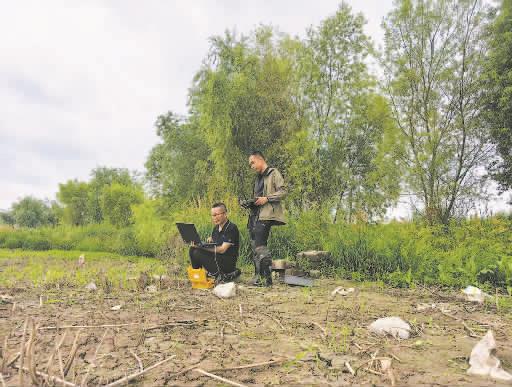
吉林省生态环境监测中心:登高战酷暑筑牢环境数据防线
Zhong Guo Huan Jing Bao· 2025-08-28 01:46
Core Insights - The article highlights the significant efforts made by the Jilin Provincial Ecological Environment Monitoring Center to enhance the supervision of key polluting units and improve the overall ecological environment quality in the province [1] Group 1: Regulatory Efforts - The Jilin Provincial Ecological Environment Monitoring Center focuses on key industries such as cement, steel, VOCs, alcohol, and sewage treatment plants, conducting rigorous enforcement sampling [1] - Monitoring personnel faced extreme conditions, including climbing 60-meter sampling platforms and enduring temperatures of 70 degrees Celsius from flue gas and 300 degrees Celsius from equipment, ensuring accurate and reliable data collection [1] Group 2: Self-Monitoring and Cross-Inspection - A new cross-inspection model was implemented for self-monitoring checks among key polluting units, involving seven working groups from various ecological environment bureaus and monitoring centers [1] - This initiative involved a comprehensive "health check" of 95 key units, assessing their self-monitoring plans, automatic monitoring system operations, manual monitoring equipment usage, and technical prevention capabilities [1] Group 3: Comprehensive Approach - The dual approach of strict enforcement and innovative inspections aims to enhance corporate self-discipline and ensure accountability in pollution control efforts [1] - The monitoring center's actions provide robust support for precise pollution control and contribute to the ongoing battle against pollution, reinforcing the ecological integrity of Jilin [1]