液态金属

Search documents
生益科技涨2.01%,成交额4.91亿元,主力资金净流出3298.48万元
Xin Lang Cai Jing· 2025-08-28 02:37
Core Viewpoint - Shengyi Technology's stock has shown significant growth this year, with a year-to-date increase of 110.23%, indicating strong market performance and investor interest [1][2]. Financial Performance - For the first half of 2025, Shengyi Technology reported revenue of 12.68 billion yuan, a year-on-year increase of 31.68%, and a net profit attributable to shareholders of 1.43 billion yuan, up 52.98% year-on-year [2]. - The company has distributed a total of 11.94 billion yuan in dividends since its A-share listing, with 3.58 billion yuan distributed over the past three years [3]. Stock Market Activity - As of August 28, Shengyi Technology's stock price was 49.30 yuan per share, with a market capitalization of 119.76 billion yuan [1]. - The stock has experienced a trading volume of 4.91 billion yuan on the same day, with a turnover rate of 0.43% [1]. - The stock has appeared on the "Dragon and Tiger List" twice this year, with the most recent instance on March 19, where it recorded a net buy of -548 million yuan [1]. Shareholder Structure - As of June 30, 2025, the number of shareholders decreased by 14.25% to 75,100, while the average circulating shares per person increased by 16.61% to 31,561 shares [2]. - Major shareholders include Hong Kong Central Clearing Limited, holding 166.7 million shares, and various ETFs such as Huatai-PB CSI 300 ETF and E Fund CSI 300 ETF, which have increased their holdings [3].

生益科技跌2.01%,成交额8.20亿元,主力资金净流出4369.25万元
Xin Lang Cai Jing· 2025-08-26 03:01
Company Overview - Guangdong Shengyi Technology Co., Ltd. is located in Dongguan, Guangdong Province, established on June 27, 1985, and listed on October 28, 1998. The company specializes in the design, production, and sales of copper-clad laminates, bonding sheets, printed circuit boards, ceramic electronic components, LCD products, electronic-grade glass cloth, epoxy resin, copper foil, flexible electronic materials, display materials, packaging materials, and insulation materials [2]. Financial Performance - For the first half of 2025, Shengyi Technology achieved operating revenue of 12.68 billion yuan, representing a year-on-year growth of 31.68%. The net profit attributable to the parent company was 1.43 billion yuan, with a year-on-year increase of 52.98% [2]. - The company has cumulatively distributed cash dividends of 11.939 billion yuan since its A-share listing, with 3.575 billion yuan distributed over the past three years [3]. Stock Performance - As of August 26, Shengyi Technology's stock price was 48.87 yuan per share, with a market capitalization of 118.718 billion yuan. The stock has increased by 108.40% year-to-date, with a 9.45% rise over the last five trading days and a 16.41% increase over the last 20 days [1]. - The company has appeared on the "Dragon and Tiger List" twice this year, with the most recent appearance on March 19, where it recorded a net buy of -548 million yuan [1]. Shareholder Structure - As of June 30, 2025, the number of shareholders was 75,100, a decrease of 14.25% from the previous period. The average circulating shares per person increased by 16.61% to 31,561 shares [2]. - Among the top ten circulating shareholders, Hong Kong Central Clearing Limited held 166.7 million shares, a decrease of 16.4 million shares from the previous period. Other notable shareholders include various ETFs, with increases in holdings for several [3].
生益科技涨2.05%,成交额1.88亿元,主力资金净流入928.57万元
Xin Lang Cai Jing· 2025-08-22 03:01
Company Overview - Shengyi Technology Co., Ltd. is located in Dongguan, Guangdong Province, established on June 27, 1985, and listed on October 28, 1998. The company specializes in the design, production, and sales of copper-clad laminates and bonding sheets [1][2]. Stock Performance - As of August 22, Shengyi Technology's stock price increased by 2.05%, reaching 45.36 CNY per share, with a trading volume of 188 million CNY and a turnover rate of 0.18%. The total market capitalization is 110.19 billion CNY [1]. - Year-to-date, Shengyi Technology's stock price has risen by 93.43%. In the last five trading days, the stock increased by 1.18%, while it rose by 19.21% over the past 20 days and 69.63% over the last 60 days [1]. Capital Flow - The net inflow of main funds was 9.29 million CNY, with large orders accounting for 11.23% of total purchases and 10.2% of total sales. Notably, a significant single order bought 12.81 million CNY, representing 6.81% of total transactions [1]. Financial Performance - For the first half of 2025, Shengyi Technology reported a revenue of 12.68 billion CNY, reflecting a year-on-year growth of 31.68%. The number of shareholders decreased by 14.25% to 75,100, while the average circulating shares per person increased by 16.61% to 31,561 shares [2]. Dividend Distribution - Since its A-share listing, Shengyi Technology has distributed a total of 11.94 billion CNY in dividends, with 3.58 billion CNY distributed over the past three years [2]. Shareholding Structure - As of June 30, 2025, Hong Kong Central Clearing Limited is the fourth-largest circulating shareholder, holding 166.7 million shares, a decrease of 16.4 million shares from the previous period [2].
折叠屏手机逐渐从高端向主流消费群体渗透
Zheng Quan Shi Bao Wang· 2025-08-21 14:16
Core Insights - The foldable smartphone market is maturing, with decreasing prices and increasing adoption among mainstream consumers [1][2] - Honor has launched the Magic V Flip 2, featuring advanced specifications and a competitive price point, indicating a shift towards affordability in foldable devices [1] - The global foldable smartphone shipment is projected to grow at a compound annual growth rate (CAGR) of 49.48%, reaching 102 million units by 2027, with China expected to see significant growth [1][2] Industry Trends - Foldable smartphones are becoming a key innovation in consumer electronics, transitioning from high-end to mainstream markets [1] - The hinge and flexible screen technologies are critical areas of innovation, with major players like Huawei and Samsung leveraging self-developed hinge technology for competitive advantage [1] - The foldable smartphone hinge market is expected to reach a value of $1.2 billion by 2025, with hinge costs accounting for approximately 5%-8% of the bill of materials (BOM) per device [2] Competitive Landscape - Apple's entry into the foldable smartphone market is anticipated to enhance market penetration, with expectations of a rise in foldable smartphone penetration from 1.6% in 2025 to over 3% by 2027 [2][3] - The focus will shift towards manufacturing efficiency, cost control, and supply chain integration as Apple aims to differentiate its offerings in a more stable market [3] - Suppliers that can manage technology, production capacity, and price flexibility will be key beneficiaries in the upcoming growth cycle [3]

金融工程日报:沪指下探回升续创10年新高,封板率创近一个月新高-20250820
Guoxin Securities· 2025-08-20 14:19
- The report does not contain any quantitative models or factors for analysis
午间涨跌停股分析:63只涨停股、10只跌停股,小金属板块走强,云南锗业2连板
Xin Lang Cai Jing· 2025-08-20 03:49
Group 1 - A-shares experienced significant activity with 63 stocks hitting the daily limit up and 10 stocks hitting the limit down on August 20 [1] - The liquid metal concept saw strong performance, with Dongfang Zirconium hitting the limit up [1] - The small metal sector also showed strength, with Yunnan Zinc Industry achieving two consecutive limit up days [1] Group 2 - ST Gaohong faced a continuous decline with eight consecutive limit down days [2] - Aili Home and ST Nanzhi both experienced two consecutive limit down days [2] - ST Huarong and Xintian Pharmaceutical also hit the limit down [2]

金融工程日报:沪指缩量震荡,消费电子、CPO概念持续火热-20250819
Guoxin Securities· 2025-08-19 14:34
The provided content does not contain any specific quantitative models or factors, nor does it include their construction processes, formulas, evaluations, or backtesting results. The documents primarily discuss market performance, sector and concept index movements, market sentiment, capital flows, ETF premiums/discounts, block trading discounts, and institutional activities. These are general market observations and statistics rather than detailed quantitative models or factor analyses.
TrendForce集邦咨询:预计2025年折叠手机铰链市场规模达12亿美元
Zhi Tong Cai Jing· 2025-08-19 05:49
Group 1 - The core viewpoint is that the introduction of foldable products by Apple in the second half of 2026 is expected to increase the penetration rate of foldable phones from 1.6% in 2025 to over 3% by 2027, driven by advancements in hinge technology and design [1] - The foldable phone hinge market is projected to reach a value of $1.2 billion by 2025, with Samsung adopting a water-drop hinge design in its Galaxy Z Fold5 and Flip series to enhance durability and reduce crease visibility [2] - The industry is moving towards modular designs and standardization to reduce costs and improve yield rates, with suppliers like New Power and Amphenol investing in high-precision components to adapt to the water-drop hinge trend [2] Group 2 - Apple is considering the use of liquid metal as a structural material for its foldable devices, which could lead to a significant upgrade in the supply chain if combined with 3D printing and composite materials [3] - Apple typically adopts an "early majority" strategy, entering the foldable phone market once it stabilizes, aiming to capture market share through differentiation while minimizing risks and R&D costs [3] - The entry of Apple into the foldable phone market signifies a shift towards mature applications, where competition will focus on manufacturing efficiency, cost control, and supply chain integration [3]

2025年中国液态金属行业概览:液态金属赋能工业新变革(精华版)
Tou Bao Yan Jiu Yuan· 2025-07-23 12:57
Investment Rating - The report does not explicitly provide an investment rating for the liquid metal industry. Core Insights - Liquid metals possess significant advantages over traditional metal materials, including high strength, hardness, wear resistance, and excellent electrical and thermal conductivity, making them suitable for applications in electronics, healthcare, wearable devices, and flexible robotics. However, the industry faces technological bottlenecks in material and packaging, hindering clear industrial application trends [2][5][19]. Summary by Sections Industry Overview - Liquid metals are defined as metals or metal alloys with melting points below or near room temperature, exhibiting unique properties such as low melting points, high conductivity, and good flowability, applicable in various fields including consumer electronics, aerospace, and biomedical [6][7]. Raw Materials - High-purity gallium is the primary raw material for gallium-based liquid metals, with China leading globally in gallium resource reserves and production, providing a cost advantage and a foundation for technological innovation in the liquid metal industry [3]. Applications - The primary industrial application of liquid metals is in high-end chip cooling, where they serve as thermal interface materials (TIMs) due to their superior thermal conductivity and flowability. Other potential applications, such as hydrogen production, 3D printing, and flexible robotics, are still in the experimental stage and have not yet achieved commercialization [4][27][33]. Industrial Bottlenecks - The main bottlenecks in the industrial application of liquid metals are found in material and packaging dimensions. Material challenges arise from impurities in high-purity gallium, which complicate the material system and hinder predictability in modifications. Packaging issues stem from the complex solid-liquid phase transitions and the strong flowability and surface tension of liquid metals, leading to compatibility, design, and cost challenges [5][57]. Production Processes - The production of liquid metal components typically involves vacuum die casting, which offers advantages such as low cost, high complexity, and minimal waste compared to traditional metal processing methods. The process includes low-temperature melting and die casting to achieve precise shapes and properties [20][26]. Future Prospects - Liquid metals have vast potential in flexible electronics and robotics due to their unique properties, but significant technical challenges remain before widespread commercialization can occur. Continued research and development are necessary to overcome these challenges and enhance the feasibility of liquid metal applications [40][49].
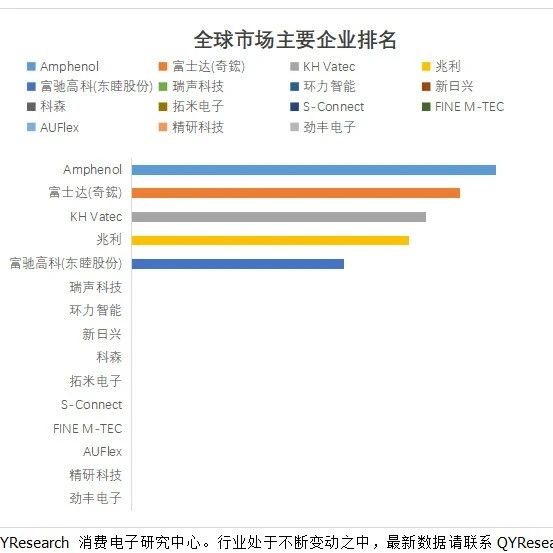
全球折叠屏手机铰链模块市场前15强生产商排名及市场占有率
QYResearch· 2025-07-16 09:00
Core Viewpoint - The article discusses the evolution and significance of hinge technology in foldable smartphones, highlighting the different types of hinges, their advantages and disadvantages, and the impact of material innovations on performance and cost [2][5][6]. Industry Perspective - Foldable hinge technology has undergone multiple iterations since the first commercial foldable phone was launched in 2019, leading to various technical routes and design philosophies [2]. - The main types of hinge technology include U-shaped hinges, waterdrop hinges, and other types, each with unique characteristics affecting crease control, thickness, cost, and durability [2]. U-Shaped Hinge - The U-shaped hinge, exemplified by the Samsung Galaxy Fold series, is a simpler and cost-effective design but suffers from significant drawbacks such as visible creases and potential screen damage over time [3]. - This hinge design has been criticized for allowing dust ingress and causing aesthetic issues due to gaps when closed [3]. Waterdrop Hinge - The waterdrop hinge, commonly used by domestic manufacturers like OPPO and Huawei, allows for a larger bending radius, reducing screen creases and providing a seamless closure [4]. - While offering advantages such as shallower creases and improved user experience, the complexity of the waterdrop hinge increases production costs and device thickness [4]. Evolution of Hinge Technology - The evolution of hinge technology reflects the transition of foldable smartphones from being merely functional to providing a better user experience, with advancements in materials and structural design [5]. - The latest innovation is Huawei's "Tiangong Hinge System," which supports both inward and outward folding, marking a new stage in hinge technology development [5]. Material Innovations - The performance of foldable hinges is closely tied to material selection, with advancements from traditional stainless steel to revolutionary liquid metal materials enhancing strength and fatigue resistance [6]. - Metal Injection Molding (MIM) is the mainstream choice for hinge manufacturing, while liquid metal offers superior properties, making it ideal for components requiring repeated folding [6]. Market Dynamics - The global foldable hinge market is projected to exceed $900 million in 2024, with a growth rate of nearly 5% [7]. - The introduction of tri-fold smartphones increases the number of required hinges, suggesting further market expansion [7]. - The market is characterized by high technical barriers, dense patent layouts, and a trend towards consolidation among leading companies [7]. Regional Distribution - Hinge manufacturers are primarily located in China and South Korea, with the U.S. excelling in design but less involved in manufacturing [8]. - Chinese companies are increasingly competitive across the entire supply chain, from materials to design and manufacturing [8]. Cost Structure - Hinges represent a significant incremental cost in foldable smartphones, with individual costs ranging from 800 to 1200 yuan, influenced by material choices and manufacturing complexity [8]. - Reducing hinge costs is crucial for the broader adoption of foldable smartphones, with potential improvements through material substitution and process enhancements [8]. Challenges in the Industry - The industry faces challenges such as reliance on foreign high-end materials and increasing competition, necessitating ongoing R&D investment [9]. - However, advancements in MIM technology and liquid metal by Chinese firms are enhancing the self-sufficiency of the supply chain [9]. Market Forecast - The global foldable hinge module market is expected to reach $1.82 billion by 2031, with a compound annual growth rate (CAGR) of 6.8% [10].