环境空气质量标准修订

Search documents
加严环境空气质量标准是否不利于经济发展?生态环境部回应
Nan Fang Du Shi Bao· 2025-12-26 08:13
Core Viewpoint - The Ministry of Ecology and Environment has released a draft for stricter air quality standards, raising concentration limits for PM2.5, PM10, SO2, and NO2, which may impact economic and social development, but past experiences suggest that stricter standards can improve air quality and promote high-quality economic growth [1][2]. Group 1: Air Quality Improvement - The revision of air quality standards has significantly improved national air quality, with a 36% decrease in average PM2.5 concentration and a 68% reduction in heavy pollution days over the past decade, while GDP increased by 63% and the number of vehicles rose by 111% [1]. - The implementation of stricter air quality standards has led to four strategic shifts in air pollution control: from total pollutant emission control to air quality improvement, from single pollutant control to multi-pollutant coordination, from industrial source control to comprehensive management of various pollution sources, and from local pollution control to regional joint prevention and control [2]. Group 2: Economic and Social Development - The revised standards are expected to have a limited direct impact on production activities, as air quality standards focus on goal orientation and strategic guidance rather than strict emission limits [2]. - The process of achieving air quality standards is gradual, with supporting policies, funding, and technologies being implemented progressively to ensure a smooth transition without disrupting economic stability [2]. - Long-term benefits of stricter standards include further reductions in PM2.5 levels, improved public health outcomes, and the promotion of new production capacities in sectors like electric vehicles and clean energy, facilitating a green and low-carbon transition in industries [3].
环境空气质量标准修订对经济高质量发展发挥积极作用(答问八)
Xin Lang Cai Jing· 2025-12-26 05:40
Core Viewpoint - The recent revision of the air quality standards by the Ministry of Ecology and Environment aims to tighten the concentration limits for pollutants such as PM2.5, PM10, SO2, and NO2, which is expected to positively impact economic development and public health despite concerns about potential negative effects on economic growth [1][2]. Group 1: Impact on Air Quality and Economy - The revision of air quality standards has historically led to significant improvements in air quality, with a 36% decrease in average PM2.5 concentration and a 68% reduction in heavy pollution days over the past decade, while GDP increased by 63% and vehicle ownership rose by 111% [1]. - The implementation of stricter air quality standards has facilitated a strategic shift in pollution control, moving from total emissions control to a focus on air quality improvement, and from single pollutant management to multi-pollutant coordination [1][2]. Group 2: Implementation and Long-term Benefits - The revised standards will be implemented in phases to minimize the impact on economic and social stability, allowing for a gradual transition to meet the new requirements [2]. - Long-term benefits of stricter standards include further reductions in PM2.5 levels, improved public health outcomes by decreasing the incidence of cardiovascular and respiratory diseases, and the promotion of green technologies in industries such as new energy vehicles and clean energy [2].
新标准实施会带来哪些收益?|《环境空气质量标准》与配套技术规范修订系列解读③
Zhong Guo Huan Jing Bao· 2025-12-23 23:21
Core Viewpoint - The Ministry of Ecology and Environment is seeking public opinion on the draft revision of the "Ambient Air Quality Standards" (GB 3095—2012), which aims to further improve air quality and public health in China [1] Group 1: Health Benefits of New Standards - The implementation of the new standards is expected to lead to significant health benefits, with PM2.5 concentration reductions potentially saving approximately 1% of GDP in medical expenses from 2013 to 2017, and around 0.6% of GDP from 2018 to 2020 [2] - A reduction in PM2.5 annual average concentration from 35 µg/m³ to 25 µg/m³ could decrease the all-cause mortality risk related to air pollution by about one-third, providing substantial public health benefits [2] - The health benefits of the new standards are closely linked to the aging population in China, which necessitates the revision of air quality standards and collaborative governance of various air pollutants to alleviate disease burden [2] Group 2: Improvement of Public Welfare - The revision of the air quality standards is crucial for enhancing public welfare during the "14th Five-Year Plan" period, contributing to the construction of a beautiful China and promoting high-quality economic and social development [3] - Continuous improvement in air quality is expected to extend the average life expectancy of citizens, reduce medical expenses, and enhance public satisfaction with the environment [3] Group 3: Synergistic Effects on Pollution Reduction and Carbon Emission - Achieving the goal of reducing the national average PM2.5 concentration to below 25 µg/m³ by 2035 requires a 20% to 30% reduction in major pollutant emissions, including a 21% to 28% reduction in primary PM2.5, SO2, NOx, and VOCs [4] - Systematic emission reductions and collaborative governance across energy, industry, and transportation sectors are essential for successful implementation of air quality improvement strategies [4] - Specific measures include optimizing energy structure, enhancing heating and energy use systems, upgrading industrial structures, and promoting cleaner transportation [4] Group 4: Economic Returns on Investment - The benefits of implementing the new standards are estimated to be about ten times the investment in pollution control, with a cost-benefit ratio of approximately 1:10 [5] - Measures such as promoting eco-friendly solvents and improving vehicle fuel efficiency, while initially costly, are expected to foster green and low-carbon industrial transformation [5] - The pollution reduction measures are projected to achieve annual CO2 reductions of approximately 600 million to 800 million tons, with cumulative reductions exceeding 7 billion tons from 2026 to 2035 [5]
PM2.5年均浓度提标,我国有望迎来更严环境空气质量标准
Xin Lang Cai Jing· 2025-12-19 03:50
Core Viewpoint - The Ministry of Ecology and Environment has released a draft for public consultation on the revised "Ambient Air Quality Standards," which aims to tighten concentration limits for particulate matter and gases like sulfur dioxide (SO2) and nitrogen dioxide (NO2) [1][7]. Group 1: Reasons for Revising Air Quality Standards - The current standards have led to significant improvements in air quality, with PM2.5 annual average concentration decreasing by 36% from 2015 to 2024, and the number of heavily polluted days reduced by 68% [2][8]. - The revision aims to further protect public health, as PM2.5 remains the most harmful air pollutant according to the World Health Organization (WHO) [2][8]. - The revision supports the "Beautiful China" initiative, which targets an average PM2.5 concentration of below 25 micrograms per cubic meter by 2035, addressing the gap where nearly half of the compliant cities still exceed this limit [2][8][9]. Group 2: Key Changes in the Standards - The revised standards will tighten the PM2.5 annual average and daily average secondary limits to 25 micrograms per cubic meter and 50 micrograms per cubic meter, respectively [4][10]. - PM10 annual and daily average secondary limits will also be tightened to 50 micrograms per cubic meter and 100 micrograms per cubic meter [4][10]. - The revision includes stricter limits for sulfur dioxide and nitrogen dioxide, while ozone and carbon monoxide limits will remain unchanged [11]. Group 3: Implementation of the Revised Standards - The revised standards will be implemented in two phases: the first phase (2026-2030) will introduce transitional limits of 30 micrograms per cubic meter for PM2.5 annual average and 60 micrograms per cubic meter for daily average [5][12]. - The second phase, starting in 2031, will fully enforce the revised limits for particulate matter and gases [5][12]. - The transitional limits are designed to allow for a smooth implementation and to reduce short-term pressures on economic and social development [6][12].
《环境空气质量标准》修订公开征求意见
Xin Hua Wang· 2025-12-18 06:34
Core Viewpoint - The Ministry of Ecology and Environment is seeking public opinion on the revised "Ambient Air Quality Standards" which aims to tighten concentration limits for particulate matter and gases like sulfur dioxide (SO2) and nitrogen dioxide (NO2), indicating a move towards stricter air quality standards in China to better protect public health [1][2]. Group 1: Reasons for Revising Air Quality Standards - The current standards have led to significant improvements in air quality, with PM2.5 annual average concentration decreasing by 36% and heavy pollution days reduced by 68% from 2015 to 2024 [2]. - The revision is necessary to enhance public health protection, as PM2.5 remains the most harmful air pollutant according to WHO research [2][3]. - The revision supports the goal of achieving an average PM2.5 concentration below 25 micrograms per cubic meter by 2035, as part of the "Beautiful China" initiative [2][3]. Group 2: Key Changes in the Revised Standards - The revised standards will tighten the secondary limits for PM2.5 annual and daily concentrations to 25 micrograms per cubic meter and 50 micrograms per cubic meter, respectively [4]. - PM10 annual and daily secondary limits will also be tightened to 50 micrograms per cubic meter and 100 micrograms per cubic meter [4]. - The concentration limits for sulfur dioxide and nitrogen dioxide will be tightened, while limits for ozone and carbon monoxide will remain unchanged [4]. Group 3: Implementation Phases of the Revised Standards - The revised standards will be implemented in two phases: the first phase from 2026 to 2030 will have transitional limits for PM2.5 and PM10 [5]. - The second phase starting in 2031 will fully enforce the revised concentration limits for particulate matter and gases [6]. - The transitional limits aim to allow regions to prepare for the new standards, reducing short-term economic pressures while improving air quality [6].
我国有望迎来更严格环境空气质量标准
Xin Hua Cai Jing· 2025-12-17 23:49
Core Viewpoint - The Ministry of Ecology and Environment has released a draft for public consultation on the revised "Ambient Air Quality Standards" which aims to tighten concentration limits for particulate matter and gases like sulfur dioxide (SO2) and nitrogen dioxide (NO2), indicating a move towards stricter air quality standards in China to better protect public health [1][2]. Group 1: Reasons for Revising Air Quality Standards - The current standards have led to significant improvements in air quality, with PM2.5 annual average concentration decreasing by 36% and heavy pollution days reduced by 68% from 2015 to 2024 [2]. - The revision is necessary to enhance public health protection, as PM2.5 remains the most harmful air pollutant according to WHO research [2][3]. - The revision supports the goal of achieving an average PM2.5 concentration of below 25 micrograms per cubic meter by 2035, as part of the "Beautiful China" initiative [2][3]. Group 2: Key Changes in the Revised Standards - The revised standards will tighten the secondary limits for PM2.5 annual and daily concentrations to 25 micrograms per cubic meter and 50 micrograms per cubic meter, respectively [4]. - PM10 annual and daily secondary limits will also be tightened to 50 micrograms per cubic meter and 100 micrograms per cubic meter [4]. - The concentration limits for sulfur dioxide and nitrogen dioxide will be tightened, while limits for ozone and carbon monoxide will remain unchanged [4]. Group 3: Implementation Phases of the Revised Standards - The revised standards will be implemented in two phases: the first phase from 2026 to 2030 will introduce transitional limits for PM2.5 and PM10 [5]. - From 2031 onwards, the revised limits for particulate matter, sulfur dioxide, and nitrogen dioxide will be fully enforced [6]. - The transitional limits are designed to allow for a smooth implementation of the new standards, reducing short-term economic pressures while aiming for improved air quality [6].
为什么要修订《环境空气质量标准》?|《环境空气质量标准》与配套技术规范修订系列解读①
Zhong Guo Huan Jing Bao· 2025-12-17 23:18
Core Viewpoint - The Ministry of Ecology and Environment is seeking public opinion on the revised "Ambient Air Quality Standards" (GB 3095—2012) and its accompanying technical specifications, highlighting the need for updates to improve public health and align with international standards [1][3][5] Group 1: Achievements of Current Standards - The implementation of the current "Ambient Air Quality Standards" has significantly improved air quality in China, reducing the annual average concentration of PM2.5 from 46 micrograms per cubic meter to 29.3 micrograms per cubic meter, a decrease of 36% [2] - Major pollutants such as PM10, SO2, NO2, and CO have also seen reductions exceeding 25%, with SO2 dropping by 65% from 23 micrograms per cubic meter to 8 micrograms per cubic meter [2] - By 2024, 222 cities, or 65.5% of all cities, will meet air quality standards, marking a historical high [2] Group 2: Reasons for Revising Standards - The revision aims to further protect public health, as studies indicate significant health risks associated with PM2.5 and other pollutants, necessitating updated standards to mitigate these risks [3] - The revision supports the goals of the "Beautiful China" initiative, which aims to reduce the national average PM2.5 concentration to below 28 micrograms per cubic meter by 2027 and below 25 micrograms per cubic meter by 2035 [3] - The current PM2.5 secondary limit of 35 micrograms per cubic meter is relatively lenient compared to international standards, indicating a need for alignment with global air quality benchmarks [4]
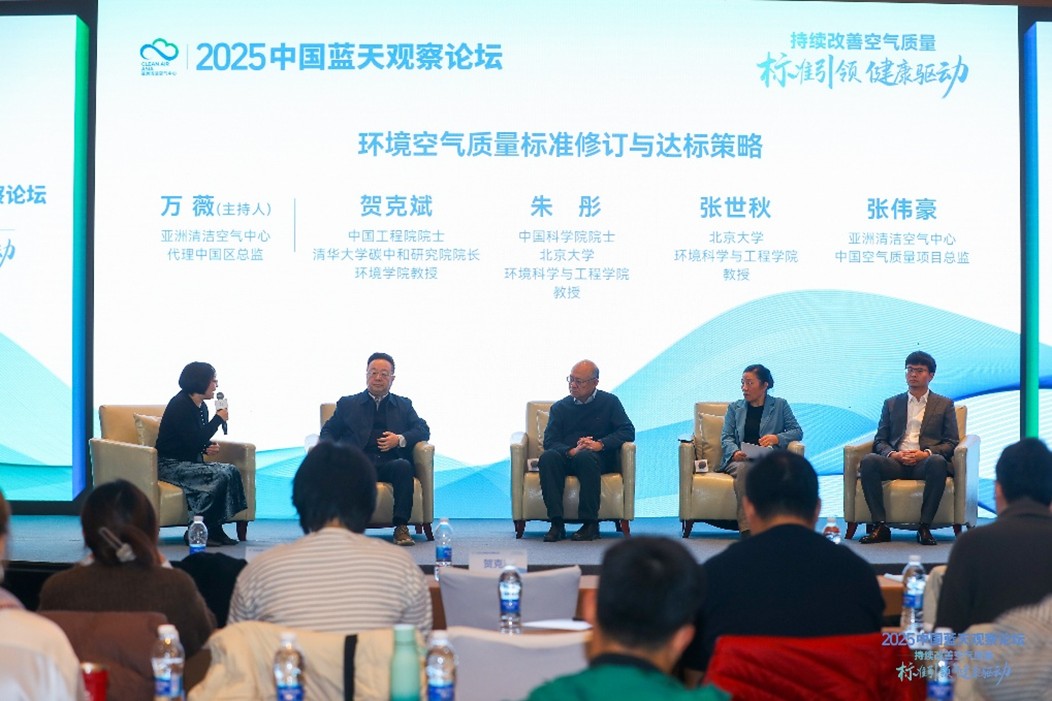
亚洲清洁空气中心、清华大学、北京大学共同发布报告 以环境空气质量标准研究为修订提供科学参考
Jing Ji Wang· 2025-10-27 07:43
Core Insights - The 2025 China Blue Sky Observation Forum was held in Beijing, focusing on the theme "Continuous Improvement of Air Quality: Standards Lead, Health Driven" [1] - The forum released a series of research reports in collaboration with Tsinghua University and Peking University, analyzing the revision of China's air quality standards and its economic impacts [1][2] - The proposed new air quality standard limit of 25μg/m3 for PM2.5 aims to enhance health benefits and drive continuous improvement in air quality [1] Group 1 - The report "Analysis of the Path to Achieve Revised Environmental Air Quality Standards" outlines scenario target values and phased recommendations for revising air quality standards, establishing achievable paths for compliance [1] - The report emphasizes the need for upgrading standards in line with ongoing air quality improvements and reduction measures [1] - The research highlights the synergistic benefits of pollution reduction and carbon emission cuts, along with health benefits associated with the new standards [1] Group 2 - The economic impact assessment report utilizes a computable general equilibrium model to evaluate the macroeconomic effects and cost-benefit analysis of four standard revision scenarios for 2030 and 2035 [2] - Following the WHO's updated global air quality guidelines, the U.S. and EU are set to revise their air quality standards in 2024, tightening PM2.5 annual concentration limits to 9μg/m3 and 10μg/m3 respectively [2] - The study analyzes the triggers, institutional and decision-making processes, scientific evaluation frameworks, and cost-benefit assessments of the U.S. and EU practices, providing valuable insights for China and other countries [2]
环境空气质量标准修订,专家:尽快加严标准限值并分区域推进达标
Xin Jing Bao· 2025-10-24 13:55
Core Insights - The Asian Clean Air Center held the 2025 China Blue Sky Observation Forum, releasing a report on air quality standards in collaboration with Tsinghua University and Peking University [1] - The proposed revision of the air quality standard suggests a new PM2.5 annual concentration limit of 25 micrograms per cubic meter, which aligns with the WHO's second phase transition target [2] - The current air quality standard, implemented in 2016, has seen over 70% of cities meeting the PM2.5 standard, indicating a need for an updated benchmark [1][2] Group 1: Current Standards and Proposed Changes - The existing PM2.5 annual concentration limit is set at 35 micrograms per cubic meter, which corresponds to the initial WHO guideline [1] - The new proposed standard of 25 micrograms per cubic meter aims to enhance health benefits and further improve air quality [2] - The revision process considers China's development stage, resource endowment, and environmental capacity [1] Group 2: Health and Economic Implications - Implementing stricter air quality standards is expected to drive industrial structure optimization and energy transition, despite potential short-term economic pressures [3] - The ecological environment department has made positive progress in evaluating the implementation of air quality standards and their health impacts [3] - The approach to revising standards will focus on a balanced strategy, avoiding extreme measures while ensuring local governments can meet the new targets [3]
以环境空气质量标准研究为修订提供科学参考
Zhong Guo Neng Yuan Wang· 2025-10-24 11:21
Core Insights - The forum held by the Asia Clean Air Center in Beijing focused on the theme of "Continuous Improvement of Air Quality: Standards Leading, Health Driven" and presented the latest research findings on environmental air quality standards in collaboration with Tsinghua University and Peking University [1] Group 1: Air Quality Standards Revision - The current air quality standards (GB3095-2012) were revised in 2012 and fully implemented in 2016, with a revision process initiated in 2022 [1] - The State Council's "Action Plan for Continuous Improvement of Air Quality" released in November 2023 emphasizes the need to start revising air quality standards and related technical specifications [1] - The demand for revising and raising standards has become clear, especially since the national average PM2.5 concentration has met standards for five consecutive years since 2020 [3] Group 2: Health and Economic Impact - The report "Economic Impact Assessment of China's Air Quality Standards Revision" utilized a computable general equilibrium model to evaluate the macroeconomic impacts and cost-benefit analysis of four standard revision scenarios [7] - Stricter air quality standards may impose short-term economic pressures due to increased pollution reduction expenditures, but they can also drive industrial structure optimization and energy transition [7][8] - The cost-benefit analysis indicates that implementing stricter standards earlier yields greater net benefits, particularly in the medium to long term as health benefits accumulate [8] Group 3: International Practices and Comparisons - The report includes a comparative analysis of international practices in air quality standards revision, particularly focusing on the United States and the European Union [10] - The U.S. follows a highly institutionalized standard review mechanism, assessing air quality standards every five years based on the latest scientific evidence, while the EU's revisions are driven by macro strategies and international consensus [11] - The analysis highlights the differences in the assessment frameworks, with the U.S. emphasizing health impacts and the EU focusing on multi-objective balance, including environmental equity [11]