
石油封锁

Search documents
古巴宣布系列紧急措施保障民生与生产,应对美国石油封锁
Xin Lang Cai Jing· 2026-02-07 03:11
Core Viewpoint - The Cuban government is implementing emergency measures to prioritize the protection of livelihoods and production in response to a new round of U.S. oil sanctions [1] Group 1: Emergency Measures - The measures will be flexibly adjusted based on local conditions and a call for national unity has been made to collectively face the challenges [1] - Specific implementation details are still under discussion and are expected to be announced within a week [1] Group 2: Fuel Supply Prioritization - Fuel will be prioritized for essential services and key economic activities, while non-essential activities will be postponed [1] - Efforts will be made to restore fuel supply, increase domestic oil production, and accelerate the construction and utilization of green energy projects [1] Group 3: Fuel Rationing and Key Areas - Fuel rationing and energy-saving measures will be implemented, with administrative work concentrated from Monday to Thursday [1] - Ensuring fuel supply for critical areas such as water supply, food production, healthcare, national defense, disaster warning, and foreign exchange-generating industries is a priority [1]
委内瑞拉油轮或恢复向古巴运油
中国能源报· 2026-02-06 14:36
Core Viewpoint - Venezuela is preparing to resume fuel supplies to Cuba under U.S. supervision, with a tanker recently loading 150,000 barrels of gasoline, indicating a potential shift in the geopolitical landscape of oil supply in the region [1]. Group 1: Venezuela's Oil Supply to Cuba - A tanker has been observed loading 150,000 barrels of gasoline in Venezuela, suggesting a resumption of fuel supplies to Cuba under U.S. oversight [1]. - Venezuela has been Cuba's largest oil supplier for 25 consecutive years until December 2025 [1]. - The U.S. imposed a comprehensive blockade on Venezuelan oil tankers in December 2025, following military actions against Venezuelan leadership [1]. Group 2: U.S. Policy and Actions - The U.S. has taken military action against Venezuelan President Maduro and his wife, asserting control over Venezuela and indicating that U.S. oil companies will invest in the country [1]. - U.S. Vice President Vance stated that Venezuela can only sell its oil if it aligns with U.S. interests [1]. - An executive order signed by Trump threatens tariffs on countries supplying oil to Cuba, marking a new round of sanctions against Cuba [1]. Group 3: Other Oil Suppliers to Cuba - Mexico, another oil supplier to Cuba, last delivered fuel in January and is seeking to continue supplies while avoiding U.S. retaliation through tariffs [2].


古特雷斯对美国新一轮针对古巴的石油封锁表示担忧
Xin Hua She· 2026-02-04 23:56
新华社联合国2月4日电(记者尚绪谦)联合国秘书长古特雷斯的发言人迪雅里克4日说,古特雷斯对美 国发起新一轮针对古巴的石油封锁表示担忧。 ...
古巴国家主席:美对古新一轮石油封锁暴露其法西斯本质
Xin Hua She· 2026-01-30 15:53
Core Viewpoint - The Cuban President Díaz-Canel accuses the United States of exposing its fascist, criminal, and genocidal nature through a new round of oil sanctions against Cuba [1] Group 1: U.S.-Cuba Relations - The relationship between Cuba and the United States is currently at a high level of tension [1] - The U.S. has recently launched a large-scale military strike against Venezuela, with President Trump suggesting that Cuba may be the next target [1] Group 2: U.S. Sanctions and Economic Impact - President Trump signed an executive order threatening to impose tariffs on goods from countries that provide oil to Cuba, aiming to "suffocate" the Cuban economy under false pretenses [1]
“古巴石油,仅能维持20天不到”
Guan Cha Zhe Wang· 2026-01-29 13:37
Core Viewpoint - The U.S. government's blockade has led to an energy crisis in Cuba, with oil reserves expected to last only 15 to 20 days due to the disruption of supplies from Venezuela and Mexico [1][2]. Group 1: Oil Supply Disruption - Cuba's oil supply from Venezuela, which was at 46,500 barrels per day in December, has been completely cut off following the U.S. military's capture of President Maduro on January 3 [2]. - Mexico's oil exports to Cuba averaged about 17,200 barrels per day for crude oil and 2,000 barrels per day for refined oil from January to September last year, but recent reports indicate that Mexico may halt further shipments due to U.S. pressure [2][5]. - Kpler's analysis indicates that Cuba's oil reserves, combined with a recent shipment from Mexico, can only sustain the country for 15 to 20 days [1][5]. Group 2: Economic Impact - The interruption of oil supplies is expected to have a devastating impact on Cuba's economy, which is already facing stagnation, with declines in tourism and sugar production [5][6]. - Frequent power outages are reported across Cuba, and without a restoration of oil supplies, the country may have to implement strict rationing measures [5][6]. - Experts warn that the economic crisis could threaten the survival of the Cuban government, as the situation becomes increasingly dire [6]. Group 3: Political Context - The U.S. administration is attempting to leverage the oil supply blockade to force Cuba into negotiations, with President Trump asserting that Cuba will soon fail without Venezuelan support [6]. - In response to U.S. threats, Cuban citizens have protested against perceived U.S. imperialism, while the Cuban president has vowed that the country will not be deterred by external pressures [6].
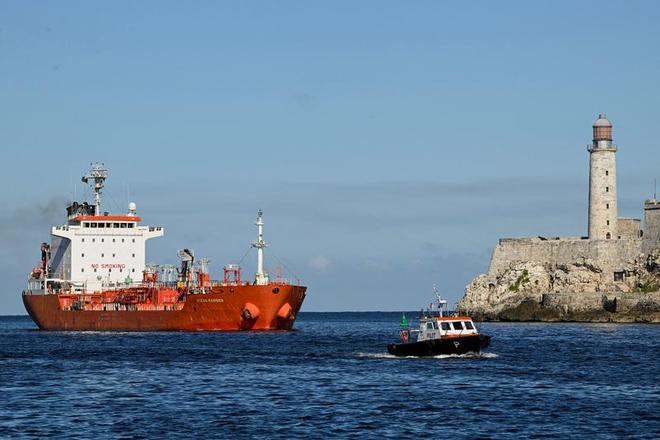
美国发出威胁,古巴回击
Xin Lang Cai Jing· 2026-01-24 15:28
Group 1 - The Trump administration is considering a comprehensive blockade on oil imports from Cuba, with support from Secretary of State Rubio, but has not yet made a final decision [2] - There is internal disagreement within the Trump administration regarding the blockade, with some officials concerned about the potential humanitarian crisis it could cause [2] - The Cuban Deputy Foreign Minister condemned the U.S. actions as a "barbaric attack" on a peaceful nation, attributing Cuba's economic difficulties to U.S. policies [2] Group 2 - The Cuban Defense Council has approved plans and measures for entering a state of war amid heightened tensions with the U.S. [3] - Following a large-scale military strike on Venezuela by the U.S., Trump hinted that Cuba could be the next target, threatening that Cuba would struggle without Venezuelan oil supplies [3] - Trump reiterated pressure on Cuba, warning that without a quick agreement, Cuba could face a situation of "zero oil, zero funding" [3]

特朗普政府欲全面封锁古巴石油进口
中国能源报· 2026-01-24 12:06
Core Viewpoint - The Trump administration is considering a comprehensive blockade on oil imports from Cuba, reflecting heightened tensions between the U.S. and Cuba, especially following recent military actions against Venezuela [3]. Group 1: U.S.-Cuba Relations - The U.S. government is contemplating a full blockade on Cuban oil imports, with support from Secretary of State Mike Pompeo [3]. - The relationship between the U.S. and Cuba is currently very tense, exacerbated by recent U.S. military actions against Venezuela [3]. - President Trump has indicated that Cuba may be the next target for U.S. actions, particularly if Venezuela's oil supply is lost [3]. Group 2: Cuban Response - Cuban President Miguel Díaz-Canel has stated that Cuba will not initiate attacks or threats against any country but is prepared to defend its territory [3].
特朗普施压古巴“达成协议”,墨西哥会否成古巴供油的关键?
Xin Lang Cai Jing· 2026-01-12 08:44
Group 1 - The U.S. President Trump threatens Cuba with "zero oil, zero funds" if an unspecified agreement is not reached, indicating a potential escalation in U.S. pressure on Cuba [2][3][4] - Cuba's President Díaz-Canel asserts that Cuba will not be coerced and will defend its sovereignty, emphasizing the country's independence from U.S. influence [4][5][6] - Historically, Cuba has relied heavily on Venezuela for oil and financial support, with Venezuela being the largest supplier, providing approximately 26,500 barrels per day, covering about 50% of Cuba's oil needs [3][10] Group 2 - Mexico is positioned to become an important oil supplier to Cuba, although its current oil exports to Cuba are relatively low, accounting for only 3.3% of its total exports [7][8] - Recent data indicates that Mexico exported about 19,200 barrels of oil per day to Cuba, valued at approximately $400 million, but the actual economic viability of these exports remains uncertain [8][9] - The political instability in Venezuela has led to a decrease in oil shipments, with recent reports showing that Venezuela has not sent oil to Cuba since the U.S. intervention [3][10]
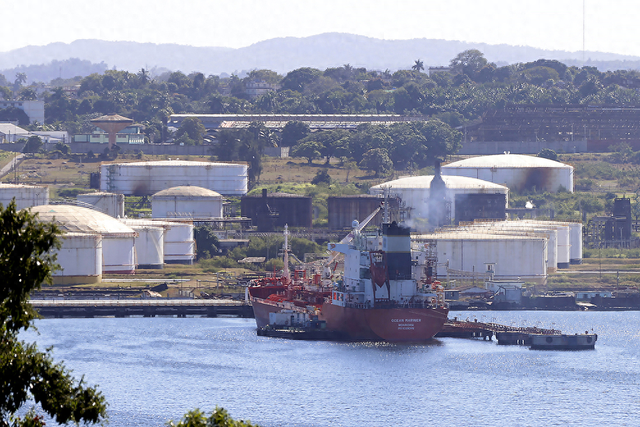
美国国务卿鲁比奥:石油封锁措施为美国赢得对委筹码
Xin Lang Cai Jing· 2026-01-04 20:02
Core Viewpoint - The U.S. Secretary of State, Rubio, stated that after President Maduro's departure, the U.S. will implement oil "blockade measures" to compel the new Venezuelan leadership to meet U.S. demands [1][5]. Group 1: U.S. Strategy and Actions - Rubio emphasized that the U.S. is currently enforcing oil blockade measures, which include the potential seizure of sanctioned oil tankers [5]. - The U.S. aims to cut off revenue sources for the Maduro regime by intercepting drug trafficking and sanctioned vessels [9]. - The U.S. will require Venezuela to sever ties with Iran, Hezbollah, and Cuba, stop drug trafficking, and ensure that its oil industry is not exploited by hostile forces [1][5]. Group 2: Oil Industry and Investment Opportunities - Rubio mentioned that U.S. oil companies may invest billions to help rebuild Venezuela's oil industry, especially given the global shortage of heavy crude oil [3][8]. - He noted that non-Russian companies are likely to show strong interest in Venezuela's oil market due to the advanced refining capabilities of U.S. Gulf Coast refineries [8]. - The oil industry is identified as the core pillar for Venezuela's economic prosperity, which has been severely hindered by mismanagement and corruption [9]. Group 3: Political Transition and Future Outlook - Trump indicated that the U.S. will work with interim President Delcy Rodriguez to facilitate a transition to a democratically elected government, although specific plans were not disclosed [3][8]. - Rubio avoided questions about the timing of democratic elections in Venezuela, stating that the process requires time and will be judged by actions rather than statements [4][9]. - The U.S. will continue its blockade measures until tangible changes are observed that align with U.S. interests and benefit the Venezuelan populace [9].

沥青数据日报-20251230
Guo Mao Qi Huo· 2025-12-30 07:36
1. Report's Investment Rating for the Industry - No investment rating information is provided in the report. 2. Core Viewpoints of the Report - The asphalt spot market faces prominent supply pressure, with increased refinery production schedules. Both refinery and social inventories are in an accumulation state. Demand remains sluggish due to the off - season. Some southern refineries have lowered prices to boost sales, while prices in Shandong are relatively stable due to low inventory levels. Meanwhile, the main futures contract has slightly risen, with both long and short positions leaving the market. The net - short position pattern remains unchanged, and the intraday fluctuation range has narrowed, maintaining a narrow - range oscillation. Overall, the current supply - demand contradiction in the asphalt market has not been improved, and the weakening of crude oil has reduced cost support. In the short term, the upward space of the futures is limited by the fundamentals, and the spot price is at a discount to the futures price [5]. 3. Summary by Relevant Catalog 3.1 Asphalt Market Data - **Spot Market**: In the East China region, the current price is 3000, the previous price was 3000 with a 0% increase; in the Northeast, the current price is 3410, the previous price was 3440 with a - 30 decrease; in the North China, the current price is 3010, the previous price was 3010 with a 0% increase; in the South, the current price is 2840, the previous price was 2800 with a 40 increase; in the Northwest, the current price is 3430, the previous price was 3430 with a 0% increase; in Shandong, the current price is 2920, the previous price was 2920 with a 0% increase [1]. - **Futures Market**: For the BU2601 contract, the current price is 2977, the previous price was 2969 with a 0.27% increase; for the BU2602 contract, the current price is 3008, the previous price was 2995 with a 0.43% increase [1]. 3.2 International News and Policy Expectations - **US Policy on Venezuela**: US officials have downplayed the possibility of military action against Venezuela and stated that the White House has ordered the US military to focus on oil blockades for at least the next two months. The US is prioritizing economic pressure through sanctions, believing that existing measures have put heavy pressure on the Maduro government. It has warned that Venezuela will face an economic disaster by the end of January if it does not make significant concessions [1]. - **Russian Public Expectations on the Russia - Ukraine Conflict**: A Russian national poll shows that most people expect the Ukraine conflict to end in 2026. Among 1600 respondents, 70% believe that Russia will be more successful in 2026, and 55% of the optimistic expectations are related to the end of the special military operation. This poll is considered a possible test by the Kremlin of public reaction to a peace agreement [2]. - **Fed Interest Rate Policy Expectations**: According to CME's "FedWatch", the probability that the Fed will keep interest rates unchanged in January next year is 84.5%, and the probability of a 25 - basis - point rate cut is 15.5%. By March, the probability of keeping interest rates unchanged is 51.8%, the probability of a cumulative 25 - basis - point rate cut is 42.2%, and the probability of a cumulative 50 - basis - point rate cut is only 6.0%. The market has limited expectations for short - term rate cuts [2].