精酿啤酒

Search documents
跨界“搅局者”来了白酒巨头进军啤酒圈
Zheng Quan Shi Bao· 2025-08-21 18:32
Core Viewpoint - Major Chinese liquor companies are entering the craft beer market, aiming to tap into a rapidly growing segment of the beer industry, which is projected to exceed 100 billion yuan by 2025 [1][4]. Industry Overview - The Chinese beer market is undergoing significant structural adjustments, with overall production declining. In the first half of 2025, production from large-scale breweries was 19.04 million kiloliters, a year-on-year decrease of 0.3% [2]. - Traditional beer production has been declining for five consecutive years, with 2024 production at 35.21 million kiloliters, down 30% from the peak of 50.62 million kiloliters in 2013 [2]. - The market is highly concentrated, with five major players—China Resources Beer, Tsingtao Brewery, Budweiser APAC, Yanjing Beer, and Chongqing Beer—holding over 90% of the market share [2]. - The low-end beer market is shrinking, while mid-range and premium products are expected to drive future growth [2]. High-End Beer Performance - High-end beer products are experiencing growth, with Chongqing Beer reporting a 0.04% increase in revenue from high-end products (priced above 8 yuan) to 5.265 billion yuan [3]. - Yanjing Beer saw a 9.32% increase in revenue from mid-to-high-end products, reaching 5.536 billion yuan, with their gross margin improving by 6.25 percentage points to 51.71% [3]. Craft Beer Market Growth - The craft beer segment is rapidly expanding, with the market size projected to grow from 42.8 billion yuan in 2022 to 68 billion yuan in 2024, reflecting a compound annual growth rate of 26.7% [4]. - By 2025, the craft beer market is expected to surpass 104 billion yuan, driven by changing consumer preferences towards quality over quantity [4]. Profitability and Consumer Trends - Craft beer generally has a gross margin of 55% to 65%, which is 15% to 20% higher than that of industrial beer [5]. - The Z generation (born 1995-2009) is becoming the main consumer group, shifting the focus from traditional social drinking to personal enjoyment and quality experiences [5][6]. White Liquor Companies Entering Craft Beer - Major liquor companies like Zhenjiu Lidou and Wuliangye are launching craft beer products to capture market share. Zhenjiu Lidou's "Niu Shi News" craft beer gained significant attention during its launch, with over 190 million views online [7]. - Wuliangye's new craft beer brand "Fenghuolun" is priced at 19.5 yuan per bottle, marking its entry into the mid-to-high-end craft beer market [7]. - Luzhou Laojiao has been active in the craft beer sector since 2021, focusing on high-end craft beer products and expanding its market presence [8]. Strategic Insights - The entry of liquor companies into the craft beer market leverages existing brand resources and distribution networks, aiming for new growth opportunities [8]. - Analysts suggest that these companies should adopt differentiated strategies to avoid direct competition with established beer giants, focusing on high-end branding and leveraging mature distribution channels [8].
1300亿!中国啤酒大变局
Sou Hu Cai Jing· 2025-08-19 03:53
Core Insights - The craft beer segment in China is experiencing rapid growth, contrasting with the decline in traditional industrial beer production and sales [4][11][12] - The introduction of innovative flavors, particularly tea-infused beers, has captured consumer interest and expanded the market [8][10][20] - The younger generation, especially women, is driving the demand for craft beer, leading to a shift in consumption patterns [15][19][20] Group 1: Market Dynamics - The craft beer market in China has surpassed 800 billion yuan in 2024, with a year-on-year growth rate exceeding 30% [10] - Traditional beer giants are facing challenges, with major brands like Budweiser and Tsingtao reporting significant declines in sales [11][12] - The overall beer production in China has decreased by 0.6% in 2024, marking a shift in consumer preferences towards craft beer [12] Group 2: Consumer Trends - The Z generation (ages 18-24) is becoming the core consumer group for craft beer, with a notable increase in female consumers [15][17] - Female consumers now account for 55% of the craft beer market, with a preference for fruity and tea-flavored options [19] - The demand for quality and health-conscious products is reshaping consumer expectations, moving away from low-cost industrial beers [20][21] Group 3: Industry Innovations - The introduction of tea-infused beers, such as Jin Xing's tea beer, has opened new avenues for flavor innovation in the craft beer sector [8][9] - Major breweries are entering the craft beer space, with companies like Tsingtao and China Resources Beer investing in new production facilities [28] - The craft beer segment is evolving from niche markets to mainstream consumption, with retail giants redefining craft beer as a fast-moving consumer good [28][29]

1300亿,中国啤酒大变局
3 6 Ke· 2025-08-19 00:12
Group 1 - The craft beer segment in China has experienced significant growth, becoming the fastest-growing category in the beer market, while traditional industrial beer giants face declining production and revenue [2][11][12] - Jin Xing Beer has emerged as a notable player, achieving remarkable sales of 100 million bottles and a production volume exceeding 100,000 tons, driven by its innovative tea-infused craft beer [5][8] - The introduction of tea-flavored beers has opened new avenues for innovation in the craft beer sector, with major industry players like Qingdao and Budweiser launching their own versions [7][8][9] Group 2 - The craft beer market in China has surpassed 80 billion yuan in size, with a year-on-year growth rate exceeding 30%, and products incorporating Chinese elements now account for 18% of the market [10][12] - The younger generation, particularly the Z generation, is driving the craft beer market, with a notable increase in female consumers, who now represent 55% of the craft beer demographic [16][18] - The shift in consumer preferences towards quality and health has led to a decline in traditional industrial beer, which often uses cheaper ingredients, while craft beer adheres to higher quality standards [19][20] Group 3 - The craft beer segment in China has evolved from a niche market to a more inclusive definition, allowing for a broader range of products as long as they adhere to basic brewing standards [22][23] - The number of craft beer companies has surged, with over 24,000 related enterprises existing as of mid-2025, indicating a robust growth trajectory [26] - Major beer corporations are entering the craft beer space, but their primary focus remains on traditional mass production, while new retail players are redefining craft beer as a more accessible consumer product [27][29][30]

白酒、食品品牌企业扎堆切入精酿啤酒赛道 高端啤酒竞争更激烈
Zheng Quan Ri Bao· 2025-08-16 01:32
Core Insights - The craft beer sector is witnessing an influx of brands from various industries, including major liquor and food companies, as they seek growth opportunities amid a competitive landscape in the high-end liquor market [1][4]. Group 1: Market Entry and Strategy - Wuliangye's subsidiary launched a craft beer named "Fenghuolun," priced at 19.5 yuan per can, targeting consumers aged 25 to 49 and aiming to capture the mid-to-high-end beer market [1][2]. - Other companies like Zhenjiu Lidu and Luzhou Laojiao have also entered the craft beer market, with Zhenjiu Lidu's "Niushi News" priced at 88 yuan per bottle, emphasizing a new consumer experience [2][3]. - The entry of food companies like Haoxiangni and Three Squirrels into the craft beer market reflects a broader trend of diversification among brands seeking new revenue streams [1][4]. Group 2: Industry Trends and Growth - The Chinese craft beer market is projected to grow from 428 billion yuan in 2022 to 680 billion yuan by 2024, with a compound annual growth rate of 26.7%, and is expected to exceed 1 trillion yuan by 2025 [6]. - The craft beer segment is attractive due to its high gross margins, typically ranging from 55% to 65%, which are significantly higher than those of industrial beers [6]. - The shift in consumer preferences towards higher-quality and premium experiences is driving the growth of craft beer, as companies leverage existing distribution networks and brand equity to support higher price points [4][6]. Group 3: Competitive Landscape - Major players like China Resources Beer, Qingdao Beer, and Budweiser APAC dominate over 90% of the market, while craft beer brands and regional players compete for the remaining share [5]. - The overall beer production in China has been declining since reaching a peak of 50.62 million kiloliters in 2013, with a projected production of 35.21 million kiloliters in 2024 [5]. - The high-end beer segment has shown robust growth since 2020, contributing significantly to the profits of leading beer companies [5][6]. Group 4: Future Outlook - Experts predict that the trend of cross-industry collaboration in the alcoholic beverage sector will intensify, with a focus on quality enhancement and brand development [7][8]. - The high-end beer market is expected to continue evolving, with an emphasis on product innovation and meeting the diverse needs of consumers [7].



精酿啤酒进入“战国时代”五粮液、珍酒跨界入局
Xin Lang Cai Jing· 2025-08-15 22:41
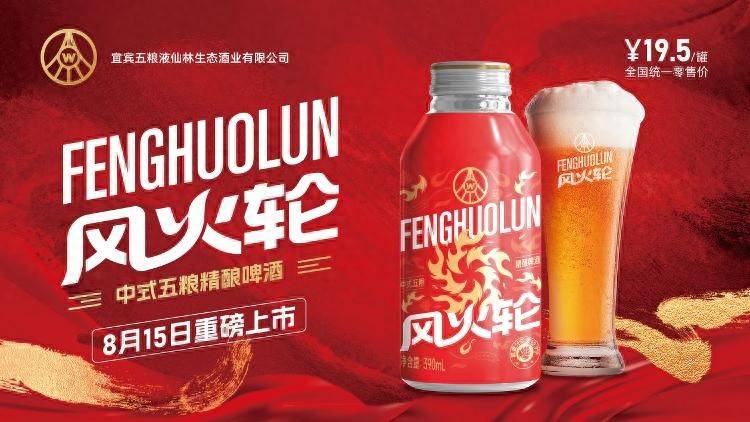
Core Viewpoint - Wuliangye's subsidiary, Xianlin Ecological Wine Industry, has launched a new craft beer brand "Fenghuolun," entering the mid-to-high-end craft beer market with a retail price of 19.5 yuan per can (390ml) [2] Group 1: Market Entry and Strategy - Wuliangye's entry into the craft beer market aligns with the structural changes in domestic alcohol consumption, targeting new consumer groups such as young people, middle-aged individuals in small towns, and senior white-collar workers [4] - The craft beer market is projected to reach a scale of 134.2 billion yuan by 2025, with significant growth expected over the next five years [3] - The strategy includes a focus on mid-to-high-end pricing and a distribution model that combines self-operated base markets with national regional agents and brand alliances [4] Group 2: Competitive Landscape - Other traditional liquor companies, such as Guizhou Zhenjiu, are also entering the craft beer space, indicating a trend of cross-industry competition [3] - The entry of liquor giants into the craft beer market is expected to raise channel thresholds and squeeze out smaller brands in the short term, while potentially reshaping the industry landscape in the long term [3][4] - The craft beer segment is becoming increasingly competitive, with established brands like Qingdao Beer and Yanjing Beer also launching high-priced craft beer products [4] Group 3: Advantages and Challenges - Liquor companies have advantages in channel reuse, brand momentum transformation, and supply chain collaboration, which can facilitate rapid market entry and product distribution [3][4] - However, challenges include brand recognition conflicts and consumer skepticism regarding the expertise of liquor companies in producing beer, leading to higher educational costs [4] - The craft beer market is described as entering a "Warring States" period, with traditional liquor giants leveraging their existing distribution networks to target the mid-to-high-end market [4]
白酒、食品品牌企业扎堆切入精酿啤酒赛道
Zheng Quan Ri Bao· 2025-08-15 17:07
Core Insights - The craft beer sector is witnessing an influx of brands from various industries, including major liquor companies like Wuliangye and food companies like Three Squirrels, aiming to explore new growth opportunities amid a competitive landscape in the high-end liquor market [1][4]. Group 1: Market Entry and Strategy - Wuliangye's subsidiary launched a craft beer named "Fenghuolun," targeting consumers aged 25 to 49, with a price point of 19.5 yuan per can, reflecting a strategy to attract younger demographics [2][1]. - Zhenjiu Liduo introduced its high-end craft beer "Niushi News" at a retail price of 88 yuan per bottle, aiming to redefine consumer perceptions of quality beer [2][3]. - The entry of food companies like Haoxiangni and Three Squirrels into the craft beer market indicates a broader trend of diversification among brands seeking new revenue streams [4][1]. Group 2: Industry Trends and Growth - The craft beer market in China is projected to grow from 428 billion yuan in 2022 to 680 billion yuan by 2024, with a compound annual growth rate of 26.7%, expected to exceed 1,040 billion yuan by 2025 [6]. - High-end beer has become a focal point for major breweries, with leading companies like China Resources Beer and Qingdao Beer experiencing significant profit increases, indicating a shift towards premium products [5][6]. - The craft beer segment is characterized by high profit margins, typically between 55% and 65%, which is 15% to 20% higher than industrial beer, attracting various brands to enter the market [6][4]. Group 3: Competitive Landscape - Major players in the beer market, including China Resources Beer, Qingdao Beer, and Budweiser APAC, dominate over 90% of the market share, while craft beer companies and regional brands compete for the remaining market [5][6]. - The high-end beer market is becoming increasingly competitive, with brands focusing on product innovation and premium positioning rather than just price competition [7][5]. - Experts suggest that the integration of liquor industries, such as the crossover between liquor and beer, will become a common practice, emphasizing the need for brands to develop management and operational capabilities to thrive in a diversified market [8][7].
又是“牛市”又是“风火轮”,珍酒、五粮液连发啤酒新品
Sou Hu Cai Jing· 2025-08-15 12:35
Core Insights - The craft beer market in China is experiencing significant growth, with major players from the liquor industry, including Wuliangye and Zhenjiu, entering the sector to capture a younger consumer base and diversify their product offerings [1][4][5] Market Trends - The craft beer market size is projected to grow from approximately 10 billion yuan in 2020 to between 30 billion and 40 billion yuan by 2025, indicating a robust expansion [1][6] - There are over 7,400 craft beer-related companies currently operating in China, with around 1,300 new registrations since 2025, reflecting a growing interest in the sector [6][10] Company Strategies - Wuliangye's new product, "Fenghuolun," is priced at 19.5 yuan per can, targeting mainstream mid-to-high-end consumers, while Zhenjiu's "Niushi" is positioned in the ultra-premium segment at 88 yuan per 375mL bottle [4][7] - The entry of liquor giants into the craft beer market is seen as a strategic move to rejuvenate brand image and expand consumption scenarios, particularly among younger demographics [5][6] Competitive Landscape - The craft beer segment is becoming increasingly competitive, with traditional liquor companies leveraging their brand equity to attract new consumers and explore higher capital efficiency [1][10] - The pricing strategy varies significantly among companies, with Wuliangye focusing on accessible pricing to attract a broader consumer base, while others like Zhenjiu target the high-end market [7][10] Future Outlook - Wuliangye plans to launch additional products in the craft beer category, indicating a commitment to expanding its presence in this growing market [10] - The success of these liquor companies in the craft beer space will depend on their ability to achieve sustainable sales and cultivate brand loyalty among consumers [10]
原料之争引爆酒圈!88元“牛市”啤酒被“泼冷水”
Guo Ji Jin Rong Bao· 2025-08-15 11:44
Group 1 - The new beer "Bull Market" launched by Zhenjiu Lidou has sparked significant industry discussion, with concerns about its reliance on imported ingredients and lack of local sourcing [1][2][4] - The product is priced at 88 yuan per bottle (375ml) and targets high-consumption groups, positioning itself against regular beers [2][5] - Initial sales figures show over 100 monthly sales on Taobao and over 2000 on JD.com, indicating potential for good early performance despite a trend of consumer downgrade in the market [5] Group 2 - Five Grain Liquid is also entering the craft beer market with a new brand "Fire Wheel," priced at 19.5 yuan per bottle (390ml), aimed at the mid-to-high-end segment [7] - The craft beer market in China is projected to exceed 130 billion yuan this year, accounting for 17% of the total beer market, with a compound annual growth rate leading the industry over the next five years [9] - The market is experiencing diversified competition, with traditional liquor companies and retailers like Hema and Yonghui launching their own craft beer brands at competitive prices [9]

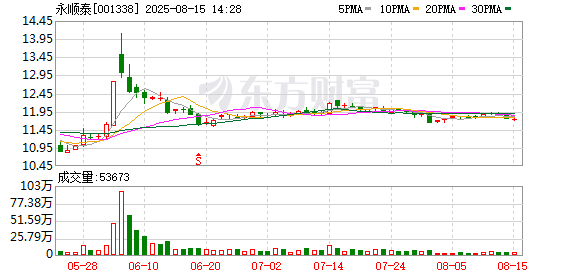
永顺泰:公司的麦芽生产基地分布于广东、浙江、江苏、山东、河北等地区
Mei Ri Jing Ji Xin Wen· 2025-08-15 06:27
Core Viewpoint - The company aims to strengthen its position in the malt industry and become a world-class malt supplier, focusing on high-end development and organic growth in both quantity and quality [2]. Group 1: Company Strategy - The company's development strategy is to deepen its core malt business and consolidate its leading position in the industry [2]. - The company has over 20 years of cooperation history with major beer manufacturers such as Budweiser, Carlsberg, Heineken, and others, indicating strong industry relationships [2]. - The company's malt production bases are strategically located in key regions like Guangdong, Zhejiang, Jiangsu, Shandong, and Hebei, aligning with major beer brewing and consumption markets [2]. Group 2: Market Position and Competition - The company is actively collaborating with regional small and medium-sized clients as well as craft beer customers, providing a wide range of specialty and customized malt products [2]. - The company acknowledges the high added value of craft beer and the reduced marginal effect of transportation costs, indicating a competitive landscape in the craft beer malt sector [2]. - Future plans include continuing to deepen the malt business and pursuing opportunities for capacity expansion and potential acquisitions [2].
酒业周报∣7月酒类价格同比下降1.9%,《黄酒酒庄》团标立项、《凤香型白酒》国标发布,贵州茅台发布半年报
Xin Hua Cai Jing· 2025-08-15 03:07
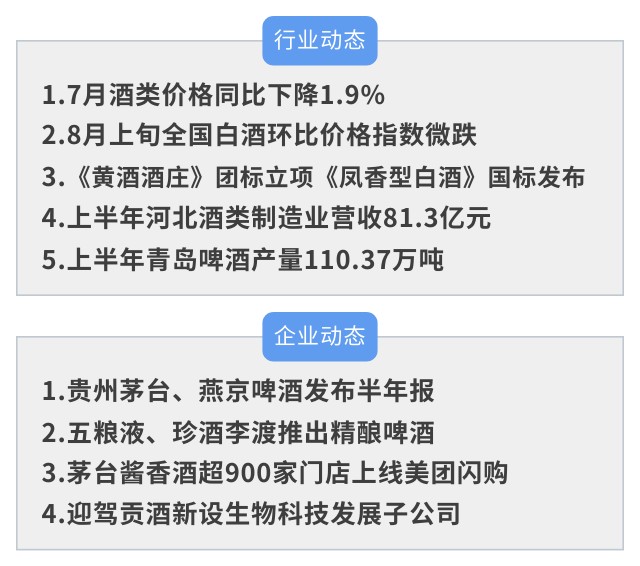
Industry Dynamics - In July, the price of alcoholic beverages decreased by 1.9% year-on-year, while the overall consumer price index remained flat [4] - In early August, the national white wine price index slightly fell by 0.18%, with famous wines down by 0.20% and local wines down by 0.24% [4] - The China Alcoholic Drinks Association has initiated the drafting of a group standard for "Yellow Wine Winery" and approved the national standard for "Fengxiang Type Baijiu," effective from August 1, 2026 [4] Company Dynamics - In the first half of 2025, Hebei's liquor manufacturing industry reported revenues of 8.13 billion yuan, with a profit of 1.07 billion yuan, showing a year-on-year revenue decline of 2.8% but a profit increase of 54.2% [5] - Guizhou Moutai reported a total revenue of 91.094 billion yuan in the first half of 2025, a year-on-year increase of 9.16%, with net profit reaching 45.403 billion yuan, up 8.89% [6] - Yanjing Beer achieved a revenue of 8.558 billion yuan in the first half of 2025, with a net profit of 1.103 billion yuan, reflecting a revenue growth of 6.37% and a profit increase of 45.45% [6] - New craft beers have been launched by Wuliangye and Zhenjiu Liudu, indicating a trend of traditional liquor companies entering the craft beer market to diversify their product offerings [6] - Moutai's partnership with Meituan Shanguo has led to over 900 stores offering instant purchase options for Moutai's products, enhancing its retail strategy [7] - Yingjia Gongjiu has established a subsidiary focused on biotechnology development, indicating a diversification into biological feed and organic fertilizers [7]