
绿色化

Search documents
消费行业日均销售收入同比增长13.7%
Sou Hu Cai Jing· 2026-02-24 22:30
Group 1 - The core viewpoint of the articles highlights a significant increase in consumer spending during the 2026 Spring Festival holiday, with a daily average sales revenue growth of 13.7% compared to the previous year, indicating a vibrant consumption market driven by various factors [1][3] Group 2 - The tourism sector experienced a robust performance, with tourism-related service sales revenue increasing by 39.6% year-on-year during the holiday, particularly in ice and snow tourism regions, which saw a 62.4% increase [2] - Hainan's tourism and shopping services surged, with sales revenue increasing by 70.9% as it welcomed a large number of visitors during the first long holiday after its customs closure [2] - The integration of traditional culture with modern consumption led to a rise in digital cultural services and performances, with sales revenue for digital cultural services and art performance venues increasing by 38.8% and 136.6% respectively [2] Group 3 - The restaurant sector saw a significant increase in consumer spending, with overall restaurant revenue growing by 31.2%, driven by family gatherings and local specialty offerings [2] - Retail sales also showed strong growth, with department store sales increasing by 39.3% and online retail growing by 10.4% year-on-year, providing convenience for holiday shopping [2] Group 4 - The increase in consumer spending is attributed to three main factors: the extended holiday period boosting consumer enthusiasm, the effectiveness of the "old for new" policy, and the implementation of a prize invoice pilot program in 50 cities to stimulate consumption [3] - The strong consumption data during the holiday reflects the vitality and potential of the Chinese consumer market, laying a foundation for sustained economic stability and growth [3]
从“历史经典产业”到“传统优势民生产业”,新五年酿酒产业提质发展
Soochow Securities· 2026-02-24 00:45
Investment Rating - The report maintains an "Accumulate" rating for the beverage industry, indicating a positive outlook for investment in this sector [1]. Core Insights - The report emphasizes the transition of the brewing industry from a "historical classic industry" to a "traditional advantageous livelihood industry," highlighting its importance in cultural heritage and economic development [4][9]. - The "14th Five-Year Plan" outlines specific goals for the brewing industry, including the establishment of over three trillion-level traditional advantageous wine production areas and more than ten hundred-billion-level specialty brewing industrial parks by 2028 [10][12]. - The report identifies a shift in the industry towards digitalization, green practices, and internationalization, with leading companies actively pursuing these transformations [18][20]. Summary by Sections 1. Development of the Brewing Industry - The brewing industry is recognized as a traditional advantageous industry, playing a crucial role in cultural transmission and regional economic development [9]. - The "Guidance on Quality Improvement and Upgrading of the Brewing Industry (2026-2030)" outlines a clear path for high-quality development, focusing on adapting to market changes [9][10]. - The report details a comprehensive plan with 21 key tasks across seven dimensions, including enhancing raw material supply, promoting technological innovation, and transforming business models [17][18]. 2. Investment Recommendations - The report suggests that while traditional beverages like baijiu, beer, and yellow wine are well-established, emerging categories such as fruit wines and craft beers present new opportunities [21]. - It recommends focusing on companies like Kweichow Moutai, which is expected to stabilize and recover in valuation, along with other notable brands such as Gujing Gongjiu and Luzhou Laojiao [22].




食品饮料行业跟踪周报从“历史经典产业”到“传统优势民生产业”新五年酿酒产业提质发展
Soochow Securities· 2026-02-23 00:30
Investment Rating - The report maintains an "Add" rating for the food and beverage industry, indicating a positive outlook for the sector [1]. Core Insights - The report emphasizes the transition of the brewing industry from a "historical classic industry" to a "traditional advantageous livelihood industry," highlighting its importance in cultural heritage and economic development [4][9]. - The "14th Five-Year Plan" outlines clear goals for the brewing industry, aiming for high-quality development and the establishment of over three trillion-level traditional advantageous wine-producing areas and more than ten hundred-billion-level specialty brewing industrial parks by 2028 [10][12]. - The report identifies a shift in the industry towards digitalization, green practices, and internationalization, with leading companies actively pursuing transformation strategies [18][20]. Summary by Sections 1. Development of the Brewing Industry - The brewing industry is recognized as a traditional advantageous industry, playing a crucial role in cultural transmission and regional economic development [9]. - The "Guidance on Quality Improvement and Upgrading of the Brewing Industry (2026-2030)" sets a roadmap for adapting to market changes and achieving high-quality growth [9][10]. - The report outlines a two-phase goal structure for the industry, focusing on enhancing raw material supply, technological innovation, and brand empowerment [12][17]. 2. Investment Recommendations - The report suggests that while traditional sectors like white wine, beer, and yellow wine are mature, emerging segments such as fruit wine and craft beer present new opportunities [21]. - It recommends focusing on companies like Guizhou Moutai, which is expected to stabilize and recover in valuation, along with other notable brands [22].
(新春走基层)福建开春首展 第二十二届南安CNPV泵阀消防展启幕
Zhong Guo Xin Wen Wang· 2026-02-19 13:34
Core Insights - The 12th CNPV (China National Pump Valve and Fire Equipment Trade Fair) has commenced in Nan'an, Fujian, attracting over 600 companies and thousands of industry professionals, highlighting its significance as a major industry event [1][2] Group 1: Event Overview - The trade fair features 1,400 international standard exhibition booths and includes three major professional exhibition areas and ten themed pavilions, covering the entire industrial chain from valves to fire equipment and smart manufacturing [1] - The event has evolved from a local exhibition to an international industry event over 22 years, showcasing the growth of local brands and connecting global partners [2] Group 2: Industry Development - Nan'an has transformed from a small-scale workshop industry in the 1970s to a recognized "China's Water and Heating Capital," focusing on high-end, intelligent, and green transformation [1] - The fair serves as a platform for local enterprises to gain visibility and recognition in the global market, with participation from over ten local companies [2] Group 3: Interactive Features - The event includes interactive technology displays such as robot performances and smart dog demonstrations, enhancing the visitor experience [2] - Online and offline integration through "cloud exhibitions" and live streaming allows international buyers to connect with opportunities without geographical constraints [3]
《工程机械》杂志社恭祝行业同仁新春大吉 马年大吉
工程机械杂志· 2026-02-16 12:04
Core Viewpoint - The engineering machinery industry is transitioning from scale expansion to value leadership, with a focus on intelligence, greening, and internationalization as the three core themes for transformation, essential for high-quality development [5]. Industry Highlights - The engineering machinery industry may be on the path to recovery, with improved performance indicators [6]. - The industry is set to enter the "National IV" era starting December 1 [6]. - Domestic sales have declined for 13 consecutive months, while exports surged over 70% this year, raising questions about the future of the excavator industry [6]. - February's construction rate showed improvement, leading to optimistic expectations for the engineering machinery sector [6]. - Caterpillar is nearing a cyclical turning point, with its rating downgraded to "neutral" [6]. Market Data - Sales data for excavators and loaders is being tracked for 2025, with monthly breakdowns available [6][7]. - Average working hours for major products are also being monitored for 2025 [8]. Downstream Demand - The average working hours for major products are being recorded monthly for 2025 [8]. - The CCTV excavator index is being tracked for 2025, with monthly data available [8]. - Komatsu's working hours are also being monitored for 2025 [8]. Market Dynamics - February's construction rate improvement has led to a "warm" outlook for the engineering machinery industry [8]. - January's strong credit performance has reinforced expectations for a recovery in domestic demand, suggesting a potential thaw in the engineering machinery sector [8]. Expert Insights - Industry leaders are discussing the current development situation and key tasks for the engineering machinery sector [9]. - Support for the electrification of engineering machinery and commercial vehicles is being advocated by industry representatives [9].


因地制宜发展新质生产力丨上海化工产业焕新记
Bei Jing Ri Bao Ke Hu Duan· 2026-02-15 09:45
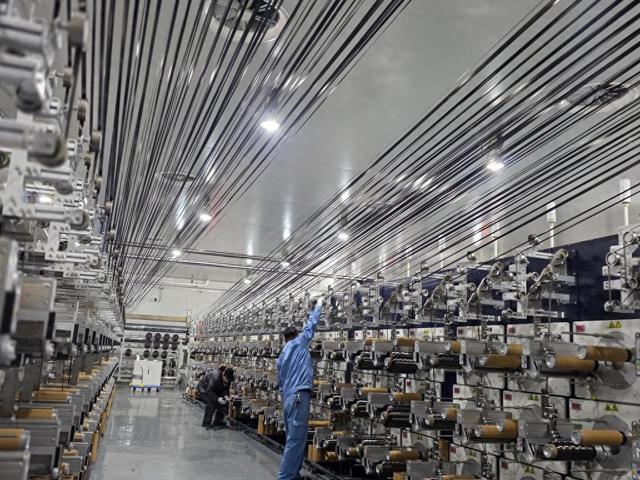
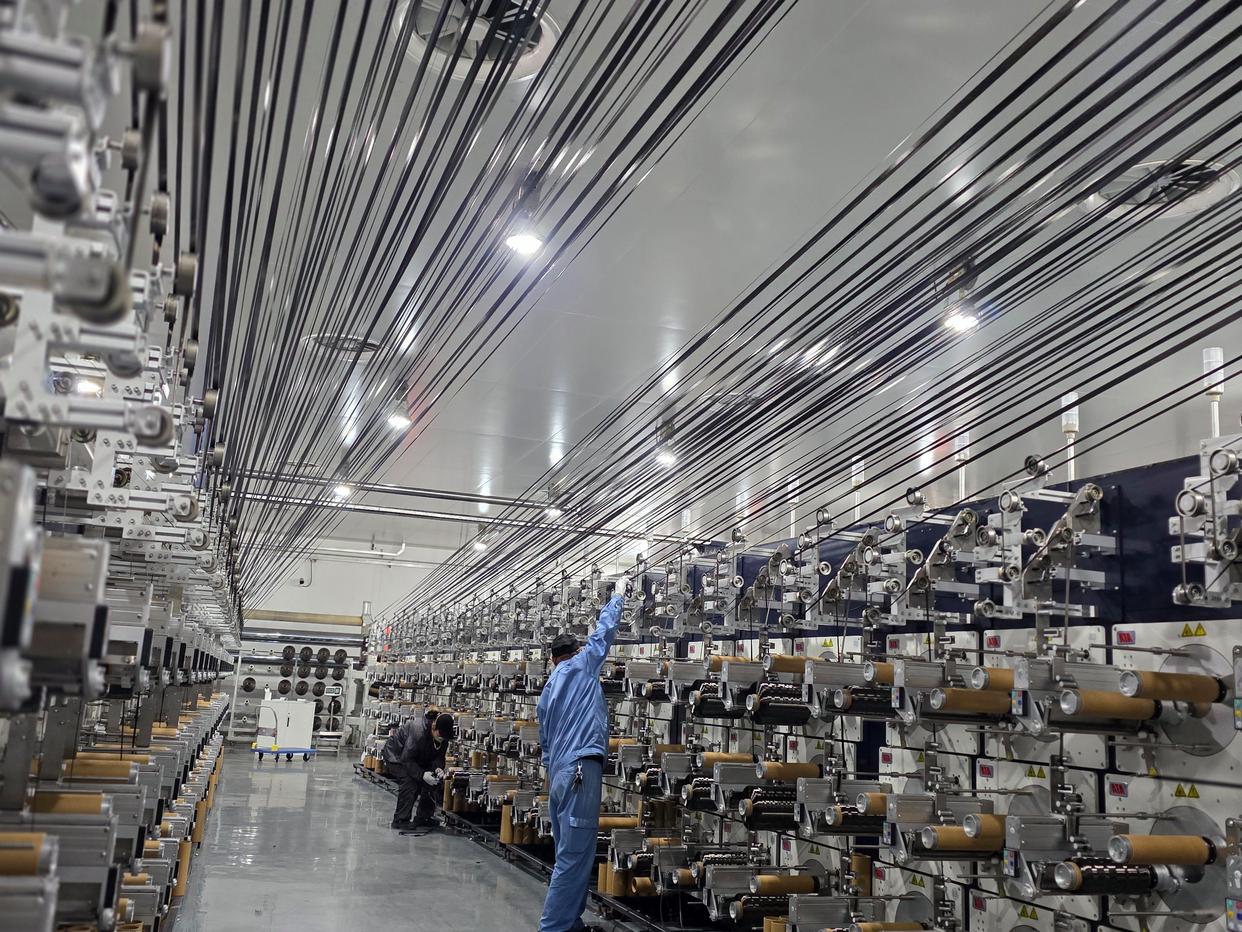
Core Viewpoint - The traditional chemical industry in Shanghai is undergoing a transformation towards high-end, intelligent, and green production, leading to increased product value, reduced energy consumption, and more efficient production processes [1] Group 1: High-End Transformation - Shanghai Chemical New Materials has achieved an annual compound growth rate that consistently exceeds the city's industrial average since the 14th Five-Year Plan [1] - Shanghai Petrochemical has become the first domestic company to master the industrialization technology of 48K large tow carbon fiber, with production lines established in 2022 [3] - The carbon fiber produced is being utilized in large wind turbine blades and new energy storage, with sales expected to double by 2025 [3] Group 2: Intelligent Transformation - The integration of digital technologies such as artificial intelligence and industrial internet is shifting chemical production from experience-driven to data-driven processes [5] - Companies like Covestro have optimized production processes using AI, resulting in a 5% reduction in production time, thereby increasing capacity [6] Group 3: Green Transformation - A 100,000-ton green methanol project is set to be operational by the end of 2025, utilizing local agricultural waste as raw materials [7] - Covestro's integrated production base in Shanghai is projected to consume less than 10% of the total energy in the chemical zone while contributing 16% of its output value, with a 70% reduction in CO2 emissions per unit product compared to 2009 [9] - The transformation towards green production involves both producing green products and adopting environmentally friendly manufacturing processes [9]
向“高”攀 向“智”转 向“绿”行——上海化工产业焕新记
Xin Hua She· 2026-02-15 03:55
Core Insights - The traditional chemical industry in Shanghai is undergoing a transformation towards high-end, intelligent, and green production, resulting in higher product value, lower energy consumption, and more efficient production processes [1] Group 1: High-End Development - Shanghai Petrochemical has become the first company in China to master the industrialization technology of 48K large tow carbon fiber, with production lines established in 2022 [2] - The carbon fiber produced is being utilized in large wind turbine blades and new energy storage, with sales expected to double by 2025 [2] - Shanghai Huayi New Materials has developed a new type of acrylic acid catalyst, reducing production costs by over 30% [2] - The Shanghai Chemical Industry Zone has attracted approximately 13 billion yuan in investments, focusing on semiconductor photoresists and electronic chemicals [2] Group 2: Intelligent Transformation - The integration of digital technologies such as artificial intelligence and industrial internet is shifting chemical production from experience-driven to data-driven processes [3][4] - Companies are now able to monitor equipment continuously, enhancing safety and stability in production [4] - For instance, Covestro has optimized production processes using AI, resulting in a 5% reduction in production time, thereby increasing capacity [5] Group 3: Green Initiatives - A 100,000-ton green methanol project is set to be operational by the end of 2025, utilizing local agricultural waste as raw materials [6] - The project converts waste from livestock into biogas, which is then purified and used in methanol production, turning environmental challenges into valuable resources [6] - Covestro's integrated production base in Shanghai is expected to contribute 16% of the chemical zone's output while consuming only 10% of its total energy by 2025, with a 70% reduction in CO2 emissions per unit product compared to 2009 [7]
因地制宜发展新质生产力|向“高”攀 向“智”转 向“绿”行——上海化工产业焕新记
Xin Hua She· 2026-02-15 03:20
Core Viewpoint - The chemical industry in Shanghai is undergoing a transformation towards high-end, intelligent, and green production, with significant advancements in product quality, energy efficiency, and production processes [1][3]. Group 1: High-End Transformation - Shanghai Petrochemical has become the first company in China to master the industrialization technology of 48K large tow carbon fiber, with the first domestic production line established in 2022 [3]. - The carbon fiber produced is being utilized in large wind turbine blades and new energy storage, with a goal to double sales by 2025 [3]. - Shanghai Huayi New Materials has developed a new type of acrylic acid catalyst, reducing production costs by over 30% through innovation [3]. Group 2: Intelligent Transformation - The integration of digital technologies such as artificial intelligence and industrial internet is shifting chemical production from experience-driven to data-driven processes [3]. - Companies like Covestro have optimized production processes using AI, resulting in a 5% reduction in production time and increased capacity [5]. - The use of smart inspection tools has enhanced safety and efficiency in chemical production, allowing for real-time monitoring and early intervention [3]. Group 3: Green Transformation - A 100,000-ton green methanol project is set to be operational by the end of 2025, utilizing local agricultural waste as raw materials [5]. - Covestro's integrated production base is expected to contribute 16% of the chemical district's output while consuming less than 10% of its total energy [5]. - The carbon emissions per unit of product at Covestro's facility have decreased by 70% compared to 2009 levels, showcasing significant advancements in green production [5].
政策“破冰”与产业“重塑”,三部门发文如何改写酒业未来五年进程?
Xin Lang Cai Jing· 2026-02-15 01:09
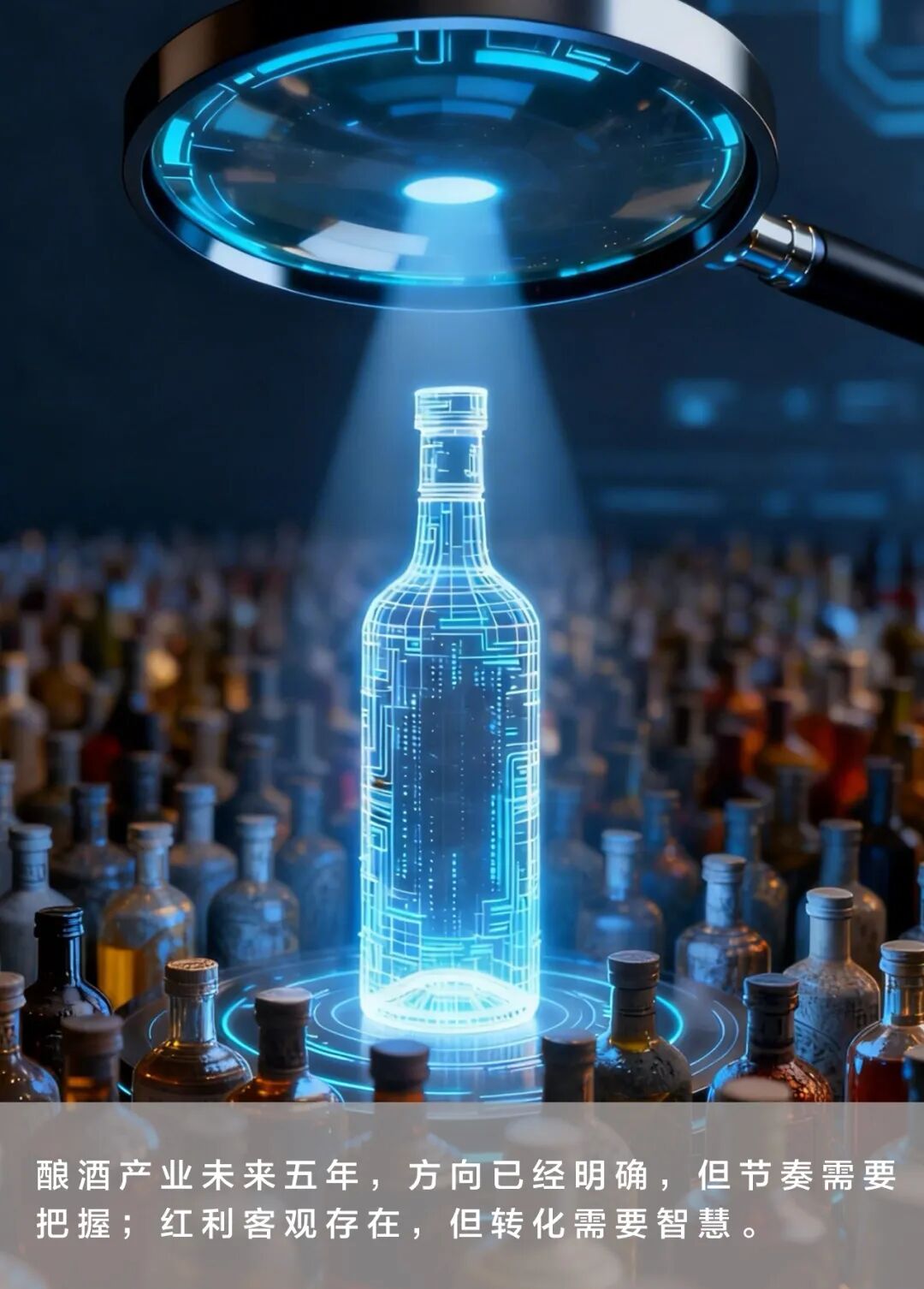
Core Viewpoint - The release of the "Guiding Opinions on the Quality Improvement and Upgrading of the Brewing Industry (2026-2030)" by three government departments marks a significant policy shift, redefining the brewing industry from a "restrictive industry" to a "historical classic industry," signaling a potential restructuring of the industry's operational rules [4][14][16]. Summary by Relevant Sections Policy Context - The brewing industry is recognized as a traditional advantageous industry and a fundamental livelihood industry, playing a crucial role in cultural heritage, regional economic development, rural revitalization, and job creation [5]. - The policy aims to guide the brewing industry to adapt to new market demands and achieve high-quality development [5]. Development Goals - The policy outlines developmental goals for the brewing industry over the next five years, aiming for enhanced integration of raw material cultivation, production, and consumption by 2028, with a focus on product diversity, quality recognition, and brand reputation [7]. - By 2030, the industry aims for improved digitalization, greening, and internationalization, with a stable increase in scale and optimized production capacity and product structure [7]. Key Tasks - The policy identifies seven key areas with 21 specific tasks to enhance the brewing industry's capabilities, including: - Strengthening the supply of raw materials such as sorghum and barley [8]. - Encouraging a shift from traditional brewing methods to scientific and intelligent brewing [10]. - Supporting the integration of upstream and downstream industries and fostering specialized small and medium enterprises [10]. - Promoting digital, green, and international development strategies [10]. - Encouraging new business models and consumption scenarios, such as community e-commerce and themed street markets [10]. Market Implications - The policy is seen as a structural transformation for the brewing industry, laying the groundwork for a quality-driven shift in the Chinese consumer market [14]. - The emphasis on supporting industrial concentration zones and potential tax incentives raises questions about the future of regulatory constraints on the industry [16]. - The success of the outlined goals will depend on the actual market demand and the ability of enterprises to adapt to these changes [17][18]. Conclusion - The policy opens up opportunities for the brewing industry, but the realization of its ambitious targets will require careful navigation of market dynamics and consumer preferences [20].
2025年中国农产品加工行业研究报告
硕远咨询· 2026-02-15 00:20
Investment Rating - The report does not explicitly state an investment rating for the agricultural product processing industry Core Insights - The agricultural product processing industry in China is experiencing robust growth, driven by rising consumer income, health awareness, and technological advancements, with an expected growth rate of over 8% in the next five years [14] - The industry is undergoing a transformation towards smart, green, and high-end processing, integrating advanced information technology and environmental concepts to enhance production efficiency and product quality [12][14] - The market is characterized by a diverse product range, including grain processing, oil processing, fruit and vegetable processing, livestock product processing, and aquaculture processing, with emerging sectors like biofuels and biochemicals gaining importance [4][9] Industry Overview - Agricultural product processing refers to the transformation of primary agricultural products into value-added products through various technical means and processes, including physical, chemical, and biological treatments [3] - The industry serves as a bridge between agriculture and industry, effectively extending the shelf life of agricultural products and enhancing their quality and value [3] Industry Development History - The industry began with small-scale workshops and has evolved significantly since the 1950s, transitioning from rudimentary processing to large-scale mechanized operations, although challenges in product diversity and technology remain [9][11] - Post-reform, the industry has seen rapid growth due to market economy establishment and foreign policy, leading to increased enterprise numbers and product diversification [11] Current Industry Analysis - As of 2024, the market size of China's agricultural product processing industry has surpassed several trillion RMB, indicating strong development momentum and market potential [13] - The industry is primarily concentrated in regions with significant agricultural production, such as Northeast, North China, East China, and South China, forming specialized agricultural processing clusters [15][17] Market Demand and Consumer Trends - Consumer demand for processed agricultural products is becoming more diverse, with a shift towards functional foods, organic products, and convenience foods driven by rising health awareness [19][20] - The emphasis on product quality is increasing, with consumers prioritizing nutritional value, safety, and transparency in food production [21] Technological Development and Innovation Trends - The application of smart manufacturing technologies is becoming widespread in agricultural product processing, enhancing production efficiency and quality stability [37] - The introduction of biotechnology and enzyme engineering is revolutionizing traditional food processing methods, improving product taste and nutritional value [38] Policy Environment and Regulatory Impact - The government is actively promoting agricultural modernization through various policies, including subsidies for processing equipment and support for agricultural technology innovation [53] - Environmental protection and energy-saving policies are increasingly influencing industry practices, encouraging companies to adopt green development strategies [58] Competitive Landscape and Major Company Analysis - The industry is characterized by a mix of large leading enterprises and numerous small and medium-sized enterprises, creating a competitive yet complementary environment [18] - Leading companies are focusing on R&D investment and brand building to enhance their core competitiveness and market influence [72][73]