美国制裁

Search documents
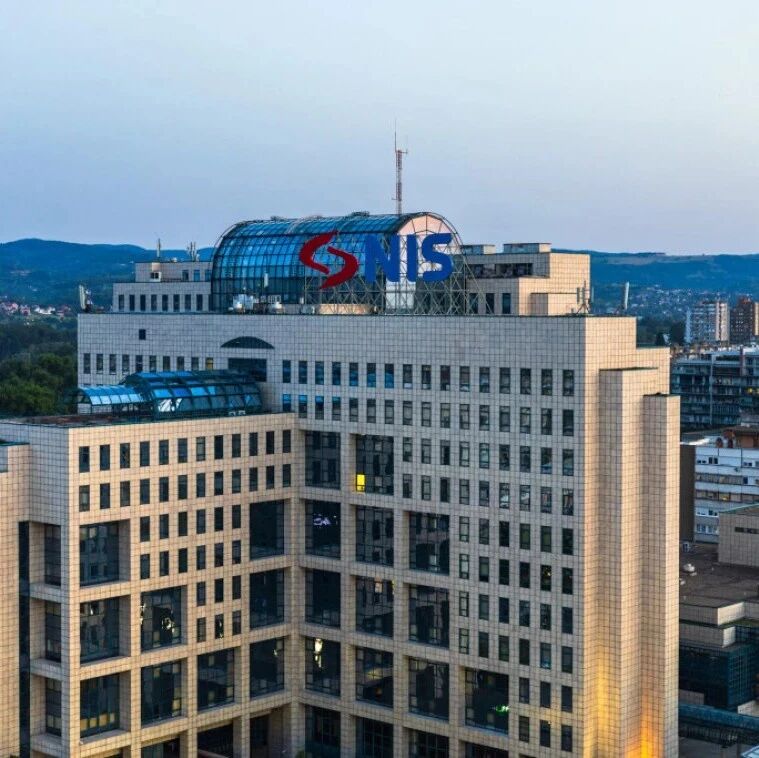
遭美制裁,俄股东或移交石油公司控制权
中国能源报· 2025-11-12 03:10
Core Viewpoint - The Russian shareholders of the Serbian Oil Company (NIS) are willing to transfer control of the company to a third party due to U.S. sanctions, with the Serbian government supporting this request [3]. Group 1 - On November 11, Serbian Minister of Mining and Energy, Andjelkovic, announced the willingness of Russian shareholders to hand over control of NIS to a third party [3]. - The Russian shareholders have submitted a request to the U.S. Treasury's Office of Foreign Assets Control (OFAC) to postpone the effective date of sanctions while negotiating with a third party [3]. - NIS was placed on the U.S. sanctions list earlier this year due to "secondary risks" associated with two Russian oil and gas companies, with the U.S. having postponed the effective date of sanctions eight times since then [3].

遭美制裁,俄股东或移交塞尔维亚石油公司控制权
Zhong Guo Neng Yuan Wang· 2025-11-11 14:54
Core Viewpoint - The Russian shareholders of the Serbian Oil Company (NIS), which is under U.S. sanctions, are willing to transfer control of the company to a third party, with the support of the Serbian government [1] Group 1: Company Actions - The Russian shareholders have submitted a request to the U.S. Department of the Treasury's Office of Foreign Assets Control (OFAC) to postpone the effective date of sanctions during negotiations with a third party [1] - The Serbian government supports the request made by the Russian shareholders [1] Group 2: Sanctions Background - NIS was placed on the U.S. sanctions list earlier this year due to "secondary risks" associated with two Russian oil and gas companies [1] - The U.S. has postponed the effective date of sanctions on NIS eight times to date [1] - The ownership structure of NIS has changed multiple times during the period of sanctions postponement [1]
乌哈尔科夫等三州实施紧急停电措施!遭美制裁 俄股东或移交塞尔维亚石油公司控制权
Mei Ri Jing Ji Xin Wen· 2025-11-11 14:36
Group 1 - Ukraine's national electricity company has implemented emergency power outages in Kharkiv, Sumy, and Poltava regions due to damage from Russian shelling, suspending previously announced hourly power outage schedules until the emergency measures are lifted [1] - The Ukrainian armed forces conducted precision strikes on key Russian military facilities, including the Saratov oil refinery and Feodosia maritime oil terminal, aiming to weaken Russia's military economic potential [2] - The Serbian oil company (NIS) is facing U.S. sanctions, and Russian shareholders are willing to transfer control of the company to a third party, with the Serbian government supporting this request to delay the sanctions' effective date [3]
遭美制裁 俄股东或移交塞尔维亚石油公司控制权
Yang Shi Xin Wen Ke Hu Duan· 2025-11-11 12:39
Core Viewpoint - The Russian shareholders of the Serbian oil company (NIS), which is under U.S. sanctions, are willing to transfer control of the company to a third party, with the support of the Serbian government [1] Group 1: Sanctions and Control Transfer - The Serbian Minister of Mining and Energy, Hadanovic, announced the willingness of Russian shareholders to transfer control of NIS to a third party [1] - The Russian shareholders have submitted a request to the U.S. Department of the Treasury's Office of Foreign Assets Control (OFAC) to postpone the effective date of sanctions during negotiations with a third party [1] - The Serbian government supports the request for postponement of sanctions [1] Group 2: Background on Sanctions - NIS was placed on the U.S. sanctions list earlier this year due to "secondary risks" associated with two Russian oil and gas companies [1] - The U.S. has postponed the effective date of sanctions on NIS eight times to date [1] - The ownership structure of NIS has changed multiple times during the postponement period [1]
美式制裁失灵?特朗普全球喊停进口俄能源,印日硬刚狂买底气何在
Sou Hu Cai Jing· 2025-11-07 09:45
Core Viewpoint - India and Japan continue to import Russian energy despite pressure from the U.S., highlighting a shift in global dynamics where national interests take precedence over alliances [1][22]. Group 1: India's Energy Imports - India has significantly increased its imports of Russian oil, benefiting from discounts of $8-10 per barrel compared to international prices [5]. - In the first nine months of 2025, India is expected to import 1.7 million barrels of Russian oil daily, accounting for 35%-40% of its total imports, saving $8.5 billion in the first half of the year alone [5][7]. - A halt in Russian oil imports could increase India's annual energy costs by $17 billion, exacerbating trade deficits and potentially triggering inflation, which poses a risk to its economic growth [7][20]. Group 2: Japan's Energy Dependence - Japan's reliance on Russian liquefied natural gas (LNG) is profound, with nearly 9% of its total imports coming from Russia and 29% of its electricity generation relying on Russian LNG [7][9]. - Japanese companies hold stakes in the Sakhalin-2 project, which will continue supplying gas until at least 2028, complicating any potential shift away from Russian energy [9]. - The Japanese government, under Prime Minister Suga Yoshihide, is cautious about increasing domestic energy prices, which could destabilize its political standing [9][20]. Group 3: Diplomatic Strategies - Both India and Japan employ a strategy of "soft compliance and hard lines," skillfully navigating U.S. pressures while maintaining their energy imports [11][16]. - India's approach includes avoiding direct discussions with U.S. officials regarding Russian oil, while Japan's strategy involves appeasing the U.S. through defense spending and cooperation in various sectors [12][16]. - The U.S. sanctions are losing effectiveness as countries prioritize their national interests over compliance with U.S. demands, reflecting a broader trend in international relations [18][22].
光大期货能化商品日报-20251031
Guang Da Qi Huo· 2025-10-31 03:41
1. Report Industry Investment Rating No relevant content provided. 2. Core Viewpoints of the Report - The oil price is expected to continue oscillating. The uncertainty in the crude oil market lies in the supply - side structural contradictions caused by sanctions, but during the current off - season of demand, the overall conflict is not obvious, and the impact on prices is relatively mild [1]. - The absolute prices of fuel oil (FU and LU), asphalt (BU), polyester, rubber, methanol, polyolefins, and polyvinyl chloride are all expected to oscillate, with attention paid to the fluctuations of oil prices under the influence of macro - factors [3][5][6]. 3. Summary According to Relevant Catalogs 3.1 Research Views - **Crude Oil**: On Thursday, the WTI December contract rose 0.09 dollars to 60.57 dollars/barrel (0.15% increase), the Brent December contract rose 0.08 dollars to 65.00 dollars/barrel (0.12% increase), and the SC2512 closed at 461.4 yuan/barrel, down 1.1 yuan/barrel (0.28% decrease). The meeting between Chinese and US leaders and trade achievements have positive impacts, but sanctions on Russian producers and potential OPEC+ production increase add uncertainties [1]. - **Fuel Oil**: On Thursday, the main contract of high - sulfur fuel oil (FU2601) fell 1.43% to 2751 yuan/ton, and the main contract of low - sulfur fuel oil (LU2601) rose 0.62% to 3255 yuan/ton. The Asian low - sulfur market structure has weakened due to weak downstream demand and sufficient supply, while the high - sulfur market is expected to remain stable [3]. - **Asphalt**: On Thursday, the main contract of asphalt (BU2601) fell 0.4% to 3254 yuan/ton. The supply pressure will ease in early November, and there are still construction rush expectations in some markets [3]. - **Polyester**: TA601 closed at 4570 yuan/ton, down 1.42%; EG2601 closed at 4032 yuan/ton, down 1.66%. The cost support of PX and TA has weakened, and the production and sales of polyester yarn are weak. There is still a pressure of inventory accumulation for EG in the fourth quarter [5]. - **Rubber**: On Thursday, the main contract of natural rubber (RU2601) fell 225 yuan/ton to 15400 yuan/ton, and the main contract of 20 - number rubber (NR) fell 195 yuan/ton to 12525 yuan/ton. The raw material prices of rubber are firm, demand is okay, and the postponement of tariff increase may improve demand expectations [5]. - **Methanol**: The supply in the domestic market has recovered to a high level, and overseas Iranian plants will be restricted by winter gas rationing. Although the arrival volume has decreased due to sanctions, the short - term port supply is still relatively large, and methanol is expected to oscillate [6]. - **Polyolefins**: The short - term production will remain at a high level, and the marginal increase in demand will gradually decline. The short - term rebound of crude oil supports the valuation, but the fundamental driving force is weakening, and polyolefin prices are expected to enter an oscillatory phase [6]. - **Polyvinyl Chloride**: The supply remains at a high - level oscillation, domestic demand has slowed down, and exports are expected to be weak due to Indian anti - dumping policies and Sino - US trade frictions. The price has a demand for phased repair, but the rebound height is limited under high - inventory pressure [8]. 3.2 Daily Data Monitoring - The table shows the spot prices, futures prices, basis, basis rates, and their changes of various energy and chemical products on October 30 and 29, 2025, as well as the quantiles of the latest basis rates in historical data [10]. 3.3 Market News - The meeting between Chinese President Xi Jinping and US President Donald Trump in Busan, South Korea, and the positive results of Sino - US economic and trade consultations have alleviated concerns about the decline in economic activities caused by tariffs and trade wars [13]. - Some Indian refiners have suspended purchasing Russian oil after the US blacklisted two major Russian producers last week, but Indian Oil said it would "never stop" buying Russian crude. Traders are closely watching the next moves of Russian oil buyers [13]. 3.4 Chart Analysis - **4.1 Main Contract Prices**: There are charts showing the closing prices of main contracts of various energy and chemical products from 2021 - 2025, including crude oil, fuel oil, asphalt, etc. [15][16][17]. - **4.2 Main Contract Basis**: There are charts presenting the basis of main contracts of various products such as crude oil, fuel oil, etc., over different time periods [33][38][40]. - **4.3 Inter - period Contract Spreads**: There are charts showing the spreads between different contracts of products like fuel oil, asphalt, etc. [48][50][53]. - **4.4 Inter - variety Spreads**: There are charts depicting the spreads between different varieties such as crude oil internal and external markets, fuel oil high - and low - sulfur spreads, etc. [63][66][71]. - **4.5 Production Profits**: There are charts showing the production profits of products like LLDPE and PP [72]. 3.5 Team Member Introduction - The research team members include Zhong Meiyan (Assistant Director and Energy - Chemical Director), Du Bingqin (Analyst for Crude Oil, etc.), Di Yilin (Analyst for Natural Rubber, etc.), and Peng Haibo (Analyst for Methanol, etc.), with their respective educational backgrounds, honors, and professional capabilities introduced [77][78][79]. 3.6 Contact Information - The company is located at Unit 703, 6th Floor, No. 729 Yanggao South Road, China (Shanghai) Pilot Free Trade Zone. The company's phone number is 021 - 80212222, fax is 021 - 80212200, and the customer service hotline is 400 - 700 - 7979, with a postal code of 200127 [82].
印度最大私营炼油商停购俄石油,印媒:此举将付出代价
Huan Qiu Shi Bao· 2025-10-26 22:46
Core Points - Reliance Industries, India's largest private refiner, has decided to stop purchasing Russian crude oil following U.S. sanctions on Russian oil companies [1][2] - Reliance was a major buyer of Russian crude, importing approximately 630,000 barrels per day in September, which constituted about one-third of India's total crude imports [1] - Other Indian refiners, including state-owned companies, are also reviewing their Russian oil trade to comply with U.S. sanctions, indicating a potential significant reduction in imports [2] Group 1 - Reliance Industries will adjust refinery operations to meet compliance requirements while maintaining supplier relationships [1] - The share of Russian crude in India's total imports has increased from less than 3% to approximately one-third [1] - The combined supply from Russian oil companies accounted for about 60% of India's Russian oil purchases [2] Group 2 - The shift away from Russian oil may lead to increased crude import costs for India, despite the possibility of sourcing from the Middle East and other regions [2] - Analysts suggest that while technical adjustments in refineries are feasible, the primary concern is the pressure on refining profit margins [2] - The cessation of Russian oil purchases may enhance the likelihood of India reaching a trade agreement with the U.S., which has been a critical point in trade negotiations [2]
面对美国制裁,一日内两国总统发声
第一财经· 2025-10-25 13:59
Core Viewpoint - The article discusses the recent sanctions imposed by the United States on Colombian President Gustavo Petro and Venezuelan President Nicolás Maduro, highlighting the escalating tensions between these countries and the U.S. regarding drug trafficking and military presence in the Caribbean region [3][4][6][9]. Group 1: U.S. Sanctions and Responses - The U.S. announced sanctions against President Petro and his family, citing anti-drug laws, which will freeze their assets and financial services in the U.S. [6] - President Petro condemned the sanctions as a "paradox," emphasizing Colombia's efforts in combating drug trafficking and expressing his determination to defend the rights of the Colombian people against U.S. actions [5][6]. - The Colombian Foreign Ministry strongly criticized the sanctions as "unfounded," noting the deterioration of U.S.-Colombia relations, which were once characterized by strong alliance [7]. Group 2: Venezuelan Stance - President Maduro accused the U.S. of "manufacturing a new war" and stated that Venezuela would strive to prevent such conflicts, advocating for peace and harmony in the region [9]. - Maduro highlighted that the U.S. is using military threats and fabricated stories to undermine Venezuela, despite reports indicating that Venezuela is not a major source of drugs entering the U.S. [9]. - The U.S. has increased military presence in the Caribbean under the pretext of combating drug trafficking, which Maduro claims is a tactic for regime change in Venezuela [9].

受美制裁影响 哥伦比亚总统银行账户遭冻结
Yang Shi Xin Wen· 2025-10-25 13:23
Group 1 - The U.S. Department of the Treasury's Office of Foreign Assets Control (OFAC) announced sanctions against Colombian President Petro and his family, as well as Interior Minister Armando Benedetti [1] - Following the sanctions, Colombian banks began freezing the bank accounts of President Petro and others involved [1] - President Petro condemned the U.S. actions and stated that he would never yield to such measures [1]
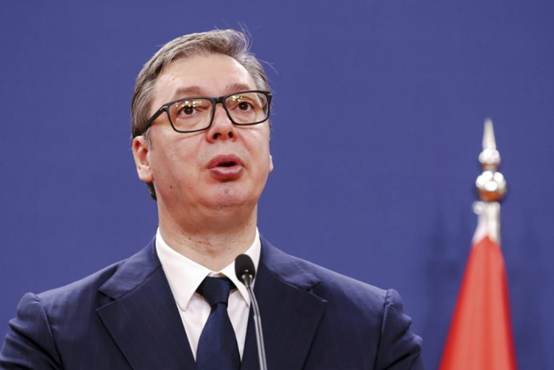
美要求塞尔维亚将俄企控股石油工业公司国有化,武契奇:不可接受
Huan Qiu Wang· 2025-10-12 07:27
Core Points - Serbian President Aleksandar Vučić rejected the suggestion to nationalize the Serbian Oil Industry (NIS) to evade U.S. sanctions, calling the idea "unacceptable" [4][6] - The Serbian government holds a minority stake in NIS, while the majority is owned by a Russian company [6] - U.S. sanctions against NIS came into full effect earlier this month, which Vučić stated would have severe impacts on the country [6] Group 1 - Vučić stated that he was approached by the U.S. to nationalize NIS as a means to circumvent sanctions [6] - The President emphasized that Serbia does not support the appropriation of others' funds and property [6] - Vučić described the U.S. sanctions as "bad news" for Serbia, indicating significant negative consequences for the nation [6]