芯片自主化

Search documents
中企不再买英伟达芯片,黄仁勋竟发声,外交部强硬回击
Sou Hu Cai Jing· 2025-09-20 08:08
Core Insights - Nvidia CEO Jensen Huang expressed disappointment over the escalating U.S. export controls on chips to China, which restricts Nvidia's ability to sell high-end chips in the Chinese market [1][3] - Huang's concerns extend beyond immediate lost orders; he fears a long-term trend where China may permanently shift away from U.S. technology [3][9] - China, previously a significant market for Nvidia, accounting for over 20% of its data center revenue, is becoming increasingly distant due to U.S. restrictions [3][9] Industry Dynamics - The Chinese government responded to Huang's comments, emphasizing its commitment to international rules and market principles, stating that the Chinese market remains open to compliant enterprises [3][7] - The U.S. export restrictions have inadvertently spurred a wave of technological self-sufficiency in China, with local companies like Huawei and others rapidly advancing in AI chip development [5][9] - In 2023, the Chinese AI chip market surpassed 100 billion, with a growing share of domestic chips, indicating a shift away from reliance on foreign technology [5][9] Strategic Implications - The loss of orders for companies like Nvidia, AMD, and Qualcomm signifies not just immediate revenue impacts but also a potential loss of strategic opportunities in the evolving tech landscape [7][9] - China's response to U.S. actions highlights its determination to achieve technological independence, with a focus on self-research and development as the path to strength [9][11] - The ongoing "chip war" initiated by the U.S. is reshaping the global tech ecosystem, with a shift from interdependence to fragmentation, driven by political rather than market forces [9][11]



土耳其,也要自研芯片
半导体行业观察· 2025-09-06 03:23
Core Viewpoint - Turkey is preparing to initiate large-scale domestic chip production to reduce reliance on foreign technology [2][3] Group 1: Domestic Chip Production Plans - Yongatek Microelectronics, a Turkish chip design company, has been working since 2014 to become a national chip design and production center [2] - The company is collaborating with Turkish appliance manufacturer Beko to develop microcontrollers (MCUs) as part of the HIT-30 funding program, with prototype production expected by the end of this year and mass production starting next year [2] - Beko alone is projected to use 30 million MCUs annually, with potential demand in defense, robotics, and IoT reaching 50 million units [2] Group 2: Global Chip Market Context - The ongoing US-China tech and chip trade war poses a threat to other countries' development of autonomous chip capabilities [2] - Major US companies like Nvidia, Qualcomm, Broadcom, and Apple are relocating chip production back to the US, which could create new fronts in the "chip war" [3] - Chips are expected to become a decisive resource of the century, with AI emerging as a key competitive arena [3] Group 3: Investment and Infrastructure - Turkey plans to provide approximately $5 billion in support to attract international tech companies to establish production facilities in the country [3] - Currently, Turkey relies almost entirely on imported chips, with limited domestic production of sensors [3] Group 4: Initial Production Focus - The first chips produced in Turkey will focus on home appliances, with potential for 28nm or 40nm chips, and possibly 22nm chips for the automotive sector in the future [4][5] - Establishing chip production lines may take up to three years, and collaboration with institutions like Aselsan and TÜBITAK is encouraged [5] Group 5: Defense and Advanced Technology - The defense industry faces chip supply bottlenecks, particularly with field-programmable gate arrays (FPGAs), which are widely used [5] - Yongatek is working with foreign companies to develop autonomous FPGAs and is also developing AI chips for smart cameras and smart city security applications [5] - The AI camera chip is expected to enter mass production by 2027-2028, while FPGA development is ongoing through the European Union [5] Group 6: Talent and Knowledge Retention - To end reliance on foreign technology, Turkey needs to establish more chip design centers and encourage Turkish engineers working abroad to return and contribute to national development [6]

裕太微(688515)2Q25:2.5G PHY/车规产品加速放量
Xin Lang Cai Jing· 2025-09-03 00:37
Core Viewpoint - The company has shown significant revenue growth in 1H25, driven by new product launches and industry recovery, despite reporting a net loss [1][2][3] Financial Performance - In 1H25, the company achieved revenue of 222 million yuan, a year-on-year increase of 43.41%, while the net profit attributable to shareholders was a loss of 104 million yuan, reducing losses by 4 million yuan compared to the previous year [1] - In Q2 2025, revenue reached 141 million yuan, reflecting a year-on-year growth of 71.39% and a quarter-on-quarter increase of 73.74% [1] - The gross margin improved to 43.98% in Q2 2025, with a quarter-on-quarter increase of 3.24 percentage points [1][2] Product Development - The company has successfully launched several new products, including 2.5G PHY chips, which generated revenue of 73 million yuan, a year-on-year increase of 88.34% [2] - The company plans to continue introducing new products in 2023 and 2024, contributing to a significant revenue increase from these new offerings [2] - The automotive-grade chip segment has seen rapid growth, with revenue from automotive PHY chips reaching 14 million yuan, a year-on-year increase of 215.48% [2] Market Outlook - For 2025, the company expects continued revenue growth driven by the demand for industrial-grade products and the launch of new products [3] - The company anticipates that revenue from 2.5G PHY chips will reach new highs, with plans to introduce single-port 10G PHY chip samples by the end of 2025 [3] Investment Recommendation - The target price is set at 140.50 yuan, maintaining a "buy" rating based on projected revenues of 562 million yuan, 830 million yuan, and 1.215 billion yuan for 2025, 2026, and 2027 respectively [4] - The company is valued at 20 times the 2025 price-to-sales ratio, reflecting its growth potential as a rare domestic PHY chip supplier [4]

探路者: 2025年度公司向特定对象发行股票方案论证分析报告
Zheng Quan Zhi Xing· 2025-08-25 20:08
Group 1 - The company plans to issue shares to specific investors to meet funding needs and enhance capital strength and profitability [1][4][5] - The issuance is driven by the competitive pressure in the outdoor brand market and aims to leverage the company's industry experience through product innovation, brand empowerment, and channel development [1][2][3] - The company aims to deepen its "outdoor + chip" dual business strategy, focusing on technology-driven innovation and overcoming core technology barriers [2][3][21] Group 2 - The issuance will be fully subscribed by the company's actual controller, Li Ming, and his controlled enterprise, Beijing Tongyu He Ying Investment Management Co., Ltd., which will stabilize the company's equity structure [4][5][10] - The shares will be issued as domestic listed ordinary shares (A shares) with a par value of RMB 1.00 per share [4][6] - The issuance price is set at RMB 7.28 per share, which is not less than 80% of the average trading price over the previous 20 trading days [6][10] Group 3 - The company anticipates that the issuance will enhance its financial risk resistance and support stable operations and development [5][21] - The funds raised will be used to supplement working capital, which is crucial for the company's expanding business scale and operational needs [3][21][22] - The company has established a modern corporate governance structure and internal control environment to ensure the proper use of raised funds [22][24] Group 4 - The issuance is expected to increase the total assets and net assets of the company, although it may dilute immediate returns for existing shareholders [17][19][26] - The company has proposed measures to mitigate the impact of dilution on immediate returns, including focusing on technology innovation and product development [21][23][25] - The company will ensure compliance with relevant laws and regulations throughout the issuance process, including obtaining necessary approvals from shareholders and regulatory bodies [15][26]

伯恩斯坦预测2025年英伟达在华芯片市场份额将下滑至54%
Xin Lang Cai Jing· 2025-08-06 12:56
Core Viewpoint - According to Bernstein, Nvidia's market share in China's AI chip market is expected to decline from 66% in 2023 to 54% by 2025 due to the rise of domestic chip manufacturers [1] Group 1: Market Dynamics - Chinese chip manufacturers are gaining market share, driven by government policies promoting chip self-sufficiency [1] - Key players in the domestic market include Huawei, Cambricon, and Haiguang, which are becoming the main forces in domestic substitution [1]
A股IPO撤回的歌尔微,为何转战港交所?
Sou Hu Cai Jing· 2025-07-17 11:17
Core Viewpoint - The enthusiasm of Qingdao enterprises for listing in Hong Kong has been increasing since 2025, with several companies, including Goer Micro, applying for listings, reflecting a strategic shift in capital operations and market response to regulatory changes [2][9]. Group 1: Company Overview - Goer Micro has submitted its initial public offering (IPO) application to the Hong Kong Stock Exchange after previously withdrawing its A-share IPO application due to market conditions and regulatory tightening [2][6]. - The company’s revenue showed a fluctuating upward trend, with reported revenues of 3.121 billion yuan, 3 billion yuan, and 3.266 billion yuan for the years 2022, 2023, and the first nine months of 2024, respectively [6]. - The sensor segment dominates Goer Micro's revenue structure, accounting for 77% of total revenue in the first nine months of 2024, with sensor revenue reaching 2.515 billion yuan [6][7]. Group 2: Strategic Decisions - The decision to list in Hong Kong is part of a strategic restructuring, allowing Goer Micro to focus on MEMS sensor devices while its parent company, Goer Group, concentrates on precision components and smart hardware [7][9]. - Goer Micro's reliance on external chip suppliers remains significant, with nearly 60% of its chip procurement coming from Infineon in 2022, although the proportion of self-developed chips in its MEMS products has increased from 22.5% in 2023 to 29.7% in 2024 [3][5]. - The Hong Kong Stock Exchange has introduced favorable policies, such as the "Science and Technology Enterprise Special Line," to facilitate listings for technology companies, enhancing Goer Micro's confidence in its IPO plans [9].
为什么苹果对自研 C1 基带芯片如此低调?库克终于坦白了
Sou Hu Cai Jing· 2025-05-04 17:22
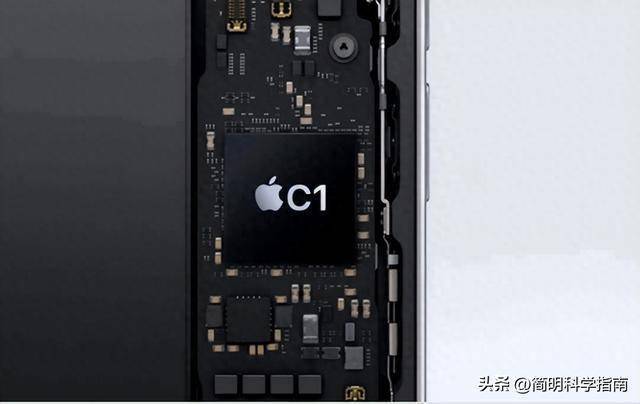
Core Viewpoint - Apple has quietly launched its first self-developed mobile baseband chip, C1, which is a significant milestone in its supply chain autonomy, potentially indicating a shift away from Qualcomm [1][3]. Group 1: Development and Strategy - Apple has been focusing on hardware chip autonomy for years, designing its A-series processors for iPhones and M-series for Macs, with the C1 baseband chip being the most developed project [3]. - The development of the C1 chip followed Apple's acquisition of Intel's 5G baseband team for $1 billion in 2019, after years of reliance on Qualcomm due to Intel's underperformance [3][17]. - Apple has chosen a cautious marketing approach for the C1 chip, emphasizing its energy efficiency rather than its performance to avoid undermining its higher-end iPhone models that still use Qualcomm chips [5][7]. Group 2: Performance and Testing - Despite the low-key marketing, the C1 chip reportedly outperforms Qualcomm's existing technology in various aspects, including download speed, upload stability, and connection quality [7]. - Testing results show that the C1 chip achieves similar average download speeds (approximately 450-670 Mbps) compared to Qualcomm's X71 chip, with slightly better upload speeds [7][9]. - The C1 chip's power consumption is 25% lower than that of the Qualcomm X71, with significant reductions in battery usage during video playback and data downloads [9][11]. Group 3: Future Implications - Apple's CEO Tim Cook expressed excitement about the C1 chip's performance and its potential to enhance battery life, indicating a strategic shift towards self-developed communication chips [13]. - Currently, all mid to high-end iPhone models still rely on Qualcomm's mobile data solutions, with a supply agreement in place until 2026 [13][15]. - The successful launch of the C1 chip may lead to the development of a next-generation chip (potentially C2), expected to support millimeter-wave technology and replace Qualcomm entirely after the current contract ends [15][17]. Group 4: Financial Impact - The self-developed baseband chip allows Apple to save $5-6 per iPhone in patent fees, translating to over $1 billion in annual savings [17]. - Once Apple fully transitions to its own baseband technology, it will be able to assert its leadership in the communication chip sector without the need for a subdued marketing approach [17].