
轨道上的大湾区

Search documents
广东多个重大项目迎来关键突破 跑出建设“加速度”
Nan Fang Ri Bao Wang Luo Ban· 2025-09-30 08:07
Group 1 - The construction of the main structure of the Foshan Station for the Guangzhan High-speed Railway has been completed, with the project now entering the decoration and renovation phase [1] - The Guangzhan High-speed Railway is in the final stages of preparation for operation, significantly reducing travel time from Guangzhou to Zhanjiang to 1.5 hours upon completion by the end of this year [1] - The Shantou South to Shantou section of the Shanshan High-speed Railway has officially entered the track-laying phase, aiming to enhance transportation capacity from an average of 24 pairs of trains per day to over 50 pairs [2] Group 2 - The Changshen Expressway expansion project has completed the main bridge construction, transitioning to the final stages of road surface and ancillary works, with a total length of approximately 116.6 kilometers [2] - The expansion project is a key initiative under Guangdong's 14th Five-Year Plan, aimed at strengthening connections between the Guangdong-Hong Kong-Macao Greater Bay Area and central regions like Jiangxi [2] - The first phase of the Bay Area University (Binhaiwan Campus) has successfully topped out, marking significant progress in higher education infrastructure in the Greater Bay Area [3] Group 3 - The Bay Area University project will cover an area of approximately 67,000 square meters, addressing the shortage of high-level engineering education resources in the region [3] - The Guangzhou Baiyun Station's TOD integrated transport hub has completed the construction of four towers, which will serve as a key driver for regional economic development [3]
大湾区:从互联互通到直连直通
Nan Fang Ri Bao Wang Luo Ban· 2025-09-30 08:07
Core Viewpoint - The opening of new intercity rail lines in Guangzhou enhances connectivity within the Greater Bay Area, facilitating direct access between cities and improving transportation efficiency [1] Group 1: Infrastructure Development - On September 29, the Guangzhou East Ring Intercity (Panyu - Baiyun Airport North), Palian Intercity, and the northern extension of the Guanghui Intercity (Xiaojinkou - Huizhou North) successfully commenced operations [1] - The total length of intercity rail operated by the Guangzhou Metro Group now reaches 420 kilometers, connecting six cities: Guangzhou, Foshan, Dongguan, Huizhou, Zhaoqing, and Qingyuan [1] Group 2: Connectivity and Integration - The new lines link 10 hubs and provide convenient transfers with 14 metro lines at 17 metro stations, forming the core framework of the "Railway on the Bay Area" [1] - The opening of these new lines accelerates the upgrade of connectivity among Bay Area cities from mere interconnection to direct and seamless access [1]
广州地铁五线齐开 大湾区城市走向“直联直通”
Zhong Guo Xin Wen Wang· 2025-09-30 03:43
Core Points - Guangzhou Metro has opened three intercity rail lines and two metro lines, enhancing connectivity in the Greater Bay Area [1][3][5] - The total operational length of intercity railways managed by Guangzhou Metro Group has reached 420 kilometers, connecting six cities and facilitating convenient transfers with 14 metro lines [3][5] - The overall operational mileage of the Guangzhou Metro network has now reached 768.4 kilometers [3] Intercity Rail Developments - The newly opened intercity lines add eight stations that allow seamless transfers to nearby national rail and metro stations [5] - The "golden triangle" formed by the stations of Panyu, Pazhou, and Guangzhou Lianhuashan enables direct access to key areas such as the Pazhou Convention and Exhibition Center and Guangzhou Baiyun Airport without transfers [5] - Travel times from Pazhou Station include 30 minutes to Guangzhou Baiyun Airport, 30 minutes to downtown Foshan and Dongguan, 60 minutes to Shenzhen Airport, and 90 minutes to downtown Qingyuan, creating a "30-60-90" transportation circle [5] Future Expansion Plans - By the end of this year, Guangzhou Metro plans to commence construction on the Foshan-Guangzhou-Dongguan intercity line and take over operations of the Guangzhou-Dongguan-Shenzhen intercity line [3] - Additional projects include the southern extension of the Guangqing intercity railway and the completion of the remaining section of Metro Line 22, with the total operational mileage of "metro + intercity + tram" expected to exceed 1,300 kilometers [3] Service Enhancements - All new intercity railway stations are equipped with AEDs, designated "love seats," and services for individuals with mobility challenges [5] - Most stations feature restrooms, including accessible facilities, and some stations have added nursing rooms for mothers [5]

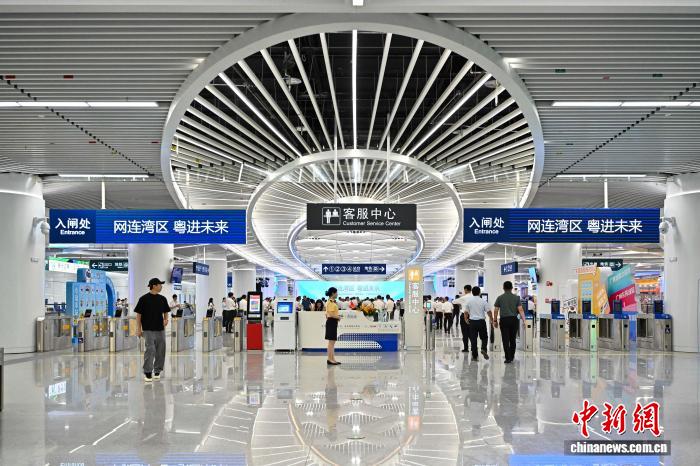
广深带头“织网”轨道交通 大湾区进阶“一小时产业圈”
2 1 Shi Ji Jing Ji Bao Dao· 2025-09-29 15:46
Core Insights - The recent opening of new metro lines in Guangzhou and Shenzhen marks a significant advancement in the rail transit network of the Greater Bay Area, enhancing connectivity and operational efficiency [1][3][4] Group 1: Infrastructure Developments - Shenzhen Metro's Line 16 Phase II and Line 6 Branch II commenced operations on September 28, followed by the opening of multiple new lines in Guangzhou on September 29, including three intercity railways and two metro lines [1][3] - Guangzhou Metro's operational mileage has reached 768.4 kilometers, while Shenzhen Metro has surpassed 600 kilometers, contributing to a total of over 1,100 kilometers of rail transit in the region [1][3] Group 2: Economic and Strategic Implications - The integration of Guangzhou and Shenzhen's metro systems through Dongguan is expected to create the largest metro network in the country, significantly reducing commuting costs and time, thus facilitating smoother flow of production factors [2][4] - The development of a dense and efficient rail network is anticipated to transform the Greater Bay Area into a tightly connected urban region, enhancing industrial collaboration and spatial restructuring [2][4][5] Group 3: Passenger Demand and Growth - The Guangzhou-Shenzhen intercity railway currently accommodates a daily passenger volume of 166,000, with a peak of over 70,000 during the summer transport season, indicating a near-capacity operation [6][7] - Guangzhou Metro's ridership reached a historical high of 12.2 million passengers on December 31, 2024, with an average daily ridership of approximately 9.15 million as of August 31, 2023, reflecting a year-on-year increase of 3.98% [6][7] Group 4: Technological Integration - The ongoing enhancement of the metro network is closely linked with the integration of smart and digital technologies, which are expected to optimize operational efficiency and reduce commuting times [8] - Companies like Jiadu Technology are applying AI and digital twin technologies to improve metro scheduling and station management, thereby increasing overall network efficiency [8]
广惠城际北延段正式开通,惠州迈入“高铁城际直通”新时代
Nan Fang Du Shi Bao· 2025-09-29 15:08
Core Points - The opening of the Guanghui Intercity North Extension on September 29, 2025, marks a significant milestone for Huizhou residents, enabling seamless connectivity between the intercity railway and the national high-speed rail network [1] - The new line, measuring 6.36 kilometers, enhances Huizhou's access to the Ganshen High-Speed Railway, contributing to the development of the "Railway on the Bay Area" [1] Group 1: Connectivity and Operations - The Guanghui Intercity North Extension connects the existing Guanghui Intercity Xiaojinkou Station to the Ganshen High-Speed Railway Huizhou North Station, with nearly 80% of the route being underground [2] - The line will operate 28 intercity train services daily from Huizhou North Station, reaching key cities in the Greater Bay Area such as Dongguan, Panyu, and Foshan [2] - Passengers can transfer to the high-speed rail within approximately 10 minutes at Huizhou North Station, with volunteer guides available to assist [2] Group 2: Economic and Urban Development - The Guanghui Intercity North Extension is a key transportation project in Guangdong's 14th Five-Year Plan, representing a historic breakthrough for Huizhou's self-invested intercity railway [3] - This connection enhances Huizhou North Station's role as a comprehensive transportation hub, facilitating a "half-hour living circle" with cities like Guangzhou and Dongguan [3] - The project faced significant technical challenges during construction, including geological issues and coordination among multiple departments, which were successfully overcome [3] - The opening of this line is a milestone for Huizhou's integration into the Guangdong-Hong Kong-Macao Greater Bay Area, promoting efficient resource flow and urban functionality [3]
广州地铁同日开通多条城际铁路和地铁线路
Zhong Guo Xin Wen Wang· 2025-09-29 12:36
Core Points - Guangzhou Metro has opened multiple intercity railways and metro lines on September 29, enhancing connectivity in the Greater Bay Area [1][3][5] - The total operational length of intercity railways managed by Guangzhou Metro Group has reached 420 kilometers, linking six cities: Guangzhou, Foshan, Dongguan, Huizhou, Zhaoqing, and Qingyuan [1][3] - The metro network has expanded to 768.4 kilometers with the addition of three intercity lines and two metro lines [3][5] Intercity Railways - The newly opened intercity lines include the Guangzhou East Ring Intercity (Panyu to North Baiyun Airport), Pailian Intercity, and the northern extension of the Guanghui Intercity [1][3] - These lines feature eight stations that allow for convenient transfers to national rail and metro stations, forming a "golden triangle" with key stations [3][5] - The new intercity lines enable direct access to key areas in Guangzhou, such as the Pazhou Exhibition Center and the International Financial City, without the need for transfers [3][5] Metro Lines - The newly opened metro lines include the second phase of Line 13 (Tianhe Park to Yuzhu), the second phase of Line 14 (Jiahe Wanggang to Lejia Road), and the Guangzhou East Station on Line 11 [3][5] - The integration of these metro lines with intercity railways is expected to enhance regional connectivity and support economic development in the area [5] Future Developments - Guangzhou Metro Group plans to start construction on the Foshan-Dongguan Intercity by the end of this year and will take over the operation of the Dongguan-Shenzhen Intercity [5] - Additional projects include the southern extension of the Guangqing Intercity Railway and the completion of the remaining section of Metro Line 22, aiming to exceed 1,300 kilometers of combined "metro + intercity + tram" routes [5]
广深莞地铁密集“上新”,跨市轨交重塑大湾区
第一财经· 2025-09-29 10:12
Core Viewpoint - The article highlights the rapid expansion of the rail transit network in the Guangdong-Hong Kong-Macao Greater Bay Area, emphasizing its role in enhancing regional connectivity and reshaping urban and industrial landscapes [3][12]. Summary by Sections Shenzhen Metro Development - As of September 28, 2023, Shenzhen's metro system has reached an operational mileage of 609.6 kilometers, ranking fifth nationally, with a network density of 0.305 kilometers per square kilometer, the highest among mainland cities [5][6]. - The metro system has seen a significant increase in passenger volume, with a daily average of 8.95 million trips from January to August 2023, marking a 7.1% year-on-year growth [6][7]. - The surge in ridership is attributed to a growing resident population, which reached 22.38 million by the end of 2024, and the opening of new transit routes enhancing cross-border travel [7][8]. Greater Bay Area Rail Network Expansion - The article discusses the ongoing construction of multiple rail lines connecting Shenzhen with Dongguan and Huizhou, facilitating seamless transit across the Greater Bay Area [9][10]. - The opening of new metro lines in Guangzhou and Dongguan is expected to significantly improve intercity connectivity, transforming the region's transportation landscape [10][11]. - The integration of rail systems is projected to lower commuting costs and time, enhancing the movement of talent, technology, and capital within the Greater Bay Area [12][14]. Economic and Industrial Implications - The expansion of the rail network is anticipated to reshape the industrial and population distribution in the Greater Bay Area, fostering a more integrated economic environment [12][14]. - The connectivity between Shenzhen, Dongguan, and Huizhou is expected to facilitate a "same-city life" experience for residents, while also promoting industrial collaboration among neighboring cities [14]. - The article notes that the development of the rail network aligns with broader reforms aimed at improving the efficiency of resource allocation across various sectors in the Greater Bay Area [14].

广深莞地铁密集“上新”,跨市轨交重塑大湾区|湾区观察
Di Yi Cai Jing· 2025-09-28 13:56
Core Insights - Shenzhen Metro's operational mileage has surpassed 600 kilometers, reaching 609.6 kilometers, ranking fifth nationally [2][3] - The rapid expansion of the Guangdong-Hong Kong-Macao Greater Bay Area's rail transit network is facilitating the smooth flow of regional production factors and reshaping urban space and industrial patterns [2][4] Summary by Sections Shenzhen Metro Expansion - Shenzhen Metro's operational mileage reached 609.6 kilometers with the opening of Line 16 Phase II and Line 6 Branch II, maintaining the highest network density among mainland cities at 0.305 kilometers per square kilometer [3] - The metro's ridership has been robust, with an entry volume of 169.48 million and a passenger flow of 300.13 million in August, ranking third nationally [3] - Daily average ridership from January to August was 8.95 million, showing a significant year-on-year increase of 7.1% [3][4] Population Growth and Demand - The surge in metro ridership is attributed to a substantial increase in the resident population, which reached 22.38 million by the end of 2024, marking a year-on-year increase of 741,100 [4] - The opening of the Shenzhen-Zhongshan Channel and the rise in cross-border travel from Hong Kong have also contributed to increased metro usage [4] Future Developments - Shenzhen is set to welcome four new metro lines by the end of the year, enhancing the coverage and operational efficiency of its rail network [4] - Ongoing construction of the metro's fifth phase is expected to push the total mileage beyond 800 kilometers by 2030, connecting with neighboring cities like Dongguan and Huizhou [4][5] Greater Bay Area Connectivity - The integration of Shenzhen's metro with Dongguan's rail system is underway, with plans for extensions that will enhance connectivity between the two cities [5] - The overall development of the Greater Bay Area's rail network is anticipated to significantly reduce commuting costs and time, fostering economic collaboration among cities [8] Economic Implications - The expansion of the rail network is expected to reshape the industrial and population layout in the Greater Bay Area, enhancing the flow of talent, technology, and capital [8] - The construction of cross-city metro lines will facilitate a "same-city life" experience for residents, while also restructuring urban and industrial logic [8][9]

45年,深圳长出一片“轨道森林”
2 1 Shi Ji Jing Ji Bao Dao· 2025-08-26 11:12
Core Insights - Shenzhen has transformed from a small county with a population of 330,000 in 1980 to a mega city with nearly 18 million residents by 2024, marking a more than 50-fold increase in population over 45 years [1] - The Shenzhen metro system has achieved a daily passenger flow of over 10 million within just 20 years, with the highest network density in the country [1][4] - The city aims to expand its metro network to 1,000 kilometers by 2035, with significant ongoing projects and investments [5][9] Metro Development - Shenzhen's metro system began operations in 2004, with an initial network of 21.3 kilometers, and has since grown to a total operational mileage of 595.1 kilometers by 2024 [4][9] - The average daily passenger volume reached 8.47 million in 2024, a nearly 50-fold increase from the initial 170,000 passengers in the first month of operation [4][8] - The city plans to have 640 kilometers of metro lines operational by 2025 and aims for 1,000 kilometers by 2035, indicating ambitious growth in urban transit infrastructure [5][9] Key Milestones - The successful bid for the 26th World University Games in 2007 catalyzed significant metro development, with a commitment to complete 155 kilometers of metro lines by 2011 [7] - A construction boom occurred in 2019, with 16 lines and 284 kilometers of new metro lines under development, reflecting a major expansion phase [8] - The establishment of large-scale transportation hubs, such as the Car Gong Miao and Gangxia North hubs, has enhanced connectivity and accessibility in densely populated areas [8][13] Intercity Connectivity - Shenzhen is working on three cross-city metro projects to connect with Dongguan, enhancing regional integration [11][12] - Plans are also in place to extend metro lines to Huizhou, further improving intercity transport links [12] - The ongoing construction of intercity rail projects, such as the Suiguan-Shenzhen and Shenzhen-Huizhou lines, aims to create a "railway on the bay area" for better connectivity [12]
广州轨道交通迎来通车“大年”
Nan Fang Du Shi Bao· 2025-08-20 06:39
Group 1: Metro and Intercity Rail Developments - Guangzhou Metro has opened the 10th line (Yangji East to Xilang section) and the 12th line (Xunfenggang to Guangzhou Sports Center, and Ersha Island to South University Town) on June 29, enhancing connectivity with multiple lines including the Guangfo Line and Line 22 [1] - The Guangzhou Metro plans to open a total of 10 lines (sections) this year, covering a total length of 173 kilometers, which includes 6 metro lines and 4 intercity lines, forming a three-dimensional transportation network of "metro + intercity" [1] - Three intercity railways have passed preliminary acceptance, including the Guangfo East Ring, the Pazhou Branch of the Suiguan-Shenzhen Intercity Railway, and the New Baiyun-Guangzhou Airport T2 section, marking significant progress towards operational readiness [3] Group 2: High-Speed Rail Progress - The construction of the Guangzhan High-Speed Railway has completed the full track laying, with a total length of approximately 401 kilometers and over 897 kilometers of track laid, aiming for completion by the end of the year [2] - Guangzhan High-Speed Railway is a key component of the national high-speed rail network and is expected to significantly reduce travel time between the western Guangdong region and the Guangdong-Hong Kong-Macao Greater Bay Area [2] Group 3: Baiyun Airport Developments - Baiyun Airport has served over 50.2 million passengers from January 1 to August 13, 2025, marking an 8.3% increase compared to the same period last year [4] - The T3 terminal of Baiyun Airport is set to be operational this year, contributing to a large hub structure of "three terminals + five runways" [6] - Baiyun Airport is positioned as a crucial air bridge connecting the Greater Bay Area to the world, with over 240 domestic and international destinations and more than 1,700 international flights weekly [5]