
载人航天

Search documents
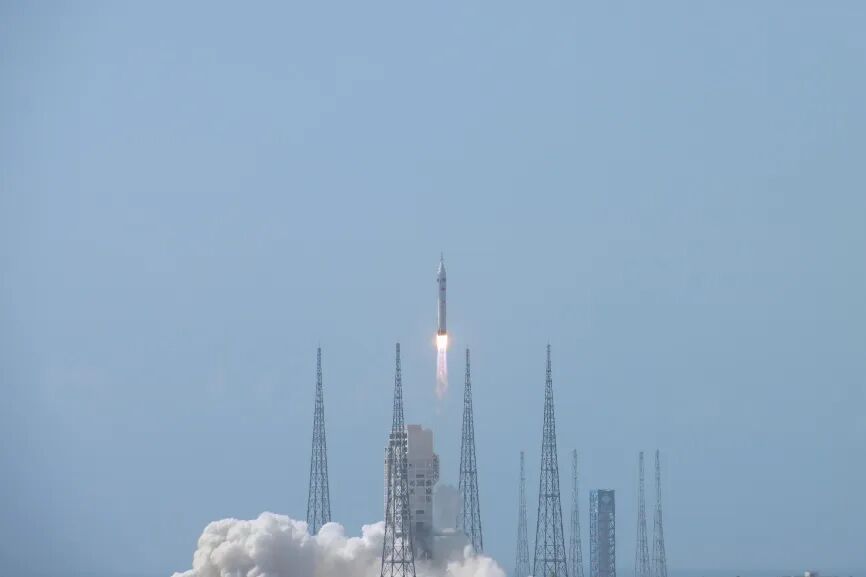
载人登月火箭,海上软着陆成功,不是美国的SpaceX,是中国的长征十号
3 6 Ke· 2026-02-12 00:32
Core Viewpoint - The successful test of the "Dream Boat" manned spacecraft and the "Long March 10" rocket marks a significant advancement in China's manned lunar exploration program, particularly in validating critical safety technologies for astronaut escape systems during high-risk phases of flight [13][24]. Group 1: Test Overview - The "Dream Boat" spacecraft and "Long March 10" rocket were launched at 11 AM from the Wenchang Space Launch Site in Hainan, designed specifically to test emergency escape capabilities during the most dangerous phase of flight [1][2]. - The test involved the "maximum dynamic pressure escape" scenario, where the spacecraft had to execute an escape maneuver under peak atmospheric pressure conditions, which is critical for astronaut safety [14][16]. Group 2: Technical Details - The "Long March 10" rocket utilized a single-stage configuration for this low-altitude flight verification, differing from multi-stage launches [4][19]. - The escape system was successfully activated, with the escape tower igniting to separate the return capsule from the rocket, demonstrating the system's effectiveness in real flight conditions [4][18]. Group 3: Future Implications - The successful completion of this test is a crucial step towards China's goal of landing astronauts on the Moon by 2030, while also enhancing capabilities for future missions to the Chinese space station [24][28]. - The "Long March 10" rocket is designed for reusability, similar to SpaceX's Falcon 9, which will significantly reduce costs and improve the efficiency of future space missions [19][26].

维珍银河股价波动频繁,机构评级分化
Jing Ji Guan Cha Wang· 2026-02-11 16:36
Stock Performance - Virgin Galactic's stock price experienced significant fluctuations, with a recent increase of 5.04% on January 10, 2026, closing at $3.31 per share and a trading volume of 2.64928 million shares, resulting in a turnover rate of 4.19% [2] - On January 6, 2026, the stock rose by 3.08%, closing at $3.35, with a trading volume of $17.2903 million [2] Financial Performance - The latest financial report indicates that the company generated revenue of $365,000, with a net loss of $64.42 million and earnings per share of -$1.09, resulting in a price-to-earnings ratio of -0.48 [3] Analyst Ratings - As of January 10, 2026, among the 8 institutions participating in the ratings, 25% recommended a "buy," 50% suggested "hold," and 25% advised "sell." This is a change from the ratings on November 26, 2025, where 22% were "buy," 44% were "hold," and 34% were "sell" [4] Industry Overview - Virgin Galactic is an American aerospace company focused on crewed spaceflight services, including the development of spaceflight systems, with plans to launch from the spaceport in New Mexico [5]

我国完成首次载人飞船返回舱海上搜索回收任务
Yang Shi Xin Wen· 2026-02-11 04:35
Core Insights - The successful sea recovery of the "Dream" manned spacecraft marks a significant milestone for China's space program, particularly in the context of future lunar exploration and space station operations [1] Group 1: Mission Details - On February 11, 2026, the "Dream" manned spacecraft successfully executed a maximum dynamic pressure escape flight test and safely splashed down at sea [1] - This mission involved the Long March 10 rocket system and is the first instance of a manned spacecraft recovery operation conducted at sea in China [1] Group 2: Future Implications - The "Dream" spacecraft is primarily designed for China's manned lunar exploration missions while also supporting near-Earth space station operations [1] - The spacecraft's return capsule is capable of multiple reuses, which is crucial for the sustainability of future space missions [1]
2026年度载人航天飞行任务标识投票通道开启
Xin Lang Cai Jing· 2026-01-30 03:40
Group 1 - The 2026 manned spaceflight mission logo collection activity officially started on November 1, 2025, and will accept submissions until December 30, 2025, receiving over 500 entries from various sectors [1] - After preliminary review, 10 logo candidates for four missions, including Tianzhou-10, Shenzhou-23, Shenzhou-24, and Mengzhou-1, were selected for the online voting phase [1] - The voting period is set from January 30, 2026, at 09:30 to February 6, 2026, at 09:30, with voting conducted through the official website of the China Manned Space Engineering [1]
仪器历史上的今天:中国科学院仪器馆成立
仪器信息网· 2026-01-23 09:02
Core Viewpoint - The article highlights the historical significance and contributions of the Chinese Academy of Sciences Instrumentation Museum, which evolved into the Changchun Institute of Optics, Fine Mechanics and Physics, in the development of optical technology and national defense in China. Group 1: Historical Development - The Instrumentation Museum was established in 1953, marking the beginning of optical research in New China, with Wang Daheng as a key figure in its founding [2][3]. - The first furnace of optical glass was produced by the end of 1953, laying the foundation for the optical instrument manufacturing industry [4]. - In 1957, the museum was renamed the Institute of Optics and Fine Mechanics, and by 1958, it successfully developed a series of significant optical instruments known as the "Eight Major Items" [5]. Group 2: Contributions to National Defense - The institute played a crucial role in supporting the development of medium-range missiles in the early 1960s by undertaking the task of developing large optical measurement equipment [11]. - In 1964, the institute was responsible for the development of high-speed cameras used during China's first atomic bomb test, successfully obtaining critical optical measurement data [13]. - The institute has participated in several major national projects, including "Two Bombs, One Satellite" and manned spaceflight, contributing significantly to national defense and economic development [14]. Group 3: Current Status and Impact - As of the end of 2023, the Changchun Institute of Optics is one of the largest research institutes under the Chinese Academy of Sciences, employing over 2,500 staff and housing 21 research departments and multiple national key laboratories [19]. - The institute has incubated several high-tech enterprises, forming a distinctive optoelectronic industry cluster [19]. - It has been a cradle for many top scientists, including Wang Daheng and Jiang Zhuying, contributing to the advancement of optical science in China [16].

奥普光电(002338.SZ):子公司长光宇航产品广泛应用于载人航天、深空探测、武器装备、商业航天等多个领域
Ge Long Hui· 2026-01-23 07:21
Core Viewpoint - Aopu Optoelectronics (002338.SZ) has reported that its subsidiary Changguang Aerospace is actively involved in various sectors including manned spaceflight, deep space exploration, military equipment, and commercial aerospace, with a focus on providing structural and functional components for rockets and satellites [1] Group 1 - Changguang Aerospace has successfully applied multiple products in the commercial aerospace sector, although this business segment currently represents a relatively low proportion of overall revenue [1] - In the first half of 2025, Changguang Aerospace achieved a main business revenue of 142 million yuan, accounting for 39.35% of the company's consolidated operating income [1] - The net profit for the same period was 41.63 million yuan, which, after consolidation based on the company's shareholding ratio, represented 68.8% of the company's consolidated net profit [1]

焦点访谈|是“考验”更是“机会” 看中国航天在突发状况下创造奇迹
Yang Shi Wang· 2026-01-20 13:32
Core Viewpoint - The Shenzhou-20 spacecraft successfully returned to Earth after an extended stay in space, marking a significant milestone in China's manned space program, particularly as it was the longest duration for a Shenzhou spacecraft in orbit at 9 months [1][3][15]. Group 1: Mission Details - The Shenzhou-20 spacecraft was originally scheduled to return in early November but was delayed due to a crack found in the spacecraft's window [5][9]. - The decision was made to prioritize the safety of the astronauts, leading to the crew returning on the Shenzhou-21 spacecraft instead [1][13]. - The Shenzhou-20 spacecraft remained in a stable condition and was able to continue its mission in space for an additional three months [11][15]. Group 2: Technical Aspects - The spacecraft's ability to remain in orbit for 9 months was validated through ground experiments, and this mission provided real-time data on the effects of prolonged space exposure on the spacecraft's systems [17][26]. - The return of the Shenzhou-20 allowed for the transport of larger cargo, including a new generation of space suits and other equipment, which would aid in the development of future space missions [19][22]. Group 3: Future Implications - The successful return of the Shenzhou-20 spacecraft contributes valuable data for the development of next-generation manned spacecraft, enhancing the understanding of long-duration spaceflight [26]. - The mission's completion signifies a successful emergency response capability for China's space program, reinforcing the importance of adaptability in space exploration [26].

神舟二十号飞船安全返回东风着陆场
Jing Ji Ri Bao· 2026-01-19 22:17
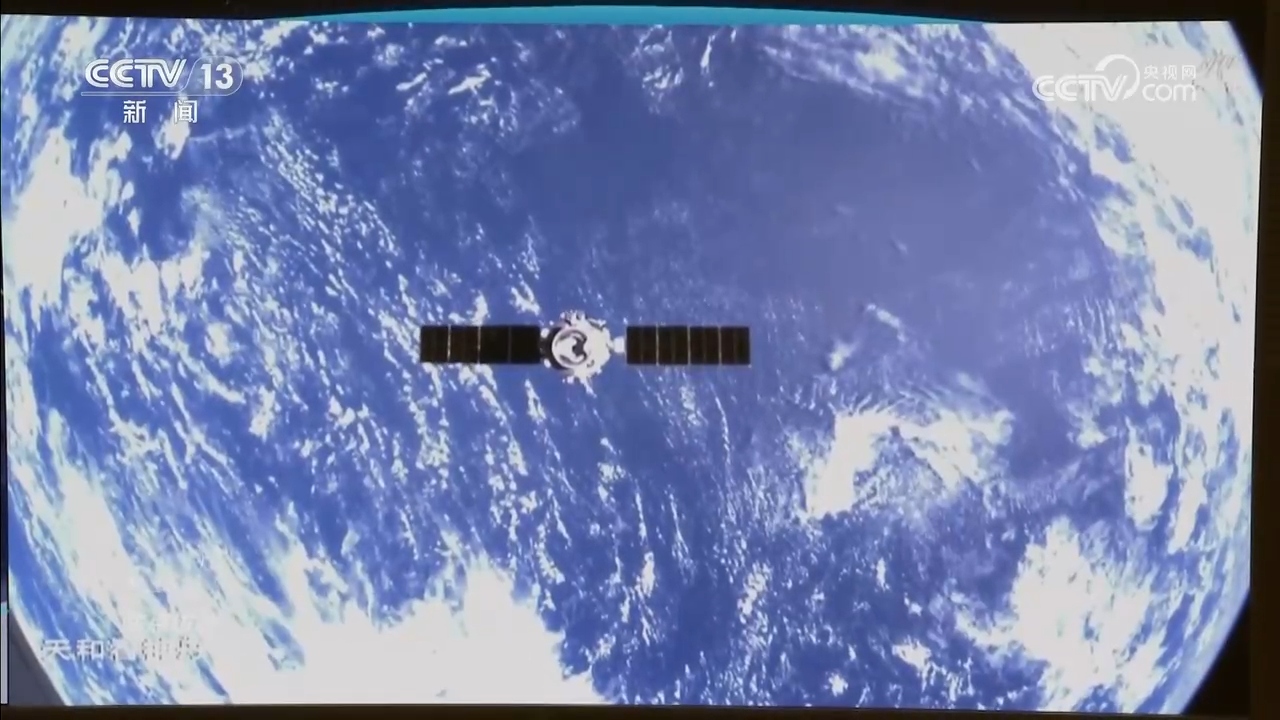
Core Points - The Shenzhou-20 spacecraft successfully landed on January 19, 2026, after a mission duration of 270 days, demonstrating its capability for a 9-month stay in orbit [1] - The spacecraft was launched on April 24, 2025, and initially delayed its return due to suspected impact from space debris, leading to extended experiments in orbit [1] - To mitigate return risks, a close-up inspection of the spacecraft's return capsule window was conducted, confirming the status of cracks, and a device for handling these cracks was developed and installed by astronauts [1] Summary by Sections - **Mission Overview** - Shenzhou-20 spacecraft launched on April 24, 2025, and successfully docked with the space station [1] - The return was delayed due to potential damage from micro-debris, leading to additional experiments in orbit [1] - **Return and Safety Measures** - The spacecraft returned to Earth on January 19, 2026, after 270 days in orbit [1] - Prior to the return, astronauts conducted an external inspection of the return capsule window to assess crack conditions [1] - A crack handling device was developed and installed to enhance thermal protection and sealing during the return process [1]
中国空间站送别“老战友”
Xin Hua She· 2026-01-19 10:51
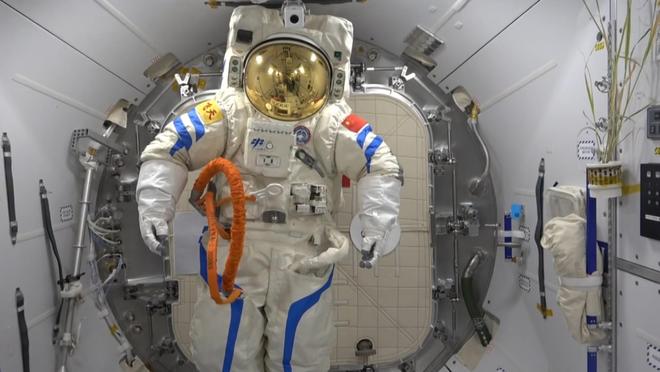
Core Points - The Chinese space station's extravehicular suit B returned to Earth with the Shenzhou-20 spacecraft, marking the end of its mission [2] - Extravehicular suit B is the first batch of suits used in the Chinese space station and the second generation of "Feitian" suits, having entered the space station on May 29, 2021 [2] - The suit has supported 20 extravehicular activities by astronauts [2] Summary by Sections - The Shenzhou-21 crew recorded a farewell video for the extravehicular suit B before its return [5] - After returning, the suit will be used for research purposes to contribute to advancements in space suit technology and the manned spaceflight program [5]
神二十乘组太空归来后首次公开亮相
Xin Lang Cai Jing· 2026-01-17 07:27
Core Insights - The core focus of the news is the successful return of the Shenzhou 20 crew after encountering a space debris incident, highlighting their emergency response and teamwork during the mission [1][2][3]. Group 1: Incident and Response - The Shenzhou 20 spacecraft's return capsule window was damaged by space debris, leading to a triangular crack that was promptly documented and communicated to ground control [2]. - The crew expressed gratitude for public concern and emphasized their confidence in the ground team's ability to devise a safe return plan [2]. - The incident underscored the importance of rigorous training and mutual trust among the crew and ground support, enabling them to effectively manage unexpected challenges [3]. Group 2: Mission Highlights - The crew's six-month mission included significant tasks such as installing space debris protection panels, crucial for the safety of the space station [4]. - The first spacewalk from the node cabin marked a historic moment for the crew, showcasing their preparedness through extensive rehearsals [4]. - The experience of cooking in space and conducting experiments with small animals provided unique insights into life in microgravity [5]. Group 3: Future Aspirations - The crew members discussed the evolving challenges of space missions, emphasizing the need for continuous skill development and adaptability to meet the demands of advancing space station operations [6]. - They highlighted the importance of strong ideals, physical and psychological resilience, comprehensive knowledge, and emergency response capabilities for future astronauts [6]. - The crew encouraged the younger generation to pursue careers in space exploration, emphasizing that it requires dedication and hard work rather than romantic notions [6].